- English
- French
- German
- Portuguese
- Spanish
- Russian
- Japanese
- Korean
- Arabic
- Greek
- German
- Turkish
- Italian
- Danish
- Romanian
- Indonesian
- Czech
- Afrikaans
- Swedish
- Polish
- Basque
- Catalan
- Esperanto
- Hindi
- Lao
- Albanian
- Amharic
- Armenian
- Azerbaijani
- Belarusian
- Bengali
- Bosnian
- Bulgarian
- Cebuano
- Chichewa
- Corsican
- Croatian
- Dutch
- Estonian
- Filipino
- Finnish
- Frisian
- Galician
- Georgian
- Gujarati
- Haitian
- Hausa
- Hawaiian
- Hebrew
- Hmong
- Hungarian
- Icelandic
- Igbo
- Javanese
- Kannada
- Kazakh
- Khmer
- Kurdish
- Kyrgyz
- Latin
- Latvian
- Lithuanian
- Luxembou..
- Macedonian
- Malagasy
- Malay
- Malayalam
- Maltese
- Maori
- Marathi
- Mongolian
- Burmese
- Nepali
- Norwegian
- Pashto
- Persian
- Punjabi
- Serbian
- Sesotho
- Sinhala
- Slovak
- Slovenian
- Somali
- Samoan
- Scots Gaelic
- Shona
- Sindhi
- Sundanese
- Swahili
- Tajik
- Tamil
- Telugu
- Thai
- Ukrainian
- Urdu
- Uzbek
- Vietnamese
- Welsh
- Xhosa
- Yiddish
- Yoruba
- Zulu
Cross Roller Bearing RA Series Benefits in Precision Stages
The Cross roller bearing RA series provides significant performance advantages in high-precision stages where space is restricted and precision is critical. The series differs from normal ball bearings in that the raceway is V-shaped and has cylindrical rollers at alternate 90-degree angles, so that a single unit may take combined radial, axial, and moment stresses. The RA series offers a super-thin wall section and GCr15 bearing steel hardened to 58-62 HRC, with precise grades from P5 to P2. For OEMs and industrial equipment makers, it means fewer components, tighter tolerances, and longer service intervals across demanding applications.
Understanding Cross Roller Bearing RA Series: Features and Specifications
The RA series is a compact variant of the standard RB cross roller bearing family. It features a split inner ring and an integrated outer ring, with orthogonally arranged rollers separated by spacers to prevent inter-roller friction and skewing.
Key Dimensional and Material Specifications
| Parameter | RA Series Specification |
|---|---|
| Wall section reduction | 20–40% thinner than RB series |
| Roller arrangement | 90° alternating, V-groove raceway |
| Material | GCr15 bearing steel |
| Surface hardness | 58–62 HRC |
| Precision grades | P5, P4, P2 (JIS/ISO) |
As a result of these criteria, the RA series is particularly well-suited for circumstances in which there is a restriction on the amount of space that is available for housing, but the load capacity cannot be compromised.
Structural Design Advantages
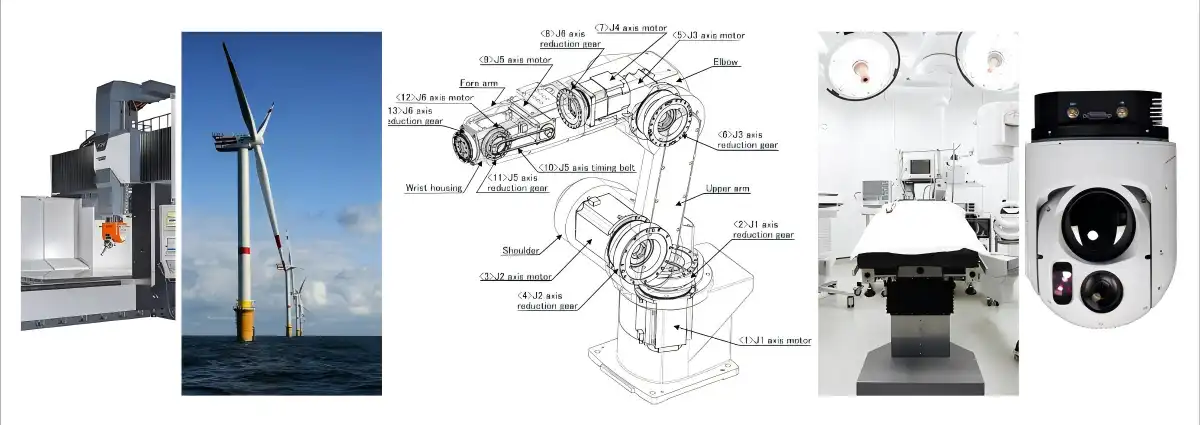
The split inner ring design allows roller insertion during assembly without requiring complex tooling. Spacers between each roller maintain consistent contact angle geometry, which directly reduces variation in starting and running torque. This translates into predictable rotation behavior—a requirement in semiconductor wafer handling and medical imaging equipment.
Load-Bearing Capacity in a Single Unit
One practical benefit engineers appreciate is the elimination of paired bearing configurations. A single RA series cross roller bearing unit sustains combined loads that would otherwise require two separate bearings. According to THK's technical documentation, cross roller bearings provide three to four times greater stiffness than equivalent-size ball bearings under the same load conditions.
Advantages of Cross Roller Bearing RA Series Over Alternatives
For applications requiring positional accuracies in the micrometer range, the RA-series always outperforms ball bearings, tapered roller bearings, and competitor cross roller products. The major factors that make this bearing stand out in production environments are:
- High Stiffness Under Combined Loads: The line-contact roller design gives three to four times the stiffness of ball bearings. This minimizes elastic deformation under typical moment loading conditions such as those seen in cantilevered robotic arms and guarantees positional repeatability of ±1 micron for precision-grade systems.
- Compact form factor for space-constrained designs: Compared to typical cross roller versions, the Cross roller bearing RA series decreases the total rotary joint height by as much as 40 percent. This permits motor housings to be integrated into collaborative robot joints without expanding the outside diameter of the arm.
- Low vibration and backlash: The rollers are spaced apart so they never touch each other, avoiding one of the major sources of vibration. In semiconductor indexing stages, this property is directly related to decreased wafer positioning errors and lower defect rates.
- Long life with proper lubrication: The RA series may be used in cleanroom or vacuum applications with low-outgassing lubricants and will run reliably for millions of cycles without polluting the process environment around it.
High stiffness when loads are combined: Rollers are line contact and are three to four times stiffer than ball bearings. This minimizes elastic deformation and preserves positional repeatability to ±1 micron in precision-grade applications under moment stress, as in a typical cantilevered robotic arm.
How to Select the Right Cross Roller Bearing RA Series for Your Application
To choose the right RA series bearing, you need to make sure that the load ratings, size restrictions, and environmental conditions are all right for your machine design. The following table shows some of the most important factors that are used to make the selection.
| Selection Factor | Evaluation Criteria |
|---|---|
| Load type | Radial, axial, or combined moment loading |
| Precision grade | P5 standard; P4/P2 for semiconductor or medical use |
| Environmental conditions | Cleanroom, vacuum, or standard industrial |
| Lubrication requirement | Standard grease or low-outgassing oil |
| OEM compatibility | Dimensional interchangeability with THK, NSK, or KOYO equivalents |
Evaluating Supplier Qualifications
Before you purchase from the manufacturer of Cross roller bearing RA series components, please ensure that it has both ISO 9001 and IATF 16949 certifications. These certifications confirm the compliance of the quality control system with the international standards of production. Luoyang Auto Bearing Co., Ltd. (ATLYC), established in 2010, has both certifications and has supplied precision bearings to customers in the US, Germany, South Korea, and Turkey in the last 15 years.
Comparing Leading Brands and Equivalents
Cross roller bearings with RA form are made by THK, NSK, SKF, KOYO, and INA. When buying managers review Chinese RA series cross roller bearing manufacturers, the factors that differentiate them are uniform dimensional tolerance, certification documents, and the capacity to provide technical assistance for special applications.
Bulk Order and Lead Time Considerations
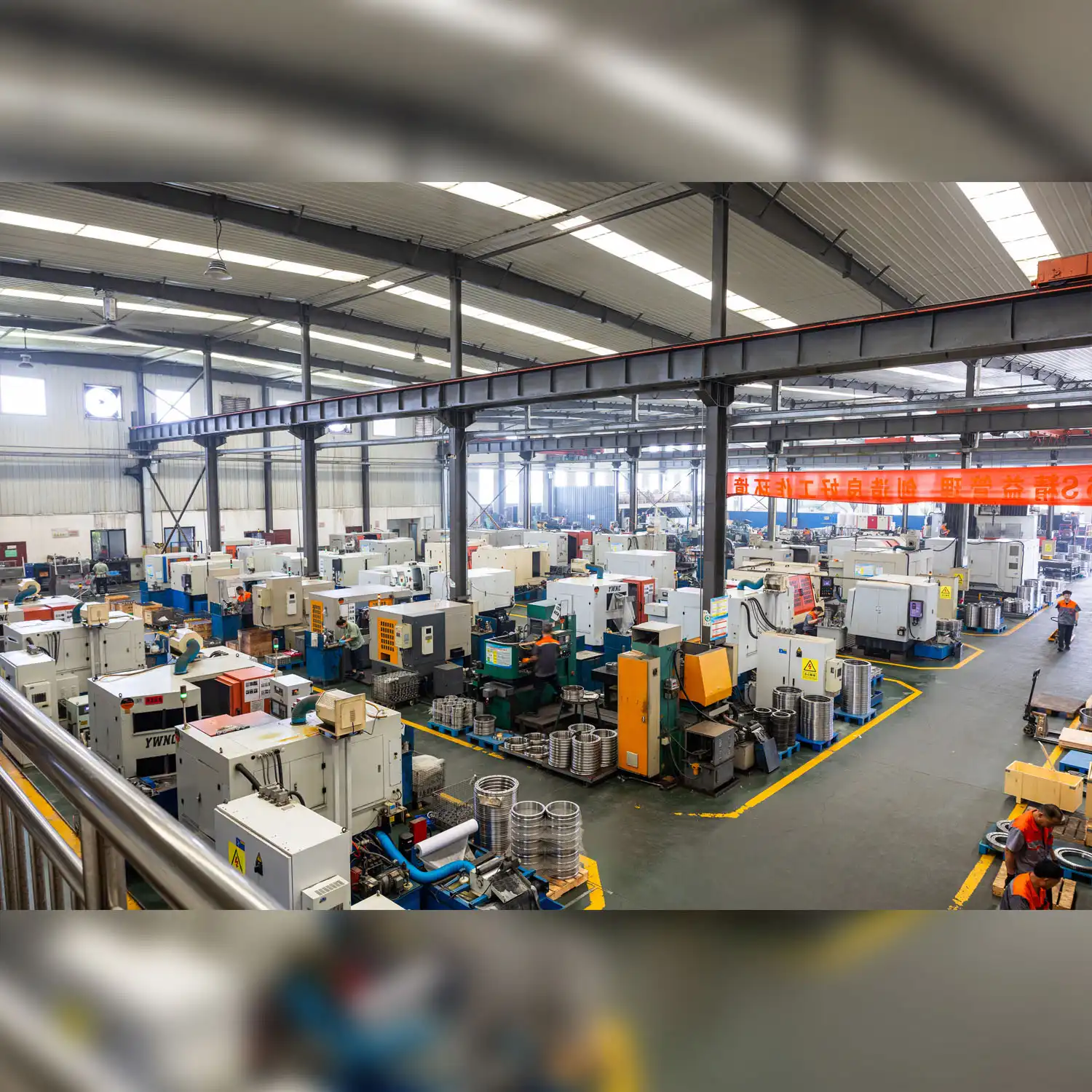
For mid-sized to large firms, the reliability of wait times is as crucial as unit pricing when placing large orders. Before you sign a long-term supply contract, be sure to record information on the manufacturing capacity and sample inspection reports. ATLYC has six manufacturing workshops with 120 trained people who produce, quality-check, and assemble.
Installation and Maintenance Best Practices for RA Series Bearings
Proper fitting greatly increases the service life of bearings. If you misalign or overtighten a Cross roller bearing RA series, it can lose its precision grade very quickly.
Step-by-Step Installation Guidelines
Clean all areas that will be touching before installing. When tightening mounting nuts, use a calibrated torque wrench and follow the manufacturer's torque procedure to make sure that the preload is spread out evenly across the split inner ring. During press fitting, you should never put direct force on the rolling elements.
Lubrication and Inspection Schedule
In normal industrial settings, use a compatible grease to re-grease every 2,000 to 4,000 hours of use. When setting up a cleanroom or vacuum, use the recommended low-outgassing oil and check the state of the lubrication during regular maintenance times. Checking the track visually for discoloration or surface cracking is a good way to spot fatigue wear early on.
Troubleshooting Common Issues
Strange noises during rotation are usually caused by dirt or not enough oil, not by a structural failure. Uneven running force is often a sign that the fitting wasn't done right. If you check the machine's condition on a regular basis, you can catch both problems early and fix them, which saves you money by avoiding costly downtime.
Why Choose the Cross Roller Bearing RA Series: A Rational Choice for Precision Stages
And when you consider the overall cost of ownership, not just the price of the unit, you get a decent return on your investment with the RA series cross roller bearing. In precision stage applications, the maintenance frequency is reduced, the replacement intervals are extended, and the multiple bearing setups are eliminated, leading to lower lifetime costs.
ROI Through Reduced Downtime
For example, an unexpected bearing failure on a robotic assembly line running on a continuous production schedule might cost much more than the bearing itself. The RA series has a reduced failure rate in high-cycle applications because it is stronger and does not wear out as readily as ball bearings.
Alignment With Industry 4.0 Requirements
More condition monitoring sensors and predictive maintenance systems are being fitted to the manufacturing lines, and then data quality difficulties connected to bearing consistency appear. When installed, an RA series cross roller bearing properly produces cleaner sensor data because of its constant torque signature. This improves the accuracy of the projected maintenance.
ATLYC's Manufacturing Position
From a single workshop in 2010, ATLYC has evolved into a facility with six workshops, working on all six kinds of bearings. The volume of manufacturing enables adjustable order quantities and consistent quality output for OEM clients worldwide who want technical documents and dependable long-term supply.
Conclusion
The Cross roller bearing RA series faces a great technological challenge: to be thin and light, yet highly robust and able to withstand loads in several directions. This kind of bearing reduces the number of parts required by OEMs, whether they are building precise stages, robotic joints, or instruments that handle semiconductors. It increases the precision of the location. Selecting a certified manufacturer with evidence of certificates and demonstrated manufacturing capacity helps preserve the long-term security of the supply chain. ATLYC has been manufacturing precision bearings for 15 years and is ISO 9001 and IATF 16949 certified, making ATLYC a trusted source for demanding worldwide applications.
FAQ
1. What load capacities does the RA series cross roller bearing support?
The RA series handles combined radial, axial, and moment loads simultaneously within a single unit. Specific dynamic and static load ratings vary by bore diameter and precision grade. Consult the product datasheet or contact ATLYC's engineering team for load capacity tables matched to your application dimensions.
2. How does the RA series compare to ball bearings in precision stages?
Cross roller bearings in the RA configuration provide three to four times greater stiffness than equivalent ball bearings under combined loading. This translates into lower elastic deformation, improved repeatability, and longer service intervals in high-cycle precision stages.
3. Can the RA series be customized for OEM requirements?
Yes. ATLYC supports dimensional customization, precision grade selection (P5, P4, P2), and material or lubrication specification adjustments for OEM applications. Custom configurations typically require a technical review process and minimum order quantity confirmation.
4. Is the RA series suitable for cleanroom or vacuum environments?
Yes, provided that appropriate low-outgassing lubricants are applied and roller materials meet the contamination standards of the target environment. ATLYC can specify compatible lubrication options based on your operating conditions.
Partner With ATLYC for Cross Roller Bearing RA Series Supply
ATLYC sells Cross roller bearing RA series goods that are certified by ISO 9001 and IATF 16949 to OEMs and dealers in the US, Germany, South Korea, and Turkey. We can supply your precision stage projects with the dependability they need thanks to our six production workshops, ability to handle large orders, and direct engineering support. To get a quote or product specification sheet right away, email our team at auto@lyautobearing.com.
References
1. THK Co., Ltd. — Cross Roller Ring Technical Manual, 2022.
2. NSK Ltd. — Precision Machine Components Catalog, 2021.
3. ISO — ISO 9001:2015 Quality Management Systems — Requirements, International Organization for Standardization, 2015.
4. IATF — IATF 16949:2016 Quality Management System Requirements for Automotive Production, International Automotive Task Force, 2016.
5. Hamrock, B. J., Schmid, S. R., & Jacobson, B. O. — Fundamentals of Machine Elements, McGraw-Hill, 2014.
6. Zhang, Y., & Wang, L. — Precision Bearing Selection and Application in Industrial Robotics, Journal of Manufacturing Science and Engineering, 2020.
Learn about our latest products and discounts through SMS or email