- English
- French
- German
- Portuguese
- Spanish
- Russian
- Japanese
- Korean
- Arabic
- Greek
- German
- Turkish
- Italian
- Danish
- Romanian
- Indonesian
- Czech
- Afrikaans
- Swedish
- Polish
- Basque
- Catalan
- Esperanto
- Hindi
- Lao
- Albanian
- Amharic
- Armenian
- Azerbaijani
- Belarusian
- Bengali
- Bosnian
- Bulgarian
- Cebuano
- Chichewa
- Corsican
- Croatian
- Dutch
- Estonian
- Filipino
- Finnish
- Frisian
- Galician
- Georgian
- Gujarati
- Haitian
- Hausa
- Hawaiian
- Hebrew
- Hmong
- Hungarian
- Icelandic
- Igbo
- Javanese
- Kannada
- Kazakh
- Khmer
- Kurdish
- Kyrgyz
- Latin
- Latvian
- Lithuanian
- Luxembou..
- Macedonian
- Malagasy
- Malay
- Malayalam
- Maltese
- Maori
- Marathi
- Mongolian
- Burmese
- Nepali
- Norwegian
- Pashto
- Persian
- Punjabi
- Serbian
- Sesotho
- Sinhala
- Slovak
- Slovenian
- Somali
- Samoan
- Scots Gaelic
- Shona
- Sindhi
- Sundanese
- Swahili
- Tajik
- Tamil
- Telugu
- Thai
- Ukrainian
- Urdu
- Uzbek
- Vietnamese
- Welsh
- Xhosa
- Yiddish
- Yoruba
- Zulu
Cross roller bearing RA series load capacity chart & calculation formula
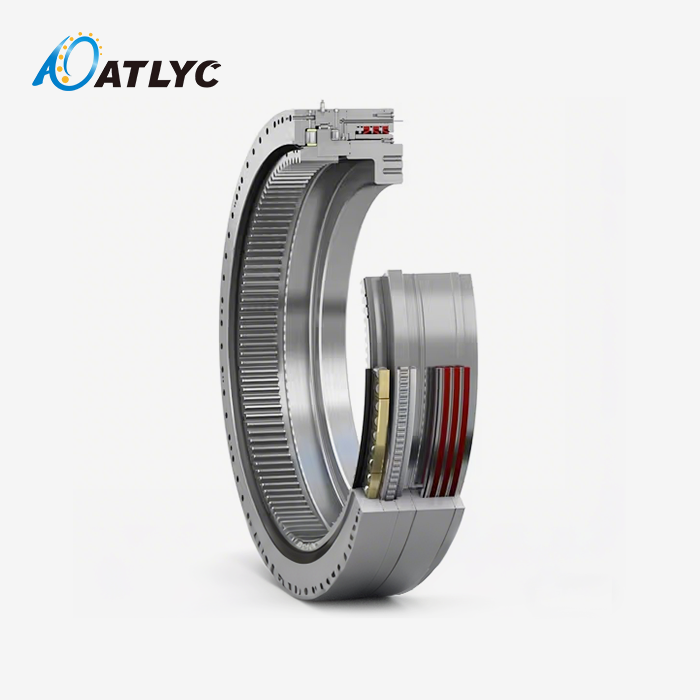
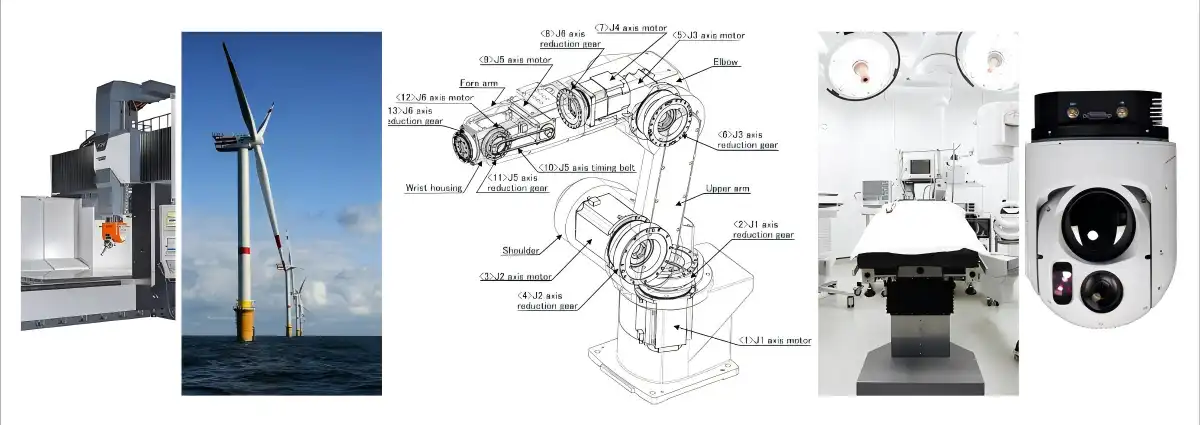
It is important to know the load ability of precision bearings that will be used in mission-critical situations. The Cross roller bearing RA series is unique because it is very thin and very stiff. It was designed to work in tight spaces where radial, axial, and moment loads all come together at the same time. In this series, cylindrical rollers are grouped orthogonally at 90-degree angles within V-groove raceways. Spacers are placed between the rollers to prevent friction between them. With an inner ring that is split and an outer ring that is built in, these bearings offer very accurate spinning while supporting forces in multiple directions in a single small unit. In industrial robots, CNC machining centers, and medical imaging equipment, the RA series solves the problem of getting high rigidity without giving up valuable installation space. This is a problem we've seen directly as a global OEM for 15 years.
Understanding Cross Roller Bearing RA Series Load Capacity
What Load Capacity Means for Precision Bearing Performance
Load capacity tells you how much force a bearing can take before the material wears out or deforms and makes it less useful. In industrial gear, this measure has a direct effect on how long the equipment lasts, how often it needs to be maintained, and the working safety margins. The Cross roller bearing RA series can handle three different types of loads: axial forces that run parallel to the shaft axis, radial forces that go across the shaft axis, and moment loads that cause twisting stress. RA bearings' orthogonal roller design spreads these forces across multiple contact points at the same time, while traditional ball bearings need paired setups. Manufacturing data from precise grinding operations shows that the shape of the roller setup and the finish of the raceway surface (at least Ra 0.2 μm) have a big effect on how well the load is distributed. The type of material used is also important. For example, heat treating Gcr15 and Gcr15SiMn chromium steels to 58–62 HRC gives them the best strength and wear resistance.
Reading Load Capacity Charts Correctly
There are two important scores on load capacity charts: steady load capacity (C0) and dynamic load capacity (C). Static ratings are based on the highest amount of contact stress that can happen before lasting deformation occurs. They are used for uses that stay still or slowly move back and forth. Dynamic rates are based on fatigue life tests done under normal conditions and are used for activities that are always turning. Each RA type, which has inner diameters ranging from 20 mm to 350 mm, has a different load limit that matches its size. Axial, radial, and moment load limits are usually shown on charts in Newtons (N) or Newton-meters (Nm), along with basic dynamic load rates and limiting speeds. Professionals in procurement should compare application forces to chart values and add safety factors of 1.5 to 3.0, based on the working conditions.
Factors Shaping RA Series Load Handling
Bearing shape determines how well a load line works. Cross roller bearing RA series. The RA series keeps the contact angle between the roller and the track at 45 degrees, which makes the best use of power distribution in both the radial and axial directions. The effective length and width ratio of the rollers affects where the contact stress is concentrated. Longer rollers spread loads more widely, but they make the bearing less compact. The uniformity of the preload depends on how precisely the parts are made. Our IATF 16949-certified production lines keep the axial runout of P5-grade units to within 5 microns. Material that is the same hardness throughout the raceway depth prevents subsurface wear, and surface processes like carbonitriding make it last longer in dirty settings. Temperature stability is also important. The Gcr15SiMn metal keeps its shape up to 150°C, which stops preload loss during the thermal cycle that happens a lot in automated production lines.
Calculation Formula for Cross Roller Bearing RA Series Load Capacity
Static Load Rating Calculation Methodology
To figure out a static load capacity, you need to use the formula C0 = f0 × i × Z × Lwe × Dwe. Here, f0 is a geometry-dependent factor (usually 44 for line contact), i is the number of roller rows, Z is the number of loaded rollers, Lwe is the effective roller length, and Dwe is the roller diameter. The Cross roller bearing RA series usually uses single-row layouts, and the number of rollers varies by bearing size. For example, a RA8008 model has about 40 rollers, while a RA18013 model has about 72. The stress is spread out at the ends of the rollers, so the effective roller length takes the bevel measurements away from the total length. The maximum allowable contact stress depends on the qualities of the material. For example, chromium steel can handle about 4,200 MPa for static uses. When the application Cross roller bearing RA series loads go over 50% of the C0 grade, the chance of lasting deformation goes up by a factor of ten.
Dynamic Load Rating and Service Life Estimation
Using L10 = (C/P)^p × 10^6 turns to figure out a bearing's fatigue life when it's spinning, where C is the bearing's basic dynamic load capacity, P is its equivalent dynamic load, and p is 10/3 for roller bearings. The equation for equivalent load mixes radial (Fr), axial (Fa), and moment (M) components: P = X × Fr + Y × Fa + Z × M. The values X, Y, and Z are based on load distribution factors that are unique to the RA geometry. To find out how long a bearing will last in a robotics joint that is under 1,500N of radial load, 800N of axial load, and 120Nm of moment, you would have to use exact coefficients. To turn L10 into working hours, divide the number of spins by the speed (RPM) and add 60 minutes. This is an important step for planning maintenance. Changes need to be made because of the environment. In the field, we've seen that contamination or poor lubrication cuts estimated life by 30 to 70 percent in aftermarket uses.
Practical Calculation Example for CNC Rotary Tables
Take a look at a CNC rotating table that needs a Cross roller bearing RA series model with a 150mm shaft width and the ability to work at 100 RPM with 3,000N of radial force, 1,200N of axial force, and 85Nm of tilting moment. We choose RA15013 (150mm inside diameter, 210mm outside diameter, 13mm width) and set C0 = 27,500N and C = 19,800N. Then, we use load factors X=0.6, Y=0.5, and Z=0.012 (which are normal for RA shape) to get P = (0.6 × 3,000) + (0.5 × 1,200) + (0.012 × 85,000) = 1,800 + 600 + 1,020 = 3,420N. Life expectancy is calculated as L10 = (19,800/3,420)^3.33 × 10^6 = 142 million turns, which is about 23,700 hours of operation at 100 RPM. This figure is based on the idea that there is good lubrication and no contamination. These are things that our expert team stresses to customers when they meet with them.
Common Calculation Pitfalls to Avoid
Misusing load factors is one of the most common mistakes people make. Life expectations are 40–60% too high when ball bearing factors are used instead of roller-specific values. When engineers enter moment values directly without scaling by the right geometric constants—moment arms change with bearing pitch diameter—this is called neglecting moment load conversion errors. Temperature effects are often forgotten; working temperatures above 100°C make materials less hard, which means they can't hold as much weight for every 50°C rise. When you think about shock loads and shaking, you need to think about peak loads instead of normal loads. For example, in pneumatic actuators, impact forces can be 3–5 times steady-state loads. Before confirming an order, our technical support team always checks the customer's figures to find mistakes like these that could cause the system to fail early.
Key Specifications and Design Features Influencing Load Capacity
Structural Design Elements Enhancing Rigidity
The RA series is different from other types of bearings because of its roller arrangement. When cylindrical rollers are positioned 90 degrees perpendicular to the raceways, they make four-point contact patches that push loads in both the axial and radial directions at the same time. Keeping spacers between neighboring rollers stops skewing and the production of frictional heat, which keeps the dimensions stable even when the machine is rotating continuously. The split inner ring design makes it easier to place onto shafts without taking apart nearby parts, which is useful for robotic arm retrofits where entry to the workspace limits maintenance tasks. Outer ring integration gets rid of the tolerance stack-up problems that come with designs with more than one piece. This makes the runout accuracy better to within 10 microns on P4-grade precision classes. Brass metal or engineered resin materials are used to build cages. Brass is better at transferring heat in high-speed situations, while resin is lighter in aircraft settings where weight reduction is important.
Dimensional Standards and Size Range Coverage
The inner widths of the sizes range from 20mm (RA5008) to 350mm (RA35040), so they can fit a wide range of shaft sizes in industrial equipment. The width can be anywhere from 12mm to 45mm, and thinner shapes allow for more compact joint designs in medical scanners and shared robots. Standardized spacing is used for mounting hole patterns, but custom drilling can fit unique machine designs. We've used this freedom to help car OEMs who need bolt circles that the Cross roller bearing RA series isn't standard. Tolerance grades go from P0 (normal precision) to P2 (ultra-precision). Tighter tolerances cost 25–40% more, but they are worth it because they make load capacity more regular. Bearing weight goes up with size; a RA8008 weighs about 0.35 kg, and a RA18013 weighs about 1.8 kg. Transport and handling methods need to be changed to fit. For example, when opening bigger models, they need to be carefully lifted so that the inner rings don't come apart.
Procurement Insights for Cross Roller Bearing RA Series
Global Supply Landscape and Brand Positioning
Japanese companies like IKO, NSK, and KOYO have been in the precision bearing market for decades and have built a reputation for quality through decades of supplying cars and robots. European companies like SKF and Schaeffler (INA/FAG) put a lot of effort into building customization and expert support networks that reach all Western markets. These brands usually charge 40–70% more for Cross roller bearing RA series units than Chinese makers do. They can do this because they offer tighter tolerance guarantees and faster shipping through regional stores. Since 2015, IATF 16949 approval and changes to CNC grinding equipment have helped Chinese bearing makers, including our company, Luoyang Auto Bearing, close the quality gap by a large amount. Independent tests show that our P5-grade Cross roller bearing RA series has the same runout accuracy as Japanese P4 versions, but costs 35–50% less. More and more, procurement managers are using dual-sourcing methods, which means they choose high-end names for prototypes and switch to cheaper Chinese suppliers for mass production.
Critical Procurement Factors Beyond Unit Price
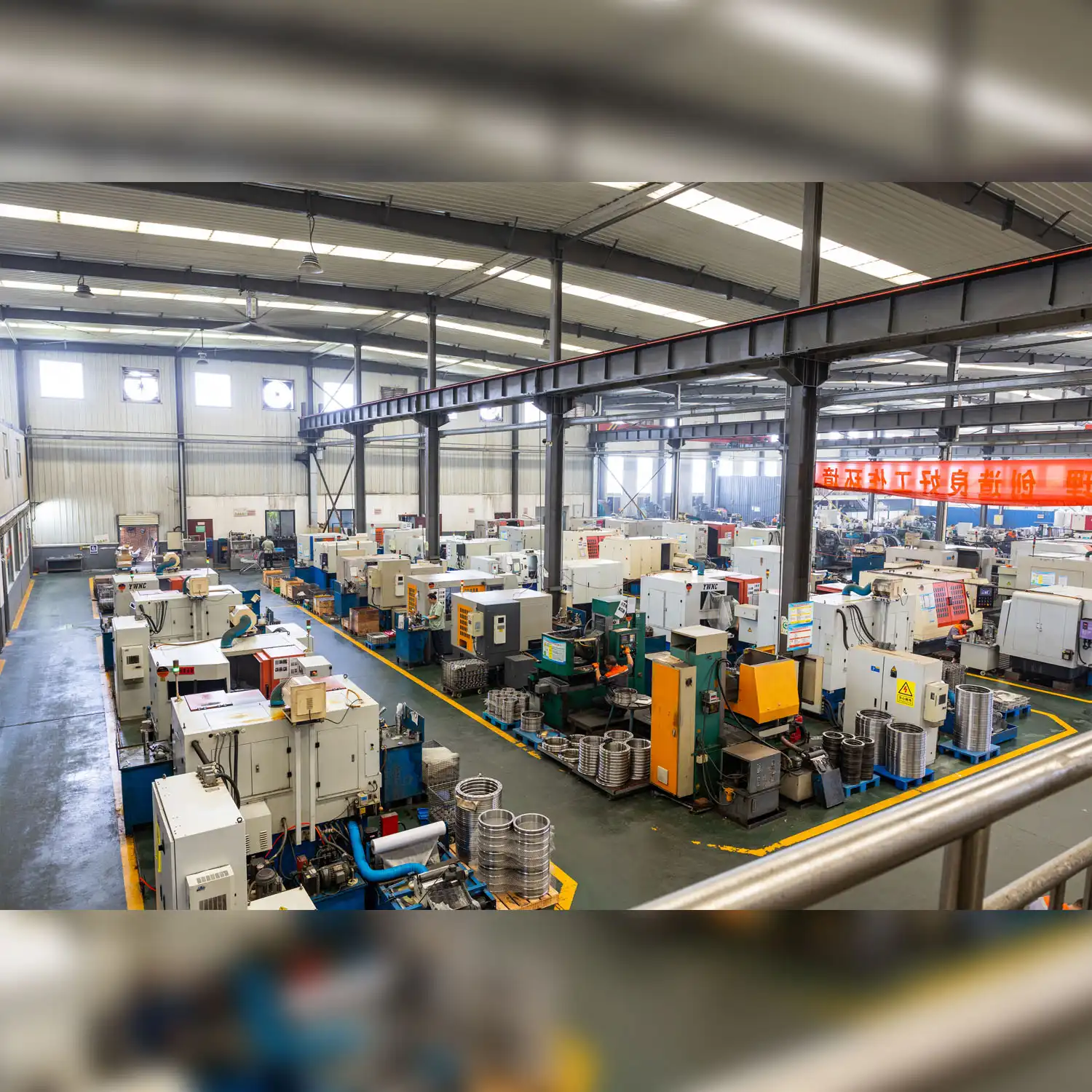
Lead times are very different between providers. Japanese makers say it will take 8–12 weeks for normal RA models and 16–20 weeks for custom sizes. These lead times make it hard to meet project deadlines in the robotics market, which changes quickly. Our six production workshops allow for standard deliveries in 4 to 6 weeks and custom orders in 8 to 10 weeks. North American automation installers value this responsiveness edge the most. Minimum order numbers (MOQs) affect the total cost of buying something. For smaller OEMs, European sellers often apply 50–100 unit MOQs that make it more expensive to keep inventory on hand. We can meet MOQs of 10 units for regular sizes because we know that prototype projects turn into large orders as goods get better. Payment terms affect planning for cash flow. For example, when we buy from foreign sellers, letter of credit requirements tie up working capital. But for our regular customers, we offer net-30 or net-60 terms after the original order qualification. When application questions come up, being able to get technical help quickly is very important. For example, Asian providers that serve American customers may take longer to respond because of time zone differences. Cross roller bearing RA series while our engineering team's business hours cross with those of the US East Coast procurement offices.
Volume Pricing Strategies and Negotiation Approaches
When you buy 100, 500, or 1,000 units, you usually get a quantity break, which gives you 8–12%, 15-20%, or 22–28% off the price of a single unit. Annual blanket purchase orders get better prices, no matter how many items are released at a time. This system helps OEMs whose production plans often change. Commodity price indexing protects against changes in the price of steel; contracts worth more than $50,000 a year can include price changes every three months that are tied to public Gcr15 steel rates. Carrying costs are passed on to suppliers through consignment inventory arrangements, which ensure just-in-time availability. We've used this model with three automobile tier-one suppliers that need to send goods to assembly plants every week. Adding technical value to a deal makes it easier to negotiate. For example, giving application engineering support, personalized test reports, or failure analysis services makes a plan stand out from others that are just competing on price. Procurement pros should ask for specific cost breakdowns that separate the parts of the price that are for materials, processing, and markup. This kind of transparency helps with negotiations and builds trust for long-term relationships.
Shipping Logistics and After-Sales Support Considerations
International shipping adds a level of difficulty to purchases made in the United States. Shipping goods by sea from Chinese ports to US West Coast terminals takes 18 to 25 days, plus 5 to 7 days for customs clearance. This means that you need to plan for extra inventory. Air freight speeds up delivery to 5–7 days, but it costs an extra $4–8 per kilogram, so it's only worth it for urgent repairs or samples that will only be made in small numbers. Strong packaging keeps things from getting damaged in shipping. Our bearings come in individual plastic sleeves inside partitioned boxes, padded with foam inserts that can withstand 3-meter drops. Clearance delays can be avoided by making sure that all customs paperwork is correct. We provide business invoices, packing lists, and Harmonized Tariff Schedule classifications (usually 8482.50.00 for cylindrical roller bearings) that have been checked by licensed customs agents. After-sales help is what sets providers apart when bearings break. Our guarantee covers production flaws for 18 months after shipment, and within 72 hours of receiving a returned sample, failure analysis services will find the root causes. After the guarantee is approved, new parts are sent out via fast courier within 48 hours. This quick response time keeps production costs as low as possible, often being 10–20 times lower than the cost of bearing replacement.
Conclusion
Learning how to evaluate the load capacity of the Cross roller bearing RA series changes the buying process from a one-time event to a planned process of optimizing equipment. This book has taken the mystery out of math formulas, how to understand specifications, and how to choose a seller. These things have a direct effect on how well machinery works and how much it costs to own. As manufacturing gets more complicated with robots, CNC cutting, and medical equipment, choosing the right bearings needs to be done with the right amount of technical precision. The RA series offers unmatched load handling in extremely small packages, overcoming engineering problems that stop innovation in designs with limited room. Achieving procurement success depends on finding the right balance between quality certifications, reliable shipping, and technical support. This is where well-established Chinese makers can now compete effectively with premium names that have been around for a long time. Bearing solutions backed by ISO 9001 and IATF 16949 quality systems, along with quick expert partnerships that cut down on project timelines, are what your equipment needs.
FAQ
1. How Do I Interpret Load Capacity Charts for Specific Applications?
Three important numbers are shown on load capacity charts: the basic static load rating (C0), the basic dynamic load rating (C), and the stopping speeds. Compare the radial force, axial force, and moment load values in your application to the values shown on the chart. For an infinite life expectancy, make sure that the real loads stay below 50% of the static rate. Dynamic rates are used when bearings are constantly turning; to figure out the corresponding load, use the factors found in technical catalogs.
2. What Service Life Can I Expect Under Maximum Rated Load?
When the dynamic load capacity (C) is at its highest, the bearing has an L10 life of about one million turns, which is when 10% of bearings fail due to wear. Because load and fatigue life are related in a cubic way, lowering the operating load to 50% of the rate makes the theoretical life last for 10 million revolutions. The actual service life depends on how well the parts are oiled, how dirty they are, and how well they were installed.
3. Are Customization Options Available for Special Load Conditions?
Custom changes can include different preload values, unique seal setups, coatings that prevent corrosion, and mounting hole shapes that aren't standard. Customization usually takes 8–10 weeks and needs at least 50–100 units, but this depends on how complicated the change is. With engineering models and application requirements, it is possible to get accurate quotes for custom bearing solutions that can handle different load patterns.
Partner with ATLYC for Reliable Cross Roller Bearing RA Series Supply
ATLYC has been making high-quality precision bearings for 15 years and can help you with your most difficult tasks. Our Cross roller bearing RA series blends quality systems that are ISO 9001 and IATF 16949 approved with low prices that cut the cost of your parts by 30 to 50 percent compared to high-end imports. We offer normal wait times of 4 to 6 weeks and quick technical support that works with your engineering plans to automation integrators, CNC makers, and medical equipment OEMs all over North America. Our six specialized workshops make bearings that meet P5 and P4 precision grades. All of the materials used are fully traceable, which meets strict standards for purchasing. As a reliable Cross roller bearing RA series maker, we offer 10-unit minimum orders that give you the freedom to make prototypes, volume savings that start at 100 units, and the ability to customize your order to fit your specific load conditions. Email our engineering team at auto@lyautobearing.com to talk about the needs of your particular application, ask for load capacity calculations, or get full quotes. We want to be your long-term partner by providing steady quality, on-time delivery, and technical knowledge that speeds up the success of your project. Get in touch with ATLYC today to see what makes them different in the sale of precision bearings.
References
1. Harris, T.A. & Kotzalas, M.N. (2006). Advanced Concepts of Bearing Technology: Rolling Bearing Analysis, Fifth Edition. CRC Press, Taylor & Francis Group.
2. ISO 76:2006. Rolling Bearings — Static Load Ratings. International Organization for Standardization, Geneva, Switzerland.
3. Weck, M. & Brecher, C. (2006). Machine Tools Production Systems 2: Design and Calculation. Springer-Verlag Berlin Heidelberg.
4. Budynas, R.G. & Nisbett, J.K. (2015). Shigley's Mechanical Engineering Design, Tenth Edition. McGraw-Hill Education.
5. THK Co., Ltd. (2020). Cross Roller Bearings Technical Catalog: Design and Application Guidelines. THK Technical Support Division.
6. Palmgren, A. & Lundberg, G. (1952). Dynamic Capacity of Rolling Bearings. Acta Polytechnica Mechanical Engineering Series, Royal Swedish Academy of Engineering Sciences.
Learn about our latest products and discounts through SMS or email