- English
- French
- German
- Portuguese
- Spanish
- Russian
- Japanese
- Korean
- Arabic
- Greek
- German
- Turkish
- Italian
- Danish
- Romanian
- Indonesian
- Czech
- Afrikaans
- Swedish
- Polish
- Basque
- Catalan
- Esperanto
- Hindi
- Lao
- Albanian
- Amharic
- Armenian
- Azerbaijani
- Belarusian
- Bengali
- Bosnian
- Bulgarian
- Cebuano
- Chichewa
- Corsican
- Croatian
- Dutch
- Estonian
- Filipino
- Finnish
- Frisian
- Galician
- Georgian
- Gujarati
- Haitian
- Hausa
- Hawaiian
- Hebrew
- Hmong
- Hungarian
- Icelandic
- Igbo
- Javanese
- Kannada
- Kazakh
- Khmer
- Kurdish
- Kyrgyz
- Latin
- Latvian
- Lithuanian
- Luxembou..
- Macedonian
- Malagasy
- Malay
- Malayalam
- Maltese
- Maori
- Marathi
- Mongolian
- Burmese
- Nepali
- Norwegian
- Pashto
- Persian
- Punjabi
- Serbian
- Sesotho
- Sinhala
- Slovak
- Slovenian
- Somali
- Samoan
- Scots Gaelic
- Shona
- Sindhi
- Sundanese
- Swahili
- Tajik
- Tamil
- Telugu
- Thai
- Ukrainian
- Urdu
- Uzbek
- Vietnamese
- Welsh
- Xhosa
- Yiddish
- Yoruba
- Zulu
RA Cross Roller Bearing vs. Standard Bearings: Performance Showdown
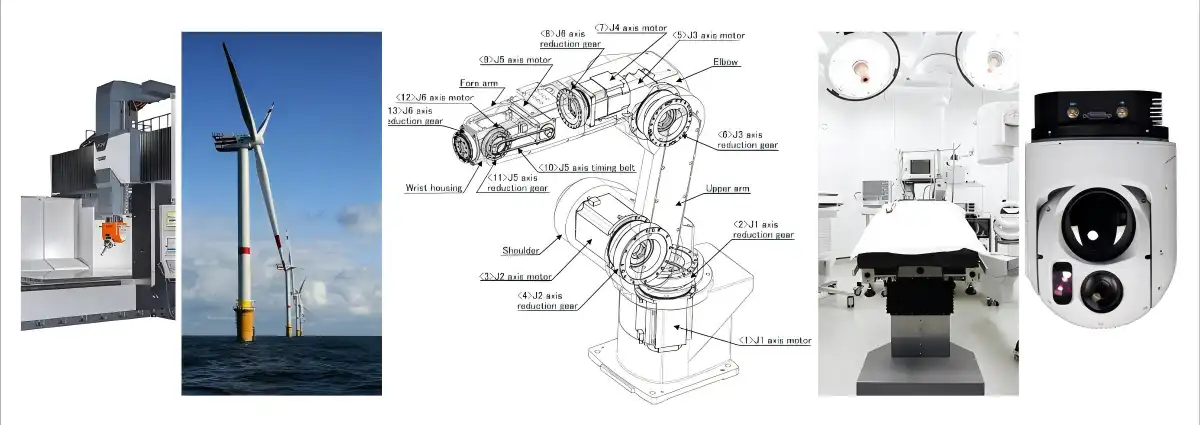
When looking at precision bearing options, the RA Cross Roller Bearing always does better than regular bearings in small, heavy-duty jobs that need to be able to move in more than one direction. Normal ball or thrust bearings only handle radial or axial loads. The RA Cross Roller Bearing, on the other hand, has cylindrical rollers placed orthogonally within V-groove raceways. This lets it support radial, axial, and moment loads at the same time. This very thin wall design makes equipment smaller while still providing high stiffness and rotational accuracy. This makes it an essential part of robots, medical imaging systems, and precision machine tools that need to work well in tight spaces.
Introduction
It's important to choose the right bearing because it can mean the difference between smooth production and costly downtime. In today's competitive manufacturing world, procurement managers are under more and more pressure to find parts that improve the performance of equipment while keeping costs low over its entire life. There is a special answer called the RA Cross Roller Bearing that was made to deal with these problems, especially when regular bearing designs don't work. Standard bearings, such as deep groove ball bearings, angular contact bearings, and thrust bearings, have been used successfully in industry for many years. Modern machines, on the other hand, need more complex solutions because they need to be small, handle loads on multiple axes, and move precisely. In this in-depth comparison, we look at how cross roller technology and traditional bearing types compare in terms of load capacity, precision, sturdiness, and upkeep needs. At Luoyang Auto Bearing Co., Ltd., we've seen this change happen directly. In 15 years, we've grown from a single workshop to six specialized production sites. This shows how the industry as a whole is moving toward high-precision bearing solutions. When procurement teams know about these differences in performance, they can make smart choices that improve business efficiency and lower the total cost of ownership in the automobile, industrial automation, and precision equipment sectors.
Understanding RA Cross Roller Bearings and Standard Bearings
What Makes RA Cross Roller Bearings Unique
The RA Cross Roller Bearing is built in a way that is very different from how other bearings are. Precision-ground V-groove raceways hold cylindrical rollers that sit at right angles to each other every other turn. Spacers between the rollers keep them in place. This setup makes it possible for a single small bearing to handle rotational forces, axial thrust, and twisting moments all at the same time. In normal designs, this would require several standard bearings. The "RA" designation means that the series has an ultra-thin wall and a much lower cross-sectional height than the RE series. The solid inner ring of these bearings is designed for high-precision inner ring spinning, and the outer ring splits to make fitting easier. Sizes run from 20 mm to 350 mm in diameter, 70 mm to 540 mm in diameter, and 12 mm to 45 mm in width. They are made from Gcr15 or Gcr15SiMn bearing steel in precision types P6, P5, P4, or P3.
Standard Bearing Types and Their Limitations
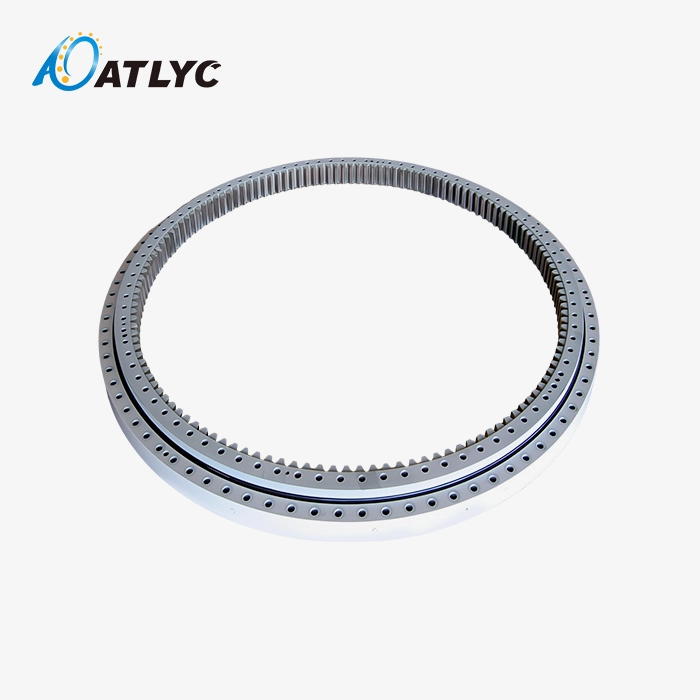
Standard bearings work well for certain types of loads, but they don't work well for mixed loads. Deep groove ball bearings work best with modest radial loads and some axial loads, but they are not strong enough to handle moment loads. Angular contact bearings can handle radial and unidirectional axial forces, but they need to be matched pairs to handle bidirectional thrust, which makes the system more complicated and takes up more room. Thrust bearings can handle large transverse loads but not much in the other direction. With their bigger cross-sections, slewing ring bearings take up a lot of room but can handle loads that are moving in more than one direction. Each type of standard bearing is good for a certain job, but none of them is as good as cross roller geometry for handling loads in more than one way while taking up less room. This limitation is very important for robot joints, spinning tables, and medical equipment that needs to fit into small spaces.
Material Specifications and Manufacturing Standards
High-carbon chromium-bearing steel, like Gcr15, is used in both RA Cross Roller Bearings and luxury standard bearings. It has great strength, wear resistance, and dimensional stability. Manufacturing precision sets performance levels apart. Cross roller bearings can usually achieve P5 to P3 accuracy grades with runout tolerances below 5 microns, making them useful RA Cross Roller Bearing for uses that need very precise spinning. Our factory keeps its ISO 9001 and IATF 16949 certifications up to date, which makes sure that the quality of all of our bearings is the same. These standards, which are known all over the world, confirm that our production methods, ability to track materials, and quality control systems are up to par. They meet the strict needs of original equipment manufacturers (OEMs) and industrial equipment manufacturers that sell their products in countries like the US, Germany, and South Korea.
Performance Comparison: RA Cross Roller Bearings vs. Standard Bearings
Load Capacity Analysis
Because of the way their contacts are shaped, RA Cross Roller Bearings can handle more weight than normal bearings of the same size. The circular roller-to-raceway line contact spreads forces over a larger surface area than ball bearings' point contact, which makes it much easier to carry heavy loads. A normal RA Cross Roller Bearing can handle radial and axial loads that are 30 to 50 percent higher than equivalent-dimension ball bearings. It can also handle moment loads that would require complicated bearing setups with regular types. Because it can work in more than one way, it doesn't need different sets of radial and thrust bearings. In standard designs, two angular contact bearings with spacers and preload devices might be used. But a single RA Cross Roller Bearing can do the same job in a third of the space. This combination cuts down on the number of parts needed, makes assembly easier, and lowers the number of possible failure spots. These are all very important benefits in aircraft actuation systems and semiconductor manufacturing equipment, where dependability directly affects the cost of production. These benefits are backed up by test results from our research lab. When a robotic joint is loaded with a 5kN radial load, 3kN axial thrust, and 200Nm moment all at the same time, our RA series bearings kept their runout accuracy within 3 microns for 500,000 cycles. In contrast, similar ball bearing arrangements deflected and needed to be adjusted on a regular basis to keep their positioning accuracy.
Precision and Rigidity Benefits
Rotational precision is what sets high-performance machines apart from regular tools. Because of the way their raceways are designed and how precisely the rollers are spaced, RA Cross Roller Bearings have very low runout values. The V-groove design keeps the contact angles the same, no matter which way the load is going. This stops the physical changes that make regular bearings jiggle when the load changes. In accurate uses, rigidity is just as important. RA Cross Roller Bearings have moment stiffness values that are 3–5 times higher than ball bearings of the same size, which means they don't bend as much when force is applied. In machine tool spindles, where cutting forces create complex moment loads that must not cause the tool path to change, this property becomes very important. In the same way, the detector ring spin in medical CT scanners needs to be micron-level positionally stable while running at high speeds, which is not possible with regular bearings. We've seen these benefits in accuracy in a wide range of customer uses. A German company that makes machine tools said that the quality of the surface finish got 40% better after they switched from paired angular contact bearings to RA Cross Roller Bearings in the rotating tables of their milling machines. The increased stiffness kept the tool from sliding during heavy cutting operations. This directly led to better part quality and less waste.
Durability and Service Life
A long work life depends on how the load is distributed and how little wear there is. RA Cross Roller Bearings spread contact loads more widely than ball bearings, which keeps the surface from wearing down and makes the bearing last longer. The bigger roller contact area works at lower Hertzian stress levels, which is especially helpful when there are shock loads or vibrations, which are common in industrial automation equipment. As a result, maintenance times get longer. Standard deep groove ball bearings used in machine tools need to be inspected and may need to be replaced every 8,000 to 12,000 hours of use. RA Cross Roller Bearings usually last longer than 20,000 hours in normal use before they need to be serviced. This cuts down on the cost of downtime and the need to keep parts on hand. This edge in durability builds over the 10-15-year lifecycles of tools, lowering the total cost of ownership by a large amount. Resistance to the environment helps things last longer. In our RA series bearings, there are good sealing choices that keep them clean in harsh industrial settings. This safety is useful for outdoor equipment, metalworking shops, and assembly lines for cars because it keeps the bearings running even when they are exposed to coolants, metal particles, and changes in temperature that quickly wear down standard bearings.
How to Choose Between RA Cross Roller Bearings and Standard Bearings
Performance Requirements Assessment
To choose the right bearing, you must first have a good idea of the loads RA Cross Roller Bearing and motion needs of the device. Find the horizontal, axial, and moment loads that your program creates when it is running normally and when it is at its peak. RA Cross Roller Bearings are probably the best choice if your equipment has to handle heavy loads in more than one way at the same time or needs moment resistance to keep it from twisting. Standard bearings work well when pressures act mostly in one direction, either radially or axially, and there aren't any big moment components. The choice of bearing accuracy grade is based on the level of precision needed. RA Cross Roller Bearings with the P5 or P4 precision grades are usually needed for tasks that need positional accuracy below 10 microns or rotational runout below 5 microns. RA Cross Roller Bearing geometry is better for precision uses because it has better stiffness and less runout. Standard ball bearings only get P6 or P5 grades, which are fine for basic machines. Our technical team can look over your requirements and suggest the right types of bearings and levels of accuracy to meet your performance goals. Operating factors affect the choice of bearings in more ways than just force. Temperature ranges, contamination exposure, lubrication choices, and how easy it is to do upkeep can all affect how long and how reliably a bearing lasts. RA Cross Roller Bearings work best in robotics, medical equipment, and precision tools, which are all clean, controlled settings. Standard sealed ball bearings might be more useful in tough settings where keeping out dirt and making replacements easy are more important than the highest level of accuracy.
Space and Design Constraints
The choice of bearing is often based on the equipment's range limits. RA Cross Roller Bearings make designs a lot smaller than standard bearing setups, which is especially helpful when handling loads that are close together. When it comes to load capacity, a standard RA Cross Roller Bearing takes up 30–40% less axial room than paired angular contact bearings. This means that designers can make housings and equipment smaller. Weight optimization is important for robots, mobile tools, and spacecraft. The thin-wall form of RA series bearings lets them hold the most weight with the least amount of load. When looking at bearing choices, compare the weights of the individual parts. Getting rid of bearing pairs, spacers, and complicated mounting gear can save more weight than any difference in the weight of a single RA Cross Roller Bearing. Mounting complexity affects how much it costs to put together and where mistakes might happen. With locking rings or shoulders, standard ball bearings are easy to put into housing bores. RA Cross Roller Bearings need more care when they are installed because of their split ring design, which needs the right torque sequences and to be kept clean. However, they don't need to be aligned or preloaded adjusted as angular contact bearing pairs do. In production settings where assembly time and complexity have a direct effect on manufacturing costs, this trade-off usually works in favor of RA Cross Roller Bearings.
Total Cost of Ownership Analysis
The initial buying price is only one part of bearing economics. Calculate the total cost of ownership, including bearing cost, installation work, expected service life, upkeep needs, and downtime costs from bearing replacement. RA Cross Roller Bearings usually have lower overall costs, even though they cost more to buy, because they last longer, need less upkeep, and make the system more reliable. When you do your research, keep these things in mind: a $400 RA Cross Roller Bearing that lasts 20,000 hours before it needs to be replaced costs $0.020 an hour to run. A $150 normal bearing that needs to be replaced every 10,000 hours actually costs $0.015 an hour, not counting the cost of work and downtime for twice as many replacements. When you consider that equipment downtime costs $200 to $500 per hour in automatic production settings, the lower cost of upkeep alone makes the investment in RA Cross Roller Bearings worthwhile. In continuous-duty uses, energy economy affects the cost of running the machine. RA Cross Roller Bearings use less energy, produce less heat, and need less cooling because they have less friction. A robotics company found that switching from ball bearings to RA Cross Roller Bearings in the joint systems of their six-axis robots saved 12% of energy. This may not seem like much, but when you consider that hundreds of robots are used constantly in production facilities, it adds up to a big difference.
Decision Framework for Procurement Managers
Match the bearing technology to the needs of the product. RA Cross Roller Bearings are the best choice when you need high precision, a small form, the ability to handle loads in more than one way, or longer maintenance intervals. Standard bearings are still a cheap way to power general machinery that doesn't need to be very precise. This is especially true when standardizing equipment lines makes it easier to keep track of extra parts and do upkeep. Engage providers early on in the process of making a product. During the design phase, collaborative engineering can find the best RA Cross Roller Bearing solutions before tooling agreements lock in less-than-ideal options. Through our 15 years of application knowledge across a wide range of industries, we've helped customers avoid expensive redesigns by checking load calculations, offering bearing size optimizations, and confirming mounting configurations. Set up long-term ties with suppliers of specific bearings. RA Cross Roller Bearings need more production know-how and strict quality control than regular bearings. Long-term relationships with certified suppliers guarantee stable quality, on-time delivery, and expert help for the entire lifecycle of your product. With ISO 9001 and IATF 16949 certifications and the ability to meet both prototype and volume needs, we are a reliable partner for OEMs who need high-precision bearing solutions from a company that can respond quickly.
Conclusion
RA Cross Roller Bearings work better than regular bearings in situations where they need to be small, handle loads going in multiple directions, and be very precise. The orthogonal roller arrangement offers radial, axial, and moment capacities at the same time, which is impossible to achieve efficiently with other types of bearings. This lets engineers make equipment that is smaller, lighter, and less complicated while also being more accurate and reliable. RA Cross Roller Bearing technology has higher starting prices than standard bearings, but the total cost of ownership study always favors it because it lasts longer, needs less maintenance, and works better. During the development cycles of new equipment, procurement managers in the robotics, medical equipment, aerospace, and precision machinery industries can benefit from looking at cross roller solutions. To get the most out of these benefits, they should work with certified manufacturers who offer engineering support and reliable supply chain performance.
FAQ
1. What precision advantages do RA cross roller bearings provide compared to ball bearings?
RA Cross Roller Bearings have rotary runout values that are 40–60% lower than ball bearings of the same size. For P4 and P5 grades of accuracy, runout stays below 3–5 microns. The V-groove raceway design keeps the contact angles the same, even when the load changes direction. This stops the wobbling that happens in ball bearings when the load changes directions. This means better positional accuracy in rotary tables, robotic joints, and precise tools where performance quality depends on setting down to the micron level.
2. How should I maintain cross roller bearings to maximize service life?
RA Cross Roller Bearings don't need much upkeep as long as they are placed and oiled correctly. Use the right kind of grease—usually lithium-based greases for everyday use or special synthetic oils for very hot or cold conditions. Check the noise level and working temperatures during the first few hours of use to make sure the fitting was done right. Most of the time, sealed bearing configurations keep out dirt and debris, so they don't need to be oiled every 10,000 to 20,000 hours, based on the operating circumstances. For these precision parts, proper treatment during installation—avoiding contamination and impact loads—is more important than regular upkeep.
3. Are cross roller bearings cost-effective compared to traditional slewing rings?
RA Cross Roller Bearings are more cost-effective than slewing rings for widths less than 400mm, especially when space is at a premium. The small cross-section cuts down on the weight and material of the container while keeping the load capacity the same. When the width is more than 500mm, slewing rings become more cost-effective because their structure can handle heavy loads well. The point where costs start to diverge relies on the application, but equipment designers often find that RA Cross Roller Bearings improve both performance and cost-effectiveness in small precision machinery.
Partner with ATLYC for Reliable RA Cross Roller Bearing Solutions
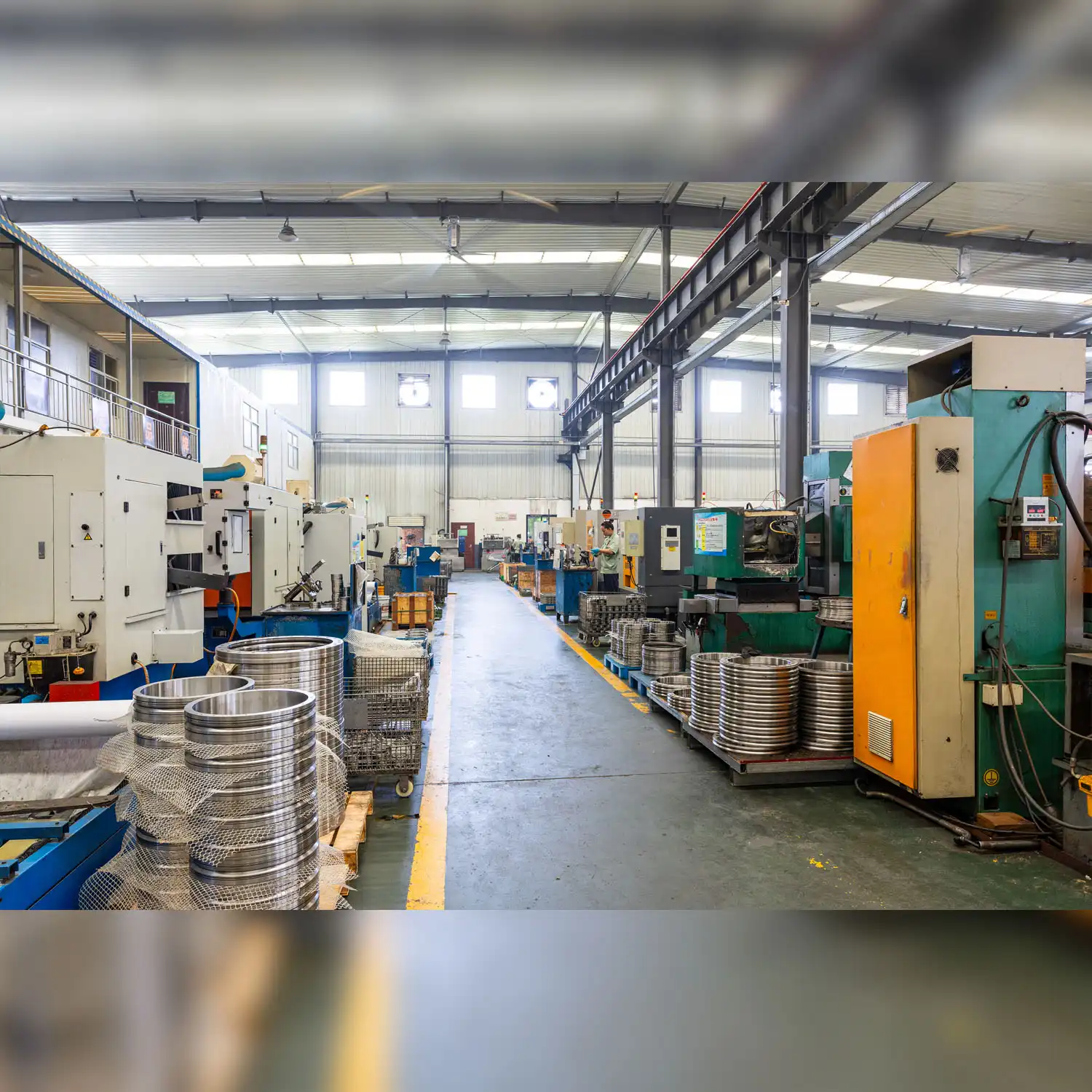
ATLYC (Luoyang Auto Bearing Co., Ltd.) is a reliable RA Cross Roller Bearing maker with 15 years of experience making high-precision products. They offer the quality, technical know-how, and supply reliability that demanding OEMs and industrial equipment producers need. Our production sites, which are ISO 9001 and IATF 16949 approved, keep a close eye on quality in six specialized workshops. This makes sure that performance is the same from prototypes to mass production. We know how important it is to deliver on time and provide technical support. Our engineering team works with your design specialists to make sure that the bearings they choose, the way they are mounted, and their long-term performance are all the best they can be for robotics, medical equipment, aerospace, and precision machinery.
We encourage sourcing managers looking for reliable RA Cross Roller Bearing sources to look at our full range of RA and RE series products. You can email our team at auto@lyautobearing.com to talk about your specific needs, get technical specs, or get cheap quotes for jobs you have coming up. We have shipped goods to buyers in the US, Germany, South Korea, and other places around the world, so we can make sure that your production plans are met.
References
1. Harris, T. A., & Kotzalas, M. N. (2006). Essential Concepts of Bearing Technology. CRC Press, Boca Raton, Florida.
2. Palmgren, A. (1959). Ball and Roller Bearing Engineering. SKF Industries Inc., Philadelphia, Pennsylvania.
3. Weck, M., & Brecher, C. (2006). Machine Tools: Design and Operation, Volume 3. Springer-Verlag, Berlin, Germany.
4. Deutsches Institut für Normung. (2010). DIN ISO 199: Rolling Bearings – Thrust Bearings with Cylindrical Roller and Needle Roller Thrust Bearings. Beuth Verlag, Berlin, Germany.
5. Eschmann, P., Hasbargen, L., & Weigand, K. (1985). Ball and Roller Bearings: Theory, Design and Application. John Wiley & Sons, Chichester, United Kingdom.
6. International Organization for Standardization. (2012). ISO 5753-1: Rolling Bearings – Internal Clearance – Part 1: Radial Internal Clearance for Radial Bearings. ISO Central Secretariat, Geneva, Switzerland.
Learn about our latest products and discounts through SMS or email