- English
- French
- German
- Portuguese
- Spanish
- Russian
- Japanese
- Korean
- Arabic
- Greek
- German
- Turkish
- Italian
- Danish
- Romanian
- Indonesian
- Czech
- Afrikaans
- Swedish
- Polish
- Basque
- Catalan
- Esperanto
- Hindi
- Lao
- Albanian
- Amharic
- Armenian
- Azerbaijani
- Belarusian
- Bengali
- Bosnian
- Bulgarian
- Cebuano
- Chichewa
- Corsican
- Croatian
- Dutch
- Estonian
- Filipino
- Finnish
- Frisian
- Galician
- Georgian
- Gujarati
- Haitian
- Hausa
- Hawaiian
- Hebrew
- Hmong
- Hungarian
- Icelandic
- Igbo
- Javanese
- Kannada
- Kazakh
- Khmer
- Kurdish
- Kyrgyz
- Latin
- Latvian
- Lithuanian
- Luxembou..
- Macedonian
- Malagasy
- Malay
- Malayalam
- Maltese
- Maori
- Marathi
- Mongolian
- Burmese
- Nepali
- Norwegian
- Pashto
- Persian
- Punjabi
- Serbian
- Sesotho
- Sinhala
- Slovak
- Slovenian
- Somali
- Samoan
- Scots Gaelic
- Shona
- Sindhi
- Sundanese
- Swahili
- Tajik
- Tamil
- Telugu
- Thai
- Ukrainian
- Urdu
- Uzbek
- Vietnamese
- Welsh
- Xhosa
- Yiddish
- Yoruba
- Zulu
RA series cross roller bearing model selection criteria for robotics applications
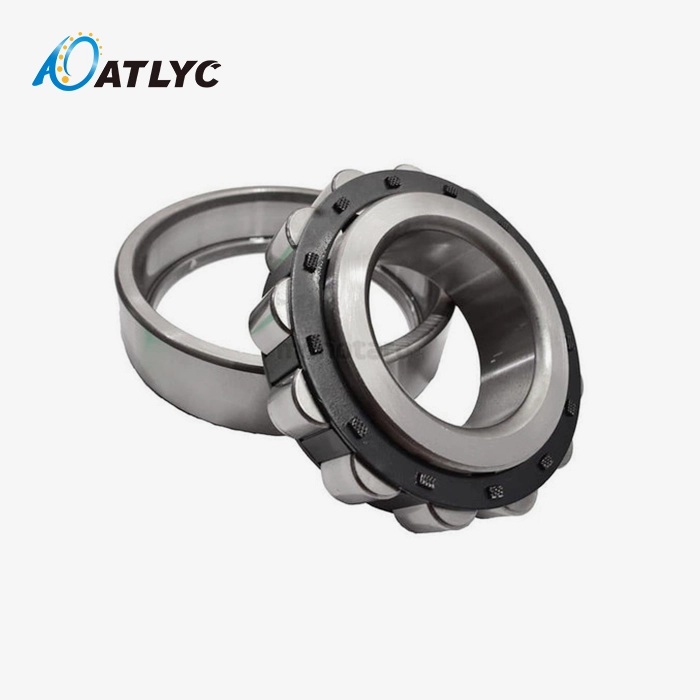
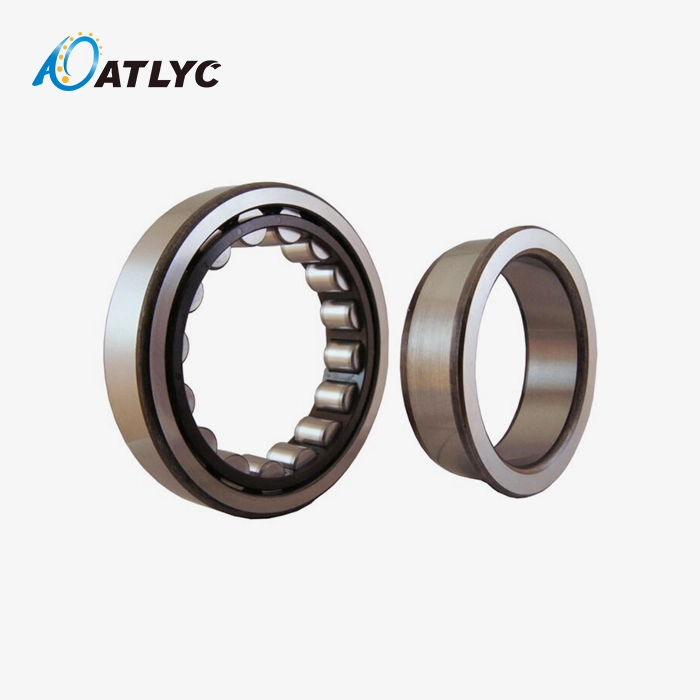
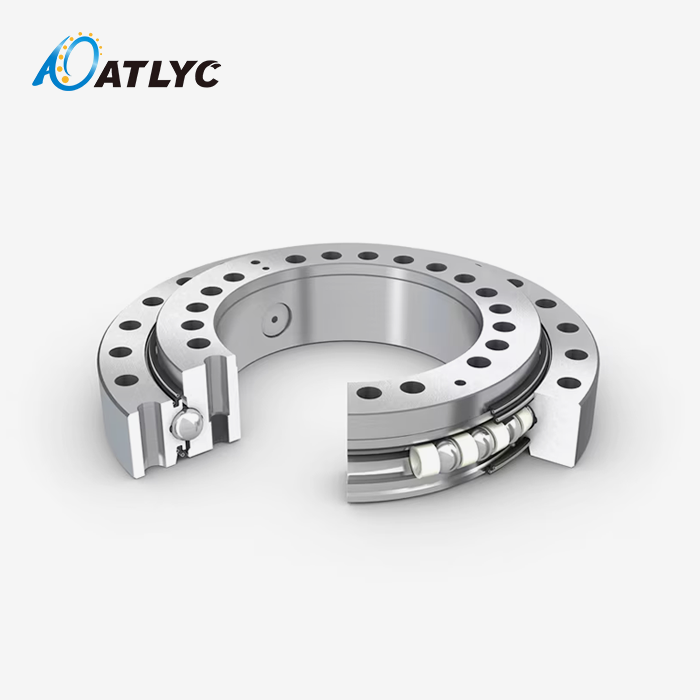
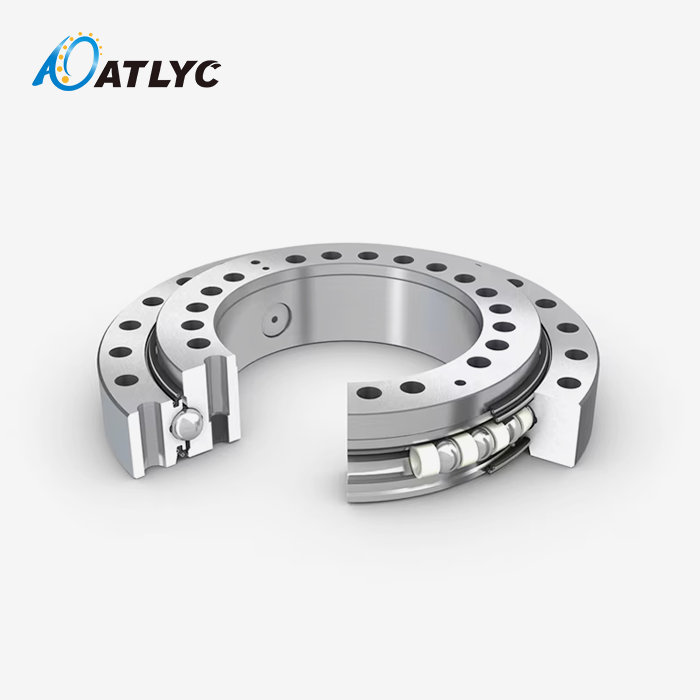
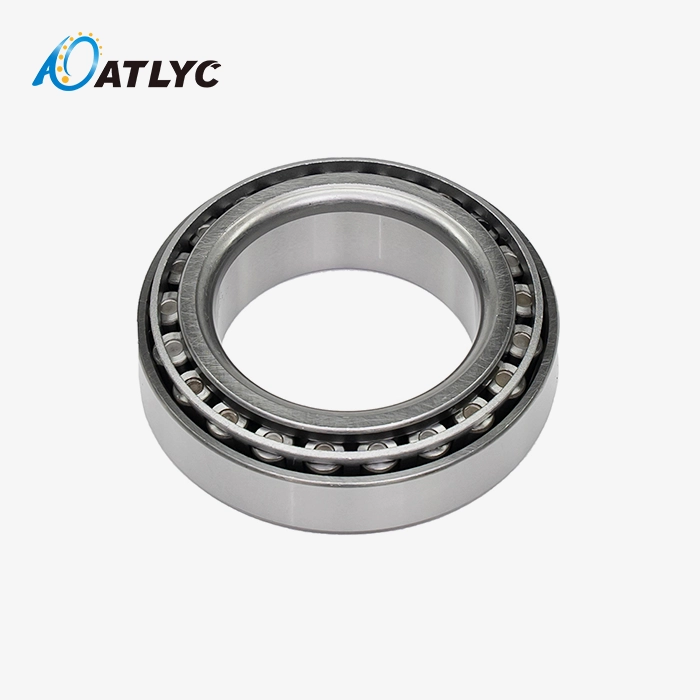
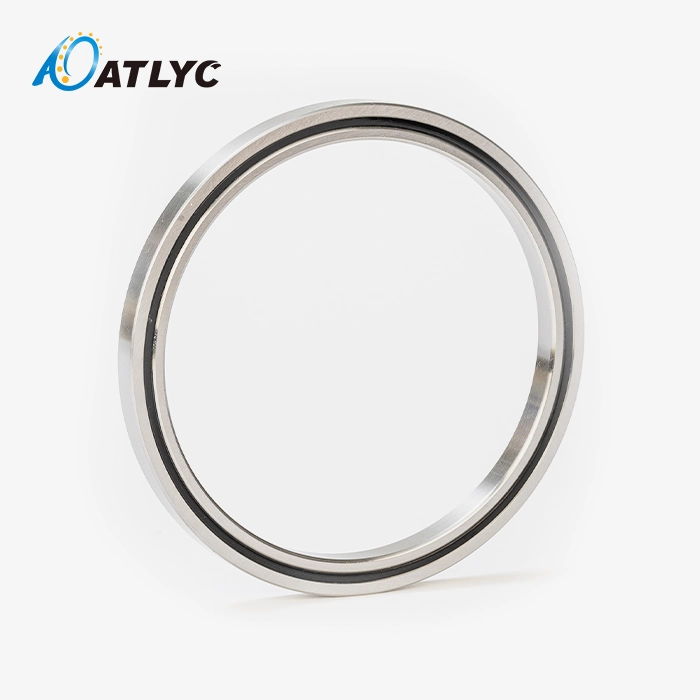
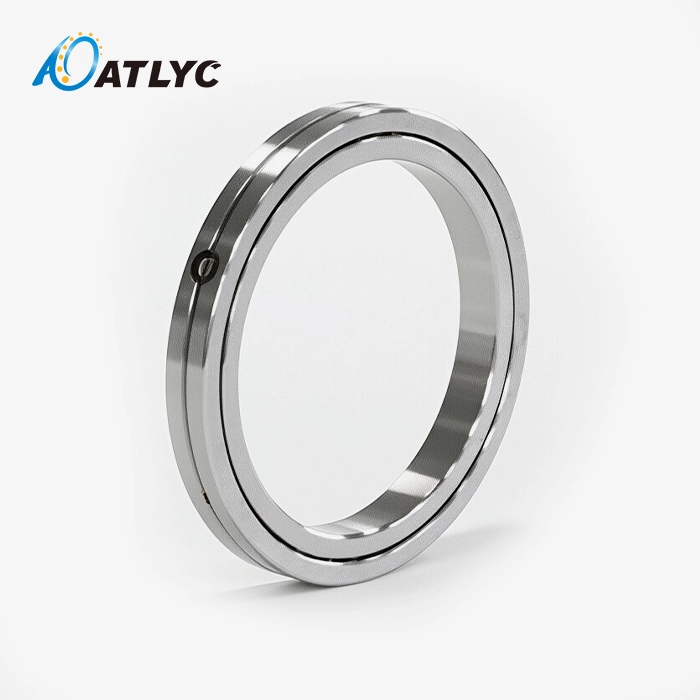
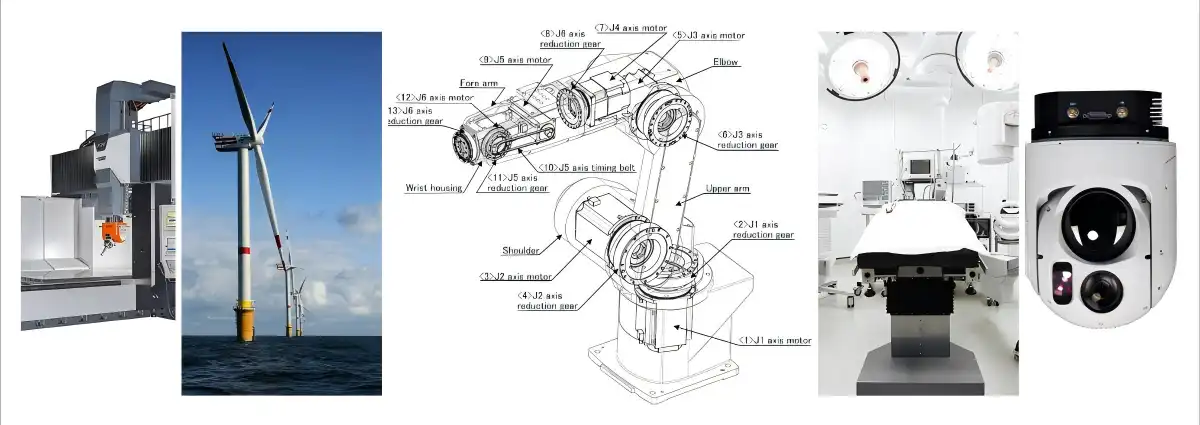
It takes more than just matching the sizes on a blueprint to find the right bearing for robots. The Cross roller bearing RA series is the best choice for robotic joints, manipulators, and precision rotary tables that need to save space, weigh less, and handle loads that can move in more than one way. This type of very thin bearing has an inner ring that is split and an outer ring that is merged. It also has cylindrical rollers that are placed 90 degrees apart and in an orthogonal pattern inside V-groove raceways. This one-of-a-kind design lets a single bearing unit handle radial, axial, and moment loads at the same time. This makes the system simpler while still providing high spinning accuracy and stiffness, which are important performance factors for industrial automation uses.
Understanding RA Series Cross Roller Bearings for Robotics
Cross roller bearings are brilliant engineering because they have an orthogonal layout of rollers that changes the way small rotational systems handle complex load patterns. Unlike regular ball bearings, which need to be paired up in order to handle combined loads, these precision components combine all of their functions into a single, small package.
Structural Design and Material Engineering
At the heart of the Cross roller bearing RA series is a unique split-ring design. The outer ring stays together, giving the structure consistency, while the split inner ring makes it easier to put together the precision-ground cylinder rollers. These rollers move back and forth at right angles to each other. Precise spacers between them keep metal from touching metal and causing wear. The V-groove shape of the track makes sure that the load is evenly spread across the roller contact areas. For material selection, high-grade bearing steels like GCr15 or GCr15SiMn are often used because they are harder, wear less easily, and keep their shape at different temperatures. Manufacturers get uniform material qualities through vacuum degassing and controlled heat treatment methods. This is necessary for keeping tight tolerances over a long service life. Surface hardening processes often go above 58 to 62 HRC, which makes the material very resistant to rolling wear.
Critical Specifications and Performance Characteristics
The RA cross roller bearing line covers a wide range of sizes to meet the needs of a wide range of robotics uses. The inside diameters range from 20 mm to 350 mm, and the outside diameters range from 70 mm to 540 mm. Section heights range from 12mm to 45mm, which is a lot less than the width of two ball bearings with the same capacity. This small shape directly solves the problem of "dead weight" in robotic joints, where every gram changes how much weight they can hold and how much energy they use. When choosing a model, you should pay close attention to the load limit specs. Static load rates tell you how much you can safely load when you're not moving or when you're slowly turning, which is common in precision positioning jobs. The dynamic load rates show the loads that can be sustained during continuous spinning, taking into account the limits of material fatigue. Because the rollers are not lined up in a straight line, these bearings can handle large rotational loads, axial loads in both directions, and moment loads all at the same time. This is an ability that can't be matched by easier bearing types. Temperatures that can be used normally are between -20°C and +80°C, but special oil can make them work in even colder places.
Comparative Advantages in Robotics Systems
When comparing the performance of one bearing option to others, the benefits become clear. Ball bearings have less friction, but they need complicated preloaded pairs to be stiff. Angular contact bearings can hold a lot of weight, but they need to be installed precisely and take up a lot of room in the housing. Large widths can be handled by slewing bearings, but they are too big to be used in flexible robot arms. The RA series has more rigidity per unit volume, which means that automatic processes can place things more accurately and repeatably. When runout standards are used to measure rotational accuracy, it usually reaches levels that are compatible with optical inspection tools and precision machining centers. Because the cylinder-shaped rollers and smooth raceways have a low friction coefficient, they need less power, which means smaller motors and less heat generation in small joint housings.
Critical Model Selection Criteria for Robotics Applications
Matching bearing specs to application needs is what makes the difference between a successful robotic system integration and one that fails early and costs a lot to fix. The selection method needs a thorough look at a lot of different technical factors.
Load Analysis and Capacity Matching
Calculating the load correctly, the Cross roller bearing RA series is the first step in choosing the right bearings. Robotic manipulators create complicated loading conditions by mixing forces from stretched arms, inertial loads during acceleration, and external forces from moving the workpiece. The engineering teams need to figure out the maximum axial loads in both thrust directions, the maximum radial loads, and the rolling moments at the bearing contact.When something keeps turning, like a rotary measuring table or a spinning tool changer, dynamic load rates become very important. The bearing's C-rating, which is usually given in kilonewtons, needs to be higher than the estimated loads by the right amount to ensure safety. This is usually 1.5x to 2x, but it depends on the duty cycle severity and the desired service life. Applications with a lot of start-stop cycles or long-term movement under load are governed by static load values. This is because roller-raceway contact points are at risk of Brinelling.
Precision and Rigidity Requirements
Accuracy in rotation has a direct effect on the repetition and placement accuracy of the end effector. The Cross roller bearing RA series has different levels of accuracy that are in line with ISO 199 and JIS B 1514. The P6 and P0 grades are good for basic industrial robots. The P5, P4, and P2 grades are better for medical robotics, precision assembly automation, and tools used to make semiconductors that need to be accurate to the micron level. Rigidity is a measure of how resistant something is to stretching when it is under load. It is a factor that affects both the accuracy of placing while still, and the dynamic reaction while moving. Higher stiffness reduces deflection at the tool point, keeping the planned paths even when the pressure conditions change. Because the contacts are spread out and the bearing span is big compared to the size of the envelope, the crossed roller design is naturally very rigid.
Speed Limitations and Thermal Management
Maximum spinning speeds are limited by centrifugal forces working on the wheels and kinematic issues inside the bearing's shape. Although these bearings work best at low speeds and not very fast ones, the right choice of lubricant can make them work at faster speeds. Grease lubrication makes servicing easier, but it limits speeds. Oil mist or flowing oil systems let you go faster and better control temperature. The operating temperature changes the viscosity of the grease, the size of the material, and the clearing properties. Applications in climate-controlled factories have fewer problems with heat than mobile robots that have to work in a variety of circumstances. When doing a tolerance stack-up analysis, you need to think about the thermal expansion factors of the bearing materials and the housing materials. This is especially important in precision applications where changes in temperature could cause changes in preload or clearance.
Environmental Protection and Sealing
Metal chips, gritty dust, coolant mists, and chemical vapors are just some of the things that can get into bearings in industrial settings. Even though the basic RA series design doesn't have any built-in covers, extra closing arrangements keep outside elements from getting in. Labyrinth seals cover without touching and have little friction, so they are good for clean areas. Contact seals with flexible lips keep out contaminants more effectively, but they cause a little more drag. When it's wet or the chemicals are strong, corrosion defense is very important. Even though standard bearing steels are very hard, they can still rust. For uses in food processing, medical equipment, or naval settings, stainless steel versions or special coatings that prevent corrosion may be necessary. However, these choices usually come with longer wait times and higher prices.
Comparing RA Series Bearings with Alternative Solutions in Robotics
Engineers can choose the best options that balance performance, cost, and the ease of supplying them when they know how different bearing methods compare.
RA Series Versus RB Series Cross Roller Bearings
Both models have a basic crossed roller design, but they are built differently in ways that affect how well they fit the purpose. The RB line has inner and outer rings that are one piece, and the outer ring has a hole for installing the roller. This arrangement gives the most rigidity and easier housing connections, but it limits the design freedom of the shaft and housing. With its split inner ring design, the Cross roller bearing RA series makes it easy to put onto shafts, which is especially helpful when adding bearings to assemblies that are already in place. The ability of RA designs to move the outer ring works well in situations where the outer race needs to spin, which is common in some robot joint configurations. There are model-specific benefits when looking at the RA22 version, which is known for being more durable thanks to better heat treatment and improved internal geometry that makes it last longer in harsh job cycles.
Slewing Bearings and Application Crossover
Slewing bearings are used in construction tools, wind turbines, and systems for moving things around that need to rotate parts with big diameters. These bearings have fastening holes and gear teeth built right in, which makes system coupling easier for large-scale uses. However, their large size and heavy weight make them useless for flexible robots, whose design goals are to be small and light. When accuracy is more important than raw size, the RA series shines in the small to medium diameter range. A 150mm RA series bearing can hold the same amount of weight as a much bigger and heavier slewing bearing, but it takes up much less space and can handle the tight limits needed for precision robots.
Manufacturer Comparison and Supply Chain Considerations
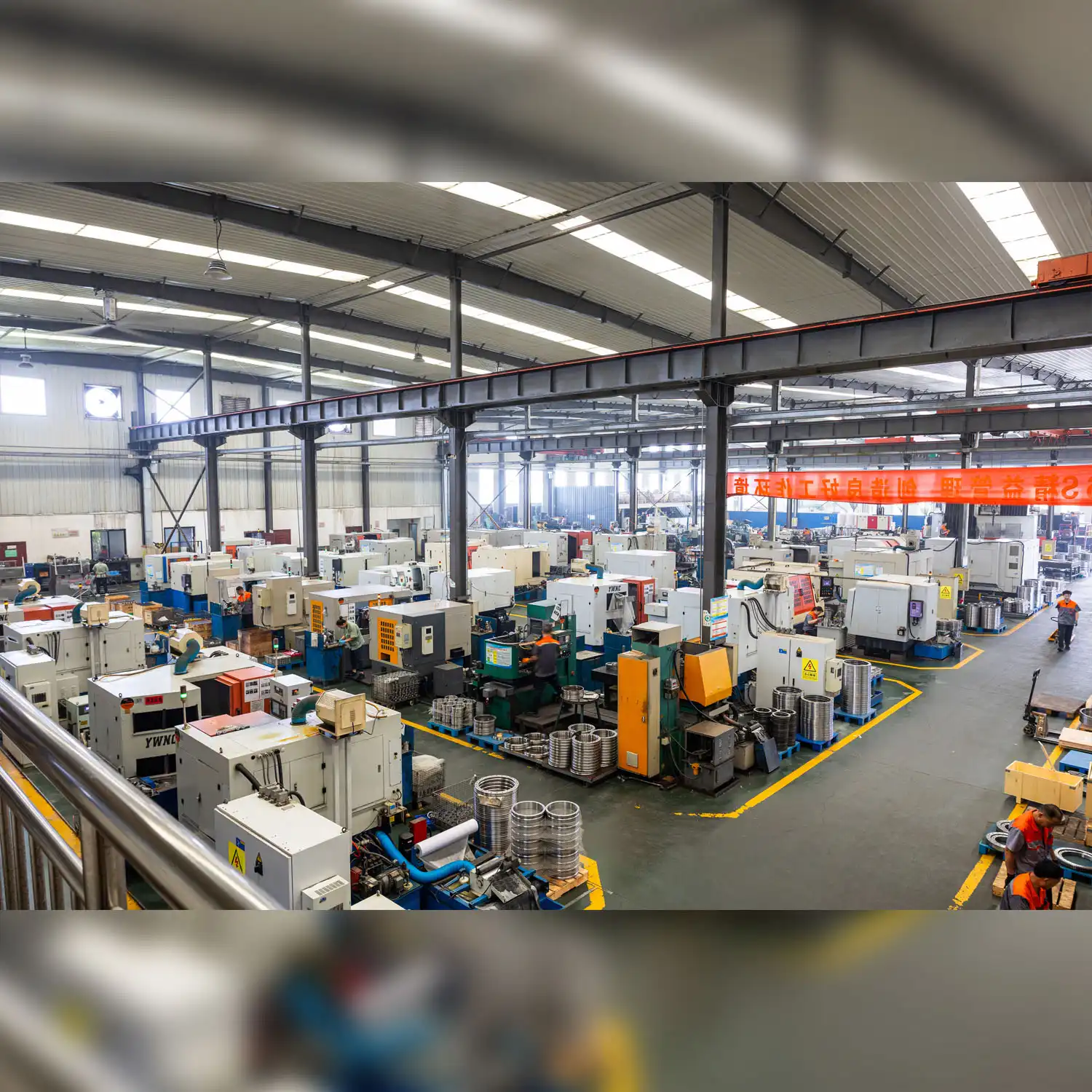
To choose a brand, you have to weigh Cross roller bearing RA series the technical performance, uniformity of quality, dependability of shipping, and total cost of ownership. Japanese companies like IKO, NSK, and THK have built strong names over many years of coming up with new ideas and strict quality control. When comparing products, their bearings are often used as standards, and the high price is justified by the fact that they come with a lot of technical literature and application engineering support. Chinese producers have gradually closed performance gaps by improving technology and putting in place quality systems. With ISO 9001 and IATF 16949 certifications, companies like ATLYC show they can make fine cross roller bearings that meet world standards. The production base in Luoyang takes advantage of the availability of specialized bearing steel, well-established machining skills, and economies of scale that make prices low. This is especially helpful for OEM applications that need to make a lot of parts. Professionals in procurement weigh technology requirements against factors that affect the supply chain. Standard models from Chinese providers often have shorter lead times than foreign options. This lowers the cost of keeping inventory and makes it easier to meet production needs. Customization lets makers give different sizes, special materials, or unique ways to seal their products, which makes the finished goods stand out in competitive markets.
Procurement and Supply Chain Considerations for B2B Clients
Strategic buying of precise bearings strikes a balance between the needs of the Cross roller bearing RA series of the current project and the value of a long-term relationship.
Sourcing Strategies and Supplier Evaluation
There are two types of procurement channels: catalog distributors, which give a wide range of products with little room for customization, and direct maker relationships, which allow for more customized solutions. Distributors make things easier for people who only need a few units and can quickly deliver stock models, such as the Cross roller bearing RA series, but prices are higher because of markups and the cost of keeping supplies. Direct manufacturer involvement works best for OEM uses with a lot of parts, where customization, technical collaboration, and lowering costs make the relationship investment worthwhile. When looking at possible suppliers, you need to look at a lot of things, such as their manufacturing capacity, quality certifications, expert help, and shipping history. Site audits check the area of output, the level of sophistication of the tools, and the quality control systems. References from current customers give you an idea of how well the company really does in terms of quality uniformity, timeliness, and problem-solving.
OEM Collaboration and Customization
Standard catalog models cover a lot of uses, but changing the specifications can help you get even better results. By changing the dimensions, you can make the packaging smaller or the load more evenly distributed. Different types of materials improve their ability to fight rust or handle high temperatures. Special arrangements for closing make it easier to keep contaminants out. New accuracy grades match the need for efficiency with the need to stay within budget. Manufacturers like ATLYC are happy to work with OEMs to create unique solutions by using their technical knowledge and production freedom. The conversation process starts with application requirements, such as loading patterns, environmental conditions, accuracy standards, and goals for the lifetime. Engineering teams look at what's needed, come up with answers, and make changes to plans over and over to get the best performance and ease of production. Prototype amounts test efficiency before committing to full production, which lowers the risk of the program.
Lead Time Management and Inventory Strategy
Standard model wait times from well-known Chinese makers are usually between 4 and 6 weeks from the time an order is placed until it is delivered. This is about the same time as global options but cheaper. Custom specs can make lead times 8–12 weeks longer, based on the need for tools and the production schedule. Strategic buyers keep a safety stock of important models, weighing the cost of buying more goods against the cost of making sure that production doesn't stop. Just-in-time methods cut down on stocking costs but require a lot of teamwork in the supply chain and trust in the suppliers. Vendor-managed inventory systems make sure that materials are always available by putting the responsibility of keeping stock on providers. With a consignment deal, you don't have to pay until you use the item, which helps people who use a lot of it. It depends on how much is used, how important it is, and how much supply risk someone is willing to take. These are all things that need to be looked at again and again as business conditions change.
Conclusion
To choose the right model for a Cross roller bearing RA series application in robots, you need to carefully look at the load profiles, accuracy needs, weather conditions, and expected lifespan, along with the bearing's specs and abilities. The RA series has a high performance density thanks to its orthogonal roller arrangement, which makes it possible for small, rigid, accurate rotational systems that are important for modern robots. To have a successful execution, you need to find a balance between technical performance and procurement factors like supplier capability, quality uniformity, shipping reliability, and total cost of ownership. Chinese makers keep raising quality standards and keeping prices low, which makes their products a great deal for large orders as long as they have the right certifications and process controls in place.
FAQ
1. What distinguishes the RA series from other cross roller bearing types?
The RA cross roller bearing has a split inner ring and an integral outer ring. This lets the outer ring rotate and makes attaching the shaft easier than with the RB series, which has integral rings. This difference in structure works well for situations where the outer race needs to rotate or where it's easy to attach to existing shafts. Both models use orthogonal rollers that can carry loads in more than one way while still taking up little space.
2. How do I calculate the required load capacity for my robotic application?
Find the maximum radial, axial, and moment loads by taking into account the length of the robot arm, the weight of the object, the acceleration forces, and any external loads. When comparing estimated loads to bearing dynamic ratings for turning applications or static ratings for positioning applications, safety factors of 1.5x to 2x should be used. For important uses, check with the manufacturer's engineering department to make sure your choices are correct.
3. What accuracy grade should I specify for industrial robot joints?
P5 grade is usually enough for general industrial robots that need to be able to repeat their positions within ±0.02 to 0.05 mm. For tighter standards, the P4 grade is right for precision assembly and checking tasks. For micron-level precision, medical robotics and semiconductor tools may need P2 grade. You need to weigh the need for accuracy against the costs and system tolerance budgets.
4. Can these bearings operate in harsh environmental conditions?
In climate-controlled factories, standard bearings work well. When there is pollution, wetness, or acids that eat away at metal, harsh conditions call for extra sealing and special materials. Stainless steel versions don't rust, and better closing systems keep out dirt and other things. Talk to your providers about the environment to find out what protections are needed for efficient operation.
Partner with ATLYC for Your Cross Roller Bearing RA Series Requirements
Sourcing precision bearings demands a manufacturing partner with Cross roller bearing RA series technical know-how, reliable quality control, and a supply chain that you can count on. ATLYC has been making bearings for 15 years, has quality systems that are ISO 9001 and IATF 16949 certified, and has a track record of helping users in the car and industrial automation industries around the world. Our engineering team works with OEM clients to find the best Cross roller bearing RA series options for robotic uses. We offer customization options and quick technical support. Get in touch with our team at auto@lyautobearing.com to talk about your needs with a reliable cross roller bearing RA series provider who wants you to succeed.
References
1. Harris, T.A. & Kotzalas, M.N. (2006). "Rolling Bearing Analysis: Essential Concepts of Bearing Technology," CRC Press, Fifth Edition.
2. ISO 199:2014. "Rolling Bearings – Thrust Bearings – Geometrical Product Specifications (GPS) and Tolerance Values," International Organization for Standardization.
3. Schaeffler Technologies AG & Co. (2019). "Crossed Roller Bearings: Design Principles and Application Guidelines," Technical White Paper Series.
4. Xu, H. & Chen, G. (2021). "Precision Bearing Technology in Industrial Robotics: Performance Analysis and Selection Methodology," Journal of Mechanical Engineering Science, Vol. 235, Issue 18.
5. NSK Ltd. (2020). "Cross Roller Bearings for Robot Applications: Technical Catalog and Selection Guide," NSK Technical Documentation.
6. Zhou, L., Wang, Y., & Liu, J. (2022). "Comparative Study of Bearing Solutions for Multi-Axis Robotic Systems," International Journal of Advanced Manufacturing Technology, Vol. 119, pp. 3847-3862.
Learn about our latest products and discounts through SMS or email