- English
- French
- German
- Portuguese
- Spanish
- Russian
- Japanese
- Korean
- Arabic
- Greek
- German
- Turkish
- Italian
- Danish
- Romanian
- Indonesian
- Czech
- Afrikaans
- Swedish
- Polish
- Basque
- Catalan
- Esperanto
- Hindi
- Lao
- Albanian
- Amharic
- Armenian
- Azerbaijani
- Belarusian
- Bengali
- Bosnian
- Bulgarian
- Cebuano
- Chichewa
- Corsican
- Croatian
- Dutch
- Estonian
- Filipino
- Finnish
- Frisian
- Galician
- Georgian
- Gujarati
- Haitian
- Hausa
- Hawaiian
- Hebrew
- Hmong
- Hungarian
- Icelandic
- Igbo
- Javanese
- Kannada
- Kazakh
- Khmer
- Kurdish
- Kyrgyz
- Latin
- Latvian
- Lithuanian
- Luxembou..
- Macedonian
- Malagasy
- Malay
- Malayalam
- Maltese
- Maori
- Marathi
- Mongolian
- Burmese
- Nepali
- Norwegian
- Pashto
- Persian
- Punjabi
- Serbian
- Sesotho
- Sinhala
- Slovak
- Slovenian
- Somali
- Samoan
- Scots Gaelic
- Shona
- Sindhi
- Sundanese
- Swahili
- Tajik
- Tamil
- Telugu
- Thai
- Ukrainian
- Urdu
- Uzbek
- Vietnamese
- Welsh
- Xhosa
- Yiddish
- Yoruba
- Zulu
Crossed Roller Bearing RB Series Load Capacity Guide
When specifying precision bearings for high-rigidity applications, understanding load capacity becomes paramount. The Crossed Roller Bearing RB Series stands out as an engineered solution designed to address complex loading conditions through its unique orthogonal roller arrangement. This guide examines load-bearing capabilities across static and dynamic conditions, helping procurement teams at automotive manufacturers and industrial OEMs make informed sourcing decisions. With comprehensive technical insights into load ratings, material composition, and operational parameters, this resource supports strategic partnerships with manufacturers who demonstrate consistent quality and international standards compliance.
Understanding RB Series Crossed Roller Bearings
Structural Configuration and Design Philosophy
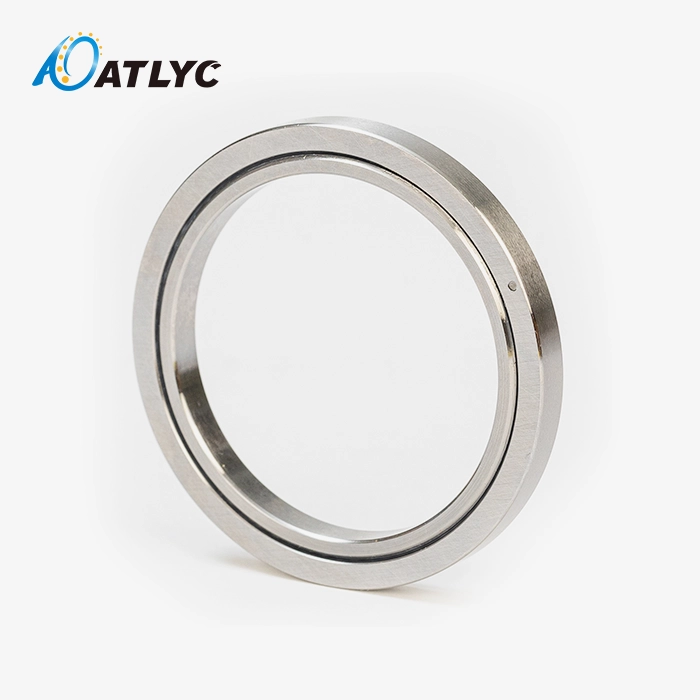
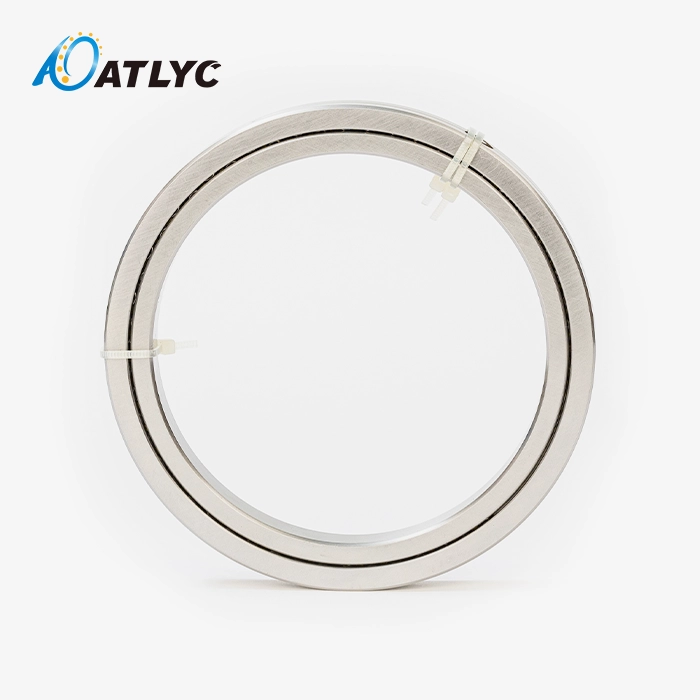
The RB series represents a specialized category of precision rotary components characterized by cylindrical rollers positioned at 90-degree angles between V-groove raceways. This configuration features an integrated inner ring paired with a separable outer ring equipped with a mounting plug—an arrangement optimized for applications requiring inner ring rotation. Unlike conventional ball bearings that rely on point contact, these components achieve line contact between rollers and raceways, significantly enhancing stiffness and load distribution. The orthogonal roller layout addresses a fundamental engineering challenge: how to support multi-directional loads within compact envelopes. Each roller alternates orientation, with spacing retainers preventing roller-to-roller contact and maintaining consistent torque characteristics throughout rotation cycles. This structural approach eliminates the need for dual angular contact configurations traditionally required for handling combined loading scenarios.
Technical Specifications and Dimensional Range
Knowing the bearings' measurement powers helps you choose the right ones for the job. The RB series can handle a wide range of sizes, with inner diameters from 20mm to 1,100mm, outer diameters from 70mm to 1,500mm, and width patterns from 12mm to 110mm. This wide range of sizes makes it possible to use them in a wide range of tools, from small robotic hands to big machining center rotary tables. The makeup of a material directly affects how much weight it can hold and how long it will last. For manufacturing, high-quality Gcr15 bearing steel and Gcr15SiMn metal are used. These are heated to get hardness levels between HRC 58 and 64. This process for metals makes sure that the dimensions stay stable under repeated loading and that the surface stays intact over long periods of service. Fatigue resistance is affected by the qualities of the material, which is an important thing to think about when choosing bearings for continuous-duty use in industrial automation settings.
Precision Grades and Manufacturing Standards
Accuracy classifications define bearing performance in precision-critical installations. The RB series achieves multiple ISO tolerance grades, including P6, P0, P5, and P4—with P4 representing the highest precision tier suitable for measurement instruments and semiconductor manufacturing equipment. These classifications dictate permissible deviations in raceway geometry, roller diameter variation, and assembled runout characteristics. Manufacturing standards compliance assures quality-conscious procurement teams. Production facilities holding ISO 9001 certification demonstrate systematic quality management, while IATF 16949 accreditation specifically addresses automotive industry requirements. Luoyang Auto Bearing Co., Ltd. maintains both certifications across six specialized production workshops, reflecting 15 years of manufacturing refinement since establishing its initial automated deep groove ball bearing facility in 2010.
Load Capacity of RB Series Crossed Roller Bearings: In-Depth Analysis
Static Load Rating Fundamentals
Static load capacity defines the maximum force a stationary or slowly oscillating Crossed Roller Bearing RB Series can withstand without permanent deformation exceeding specified limits. The crossed roller design inherently distributes static loads across multiple contact points—typically 50% of total rollers engage simultaneously under combined loading conditions. This load-sharing characteristic yields higher static capacity compared to equivalent-sized ball bearings with fewer contact elements. Load distribution mechanics become particularly relevant when examining the interaction between radial forces, axial thrust, and overturning moments. A single RB series bearing manages all three load components concurrently, with the crossed arrangement creating symmetric support that minimizes deflection. Engineering calculations must account for equivalent static load—a mathematical representation combining individual load vectors into a single comparative value against published catalog ratings.
Dynamic Load Capacity and Operational Considerations
Dynamic capacity governs performance under continuous rotation with variable loading. The line-contact geometry between cylindrical rollers and raceways reduces contact stress compared to point-contact designs, extending calculated bearing life according to ISO 281 methodology. Dynamic load ratings published in technical datasheets reflect standardized testing conditions—typically 1 million revolutions at specified speeds with consistent lubrication and contamination control. Operating parameters significantly influence realized load capacity. Elevated temperatures reduce material hardness and lubricant viscosity, diminishing effective load-bearing capability. Rotation speeds interact with centrifugal forces acting on roller masses, while lubrication regimes must maintain adequate film thickness to prevent boundary contact. Industrial robotics applications with intermittent motion profiles experience different loading patterns compared to continuously rotating machining spindles—requiring tailored capacity evaluations.
Material Quality and Roller Configuration Impact
The relationship between material properties and load capacity extends beyond base hardness values. Through-hardening depth, residual stress profiles, and grain structure homogeneity all contribute to fatigue resistance under cyclic loading. Gcr15SiMn alloy formulations incorporate silicon and manganese to enhance hardenability and toughness, proving advantageous in applications subject to shock loads or vibration. Roller geometry optimization represents another capacity-influencing factor. Crowned roller profiles prevent edge loading when slight misalignment occurs, distributing stress more uniformly across contact patches. The spacing retainer design maintains precise roller positioning while accommodating thermal expansion differentials between inner and outer rings. These design elements work synergistically to preserve load capacity across temperature fluctuations and mounting tolerances encountered in real-world installations.
Speed-Load Performance Characteristics
Operational speed and load capacity exhibit inverse relationships governed by bearing thermal management capabilities. At higher rotational velocities, internal friction generates heat that must dissipate through housing structures and lubrication systems. Excessive temperatures accelerate lubricant degradation and reduce permissible loading to maintain acceptable bearing life expectations. Performance curves mapping load versus speed boundaries help engineers identify suitable operating zones. Crossed roller bearings typically excel in moderate-speed, high-load scenarios rather than ultra-high-speed applications, better served by specialized ball bearing designs. Precision rotary tables operating below 500 RPM represent ideal use cases where the RB series delivers maximum load capacity with minimal thermal constraints.
Comparing RB Series with Alternative Crossed Roller Bearings
Structural Differences from KR Series Variants
While both RB and KR series utilize crossed roller principles, distinct structural characteristics create application-specific advantages. The KR series employs a separable inner ring construction versus the RB integrated inner ring design. This fundamental difference influences installation procedures and suitability for specific mounting configurations. Applications requiring outer ring rotation favor KR architectures, whereas inner ring rotation scenarios benefit from RB structural rigidity. Load capacity comparisons reveal nuanced performance distinctions. The integrated inner ring configuration of the RB series provides enhanced stiffness that translates to higher moment load resistance—particularly valuable in cantilever-loaded robotic arm applications. Conversely, KR series designs offer installation flexibility advantageous when replacing existing bearings without disassembling adjacent components.
Performance Comparison Against Ball Bearings
Ball bearings remain prevalent in rotary applications, prompting procurement teams to evaluate tradeoffs against Crossed Roller Bearing RB Series alternatives. The fundamental contact mechanics distinction—point versus line contact—creates divergent performance profiles. Ball bearings typically achieve higher speed capabilities with lower friction, while crossed roller units deliver superior rigidity and load capacity per unit volume. Deflection characteristics under loading demonstrate crossed roller advantages in precision positioning applications. A robotics joint utilizing ball bearings may experience measurable angular deviation under moment loads, whereas an equivalent RB series installation maintains positioning accuracy through enhanced stiffness. This performance attribute justifies premium pricing for applications where positional repeatability directly impacts product quality or process efficiency.
Cost-Benefit Analysis for Procurement Decisions
Evaluating total ownership costs requires examining initial procurement expenses against operational lifespan and maintenance requirements. Crossed roller bearings command higher unit prices, reflecting manufacturing complexity and precision machining demands. However, extended service life and reduced maintenance frequency often offset initial investments—particularly in applications experiencing bearing-related downtime costs. Maintenance interval extension represents a tangible economic benefit. The robust load distribution and contamination-resistant sealed configurations available in the RB series reduce lubrication frequency and bearing replacement cycles. An automotive assembly line implementing crossed roller bearings in transfer mechanisms documented 40% maintenance cost reduction over three-year evaluation periods compared to previous ball bearing installations.
Practical Applications and Maintenance Tips for RB Series Crossed Roller Bearings
Industrial Robotics Integration
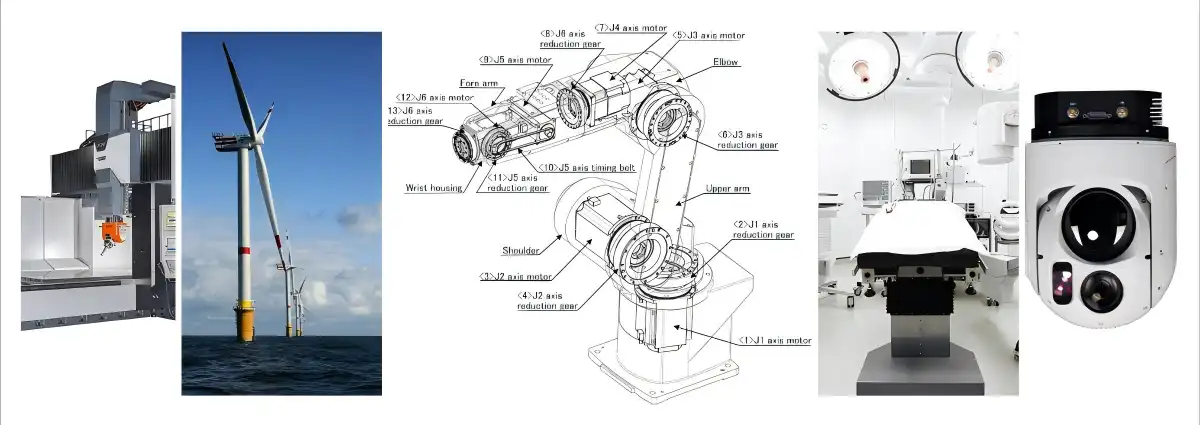
Robotic joints represent perhaps the most demanding application environment for precision bearings. Each axis experiences continuous acceleration and deceleration cycles with combined radial, axial, and moment loading. The RB series addresses these challenges through its multi-directional load capacity and compact cross-section—enabling lighter arm designs with maintained payload ratings. A six-axis industrial robot might incorporate eight to twelve crossed roller bearings across various joints, each sized according to specific load profiles and positioning accuracy requirements. Collaborative robots operating in automotive assembly environments demonstrate real-world performance validation. One European automotive manufacturer documented positioning repeatability within ±0.02mm across 2 million cycle testing using RB series bearings in wrist and elbow joints. This precision maintenance occurred despite exposure to temperature variations between 10°C and 45°C and occasional coolant mist contamination.
Machine Tool Rotary Table Applications
Machining center rotary tables demand exceptional stiffness to maintain workpiece positioning accuracy during cutting operations. The moment loads generated by off-center workpiece masses, combined with cutting forces, create severe operating conditions. RB series bearings with diameters exceeding 400mm provide the necessary rigidity while accommodating table indexing and continuous contouring motions. A precision machining facility producing aerospace components replaced tapered roller bearing pairs with single RB series units in their five-axis mill rotary tables. Post-installation measurements revealed 30% reduction in thermal drift and improved angular positioning accuracy from ±8 arc-seconds to ±4 arc-seconds—directly contributing to reduced scrap rates on tight-tolerance titanium components.
Maintenance Protocols for Extended Service Life
Proper installation procedures establish the foundation for reliable operation. Mounting surfaces must meet flatness specifications—typically within 0.01mm across the bearing footprint—to prevent raceway distortion affecting load distribution. Torque sequences for mounting bolt tightening follow specified patterns, preventing uneven clamping forces that induce preload variations. Lubrication selection and application frequency directly impact bearing longevity. Grease-lubricated installations typically employ lithium-based formulations with NLGI Grade 2 consistency for general industrial applications. Relubrication intervals depend on operating conditions—sealed bearings in clean environments may operate 10,000+ hours between services, while open configurations in contaminated settings require quarterly attention. Oil lubrication systems provide continuous film replenishment suitable for high-speed or elevated-temperature applications, though requiring auxiliary pumping and filtration equipment. Environmental contamination represents the primary failure mode accelerator. Sealing solutions range from contact lip seals providing robust particle exclusion to non-contact labyrinth configurations minimizing friction. A semiconductor equipment manufacturer utilizing RB series bearings in wafer-handling robots implemented dual-seal configurations, maintaining cleanroom compatibility while extending mean time between failures beyond 50,000 operational hours.
Procurement Considerations: How to Source and Select RB Series Crossed Roller Bearings
Supplier Evaluation Criteria
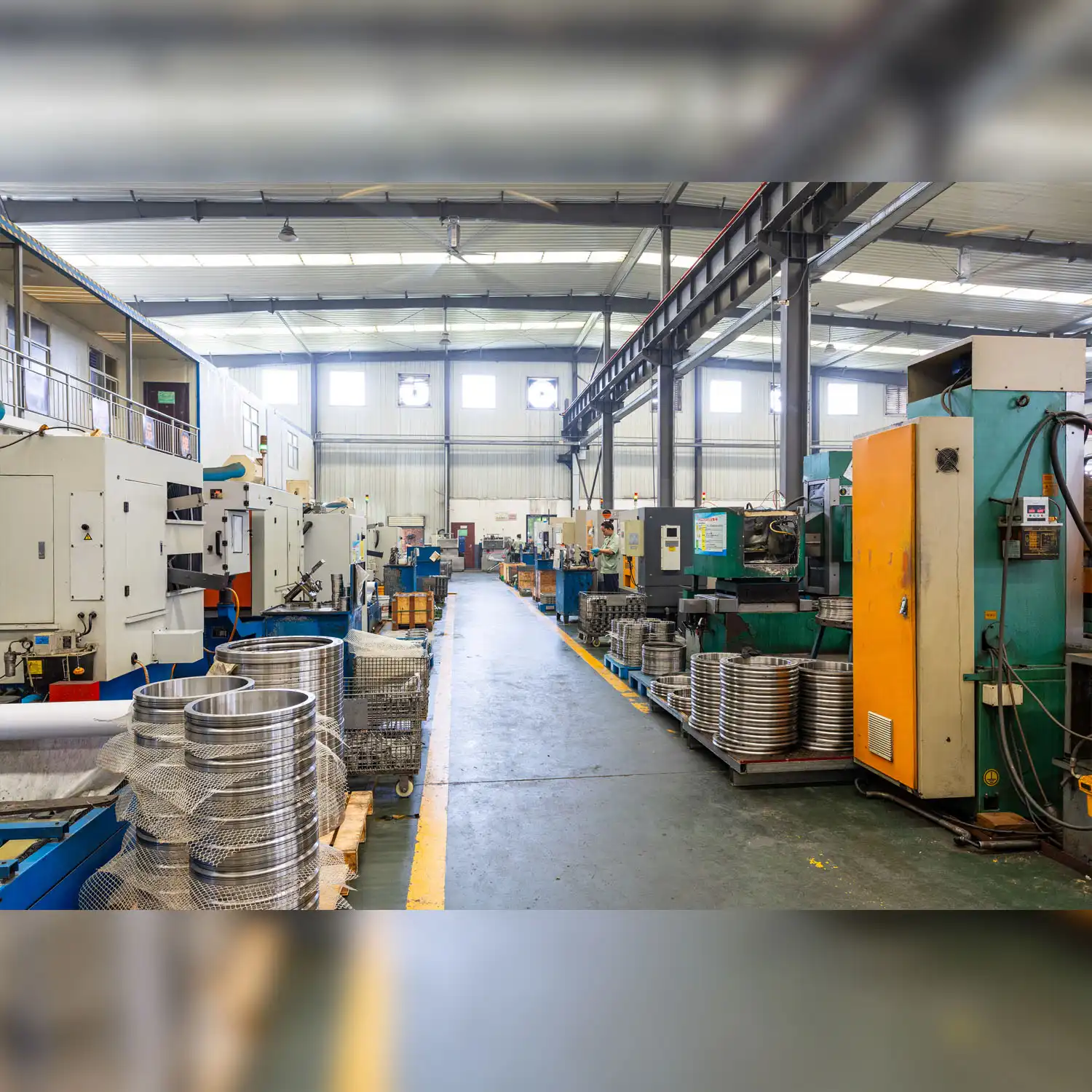
Selecting qualified bearing suppliers for the Crossed Roller Bearing RB Series requires assessing multiple capability dimensions beyond unit pricing. Manufacturing capacity determines delivery reliability—particularly relevant when procurement teams manage production schedules with minimal inventory buffers. Facilities operating multiple production workshops with dedicated crossed roller bearing lines demonstrate scalability supporting volume requirements as your equipment production ramps. Quality certifications provide objective evidence of process control maturity. ISO 9001 certification establishes baseline quality management system requirements, while IATF 16949 specifically addresses automotive industry needs, including production part approval processes and continuous improvement methodologies. Suppliers maintaining both certifications, such as ATLYC with 15 years of manufacturing evolution, demonstrate commitment to international standards that reduce your incoming inspection burdens.
Technical Support and Customization Capabilities
Engineering support availability differentiates commodity suppliers from strategic partners. Complex applications may require bearing modifications—custom seal configurations, specialized coatings for corrosive environments, or dimensional adjustments accommodating unique housing constraints. Manufacturers with in-house engineering teams can collaborate on application-specific solutions rather than forcing designs into standard catalog offerings. Prototyping capabilities accelerate product development cycles. A supplier able to produce small quantities of customized crossed roller bearings enables design validation before committing to production tooling. This flexibility proves invaluable when developing next-generation equipment where bearing performance directly influences competitive differentiation.
Lead Time Management and Bulk Purchasing
Understanding production lead times helps synchronize bearing procurement with assembly schedules. Standard RB series configurations typically ship within 4-6 weeks, while custom specifications may require 8-12 weeks, accommodating material procurement and specialized machining operations. Establishing framework agreements with committed annual volumes often secures priority production allocation and price stability. Volume pricing structures reward strategic purchasing approaches. Bearing manufacturers typically offer tiered pricing—with meaningful cost reductions materializing above minimum order quantities. An automotive Tier 1 supplier consolidated their crossed roller bearing purchases with a single manufacturer, negotiating 18% cost reduction through annual volume commitment while simultaneously improving delivery performance through dedicated production capacity.
After-Sales Support and Warranty Terms
Warranty coverage reflects the manufacturer's confidence in product reliability. Standard bearing warranties typically cover material and manufacturing defects, with durations ranging from 12 to 24 months post-delivery. Scrutinize warranty exclusions—particularly regarding installation-induced damage or operation outside specified parameters—to understand actual risk allocation. Technical troubleshooting support becomes valuable when addressing unexpected field performance issues. A responsive supplier providing bearing failure analysis identifies root causes—whether installation errors, lubrication inadequacy, or application conditions exceeding design assumptions. This diagnostic capability accelerates corrective actions, minimizing equipment downtime costs.
Conclusion
Selecting appropriate load-rated bearings fundamentally influences equipment performance, operational reliability, and total ownership costs. The RB series delivers proven capability in managing complex loading through its orthogonal roller configuration and robust structural design. Procurement decisions balancing initial investment against lifecycle value require evaluating supplier manufacturing capacity, quality certifications, technical support capabilities, and long-term partnership potential. Manufacturers demonstrating continuous improvement commitment, international standards compliance, and application engineering expertise position themselves as strategic collaborators rather than transactional component sources. Understanding load capacity fundamentals, comparative performance attributes, and proper maintenance protocols enables informed sourcing strategies supporting your competitive positioning in demanding industrial markets.
FAQ
What maximum load can RB series bearings handle?
Load capacity varies with bearing size and precision grade. Smaller RB series units with 20mm inner diameters typically support static radial loads around 5kN, while larger 1,100mm configurations manage loads exceeding 500kN. Dynamic capacity ratings account for rotational speed and expected service life—with specific values published in manufacturer technical catalogs corresponding to individual part numbers.
How do crossed roller bearings differ from slewing bearings in load handling?
Slewing bearings prioritize large-diameter, low-speed applications like crane turntables, whereas crossed roller bearings optimize compact dimensions with higher precision. Load distribution mechanics differ—slewing rings typically employ ball elements with four-point contact, while crossed rollers achieve line contact, providing superior stiffness per unit size.
What maintenance techniques extend bearing service life?
Proper lubrication remains paramount—maintaining clean grease films prevents abrasive wear. Environmental sealing protects against contaminant ingress that accelerates fatigue failure. Periodic vibration monitoring detects early degradation signs, enabling proactive replacement before catastrophic failure. Maintaining recommended operating temperatures through adequate housing heat dissipation preserves material properties and lubricant effectiveness throughout design life.
Partner with ATLYC for Premium Crossed Roller Bearing RB Series Solutions
ATLYC brings 15 years of bearing manufacturing expertise to your precision motion challenges. As an established Crossed Roller Bearing RB Series manufacturer, we combine ISO 9001 and IATF 16949 certified production across six specialized workshops with engineering support tailored to automotive and industrial equipment applications. Our GCr15 and GCr15SiMn material expertise ensures consistent quality meeting P4 and P5 precision grades, your equipment demands. Whether you require standard configurations or custom modifications, our technical team collaborates on optimized solutions, balancing load capacity, dimensional constraints, and cost-performance targets. Contact auto@lyautobearing.com to discuss your specific requirements and request detailed technical datasheets supporting your bearing selection process.
References
1. Harris, T.A. & Kotzalas, M.N. (2006). Rolling Bearing Analysis: Essential Concepts of Bearing Technology. CRC Press.
2. ISO 281:2007. Rolling bearings — Dynamic load ratings and rating life. International Organization for Standardization.
3. Palmgren, A. (1959). Ball and Roller Bearing Engineering. SKF Industries Inc.
4. Hamrock, B.J. & Dowson, D. (1981). Ball Bearing Lubrication: The Elastohydrodynamics of Elliptical Contacts. John Wiley & Sons.
5. Eschmann, P., Hasbargen, L. & Weigand, K. (1985). Ball and Roller Bearings: Theory, Design and Application. K. G. Saur Verlag.
6. Brewe, D.E. & Hamrock, B.J. (1977). Simplified Solution for Elliptical-Contact Deformation Between Two Elastic Solids. NASA Technical Paper 1001.
Learn about our latest products and discounts through SMS or email