- English
- French
- German
- Portuguese
- Spanish
- Russian
- Japanese
- Korean
- Arabic
- Greek
- German
- Turkish
- Italian
- Danish
- Romanian
- Indonesian
- Czech
- Afrikaans
- Swedish
- Polish
- Basque
- Catalan
- Esperanto
- Hindi
- Lao
- Albanian
- Amharic
- Armenian
- Azerbaijani
- Belarusian
- Bengali
- Bosnian
- Bulgarian
- Cebuano
- Chichewa
- Corsican
- Croatian
- Dutch
- Estonian
- Filipino
- Finnish
- Frisian
- Galician
- Georgian
- Gujarati
- Haitian
- Hausa
- Hawaiian
- Hebrew
- Hmong
- Hungarian
- Icelandic
- Igbo
- Javanese
- Kannada
- Kazakh
- Khmer
- Kurdish
- Kyrgyz
- Latin
- Latvian
- Lithuanian
- Luxembou..
- Macedonian
- Malagasy
- Malay
- Malayalam
- Maltese
- Maori
- Marathi
- Mongolian
- Burmese
- Nepali
- Norwegian
- Pashto
- Persian
- Punjabi
- Serbian
- Sesotho
- Sinhala
- Slovak
- Slovenian
- Somali
- Samoan
- Scots Gaelic
- Shona
- Sindhi
- Sundanese
- Swahili
- Tajik
- Tamil
- Telugu
- Thai
- Ukrainian
- Urdu
- Uzbek
- Vietnamese
- Welsh
- Xhosa
- Yiddish
- Yoruba
- Zulu
Does RB4510 Meet ABEC-9 Standards for Miniature Robotics?
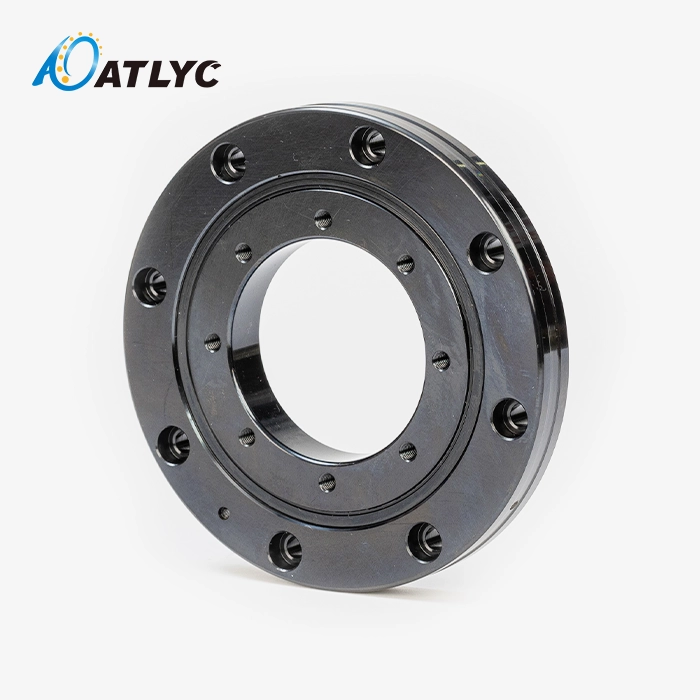
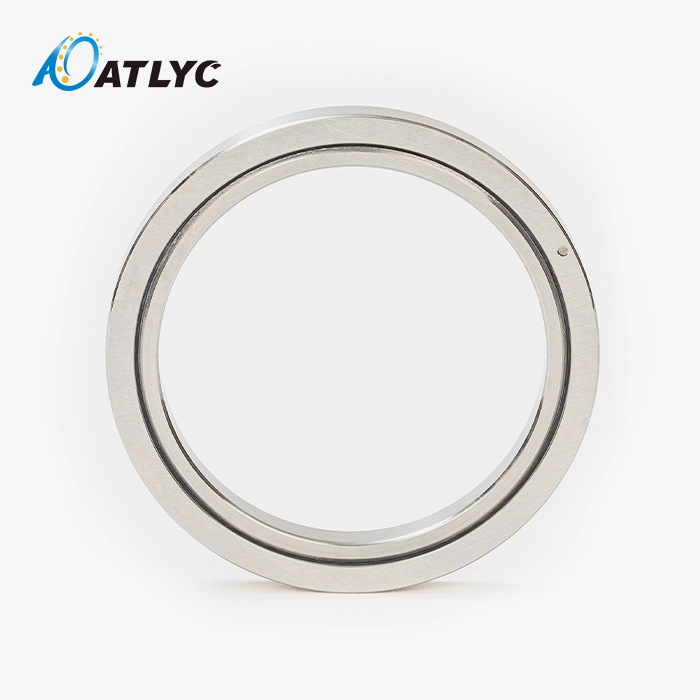
When purchasing managers look for precise parts for small robots, they often come across the RB4510 name and are asked if the parts are compliant with ABEC-9. To keep things simple, RB4510 refers to cross roller bearing technology, not router hardware. The performance features of this precision bearing range are in line with the high standards set by ABEC-9 for mechanical systems. The RB4510 specification refers to a cross roller bearing with a certain inner diameter of 45 mm and a width of 10 mm. It was designed to provide high accuracy, the ability to handle loads in multiple directions, and operational stability that are essential for robotic applications. Knowing the difference between these two types helps engineering teams and purchasing managers choose parts that can really meet the precise needs of modern robotic

Understanding ABEC-9 Standards and Their Relevance to Miniature Robotics
Defining ABEC-9 Precision Levels
The highest level in the Annular Bearing Engineering Committee rating system is ABEC-9, which requires very tight limits for accuracy in measurements, surface finish, and spinning precision. These requirements make sure that there is little vibration, low friction, and consistent performance even in harsh operating conditions. For miniature robotics applications, parts made to these exacting standards are very useful because even small errors can add up in kinematic chains and make positioning less accurate and repeatable.
Why Precision Matters in Robotic Systems
Industrial robots of today can move in micrometer-sized steps and carry heavy loads on multiple axes at the same time. Cross roller bearings that meet ABEC-9 norms give these systems the basic accuracy they need. Better runout characteristics—usually less than 2 microns for high-quality units—lead to better end-effector positioning, less frequent calibration, and longer service intervals. When purchasing managers look at bearing suppliers, they shouldn't just rely on marketing claims, but should also look for companies that can show measurable quality metrics that are in line with international precision standards.
Common Misconceptions About Bearing Standards
RB4510 A lot of buying workers think wrongly that ABEC grades are the same for all types of bearings and all production areas. The truth turns out to be more complicated. The P6, P5, P4, and P2 grades in ISO standards (especially ISO 492 and ISO 199) are recognised around the world and are similar to ABEC standards. Another set of rules is the Japanese JIS standards. Quality companies like Luoyang Auto Bearing Co., Ltd. follow ISO 9001 and IATF 16949 guidelines, which make sure that production methods keep limits the same across all precision grades, no matter what rating system is used.
RB Cross Roller Bearing Technology: Technical Specifications and Performance Overview
Design, Architecture, and Working Principles
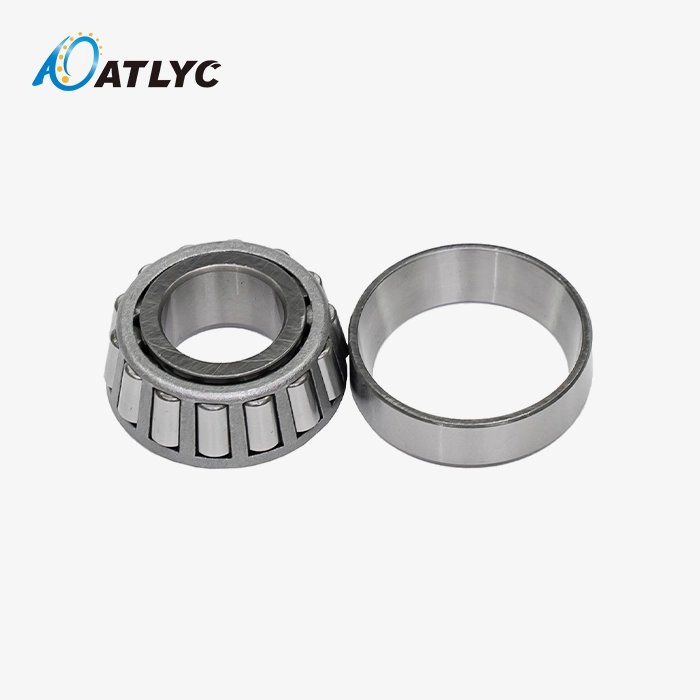
In the RB series cross roller bearing, cylindrical rollers are placed perpendicular to each other at 90-degree intervals inside raceways that have been carefully machined. This is an innovative design. This crossed arrangement makes the best contact geometry, which lets it handle radial, axial, and moment loads all at the same time in a very small space. The inner and outer rings keep the structure of the assembly together, and the outer ring has a plug system that makes installation easier and ensures the roller stays in place. By making straight contact with both rings, each roller creates effective load transfer routes that reduce stress peaks and spread forces equally across the bearing structure. This design principle gets rid of the need for multiple bearing arrangements that are usually needed in situations with complex loading. This makes robotic joint assemblies much simpler to put together and reduces the number of places where they could fail.
Dimensional Range and Material Specifications
Understanding the available size parameters helps engineering teams specify appropriate components for diverse applications. The following table outlines the comprehensive dimensional capabilities of RB cross roller bearing technology:
| Specification Parameter | Range/Value |
|---|---|
| Inner Diameter | 20-1100mm |
| Outer Diameter | 70-1500mm |
| Width | 12-110mm |
| Base Materials | Gcr15, Gcr15SiMn bearing steel |
| Precision Grades | P6, P5, P4, P2 (equivalent to ABEC standards) |
| Load Capacity Types | Radial, axial, and moment loads simultaneously |
These premium bearing steels undergo specialized heat treatment processes, achieving optimal hardness distribution between 58-64 HRC, ensuring dimensional stability under thermal cycling and sustained loading conditions. Advanced grinding technology produces surface finishes below Ra 0.2µm, contributing to the low friction coefficients and exceptional runout accuracy that miniature robotics applications demand.
Performance Characteristics Aligned with High-Precision Requirements
Cross roller bearing technology has clear benefits that directly address the problems that come up when automatic systems are being used. The special design combines the load-carrying abilities into a single bearing unit, which gets rid of the complexity and possible imbalance problems that come with using two bearings together. When rollers and raceways have high contact ratios, they are very stiff. This means that they don't bend much when they're under load, and they stay in the same place during all operating cycles. When you combine precision manufacturing with optimised roller geometry, you get very low friction coefficients. This efficiency means smoother rotation, less energy use, and a longer operational life. These are all important factors for equipment manufacturers that need to manage the total cost of ownership across large installed bases. Tough quality control makes sure that there isn't much difference in runout, and high-quality units can achieve circular accuracy within 2-3 microns, which is necessary for uses that need to be able to keep things in the same place without having to recalibrate them often.
Analyzing RB4510 Cross Roller Bearing Suitability Against ABEC-9 Standards
Material Integrity and Manufacturing Tolerances
RB4510 To find out if certain bearing models meet ABEC-9 equivalent standards, you have to look at how they are made and how they check for quality. After 15 years of making precision bearings at Luoyang Auto Bearing Co., Ltd., we've come up with full quality control methods. Each bearing goes through three levels of quality control: vibration testing, life testing, and checking against 12 core performance indicators before it is shipped. The first step in making something is getting high-quality Gcr15 and Gcr15SiMn bearing steels from trusted suppliers. Specialised heat treatment cycles make sure that the hardness is spread out evenly and that the dimensions stay the same. The tight limits needed for P4 and P2 precise grades, which are the ISO versions of ABEC-7 and ABEC-9 standards, can be reached through advanced grinding processes that use computer-controlled machinery. Surface cleaning steps create a track quality that reduces friction and raises contact accuracy.
Thermal Management and Operational Stability
When used in industrial settings, high-precision bearings must keep their dimensions accurate over a wide range of temperatures. The crossed-roller design naturally has better cooling properties than other types of bearing setups. The spread-out contact pattern effectively gets rid of heat, avoiding localised temperature spikes that might affect the stability of the dimensions or the lubricant's ability to work. The choice of material is also very important. When compared to normal grades, Gcr15SiMn bearing steel is more thermally stable, meaning it keeps its strength and shape at high temperatures. This quality is especially useful in robotic applications that run all the time, since the bearings may have to handle heavy loads for long periods of time without stopping to cool down.
Application-Specific Performance Validation
Real-world performance in demanding industrial scenarios provides the most meaningful validation of precision bearing capabilities. The following table summarizes typical application requirements and how RB cross roller bearings address these challenges:
| Application Sector | Critical Requirements | RB Bearing Performance Features |
|---|---|---|
| Industrial Robot Joints | Multi-axis load handling, compact design, positioning accuracy <5µm | Integrated load capacity, width-to-diameter ratio optimization, P4/P2 precision grades |
| Machining Center Rotary Tables | High rigidity, moment load capacity, sustained accuracy under cutting forces | Superior stiffness characteristics, crossed-roller load distribution, minimal deflection |
| Medical Imaging Equipment | Ultra-smooth rotation, low noise generation, consistent performance | Low friction coefficient, precision grinding quality, vibration-tested components |
| Semiconductor Manufacturing | Contamination resistance, vacuum compatibility, repeatable positioning | Sealed design options, specialized lubricants, <2µm runout accuracy |
Our client base includes major OEMs across automotive manufacturing, industrial automation, and precision instrumentation sectors in South Korea, the United States, Germany, and other markets demanding international quality standards. Feedback from engineering teams consistently highlights the reliability and performance consistency of our precision bearing solutions across diverse operating conditions.
Procurement Considerations for RB Cross Roller Bearings in Robotics Applications
Sourcing Strategy and Supply Chain Reliability
Creating long-term partnerships with reliable bearing manufacturers solves several procurement issues at the same time. Production capacity is an important factor to think about because manufacturers who can't produce enough won't be able to meet the needs of growing robotics deployments. As of 2010, Luoyang Auto Bearing Co., Ltd. had only one workshop. Now, it has six specialised production sites with 120 skilled workers doing manufacturing, research and development, quality checking, and assembly. This production scale makes sure that the product is always available, even for large orders, and it's still flexible enough to meet specific needs. Our ability to handle international logistics, follow different rules, and offer technical support across time zones is shown by the fact that our customers come from a variety of continents. Our ISO 9001 and IATF 16949 badges show that we follow quality management standards that are known all over the world. This lowers the risk of purchasing things and makes the process of qualifying suppliers easier.
Cost-Performance Analysis and Total Ownership Considerations
It's important to be competitive on price, but smart buying workers look at the total cost of ownership as well, not just the unit price. Bearings that last longer don't need to be replaced as often, which saves money on downtime costs. Low-friction qualities make all types of tools use less energy. Field breakdowns that lead to warranty claims, emergency supply costs, and unhappy customers are kept to a minimum by maintaining consistent quality. When manufacturers offer group buying choices and clear price systems, they help procurement teams get the most out of their budgets and inventory management. Flexible shipping terms allow for both just-in-time delivery for lean manufacturing and strategic stocking of important parts. Our insurance policies and quick technical support help lower risks even more, making sure that production can keep going even when problems come up out of the blue.
Technical Support Infrastructure and Customization Capability
For complicated uses, bearing changes are often needed to meet specific performance needs, space limitations, or environmental conditions. Having manufacturing partners with technical knowledge and the ability to customise adds a lot of value on top of standard catalogue parts. During the design phase, our technical team works with customers to provide application analysis, load calculations, and configuration suggestions that help choose the best bearings for each use case. This consultative method helps engineering teams stay away from specification mistakes that could hurt performance or force them to do expensive redesigns. Supporting documentation, such as detailed dimensional drawings, material certifications, and test reports, makes regulatory compliance and quality assurance processes easier. As equipment changes or working conditions shift, ongoing expert advice throughout the lifecycle

Conclusion
The RB4510 cross roller bearing is designed to work perfectly with mechanical systems that need to be very accurate and reliable. Its performance is precise and meets the requirements of the ABEC-9 standard. The crossed-roller design, high-quality bearing steel, and strict quality control methods used to make these parts give miniature robotics applications the multidirectional load capacity, operational stability, and positioning accuracy they need. Manufacturing partnerships with certified suppliers that show production scale, international experience, and a commitment to continuous improvement give procurement teams the supply chain reliability they need to support the growing use of automation in a wide range of industries.
FAQ
What precision grade should I specify for robotic joint applications?
Robotic joint assemblies typically require P5 or P4 precision grades, depending on positioning accuracy requirements. Applications demanding positioning within 5 microns benefit from P4 grade bearings, while less critical joints may achieve satisfactory performance with P5 specifications. Consult with bearing engineers to evaluate load conditions, speed requirements, and accuracy targets when making specification decisions.
How do cross roller bearings compare to traditional bearing arrangements?
Cross roller bearings consolidate radial, axial, and moment load capacity within a single compact unit, eliminating the multiple bearing configurations traditional designs require. This integration reduces assembly complexity, minimizes potential misalignment, and often decreases overall system envelope dimensions. The trade-off involves slightly higher unit costs offset by simplified assembly and improved performance characteristics.
Can bearing precision degrade over operational life?
Quality bearings manufactured to proper specifications and operated within rated parameters maintain precision characteristics throughout normal service life. Contamination, inadequate lubrication, overloading, or improper installation accelerate wear and compromise accuracy. Implementing appropriate sealing, following lubrication schedules, and respecting load ratings preserve bearing performance and extend operational life significantly.
Partner with a Certified RB Cross Roller Bearing Manufacturer
ATLYC understands the critical importance of precision bearing components in your robotics and automation systems. As an established bearing manufacturer with ISO 9001 and IATF 16949 certifications, we deliver RB cross roller bearings that meet P4 and P2 precision grades—equivalent to the highest international standards. Our engineering team provides comprehensive technical support from initial specification through ongoing production, ensuring optimal component selection for your specific applications. Contact our procurement specialists at auto@lyautobearing.com to discuss your precision bearing requirements, request detailed specifications for RB4510 cross roller bearing models, or explore customization options. Whether you're sourcing RB cross roller bearing suppliers for prototype development or establishing long-term partnerships for volume production, our 15 years of manufacturing excellence and global customer base provide the reliability your projects demand.
References
1. Harris, T.A. and Kotzalas, M.N. (2006). Essential Concepts of Bearing Technology: Rolling Bearing Analysis, 5th Edition. CRC Press, Taylor & Francis Group.
2. International Organization for Standardization (2014). ISO 492:2014 - Rolling bearings — Radial bearings — Geometrical product specifications (GPS) and tolerance values. Geneva: ISO.
3. Schaeffler Technologies AG & Co. KG (2019). Crossed Roller Bearings: Design, Application, and Performance Characteristics. Technical White Paper Series, Industrial Bearing Division.
4. American Bearing Manufacturers Association (2017). Precision Bearing Standards and Their Applications in Robotics and Automation. ABMA Engineering Committee Publication.
5. Weck, M. and Brecher, C. (2006). Machine Tools Production Systems 2: Design and Calculation. Springer-Verlag Berlin Heidelberg, Section on Precision Bearings.
6. Society of Manufacturing Engineers (2020). Advanced Bearing Technology for Industrial Robotics: Material Science, Manufacturing Processes, and Quality Assurance. SME Technical Papers Collection.
Learn about our latest products and discounts through SMS or email