- English
- French
- German
- Portuguese
- Spanish
- Russian
- Japanese
- Korean
- Arabic
- Greek
- German
- Turkish
- Italian
- Danish
- Romanian
- Indonesian
- Czech
- Afrikaans
- Swedish
- Polish
- Basque
- Catalan
- Esperanto
- Hindi
- Lao
- Albanian
- Amharic
- Armenian
- Azerbaijani
- Belarusian
- Bengali
- Bosnian
- Bulgarian
- Cebuano
- Chichewa
- Corsican
- Croatian
- Dutch
- Estonian
- Filipino
- Finnish
- Frisian
- Galician
- Georgian
- Gujarati
- Haitian
- Hausa
- Hawaiian
- Hebrew
- Hmong
- Hungarian
- Icelandic
- Igbo
- Javanese
- Kannada
- Kazakh
- Khmer
- Kurdish
- Kyrgyz
- Latin
- Latvian
- Lithuanian
- Luxembou..
- Macedonian
- Malagasy
- Malay
- Malayalam
- Maltese
- Maori
- Marathi
- Mongolian
- Burmese
- Nepali
- Norwegian
- Pashto
- Persian
- Punjabi
- Serbian
- Sesotho
- Sinhala
- Slovak
- Slovenian
- Somali
- Samoan
- Scots Gaelic
- Shona
- Sindhi
- Sundanese
- Swahili
- Tajik
- Tamil
- Telugu
- Thai
- Ukrainian
- Urdu
- Uzbek
- Vietnamese
- Welsh
- Xhosa
- Yiddish
- Yoruba
- Zulu
RB2508: What Are the Advantages of This Precision Bearing?
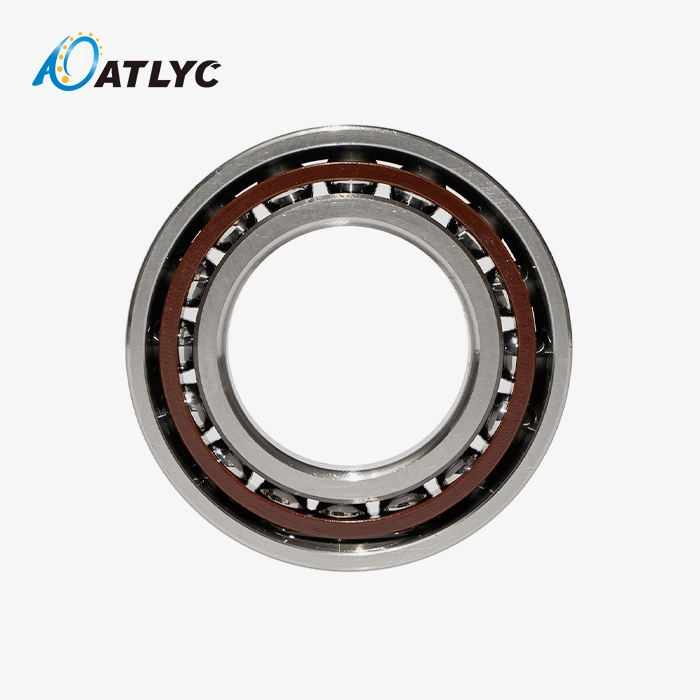
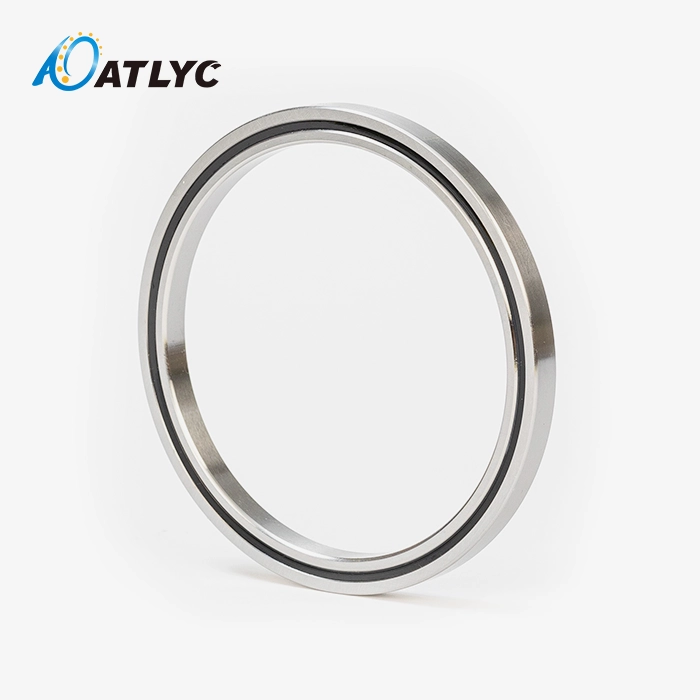
It is a big step forward in accurate engineering that the RB2508 cross roller bearing can handle huge amounts of radial, axial, and moment loads while taking up very little space. This special bearing has an inner and outer ring that are one piece, and the outer ring has a plug on it, which lets it handle loads in more than one way, which normally needs more than one bearing assembly. The RB2508 is made from high-quality Gcr15 and Gcr15SiMn bearing steels and meets P4-grade runout accuracy standards. This makes it an essential part of industrial robots, CNC rotary tables, and precise medical equipment, where positioning accuracy has a direct effect on production quality and safety.

Understanding the RB2508 Precision Bearing
The RB2508 precision bearing is part of the RB series cross roller bearing family. It was designed to meet the special needs of current robotics and precision machines. Procurement professionals can figure out if this part meets their business needs and performance standards by looking at its technical base.
Technical Specifications and Dimensional Parameters
Dimensional properties of the RB2508 determine how it can be used in machine designs. Different sizes are needed for different uses, but the RB series usually has inner diameters from 20mm to 1100mm, outer diameters from 70mm to 1500mm, and widths from 12mm to 110mm. This wide range of sizes makes it useful for a lot of different industry uses.
| Parameter | Specification Range | RB2508 Application |
|---|---|---|
| Inner Diameter | 20-1100mm | Customizable to the equipment shaft |
| Outer Diameter | 70-1500mm | Matches housing specifications |
| Width | 12-110mm | Optimized for load distribution |
| Material | Gcr15, Gcr15SiMn | Superior wear resistance |
| Accuracy Grade | P6, P5, P4 | Precision positioning capability |
Material selection plays a critical role in bearing performance longevity. The Gcr15 bearing steel provides excellent hardness distribution through specialized heat treatment processes, achieving uniform hardness of 60-64 HRC across contact surfaces. The alternative Gcr15SiMn alloy incorporates silicon and manganese additions, enhancing hardenability and tempering resistance—particularly valuable in high-temperature operating environments where dimensional stability remains paramount.
Crossed-Roller Design Architecture
One thing that makes the RB2508 stand out is that it has crossed rollers. Cylindrical rollers are placed perpendicular to each other at exact 90-degree intervals inside raceways that have been carefully polished. This set-up makes the best contact geometry, which lets each roller send forces effectively in different directions. The integral ring design keeps the structure strong while it's working, and the outer ring plug system makes installation easier and makes sure the rollers stay in place. Optimising the load path is another engineering benefit. Each roller makes line contacts with both the inner and outer rings instead of point contacts. This makes load transfer paths that are efficient and reduces stress concentrations. This design properly spreads forces across the bearing structure, making it much better at carrying weight than regular ball bearings of the same size.
Multi-Industry Application Versatility
Industrial robotics is one of the main areas where the RB2508 exhibits exceptional value. Robot joint assemblies need bearings that can handle complex loads from multiple axes at the same time and keep the accuracy of their position to within micrometres. Cross roller bearings can fit into robot configurations with limited space because they have a small cross-section. They also keep the structure rigid. These bearings are used on manufacturing center rotary tables to precisely position workpieces during multi-axis operations. The multidirectional load capacity can handle cutting forces from different directions while keeping the placement accuracy that is needed for complicated shapes. Medical imaging equipment and surgical robots also depend on these bearings to work smoothly and accurately, meeting strict noise standards and performing reliably. RB bearings are used in precision instrumentation, such as measuring tools and devices that make integrated circuits, for important positioning tasks where accuracy and repeatability have a direct effect on measurement validity and production yield. Precision-ground cross roller bearings have very low runout errors, which makes sure that the bearings always rotate with the accuracy needed for these tough jobs.
Advantages and Benefits of RB2508 Precision Bearing
Finding the right bearing technology means looking at a lot of different performance factors that affect both how well it works right away and how much it costs in the long run. The RB2508 has real benefits in a number of important performance areas.
Superior Multi-Directional Load Capacity
The crossed-roller configuration consolidates load handling capabilities that traditionally require multiple bearing arrangements. Equipment designers benefit from simplified assembly configurations, reduced component counts, and improved system rigidity. Here are the core advantages this unified load-handling approach delivers:
- Radial Load Management: Cylindrical rollers positioned horizontally distribute radial forces across extended contact lines, achieving load ratings significantly higher than comparably sized ball bearings while maintaining smooth rotation under heavy loads.
- Axial Load Capability: Vertically oriented rollers handle axial thrust forces without requiring separate thrust bearings, simplifying assembly design and reducing axial stack height in compact equipment configurations.
- Moment Load Resistance: The wide effective bearing span created by crossed-roller geometry provides exceptional resistance to tilting moments, maintaining alignment accuracy even when offset loads create turning forces on mounted components.
- Combined Loading Performance: Real-world applications rarely involve pure radial or axial forces; the RB2508 handles complex loading combinations simultaneously without performance degradation, maintaining positioning accuracy under variable operational conditions.
These advantages translate directly into simplified machine design, reduced assembly complexity, and improved equipment reliability. Manufacturing engineers working on automation systems particularly value the design flexibility this load consolidation provides when optimizing equipment footprints and minimizing component interfaces that introduce potential failure points.
Enhanced Precision and Rotational Accuracy
Runout accuracy, which is a key factor for precision equipment, determines how stable the position is while the machine is rotating. The RB2508 has very accurate runout because it uses precise grinding techniques to control the shape of the raceways to within micrometre levels. Manufacturing quality control systems check the precision of dimensions and surface finish against P4-level standards to make sure that every bearing meets strict performance requirements. Another performance benefit comes from the low friction coefficient, which is caused by the optimised roller geometry and precise manufacturing. Having less friction has many operational benefits: smoother rotation properties reduce vibration transmission, lower energy use lowers operating costs, and less heat production increases the time between lubrication services. These improvements in efficiency help equipment that works a lot over long production runs.
Durability and Extended Service Life
Material engineering and optimising heat treatment are two things that help make things last a long time. Specialised thermal processing is used on Gcr15 and Gcr15SiMn bearing steels to make the hardness distribution and microstructure refinement just right. Surface hardening makes the material less likely to wear down while keeping the core tough so that fatigue cracks don't start when the load is changed over and over again. Temperature stability keeps the dimensions the same across the wide range of temperatures that are common in industrial settings. The physical shape and qualities of the material keep the gaps and preloads the same, so performance doesn't go down when equipment temperatures change during production processes. This thermal stability is especially useful in precision applications where changes in size caused by temperature can make placement less accurate. Resistance to corrosion increases service life in harsh settings. Standard bearing steels are naturally resistant to rust, but you can add extra protection against wetness and contamination in tough industrial settings with surface treatments and special oils.
Cost-Efficiency and Operational Economics
When figuring out bearing costs, you have to look at more than just the initial purchase price. Cost-effectiveness of the RB2508 is achieved through a number of economic factors that affect the total cost of ownership. Longer cleaning gaps and wear resistance that keeps performance from dropping between service events lead to less upkeep being needed. Less downtime is needed to repair bearings in manufacturing processes, which increases machine uptime and output. Energy efficiency also helps lower running costs. Cross roller bearings need less power from the drive motor than less efficient bearing types because they have a low friction coefficient. Even though small energy savings may not seem like much when added up over many pieces of equipment, they add up to big savings in utility costs over the life of the equipment. Maximising machine uptime may be the biggest economic benefit. Unexpected equipment downtime leads to a chain of costs, such as lost production, faster ordering of repair parts, and possible delivery delays for customers. Precision cross roller bearings are reliable and last a long time, so they don't need as much unexpected upkeep. This makes it easier to plan production and measure how well the equipment is working, generally.
RB2508 Compared to Alternative Precision Bearings
Knowing about other options on the market helps people who work in buying make smart choices that meet the needs of the application and stay within the budget. The RB series mostly goes up against other types of precision bearings, each of which each have their own benefits that depend on the needs of the job.
Performance Comparison with Alternative Models
Angular contact ball bearings are a common alternative for uses that need to handle both single and multiple loads. When set up correctly, angular contact bearing pairs can handle radial, axial, and moment loads, but they need to be mounted correctly, and their preload must be adjusted. The RB2508 makes installation easier by combining these functions into a single unit. This makes the building process simpler and less likely to cause problems with misalignment.
| Bearing Type | Load Capacity | Precision Level | Installation Complexity | Ideal Application |
|---|---|---|---|---|
| RB2508 Cross Roller | Excellent multi-directional | P4-grade runout accuracy | Simplified single-unit | Robotics, rotary tables |
| Angular Contact Pairs | Good when preloaded | Depends on mounting precision | Requires careful preload | High-speed spindles |
| Tapered Roller Sets | Excellent radial/thrust | Moderate positioning accuracy | Complex adjustment needed | Heavy industrial equipment |
| Four-Point Contact | Moderate multi-directional | Good rotational accuracy | Moderate complexity | Slewing applications |
The RB2600 and similar precision bearing models within the RB family offer scaled performance for different size requirements. Larger diameter models provide increased load capacity and rigidity for heavy-duty applications, while smaller variants optimize space efficiency in compact equipment designs. Procurement teams should evaluate dimensional constraints, load requirements, and accuracy specifications when selecting among RB series options.
Price-Performance Considerations
Because of the special manufacturing methods and quality control needed, precision cross roller bearings usually have higher initial costs than other types of bearings. Total cost of ownership analysis, on the other hand, shows that the economics are good when you look at things like longer service life, less maintenance, and more uptime for the equipment. Payback times for manufacturing operations with high utilisation rates and production value are measured in months instead of years. Strategies for buying in bulk also make operations more cost-effective. By agreeing to buy in bulk, long-term supply relationships with qualified bearing manufacturers can save you money while also guaranteeing consistent quality and on-time deliveries. This method works really well with how OEMs need to make things and how secondary distributors plan their inventory.
Procurement Guide for RB2508 Precision Bearings
To effectively navigate the buying process, you need to know how the supply chain works, how to check for quality, and how to evaluate suppliers. Cost optimisation, supply dependability, and expert help needs must all be taken into account when making strategic buying choices.
Identifying Qualified Suppliers
Authorised channels of distribution guarantee that the product is real and meets quality standards. When purchasing, companies look at possible providers; they should make sure that they have ISO 9001 and IATF 16949 standards, which show that they are committed to consistent quality control. These internationally recognised standards set up systematic quality control processes that include tracking down materials, overseeing the manufacturing process, and checking the finished product. Another important evaluation factor is the manufacturing capacity. Suppliers who already have a large enough production scale can handle a growing number of needs while keeping wait times the same. Being able to adjust production levels quickly helps purchasing teams keep track of stock levels without worrying about running out of items when demand changes. Technical support skills set long-term partnership-focused suppliers apart from transactional vendors. Access to engineering knowledge, application advice, and troubleshooting help adds a lot of value on top of the product itself. Suppliers who provide detailed technical documentation, such as datasheets, installation instructions, and maintenance suggestions, make integration easier and ensure ongoing operational excellence.
Pricing Structure and Lead Time Management
Understanding the different parts of prices helps procurement teams negotiate better and keep budgets in check. The base bearing costs are based on the cost of materials, the difficulty of production, and the precision grade needed. If you choose optional features like specialised materials, surface treatments, or non-standard sizes, you may have to pay extra, so you should weigh the costs and benefits. Bulk order prices help you save money when you buy more. Manufacturers often set price levels based on minimum order quantities, with better unit costs available as order numbers rise. These volume discounts can be used to your advantage by strategically planning your purchases or making blanket purchase agreements that combine the needs of several equipment projects. Lead times vary depending on the availability of the product and the level of customisation needed. Things from a standard catalogue usually ship within a few weeks, but things made to order may need longer production times. Early communication between procurement teams and suppliers about expected needs allows production planning that matches delivery plans with project timelines and keeps rush charges to a minimum.
Quality Verification and After-Sales Support
Before fitting, incoming testing processes make sure that the quality of the bearing meets the standards set by the specification. Using high-precision measuring tools to confirm dimensions ensures that important parameters like bore diameter, outer diameter, and width tolerances are correct. Using dial indicators or similar tools to measure runout confirms that the specifications for rotational accuracy are met. Warranty coverage protects against manufacturing flaws and early failures. Suppliers with a good reputation usually offer warranty periods that show they are confident in the quality of their products. The terms of the warranties cover replacing or fixing broken products. Knowing the terms of the warranty, such as what it covers and how to file a claim, sets clear expectations for when quality problems occur. Technical support after the sale ensures continued operational performance throughout the bearing's service life. Suppliers who offer easy access to technical support can help with performance problems, improve maintenance procedures, and answering questions about applications. This ongoing support relationship makes a big difference in how reliable the equipment is and how efficiently it works.
Building Trust: Brand Reputation and Customer Support
Supplier credibility has a big impact on buying decisions, especially when it comes to precision parts whose quality directly affects how well equipment works and how long production can go on. Checking the qualifications of the maker builds trust in the quality of the product and the trustworthiness of the supply.
Manufacturing Excellence and Quality Certifications
RB2508 Luoyang Auto Bearing Co., Ltd. is a good example of how leading Chinese bearing manufacturers have changed the way they make things. Since it started in 2010, the company has grown from a single automatic deep groove ball bearing workshop to a full-service manufacturing business that makes six main types of bearings. This steady growth over the past 15 years shows a strong dedication to precise engineering and adapting to changing market needs. The manufacturing infrastructure shows how advanced the production process is. The company has 120 skilled workers who are currently working on production, research and development, quality control, and assembly. Specialisation of the workforce makes sure that professional knowledge is used at all stages of production, from processing materials to checking the finished product. Quality management systems make sure that manufacturing standards are always met. When a company gets ISO 9001 certification, it sets up a complete quality control system that includes design control, process validation, and corrective action procedures. The IATF 16949 certification is specific to the automotive industry and shows that a company can meet the high-quality standards that OEMs and tier suppliers demand. These certificates show that a company has a clear commitment to meeting international quality standards that are known all over the world.
Global Market Experience and Export Capabilities
Experience in international markets proves that a company is successful and can meet the needs of a wide range of customers. In addition to South Korea, the company exports to the US, Germany, Russia, Iran, and Turkey. This shows that it can meet the different technical and legal standards of these markets. This variety of locations also shows strong logistics and customer service systems that support doing business across borders. Testimonials and case studies from satisfied customers show that the system works well in different situations. Core customer groups include manufacturing operations that make auto parts, industrial machinery, and automation equipment. The stability of bearings has a direct effect on production efficiency and equipment downtime. Long-term supply ties with original equipment makers (OEMs) show that a provider is reliable and always delivers high-quality goods.
Technical Support Infrastructure
Technical tools that are easy to get to make choosing, installing, and maintaining bearings easier. Precise product paperwork, such as precise specs, measurement sketches, and performance traits, helps engineers evaluate products during the design stages of equipment. Installation guides give clear steps for fitting and adjusting preload correctly, which improves the performance of bearings. Troubleshooting tools help maintenance teams figure out what's wrong with performance and fix it quickly. Common failure mode analysis guides list the signs of specific issues, such as not enough greasing, pollution getting in, or situations where things are not lined up correctly. Recommended corrective actions allow for quick resolution, reducing equipment downtime. Direct consultation access connects customers with engineering experts for questions specific to their application. Responding to technical support requests shows that a supplier cares about the success of their customers in more ways than just supplying products. This builds partnerships that support long-term operational excellence.

Conclusion
The RB2508 precision bearing has great performance benefits for tough industrial uses that need to handle loads going in multiple directions, be precise in their positioning, and work reliably. Its cross-roller design combines radial, axial, and moment load handling into a small, single unit. This makes designing equipment easier while also making it more rigid and accurate. The RB2508 is made from high-quality bearing steels and is precision-ground to P4-grade accuracy to ensure consistent performance that meets strict industrial requirements. Procurement professionals looking at bearing options should know about the RB2508's technical advantages, application versatility, and total cost of ownership economics, which make it a good investment. For long-term supply relationships to work, suppliers must be reliable and offer manufacturing that is ISO 9001 and IATF 16949 certified, as well as full technical support and proven international experience.
FAQ
Where can I download RB2508 technical datasheets and installation manuals?
Comprehensive technical documentation is typically available directly from qualified manufacturers or authorized distributors. These resources include detailed dimensional specifications, load rating tables, installation procedures, and maintenance guidelines. Contacting suppliers directly ensures access to current documentation specific to your bearing specification requirements, including any custom configurations or specialized features relevant to your application.
How does the RB2508 compare in efficiency to standard ball bearing configurations?
Cross roller bearings like the RB2508 demonstrate superior efficiency in applications involving combined loading. The line contact geometry and optimized roller arrangement reduce friction coefficients compared to multiple bearing arrangements required for equivalent load handling. This efficiency translates to reduced energy consumption, lower operating temperatures, and extended lubrication intervals—delivering measurable operational cost advantages in continuous production environments.
What troubleshooting steps address unusual noise during RB2508 operation?
Abnormal noise typically indicates lubrication issues, contamination presence, or mounting problems. Verify adequate lubrication using the manufacturer-recommended lubricant type and quantity. Inspect for contamination ingress and seal integrity. Check mounting surfaces for proper perpendicularity and appropriate fit tolerances. Excessive preload or misalignment can also generate noise, requiring adjustment of the mounting configuration or installation procedure review with technical support resources.
Partner with ATLYC for Your RB2508 Precision Bearing Requirements
ATLYC delivers precision-engineered RB2508 cross roller bearings backed by ISO 9001 and IATF 16949 certified manufacturing excellence. Our 15-year bearing industry experience, combined with advanced production facilities and rigorous three-level quality control systems, ensures consistent product quality meeting P4-grade accuracy standards. As an established RB2508 manufacturer serving automotive OEMs, industrial equipment producers, and global bearing distributors, we provide competitive pricing with reliable lead times and comprehensive technical support. Contact our engineering team at auto@lyautobearing.com to discuss your specific application requirements and receive detailed quotations. We offer customization capabilities, bulk order advantages, and responsive customer service supporting your equipment performance objectives. Our export experience spanning international markets ensures smooth logistics and documentation supporting your global supply chain requirements.
References
1. Harris, T.A. and Kotzalas, M.N. (2006). Rolling Bearing Analysis: Essential Concepts of Bearing Technology. CRC Press, Boca Raton.
2. Hamrock, B.J., Schmid, S.R., and Jacobson, B.O. (2004). Fundamentals of Fluid Film Lubrication. Marcel Dekker, New York.
3. ISO 199:2014. Rolling bearings — Thrust bearings — Geometrical product specifications (GPS) and tolerance values. International Organization for Standardization.
4. Eschmann, P., Hasbargen, L., and Weigand, K. (1985). Ball and Roller Bearings: Theory, Design and Application. John Wiley & Sons, Chichester.
5. Tallian, T.E. (1992). Simplified Contact Fatigue Life Prediction Model — Part I: Review of Published Models. Journal of Tribology, Transactions of ASME, Volume 114, Issue 2.
6. Weck, M. and Brecher, C. (2006). Machine Tools Production Systems 2: Mathematical Fundamentals and Workpiece Machining. Springer-Verlag, Berlin.
Learn about our latest products and discounts through SMS or email