- English
- French
- German
- Portuguese
- Spanish
- Russian
- Japanese
- Korean
- Arabic
- Greek
- German
- Turkish
- Italian
- Danish
- Romanian
- Indonesian
- Czech
- Afrikaans
- Swedish
- Polish
- Basque
- Catalan
- Esperanto
- Hindi
- Lao
- Albanian
- Amharic
- Armenian
- Azerbaijani
- Belarusian
- Bengali
- Bosnian
- Bulgarian
- Cebuano
- Chichewa
- Corsican
- Croatian
- Dutch
- Estonian
- Filipino
- Finnish
- Frisian
- Galician
- Georgian
- Gujarati
- Haitian
- Hausa
- Hawaiian
- Hebrew
- Hmong
- Hungarian
- Icelandic
- Igbo
- Javanese
- Kannada
- Kazakh
- Khmer
- Kurdish
- Kyrgyz
- Latin
- Latvian
- Lithuanian
- Luxembou..
- Macedonian
- Malagasy
- Malay
- Malayalam
- Maltese
- Maori
- Marathi
- Mongolian
- Burmese
- Nepali
- Norwegian
- Pashto
- Persian
- Punjabi
- Serbian
- Sesotho
- Sinhala
- Slovak
- Slovenian
- Somali
- Samoan
- Scots Gaelic
- Shona
- Sindhi
- Sundanese
- Swahili
- Tajik
- Tamil
- Telugu
- Thai
- Ukrainian
- Urdu
- Uzbek
- Vietnamese
- Welsh
- Xhosa
- Yiddish
- Yoruba
- Zulu
How Do CRBH Bearings Handle Combined Loads Efficiently?
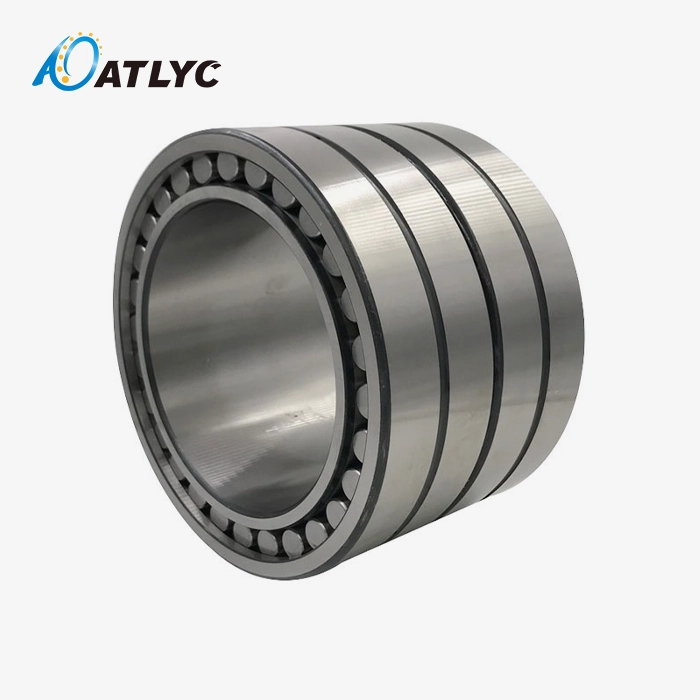
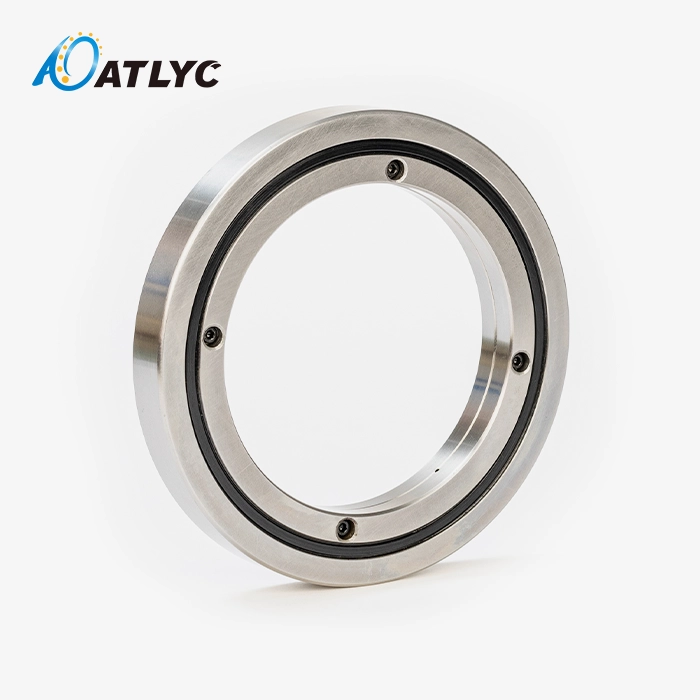
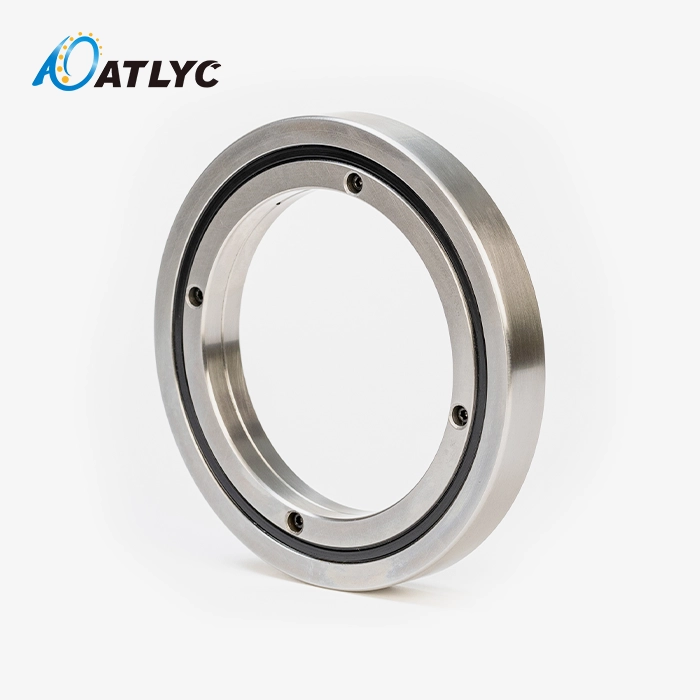
The CRBH Cross roller bearing is the best choice for production workers who are limited on space but need bearings that can handle radial, axial, and moment loads at the same time. Because it has an integrated ring structure and orthogonal rollers spaced at 90° intervals within V-groove raceways, this precision component combines the ability to carry loads in multiple directions into a single, small unit. The design gets rid of the common installation mistakes that happen with split-ring setups while still being very rigid. This is a huge benefit for robots, CNC indexing tables, and automatic inspection systems, where accurate placement affects the quality of the final product.

Understanding CRBH Cross Roller Bearings and Combined Load Handling
What Makes CRBH Bearings Different from Standard Crossed Roller Designs
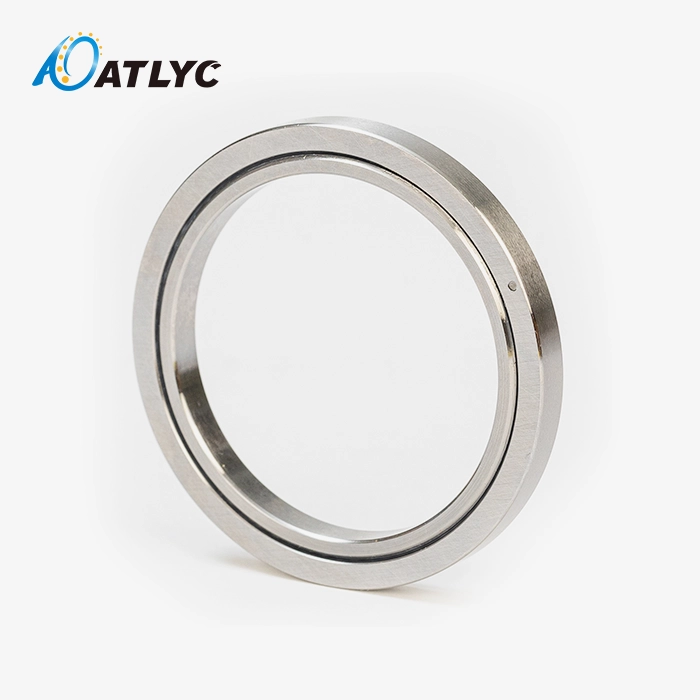
There are different types of crossed roller bearings, but CRBH bearings stand out because their inner and outer rings are made of a single piece. Unlike the RB or RE series bearings, which have split rings that need to be carefully lined up when they are put together, this combined construction doesn't have any structural gaps that could affect how the load is distributed. We've seen how unevenly tightened mounting nuts can cause split-ring designs to deform. This is a problem that takes makers days to fix and recalibrate. This problem is fixed by the CRBH line, which keeps its dimensions stable no matter how it is mounted.
The Science Behind Combined Load Capability
When machinery feels pressure from more than one way at the same time, this is called a combined load. When a robotic arm lifts something, it causes radial forces (which are perpendicular to the shaft), axial forces (which are parallel to the shaft), and moment loads, which are twisting forces. To handle these complicated loads, traditional bearing sets need to pair multiple units, usually angular contact ball bearings, in certain ways. With each extra bearing, the total tolerance stacks up, which makes the process more difficult. This problem can be solved by the CRBH Cross roller bearing, which has a set of circular rollers that are placed at right angles to each other between precision-ground V-groove raceways. This straight-line arrangement lets each roller touch both rings at the best angle, spreading the weight evenly among all rollers at the same time. The shape makes load paths that naturally resist deflection in all directions. This is done with a single component that is 30–40% thinner than similar solutions and does the job of three different bearing sets.
How Roller Positioning Enhances Load Distribution
Pay close attention to the V-groove shape of the track. V-grooves have two clear touch places for each roller, one on each side of the groove. This is different from flat or Gothic-arch profiles. When horizontal loads push downward, the bottom rollers slightly contract while the top rollers stay in place. At the same time, axial loads act on the slanted contact surfaces, moving force through the roller body instead of making it slide. Spacers or bars made of precision metal keep each roller from touching the metal next to it directly. The friction coefficient drops to 0.0015, which is a lot less than in full-complement versions where the rollers touch each other. Less friction means less heat production, longer grease life, and higher speeds that are allowed. These are all very important when your production lines need to run all the time with little planned breaks.
Technical Specifications and Performance Metrics of CRBH Bearings
Load Ratings That Matter for Procurement Decisions
Dynamic load ratings show how much CRBH Cross roller bearing weight the CRBH Cross roller bearing can hold when it's rotating, while static load ratings show how much weight it can hold when it's not moving or slowly vibrating. Because cylindrical rollers make line contact instead of point contact like balls do, CRBH bearings can usually handle 20 to 30 percent more dynamic load than ball bearings of the same size. A CRBH 4010 bearing has a 40mm bore, a 65mm outer diameter, and a 10mm thickness. It can handle a dynamic rotational load of about 13.5 kN, an axial load of 9.8 kN, and a moment load of 210 N·m.These numbers have a direct effect on how long a service will last. According to ISO 281, doubling the load cuts the life of a bearing by eight times. Accurate load rating data keeps your equipment from breaking down too soon when it's under different loads, and it also helps you plan when to do repairs. We suggest that you ask the makers for approved test reports that show that the load capacity has been checked according to ISO 76 standards.
Dimensional Parameters and Space Optimization
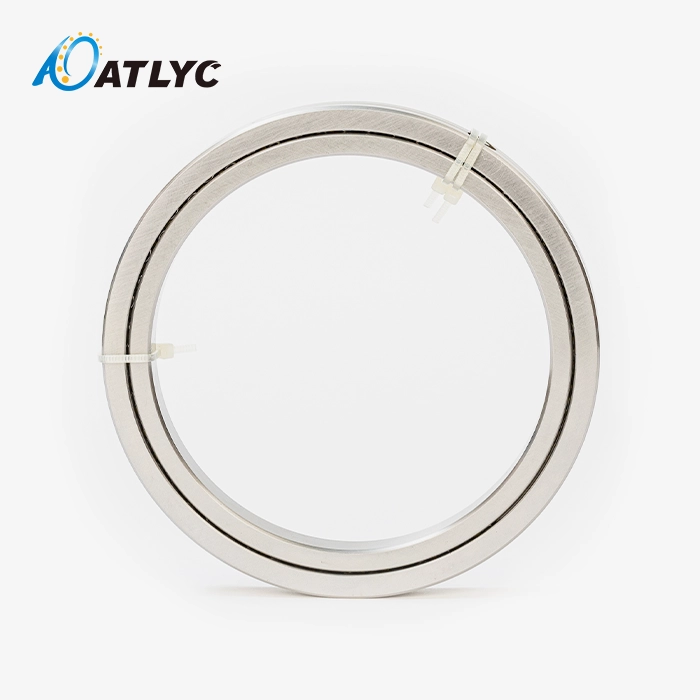
Because they have thin walls, CRBH series bearings can have diameter-to-thickness CRBH Cross roller bearing ratios of up to 10:1. Usually, a single CRBH unit is used instead of two angular contact bearings, which cuts the axial length by 40 to 50 percent. Take the case of a rotary table. Standard setups need 60 mm of axial room for the bearings, attachment tools, and adjustment shims. The equivalent CRBH Cross roller bearing does the same job in 25 mm, which frees up room that can be used for other functions or to reduce the total size of the machine. Standardized forms are used for mounting measurements, and the outer ring has through-holes for flange mounting. The mounting surfaces are precision-ground to make sure they are straight, with a tolerance of 0.01 mm. Installation freedom allows for both inner ring rotation (shaft mounting) and outer ring rotation (housing mounting) setups, so different mechanical arrangements can be made without having to be machined to order.
Maintenance Requirements for Sustained Performance
How you lubricate a bearing has a big effect on how long it lasts. Depending on the speed and temperature of operation, CRBH bearings can be lubricated with either grease or oil. NLGI Grade 2 lithium-based greases with EP additives for border lubrication protection work well for uses with limited access to relubrication when the speed is less than 500 rpm. The ultra-smooth raceways work perfectly with current synthetic greases, keeping the thickness of the film even when temperatures change, which is typical in industrial settings. When the working temperature goes above 80°C or the speed goes above 500 rpm, oil greasing is needed. Circulating oil systems keep things cool all the time and get rid of wear particles that would otherwise speed up damage to the raceways. Using vibration analysis for condition tracking finds early signs of wear, which lets you plan maintenance ahead of time and avoid major failures that mess up production schedules. Maintenance schedules for CRBH bearings in moderate-duty uses usually allow between 8,000 and 12,000 hours of use between checks. In places with a lot of contamination, sealed versions with rubber lip seals or non-contact labyrinth seals are needed to keep particles out. We have proof that proper sealing can increase the life of bearings in cement production equipment from 14 months to over 4 years. This shows how peripheral parts can affect the longevity of core parts.
Comparing CRBH Cross Roller Bearings with Alternative Bearings
CRBH vs. Standard Crossed Roller Bearings
There are many different kinds of standard crossed roller bearings. The RA, RB, RE, and RU models are just a few examples. The main difference is still between the split and the combined ring design. Split-ring designs make it easier to place on continuous shafts without taking them apart, but they add structural compliance, which makes them 15–25% less rigid than integrated rings. Applications that need precise positioning, like handling semiconductor wafers, setting optical lenses, and coordinate measuring tools, gain a lot from the CRBH Cross roller bearing and its higher stiffness.
CRBH vs. Slewing Ring Bearings
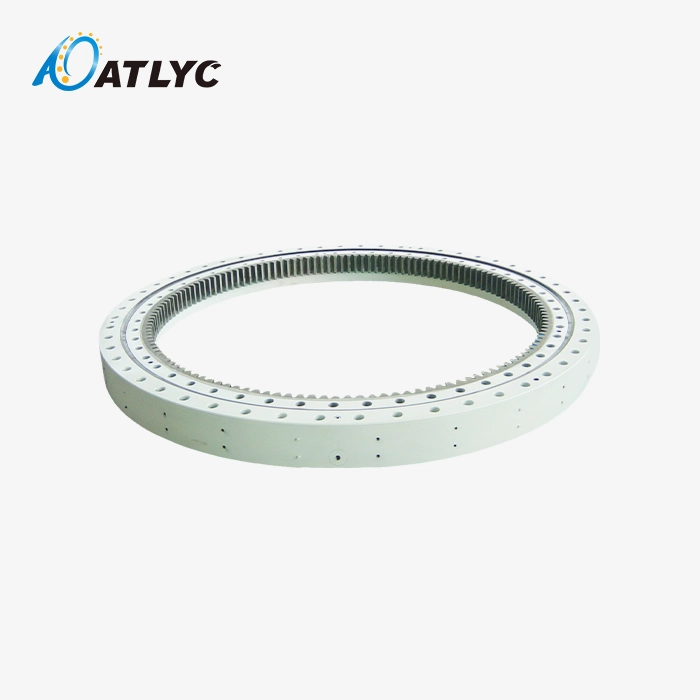
Slewing rings can handle even larger moment loads and come in sizes ranging from 200 mm to several meters. They are used in crane towers and wind turbine yaw drives. However, their large cross-sections and heavy weight make them useless for small machines. CRBH Cross roller bearing units are between regular ball bearings and slewing rings. They can handle large moment loads (up to 500 N·m in bigger sizes) while still fitting into spaces that are good for robotics and precision machine tools. Cost considerations favor CRBH Cross roller bearing models in the 30 to 150 mm bore diameter range, where slewing rings would be too big and cost too much. It takes less time to put together than slewing rings because they only need a flat mounting surface and through-bolts for installation. This is because slewing rings need to be aligned with gear mesh and go through complicated setup processes.
CRBH vs. Angular Contact Ball Bearings
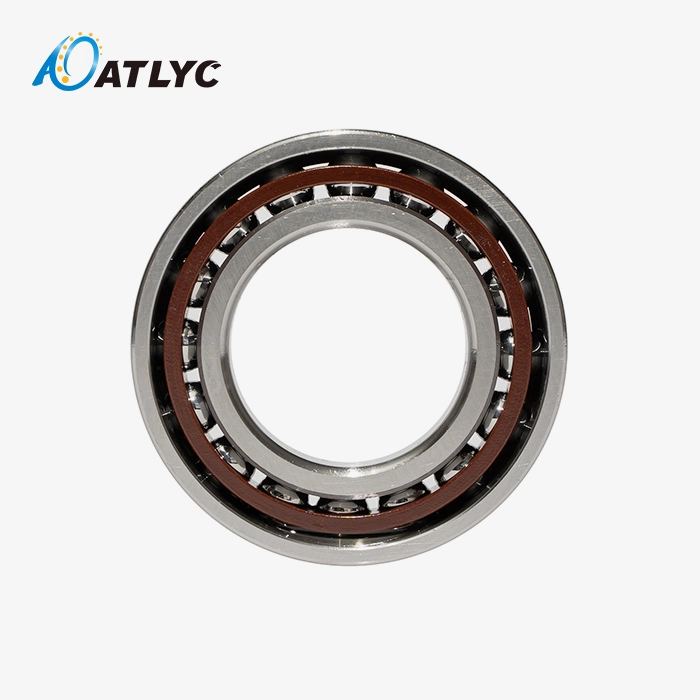
Traditionally, paired angular CRBH Cross roller bearing contact ball bearings have been used for applications with mixed loads. By changing the contact angle shape, putting two bearings back-to-back or face-to-face changes the axial load capacity. This method always works, but it takes up axial room and needs exact spacer measurements to get the right preload. If the preload is too open, there is too much internal space and vibration, and if it is too tight, heat is generated, and the life is shortened. Because of how they are made, CRBH bearings don't need to be preloaded. The arrangement of the orthogonal rollers automatically serves all load directions and doesn't need any extra preloading systems. Maintenance teams like how easy this is because replacing a bearing is just a matter of swapping it out instead of using special tools and following complicated steps to measure the preload. Less complicated maintenance is especially helpful for businesses that have equipment installed in different places and don't have easy access to expert technicians. When it comes to performance, CRBH bearings are stiffer than paired angular contact ball bearings with the same envelope size. Ball bearing arrangements have stiffness values of 40 to 60 N/µm, while CRBH installations have stiffness values of 80 to 120 N/µm. This means that CRBH installations bend half as much when the loads are the same. This trait is useful in cutting tasks where tool displacement limits are very limited and bearing compliance has a direct effect on the accuracy of the workpiece's dimensions.
Procurement Insights for CRBH Cross Roller Bearings
Identifying Qualified CRBH Cross Roller Bearing Suppliers
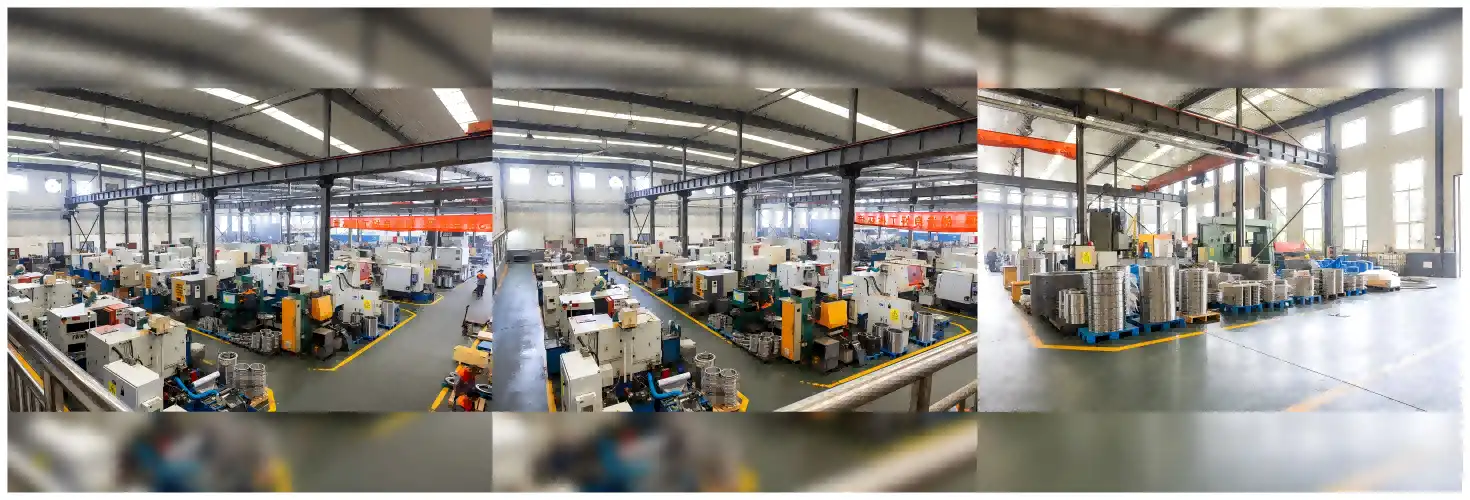
When looking for precision bearings, you need to look at more than just price when comparing makers. We suggest that building tours or thorough documentation of capabilities be used to figure out the output scale. Manufacturers with multiple specialized production lines show that they can meet long-term supply deals by producing large amounts of goods. Luoyang Auto Bearing Co., Ltd., which was founded in 2010 and has grown from a single workshop to six specialized production sites that serve customers in countries like the US, Germany, and South Korea in just fifteen years, is a good example of this growth trend. Quality marks are direct proof of consistent production. ISO 9001 certification makes sure that quality management systems are written down and followed. IATF 16949 certification, on the other hand, is specific to the car industry and covers things like advanced planning for product quality and processes for approving production parts. Suppliers with both licenses show that they can meet strict car OEM standards that apply to other industries that need reliability. The ability to provide technical help is often what sets key partners apart from adequate suppliers. A CRBH Cross roller bearing maker can help engineering teams with load calculations, finite element analysis for custom uses, and fast prototyping of non-standard sizes during the design process. This partnership stops expensive design changes after investing in tools and speeds up the time it takes for new equipment platforms to reach the market.
Managing Lead Times and Logistics
Standard CRBH Cross roller bearing sizes usually ship within two to four weeks from well-known companies that keep stock of standard sizes and shapes. For custom sizes, it takes 6 to 10 weeks, which includes getting the materials, cutting them out, heating them up, and doing the final inspections. By planning equipment builds around these dates, you can avoid project delays and high-cost, last-minute air freight costs that can be more than the cost of the bearings. How well the product is packed affects how it is when it arrives. When bearings arrive with rust from not having enough vapor-phase corrosion inhibitors or impact damage from not having enough cushioning, they make getting inspections harder and could lead to arguments. Suppliers you can trust use moisture-resistant packaging with desiccant packets and impact-rated shipping cases to keep your goods safe during ocean travel and multiple handling stages. For companies that manage foreign supply lines, the ability of the supplier to provide export documentation is very important. Getting goods through customs is faster and easier when you have accurate business bills, certificates of origin, and material certifications. When suppliers have experience with export markets, they provide these papers ahead of time. This cuts down on clearance delays that can add weeks to shipping times when changes need to be made.
Practical Implementation: Installation and Application Cases
Installation Best Practices for Maximum Performance
For a proper fitting to start, the mounting surfaces must be clean and free of burrs, paint, or rust. Surface flatness of less than 0.02 mm across the fastening face ensures that the bolts are loaded evenly, which stops the ring from warping and causing stress to build up inside it. Before installing the bearing, you should check the mounting surfaces with precision straightedges or dial markers. If they are not straight, you can fix the problem by polishing or remachining the surface. Tightening mounting bolts follows a set of torque steps that keep the load from being uneven. First, tighten all the bolts by hand in a star design. Then, apply the torque values in three steps, starting with 33% of the final torque and ending with 100%. By moving slowly, this method lets the bearing center itself on the mounting surface, spreading the tightening forces evenly around the outside. Skipping this step can cause out-of-roundness greater than 0.05 mm, which can wear out raceways faster because rollers will be loaded unevenly. Standardized tolerance suggestions tell us how to fit the shaft and frame together. Inner rings that rotate usually need h6 or j6 shaft fits, which provide a little resistance that stops fretting rust and lets the material expand when it gets hot. Stationary outer rings have H7 housing bores that make them easy to put on and take off for repair. Tighter fits may be needed for applications that are subject to shock loads, but they make it harder to take apart and require thermal expansion methods or hydraulic press fitting.
Case Study: Robotic Joint Assembly Line Integration
A company in the Midwest that makes car parts, called CRBH Cross roller bearing, has asked us to talk about positioning problems that kept happening in their six-axis robotic welding units. The old bearing system had paired angular contact ball bearings in the shoulder and elbow joints. These had to be replaced every six months because the raceways were wearing out. The study found that heat cycling decreased the preload, which increased backlash and required position correction, which added time to the cycle. For the shoulder joint, we chose CRBH Cross roller bearing 5013 units with a 50mm hole, and for the elbow joint, we chose CRBH 4010 units. The combined ring design got rid of the need to change the preload during installation. This cut the time it took to replace a bearing from 4 hours per joint to 45 minutes per joint. After 18 months, tremor research shows that there has been no wear, and positional repeatability has gone up from ±0.023mm to ±0.008mm. The 0.3-second drop in cycle time per weldment means that their three-shift business can handle 12% more work. The customer's repair team really likes how easy it is to change parts. Before, making changes to bearings required special training in how to use gear markers to measure preload and figure out spacer dimensions. Now, maintenance techs can get consistent results by following standard bolt torque methods without the need for specialized tools. This is helpful for companies that are losing skilled workers.
Conclusion
The CRBH Cross roller bearing can handle a lot of combined load because it has an integrated ring design and orthogonal roller positioning. This means that it can combine what used to be several bearing systems into one space-saving unit. The technical benefits, such as higher rigidity, easier installation, and maintenance-free operation, directly address problems that industrial equipment makers have when they need accuracy and dependability. Knowing the load grades, care needs, and correct installation steps for these parts will help them work at their best in a variety of settings, from robotic automation to precision machine tools. Strategic sourcing from certified makers that offer technical support and a reliable supply chain changes buying bearings from a one-time transaction to a relationship that supports long-term operating success.
FAQ
1. What load types can CRBH bearings handle simultaneously?
The CRBH Cross roller bearing can handle radial loads (which are perpendicular to the shaft axis), axial loads (which are parallel to the shaft axis), and moment loads (which are twisting forces) all at the same time in a single, small package. The design of orthogonal rollers spaced at 90° intervals makes load tracks that naturally resist deflection in all directions. Because it can work in more than one way, it gets rid of the need for complicated bearing setups that need more than one unit.
2. How does integrated ring construction improve performance?
Solid one-piece inner and outer rings keep the structure from breaking at points that cause movement under load. This makes the design 15–25% more stiff than split-ring designs. This design stops the warping that happens during installation when mounting bolts are tightened unevenly on split rings. This leads to uniform dimensional accuracy, which is important for precision positioning uses because it doesn't matter what the mounting conditions or limits of the case are.
3. How often do you suggest that you service CRBH bearings?
As long as the bearings are properly oiled and sealed and the load is mild, inspections should be done every 8,000 to 12,000 hours. In places with a lot of dirt or where something is always running, it may need to be checked on more often using vibration analysis to find early signs of wear. The amount of time between grease changes depends on the speeds and temperatures of the machines. For most commercial uses, the time between grease changes is between 6 and 18 months. When compared to reactive methods, planned maintenance greatly increases the life of a system.
4. Can CRBH bearings replace existing bearing arrangements in retrofit applications?
Because they have a thin wall, CRBH bearings can usually fit into mounting pockets that were made for standard bearing setups. However, some minor machining may be needed. Even if only small changes need to be made, retrofits can save money because they improve performance by lowering runout, making the structure stiffer, and making upkeep easier. During the design review process, dimensional compatibility should be checked to make sure that the parts will fit and work properly in the given application.
Partner with ATLYC for Reliable CRBH Cross Roller Bearing Solutions
ATLYC can help you with your production problems because they have been making fine bearings for fifteen years. Our ISO 9001 and IATF 16949-approved factories in Luoyang produce the CRBH Cross roller bearing, meeting the high standards needed for your car parts, industrial machinery, and automation equipment. We've grown from a single workshop to six specialized sites that serve high-end customers in the US, Germany, and South Korea. Our 120 skilled workers do things like production, quality control, and engineering support. As a reliable manufacturer, we know that your success depends on reliable quality, low prices, and a professional relationship that lasts beyond the purchase order. Contact our engineering team at auto@lyautobearing.com to talk about how our precision crossed roller bearings can improve the performance and dependability of your equipment.
References
1. Harris, T.A. & Kotzalas, M.N. (2006). Rolling Bearing Analysis: Essential Concepts of Bearing Technology (5th ed.). CRC Press, Boca Raton.
2. ISO 76:2006. Rolling bearings — Static load ratings. International Organization for Standardization, Geneva.
3. ISO 281:2007. Rolling bearings — Dynamic load ratings and rating life. International Organization for Standardization, Geneva.
4. Weck, M. & Brecher, C. (2006). Machine Tools Production Systems 1: Machine Tool Structures and Design Principles. Springer-Verlag, Berlin.
5. Schmitt, R. & Peterek, M. (2015). "Traceable Measurement of Large Gears with Micron Accuracy." CIRP Annals - Manufacturing Technology, 64(1), 457-460.
6. Budynas, R.G. & Nisbett, J.K. (2020). Shigley's Mechanical Engineering Design (11th ed.). McGraw-Hill Education, New York.
Learn about our latest products and discounts through SMS or email