- English
- French
- German
- Portuguese
- Spanish
- Russian
- Japanese
- Korean
- Arabic
- Greek
- German
- Turkish
- Italian
- Danish
- Romanian
- Indonesian
- Czech
- Afrikaans
- Swedish
- Polish
- Basque
- Catalan
- Esperanto
- Hindi
- Lao
- Albanian
- Amharic
- Armenian
- Azerbaijani
- Belarusian
- Bengali
- Bosnian
- Bulgarian
- Cebuano
- Chichewa
- Corsican
- Croatian
- Dutch
- Estonian
- Filipino
- Finnish
- Frisian
- Galician
- Georgian
- Gujarati
- Haitian
- Hausa
- Hawaiian
- Hebrew
- Hmong
- Hungarian
- Icelandic
- Igbo
- Javanese
- Kannada
- Kazakh
- Khmer
- Kurdish
- Kyrgyz
- Latin
- Latvian
- Lithuanian
- Luxembou..
- Macedonian
- Malagasy
- Malay
- Malayalam
- Maltese
- Maori
- Marathi
- Mongolian
- Burmese
- Nepali
- Norwegian
- Pashto
- Persian
- Punjabi
- Serbian
- Sesotho
- Sinhala
- Slovak
- Slovenian
- Somali
- Samoan
- Scots Gaelic
- Shona
- Sindhi
- Sundanese
- Swahili
- Tajik
- Tamil
- Telugu
- Thai
- Ukrainian
- Urdu
- Uzbek
- Vietnamese
- Welsh
- Xhosa
- Yiddish
- Yoruba
- Zulu
How Do RA Type Crossed Roller Bearings Work in Robotics?
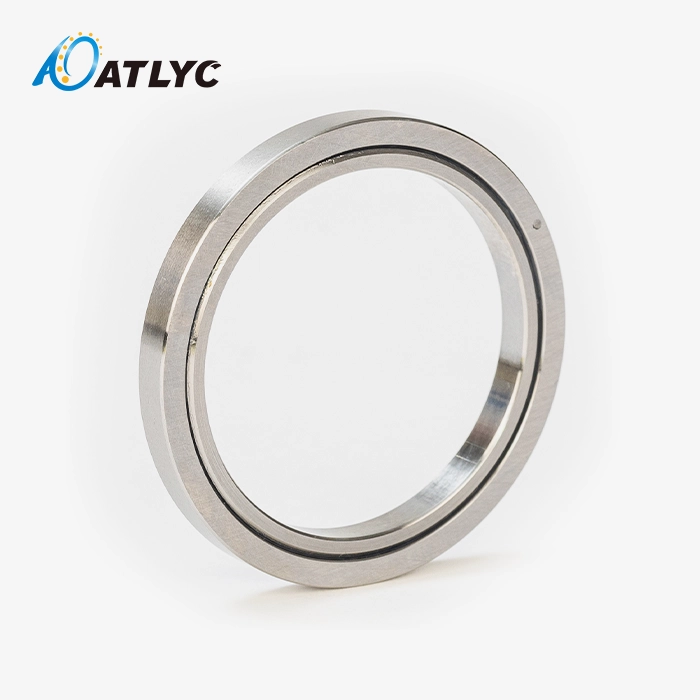
RA Type Crossed Roller Bearings function as the critical motion control component in modern robotics through their unique orthogonal roller arrangement. Cylindrical rollers positioned at 90-degree angles within precision V-grooves handle radial, axial, and moment loads simultaneously within a single compact unit. The outer ring separable design, combined with an integrated inner ring, enables smooth rotation while maintaining micron-level accuracy. This configuration eliminates the need for multiple bearing arrangements, reducing installation space by up to 60% compared to conventional solutions. The crossed roller geometry distributes contact stress evenly across roller surfaces, providing exceptional rigidity essential for robotic joints, manipulator arms, and precision rotary tables where positioning accuracy directly impacts production quality.
Understanding RA Type Crossed Roller Bearings in Robotics
Precision motion control remains the cornerstone of industrial automation, where every micron of deviation translates into measurable quality defects. Crossed roller bearings represent an engineering solution specifically developed to address the demanding requirements of robotic systems operating under constant multi-directional stress.
The Structural Innovation Behind Crossed Roller Technology
The fundamental architecture of these precision components features cylindrical rollers arranged perpendicularly between inner and outer ring raceways. Unlike traditional ball bearings that create point contact, the crossed roller configuration establishes line contact across roller length. This geometry multiplies the effective load-bearing surface area, enabling a single bearing to withstand forces that would typically require dual angular contact arrangements.
The RA series distinguishes itself through its outer ring separable construction. This design feature simplifies installation procedures within confined assembly environments common in robotic joint housings. Manufacturing these bearings involves precision grinding of 90-degree V-groove raceways into both rings, ensuring consistent roller alignment throughout operational lifecycles. The integral inner ring maintains structural rigidity while the split outer ring facilitates mounting around pre-assembled shaft configurations.
Material selection plays an equally vital role in performance characteristics. High-carbon chromium-bearing steel (GCr15 and GCr15SiMn) undergoes heat treatment processes, achieving surface hardness between HRC 58-64. This hardness level provides an optimal balance between wear resistance and fracture toughness, critical factors when bearings operate under continuous dynamic loading cycles typical in robotic applications.
How Load Distribution Enhances Robotic Performance
Robotic systems generate complex loading patterns combining radial forces from gravitational loads, axial thrust from end-effector operations, and moment forces from cantilevered arm positions. Traditional bearing arrangements require engineers to calculate and accommodate each load vector separately, often necessitating multiple bearing pairs with precise preload adjustments.
The crossed roller arrangement fundamentally changes this engineering approach. Alternating roller orientations create a self-stabilising geometry where applied loads automatically distribute across multiple contact points. When radial force acts on the bearing, half the rollers oriented in that plane carry the primary load. Simultaneously, perpendicular rollers provide torsional stability and moment resistance. This inherent load-sharing mechanism eliminates internal stress concentrations that typically limit bearing service life in demanding applications.
Precision manufacturing tolerances directly influence this load distribution efficiency. The bearings manufactured to P5 and P4 accuracy grades exhibit raceway roundness deviation below 2.5 microns and runout precision within 5 microns. These specifications ensure uniform contact stress across all rollers, preventing premature wear on individual components that would compromise overall bearing performance.
Dimensional Specifications and Application Parameters
Available sizing ranges demonstrate the versatility of this bearing type across diverse robotic platforms. Inner diameters span from 20mm to 350mm, with corresponding outer diameters reaching 540mm and cross-sectional widths between 12mm and 45mm. This dimensional flexibility allows integration into compact collaborative robots weighing under 10kg as well as heavy-duty industrial manipulators handling payloads exceeding 500kg.
The ultra-thin profile characteristic of the RA series proves particularly valuable in articulated robot arms where each joint adds rotational inertia. Reducing bearing width by even 5mm in a six-axis robot arm decreases overall moving mass, enabling faster acceleration profiles and reducing energy consumption. Independent testing has documented energy savings of 12-18% when replacing conventional bearing pairs with equivalent crossed roller units in medium-payload robotic systems.
Advantages of Using RA Type Crossed Roller Bearings in Robotics
Modern manufacturing environments demand robotic systems that deliver consistent precision across millions of operational cycles while occupying minimal factory floor space. The specific advantages offered by crossed roller technology directly address these industrial requirements.
Understanding the performance benefits of RA Type Crossed Roller Bearings requires examining how bearing characteristics translate into tangible productivity improvements. We've observed through extensive field applications that proper bearing selection influences downstream factors, including maintenance scheduling, production uptime, and total cost of ownership over equipment lifecycles.
Superior Load Capacity Within Compact Envelopes
The most immediately quantifiable advantage manifests in load-carrying capability relative to bearing envelope dimensions. Crossed roller bearings achieve basic dynamic load ratings 40-60% higher than equivalent-sized ball bearings. This performance differential stems from the line contact geometry previously described, which distributes stress across cylindrical roller length rather than concentrating forces at point contact areas.
Practical implications become clear when designing robotic wrist assemblies. A typical 6-axis robot requires the final three joints (wrist pitch, yaw, and roll) to fit within an 80mm diameter envelope while supporting tool loads up to 15kg at 250mm extension. Traditional bearing arrangements would necessitate dual angular contact pairs with external spacers, consuming valuable axial space and complicating sealing provisions. A single crossed roller bearing accomplishes the same load handling within a 45mm width, freeing space for integrated cabling channels and pneumatic routing.
The moment load capacity proves equally critical. Robotic arms operate as cantilevered structures where gravitational and inertial forces create significant overturning moments at joint interfaces. The crossed roller configuration resists these moments through its roller arrangement geometry without requiring external thrust bearings or additional structural reinforcement. Documented test data shows moment rigidity values exceeding 3.5×10^6 N·mm/arcmin for 150mm bore diameter units—a specification directly translating to positioning repeatability under varying payload conditions.
Enhanced Rotational Accuracy and Reduced Friction
Precision manufacturing applications such as semiconductor pick-and-place operations or optical component assembly require positioning accuracy measured in single-digit microns. Bearing runout—the deviation between theoretical and actual rotation centerline—becomes the limiting factor in achievable system accuracy.
Crossed roller bearings manufactured to P4 precision class exhibit radial runout below 3 microns and axial runout under 4 microns. This level of accuracy maintains positioning precision throughout the bearing's operational envelope, eliminating the cumulative error propagation that occurs in multi-bearing arrangements. When integrated into robotic systems, this translates to end-effector positioning repeatability of ±0.01mm across full working envelopes—meeting requirements for precision assembly tasks without external calibration systems.
The low friction coefficient inherent to the crossed roller design contributes additional operational benefits. Roller elements create rolling motion rather than sliding contact, generating friction coefficients typically below 0.002 under optimal lubrication conditions. Reduced friction means lower heat generation during high-speed operations, minimising thermal expansion effects that degrade positioning accuracy. Power transmission efficiency also improves, with documented torque losses 30-40% lower than comparable angular contact bearing pairs in direct drive robotic joints.
Space Efficiency Enabling Advanced Robot Architectures
Compact equipment design continues trending across industrial automation as manufacturers seek to maximise production capacity within existing facility footprints. Robotic systems must deliver increasing performance capabilities while occupying less floor space and featuring slimmer arm profiles that improve workspace accessibility.
The thin-section construction characteristic of crossed roller bearings directly enables these compact architectures. Eliminating the need for multiple bearing races, spacers, and housing shoulders reduces overall joint diameter by 20-35% compared to conventional designs. This dimensional savings compounds across multi-axis systems—a six-axis robot arm utilising crossed roller bearings at each joint can reduce total arm diameter by 40mm while maintaining equivalent load capacity.
Reduced bearing width also creates opportunities for integrating auxiliary components within joint envelopes. Engineers can package motor encoders, brake mechanisms, and cable management systems in spaces previously occupied by bearing assemblies. This integration simplifies overall robot construction, reducing parts count and potential failure points while improving serviceability through modular joint designs that allow complete assembly replacement during scheduled maintenance windows.
Comparing RA Type Crossed Roller Bearings to Other Bearing Types
Bearing selection represents a critical engineering decision impacting robot performance, maintenance requirements, and lifecycle costs. Understanding comparative advantages guides procurement managers toward optimal solutions for specific application requirements.
Performance Comparison Against Ball Bearings
Deep groove ball bearings remain the most widely utilised bearing type across industrial applications due to their low cost and adequate performance in moderate-load scenarios. Radial ball bearings handle primarily radial loads with limited axial capacity, necessitating paired arrangements when applications involve combined loading conditions.
Crossed roller bearings demonstrate measurable advantages across multiple performance parameters. Load capacity increases by 45-65% within identical envelope dimensions, allowing either increased payload capacity or reduced bearing size for equivalent loads. The higher contact ratio between rollers and raceways extends calculated bearing life (L10) by factors of 2.5 to 4 under comparable operating conditions. This longevity translates directly to reduced maintenance frequency and lower total cost of ownership despite higher initial procurement costs.
Rigidity differences prove particularly significant in precision applications. Ball bearings exhibit elastic deflection under load, creating positioning errors proportional to applied forces. Crossed roller bearings maintain structural stiffness through their geometry, with measured deflection rates 3-5 times lower than ball bearing equivalents. Robotic applications requiring consistent accuracy across varying payloads benefit substantially from this rigidity characteristic.
Angular Contact Bearing Alternatives
Angular contact ball bearings represent another common solution for combined loading applications, but RA Type Crossed Roller Bearings offer distinct advantages in certain scenarios. Angular contact bearings feature contact angles typically between 15 and 40 degrees, allowing simultaneous radial and axial load handling. Manufacturers often mount angular contact bearings in duplex or triplex arrangements to achieve bidirectional thrust capacity and increased rigidity. However, crossed roller bearings provide higher moment load rigidity and greater compactness, making them preferable for space-limited applications requiring precision positioning.
While angular contact configurations provide improved performance over single-row radial bearings, they introduce installation complexity and consume additional axial space. Proper preload adjustment becomes critical—insufficient preload reduces rigidity while excessive preload accelerates wear and increases friction. Achieving optimal preload requires precision shoulder machining and careful assembly procedures that increase manufacturing costs and assembly time.
Crossed roller bearings eliminate these installation complications through their integrated design. The alternating roller arrangement provides equivalent bidirectional load capacity without external preload adjustment mechanisms. Moment capacity also substantially exceeds angular contact capabilities, with crossed roller units handling moment loads 2-3 times greater than duplex angular contact pairs of similar dimensions. For robotic joint applications where moment loads dominate loading conditions, this advantage directly influences bearing selection decisions.
Specialised Bearing Applications
Certain robotic applications utilise specialised bearing types, including slewing rings, four-point contact bearings, or cylindrical roller bearings. Each type serves specific application niches based on load characteristics, rotation speed, and precision requirements.
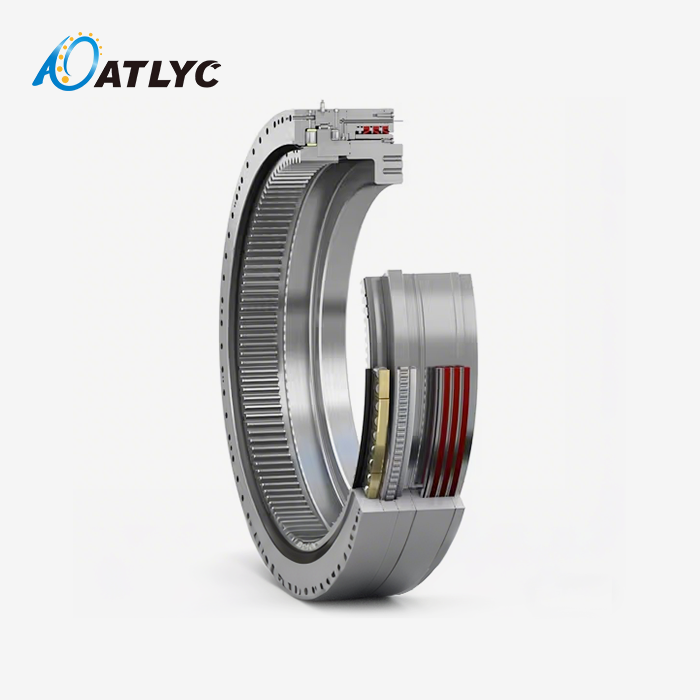
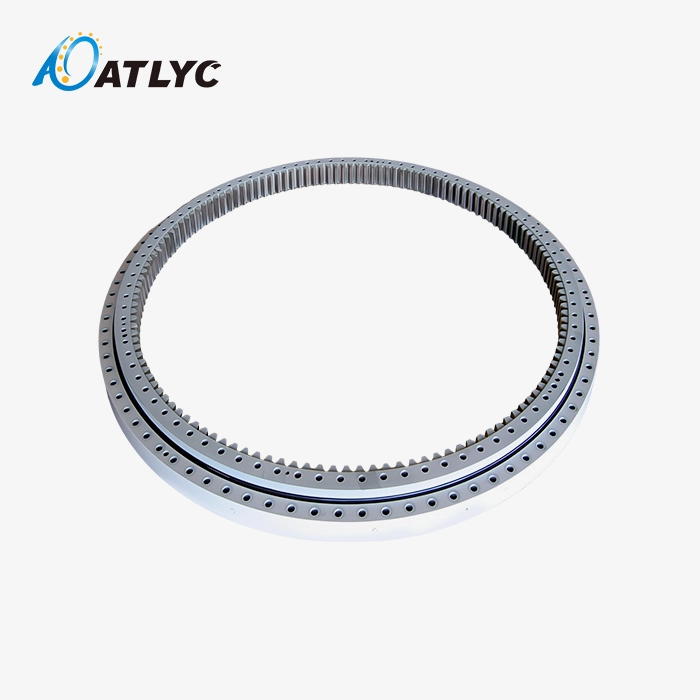
Slewing rings excel in applications requiring very large diameters with slow rotation speeds, such as crane turrets or large rotary tables. Their integrated gear teeth simplify drive system design but sacrifice precision compared to crossed roller alternatives. Applications requiring positional accuracy below 0.1mm generally prove unsuitable for slewing ring solutions.
Four-point contact bearings offer compact axial/radial load capacity through their specialised raceway geometry. However, they generate higher friction than crossed roller designs and exhibit reduced moment capacity. Applications involving continuous rotation under high moment loads experience shorter service life with four-point contact bearings compared to crossed roller equivalents.
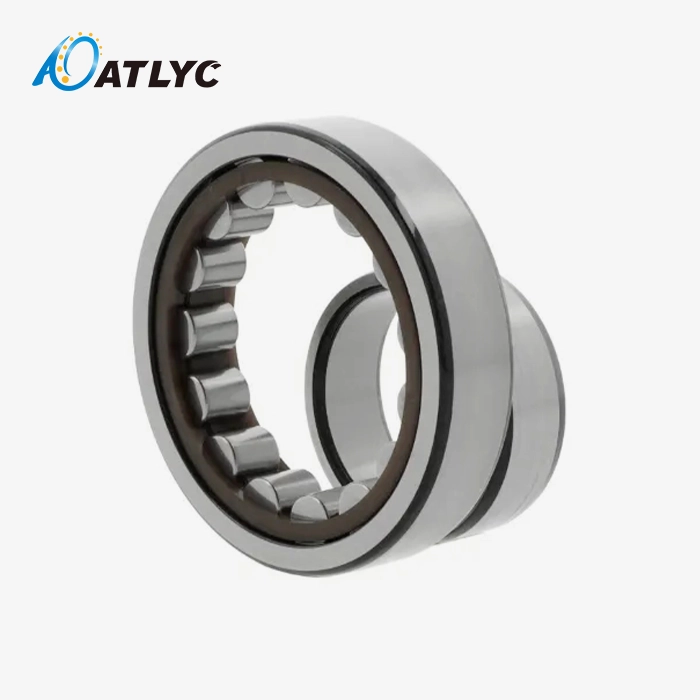
Cylindrical roller bearings provide exceptional radial load capacity and accommodate thermal expansion through their separable design. Their inability to handle axial or moment loads without supplementary thrust bearings limits applicability in robotic joints where combined loading represents the normal operating condition. Engineers might specify cylindrical roller bearings for specific robot axes experiencing purely radial loads, but crossed roller bearings offer more versatile solutions across multi-axis systems.
Maintenance and Specification Guidelines for RA Type Crossed Roller Bearings
Maximising bearing service life and maintaining precision performance requires understanding proper maintenance procedures and specification parameters. Procurement decisions should account for long-term operational requirements beyond initial purchase considerations.
Lubrication Requirements and Procedures
Proper lubrication represents the single most critical maintenance factor influencing bearing longevity. The crossed roller configuration requires lubricants that maintain film strength under the line contact conditions between rollers and raceways. Lithium-based greases with ISO VG 68-100 base oil viscosity provide suitable lubrication for most industrial robotic applications operating at ambient temperatures between 10-40°C.
Lubrication intervals depend heavily on operating conditions, including rotation speed, load intensity, and environmental contamination levels. Clean factory environments with moderate duty cycles typically require relubrication every 2000-3000 operating hours. Harsh environments exposing bearings to metal particulates, coolant mist, or temperature extremes may necessitate intervals as frequent as 500-800 hours.
Critical Specification Parameters for Procurement
Selecting appropriate bearing specifications requires analysing several application-specific parameters. Load calculations should account for maximum combined radial, axial, and moment loads with appropriate safety factors—typically 1.5-2.0 for continuous duty industrial applications.
Accuracy grade selection for RA Type Crossed Roller Bearings depends on positioning requirements. P5 class bearings suit general industrial robotics where positioning accuracy requirements remain above ±0.05mm. Applications demanding higher precision, such as semiconductor handling or precision assembly, require P4 or higher accuracy grades despite increased costs of 25-40% over P5 equivalents. However, when crossed roller rigidity and compactness are prioritised, these bearings outperform angular contact ball bearings despite the higher precision-grade cost.
Common Operational Challenges and Solutions
Premature bearing failure often traces to installation errors or operational conditions outside design parameters. Misalignment represents the most frequent installation issue, occurring when the shaft and housing axes fail to maintain concentricity within specified tolerances. Crossed roller bearings tolerate minimal misalignment—typically under 2-3 arcminutes—before accelerated wear patterns develop.
Contamination control proves equally vital. Particulate contamination from machining debris, environmental dust, or deteriorated seals creates abrasive wear on precision-ground raceways. Installing effective sealing systems and maintaining positive internal pressure where applicable prevents contamination ingress. Regular inspection of seal condition during maintenance intervals identifies potential contamination pathways before they cause bearing damage.
Procuring RA Type Crossed Roller Bearings: What B2B Buyers Need to Know
Strategic procurement decisions extend beyond comparing technical specifications and unit prices. Establishing relationships with reliable manufacturers who demonstrate consistent quality and provide comprehensive technical support creates long-term value that offsets immediate cost considerations.
Evaluating Manufacturing Partners and Quality Certifications
Quality certification represents the baseline requirement for bearing suppliers serving industrial manufacturing customers. ISO 9001 certification demonstrates fundamental quality management system implementation, while IATF 16949 certification specifically addresses automotive industry requirements, including advanced product quality planning and production part approval processes.
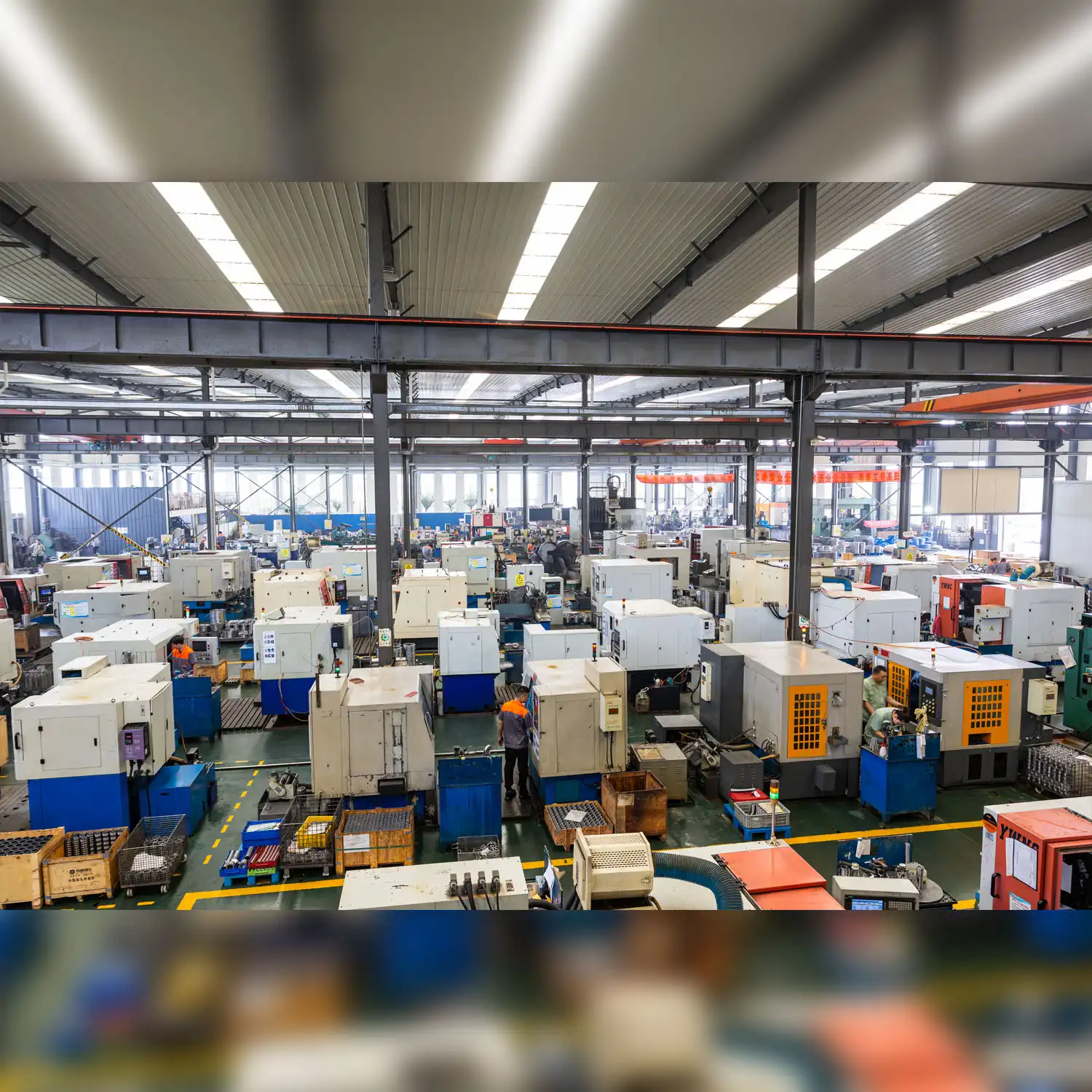
Beyond certification, procurement managers should evaluate manufacturing capacity and process capabilities. Facilities utilising CNC grinding equipment with automated in-process gauging maintain tighter tolerance control than operations relying on manual inspection methods. Production capacity influences lead time consistency—manufacturers maintaining adequate inventory buffers for standard sizes typically deliver orders within 2-3 weeks, while custom specifications may require 6-8 weeks.
Supply Chain Considerations for Global Operations
Manufacturers operating facilities across multiple countries require bearing suppliers capable of supporting global distribution networks. Consolidated purchasing through suppliers maintaining inventory in key regional markets simplifies procurement administration and reduces logistics costs compared to managing multiple regional suppliers.
Lead time consistency affects production planning and inventory management decisions. Suppliers demonstrating on-time delivery rates above 95% allow lower safety stock levels and reduced inventory carrying costs. Establishing blanket purchase agreements with scheduled release dates provides supply certainty while maintaining inventory flexibility.
Understanding Total Cost of Ownership
Initial bearing purchase price represents only one component of total lifecycle costs. Service life, maintenance requirements, and system performance impacts collectively determine true ownership costs. Bearings priced 30% higher but delivering twice the operational life and requiring half the maintenance interventions provide superior value despite higher unit costs.
Downtime costs dwarf bearing replacement costs in automated production environments where equipment stoppage halts entire production lines. Bearing selections that extend the mean time between failures directly reduce unplanned downtime frequency. Specifying premium bearings in critical robot joints where failure causes line stoppage represents sound economic decision-making even when unit costs double compared to economy alternatives.
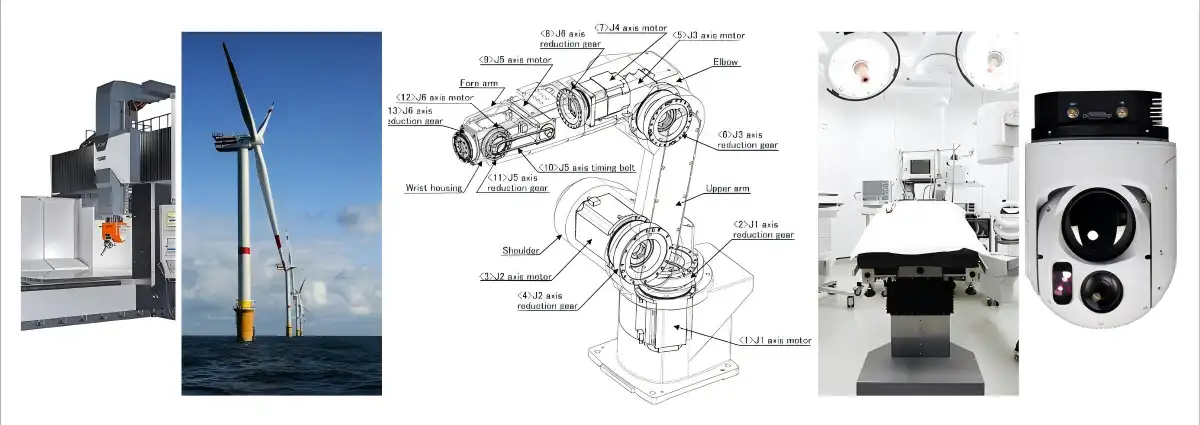
Conclusion
RA Type Crossed Roller Bearings technology delivers the precision, rigidity, and compact design essential for modern robotic systems operating in demanding industrial environments. The unique orthogonal roller arrangement handles complex multi-directional loading within ultra-thin profiles, enabling advanced robot architectures that maximise workspace efficiency. Performance advantages over conventional bearing types translate directly into improved positioning accuracy, extended service intervals, and reduced total ownership costs. Proper specification selection, accounting for load conditions, accuracy requirements, and environmental factors, ensures optimal bearing performance throughout equipment lifecycles. Strategic procurement partnerships with quality-certified manufacturers providing comprehensive technical support create long-term value exceeding immediate cost considerations, supporting reliable production operations in competitive global markets.
FAQ
What maintenance schedule should we implement for crossed roller bearings in robotic applications?
Maintenance intervals vary based on operating conditions, but general industrial environments typically require lubrication every 2000-3000 operating hours. Applications involving contamination exposure, high temperatures, or continuous heavy loading may need servicing every 500-800 hours. Regular inspection should monitor bearing noise, rotation smoothness, and seal condition. Maintaining detailed service records helps identify performance trends and optimise maintenance scheduling based on actual operating conditions rather than arbitrary time intervals.
How do we determine the proper bearing size for specific robotic joint applications?
Calculate maximum combined radial, axial, and moment loads occurring during worst-case operating conditions. Apply safety factors of 1.5-2.0 for continuous industrial duty cycles. Compare calculated loads against manufacturer-published ratings for candidate bearing sizes. Verify dimensional compatibility with shaft and housing designs while ensuring adequate space for sealing and lubrication provisions. Consulting with bearing manufacturers' applications engineering teams helps validate selections for critical applications.
Can crossed roller bearings operate in vacuum environments or extreme temperatures?
Specialised variants accommodate vacuum applications through modified cage materials and specialised lubricants formulated for low-pressure environments. Standard units operate reliably between -20°C and +80 °C. Extended temperature ranges require high-temperature greases or oil mist lubrication systems. Vacuum and extreme temperature applications should be discussed with manufacturers during specification development to ensure proper material and lubrication selection.
Partner with ATLYC for Reliable High-Precision Bearing Solutions
ATLYC delivers engineered bearing solutions combining international quality standards with competitive manufacturing scale. Our ISO 9001 and IATF 16949 certified facilities produce crossed roller bearings meeting P4 and P5 accuracy grades across dimensional ranges from 20mm to 350mm inner diameter. As an experienced RA Type Crossed Roller Bearings manufacturer serving automotive and industrial automation sectors globally, we maintain production capacity supporting both prototype quantities and volume production runs. Our applications engineering team provides technical consultation throughout bearing selection and integration phases, ensuring optimal specifications for your robotic systems. Customers in the United States, Germany, South Korea, and 15+ additional markets trust our consistent quality and reliable delivery performance. Contact our team at auto@lyautobearing.com to discuss your precision bearing requirements and discover how our 15 years of manufacturing expertise can support your automation projects.
References
1. Harris, T.A., and Kotzalas, M.N. (2006). Rolling Bearing Analysis: Essential Concepts of Bearing Technology. CRC Press, Boca Raton, FL.
2. Schaeffler Technologies AG & Co. (2019). Rolling Bearings: Design and Calculation Fundamentals. Schaeffler Technologies, Herzogenaurach, Germany.
3. Budynas, R.G., and Nisbett, J.K. (2020). Shigley's Mechanical Engineering Design, 11th Edition. McGraw-Hill Education, New York, NY.
4. SKF Group (2018). General Catalogue: Rolling Bearings and Housed Bearing Units. SKF Group, Gothenburg, Sweden.
5. Khonsari, M.M., and Booser, E.R. (2017). Applied Tribology: Bearing Design and Lubrication, 3rd Edition. John Wiley & Sons, Hoboken, NJ.
6. International Organisation for Standardisation (2014). ISO 492:2014 - Rolling Bearings: Radial Bearings - Geometrical Product Specifications and Tolerance Values. ISO, Geneva, Switzerland.
Learn about our latest products and discounts through SMS or email