- English
- French
- German
- Portuguese
- Spanish
- Russian
- Japanese
- Korean
- Arabic
- Greek
- German
- Turkish
- Italian
- Danish
- Romanian
- Indonesian
- Czech
- Afrikaans
- Swedish
- Polish
- Basque
- Catalan
- Esperanto
- Hindi
- Lao
- Albanian
- Amharic
- Armenian
- Azerbaijani
- Belarusian
- Bengali
- Bosnian
- Bulgarian
- Cebuano
- Chichewa
- Corsican
- Croatian
- Dutch
- Estonian
- Filipino
- Finnish
- Frisian
- Galician
- Georgian
- Gujarati
- Haitian
- Hausa
- Hawaiian
- Hebrew
- Hmong
- Hungarian
- Icelandic
- Igbo
- Javanese
- Kannada
- Kazakh
- Khmer
- Kurdish
- Kyrgyz
- Latin
- Latvian
- Lithuanian
- Luxembou..
- Macedonian
- Malagasy
- Malay
- Malayalam
- Maltese
- Maori
- Marathi
- Mongolian
- Burmese
- Nepali
- Norwegian
- Pashto
- Persian
- Punjabi
- Serbian
- Sesotho
- Sinhala
- Slovak
- Slovenian
- Somali
- Samoan
- Scots Gaelic
- Shona
- Sindhi
- Sundanese
- Swahili
- Tajik
- Tamil
- Telugu
- Thai
- Ukrainian
- Urdu
- Uzbek
- Vietnamese
- Welsh
- Xhosa
- Yiddish
- Yoruba
- Zulu
RA Type Crossed Roller Bearings: Benefits for Compact Designs
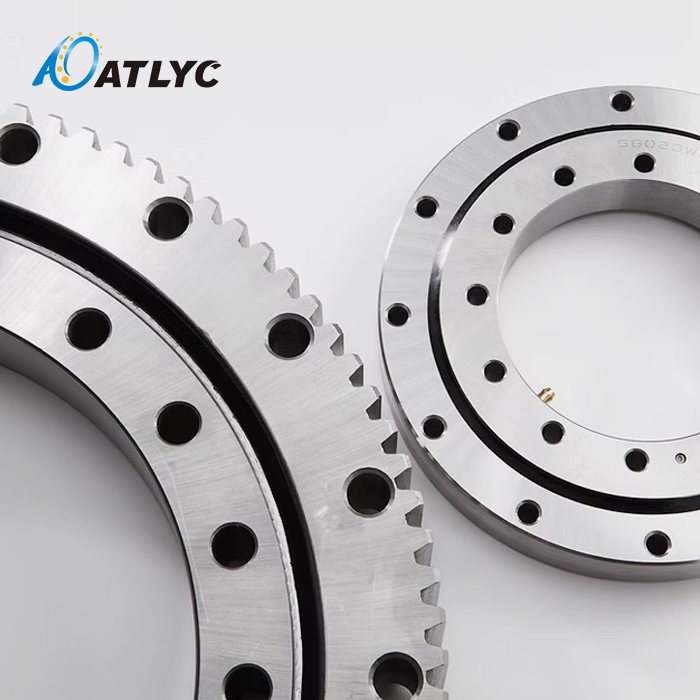
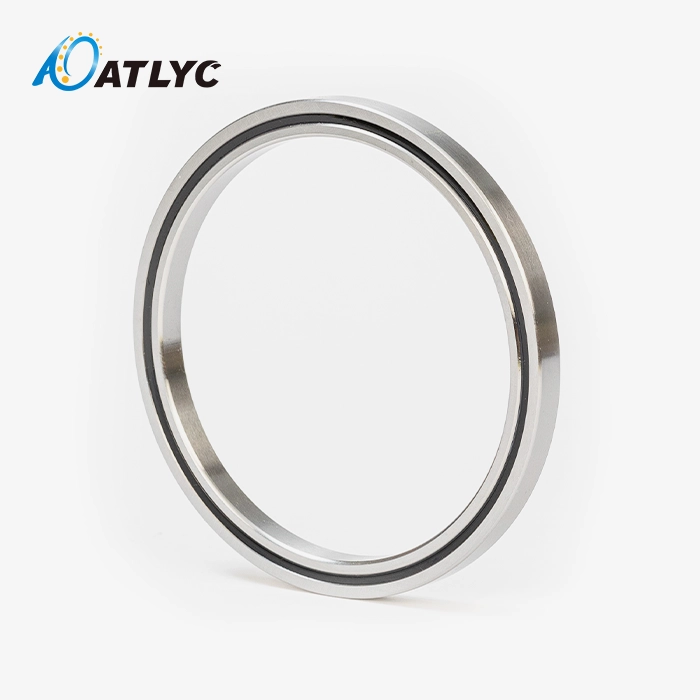
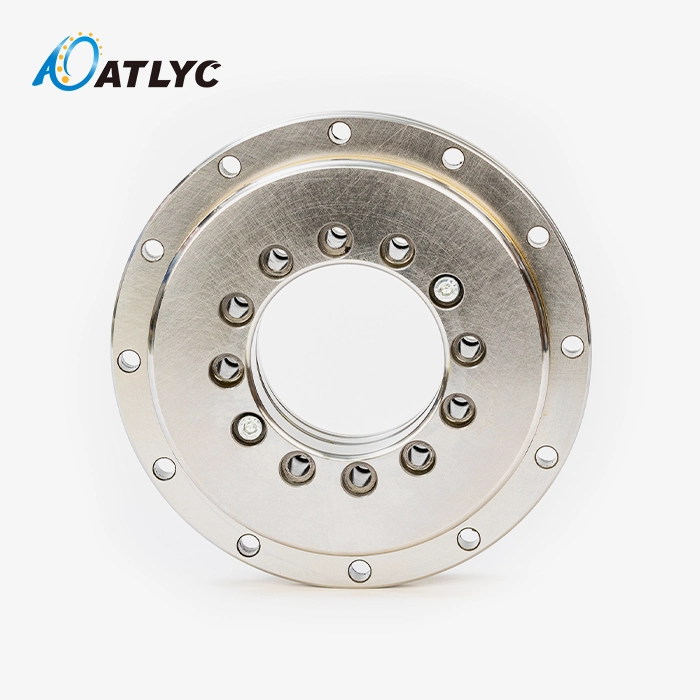
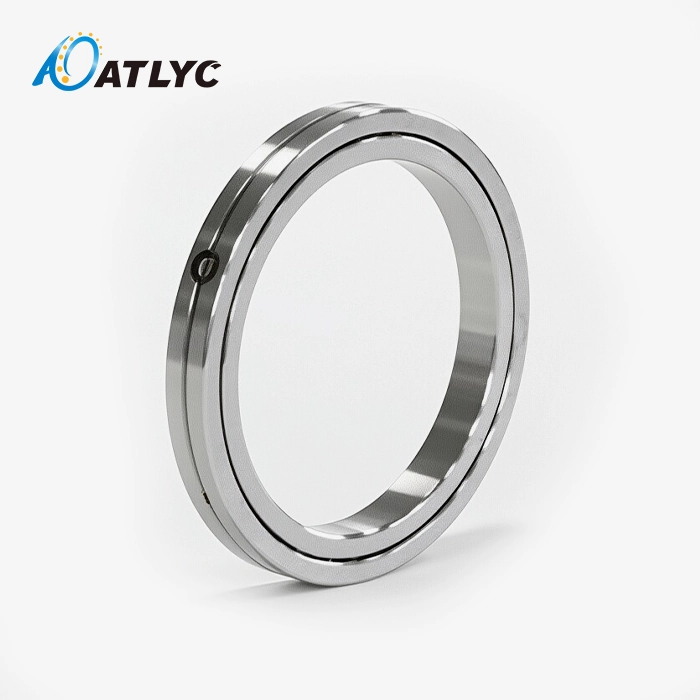
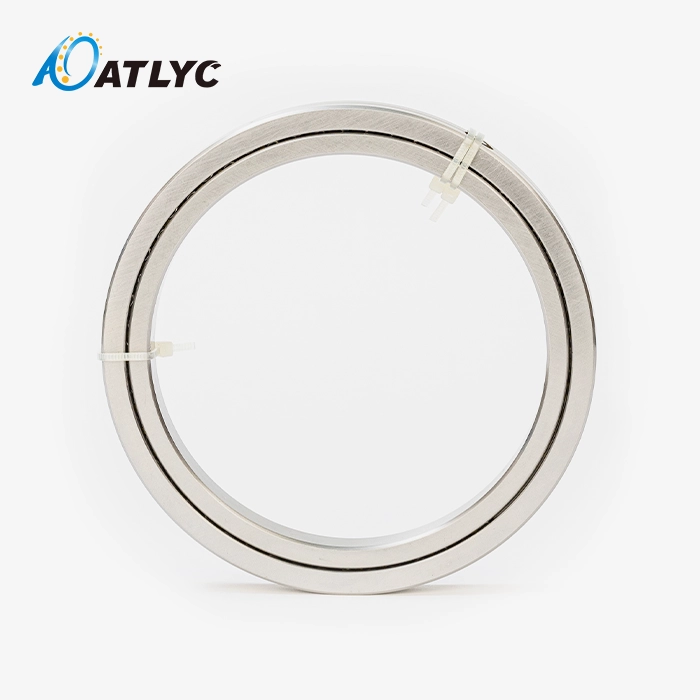
When precision is needed, but room is limited, RA Type Crossed Roller Bearings are the technical answer that opens up new design options. These special thin-section bearings combine an outer ring that can be separated with an inner ring that can rotate. This makes the bearings very small but still able to do the work of two angular contact ball bearings. The layout of orthogonal rollers within a 90-degree V-groove handles radial, axial, and moment loads at the same time while keeping thickness profiles as thin as possible. This one-of-a-kind design solves important problems in robots, medical imaging equipment, and precision machinery, where reducing weight and making the best use of space directly affect how well the whole system works and how many different ways it can be used.
Understanding RA Type Crossed Roller Bearings
The technical structure of crossed roller bearings changes the way we control motion in small areas in a fundamental way. In contrast to normal bearing designs, these parts place circular rollers at right angles to each other, moving them around inside the track. Because they are vertical, one roller handles radial loads, and the one next to it handles axial forces. This makes a balanced load distribution system inside a single small assembly.
What Makes RA Type Configuration Unique
The "RA" marking tells you exactly which design has a solid inner ring and a detachable outer ring. When high accuracy standards for rotating the inner ring are needed, this design is a must. The inner diameters of these bearings range from 20 mm to 350 mm, the outer sizes from 70 mm to 540 mm, and the widths from 12 mm to 45 mm. The outer ring separates into two parts, which makes installation easier and lets you make precise adjustments while putting it together. Its built-in inner ring keeps the structure rigid, which ensures steady spinning accuracy that often hits micron-level accuracy across P7, P6, P5, P4, and even P3 grade specs.
Load Distribution Mechanics
The crossing roller design spreads the load over several touch points at the same time. Each roller touches the track at an angle of about 90 degrees to its neighbour. This creates a balanced load pattern that gets rid of the need for paired bearing arrangements. This design can handle radial forces that push perpendicular to the shaft, axial thrust that moves along the shaft axis, and moment loads that try to tilt the spinning part. The low friction coefficient of these rollers makes sure that they rotate smoothly even when they are loaded together, and the high runout accuracy keeps the position stable during operating cycles.
Material and Manufacturing Standards
For our production, we use high-quality bearing steel, such as Gcr15 and Gcr15SiMn alloys, which were chosen because they are very hard, don't wear down easily, and have a long service life. The manufacturing method follows the quality management systems ISO 9001 and IATF 16949. This makes sure that all production batches have the same material features and measurements. Steel is hardened to HRC 58–64 through heat treatment methods. This gives it the toughness needed for long-term high-load activities. The precision grinding methods we use get the job done with the tight limits needed for the different levels of accuracy, meeting the high standards needed by companies that make medical devices and automation equipment.
Key Benefits of RA Type Crossed Roller Bearings for Compact Designs
When you compare the performance specs of crossed roller bearing technology to those of other types of bearings, you can see right away how much better they are. These benefits directly address the most important issues that purchasing managers have when they are looking for parts for new types of tools.
Exceptional Space Efficiency
To handle complex loads, traditional bearing setups often need more than one part, which takes up important installation space and adds weight that isn't needed. Crossed roller bearings, such as RA Type Crossed Roller Bearings, combine these functions into a single very thin shape. When compared to paired angular contact ball bearing sets with the same load values, the average section height is 40–60% less. This saves room, which leads to lighter robotic arms with less spin, smaller medical imaging gantries, and machine center rotating table designs that are thinner. Manufacturers of equipment always say that moving to crossed roller setups makes it possible to make products smaller than they would be with traditional bearing technologies.
Superior Rigidity and Load Capacity
The 1:1 cross-arrangement of wheels split by precision gaps makes the structure very stiff. This structure's stiffness keeps it from deforming under load, so it stays in place even when it's under a lot of moment forces. Our RA-type bearings can handle high radial, axial, and moment loads at the same time, and they don't shift as most ball bearing sets do. In line contact between rollers and raceways, stress is spread over a bigger surface area than in point contact ball bearings. This makes the load capacity much higher compared to the size of the bearing. This stiffness is very important in artificial joints where the positional accuracy needs to stay steady even when the package weight and dynamic acceleration forces change.
Smooth Operation with Minimal Vibration
The friction characteristics of RA Type Crossed Roller Bearings are inherently lower than those of ball bearings. Because there is less friction, rotation is smoother, and less heat is generated during continuous operation. The design also reduces noise and vibration transmission, contributing to quieter equipment operation—an increasingly important attribute in medical devices and precision laboratory instruments. The uniform contact pattern eliminates the periodic load variations that cause vibration in some bearing types, ensuring consistent motion quality that maintains signal clarity in measurement systems and imaging equipment.
Application Versatility Across Industries
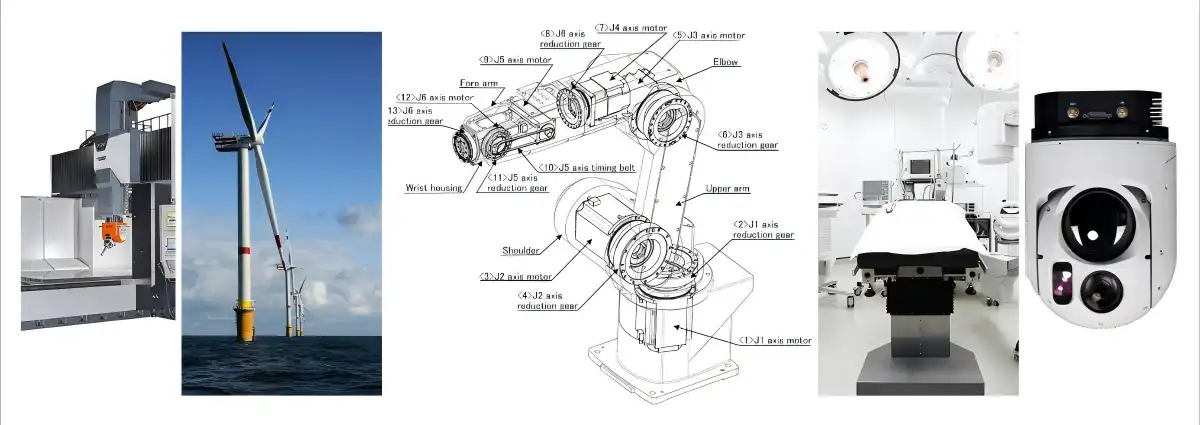
Industrial robotics represents perhaps the most demanding application environment for these components. The joints and rotating parts of 6-axis articulated robots, collaborative robot arms, and automated assembly systems all benefit from the compact, high-rigidity characteristics. Rotary tables in CNC machining centers utilize crossed roller bearings to maintain positioning accuracy during cutting operations. Manipulator rotating parts in material handling systems rely on their load capacity. Beyond industrial automation, precision rotary tables in semiconductor manufacturing equipment require the clean-room compatibility and positioning accuracy these bearings provide. Medical machines, including CT scanner gantries, surgical robot joints, and diagnostic imaging equipment, depend on their smooth, vibration-free rotation. Measuring instruments and IC manufacturing devices incorporate them wherever micron-level accuracy must be maintained in compact assemblies.
The breadth of application fields demonstrates how crossed roller technology has become indispensable across sectors where precision motion control intersects with spatial constraints. Equipment designers increasingly specify these bearings as the foundation for next-generation machinery, knowing that performance characteristics directly enable product differentiation and competitive advantages in their respective markets.
How to Choose RA Type Crossed Roller Bearings for Your Application
Selecting the appropriate bearing specification requires balancing multiple technical parameters against application requirements and operational conditions. Procurement teams must consider several critical factors to ensure optimal component selection.
Load Capacity and Speed Requirements
Calculate the actual radial, axial, and moment loads your application generates during operation. Include dynamic forces from acceleration, deceleration, and shock loads rather than only static weight calculations. Compare these values against published load ratings, maintaining appropriate safety factors based on operating conditions. Speed capabilities must also align with application demands—while crossed roller bearings handle moderate speeds effectively, ultra-high-speed applications may require alternative solutions. The bearing's dynamic load rating indicates its capacity for sustained rotation under load, while the static load rating applies when stationary or during slow oscillating movements.
Dimensional Constraints and Accuracy Grades
For RA Type Crossed Roller Bearings, measure available installation space precisely, accounting for mounting surface preparation and any adjacent components. The bearing's outer diameter, inner diameter, and width must fit within spatial limitations while providing adequate load capacity. Accuracy grades directly impact both performance and cost. P7 and P6 grades serve general industrial applications adequately, while P5 and P4 grades suit precision machinery requiring tighter runout tolerances. P3 grade specifications meet the most demanding requirements in measuring instruments and semiconductor equipment, where positioning errors must remain at absolute minimums. Match the accuracy grade to actual application needs rather than over-specifying, as higher precision grades command premium pricing.
Environmental Considerations
The operating environment significantly influences bearing selection and longevity. Temperature extremes affect lubricant performance and material expansion rates. Contamination exposure from dust, moisture, or chemical substances requires appropriate sealing solutions or specialized lubricants. Some crossed roller bearings operate in vacuum environments found in semiconductor manufacturing, requiring dry lubrication films rather than conventional greases. Clean-room applications demand specially cleaned and packaged bearings that won't introduce particulate contamination. Assess these environmental factors during specification to ensure long-term reliability.
Supplier Evaluation Criteria
Sourcing from manufacturers with documented quality certifications assures consistent product standards. Our facility holds both ISO 9001 and IATF 16949 certifications, demonstrating adherence to automotive industry quality management practices. Manufacturing capacity matters when scaling production—verify that suppliers can meet both prototype quantities and volume production demands without extended lead times. Engineering support capabilities help resolve application questions and optimization opportunities. Reliable suppliers provide technical documentation, installation guidelines, and responsive support throughout the procurement and implementation process. Long-term supply stability protects against production disruptions, particularly critical for OEM manufacturers with multi-year product lifecycles.
Installation, Maintenance, and Longevity of RA Type Crossed Roller Bearings
Proper installation procedures and maintenance practices directly determine whether bearings achieve their theoretical service life potential. Following established protocols maximizes return on investment while minimizing unexpected downtime.
Installation Best Practices
The outer ring separable design of RA Type Crossed Roller Bearings simplifies installation compared to non‑separable bearing types, yet precision remains essential. Begin by thoroughly cleaning mounting surfaces to remove any debris, burrs, or contamination that could affect seating accuracy. Inspect mating components for dimensional accuracy and surface finish quality—mounting surface runout must fall within specified tolerances to prevent load distribution problems. Install the bearing components in the correct sequence, carefully positioning the inner ring, rollers with spacers, and outer ring sections. Torque mounting bolts to specified values using a calibrated torque wrench and proper tightening sequence to ensure uniform clamping force. Avoid shock loads during handling or installation, as impact forces can damage precision‑ground raceways. Specialized installation tools maintain alignment during assembly, preventing the misalignment issues that cause premature wear.
Lubrication Requirements
Proper lubrication forms a protective film between rollers and raceways, preventing metal-to-metal contact that causes wear. We recommend high-quality bearing greases formulated for the specific operating conditions your application presents. Initial lubrication typically occurs during manufacturing, but verify lubricant quantity and distribution before installation. Operating speed, temperature, and load conditions determine relubrication intervals. Moderate-speed applications often operate 2-3 years before requiring relubrication, while high-speed or high-temperature environments demand more frequent attention. Apply the correct lubricant quantity—excessive grease increases friction and heat generation, while insufficient lubrication causes premature wear. Some precision applications utilize oil lubrication systems providing continuous fluid film protection, particularly beneficial in high-speed operations or where heat dissipation proves critical.
Inspection and Monitoring
Implementing condition monitoring practices for RA Type Crossed Roller Bearings identifies developing problems before catastrophic failure occurs. Vibration analysis detects changes in running characteristics that indicate wear progression or lubrication degradation. Temperature monitoring reveals abnormal friction increases or insufficient lubrication conditions. Acoustic emission sensors identify the ultrasonic frequencies generated by surface distress or contamination damage. Visual inspection during scheduled maintenance intervals checks for lubricant condition, seal integrity, and any visible damage. Addressing identified issues promptly through relubrication, adjustment, or replacement prevents minor problems from escalating into major failures that disrupt production schedules.
Service Life Factors
Multiple variables influence bearing longevity. Load magnitude relative to capacity ratings represents the primary determinant—operating at 80% of rated capacity yields substantially longer life than continuous operation near maximum ratings. Proper installation alignment prevents edge loading and uneven stress distribution. Adequate lubrication maintains protective films throughout operational cycles. Contamination exclusion through effective sealing protects precision surfaces from abrasive damage. Operating temperature affects material properties and lubricant viscosity. When application conditions match design specifications and maintenance protocols are followed consistently, crossed roller bearings regularly achieve or exceed calculated L10 service life predictions, providing years of reliable operation in demanding industrial environments.
Procurement Insights: Pricing, Lead Time, and Order Management
Understanding the commercial aspects of bearing procurement enables more effective sourcing decisions and budget planning. Pricing structures, delivery expectations, and supplier relationships all influence the total cost of ownership.
Pricing Considerations
Material costs represent a significant portion of manufacturing expenses for RA Type Crossed Roller Bearings. The high-grade Gcr15 and Gcr15SiMn bearing steels command premium pricing compared to standard steel alloys, reflecting their superior mechanical properties. Manufacturing complexity directly impacts pricing—higher accuracy grades require additional grinding operations and more stringent inspection procedures, increasing production costs. Bearing size affects material consumption and machining time, with larger diameters commanding proportionally higher prices. Order volume significantly influences unit pricing through economies of scale. Volume purchases for ongoing production reduce per-unit costs compared to prototype quantities. Custom specifications, including non-standard dimensions or special materials, add engineering and tooling expenses. When evaluating pricing, consider the total cost of ownership, including expected service life, rather than only the initial purchase price. Premium bearings with extended longevity often prove more economical than budget alternatives requiring frequent replacement.
Lead Time Expectations
Standard sizes from our established product range typically ship within 2-3 weeks for moderate quantities. This inventory availability supports rapid prototyping and small-batch production needs. Larger volume orders or specialized accuracy grades may require 4-6 weeks as production schedules accommodate manufacturing capacity. Custom configurations with non-standard dimensions necessitate 6-8 weeks minimum, accounting for engineering review, special tooling preparation, and production runs. Shipping logistics add additional time depending on destination—North American deliveries typically require 1-2 weeks for ocean freight or 3-5 days for air shipment when expedited delivery justifies the cost premium. European shipments follow similar timeframes. Plan procurement schedules accordingly, particularly when coordinating multiple components for production launches. Early supplier engagement during design phases prevents lead time constraints from creating project delays.
Supplier Partnership Benefits
Establishing strategic relationships with bearing manufacturers delivers advantages beyond transactional purchasing. Technical collaboration during product development optimizes bearing selection and integration. Volume commitments secure preferential pricing and capacity allocation during periods of high market demand. Quality agreements codify inspection standards and acceptance criteria. Warranty terms protect against manufacturing defects, though proper installation and operation remain the customer's responsibility. Post-sale technical support assists with installation questions, troubleshooting, and performance optimization. Reliable communication channels—whether email correspondence at auto@lyautobearing.com or direct engineering contact—ensure responsive problem resolution. Long-term partnerships align supplier and customer interests, fostering continuous improvement and mutual success.
Conclusion
The compelling advantages of RA Type Crossed Roller Bearings make them indispensable components for modern compact design challenges. Their space-efficient architecture handles complex loading conditions within minimal installation envelopes, enabling equipment miniaturization without performance compromise. The combination of high rigidity, exceptional load capacity, and smooth operation directly addresses the critical requirements of industrial automation, medical equipment, and precision machinery applications. Successful implementation depends on proper specification selection, quality sourcing from certified manufacturers, and adherence to installation and maintenance best practices. As manufacturing technology advances and equipment designs become increasingly sophisticated, these specialized bearings will continue serving as foundational elements enabling next-generation innovation across diverse industrial sectors.
FAQ
How do RA Type Crossed Roller Bearings compare to traditional ball bearings in load capacity?
Crossed roller configurations deliver substantially higher load ratings than equivalently sized ball bearings, often achieving 2-3 times greater capacity. The line contact between cylindrical rollers and raceways distributes stress across larger surface areas compared to point contact in ball bearings. This advantage becomes particularly significant when handling moment loads and combined loading conditions.
Can these bearings operate effectively in high-speed applications?
While crossed roller bearings excel in precision and load capacity, they suit moderate speed ranges most effectively. Applications with rotational speeds exceeding 1000 RPM should undergo careful evaluation, considering factors including lubrication method, heat dissipation, and dynamic load ratings. For ultra-high-speed requirements, alternative bearing types may prove more appropriate.
What maintenance practices extend bearing service life?
Regular lubrication using appropriate grease or oil maintains protective films between contact surfaces. Periodic inspection identifies developing issues before failure occurs. Operating within specified load and speed parameters prevents premature wear. Effective contamination exclusion through seals protects precision surfaces. Temperature control ensures the lubricant remains within effective viscosity ranges throughout operation.
Partner with ATLYC for Your Crossed Roller Bearing Needs
Your search for a dependable RA Type Crossed Roller Bearings supplier ends with ATLYC—where 15 years of manufacturing expertise meets international quality standards. Since 2010, we've evolved from a single workshop to a comprehensive six-facility operation, earning ISO 9001 and IATF 16949 certifications that validate our commitment to consistent quality and precision manufacturing. Our 120 skilled professionals ensure every bearing—spanning 20-350mm inner diameters with accuracy grades from P7 to P3—meets rigorous specifications for robotic joints, precision rotary tables, and medical imaging equipment. We serve OEM manufacturers and global distributors across the United States, Germany, South Korea, and beyond with competitive pricing, reliable lead times, and responsive technical support. Contact our engineering team at auto@lyautobearing.com to discuss your specific application requirements, request technical documentation, or receive volume pricing for your next production run.
References
1. Harris, T.A. & Kotzalas, M.N. (2006). Advanced Concepts of Bearing Technology: Rolling Bearing Analysis, Fifth Edition. CRC Press, Taylor & Francis Group.
2. Schaeffler Technologies AG & Co. KG (2019). Rolling Bearings: Catalogue HR 1, Technical Design and Application Guidelines for Industrial Bearings.
3. SKF Group (2018). Rolling Bearings Technical Manual, Chapter 8: Crossed Roller Bearings for Precision Applications.
4. ISO 492:2014. Rolling Bearings — Radial Bearings — Geometrical Product Specifications (GPS) and Tolerance Values, International Organization for Standardization.
5. Marsh, E.R. (2010). Precision Spindle Metrology, Chapter 4: Bearing Selection and Performance in Ultra-Precision Machines. DEStech Publications, Inc.
6. THK CO., LTD. (2020). Crossed Roller Bearings Technical Information, Engineering Reference for Compact Bearing Solutions in Automation and Robotics.
Learn about our latest products and discounts through SMS or email