- English
- French
- German
- Portuguese
- Spanish
- Russian
- Japanese
- Korean
- Arabic
- Greek
- German
- Turkish
- Italian
- Danish
- Romanian
- Indonesian
- Czech
- Afrikaans
- Swedish
- Polish
- Basque
- Catalan
- Esperanto
- Hindi
- Lao
- Albanian
- Amharic
- Armenian
- Azerbaijani
- Belarusian
- Bengali
- Bosnian
- Bulgarian
- Cebuano
- Chichewa
- Corsican
- Croatian
- Dutch
- Estonian
- Filipino
- Finnish
- Frisian
- Galician
- Georgian
- Gujarati
- Haitian
- Hausa
- Hawaiian
- Hebrew
- Hmong
- Hungarian
- Icelandic
- Igbo
- Javanese
- Kannada
- Kazakh
- Khmer
- Kurdish
- Kyrgyz
- Latin
- Latvian
- Lithuanian
- Luxembou..
- Macedonian
- Malagasy
- Malay
- Malayalam
- Maltese
- Maori
- Marathi
- Mongolian
- Burmese
- Nepali
- Norwegian
- Pashto
- Persian
- Punjabi
- Serbian
- Sesotho
- Sinhala
- Slovak
- Slovenian
- Somali
- Samoan
- Scots Gaelic
- Shona
- Sindhi
- Sundanese
- Swahili
- Tajik
- Tamil
- Telugu
- Thai
- Ukrainian
- Urdu
- Uzbek
- Vietnamese
- Welsh
- Xhosa
- Yiddish
- Yoruba
- Zulu
How Does Cross Roller Bearing XSU Series Compare to Others?
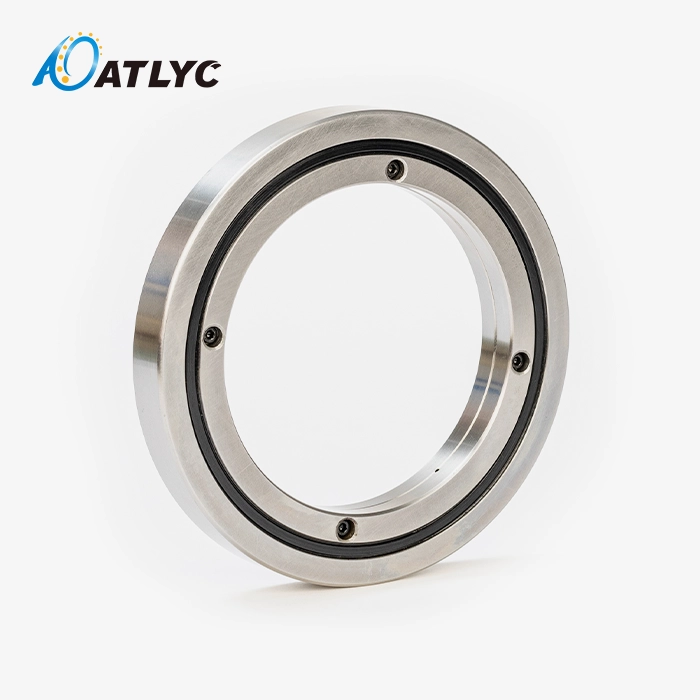
The Cross roller bearing XSU series represents a significant advancement in integrated design engineering for industrial equipment requiring simultaneous radial, axial, and moment load support. These precision bearings feature one-piece outer and inner rings with pre-drilled mounting holes, eliminating the need for additional flanges and substantially simplifying installation. The crossed rollers arranged at a 90-degree angle within V-shaped raceways provide exceptional rigidity and runout accuracy, making these components essential for robotics, precision machining centers, and medical imaging equipment, where tolerance stack-up errors directly impact operational performance.
Understanding the Cross Roller Bearing XSU Series
What Makes XSU Design Architecture Unique?
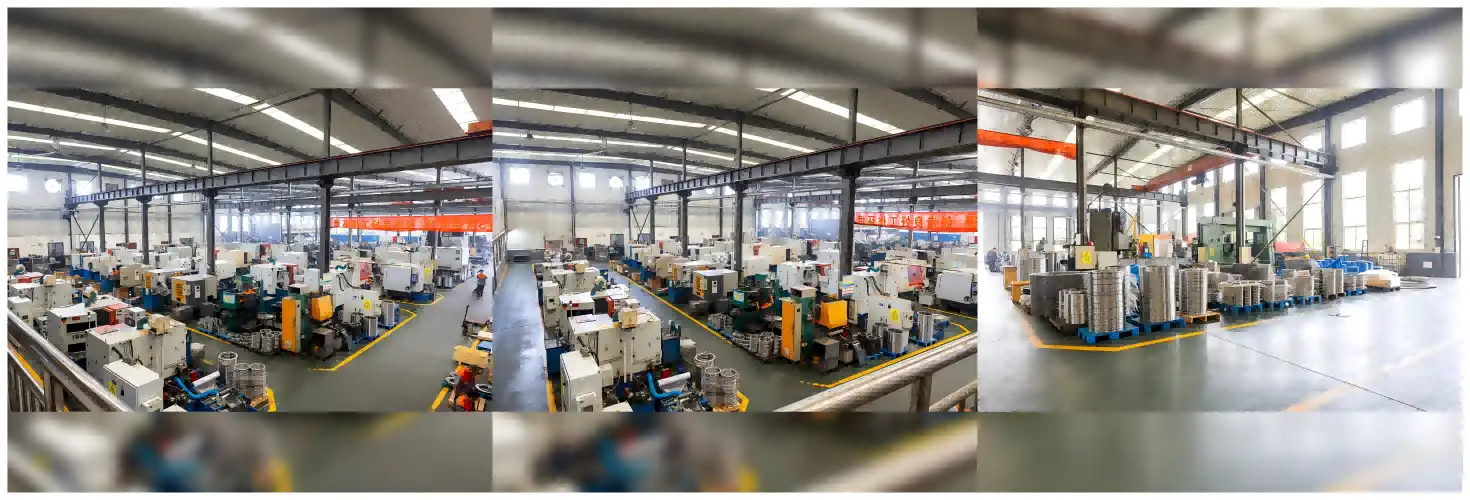
The Cross roller bearing XSU line has a one-piece design that is very different from usual bearing options that need separate housings. Both the inner and outer rings have fastening holes that were carefully made so that they can be bolted directly to surfaces that fit together. This unified method gets rid of the tolerance buildup problem that multi-component systems have, so they always work the same way in all kinds of situations. That's where the crossed roller shape comes in. Cylindrical rollers made of high-quality Gcr15 or Gcr15SiMn steel are placed parallel to each other in V-groove raceways that were carefully designed. Spacers between neighbouring rollers keep them perfectly aligned and stop metal from touching metal. In this design, the various load contact points spread forces across radial, axial, and bending moment directions at the same time. Usually, this is only possible by mixing different types of bearings. The accuracy with which these bearings were made shows that strict quality standards were met. Each unit goes through strict testing procedures and comes in a range of accuracy classes, from P6 for general commercial uses to ultra-precise P2 grades for equipment used in chip manufacturing. Over the past 15 years, our Luoyang plant has improved these production methods. It started as a single workshop and now has six specialised production lines that are certified by ISO 9001 and IATF 16949.
Size Range and Technical Specifications
The fact that these bearings cover a wide range of sizes makes them very useful. The line has inner diameters from 20mm to 1100mm, outer diameters up to 1500mm, and widths from 12mm to 110mm, so it can fit a wide range of applications, from small robotic joints to big rotary sorting tables. Because of this, engineers can choose a single type of bearing for various product lines. This makes managing supplies and working with suppliers easier. The choice of material is very important for how long something works. Gcr15 bearing steel is very good at resisting wear and keeping its shape in normal industrial settings. For uses in hot or acidic environments, Gcr15SiMn alloy steel keeps its strength better and is less likely to react with chemicals. Both materials go through controlled heat treatments that improve their substructure and make sure that the hardness is the same all over the raceway surfaces.
Primary Application Domains
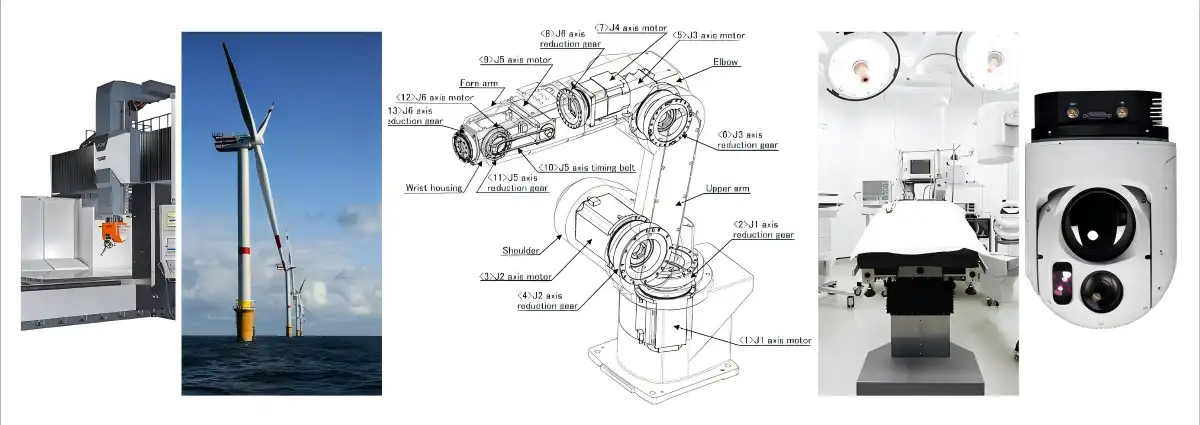
The most significant application area for the Cross roller bearing XSU series is industrial robotics. Crossed roller bearings support waist rotation and elbow articulation in six-axis robot arms, where compact envelope dimensions and high moment load capacity are essential. The zero-backlash characteristic ensures positioning accuracy remains within ±0.01mm even after millions of operating cycles, directly impacting end-effector precision during welding, assembly, or material handling operations. These bearings keep the precision rotating tables in CNC machine centers in the right place and allow them to handle cutting pressures. When cutting heavy materials, vibrations from delayed cuts cause dynamic loads that regular ball bearings can't handle without wearing out too quickly. Because the rollers are crossed, the shock loads are spread out over a bigger contact area. This keeps the table accurate for the whole life of the machine. Large-bore crossed roller bearings are used in medical imaging equipment, especially CT scanner gantries, to move X-ray tubes and detector arrays around patients. Smooth spinning, low shaking, and a small axial height make it possible for bigger patient tube sizes to be used while still keeping picture quality. Medical OEMs buy our bearings because they need tracking paperwork and lubricant specs that work in clean rooms and meet strict regulatory standards.
Performance and Design Comparison: XSU Series vs Other Cross Roller Bearings
Load Capacity and Structural Rigidity Advantages
The XSU integrated design makes the bearing much more sturdy when it's loaded with both heavy and light loads, compared to normal SRS series crossed roller bearings that have different inner and outer ring structures. By getting rid of the gaps between the bearing rings and the fastening flanges, the effective load center distance goes up by about 15 to 20 percent. This directly leads to a higher moment load capacity. Because of this structural advantage, makers of equipment can make assemblies that are lighter while still meeting or exceeding performance standards. Material handling methods set luxury bearings apart from cheaper options. During steel production, our Gcr15SiMn material goes through vacuum degassing, which reduces the number of internal flaws that can become crack starters. After several rounds of through-hardening and heating, the surface is hardened to 58–62 HRC, and the core is tough but flexible, so it doesn't break easily when it hits something. Finishing the surface keeps the Ra 0.2μm roughness level, which lowers friction coefficients and makes lubrication intervals longer. These benefits can be seen in numbers thanks to real-world success data from clients in the car production industry. Over the course of 18 months, a major European OEM that replaced normal ball bearing pairs in the shoulders of assembly robots with XSU cross roller units saw a 40% drop in unexpected repair events. The bearings kept their positional accuracy within the specified range even though they were used 24 hours a day, seven days a week, in places where metal particles were in the air, and the temperature changed from 15°C to 35°C.
Rotational Precision and Service Life Extension
The accuracy of runout has a direct effect on the quality of made parts and the consistency of the automatic equipment's placement. In P5 accuracy grades, the XSU line has radial runout of less than 5¼m and axial runout of less than 8¼m, which makes it competitive with high-end European bearing makers. This accuracy comes from manufacturing methods that control the shape of the raceways by using precise cutting and special finishing techniques that have been developed over 15 years of efforts to make things better all the time. Using L10 bearing life theory to do service life calculations shows that XSU bearings have 1.5 to 2 times the working hours of standard crossed roller designs of the same size. By using advanced polymer materials and a better pocket shape, the improved cage design lowers roller skew and friction. Field data from equipment used to handle semiconductors in cleanrooms shows that these bearings usually last longer than 30,000 hours of use before they need to be replaced. This is a very important factor in industries where unplanned downtime costs more than $10,000 per hour. Increasing the time between maintenance intervals saves money in real ways that often outweigh the initial price fees. Even though XSU series units usually cost 20–30% more to buy than normal options, they have a 35–45% lower total cost of ownership over a five-year operating window because they need less upkeep and last longer between replacements. More and more, procurement managers are seeing this as a value offering, especially when replacing bearings involves taking a machine apart and aligning it.
Procurement Considerations for XSU Series Bearings
Cost-Performance Analysis and ROI Optimization
When B2B buyers evaluate precision bearing suppliers for the Cross roller bearing XSU series, they need to consider total value delivered rather than just unit price. The XSU series pricing reflects advanced manufacturing capabilities, including five-axis CNC machining centers and automated inspection systems that ensure batch-to-batch consistency. Volume purchase agreements offer tiered savings, typically providing 8–12% price reductions for orders exceeding 50 units. When figuring out the total cost of ownership, you should include more than just the purchase price. Bottom-line income is affected by lower upkeep labour costs, longer machine usage, and lower stocking needs for extra parts. A medium-sized machine tool builder switched to XSU bearings for rotary tables and saved $127,000 a year across their entire production plant by cutting down on warranty claims and field service calls. This is 3.2 times the extra money they spent on bearings. Competitive prices in the market for precise bearings vary a lot depending on the capabilities of the suppliers and the sites of the factories. Chinese bearing makers, like Luoyang Auto Bearing Co., Ltd., offer great value by combining ISO-certified manufacturing methods with lower costs in the region. Compared to similar Japanese or European brands, they usually save 25–35% on costs while maintaining the same quality standards that have been checked by a third party.
Supply Chain Reliability and Certification Compliance
Buying from authorised makers makes sure that the product is real and comes with all the necessary paperwork. Our factory has strict quality control systems that are checked every year to make sure they meet the requirements of ISO 9001:2015 and IATF 16949:2016. This gives car and aircraft OEMs the tracking records they need. Each batch of bearings comes with material certificates, measurement inspection records, and performance test data that meet the quality standards of the user and the requirements of the law. Managing lead times is an important part of buying things, especially for foreign clients who have to coordinate complicated supply lines. Standard XSU setups ship 3–4 weeks after the order is confirmed, but pressing needs can be met by speeding up production. Custom requirements like special lubrication, changed mounting hole patterns, or special material treatments usually take 6 to 8 weeks, but our engineering team works with customers to cut down on lead times by improving the design. Deliveries to big industrial markets can be counted on thanks to global transportation. We keep up long-term relationships with shipping companies that offer cheap freight rates and open incoterms arrangements. We regularly send goods to South Korea, the US, Germany, Russia, Iran, and Turkey, which shows that we know how to deal with foreign trade rules, customs paperwork, and quality certification standards in each area. This foreign knowledge lowers the risk of buying things for buyers who are in charge of production processes in more than one area.
Maintenance and Longevity Tips for XSU Series Cross Roller Bearings
Lubrication Protocols and Contamination Prevention
Proper lubrication is still needed to get the most out of bearings and keep them rotating precisely. When you buy XSU series bearings, they come already filled with lithium soap-based grease that can work in a wide range of industrial settings at temperatures from -20°C to +120°C. Under normal load conditions, this first lube keeps things running for 5,000 to 8,000 hours. In situations with higher speeds, higher temperatures, or tough conditions, relubrication may need to be done less often, as decided by practical tracking. The type of grease you choose should be based on the performance needs and the factors of the area. Synthetic polyurea greases that keep their stickiness above 150°C are good for high-temperature uses, while low-outgassing versions keep sensitive processes from getting contaminated in cleanrooms. Our expert support team gives specific advice on lubrication based on the factors of the application. This ensures the best performance without voiding the guarantee. Contamination is the main reason why precision bearings fail, and it's responsible for about 65% of all premature bearing failures in industrial settings. Effective closing systems that keep raceways safe from water, gritty particles, and chemicals greatly increase their useful life. XSU integrated ring designs naturally protect against environmental damage better than multi-component systems. However, extra labyrinth seals or contact seals may be helpful in settings with a lot of stress.
Installation Best Practices and Failure Symptom Recognition
Proper installation procedures for the Cross roller bearing XSU series directly impact subsequent bearing performance and longevity. The mounting holes on XSU rings simplify installation compared to conventional bearings, requiring precision shimming or housing alignment. However, bolt tightening sequences must follow specified patterns to prevent ring distortion. We recommend star or diagonal tightening patterns using calibrated torque wrenches, typically applying 60-70% of maximum rated torque initially, then completing final tightening in 10-15% increments. Mounting surface preparation equally influences performance outcomes. Mating surfaces should exhibit flatness within 0.02mm across the mounting interface and surface roughness below Ra 3.2μm. Deviations from these specifications introduce localized stress concentrations that accelerate wear or cause raceway brinelling. Our installation guidelines provide detailed specifications and measurement techniques, ensuring proper bearing integration. Early failure detection minimizes unplanned downtime and secondary equipment damage. Abnormal operational symptoms requiring immediate investigation include unusual noise patterns, increased vibration levels detectable through condition monitoring systems, elevated operating temperatures exceeding 70°C, or increased rotational friction evident through higher drive motor current draw. Addressing these symptoms promptly through inspection and corrective action prevents catastrophic failures that may damage adjacent machine components or require complete equipment rebuilds.
How to Decide If the XSU Series Is Right for Your Application
Technical Requirement Evaluation Framework
Selecting optimal bearing solutions begins with comprehensive operational requirement documentation. Engineers should quantify maximum radial loads, axial loads, and moment loads under both normal and peak operating conditions. The XSU series excels in applications requiring moment load support, particularly where compact axial dimensions constrain design options. Comparing these requirements against published load ratings ensures adequate safety factors—typically 2.0 for constant loads or 3.0 for shock loading conditions. Rotational speed requirements significantly influence bearing selection decisions. Crossed roller bearings featuring cylindrical rolling elements achieve lower maximum speed ratings compared to ball bearings due to sliding friction between rollers and spacers. The XSU series typically operates reliably below 500 rpm for smaller sizes and 200 rpm for larger diameters. Applications requiring higher rotational speeds may benefit from angular contact ball bearing arrangements or specialized high-speed crossed roller designs featuring optimized cage materials. Precision requirements determine appropriate accuracy class selection. General industrial machinery adequately performs with P5 or P4 accuracy grades, while semiconductor manufacturing equipment, measuring instruments, or aerospace applications may necessitate P2 ultra-precision specifications. Higher accuracy grades command price premiums of 25-40% per grade level but deliver measurably improved machine performance where positional accuracy directly impacts product quality or operational capability.
Integration Planning and Supplier Partnership Development
Compatibility with existing machinery designs influences implementation feasibility and integration costs. The integrated mounting holes characteristic of XSU bearings simplify retrofitting compared to alternatives requiring housing modifications. Our engineering team provides 3D CAD models in multiple formats (STEP, IGES, Solidworks), facilitating digital integration into customer designs. This collaborative approach identifies potential interference issues or mounting challenges during the design phase, preventing costly modifications during production implementation. Supplier evaluation criteria should extend beyond product specifications to assess long-term partnership capabilities. Manufacturing capacity directly impacts supply reliability during demand fluctuations or rapid production scaling. Our six production workshops maintain 120 skilled employees operating across multiple shifts, delivering monthly production capacity exceeding 15,000 precision bearing units. This scale ensures consistent supply availability while maintaining quality standards through specialized workforce expertise. Technical support capabilities differentiate commodity suppliers from strategic manufacturing partners. Application engineering assistance, custom product development, and responsive after-sales support create value beyond the physical product. Our team provides failure analysis services, operational troubleshooting guidance, and continuous improvement recommendations that help customers optimize equipment performance throughout the product lifecycle. This partnership approach aligns with the procurement preferences of mid-to-large manufacturers seeking stable, long-term supplier relationships.
Conclusion
The Cross roller bearing XSU series delivers measurable advantages in load capacity, rotational precision, and installation simplicity compared to conventional crossed roller bearing designs. Its integrated ring structure with mounting holes eliminates auxiliary components while improving structural rigidity—benefits that translate directly to enhanced equipment performance and reduced total cost of ownership. Organizations operating precision machinery in robotics, automation, medical imaging, or machine tool sectors gain competitive advantages through strategic bearing selection. Procurement decisions should balance initial acquisition costs against long-term value delivery through extended service life, reduced maintenance requirements, and improved operational reliability. Luoyang Auto Bearing Co., Ltd. combines 15 years of manufacturing expertise with ISO 9001 and IATF 16949 certified quality systems, delivering precision bearings that meet international standards while offering competitive pricing advantages.
FAQ
What distinguishes the XSU series from other crossed roller bearing types?
The XSU series features integral inner and outer rings with pre-drilled mounting holes, eliminating separate housing assemblies required by conventional designs. This integrated structure reduces installation time, minimizes tolerance stack-up errors, and delivers superior rigidity under combined loading conditions. The 90-degree crossed roller arrangement simultaneously supports radial, axial, and moment loads within a compact envelope.
Can XSU bearings operate in high-speed applications?
These bearings optimize for high rigidity and precision rather than maximum rotational speed. The crossed roller design with spacers generates sliding friction that limits speed capability compared to ball bearings. Typical operational speeds remain below 500 rpm for smaller sizes and 200 rpm for larger diameters, making them ideal for indexing tables, robotic joints, and precision positioning systems rather than continuous high-speed rotation.
How often do XSU series bearings require relubrication?
Initial factory-applied lithium soap grease typically sustains 5,000-8,000 operational hours under standard conditions. Relubrication intervals depend on load intensity, operating temperature, and environmental contamination levels. High-temperature applications or harsh environments may require more frequent servicing. Our technical documentation provides specific maintenance schedules based on your operational parameters to optimize bearing longevity.
What accuracy grade should I specify for my application?
General industrial machinery performs adequately with P5 or P4 grades, offering runout tolerances suitable for most automation equipment. Medical devices, semiconductor manufacturing equipment, and precision measuring instruments benefit from P2 ultra-precision specifications. Higher accuracy grades deliver tighter geometric tolerances but command price premiums of 25-40% per grade level. Our engineering team helps match accuracy requirements to application needs.
Partner with ATLYC for Your Precision Bearing Requirements
ATLYC brings proven expertise as a trusted Cross roller bearing XSU series supplier, supporting mid-to-large OEMs and global distributors with scalable production capacity and engineering excellence. Our manufacturing capabilities span six specialized workshops maintaining rigorous quality protocols, ensuring every bearing meets demanding specifications for automotive components, industrial machinery, and automation equipment applications.
We understand that reliable supply partnerships extend beyond product delivery to encompass technical collaboration and responsive support. Our engineering team provides application guidance, custom development services, and comprehensive documentation supporting your quality management systems. Whether you're designing next-generation robotics or optimizing existing machining centers, ATLYC delivers the precision bearing solutions and partnership commitment your operations demand. Contact our team at auto@lyautobearing.com to discuss your specific requirements and discover how our Cross roller bearing XSU series manufacturer capabilities support your business objectives.
References
1. Harris, T.A. and Kotzalas, M.N. (2006). "Advanced Concepts of Bearing Technology: Rolling Bearing Analysis, Fifth Edition." CRC Press, Boca Raton.
2. Eschmann, P., Hasbargen, L., and Weigand, K. (1985). "Ball and Roller Bearings: Theory, Design and Application, Second Edition." John Wiley & Sons, Chichester.
3. ISO 199:2014. "Rolling Bearings - Thrust Bearings with Cylindrical Roller or Needle Roller Elements - Geometrical Product Specifications and Tolerance Values." International Organization for Standardization, Geneva.
4. Amasorrain, J.I., Sagartzazu, X., and Damian, J. (2003). "Load Distribution in a Four-Contact-Point Slewing Bearing." Mechanism and Machine Theory, Volume 38, Issue 6, pp. 479-496.
5. Zupan, S. and Prebil, I. (2001). "Carrying Angle and Carrying Capacity of a Large Single Row Ball Bearing as a Function of Geometry Parameters of the Rolling Contact and the Supporting Structure Stiffness." Mechanism and Machine Theory, Volume 36, Issue 10, pp. 1087-1103.
6. Xu, T., Xu, G., Zhang, Q., Hua, C., and Yang, S. (2012). "A Preload Analytical Method for Ball Bearings Utilising Bearing Skidding Criterion." Tribology International, Volume 67, pp. 44-50.
Learn about our latest products and discounts through SMS or email