- English
- French
- German
- Portuguese
- Spanish
- Russian
- Japanese
- Korean
- Arabic
- Greek
- German
- Turkish
- Italian
- Danish
- Romanian
- Indonesian
- Czech
- Afrikaans
- Swedish
- Polish
- Basque
- Catalan
- Esperanto
- Hindi
- Lao
- Albanian
- Amharic
- Armenian
- Azerbaijani
- Belarusian
- Bengali
- Bosnian
- Bulgarian
- Cebuano
- Chichewa
- Corsican
- Croatian
- Dutch
- Estonian
- Filipino
- Finnish
- Frisian
- Galician
- Georgian
- Gujarati
- Haitian
- Hausa
- Hawaiian
- Hebrew
- Hmong
- Hungarian
- Icelandic
- Igbo
- Javanese
- Kannada
- Kazakh
- Khmer
- Kurdish
- Kyrgyz
- Latin
- Latvian
- Lithuanian
- Luxembou..
- Macedonian
- Malagasy
- Malay
- Malayalam
- Maltese
- Maori
- Marathi
- Mongolian
- Burmese
- Nepali
- Norwegian
- Pashto
- Persian
- Punjabi
- Serbian
- Sesotho
- Sinhala
- Slovak
- Slovenian
- Somali
- Samoan
- Scots Gaelic
- Shona
- Sindhi
- Sundanese
- Swahili
- Tajik
- Tamil
- Telugu
- Thai
- Ukrainian
- Urdu
- Uzbek
- Vietnamese
- Welsh
- Xhosa
- Yiddish
- Yoruba
- Zulu
How Does SX011814 Improve Rotation Accuracy?
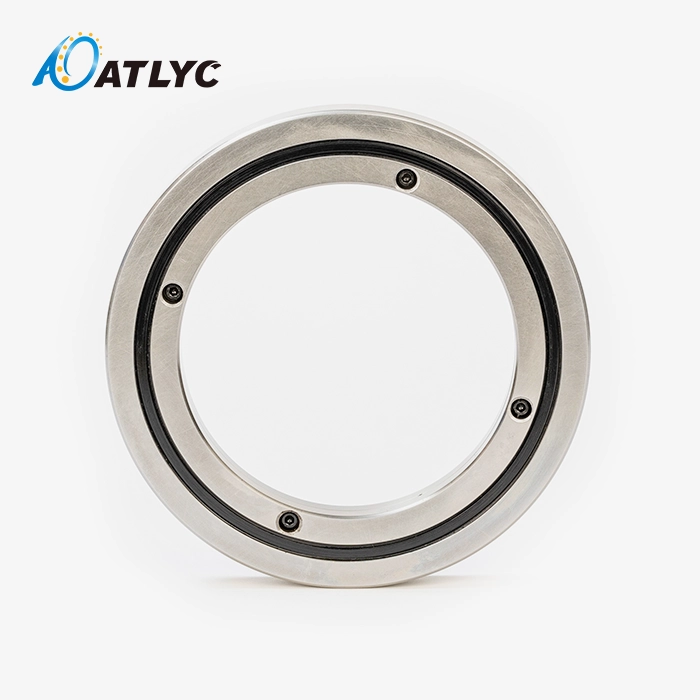
The SX011814 Cross roller bearing improves the accuracy of spinning thanks to its unique cross-roller design. Cylindrical rollers alternate at 90-degree angles within precise V-groove raceways. This design makes line contact surfaces that are 3–4 times stiffer than regular ball bearings. The split outer ring also lets you precisely change the preload to get rid of any internal space. With its high-quality Gcr15 steel construction and precision classes from P6 to P2, this very thin bearing (70mm ID × 90mm OD × 10mm width) can handle radial, axial, and moment loads all at the same time. This makes it perfect for robotic joints, CNC rotary tables, and medical imaging equipment that needs very accurate runout.
Understanding SX011814 Cross Roller Bearing and Its Role in Rotation Accuracy
When mechanical systems need accuracy down to the micron level, standard bearings don't always work. Cross roller bearing technology fills in this gap by completely changing how rotating loads are handled in small areas.
What Makes Cross Roller Bearings Different
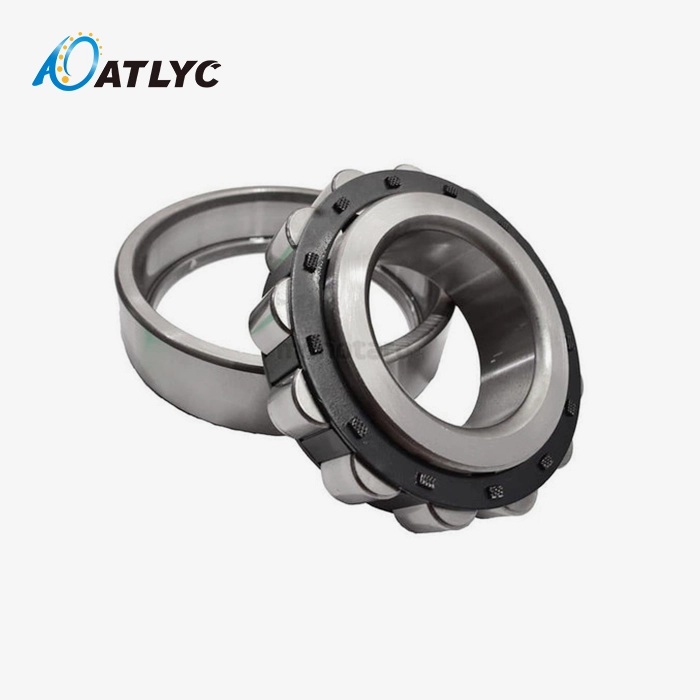
Instead of using circular elements that make point contact like most ball bearings do, the SX011814 uses cylindrical wheels that are placed perpendicular to each other. This setup makes straight contact between the moving parts and the raceways, which spreads the load over a larger area. The result is a huge increase in stiffness, which is very important when equipment needs to stay in the same place even when operating forces change. The bearing is made up of three rings that hold the inner ring together and allow it to spin. The outer ring is split in half and stays in place. Each roller is separated by plastic plates, which stop metal-on-metal friction that could make the motion less smooth. This setup works especially well in places where the inner ring needs to move, but the housing stays still, like in robot arm joints and precision measuring tables.
How Rotation Accuracy Directly Impacts Production Quality
How closely a shaft or part follows its planned circle path is called its rotation accuracy, which is often measured as runout error. In automated systems, even small changes can add up to big placement mistakes. In CNC machining centers, bearing runout has a direct effect on the quality of the surface finish and the tolerances for the size of parts that have been made. For medical imaging machines like CT scanners to make accurate diagnosis pictures, they need to move in a nearly perfect circle. These needs are met by the SX011814's precise building and cutting processes. Tolerances for manufacturing are in line with ISO precision classes P5, P4, and P2. In controlled settings, runout standards of less than one micron are now possible. This level of accuracy comes from both the physical form of the bearing and the high-quality standards used to make it. Cross roller technology is becoming more popular in fields that are switching from hydraulic to electric control and need mechanical precision instead of fluid power damping. Automation equipment makers are using these bearings more and more in their next-generation systems that need to be able to place things repeatedly without having to be recalibrated all the time.
Technical Design Features of SX011814 That Enhance Rotation Precision
Rotation precision is based on engineering that starts with choosing the right material and goes through every step of the manufacturing process. When purchasing, workers understand these scientific details, and they can better compare bearing specs to application needs.
Material Composition and Heat Treatment
The SX011814 uses Gcr15 bearing steel, which is the same as AISI 52100 or SUJ2 names used around the world. This high-carbon chromium metal has about 1% carbon and 1.5% chromium, which gives it the hardness to handle touch forces while still being tough enough to handle impact loads. After being machined, parts go through heat treatment steps that make the surfaces hard to HRC 60–64 on the Rockwell scale. Some uses that need extreme toughness call for Gcr15SiMn metal, which has silicon and manganese added to it to make it harder to work with and less likely to wear down over time. This type of material makes bearings last longer in places where the temperature changes or where there is a chance of contamination. However, standard Gcr15 meets most industry needs as long as proper care is taken. Heat treatment makes a metal structure that has both hard martensite and preserved austenite. This structure balances wear resistance and brittleness. Manufacturers of precision bearings keep these processes within very small temperature ranges. This is because changes of just 10 to 15°C can change the qualities of a material enough to affect its ability to keep its shape while it is in use.
Cross Roller Arrangement and Preload Application
The orthogonal roller orientation is what distinguishes the SX011814 Cross roller bearing from conventional designs. By arranging alternating rollers at right angles to each other, a self-stabilizing geometry is created that resists deformation under multi-directional loads. When radial forces act on one set of rollers, the perpendicular roller set prevents lateral displacement, maintaining alignment and precision. The preload program makes this steadiness even better. During assembly, the split outer ring is changed to make the rollers and raceways conflict with each other in a controlled way, which gets rid of the internal space. This zero-play state means that there is no "dead zone" where motion starts—rotation starts as soon as torque is applied, and it stops exactly when force stops. This property is measured by engineers in terms of axial and rotational stiffness values, which are usually given in Newtons per micron of displacement. The right preset combines different goals. If the preload is too low, small moves can add up to positioning mistakes. If the preload is too high, friction and heat build up. The split outer ring design of the SX011814 lets workers change the preload in the field, so they can get the best results for different working situations during installation or repair.
Geometric Moment Rigidity Under Compound Loads
Pure horizontal or axial forces are rarely created in industrial settings. As the weight moves away from the spinning axis of the robot arms, moment loads are created. Cutting forces and tool extension moments are both felt by machine tool frames. The cross roller bearing works best in these situations because it has geometric moment stiffness, which means it can resist shifting without stretching. This trait comes from how well the bearing distributes stress. Moment loads try to tilt the inner ring relative to the outer ring. At the same time, perpendicular roller sets connect, turning the shifting force into compression loads that are spread out over many contact points. The bearing works more like a hard link than a flexible joint, keeping the angle accuracy within arc-seconds even when there are strong cantilever forces. Moment load estimates used in testing methods prove this ability. The dynamic equivalent radial load is found using the formula Pc = X(Fr + 2M/Dm) + Y(Fa), where Fr is the radial force, Fa is the axial force, M is the moment load, and Dm is the pitch diameter. By comparing the determined Pc to the bearing's rated dynamic load capacity (Cr), you can guess how long it will last in real-world use.
Comparing SX011814 with Other Bearing Types for Precision Applications
To choose the right bearing technology, you need to know how well different designs work in a number of important areas. The following comparison looks at the SX011814 against other options that equipment makers often look at.
Performance Against Standard Ball Bearings
Angular contact ball bearings have long served precision applications through their ability to handle combined loads. However, fundamental geometric limitations constrain their performance. Point contact between balls and raceways concentrates stress, limiting load capacity relative to bearing size. Achieving rigidity comparable to cross roller designs typically requires paired ball bearing arrangements, consuming additional axial space. The SX011814 delivers a load capacity equivalent to multiple ball bearings within its 10mm width. This compact cross-section proves valuable in robotic joints where space constraints are severe. Friction coefficients also favor the cross roller design—cylindrical elements rolling in line contact generate less resistance than balls, improving energy efficiency in battery-powered automation equipment. Noise and vibration characteristics differ markedly between these technologies. Ball bearings can develop irregular wear patterns, causing audible frequency peaks, problematic in medical environments or precision measurement equipment. The distributed loading of cross rollers produces smoother acoustic signatures, contributing to quieter operation in noise-sensitive applications.
Durability Comparison with Standard Cross Roller Models
Not all cross roller bearings are engineered equally. The SX series designation indicates specific design features distinguishing it from generic cross roller offerings. Standard models may use pressed steel cages or simpler roller spacing methods that compromise longevity under severe operating conditions. The SX011814 incorporates individually spaced rollers separated by engineered plastic retainers. This arrangement ensures consistent roller positioning throughout bearing life, preventing the roller bunching that can occur in less sophisticated designs. The split outer ring secured by three fastening elements provides superior structural integrity compared to two-piece alternatives, reducing the risk of assembly misalignment. Material consistency represents another differentiator. While many suppliers claim to use bearing-grade steel, actual material verification through spectrographic analysis sometimes reveals compositional variations affecting hardenability. Manufacturers maintaining ISO 9001 and IATF 16949 certifications implement batch traceability and material testing protocols that reduce variability in mechanical properties.
Application Suitability in Heavy-Load Environments
Industrial robots operating in foundries, automotive assembly lines, and logistics warehouses generate demanding load cycles. Collaborative robots may handle repetitive small parts, but heavy-payload industrial arms moving engine blocks or vehicle frames create sustained moment loads combined with shock impacts during acceleration and deceleration. The SX011814 finds its niche in medium-duty precision applications. Its 70mm inner diameter suits robot joint sizes in the 10-20kg payload range, where accuracy outweighs raw load capacity as the primary selection criterion. Larger industrial manipulators may require cross roller bearings with greater pitch diameters and wider roller contact lengths to support multi-ton payloads.
Environmental considerations also influence bearing selection. The sealed design common in deep groove ball bearings provides inherent contamination protection, while cross roller bearings typically operate in protected environments. CNC machine tool applications expose bearings to coolant mist and metal chips, necessitating supplementary sealing systems. Medical imaging equipment operates in controlled clean rooms where contamination concerns are minimal, making the SX011814's open design acceptable. Thermal management differs between bearing types. Ball bearings tolerate higher rotational speeds before frictional heat becomes problematic, making them preferable for high-RPM spindle applications. Cross roller bearings optimize for high load capacity at moderate speeds—the operational profile matches precision positioning systems where rotation occurs intermittently rather than continuously.
Maintenance and Procurement Guidance for SX011814 Cross Roller Bearing
Achieving the SX011814's full service life potential requires proper installation procedures, routine maintenance protocols, and informed procurement decisions. Equipment manufacturers and maintenance teams should establish practices aligned with bearing specifications.
Lubrication Requirements and Schedules
SX011814 Cross roller bearing operates effectively with grease lubrication in most industrial environments. Lithium-soap base greases containing extreme pressure (EP) additives provide adequate protection for standard duty cycles. The bearing's internal volume should receive 30-40% fill during initial greasing, as excessive lubricant generates churning resistance that elevates operating temperatures. Relubrication intervals depend on operating speed, load intensity, and environmental exposure. Equipment running continuously at moderate speeds may require fresh grease every 2000-3000 operating hours, while intermittent-duty positioning systems can extend this interval substantially. Bearings exposed to moisture, temperature extremes, or contamination need more frequent attention. Application techniques matter significantly. Adding grease while the bearing rotates helps distribute lubricant evenly across roller contact surfaces. Automated lubrication systems delivering small quantities at regular intervals prevent the starvation that occurs when initial grease degrades, while avoiding the over-greasing that causes seal failures and increased friction.
Inspection Protocols and Wear Indicators
Preventive maintenance programs should include periodic bearing condition assessments. Acoustic monitoring using ultrasonic detectors identifies early-stage surface damage before it progresses to catastrophic failure. Elevated noise levels in the 30-50 kHz range often indicate inadequate lubrication or contamination ingress, allowing corrective action before dimensional accuracy degrades. Temperature monitoring provides another reliable indicator. Baseline operating temperatures established during commissioning serve as comparison references. Temperature increases of 10-15°C above normal levels suggest developing problems—potential causes include preload changes due to thermal expansion, lubricant breakdown, or contamination introducing abrasive particles. Visual inspection during scheduled maintenance reveals wear patterns requiring interpretation. Uniform contact marks across roller surfaces indicate proper load distribution, while localized wear zones suggest misalignment or excessive preload. Bearing discoloration may signal inadequate lubrication or contamination issues requiring immediate attention.
Supplier Verification and Authenticity Assurance
The precision bearing market includes numerous suppliers with varying quality standards. Procurement professionals must verify manufacturer credentials to avoid counterfeit or substandard products. Legitimate bearing manufacturers maintain quality certifications demonstrating adherence to international standards—ISO 9001 covering quality management systems and IATF 16949 specific to automotive industry requirements. Documentation accompanying genuine bearings includes material certifications, dimensional inspection reports, and traceability markings. These records verify that components meet specified tolerances and material properties. Suppliers unable to provide comprehensive documentation raise concerns about manufacturing process controls. Price comparisons across suppliers should account for the total cost of ownership rather than the purchase price alone. Bearings failing prematurely due to quality defects generate replacement costs, production downtime, and potential damage to surrounding equipment. Established manufacturers with decades of operational history typically deliver more consistent quality than unknown suppliers offering significantly lower pricing.
Lead Times and Volume Considerations
Standard SX011814 bearings manufactured to common specifications generally maintain shorter delivery schedules than custom variants. Distributors serving North American markets often stock popular sizes, enabling shipment within days for urgent requirements. Custom modifications—such as non-standard preload, special cage materials, or precision classes beyond P5—extend lead times as production requires dedicated manufacturing runs. Volume requirements influence both pricing and delivery timing. Single-unit purchases for prototype development or replacement applications carry premium pricing reflecting handling costs. Production quantities measured in dozens to hundreds unlock volume discounts while justifying supplier investment in maintaining inventory. Large OEM contracts for thousands of units annually enable the most favorable pricing structures and priority production scheduling. International procurement involves logistics considerations beyond bearing selection. Import duties, shipping methods, and customs documentation affect total delivered costs. Bearings classified under specific harmonized tariff codes may qualify for preferential duty rates under trade agreements, reducing total acquisition costs when proper classification procedures are followed.
Real-World Applications Showcasing SX011814's Precision Advantage
Theoretical performance specifications gain relevance when examined through actual industrial deployments. The following applications demonstrate how the SX011814 solves specific engineering challenges across diverse sectors.
Industrial Robotics Joint Integration
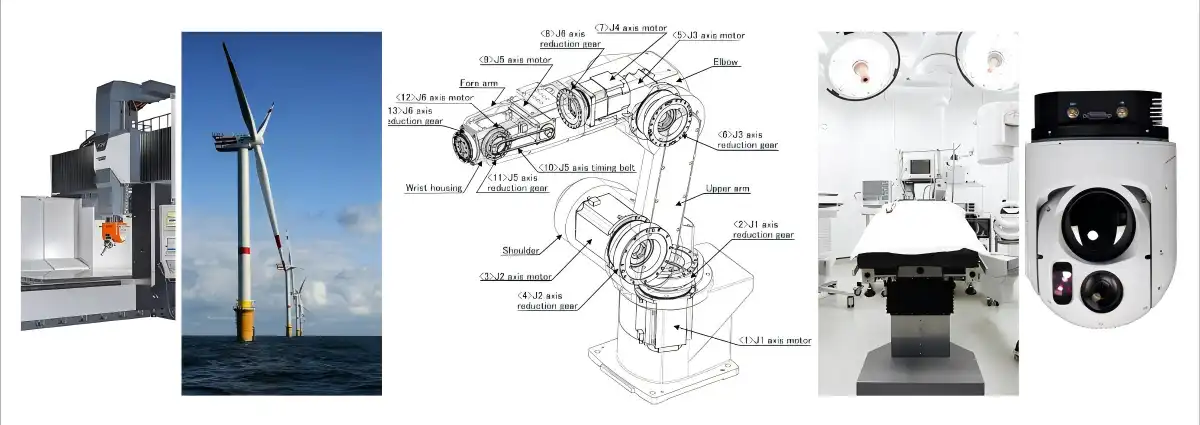
Six-axis articulated robots depend on precision bearings at each axis intersection. The SX011814 Cross roller bearing is commonly used in wrist and elbow joints where compact dimensions must be balanced with high accuracy requirements. Robot manufacturers value this bearing's ability to handle complex compound loads generated as manipulator arms extend, rotate, and position workpieces. During rapid acceleration and deceleration cycles, moment loads spike substantially above steady-state levels. The cross roller design's geometric moment rigidity prevents angular deflection that would introduce positioning errors. Repeatability specifications of ±0.02mm common in modern industrial robots become achievable when bearings maintain their positional accuracy throughout millions of motion cycles. Collaborative robots working alongside human operators create additional considerations. Lower operating speeds reduce kinetic energy during unexpected collisions, but precision requirements remain stringent. The SX011814's low friction coefficient enables sensitive force feedback systems that detect contact and trigger safety responses before excessive forces develop.
CNC Machine Tool Rotary Tables
Machining centers equipped with rotary fourth-axis tables extend the capability from three-axis milling to complex contoured surfaces. Positioning accuracy of the rotary table directly affects finished part quality—angular errors multiply across the radial distance from the rotation center to the tool contact point. The SX011814 enables rotary tables maintaining positioning accuracy within 5-10 arc-seconds, critical when machining aerospace components or medical implants with stringent dimensional tolerances. The bearing's high stiffness resists deflection caused by cutting forces, preventing the vibration that degrades surface finish quality. Coolant exposure presents environmental challenges in machining applications. Machine tool builders incorporate labyrinth seals and positive air pressure systems, protecting bearings from cutting fluid intrusion. Maintenance procedures include bearing inspection during scheduled coolant system service, as contaminated lubricant degrades performance rapidly.
Medical Imaging Equipment Gantries
CT scanners rotate X-ray sources and detectors around patients to capture cross-sectional body images. Gantry bearings must support significant overhanging weight while maintaining circular motion accuracy—deviations introduce image artifacts compromising diagnostic value. The SX011814's application in smaller medical imaging devices demonstrates its precision capabilities. Equipment manufacturers specify tight runout tolerances, ensuring consistent spatial relationships between radiation sources and sensors throughout each rotation. The bearing's smooth operation minimizes vibration that could blur images or require longer exposure times. Clinical environments impose additional requirements beyond pure mechanical performance. Operating noise must remain below levels causing patient discomfort or interfering with medical staff communication. The cross roller bearing's inherent smooth operation contributes to quieter system performance compared to alternative bearing technologies.
Conclusion
Rotation accuracy in precision machinery fundamentally depends on bearing technology capable of eliminating clearances, resisting multi-directional loads, and maintaining dimensional stability. The SX011814 achieves these objectives through its cross roller design, high-grade steel construction, and precision manufacturing standards. Compared to conventional ball bearings, it delivers superior rigidity within compact dimensions, making it the preferred solution for robotic joints, CNC rotary tables, and medical imaging systems. Proper maintenance practices and informed procurement decisions maximize bearing service life while preserving the accuracy essential for automated manufacturing and precision positioning applications. As automation systems evolve toward greater complexity, bearing technologies providing reliable micron-level accuracy become increasingly critical to production quality and operational efficiency.
FAQ
What load capacities can the SX011814 handle compared to ball bearings?
The SX011814 supports combined radial, axial, and moment loads simultaneously within its single compact structure. Its line contact design provides load capacity equivalent to multiple paired angular contact ball bearings, while occupying significantly less axial space. Specific capacity ratings depend on operating conditions and required service life, but the bearing typically handles moment loads 2-3 times greater than ball bearing alternatives of similar size.
How does preload adjustment affect bearing performance?
Preload in SX011814 Cross roller bearing eliminates internal clearance, creating zero-play conditions essential for positioning accuracy. The split outer ring design allows technicians to adjust preload by controlling fastening ring compression. Optimal preload balances rigidity against friction—insufficient preload permits micro-movements that degrade accuracy, while excessive preload generates heat and accelerates wear. Proper adjustment during installation ensures maximum performance throughout the bearing's service life.
What factors influence typical bulk order lead times?
Standard SX011814 bearings with common precision classes ship within 2-4 weeks for moderate quantities. Custom specifications requiring non-standard preload, special materials, or precision classes P4 or P2 extend lead times to 6-10 weeks as production requires dedicated manufacturing runs. Volume quantities exceeding 500 units may qualify for preferential scheduling, while smaller orders face longer queues during peak production periods.
Partner with ATLYC for Reliable SX011814 Cross Roller Bearing Supply
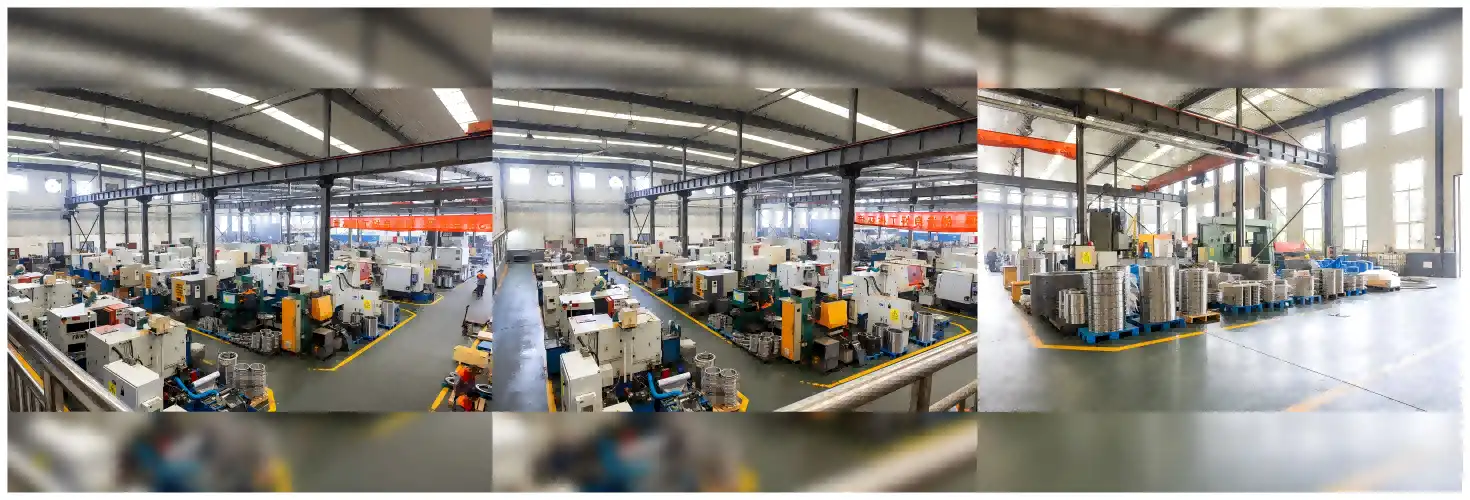
ATLYC brings 15 years of bearing manufacturing expertise to serve mid-to-large automotive and industrial equipment manufacturers requiring dependable cross roller bearing suppliers. Our ISO 9001 and IATF 16949 certified production facilities in Luoyang maintain rigorous quality controls, ensuring consistent SX011814 specifications across every production batch. With 120 skilled professionals dedicated to precision manufacturing, we deliver competitive pricing without compromising the accuracy standards your automation systems demand. Contact our engineering team at auto@lyautobearing.com to discuss your volume requirements, receive technical specifications, and establish a supply partnership backed by international experience serving customers across North America, Europe, and Asia.
References
1. Harris, T.A. & Kotzalas, M.N. (2006). Rolling Bearing Analysis: Essential Concepts of Bearing Technology. CRC Press, Fifth Edition.
2. ISO 492:2014. Rolling Bearings – Radial Bearings – Geometrical Product Specifications (GPS) and Tolerance Values. International Organization for Standardization.
3. Weck, M. & Brecher, C. (2006). Machine Tools 4: Automation of Machine Tools and Production Systems. Springer-Verlag Berlin Heidelberg.
4. Eschmann, P., Hasbargen, L. & Weigand, K. (1985). Ball and Roller Bearings: Theory, Design and Application. John Wiley & Sons, Second Edition.
5. Zhou, R.S. & Hoeprich, M.R. (1991). Torque of Tapered Roller Bearings. Journal of Tribology, Transactions of the ASME, Vol. 113, pp. 590-597.
6. Tsuha, N.A.H. & Cavalca, K.L. (2020). Stiffness and Damping of Elastohydrodynamic Line Contact Applied to Cylindrical Roller Bearing Dynamic Model. Journal of Sound and Vibration, Vol. 481, Article 115444.
Learn about our latest products and discounts through SMS or email