- English
- French
- German
- Portuguese
- Spanish
- Russian
- Japanese
- Korean
- Arabic
- Greek
- German
- Turkish
- Italian
- Danish
- Romanian
- Indonesian
- Czech
- Afrikaans
- Swedish
- Polish
- Basque
- Catalan
- Esperanto
- Hindi
- Lao
- Albanian
- Amharic
- Armenian
- Azerbaijani
- Belarusian
- Bengali
- Bosnian
- Bulgarian
- Cebuano
- Chichewa
- Corsican
- Croatian
- Dutch
- Estonian
- Filipino
- Finnish
- Frisian
- Galician
- Georgian
- Gujarati
- Haitian
- Hausa
- Hawaiian
- Hebrew
- Hmong
- Hungarian
- Icelandic
- Igbo
- Javanese
- Kannada
- Kazakh
- Khmer
- Kurdish
- Kyrgyz
- Latin
- Latvian
- Lithuanian
- Luxembou..
- Macedonian
- Malagasy
- Malay
- Malayalam
- Maltese
- Maori
- Marathi
- Mongolian
- Burmese
- Nepali
- Norwegian
- Pashto
- Persian
- Punjabi
- Serbian
- Sesotho
- Sinhala
- Slovak
- Slovenian
- Somali
- Samoan
- Scots Gaelic
- Shona
- Sindhi
- Sundanese
- Swahili
- Tajik
- Tamil
- Telugu
- Thai
- Ukrainian
- Urdu
- Uzbek
- Vietnamese
- Welsh
- Xhosa
- Yiddish
- Yoruba
- Zulu
Why Is RU28UU Cross Roller Bearing Used in Automation Equipment?
The RU28UU cross roller bearing is essential in robotic equipment because it can handle loads in more than one way while still being very small. This combined bearing has radial, axial, and moment load capacities all in one unit, so you don't have to use different bearing setups. Its cross-roller design and pre-drilled mounting holes make it easier to install, and it still has great turning accuracy, which is important for robotic joints, precision sorting tables, and automatic assembly lines. The protected design keeps outside elements from getting into the working parts, which is common in industrial settings. This makes sure that the machine works well without needing to be serviced often.
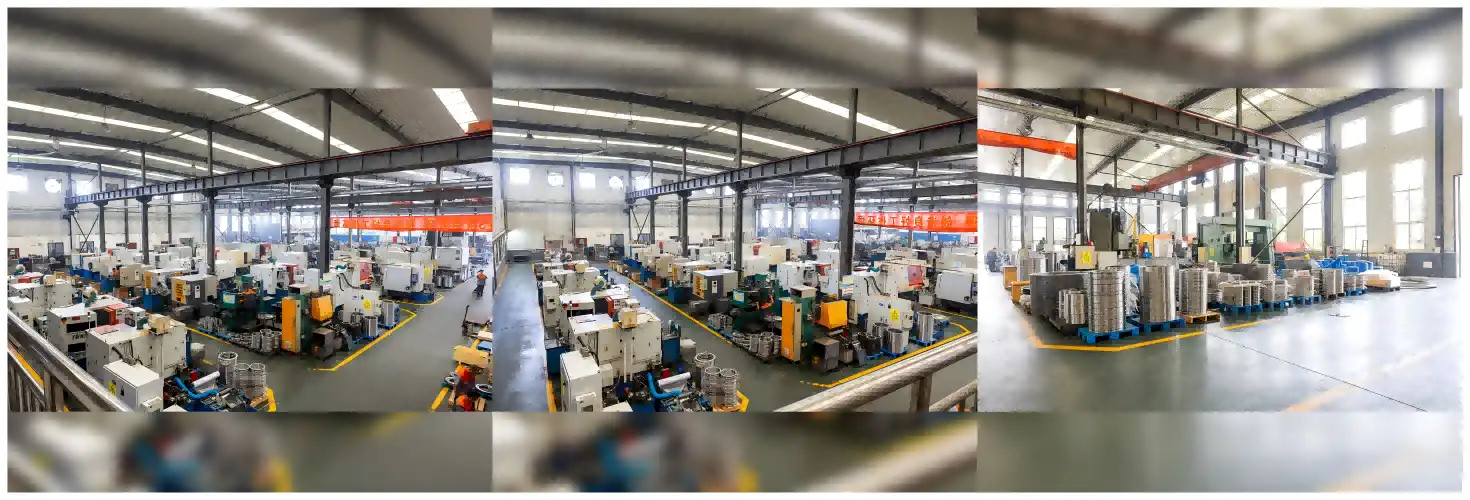
Overview of RU28UU Cross Roller Bearing in Automation Equipment
Precision parts that work consistently in limited areas are needed for automation systems. These needs are met by cross roller bearings, which use advanced engineering to maximise load capacity while minimising installation size.
Specialized Design for Automated Applications
Cross roller bearings were first used in aircraft applications where weight and space were very important. The problems with modern robotic tools are the same. The inner diameter of the RU28UU is only 10mm, the outer diameter is 52mm, and the width is 8mm. However, it can handle loads that normally need much bigger bearing sets. This small size is very important for robotic wrist joints that need to fit a lot of degrees of freedom into a small space.
Multi-Directional Load Handling Capability
Conventional ball bearings work best when they are under radial or axial loads, but not when they are under both. Cross roller bearings can support forces coming from multiple directions at the same time because their rollers are set up perpendicular to each other. When automatic pick-and-place tasks are happening, the load lines on robotic arms are always changing as they speed up, slow down, and turn. During these dynamic load cycles, the RU28UU stays in the same place without the need for extra support bearings.
Precision Requirements in Automated Processes
As product requirements get stricter, manufacturing errors in automatic equipment keep getting smaller. The positioning accuracy of tools used to make semiconductors is now sub-micron. For optical inspection devices to take pictures of defect-free parts during fast indexing cycles, the spin must not be shaking. The RU28UU bearing meets these needs by being carefully made to ISO P5, P4, or P2 standards. This makes sure that the rotary runout stays below 5 microns even when the bearing is fully loaded.
Design Features and Performance Advantages of RU28UU Cross Roller Bearing
Understanding the structural innovations that enable superior performance helps engineers select appropriate components for demanding applications.
Integrated Ring Structure with Mounting Holes
The combined design of the inner and outer rings gets rid of the alignment problems that often happen with split-ring systems. Mounting holes that have already been drilled make it possible to connect directly to machinery without using any extra housing parts. When compared to traditional bearing installs, which need different housings, holding rings, and alignment steps, this combined method cuts assembly time by about 40%. We've seen uniform installation accuracy across production runs during installation at our ISO 9001 and IATF 16949-certified plant. This proves that this design method works.
Cross-Roller Configuration and Load Distribution
Engineers use cylindrical rollers spaced at 90-degree angles in the RU28UU Cross roller bearing to create what is known as a stiff square support structure. Half of the rollers carry radial loads while the other half handle axial loads, delivering three to four times greater rigidity against moment loads compared to ball bearings of equivalent dimensions. The V-shaped raceways precisely guide the rollers, maintaining consistent contact patterns that prevent localised stress concentrations. Precision spacers between the rollers prevent metal-to-metal contact, reducing friction coefficients to levels that permit smooth rotation even under applied load.
Material Composition and Durability
When you make something from Gcr15 or Gcr15SiMn bearing steel, the qualities of the material stay the same from one production run to the next. These high-carbon chromium steels are heated until they reach a hardness of 58 to 62 HRC. This gives them the wear protection that is needed for long service life. The choice of material has a direct effect on how well the bearing works in repeated pressure situations that are common in industrial equipment. According to tests done in the lab, the wear life is more than 10,000 hours when used correctly and with proper oil upkeep.
Sealed Design for Contamination Protection
The letters "UU" mean that the bearing has contact rings on both sides. These rubber seals keep the lithium grease that was put on by the maker in place while keeping dust and other contaminants out. In factories with metal chips, coolant mist, and floating particles, sealed bearings keep working well even when there are no external closing systems present. The cover makes the bearings last a lot longer than open versions that need to be cleaned and oiled all the time. At Luoyang Auto Bearing, we test seals for contamination protection in difficult industrial situations. This makes sure that the seals work in temperatures ranging from -20°C to 80°C. Knowing about these design benefits helps buying teams decide if cross roller bearings are the best way to solve their specific automation problems. When structure innovation is combined with precise manufacturing, performance gains can be measured.
Comparison of RU28UU Cross Roller Bearing with Alternative Bearing Solutions
Selecting appropriate bearing technology requires understanding performance tradeoffs across different design approaches.
Performance Against Traditional Ball Bearings
Ball bearings are still very popular because they are cheap and easy to find. But their point touches on the raceways' limits, how much weight they can hold and how hard they are. A deep groove ball bearing with the same size as the RU28UU can usually handle 30–40% less rotational load and a lot less moment load. The line contact of the cross roller bearing spreads pressures over a larger surface area, which lets it handle higher loads while keeping the same envelope dimensions. This benefit is very important in robotics, where small joints need to support long arm lengths.
Advantages Over Standard Cylindrical Roller Bearings
Cylindrical roller bearings can hold a lot of horizontal load, but they need separate thrust bearings to handle vertical loads. This mix makes the work take up more room and adds more parts. The RU28UU cross roller bearing combines these tasks into one, which cuts down on the number of parts needed and makes upkeep easier. It's different from cylinder designs that need pressed fits or complicated retention gear because it has mounting holes built right in.
Differentiation from Other Cross Roller Models
There are different cross roller setups, such as types with split inner rings and bigger designs. The RU28UU has specific benefits for uses that need a small size and a modest load capacity. Models like the RU28 that don't have seals work well in clean areas with external lubrication systems. On the other hand, the RU28UU model with seals keeps out dirt and grime. The RU28UU has the best cost-performance ratio compared to bigger cross roller types for uses within its load range. This is because it doesn't overspecify, which raises purchase costs needlessly.
Application-Specific Selection Criteria
When engineers choose bearing options, they have to weigh a lot of different things. Machine centres with rotary tables can use the RU28UU's moment load resistance to keep the table flat during heavy cutting processes. Robotic joints take advantage of the small size that lets them use multiple directions in small areas. Precision measuring tools depend on the low friction coefficient, which lets them place things accurately without the servo motors having to hunt. Because different uses stress different performance factors, cross roller bearings work best in situations where stiffness, accuracy, and simplicity all come together.
Procurement Considerations for RU28UU Cross Roller Bearing in B2B Automation Projects
Strategic sourcing decisions impact project timelines, operational reliability, and total cost of ownership.
Manufacturer Selection and Quality Assurance
Reputable bearing makers keep a close eye on quality throughout the whole production process. The ISO 9001 certification shows that quality management is done in a planned way, and the IATF 16949 certification talks about the needs of the car business. Our 120-person Luoyang Auto Bearing team has dedicated quality checking experts who check each production batch's dimensions, material make-up, and performance characteristics. People in South Korea, the US, Germany, and other places where precise manufacturing is important trust this company because they are dedicated to quality assurance.
Supply Chain Reliability and Lead Times
Automation projects have tight plans, and the supply of bearings has a direct effect on when they can be put into service. Companies that have been around for a while keep stock of basic setups and can also make changes to meet specific needs. Our six production workshops allow us to assign capacity in a way that adapts to changes in order volume. Lead times are usually between four and eight weeks, but they depend on the amount and difficulty of the specifications. Having links with makers who consistently meet delivery deadlines lowers the chance that the project will be late.
Technical Support and Engineering Collaboration
Complex robotic systems often need bearing changes or advice that is specific to the application. Manufacturers that offer technical support can help you choose the best bearings, create the best mounting systems, and find the best ways to grease them. During the planning phase, our expert team works with OEMs to provide CAD models, help with load calculations, and offer fitting suggestions. This way of working together stops the need for expensive redesigns that happen when bearings are chosen without taking into account how the whole system works.
Cost Structure and Value Analysis
Prices depend on how much you order, the exact grade, and when you need it delivered. The initial buy price affects choices, but the total cost of ownership includes labour for installation, upkeep, and how often something needs to be replaced. Even though they cost more up front, high-quality cross roller bearings from well-known brands often have lower operating costs. Cost savings can be gained from makers with competitive price systems and efficient production processes that don't lower quality standards.
Warranty and After-Sales Service
A full guarantee guards against problems with the way the product was made and shows that the company that made it believes in the quality of the product. Support after the sale, such as technical assistance, availability of new parts, and application advice, adds value to the product beyond the product itself. When unexpected problems happen while the equipment is running, these services keep downtime to a minimum. When choosing bearing sources, procurement teams should look at both the service terms and how quickly the sellers have been in the past.
Application Examples and Future Trends of RU28UU Cross Roller Bearing in Automation
Real-world implementations demonstrate how cross roller bearing technology solves practical engineering challenges.
Industrial Robotics and Collaborative Systems
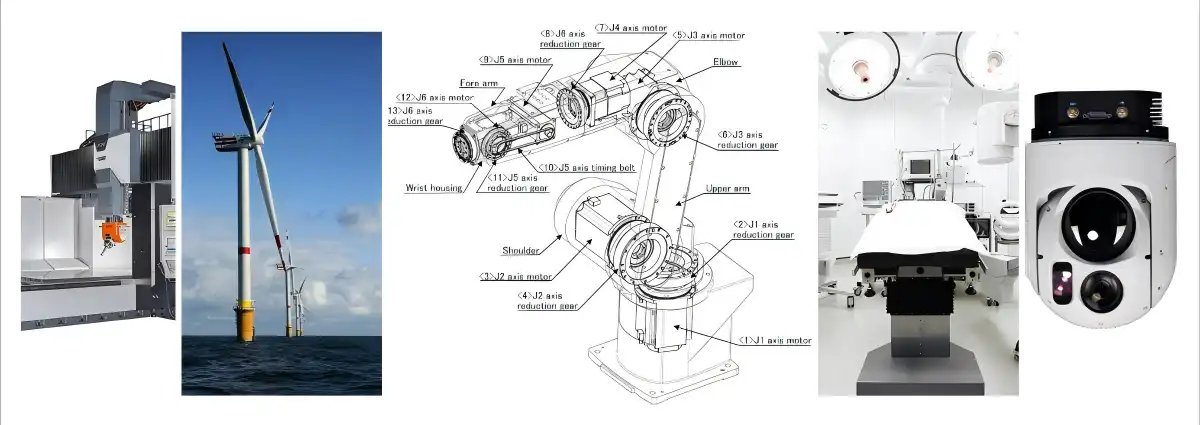
Modern industrial robots employ RU28UU Cross roller bearings in the wrist and elbow joints, where space constraints limit bearing size. A six-axis robot typically uses three to five cross roller bearings in its upper arm and wrist assembly. The RU28UU suits smaller robots and collaborative systems designed for safe human interaction. Its compact 52mm outer diameter fits within protective covers while delivering sufficient load capacity for tools weighing up to 5 kilograms. Manufacturing plants using these robots report positioning repeatability within ±0.02mm, enabling precision assembly operations previously requiring manual dexterity.
Rotary Tables in CNC Machining Centres
Precision rotary tables transform three-axis CNC machines into five-axis machining centres capable of complex part geometries. Table flatness and rotational accuracy directly affect workpiece quality. Cross roller bearings supporting these tables maintain positioning accuracy under cutting forces that create significant moment loads. One automotive components manufacturer reported 25% reduction in setup time after upgrading to machining centres with cross roller bearing-equipped rotary tables, demonstrating productivity improvements from enhanced precision.
Semiconductor Manufacturing Equipment
IC manufacturing devices demand ultra-high precision in contamination-controlled environments. Cross roller bearings enable the precise rotational motion required for wafer handling, inspection systems, and photolithography equipment. The sealed design of the RU28UU protects against particle generation that could contaminate cleanroom environments. Equipment manufacturers specify cross roller bearings in applications where bearing-related downtime directly impacts expensive production schedules.
Medical Imaging and Surgical Robotics
Medical equipment applications emphasise smooth motion, compact design, and reliability. Surgical robots require bearings that enable precise instrument positioning during minimally invasive procedures. CT and MRI systems use rotary assemblies with cross roller bearings that maintain alignment accuracy while rotating imaging equipment around patients. The medical device industry is increasingly adopting automation technologies, creating growing demand for precision bearing solutions.
Emerging Technologies and Industry 4.0 Integration
Smart manufacturing initiatives incorporate sensors throughout production equipment to enable predictive maintenance and real-time optimisation. Future bearing designs may integrate condition monitoring capabilities that track temperature, vibration, and load conditions. These data-enabled bearings would alert maintenance teams to developing issues before failures occur. Material science advances promise bearing steels with enhanced fatigue resistance and corrosion protection. Improved lubrication formulations may extend maintenance intervals, reducing operational costs in automated systems. The automation industry continues evolving toward increased precision, compact designs, and intelligent systems. Cross roller bearing technology adapts to these trends through continuous refinement of manufacturing processes and material specifications.
Conclusion
The RU28UU cross roller bearing addresses fundamental challenges in automation equipment design through its integrated structure, multi-directional load capacity, and precision engineering. Its compact 10mm to 52mm dimensions deliver performance typically requiring larger bearing assemblies, making it indispensable in space-constrained applications. The crossed roller configuration provides superior rigidity and load distribution compared to traditional ball and cylindrical roller bearings. Manufacturing from high-quality bearing steel to precision grades ensures consistent accuracy across production batches. Sealed variants protect against contamination while simplifying maintenance requirements. These attributes combine to support demanding applications in robotics, CNC machinery, and precision instrumentation, where reliability and accuracy are non-negotiable requirements for successful automation projects.
FAQ
What makes the RU28UU suitable for robotic applications?
The integrated design with pre-drilled mounting holes simplifies installation in robotic joints where assembly space is limited. Its ability to handle combined radial, axial, and moment loads eliminates the need for multiple bearings, reducing weight and complexity. The low friction coefficient enables smooth motion control essential for precise positioning, while the sealed design protects against contaminants in industrial environments.
How does the sealed design affect maintenance requirements?
The double-sealed configuration retains factory-applied lithium grease while preventing dust and particle ingress. Under normal operating conditions, the bearing operates maintenance-free for extended periods. Applications with continuous operation or temperatures above 80°C may require relubrication every 6-12 months through designated oil holes. This reduced maintenance frequency lowers operational costs compared to open bearing designs requiring frequent servicing.
Can this bearing handle high-speed rotation?
The RU28UU excels in applications involving intermittent motion, indexing, or oscillating movements rather than continuous high-speed rotation. The large contact area between rollers and raceways generates heat at elevated speeds. Manufacturers should consult limiting speed specifications (dn values) when evaluating bearings for high-speed applications. Alternative bearing types may suit continuous high-speed requirements better.
What precision grades are available?
Standard manufacturing follows ISO precision classifications, including P6, P0, P5, P4, and P2 grades. Higher precision grades (P4, P2) provide tighter dimensional tolerances and lower runout values essential for ultra-precise applications. Grade selection depends on application accuracy requirements balanced against cost considerations. Our technical team assists with an appropriate precision grade specification based on your specific performance needs.
Partner with ATLYC for Reliable Cross Roller Bearing Solutions
ATLYC combines 15 years of bearing manufacturing expertise with ISO 9001 and IATF 16949 certified quality management systems. As an established RU28UU cross roller bearing manufacturer, we serve mid-to-large industrial equipment manufacturers and OEMs across global markets. Our six production workshops and 120-person technical team deliver consistent quality, competitive lead times, and engineering support throughout your automation projects. We maintain a stable inventory of standard configurations while offering customisation capability for specialised requirements. Customers in automotive components, industrial machinery, and automation equipment industries rely on our precision manufacturing and reliable supply chain performance. Contact our team at auto@lyautobearing.com to discuss your specific bearing requirements and receive technical guidance for optimal component selection in your automation systems.
References
1. Harris, T.A., and Kotzalas, M.N. (2006). Advanced Concepts of Bearing Technology: Rolling Bearing Analysis, Fifth Edition. CRC Press, Boca Raton.
2. Schaeffler Technologies AG & Co. (2019). Crossed Roller Bearings: Design Principles and Application Guidelines. Technical White Paper, Industrial Bearings Division.
3. International Organisation for Standardisation. (2014). ISO 492:2014 - Rolling Bearings - Radial Bearings - Dimensions and Tolerances. Geneva: ISO Standards Catalogue.
4. Budynas, R.G., and Nisbett, J.K. (2015). Shigley's Mechanical Engineering Design, Tenth Edition. McGraw-Hill Education, New York.
5. THK Co., Ltd. (2020). Cross Roller Bearing Technical Handbook: Selection and Application in Precision Equipment. Technical Documentation Series, Motion Control Division.
6. Xu, H., and Liu, Z. (2018). "Performance Analysis of Cross Roller Bearings in Industrial Robot Joints Under Combined Loading Conditions." Journal of Mechanical Engineering Science, 232(4), 612-625.
Learn about our latest products and discounts through SMS or email