- English
- French
- German
- Portuguese
- Spanish
- Russian
- Japanese
- Korean
- Arabic
- Greek
- German
- Turkish
- Italian
- Danish
- Romanian
- Indonesian
- Czech
- Afrikaans
- Swedish
- Polish
- Basque
- Catalan
- Esperanto
- Hindi
- Lao
- Albanian
- Amharic
- Armenian
- Azerbaijani
- Belarusian
- Bengali
- Bosnian
- Bulgarian
- Cebuano
- Chichewa
- Corsican
- Croatian
- Dutch
- Estonian
- Filipino
- Finnish
- Frisian
- Galician
- Georgian
- Gujarati
- Haitian
- Hausa
- Hawaiian
- Hebrew
- Hmong
- Hungarian
- Icelandic
- Igbo
- Javanese
- Kannada
- Kazakh
- Khmer
- Kurdish
- Kyrgyz
- Latin
- Latvian
- Lithuanian
- Luxembou..
- Macedonian
- Malagasy
- Malay
- Malayalam
- Maltese
- Maori
- Marathi
- Mongolian
- Burmese
- Nepali
- Norwegian
- Pashto
- Persian
- Punjabi
- Serbian
- Sesotho
- Sinhala
- Slovak
- Slovenian
- Somali
- Samoan
- Scots Gaelic
- Shona
- Sindhi
- Sundanese
- Swahili
- Tajik
- Tamil
- Telugu
- Thai
- Ukrainian
- Urdu
- Uzbek
- Vietnamese
- Welsh
- Xhosa
- Yiddish
- Yoruba
- Zulu
How Does RU42UU Cross Roller Bearing Support Motion Control?
The RU42UU cross roller bearing supports motion control through its innovative 90-degree crossed roller configuration, which distributes loads uniformly across radial, axial, and moment directions simultaneously. This unique design maintains exceptional rotational accuracy while minimizing friction and backlash—essential characteristics for precision motion applications. With its integral ring structure featuring built-in mounting holes, the bearing simplifies installation in space-constrained environments, delivering high rigidity and consistent repeatability crucial for automated systems, robotic joints, and precision rotary tables where even micro-level deviations affect overall system performance.
Understanding RU42UU Cross Roller Bearing Design and Features
The fundamental architecture of crossed roller bearings distinguishes them from traditional ball bearing configurations, offering distinct advantages in precision applications.
Precise Dimensional Specifications and Spatial Efficiency
The bearing measures 20mm inner diameter, 70mm outer diameter, and 12mm width. These compact dimensions enable engineers to achieve substantial load capacity within constrained installation spaces. The bearing's slim profile proves particularly valuable in applications where equipment size directly affects functionality—such as medical imaging equipment requiring minimal footprint or robotic joints demanding lightweight yet rigid components.
Crossed Roller Configuration and Load Distribution
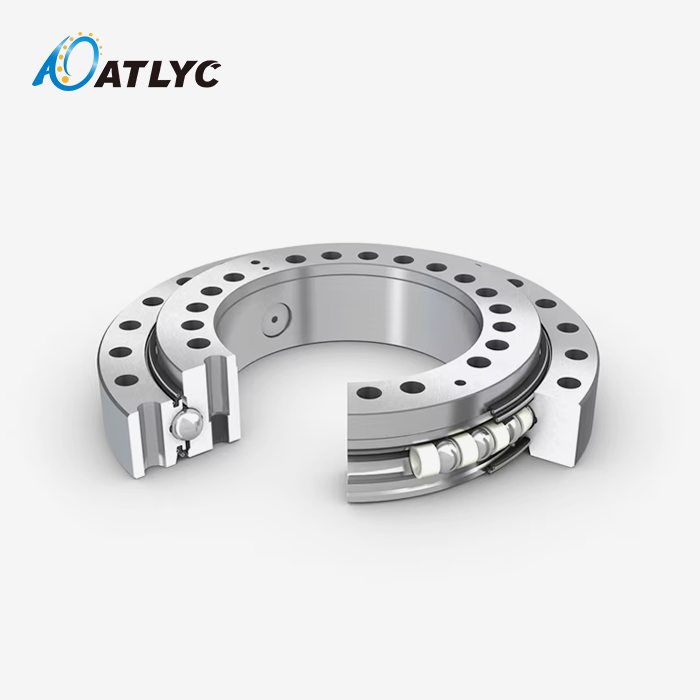
Cylindrical rollers arranged perpendicular to each other create a 90-degree crossed pattern between integral inner and outer rings. This geometric arrangement enables the bearing to handle radial loads, axial loads, and moment loads simultaneously within a single compact unit. Each roller contacts precision-machined raceways at optimal angles, distributing forces uniformly across the bearing surface. Precision spacers separate adjacent rollers, preventing direct roller-to-roller contact that would otherwise generate friction and compromise accuracy. The design's inherent rigidity minimizes deflection under load, maintaining dimensional stability essential for motion control applications. Unlike conventional bearings requiring multiple units to handle combined loading conditions, this crossed configuration consolidates load-bearing functions into one component, reducing assembly complexity RU42UU cross roller bearing and potential tolerance stack-up errors.
Material Composition and Structural Integrity
Manufactured from Gcr15 or Gcr15SiMn bearing steel, the component delivers durability matching international quality standards. These chromium-bearing steels undergo heat treatment processes, achieving hardness levels necessary for extended service life under continuous operation. The material's metallurgical properties provide resistance to surface fatigue, enabling the bearing to maintain accuracy specifications throughout its operational lifespan. The integral ring design eliminates assembly tolerance accumulation inherent in split-ring alternatives. Single-piece construction maintains precise dimensional relationships under varying load conditions, contributing to superior rotational accuracy and structural rigidity.
How RU42UU Bearings Enhance Motion Control Performance
Motion control demands repeatability, accuracy, and stability. Understanding how bearing design translates into functional performance helps you evaluate suitability for specific applications.
Operational Principles Driving Precision
The perpendicular roller arrangement creates continuous contact across raceways throughout rotation. This geometry eliminates clearance gaps that would introduce positional uncertainty, achieving minimal backlash characteristics. Low friction coefficients result from optimized roller-raceway contact mechanics, enabling smooth rotation even at slow speeds where stick-slip phenomena typically compromise precision. Moment load capacity—the bearing's ability to resist tilting forces—stems directly from the wide roller span relative to bearing height. This geometric advantage maintains angular accuracy under combined loading conditions common in motion control applications.
Vibration Reduction and Repeatability
The crossed roller configuration distributes contact points around the bearing circumference, creating balanced load paths that minimize vibration generation. Consistent roller spacing maintained by precision separators ensures uniform load distribution throughout rotation, eliminating periodic variations that would manifest as vibration or positional error. This stability proves critical in applications like measuring instruments, where environmental vibration already challenges accuracy targets. Excellent runout accuracy—the bearing's ability to maintain consistent radial and axial positioning during rotation—enables repeatable positioning within micrometers. Machine tools, precision rotary tables, and semiconductor manufacturing equipment rely on this characteristic to maintain tolerances throughout production cycles.
Practical Applications Across Industries
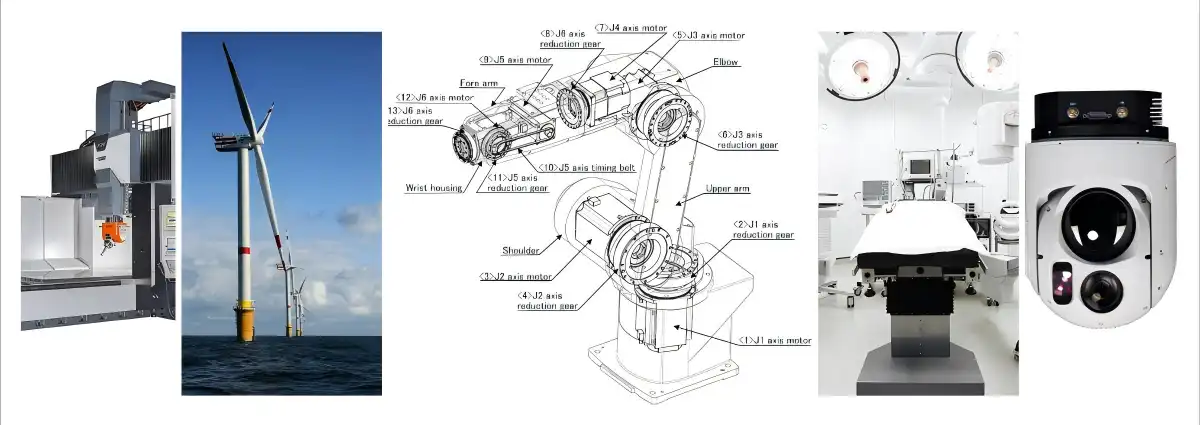
Understanding real-world implementations illustrates the bearing's versatility. Industrial robot joints utilize crossed roller bearings to achieve the multi-axis precision and load capacity required for repetitive motion cycles. The compact design accommodates tight spatial constraints within robotic arms while providing moment rigidity, preventing positional drift during payload handling. Machining center rotary tables depend on these bearings to maintain workpiece positioning accuracy throughout cutting operations. The combination of high radial stiffness and moment capacity ensures the table resists cutting forces without deflection, directly affecting finished part tolerances. Measuring instruments and coordinate measuring machines require bearing performance that doesn't introduce measurement error. The minimal runout and friction characteristics enable accurate probe positioning and smooth scanning motion essential for dimensional verification.
Comparative Analysis: RU42UU vs Other Cross Roller Bearings
Selecting the optimal bearing requires understanding performance trade-offs among similar components. Comparing the specifications against alternatives clarifies decision factors for procurement specialists.
Dimensional and Load Capacity Differences
The RU48UU model represents the next size increment in the RU series, featuring a 25mm inner diameter, an 80mm outer diameter, and a 12mm width. While providing higher radial and moment load capacity due to increased roller length, RU42UU cross roller bearing, and bearing diameter, it occupies approximately 20% more installation space. Applications with flexible spatial constraints benefit from this increased capacity, while size-limited designs favor the more compact alternative. Angular contact ball bearings offer different performance characteristics. While potentially achieving higher speed capabilities due to point contact geometry, they typically require paired or stacked arrangements to match the moment load capacity delivered by a single crossed roller unit. This multiplies component count, installation complexity, and potential tolerance stack-up—factors affecting assembly costs and long-term reliability.
Accuracy and Lifespan Considerations
Bearing accuracy classes ranging from P6 to P2 (per ISO standards) define dimensional and rotational tolerances. The bearing's availability across this precision spectrum enables specification-matching application requirements. General industrial automation typically functions effectively with P5 or P6 accuracy, while precision measuring equipment and semiconductor manufacturing devices require P4 or P2 classes to meet performance targets. Life expectancy calculations depend on load conditions, operating speed, lubrication quality, and environmental factors. The generous roller contact area distributes stresses favorably compared to point-contact designs, often extending operational life under equivalent loading conditions. This longevity translates to reduced maintenance intervals and lower total cost of ownership—key evaluation criteria for procurement decision-makers.
Cost-Performance Balance in B2B Procurement
While crossed roller bearings command premium pricing compared to standard ball bearings, the functional advantages justify investment in precision applications. Consolidating multi-directional load capacity into a single compact unit eliminates additional components, reducing assembly costs and improving reliability through simplified design architecture. Evaluating cost-effectiveness requires examining total system economics rather than component price alone. The bearing's contribution to equipment accuracy, reduced downtime through extended service life, and simplified maintenance protocols often produce a favorable return on investment in demanding motion control applications.
Procurement Insights and Supplier Guidance for RU42UU Bearings
Strategic sourcing decisions affect not only component cost but supply chain reliability and product authenticity—critical considerations for OEMs and equipment manufacturers.
Pricing Structures and Availability
Market pricing reflects accuracy class, seal configuration, and order volume. Bulk procurement arrangements typically yield 15-25% cost advantages compared to small-quantity purchases, benefiting manufacturers with predictable consumption patterns. Lead times vary seasonally, with standard configurations generally available within 3-5 weeks, while custom specifications require extended manufacturing cycles. Building relationships with suppliers offering flexible order quantities and consignment inventory arrangements helps manage working capital while ensuring component availability matches production schedules. Understanding minimum order quantities and volume discount thresholds enables cost optimization across purchasing cycles.
Identifying Reputable Brands and Authentic Products
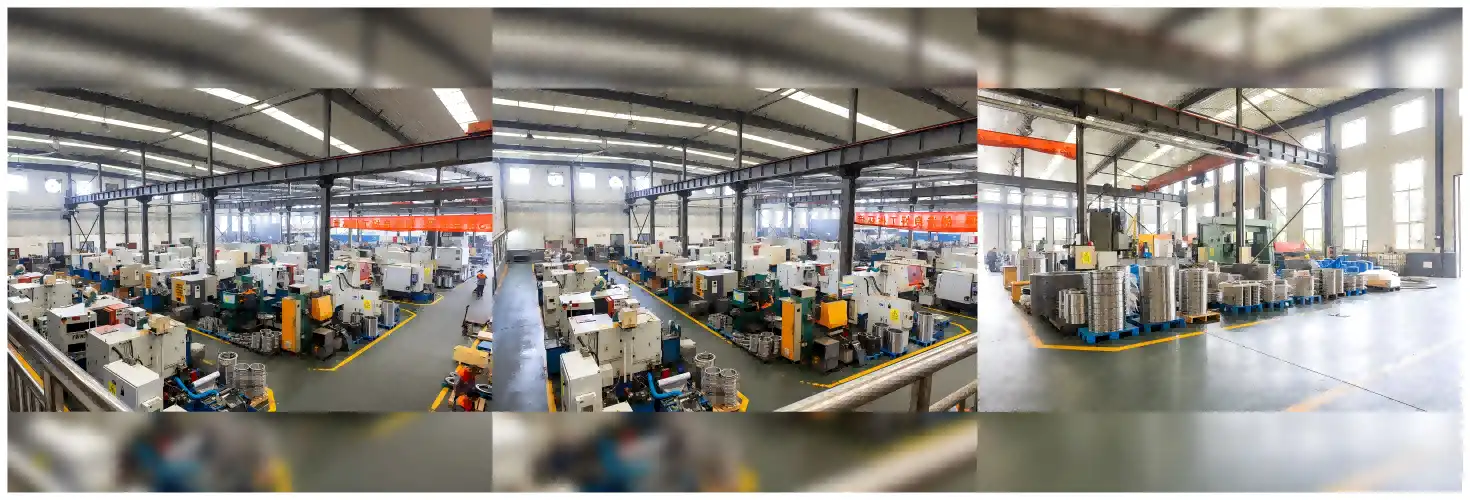
Companies like IKO, NSK, KOYO, and THK have been around for a long time and have complete lines of cross roller bearings that come with detailed documentation and quality certifications. These brands put a lot of money into precision manufacturing and metallurgical quality control, which makes sure that their products always work the way they're supposed to and meet published specifications. Fake bearings are a big problem in global supply lines. Genuine items have markings that were laser-etched with specific fonts and placements that have been checked against manufacturer paperwork. Holographic stickers and serial numbers that can be tracked are security features that are built into packaging. Requesting conformance certificates, material test reports, and dimensional inspection data can help prove that the bearings are real. Working directly with authorised distributors or well-known bearing makers that have ISO 9001 and IATF 16949 certifications lowers the risk of buying fakes. At Luoyang Auto Bearing Co., Ltd. (ATLYC), we've had strict quality control systems in place since 2010. Since then, we've grown from a single workshop to six specialised production facilities that serve customers in South Korea, the US, Germany, Russia, Iran, and Turkey. The 120 people on our team are experts in making high-precision bearings, and they have all the necessary certifications to make sure that the goods they make are real and meet all the requirements.
Quality Assurance and Warranty Considerations
By asking for dimensional inspection records, material certifications, and data to confirm accuracy, you set quality standards. Reputable suppliers offer warranties that cover manufacturing flaws and replacements or credits for early failures caused by problems with the materials or the work. Setting up clear quality agreements that include acceptance criteria, inspection protocols, and failure analysis procedures protects against low-quality products and makes everyone in the supply chain responsible. These steps are especially important when buying things for sale that go to more than one market in different countries.
Maintenance Tips and Lifespan Optimization for RU42UU Bearings
Proper maintenance practices directly influence operational life and performance consistency. Implementing structured protocols maximizes return on bearing investment while minimizing unplanned downtime.
Lubrication Protocols and Inspection Routines
Crossed roller bearings need to be oiled in a way that matches their working conditions. Most situations RU42UU cross roller bearing can be lubricated with grease, and lithium-based greases can be used in a wide range of temperatures. Initial lubrication during installation should fill about 30–40% of the bearing cavity; too much grease causes churning friction, and not enough lubrication speeds up wear. The amount of time between relubrications depends on the working speed, load, and environment. In general, industrial uses need to be relubricated every 6 to 12 months. However, in dirty environments or situations where the machine is always running, service may need to be done every three months. During regular inspections, checking the condition of the lubricant can help find signs of wear and tear before they affect the performance of the bearing. Regular inspections should check for rotational smoothness, unusual noise production, and temperature rise that could mean there are problems. Scheduled checks let you find problems like contamination, seal degradation, or lack of lubrication early, before they become major problems.
Common Pitfalls and Prevention Strategies
Installation mistakes are a common reason why things go wrong. The performance of a bearing is directly affected by how flat and straight the mounting surface is. Deviations cause changes in the preload, which leads to uneven wear patterns. Checking the geometry of the mounting surface before installation keeps bearings from breaking too soon. Overloading goes beyond the design capacity, which speeds up surface fatigue and shortens working life. Field failures can be avoided by comparing published capacity ratings to real application loads during the specification phase. When operating conditions cause shock loads or vibration, design safety factors must take dynamic stress amplification into account. When seals become broken or degraded, environmental contamination becomes a threat to sealed bearings. Protection against pollution is kept up by checking the seals regularly and replacing them when wear is noticeable. Extra sealing or protective covers may be helpful for applications that are used in very harsh settings.
Environmental and Operational Stress Management
Extreme temperatures change the viscosity of a lubricant and the qualities of a material. Operating temperatures above the lubricant's recommended range cause it to break down too quickly, while low temperatures raise friction and starting torque. Temperature-related problems can be avoided by choosing the right oils that are compatible with the expected temperature ranges. Corrosive environments can damage bearing surfaces even when seals are in place to protect them. In chemical processing or marine uses, choosing different types of stainless steel or coating them with protective coatings can make them last longer. Regular inspection finds early signs of corrosion so that action can be taken before the harm gets too bad. Predictive maintenance programs that track vibration signatures find developing bearing problems before they become catastrophic. Tracking the intensity and frequency of vibrations shows how wear happens over time, which lets replacements be planned for when maintenance windows are open instead of having to happen during emergency shutdowns.
Conclusion
The RU42UU cross roller bearing provides precise motion control with a unique design that combines the ability to carry loads in multiple directions into a small space. Because it has crossed rollers, an integral ring structure, and sealed protection, it is a strong option for tough industrial uses that need accuracy, rigidity, and dependability. To use it correctly, you need to know the dimensions, load characteristics, and how it works. Comparing performance to other options makes it clear which selection factors meet the needs of the application. Strategic purchasing that takes into account the dependability of suppliers, the authenticity of products, and quality control safeguards the performance of tools and the continuity of the supply chain. When maintenance procedures are followed correctly, operating life is increased and unexpected downtime is reduced. Crossed roller bearing technology has clear benefits when choosing parts for robotic systems, machining centers, medical devices, or measuring instruments. The detailed information in this article helps procurement workers and engineering teams make smart choices that improve the performance of motion control systems.
FAQ
1. What load capacities does the RU42UU cross roller bearing provide?
The bearing handles radial, axial, and moment loads simultaneously within its compact 70mm outer diameter footprint. Specific capacity ratings depend on accuracy class and operating conditions, but the crossed roller configuration typically delivers moment capacity equivalent to much larger conventional bearing arrangements. Consulting detailed technical specifications matching your accuracy requirements ensures proper sizing for application loads.
2. How can I distinguish genuine products from counterfeits?
Authentic bearings feature precise laser markings with manufacturer-specific fonts and positioning. Packaging includes security features like holographic labels and traceable serial numbers. Requesting certificates of conformance, material test reports, and dimensional inspection data verifies authenticity. Working with authorized distributors or certified manufacturers reduces counterfeit risk significantly.
3. Are these bearings suitable for high-speed rotary applications?
Crossed roller bearings prioritize load capacity and accuracy over maximum speed capability. While suitable for moderate-speed precision applications like rotary tables and indexing mechanisms, extremely high-speed requirements may benefit from angular contact ball bearings. Operating speeds below 500 RPM represent the sweet spot where crossed roller advantages shine. Specific speed limits depend on bearing size, lubrication, and accuracy class.
Partner with ATLYC for Precision RU42UU Cross Roller Bearing Solutions
ATLYC brings 15 years of bearing manufacturing expertise to your motion control challenges. As an established cross roller bearing supplier holding ISO 9001 and IATF 16949 certifications, we understand the precision demands of automotive components, industrial machinery, and automation equipment. Our six specialized production facilities and 120-person technical team deliver consistent quality RU42UU cross roller bearing matching international standards.
We manufacture authentic crossed roller bearings meeting specifications from P6 to P2 accuracy classes, serving OEMs and distributors across global markets. Competitive pricing, reliable lead times, and comprehensive technical support distinguish our customer relationships. Whether you need standard configurations or customized solutions, our engineering team provides application guidance, ensuring optimal component selection.
Contact auto@lyautobearing.com today to discuss your precision bearing requirements. Request detailed specifications, pricing quotations, or technical consultation—we're ready to support your motion control success with dependable supply and responsive service.
References
1. Harris, T.A. and Kotzalas, M.N. (2006). "Advanced Concepts of Bearing Technology: Rolling Bearing Analysis, Fifth Edition." CRC Press, Taylor & Francis Group.
2. ISO 492:2014. "Rolling Bearings — Radial Bearings — Geometrical Product Specifications (GPS) and Tolerance Values." International Organization for Standardization.
3. Tsutsumi, M. and Saito, H. (1997). "Performance Characteristics of Cross Roller Bearings in Precision Positioning Systems." Journal of Precision Engineering, Vol. 21, Issue 2-3, pp. 134-141.
4. NSK Ltd. Technical Report. (2018). "Cross Roller Bearing Design Principles and Application Guidelines for Motion Control Systems." NSK Motion & Control Technical Paper Series.
5. Weck, M. and Brecher, C. (2006). "Machine Tools Production Systems Volume 1: Machine Tool Structures, Drives, and Components." Werkzeugmaschinenlabor WZL, RWTH Aachen University.
6. ANSI/ABMA Standard 20-1996 (R2013). "Radial Bearings of Ball, Cylindrical Roller and Spherical Roller Types — Metric Design." American Bearing Manufacturers Association.
Learn about our latest products and discounts through SMS or email