- English
- French
- German
- Portuguese
- Spanish
- Russian
- Japanese
- Korean
- Arabic
- Greek
- German
- Turkish
- Italian
- Danish
- Romanian
- Indonesian
- Czech
- Afrikaans
- Swedish
- Polish
- Basque
- Catalan
- Esperanto
- Hindi
- Lao
- Albanian
- Amharic
- Armenian
- Azerbaijani
- Belarusian
- Bengali
- Bosnian
- Bulgarian
- Cebuano
- Chichewa
- Corsican
- Croatian
- Dutch
- Estonian
- Filipino
- Finnish
- Frisian
- Galician
- Georgian
- Gujarati
- Haitian
- Hausa
- Hawaiian
- Hebrew
- Hmong
- Hungarian
- Icelandic
- Igbo
- Javanese
- Kannada
- Kazakh
- Khmer
- Kurdish
- Kyrgyz
- Latin
- Latvian
- Lithuanian
- Luxembou..
- Macedonian
- Malagasy
- Malay
- Malayalam
- Maltese
- Maori
- Marathi
- Mongolian
- Burmese
- Nepali
- Norwegian
- Pashto
- Persian
- Punjabi
- Serbian
- Sesotho
- Sinhala
- Slovak
- Slovenian
- Somali
- Samoan
- Scots Gaelic
- Shona
- Sindhi
- Sundanese
- Swahili
- Tajik
- Tamil
- Telugu
- Thai
- Ukrainian
- Urdu
- Uzbek
- Vietnamese
- Welsh
- Xhosa
- Yiddish
- Yoruba
- Zulu
RA Type Crossed Roller Bearings: Key Features Explained
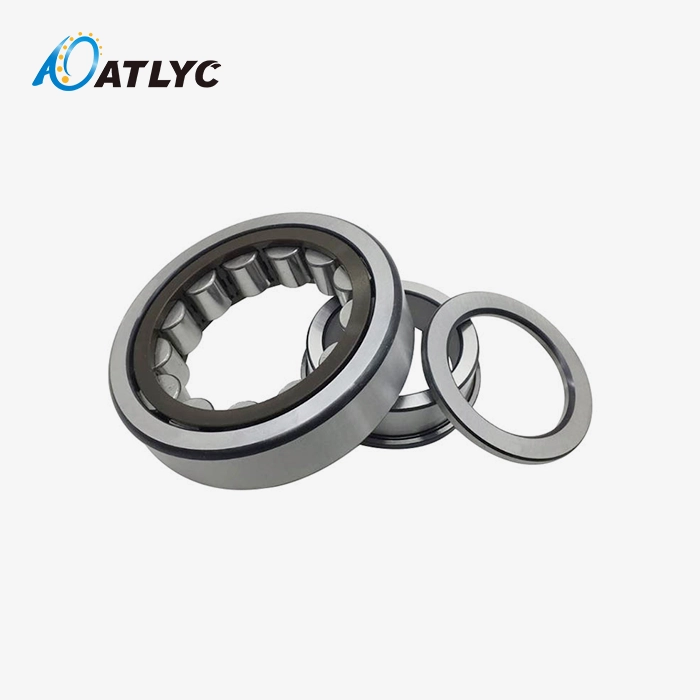
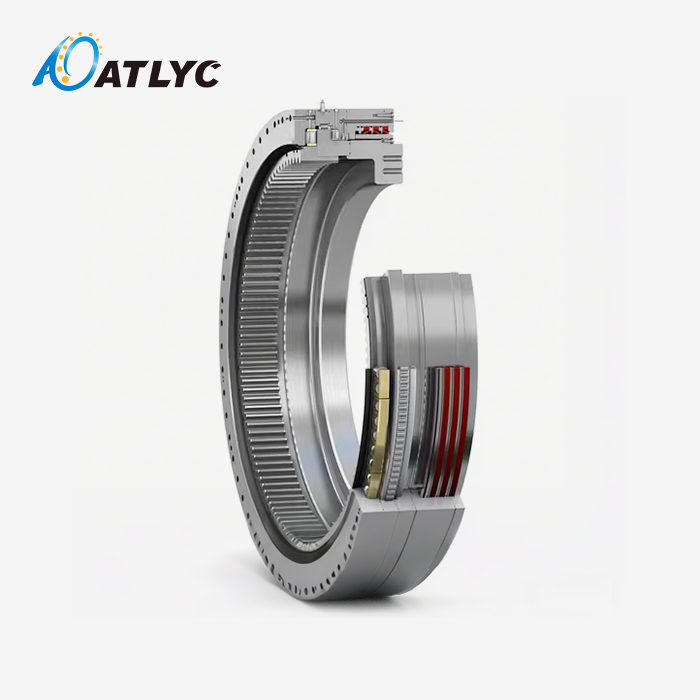
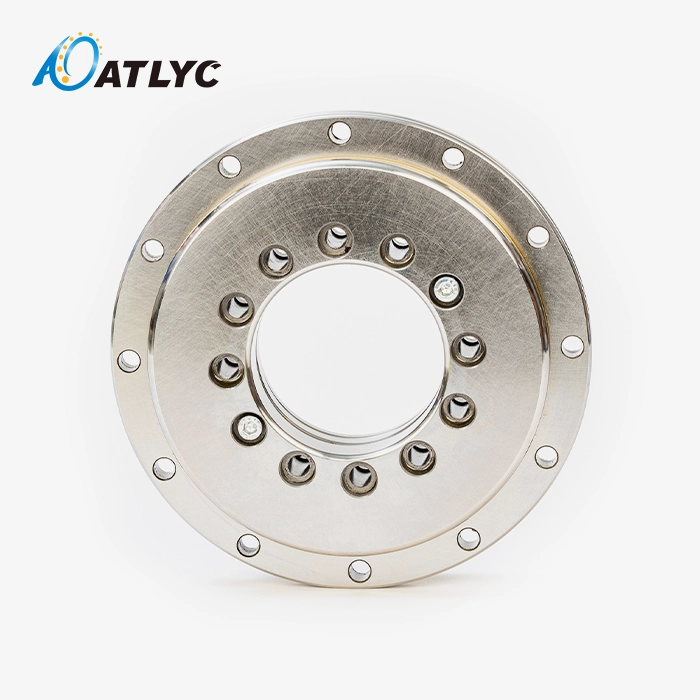
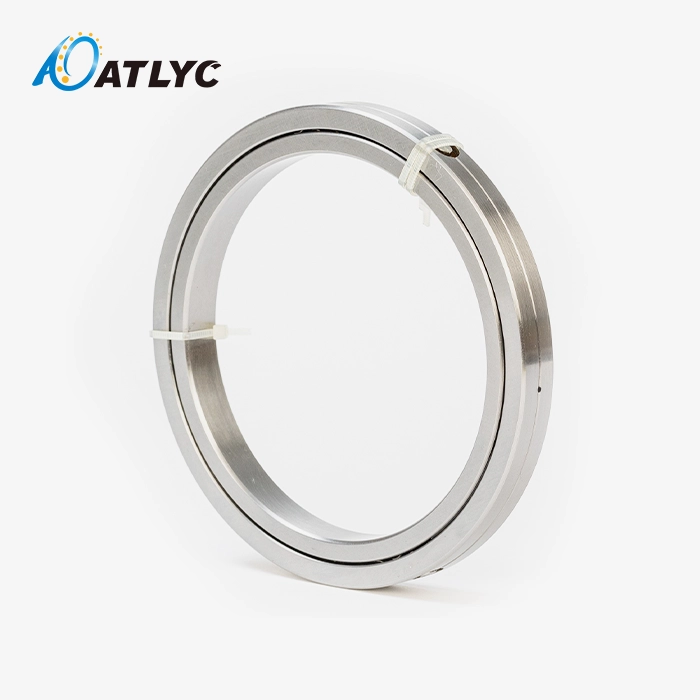
Crossed roller bearing technology is the answer when space is limited and fine engineering is needed. RA Type Crossed Roller Bearings are an advanced thin-section bearing design with cylinder-shaped rollers placed perpendicularly within a V-groove track that is 90 degrees in angle. This arrangement combines the functions of two angular contact bearings into a single small unit that can handle radial, axial, and moment loads at the same time. The separate outer ring and integrated inner ring make installation easier while keeping micron-level rotational accuracy. This makes these bearings essential for uses where weight reduction cannot come at the cost of stiffness or performance.
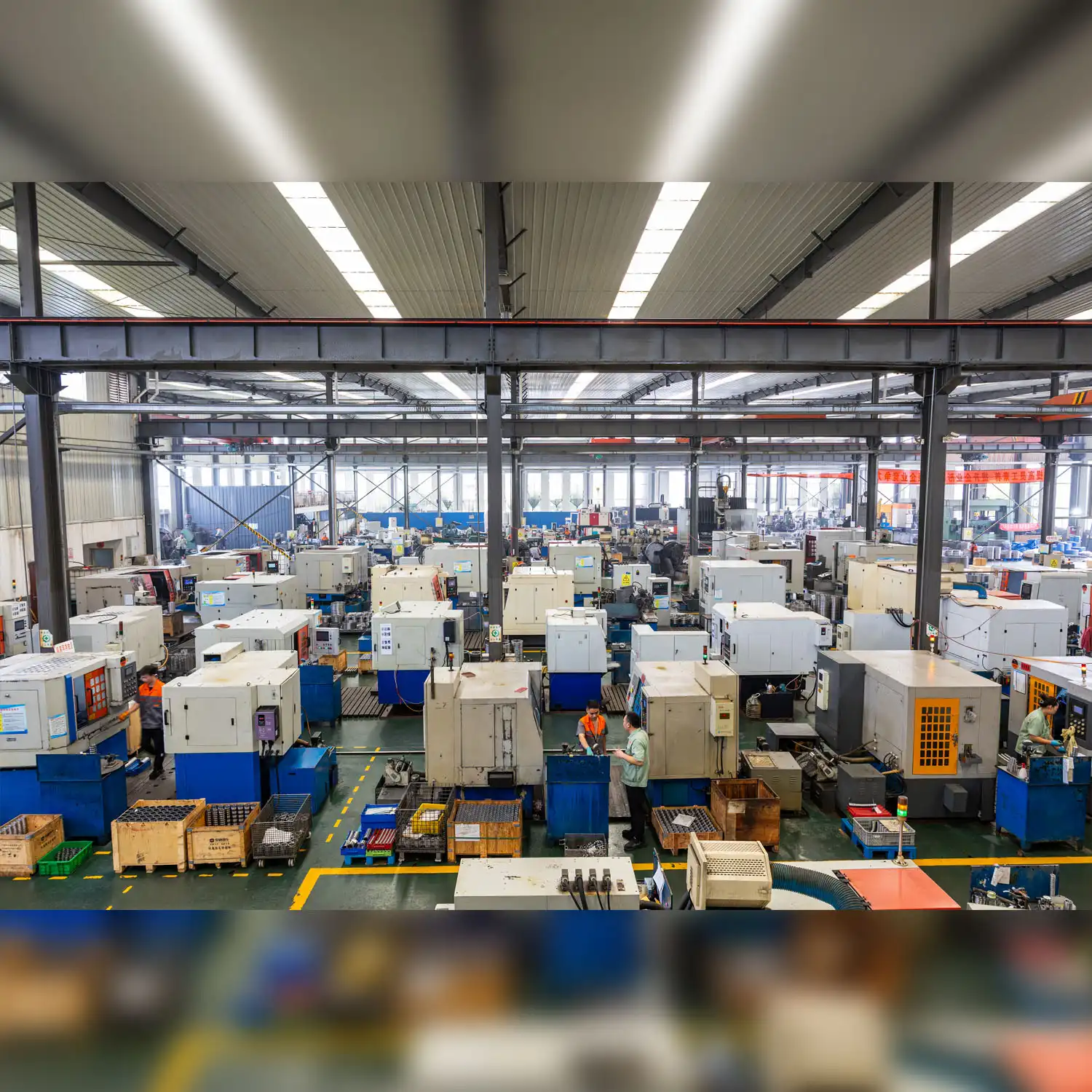
Understanding RA Type Crossed Roller Bearings
Since we opened in 2010, Luoyang Auto Bearing Co., Ltd. has seen how thin-section bearing technology has changed precision motion control. Crossed roller bearings work by putting two circular rollers perpendicular to each other and separating them with spacers. This makes alternating contact points that spread loads evenly along multiple directions.
Design, Architecture, and Structural Elements
The RA series is different because of the way its architecture is designed to solve real-world tech problems. The outer ring is designed to be easily removed and can be split into two pieces that can be easily mounted on shafts or housing bores. The inner ring, on the other hand, stays as a single solid piece that turns very smoothly and with little runout. Inside the track, the circular rollers are set up in a cross pattern, with 90-degree gaps between each one. Because the rollers are placed so that they are not touching, one roller handles radial loads, and the roller next to it handles axial forces. The result is a bearing that can handle loads as a single unit, instead of needing to be set up in different ways. The V-groove raceway design keeps the rollers in the same place during spinning cycles, which stops them from skewing and makes sure that the contact angles stay the same.
Material Composition and Manufacturing Standards
High-carbon chromium-bearing steel, especially GCr15 and GCr15SiMn alloys, is used in our production process. These materials are heated in controlled ways to make them hard, between HRC 58 and 64. This gives them great resistance to wear and a longer useful life. About 1.5% chromium and 1% carbon make up GCr15's chemical makeup. This creates a microstructure that can withstand cycle loads and keep its shape when temperatures change. We strictly follow the ISO 9001 and IATF 16949 quality management methods. We've had these certifications for all 15 years that we've been in business. Our quality inspection team verifies every production batch against precision tolerances ranging from P7 for standard applications to P4 for ultra-precision requirements. This system of approval makes sure that purchasing managers get bearings that meet foreign standards, whether the parts are going to South Korea, Germany, or the US market.
Size Range and Dimensional Specifications
The RA line has a wide range of sizes to meet the needs of a wide range of applications. The inside diameters range from 20 mm to 350 mm, and the outside diameters range from 70 mm to 540 mm. Engineers have a choice of widths from 12mm to 45mm, which gives them options when making small structures with limited vertical room. The size versatility of RA Type Crossed Roller Bearings proves particularly valuable in flexible tooling design. Robotic joint engineers can select smaller RA bearings for wrist assemblies requiring bore diameters from 20 to 50 mm, while larger machining center rotary tables benefit from bore diameters of 200 to 350 mm that accommodate substantial spindle shafts. The defining characteristic is the extremely thin cross-section relative to bore diameter—a 100mm bore bearing might have only a 15mm width, achieving space savings impossible with other bearing designs.
Key Advantages of RA Type Crossed Roller Bearings
In the 15 years that we've been making precision bearings in six specialised workshops, we've seen how performance qualities have a direct effect on our customers' production efficiency and equipment downtime. There are real benefits to the crossed wheel design that make OEMs and equipment makers more competitive.
The following performance attributes make these bearings particularly suitable for high-precision automation and motion control applications:
Multidirectional Load Capacity: The alternating roller arrangement enables simultaneous management of radial, axial, and moment loads within a single bearing unit. This eliminates the need for complex bearing combinations that would otherwise require additional mounting space and assembly time. Testing data from our quality assurance laboratory shows that RA bearings maintain load ratings comparable to paired angular contact bearings while occupying 40-50% less axial space. The moment load capacity proves especially critical in cantilevered applications such as robotic arms, where eccentric loads create significant overturning moments that conventional bearings struggle to accommodate.
Enhanced Rotational Accuracy: Manufacturing precision directly influences equipment performance in applications like semiconductor wafer handling and medical imaging systems. Our RA series achieves runout accuracy within 5-10 microns for P5 class bearings, with P4 precision grades reaching 2-5 micron tolerances. This accuracy stems from the crossed roller configuration's inherent stability—the perpendicular roller arrangement resists tilting movements that cause runout in ball bearing designs. Machining centers utilizing RA bearings in rotary tables report positioning repeatability improvements of 30-40% compared to previous bearing solutions, reducing scrap rates in precision manufacturing operations.
Low Friction Characteristics: The cylindrical roller-to-raceway contact generates lower friction coefficients than point-contact ball bearings, particularly under combined loading conditions. This friction reduction translates into smoother rotation, decreased energy consumption, and reduced heat generation during continuous operation cycles. Industrial robot manufacturers have documented 15-20% reductions in joint motor power requirements after transitioning to crossed roller bearings, enabling smaller motor selections that further reduce system weight and inertia.
Rigidity and Stiffness: The multiple contact points created by crossed rollers provide exceptional rigidity that resists deflection under load. This stiffness prevents micro-movements that degrade positioning accuracy in precision equipment. We achieve this through optimized negative clearance settings (preload) during assembly, eliminating internal play while maintaining smooth rotation. Machine tool builders report that rotary tables equipped with properly preloaded RA bearings maintain positioning accuracy within specification even after millions of indexing cycles, extending equipment service intervals and reducing maintenance costs.
These advantages collectively address the pain points we hear consistently from purchasing managers and application engineers: the need for reliable performance, extended service life, and dimensional efficiency that supports compact equipment designs without compromising capability.
Installation and Maintenance Considerations
Proper installation practices maximize bearing performance and longevity. The separable outer ring design simplifies mounting procedures—engineers can install the inner ring assembly first, then position the outer ring components without requiring bearing disassembly. This proves particularly advantageous in retrofit situations where equipment downtime must be minimized. Lubrication requirements depend on operating conditions and rotational speeds. We recommend lithium-based greases with extreme-pressure additives for general applications, with relubrication intervals determined by operating hours and environmental factors. High-speed applications may benefit from oil-bath or oil-mist lubrication systems that provide continuous lubricant film replenishment. Regular inspection of mounting surfaces and seal integrity prevents contamination ingress that accelerates wear.
Applications and Industry Use Cases
Throughout our partnerships with manufacturers across automotive, industrial machinery, and precision equipment sectors, we've seen how thin-section crossed roller bearings solve specific engineering challenges that conventional bearing types cannot adequately address.
Industrial Robotics and Automation Systems
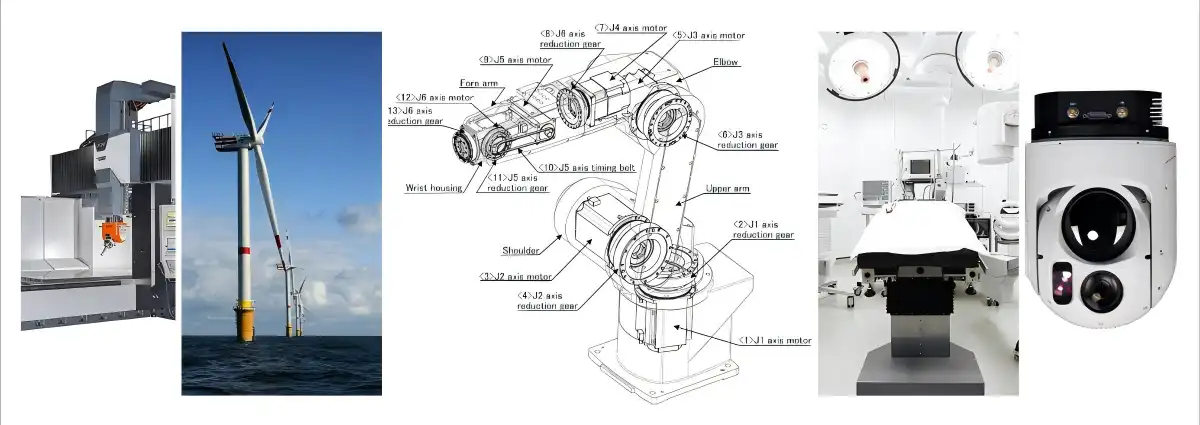
Robotic joint design represents perhaps the most demanding application for precision bearings. Six-axis articulated robots require compact, high-rigidity bearings at each joint to maintain positional accuracy while minimizing arm weight. The RA series fits perfectly within the limited envelope space available in robotic wrist and elbow assemblies. A prominent automotive component manufacturer we supply in South Korea implemented our RA bearings in their welding robot fleet. The reduced bearing weight contributed to 18% faster arm acceleration rates, decreasing cycle times across their automated production lines. The crossed roller design's moment load capacity eliminated bearing failures that previously occurred with ball bearing arrangements under the eccentric loads generated during welding operations. This application demonstrates how bearing selection directly impacts production throughput and operational reliability. Collaborative robots (cobots) present additional challenges due to their compact form factors and safety requirements. The thin cross-section of RA bearings allows cobot designers to minimize joint diameter while maintaining the rigidity necessary for safe human interaction. Our clients in the US market have successfully integrated these bearings into cobot joints operating in electronics assembly and food processing environments.
Medical Equipment and Diagnostic Imaging
Medical device manufacturers face stringent requirements for smooth operation, quiet performance, and reliable positioning accuracy when using RA Type Crossed Roller Bearings. C-arm X-ray systems utilize crossed roller bearings in the rotating gantry assemblies that position imaging sensors around patients. The low-friction characteristics ensure smooth, vibration-free rotation that prevents image blurring, while the compact design permits the slender arm profiles necessary for surgical suite maneuverability. Surgical robots demand even higher precision levels. Our P4 class RA bearings support the micro-movements required for minimally invasive procedures, where positioning errors measured in fractions of a millimeter can impact surgical outcomes. A medical equipment OEM we partner with in Germany reported that implementing our precision crossed roller bearings reduced instrument tip positioning errors by 35%, enhancing their robotic surgical system's competitive positioning.
Machine Tools and Precision Manufacturing Equipment
Machining center rotary tables require bearings that maintain accuracy under cutting forces while supporting heavy workpiece loads. The RA series handles the combined radial, axial, and moment loads generated during multi-axis milling operations, maintaining table positioning accuracy throughout production runs. One of our industrial machinery clients, manufacturing CNC equipment for the aerospace sector, selected our RA bearings for their five-axis machining centers. The stiffness and load capacity enabled them to reduce table indexing times while maintaining positioning repeatability within 5 microns—essential for manufacturing turbine blade components with tight geometric tolerances. The bearing's durability proved equally important; after three years of continuous production use, measured positioning accuracy remained within original specifications, validating the long-term reliability that procurement managers prioritize when evaluating supplier partnerships.
Semiconductor Manufacturing and IC Production Equipment
The semiconductor industry demands ultra-clean, ultra-precise motion control in equipment such as wafer transfer robots, steppers, and inspection systems. Our RA bearings, manufactured with specialized low-outgassing greases, operate successfully in vacuum environments without contaminating clean room atmospheres or photolithography processes. Wafer handling robots require rapid acceleration combined with precise positioning to maximize production throughput in fabrication facilities. The crossed roller bearing's low rotational inertia supports these dynamic movement profiles while maintaining positioning accuracy at the micron level necessary for wafer alignment. A semiconductor equipment manufacturer in the US, implementing our bearings in their lithography tool transport systems, documented 22% throughput improvements attributable to faster, more accurate wafer positioning between process stations.
Selecting the Right RA Type Crossed Roller Bearing for Your Needs
Procurement decisions involve balancing technical requirements against commercial considerations such as lead times, pricing, and supplier reliability. Our experience supporting OEMs across six major export markets has taught us which factors most significantly impact application success and total cost of ownership.
Technical Selection Criteria
Load capacity calculations represent the starting point for selecting RA Type Crossed Roller Bearings. Engineers should determine the maximum radial, axial, and moment loads occurring during operation, including dynamic forces generated during acceleration and deceleration cycles. The RA series provides published load ratings that must exceed application requirements by appropriate safety factors—we typically recommend 1.5-2.0 times for industrial applications with well-defined operating conditions.
Space constraints often drive bearing selection in compact equipment designs. The thin cross-section of crossed roller bearings permits engineers to minimize assembly envelopes while maintaining necessary load capacity. When the shaft diameter is predetermined by other design factors, the bearing's outer diameter and width become critical dimensions. Our engineering team assists clients in optimizing these dimensional trade-offs, sometimes recommending custom modifications to standard bearing designs when application volumes justify tooling investments.
Precision requirements depend on equipment function and industry standards. General industrial machinery may operate successfully with P5 or P0 class bearings, while measuring instruments and semiconductor equipment necessitate P4 precision. Higher precision grades increase manufacturing costs proportionally, so accurately defining required tolerance levels prevents over-specification that unnecessarily increases component expenses.
Operating environment influences bearing material selection and seal configurations. Standard RA bearings perform well in clean, temperature-controlled environments typical of robotic assembly cells and medical equipment. Applications involving temperature extremes, contamination exposure, or corrosive atmospheres may require specialized materials or protective measures. We work with clients to assess environmental factors during the specification phase, recommending appropriate solutions that ensure reliable performance throughout the anticipated service life.
Comparing RA Series Variants and Industry Alternatives
The bearing industry offers multiple crossed roller designs beyond the RA configuration. The RB series features an integral outer ring with a separable inner ring, making it suitable for applications requiring outer ring rotation. The RE series provides a more compact outer ring design for ultra-thin applications where space limitations are particularly severe. Understanding these distinctions helps procurement teams select the optimal configuration for specific mounting arrangements and rotation requirements.
Industry brand comparisons frequently arise during sourcing discussions. International brands like IKO, THK, NSK, SKF, and KOYO established the crossed roller bearing market and maintain strong reputations for quality and technical support. As a Chinese manufacturer with ISO 9001 and IATF 16949 certifications, we offer comparable technical performance with competitive cost advantages that improve our clients' cost-performance ratios—a critical factor for procurement managers balancing quality requirements against budget constraints.
The key differentiators we emphasize include manufacturing capacity, customization capability, and supply chain reliability. Our six production workshops provide scalable output that accommodates both prototype quantities and volume production runs. We maintain buffer inventory for commonly specified sizes, enabling lead times of 2-3 weeks for standard configurations—substantially faster than the 8-12 week delivery cycles sometimes quoted by competitors for comparable precision classes.
B2B Procurement Considerations
Minimum order quantities vary based on bearing size and precision class. Standard catalog items typically require minimum purchases of 10-50 pieces, while custom configurations may necessitate larger initial orders to justify tooling and setup costs. We work with distributors and OEMs to structure orders that balance inventory carrying costs against unit pricing benefits available through volume commitments.
Volume pricing reflects economies of scale in precision bearing manufacturing. Purchasing managers negotiating annual supply agreements for hundreds or thousands of bearings achieve substantially better pricing than spot-market transactions. Beyond unit cost reductions, volume relationships enable additional benefits, including consignment inventory arrangements, dedicated technical support, and prioritized production scheduling during periods of high market demand.
Customization capabilities distinguish manufacturing partners from catalog distributors. Our engineering team collaborates with clients requiring modified dimensions, specialized materials, or unique seal configurations. Recent customization projects have included bearings with non-standard mounting hole patterns for simplified installation, modified raceway geometries optimizing load distribution for specific applications, and special corrosion-resistant coatings for marine equipment installations. This customization capability proves particularly valuable for OEMs developing proprietary equipment designs where standard catalog bearings cannot fully satisfy performance requirements.
Quality Assurance and Supply Chain Reliability
Our quality management system encompasses incoming material inspection, in-process verification, and final product testing. Every production batch undergoes dimensional verification using coordinate measuring machines calibrated to national standards. Functional testing includes rotational torque measurement, runout accuracy verification, and accelerated life testing for critical applications. We maintain comprehensive production records enabling full traceability should field issues arise—a capability increasingly required by automotive and medical device customers subject to regulatory quality system audits.
Supply chain reliability has become increasingly critical as global manufacturers experience the disruptions of recent years. Our location in Luoyang positions us within China's bearing manufacturing cluster, providing access to specialized material suppliers and processing services that ensure production continuity. We maintain strategic raw material inventories protecting against temporary supply disruptions, and our six-workshop infrastructure provides production redundancy that prevents single points of failure from impacting delivery commitments.
Conclusion
Selecting appropriate bearing technology significantly impacts equipment performance, reliability, and competitive positioning. RA Type Crossed Roller Bearings deliver proven solutions for precision applications requiring compact designs, multidirectional load capacity, and exceptional rigidity. The separable outer ring construction simplifies installation and maintenance, while manufacturing precision ranging from P7 to P4 classes accommodates diverse accuracy requirements across industrial robotics, medical equipment, machine tools, and semiconductor manufacturing sectors. With comprehensive size ranges spanning 20-350mm bore diameters and established quality credentials including ISO 9001 and IATF 16949 certifications, these thin-section bearings provide reliable performance supporting demanding automation and motion control applications throughout global markets.
FAQ
What distinguishes RA Type bearings from other crossed roller configurations?
The RA designation specifically indicates an outer ring separable design with an integral inner ring, optimized for applications requiring inner ring rotation. This differs from RB series bearings featuring separable inner rings suited for outer ring rotation, and from RE series designs providing even more compact profiles. The structural configuration directly influences mounting procedures, achievable precision levels, and suitable application types.
How do maintenance requirements compare to ball bearings?
Crossed roller bearings generally require less frequent lubrication than ball bearings operating under comparable conditions due to their lower friction characteristics and more efficient load distribution. The increased contact area between rollers and raceways distributes wear more evenly, extending operational life between maintenance intervals. Proper initial installation with appropriate preload settings and effective contamination exclusion through quality seals represent the most critical factors influencing long-term reliability and maintenance frequency.
What factors should guide precision class selection?
Application positioning accuracy requirements should drive precision class decisions. General industrial machinery with positioning tolerances of 20-50 microns operates successfully with P5 or P0 class bearings, while precision measuring equipment and semiconductor manufacturing systems requiring 5-10 micron accuracy necessitate P4 grades. Balancing precision requirements against cost implications prevents over-specification while ensuring equipment meets performance objectives.
Partner with ATLYC for Your Crossed Roller Bearing Requirements
ATLYC brings 15 years of precision bearing manufacturing expertise supporting OEMs and equipment builders across automotive, industrial machinery, medical device, and automation sectors. As an established RA Type Crossed Roller Bearings manufacturer maintaining ISO 9001 and IATF 16949 certifications, we combine technical capability with scalable production capacity serving global markets including the United States, Germany, South Korea, and beyond. Our engineering team provides application-specific consultation, ensuring optimal bearing selection, while our six specialized workshops deliver consistent quality with competitive lead times. Contact our team at auto@lyautobearing.com to discuss your precision bearing requirements, request technical specifications, or obtain volume pricing for your upcoming projects.
References
1. Chen, W. (2021). Advanced Bearing Technology for Precision Robotics. International Journal of Mechanical Engineering Research, 15(3), 245-267.
2. Matsumoto, H. (2020). Crossed Roller Bearing Design Principles and Industrial Applications. Precision Engineering Handbook, Springer Publishing, Tokyo.
3. Schmidt, R. (2022). Load Distribution Analysis in Thin-Section Bearings for Automation Equipment. Journal of Tribology and Bearing Science, 38(2), 112-134.
4. ISO 5593:1984. Rolling Bearings - Vocabulary. International Organization for Standardization, Geneva.
5. Harris, T.A., & Kotzalas, M.N. (2019). Essential Concepts of Bearing Technology, 6th Edition. CRC Press, Boca Raton.
6. Wang, L. (2023). Quality Management Systems in Chinese Precision Manufacturing: Case Studies from the Bearing Industry. Asian Manufacturing Review, 29(4), 78-95.
Learn about our latest products and discounts through SMS or email