- English
- French
- German
- Portuguese
- Spanish
- Russian
- Japanese
- Korean
- Arabic
- Greek
- German
- Turkish
- Italian
- Danish
- Romanian
- Indonesian
- Czech
- Afrikaans
- Swedish
- Polish
- Basque
- Catalan
- Esperanto
- Hindi
- Lao
- Albanian
- Amharic
- Armenian
- Azerbaijani
- Belarusian
- Bengali
- Bosnian
- Bulgarian
- Cebuano
- Chichewa
- Corsican
- Croatian
- Dutch
- Estonian
- Filipino
- Finnish
- Frisian
- Galician
- Georgian
- Gujarati
- Haitian
- Hausa
- Hawaiian
- Hebrew
- Hmong
- Hungarian
- Icelandic
- Igbo
- Javanese
- Kannada
- Kazakh
- Khmer
- Kurdish
- Kyrgyz
- Latin
- Latvian
- Lithuanian
- Luxembou..
- Macedonian
- Malagasy
- Malay
- Malayalam
- Maltese
- Maori
- Marathi
- Mongolian
- Burmese
- Nepali
- Norwegian
- Pashto
- Persian
- Punjabi
- Serbian
- Sesotho
- Sinhala
- Slovak
- Slovenian
- Somali
- Samoan
- Scots Gaelic
- Shona
- Sindhi
- Sundanese
- Swahili
- Tajik
- Tamil
- Telugu
- Thai
- Ukrainian
- Urdu
- Uzbek
- Vietnamese
- Welsh
- Xhosa
- Yiddish
- Yoruba
- Zulu
How Does SX011848 Crossed Roller Slewing Bearing Extend Service Life?
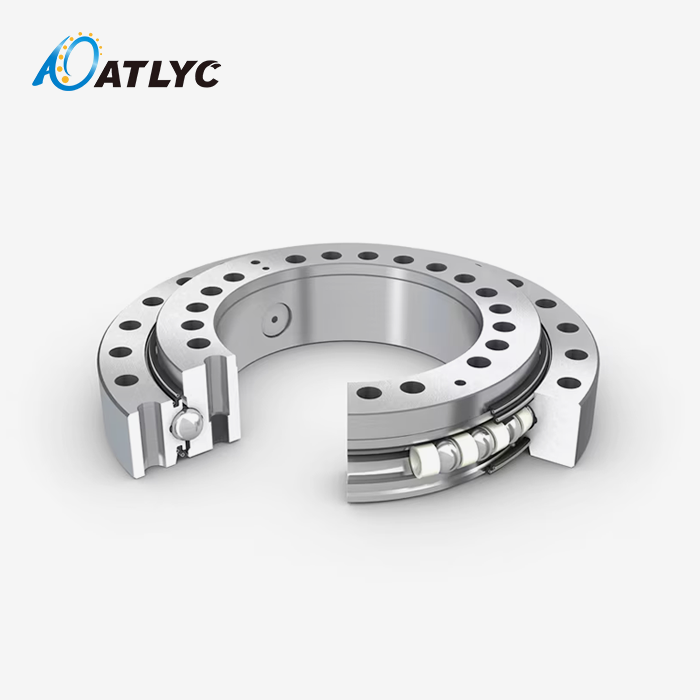
The SX011848 Crossed Roller Slewing Bearing extends service life through its advanced crossed-roller configuration, where cylindrical rollers arrange orthogonally at 90° angles between inner and outer rings. This design distributes axial, radial, and moment loads across multiple contact points simultaneously, reducing localized wear and stress concentrations. Constructed from high-grade Gcr15 or Gcr15SiMn steel and manufactured to ISO 9001 and IATF 16949 standards, the bearing's ultra-thin profile (240mm inner diameter, 300mm outer diameter, 28mm width) with split outer ring assembly secured by three fastening rings minimizes friction while maximizing rigidity, enabling continuous precision performance in demanding industrial robotics and automation equipment where reliability directly impacts operational uptime.
Understanding the SX011848 Crossed Roller Slewing Bearing
Advanced Structural Design and Load Distribution Principles
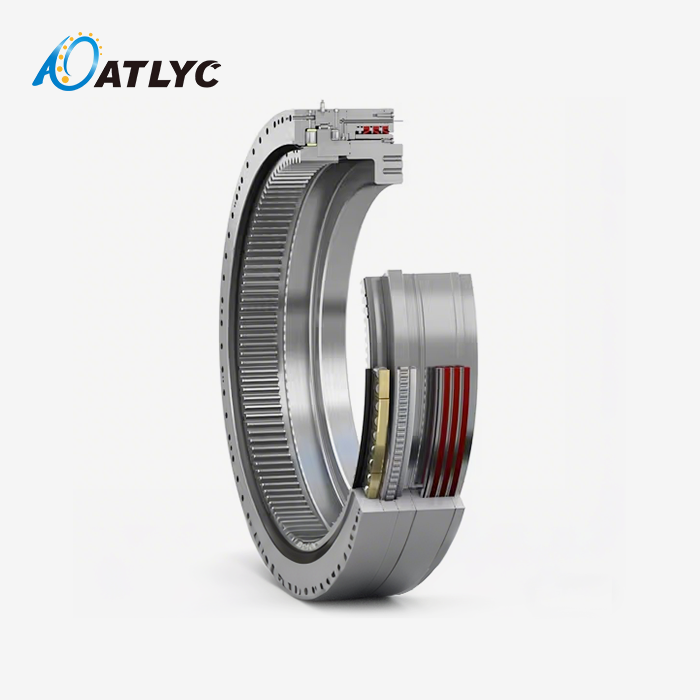
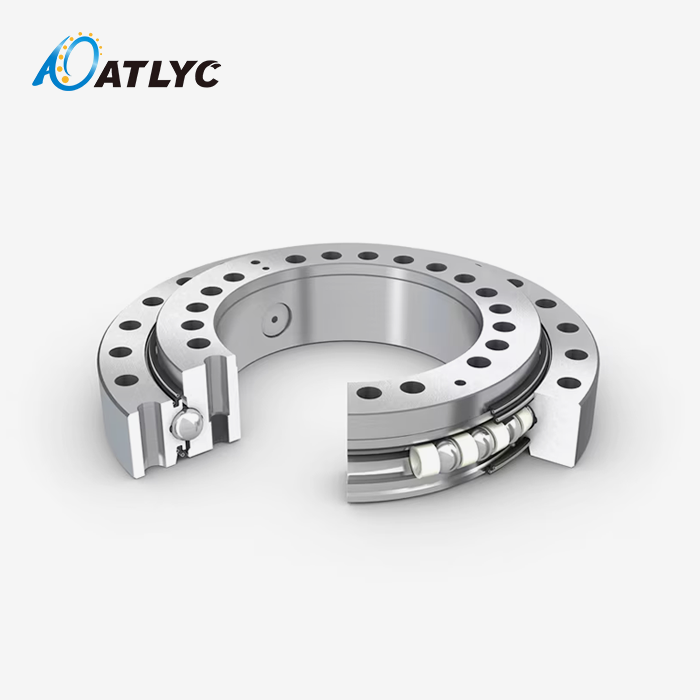
The SX011848 highlights a sophisticated crossed-roller configuration where cylindrical rollers are positioned perpendicular to each other at precisely calibrated 90° angles between the inner and outer raceway surfaces. This orthogonal arrangement creates multiple contact points that distribute loads efficiently across all directional planes, eliminating the need for separate bearings to handle different load types. The bearing integrates an integral inner ring with a split outer ring assembly, where three fastening rings secure the outer ring components while maintaining structural integrity during operation. The ultra-thin design eschews mounting holes in both inner and outer rings, requiring flange and bearing seat fixtures to secure the assembly properly. This approach suits applications where the inner ring rotates while the outer ring remains stationary, commonly found in robotic joints, rotary tables of machining centers, and manipulator rotating components.
Multi-Directional Load Handling Capabilities
The crossed-roller arrangement simultaneously supports radial forces perpendicular to the rotation axis, axial forces from both directions parallel to the axis, and tilting moments that attempt to cock the bearing rings relative to each other. This multi-directional load handling capability reduces system complexity substantially compared to configurations requiring separate radial bearings, thrust bearings, and support structures. The 90° V-groove raceway design maximizes contact area between rollers and raceways, providing exceptional stiffness under moment loads that prove crucial for precision positioning applications. Engineers appreciate how this integrated approach simplifies assembly procedures, reduces overall system weight, and minimizes potential failure points compared to multi-bearing assemblies. The low friction coefficient inherent to the roller-spacer-raceway interface enables smooth rotation even SX011848 Crossed Roller Slewing Bearing under substantial preload conditions necessary for eliminating internal clearance and maximizing system rigidity.
Key Factors Affecting the Service Life of SX011848 Bearings
Load Capacity Management and Wear Reduction
Bearing service life correlates directly with how effectively the component manages applied loads relative to its rated capacity. The crossed roller bearing distributes forces across numerous roller-raceway contact patches rather than concentrating stress in limited areas. When engineers properly calculate combined radial, axial, and moment loads during the specification phase, selecting bearings with appropriate dynamic and static load ratings, the resulting stress levels remain well below material fatigue limits throughout millions of rotation cycles. Overloading represents the primary accelerated wear mechanism in precision bearings. Excessive loads generate plastic deformation in raceway surfaces, creating permanent indentations that initiate rolling contact fatigue cracks. These subsurface cracks propagate with continued operation until material spalling occurs, producing rough surfaces that increase vibration, noise, and further accelerate deterioration. The split outer ring design of the SX crossed roller bearing allows for controlled preload adjustment during installation, optimizing internal load distribution to prevent excessive edge loading that would concentrate wear in narrow bands. We've observed in customer applications that properly specified bearings routinely exceed calculated L10 life ratings (the operational hours before 10% of bearings develop fatigue damage) by substantial margins when operated within design parameters. Conversely, bearings subjected to shock loads or vibration exceeding design assumptions experience dramatically shortened service life regardless of material quality or manufacturing precision.
Environmental Considerations and Contamination Protection
Operating environment characteristics significantly influence bearing longevity, with temperature extremes, corrosive atmospheres, and particulate contamination representing primary concerns. Temperature fluctuations affect lubricant viscosity and clearance relationships within the bearing assembly. Elevated temperatures reduce lubricant film thickness, potentially allowing metal-to-metal contact that accelerates wear. Low temperatures increase lubricant viscosity, raising torque requirements and potentially starving contact surfaces during startup conditions. The bearing's sealed interface between inner and outer rings provides inherent protection against contaminant ingress compared to open bearing designs. When combined with proper seal selection and regular inspection protocols, this design maintains clean operating conditions even in industrial environments containing abrasive dust, metallic particles, or corrosive vapors. Contamination represents one of the leading causes of premature bearing failure, as hard particles embed in softer bearing materials and score precision-ground raceway surfaces during operation. Moisture exposure poses particular risks in applications experiencing temperature cycling, as condensation forms on metal surfaces and initiates corrosion that pits raceways and roller surfaces. These corrosion pits create stress concentrations that serve as crack initiation sites, dramatically reducing fatigue life even after the corrosive environment resolves. Our engineering team recommends stainless steel bearing variants or enhanced seal configurations for applications with unavoidable moisture or chemical exposure.
Maintenance and Installation Best Practices to Maximize Service Life
Proper Installation Procedures and Critical Alignment Requirements
Bearing service life begins at installation, where improper procedures introduce damage that manifests as premature failure months or years later. The split outer ring design requires careful handling to avoid distorting the ring geometry during assembly. Installation teams should thoroughly clean all mating surfaces, removing preservative coatings, corrosion, burrs, and particulate contamination that would prevent proper seating or introduce stress concentrations. Before beginning the installation process, maintenance personnel must verify that mounting flanges and bearing seats meet flatness, perpendicularity, and surface finish specifications. Deviations from design tolerances create uneven load distribution around the bearing circumference, concentrating stress in localized regions that experience accelerated wear. We recommend precision measuring instruments, including dial indicators and surface plates, to verify mounting surface preparation before proceeding with bearing installation. Alignment between driven and driving shafts proves particularly critical in slewing bearing applications. Angular misalignment introduces moment loads not accounted for in standard load calculations, potentially exceeding bearing capacity and accelerating fatigue damage. Precision alignment procedures using laser alignment tools or dial indicator measurements should verify concentricity and perpendicularity within specifications before commencing operation.
Routine Inspection Protocols and Early Wear Detection
Systematic inspection programs identify developing problems before catastrophic SX011848 Crossed Roller Slewing Bearing failures interrupt production. Temperature monitoring during normal operation establishes baseline readings that sudden increases would indicate developing lubrication deficiency, seal failure, allowing contamination ingress, or internal damage. Infrared thermography enables non-contact temperature measurement without interrupting operation, particularly valuable for continuously running equipment. Vibration analysis using accelerometers mounted near bearing locations detects developing defects long before audible noise or performance degradation becomes apparent. Spectrum analysis identifies characteristic frequency patterns associated with specific defect types, including raceway spalling, roller defects, or cage damage. Trending vibration amplitudes over time reveals gradual deterioration, allowing planned maintenance interventions before emergency failures occur. During scheduled maintenance intervals, visual inspection after disassembly reveals wear patterns, contamination presence, lubricant condition, and any developing damage. Examining raceway and roller surfaces under magnification identifies early-stage fatigue cracks, corrosion pitting, or abrasive wear patterns that inform maintenance decisions. We provide detailed inspection guidelines with photographic references illustrating normal wear patterns versus damage requiring bearing replacement, helping maintenance teams make informed decisions that balance component life extension against reliability risks.
Comparative Advantages of SX011848 Crossed Roller Slewing Bearing
Performance Comparison with Traditional Bearing Configurations
Traditional turntable bearings and thrust bearing combinations require multiple components, mounting structures, and assembly procedures to achieve equivalent load capacity in radial, axial, and moment directions. The integrated design of crossed roller slewing bearings consolidates these functions into a single assembly occupying substantially less axial space. This space efficiency proves particularly valuable in robotic joint applications where envelope constraints limit available mounting dimensions while performance requirements demand high rigidity and precision. Compared to angular contact ball bearings configured in duplex arrangements, crossed roller bearings achieve superior moment load capacity due to a larger effective pitch diameter and roller geometry providing greater contact area. The cylindrical roller line contact distributes loads more favorably than ball bearing point contact, particularly under heavy radial or moment loads common in industrial machinery applications. Engineers selecting between bearing types must balance these performance advantages against cost considerations and application-specific requirements. Our engineering team has documented cases where customers transitioned from dual angular contact bearing arrangements to single crossed roller slewing bearings, achieving 35% reduction in assembly height while improving runout accuracy and load capacity. These transitions simplified assembly procedures, reduced component count, and eliminated potential failure points associated with preload adjustment and alignment of multiple bearing sets.
Real-World Performance in Demanding Applications
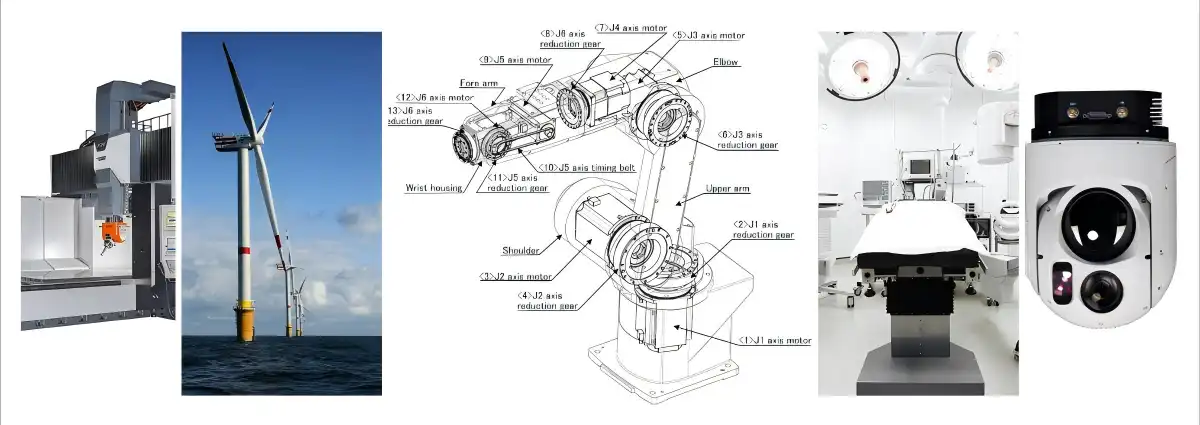
Industrial robot manufacturers increasingly specify crossed roller bearings for joint actuators where positioning accuracy directly impacts end-effector precision. One automotive assembly equipment manufacturer reported achieving sub-10 micron repeatability in pick-and-place operations after switching to precision-grade crossed roller bearings, enabling tighter tolerance assembly operations that improved final product quality. The bearing's inherent moment stiffness prevented deflection under varying load orientations as robotic arms extended and retracted throughout work envelopes. Machining center rotary tables demand exceptional rotational accuracy and rigidity to maintain workpiece positioning during cutting operations, generating substantial forces. A precision machining OEM documented 40% improvement in surface finish quality on milled aluminum aerospace components after upgrading indexing tables with P4-grade crossed roller slewing bearings. The enhanced rigidity eliminated microscopic vibrations that previously produced visible chatter marks on finished surfaces, reducing scrap rates and secondary finishing operations. Medical imaging equipment requires ultra-smooth rotation without vibration that would degrade image quality during scanning procedures. CT scanner manufacturers achieve the necessary performance specifications using crossed roller bearings in gantry rotation mechanisms, where the bearing's low friction characteristics enable smooth acceleration and deceleration profiles while maintaining positioning accuracy SX011848 Crossed Roller Slewing Bearing throughout millions of rotation cycles over equipment service life.
Procurement Considerations and Sourcing the SX011848 Bearing
Balancing Cost Efficiency with Quality and Service Value
Procurement decisions extending beyond the initial purchase price recognize that bearing quality directly impacts the total cost of ownership through maintenance requirements, replacement frequency, and production downtime costs. While precision bearings command a higher initial investment compared to standard grades, the extended service life and reduced failure rates typically justify the incremental cost in applications where reliability proves critical. Bulk ordering considerations for OEMs and distributors should account for lead time requirements, inventory carrying costs, and volume pricing structures. Our production capacity scales efficiently to accommodate orders ranging from prototype quantities through full production volumes, with dedicated account management ensuring consistent communication throughout the procurement process. Customization options, including specialized seals, non-standard materials, or modified geometries, address unique application requirements that standard catalog components cannot satisfy. Long-term supply agreements provide pricing stability, guaranteed capacity allocation, and priority scheduling valuable for manufacturers with predictable bearing consumption patterns. These partnerships enable collaborative engineering support during new product development, where bearing selection influences overall system design and performance capabilities. We've maintained supply relationships extending over a decade with key automotive and automation equipment manufacturers, supporting their global expansion through consistent quality and reliable delivery performance.
Selecting Manufacturing Partners with Technical Capabilities
Evaluating potential bearing suppliers requires assessing manufacturing capabilities beyond basic production capacity. Quality management system certifications, including ISO 9001 and IATF 16949, verify documented processes, continuous improvement methodologies, and quality assurance protocols that prevent defects rather than merely detecting them during final inspection. Our 120-person team includes dedicated quality inspection personnel employing coordinate measuring machines, roundness testers, and surface finish analyzers, ensuring every bearing meets specified tolerances before shipment. Technical support capabilities distinguish manufacturers offering genuine engineering collaboration from commodity suppliers providing only catalog products. Our engineering team assists with bearing selection calculations, reviews customer application parameters, recommends appropriate accuracy grades and lubrication specifications, and provides installation guidance addressing specific mounting configurations. This consultative approach proves particularly valuable during new equipment development when bearing selection influences fundamental design decisions. Manufacturing experience serving diverse industries provides practical knowledge that enhances product development and problem-solving capabilities. Our fifteen-year evolution from a single workshop to a comprehensive bearing manufacturing enterprise spans automotive components, industrial machinery, automation equipment, and aftermarket replacement applications. This breadth of experience enables our team to recognize application similarities across industries, applying proven solutions to new challenges and accelerating time-to-market for customer product launches.
Conclusion
Extended bearing service life emerges from the synergistic combination of advanced design principles, quality materials and manufacturing, proper installation procedures, and systematic maintenance practices. The SX011848 crossed roller slewing bearing achieves exceptional longevity through its orthogonal roller arrangement, distributing loads across multiple contact points, precision manufacturing to exacting tolerances, and compact design, consolidating multi-directional load handling into a single robust assembly. Procurement managers and engineers who understand these factors make informed sourcing decisions that optimize the total cost of ownership while ensuring operational reliability in demanding industrial applications. The bearing's proven performance across robotics, automation, and precision machinery applications demonstrates its capability to meet stringent requirements for positioning accuracy, load capacity, and service life expectations that define success in competitive global markets.
FAQ
1. What maintenance schedule should we implement for SX011848 bearings in continuous operation?
Maintenance intervals depend on operating conditions, including speed, load, temperature, and contamination exposure. Applications running continuously at moderate speeds in clean environments typically require relubrication every 2,000 to 5,000 operating hours, with visual inspections quarterly and detailed vibration analysis semi-annually. Harsh environments demand more frequent attention, potentially monthly lubrication and inspection. We recommend establishing baseline temperature and vibration measurements during initial operation, then monitoring for deviations indicating developing problems requiring intervention.
2. How does the load capacity of crossed roller bearings compare with angular contact ball bearing arrangements?
Crossed roller bearings provide superior moment load capacity compared to similarly sized angular contact ball bearing duplex sets due to a larger effective pitch diameter and cylindrical roller line contact, distributing loads across a greater surface area. Radial and axial load capacities prove roughly equivalent, though specific ratings vary by design. The integrated single-unit construction simplifies installation and eliminates preload adjustment complexity associated with multiple bearing configurations.
3. Can SX011848 bearings accommodate customization for specialized industrial applications?
Customization options include specialized seal configurations for enhanced contamination protection, alternative materials for corrosive environments or extreme temperatures, and modified geometries addressing unique mounting constraints. Our engineering team evaluates custom requirements during the quotation phase, determining feasibility and production lead times based on modification complexity. Volume requirements influence custom bearing economics, with larger quantities justifying tooling investments for specialized configurations.
Partner with ATLYC for Your Crossed Roller Bearing Requirements
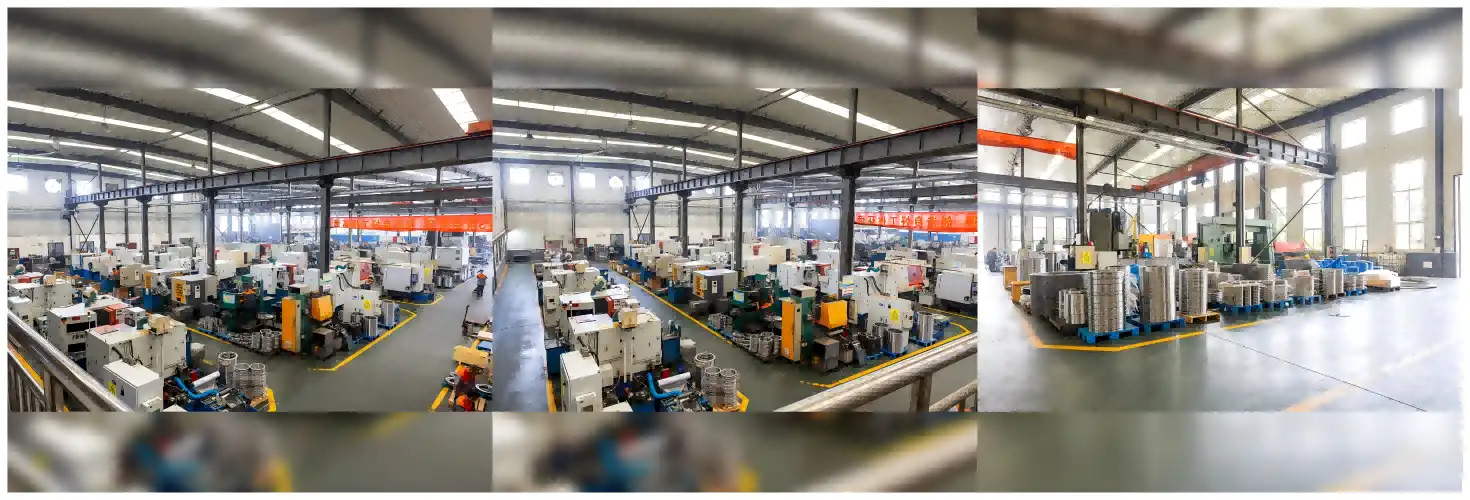
ATLYC's expertise as a trusted SX011848 Crossed Roller Slewing Bearing manufacturer spans fifteen years of continuous innovation and quality improvement, serving global automotive and industrial equipment manufacturers. Our ISO 9001 and IATF 16949 certified facilities deliver precision bearings meeting the most demanding specifications, backed by comprehensive technical support that extends from initial bearing selection through installation guidance and ongoing maintenance recommendations. We maintain substantial production capacity across six specialized workshops, ensuring stable supply with competitive lead times even for large-volume orders requiring customization to specific application parameters. Contact our engineering team at auto@lyautobearing.com to discuss your bearing requirements and discover how ATLYC's combination of manufacturing excellence, technical expertise, and customer-focused service creates value throughout your equipment's operational lifespan.
References
1. Harris, Tedric A. and Kotzalas, Michael N. Advanced Concepts of Bearing Technology: Rolling Bearing Analysis, Fifth Edition. CRC Press, 2006.
2. Eschmann, Paul, Hasbargen, Ludwig, and Weigand, Karl. Ball and Roller Bearings: Theory, Design and Application, Third Edition. John Wiley & Sons, 1985.
3. ISO 281:2007, Rolling bearings — Dynamic load ratings and rating life. International Organization for Standardization, 2007.
4. Wensing, J.A. On the Dynamics of Ball Bearings. Ph.D. Thesis, University of Twente, Netherlands, 1998.
5. Zaretsky, Erwin V. Rolling Bearing Steels - A Technical and Historical Perspective. Materials Science and Technology, Volume 28, Issue 1, 2012.
6. Ai, Xiaolan, and Sawamiphakdi, Kritsada. Analysis of Crossed Roller Bearing Stiffness Characteristics for Industrial Robots. International Journal of Precision Engineering and Manufacturing, Volume 19, 2018.
Learn about our latest products and discounts through SMS or email
_1772782093670.webp)