- English
- French
- German
- Portuguese
- Spanish
- Russian
- Japanese
- Korean
- Arabic
- Greek
- German
- Turkish
- Italian
- Danish
- Romanian
- Indonesian
- Czech
- Afrikaans
- Swedish
- Polish
- Basque
- Catalan
- Esperanto
- Hindi
- Lao
- Albanian
- Amharic
- Armenian
- Azerbaijani
- Belarusian
- Bengali
- Bosnian
- Bulgarian
- Cebuano
- Chichewa
- Corsican
- Croatian
- Dutch
- Estonian
- Filipino
- Finnish
- Frisian
- Galician
- Georgian
- Gujarati
- Haitian
- Hausa
- Hawaiian
- Hebrew
- Hmong
- Hungarian
- Icelandic
- Igbo
- Javanese
- Kannada
- Kazakh
- Khmer
- Kurdish
- Kyrgyz
- Latin
- Latvian
- Lithuanian
- Luxembou..
- Macedonian
- Malagasy
- Malay
- Malayalam
- Maltese
- Maori
- Marathi
- Mongolian
- Burmese
- Nepali
- Norwegian
- Pashto
- Persian
- Punjabi
- Serbian
- Sesotho
- Sinhala
- Slovak
- Slovenian
- Somali
- Samoan
- Scots Gaelic
- Shona
- Sindhi
- Sundanese
- Swahili
- Tajik
- Tamil
- Telugu
- Thai
- Ukrainian
- Urdu
- Uzbek
- Vietnamese
- Welsh
- Xhosa
- Yiddish
- Yoruba
- Zulu
How Does Cross Roller Bearing RE Series Ensure Smooth Rotation?
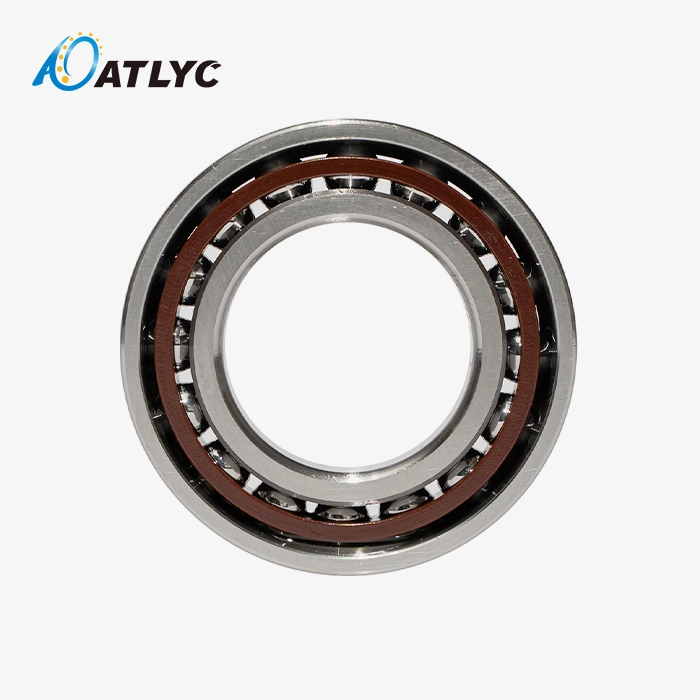
When precision machinery demands exceptional rotational Cross roller bearing RE series accuracy, the cross roller bearing RE series stands as the engineering solution you've been searching for. This specialized bearing achieves smooth rotation through its unique crossed-roller architecture, where cylindrical rollers are positioned orthogonally at 90-degree intervals within precisely machined V-grooves. The integral outer ring configuration, combined with high-grade Gcr15 and Gcr15SiMn steel materials, creates minimal friction points, while roller spacers prevent direct contact between adjacent components, ensuring continuous, vibration-free operation across radial, axial, and moment load conditions simultaneously.
Understanding the Cross Roller Bearing RE Series
The cross roller bearing RE series represents a breakthrough in precision bearing technology tailored for demanding industrial environments. Unlike conventional bearing designs that require multiple units to handle complex loading scenarios, this series integrates multi-directional load management into a single compact assembly.
Structural Design Fundamentals
The RE series employs an integral outer ring and a separate inner ring configuration. This structural choice delivers exceptional rigidity where it matters most—the outer housing rotation interface. The solid outer ring eliminates deflection issues common in split-ring designs, maintaining dimensional stability under variable operating conditions. Dimension specifications accommodate diverse application requirements. Inner diameters range from 20mm to 1100mm, outer diameters span 70mm to 1500mm, and widths extend from 12mm to 110mm. This broad dimensional range enables engineers to specify appropriate bearing sizes for applications from compact medical instruments to large-scale machining center rotary tables.
Application Versatility Across Industries
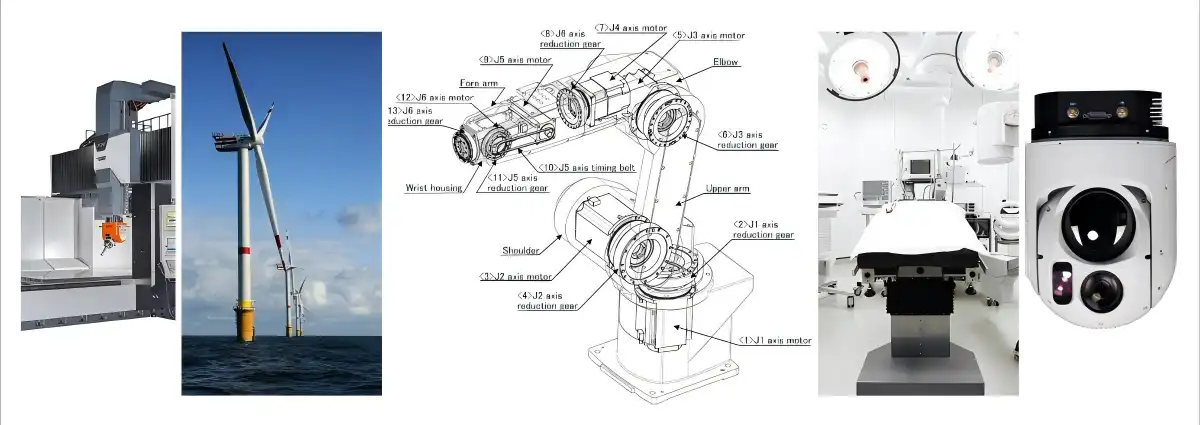
The cross roller bearing RE series serves critical functions in multiple sectors. Industrial robot joints benefit from compact installation space and multi-directional load capacity. Machining center rotary tables achieve positioning accuracy essential for modern CNC operations. Manipulator rotating components rely on smooth, low-friction movement for precision handling tasks. Medical imaging equipment manufacturers specify these bearings for CT scanner gantries and surgical robot articulation points where vibration-free rotation directly impacts diagnostic quality and patient safety. IC manufacturing devices demand the sub-micron accuracy levels that the RE series precision grades consistently deliver. Measuring instruments achieve repeatable Cross roller bearing RE series angular positioning through the exceptional runout characteristics inherent to the crossed-roller geometry.
How the RE Series Ensures Smooth Rotation: Technical Insights
Smooth rotation depends on managing three critical factors: load distribution, friction reduction, and dimensional precision. The cross roller bearing RE series addresses each element through deliberate engineering choices.
Crossed-Roller Load Distribution Mechanism
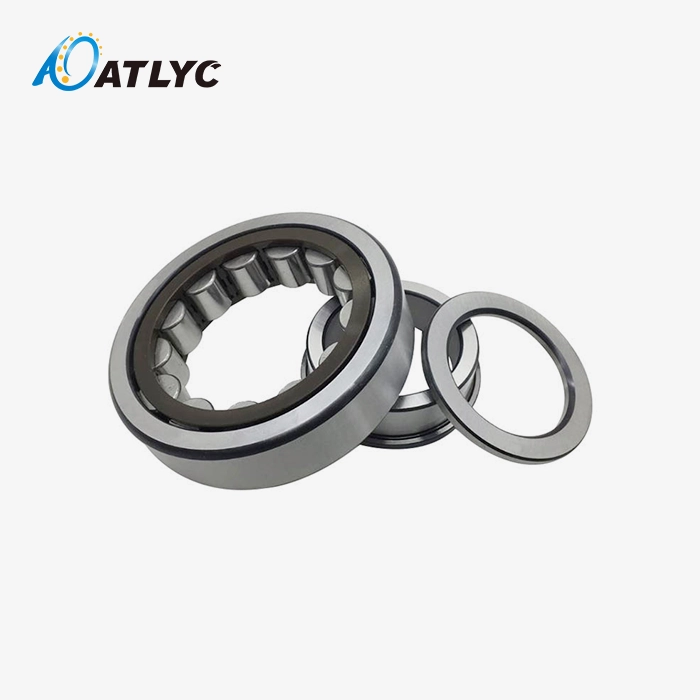
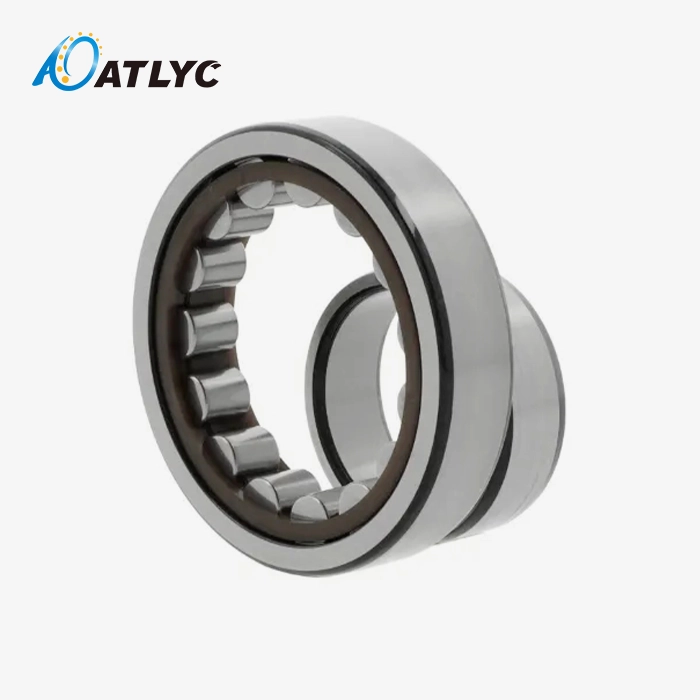
Traditional ball bearings create point contact between rolling elements and raceways, concentrating stress and limiting load capacity. The RE series employs cylindrical rollers arranged perpendicular to each other, generating line contact across the raceway surface. This geometry distributes applied forces over larger contact areas, reducing stress concentrations and enabling higher load ratings within equivalent envelope dimensions. When radial forces act on the bearing, one roller set engages the load path. Axial forces simultaneously activate the perpendicular roller set. Moment loads—the tipping forces that challenge conventional bearings—are managed by both roller sets working in complementary fashion. This integrated approach eliminates the need for separate thrust bearings or preload arrangements common in traditional designs.
Maintenance Protocols for Sustained Performance
Optimal performance requires appropriate lubrication selection and application. Grease lubrication suits most installations, with lithium complex or polyurea base greases providing wide temperature range compatibility. Relubrication intervals depend on operating speed, load, and environmental contamination levels. General guidelines recommend inspection at 2,000-hour intervals under normal conditions, with relubrication performed when grease shows discoloration or consistency changes. Contamination represents a primary threat to smooth rotation. Effective sealing systems prevent ingress of particulates, moisture, and process fluids that accelerate wear. Inspection protocols should verify seal integrity and monitor operating temperature trends that indicate developing problems before catastrophic failure occurs.
Cross Roller Bearing RE Series vs. Alternatives: Making the Right Choice
Selecting appropriate bearing technology requires understanding performance trade-offs between available options. The cross roller bearing RE series occupies a specific performance niche where multi-directional loading and compact installation space drive specification decisions.
Comparison with Standard Deep Groove Ball Bearings
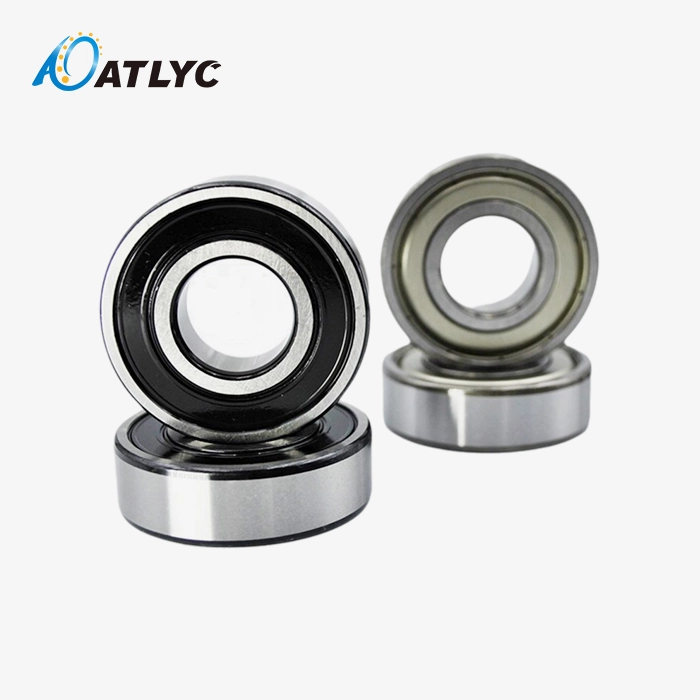
Deep groove ball bearings excel in high-speed, light-load applications but struggle with combined loading. Achieving equivalent radial and axial capacity requires pairing radial and thrust bearings, consuming valuable installation space and complicating assembly procedures. The RE series consolidates these functions into a single bearing assembly. Space savings reach 40-50% in typical robot joint applications compared to paired angular contact arrangements. Reduced part count simplifies inventory management and decreases assembly time—critical factors in high-volume production environments.
Application-Specific Advantages
Robotic applications particularly benefit from the RE series' compact Cross roller bearing RE series cross-section and moment load capacity. Robot designers face constant pressure to reduce arm weight while maintaining payload capacity and positioning accuracy. The thin-section profile of crossed-roller bearings contributes to these objectives more effectively than conventional bearing types. Precision rotary tables for machining centers demand angular positioning accuracy measured in arc-seconds. The inherent accuracy of the integral outer ring design eliminates runout contributors present in bolted bearing housings. Machine tool builders achieve positioning repeatability within ±3 arc-seconds using P4 accuracy grade RE series bearings, meeting requirements for five-axis machining operations.
Procurement Guide for Cross Roller Bearing RE Series
Successful procurement requires navigating supplier networks, understanding pricing structures, and establishing quality assurance protocols. Global supply chains present both opportunities and challenges for securing reliable bearing sources.
Identifying Qualified Bearing Suppliers
Direct manufacturer relationships offer advantages in technical support, customization capability, and cost competitiveness. ATLYC serves OEM customers and distributors across South Korea, the United States, Germany, Russia, Iran, and Turkey through established export channels developed since our 2010 founding. When evaluating potential suppliers, verify quality certifications relevant to your industry. ISO 9001 confirms basic quality management systems, while IATF 16949 demonstrates automotive-specific process controls increasingly required beyond the automotive sector. Request certification documentation and audit reports substantiating claimed compliance.
Technical Support and Customization Services
Application engineering support differentiates manufacturers capable of partnering on demanding projects. ATLYC's technical team assists with bearing selection, load calculation verification, and installation guidance. Our experience across robotic, machine tool, and automation applications enables practical recommendations addressing real-world operating conditions. Customization extends beyond dimensional modifications. Special materials, non-standard accuracy grades, integrated mounting features, and proprietary seal configurations adapt standard products to unique application requirements. Engage engineering discussions early in product development cycles to identify optimization opportunities and avoid costly redesigns.
Ensuring Long-Term Performance and Reliability
Bearing life depends significantly on installation practices and ongoing maintenance discipline. Proper handling during installation and systematic monitoring during operation prevent premature failures and maximize return on bearing investment.
Installation Best Practices
Clean working conditions during installation prevent contamination introduction that accelerates wear. Inspect the cross roller bearing RE series bearing surfaces before installation, verifying the absence of damage from shipping and handling. Any nicks, scratches, or corrosion require evaluation before proceeding with assembly. Press-fit installations require appropriate tooling to distribute installation forces uniformly around bearing rings. Concentrated loads from improper tooling damage raceways, creating noise and vibration sources. Heating bearings to facilitate installation requires controlled temperature application—excessive heat degrades material properties and dimensional accuracy.
Environmental Protection Measures
The operating environment significantly impacts bearing longevity. Temperature extremes affect lubricant viscosity and material dimensions. Applications exceeding 120°C ambient temperature require high-temperature greases and potential bearing design modifications. Low-temperature environments below -20°C demand cold-resistant lubricants maintaining appropriate consistency. Contamination protection depends on effective sealing. Evaluate whether standard bearing seals provide adequate protection or whether auxiliary sealing arrangements better suit your operating conditions. Wet environments, abrasive dust, and corrosive atmospheres each require specific sealing strategies to prevent premature bearing failure.
Real-World Performance Validation
Industrial robot manufacturers implementing RE series bearings in articulation joints report 40% reductions in maintenance interventions compared to previous bearing specifications. Improved reliability translates directly to production uptime improvements and reduced spare parts inventory requirements. Machining center builders document positioning accuracy retention exceeding 5,000 hours between adjustments when specifying P4 accuracy grade bearings with appropriate installation and maintenance practices. This stability enables manufacturers to maintain tight tolerances across extended production runs without intermediate recalibration cycles.
Conclusion
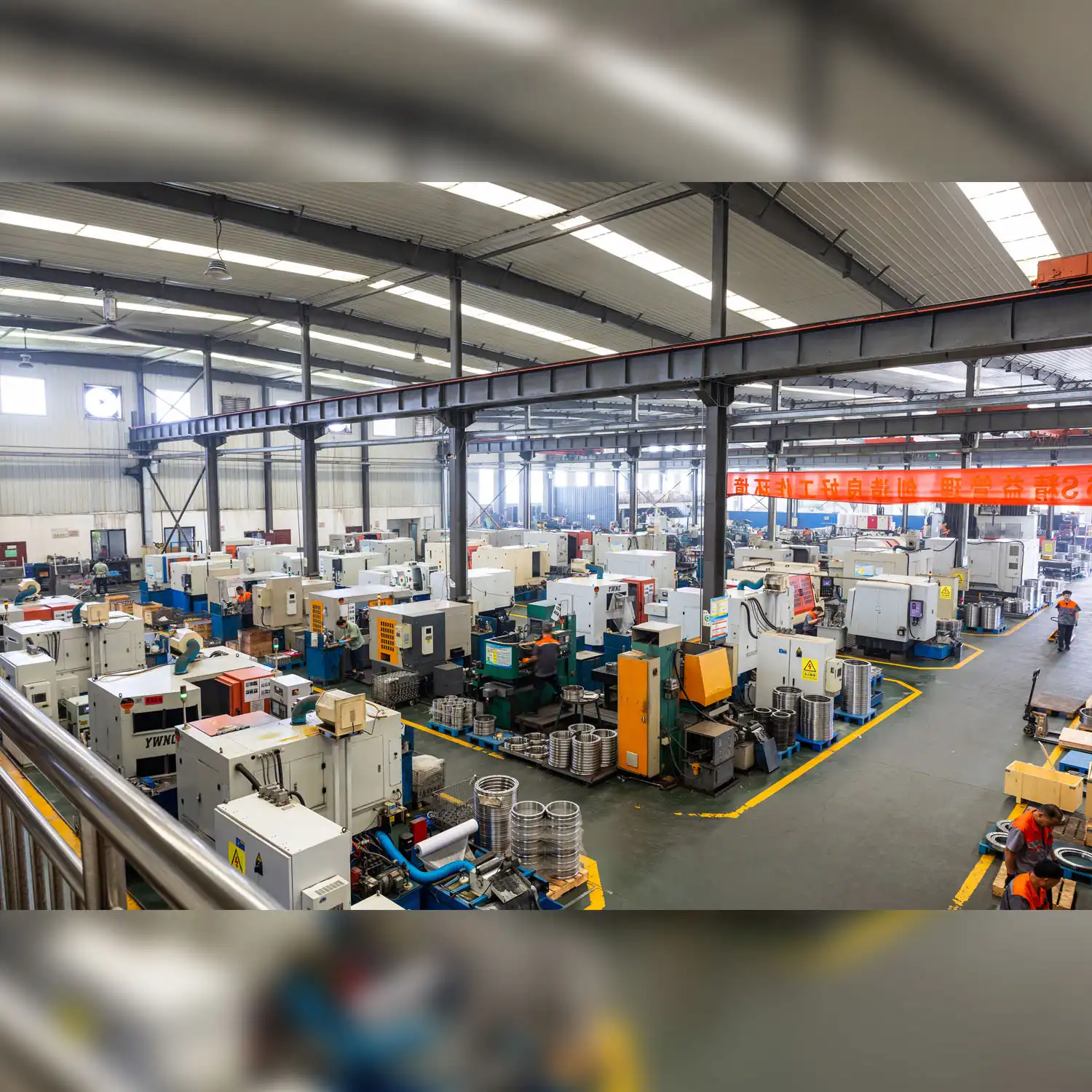
The cross roller bearing RE series achieves smooth rotation through integrated engineering solutions addressing load distribution, friction management, and dimensional precision. The crossed-roller geometry handles radial, axial, and moment loads within compact envelopes suited to space-constrained applications. Manufacturing from high-grade Gcr15 and Gcr15SiMn steels with precision tolerances reaching P2 accuracy grades supports demanding robotic, machine tool, and medical equipment requirements. Successful implementation requires appropriate bearing selection, quality supplier partnerships, and disciplined maintenance practices. ATLYC's 15-year manufacturing evolution demonstrates a commitment to continuous improvement and international quality standards. Our expanded capacity across six specialized workshops supports growing global demand while maintaining the precision and reliability OEM partners require for mission-critical applications.
FAQ
1. What advantages does the crossed-roller design provide for rotational accuracy?
The orthogonal roller arrangement creates line contact across raceway surfaces, distributing loads uniformly and minimizing deflection. The integral outer ring eliminates joint discontinuities present in split-ring designs, achieving runout accuracy within 5 microns for P5 grades and below 2 microns for P2 precision specifications. This geometric stability maintains positioning accuracy across millions of operational cycles.
2. What lead times should procurement teams expect for bulk orders?
Standard catalog sizes in common accuracy grades ship within 4-6 weeks from order confirmation. Custom specifications requiring dimensional modifications or special materials extend timelines to 8-10 weeks. Long-term supply agreements with volume commitments enable manufacturers to optimize production scheduling, potentially reducing lead times for repeat orders. International shipping adds 2-4 weeks, depending on destination and transportation method selection.
3. Can manufacturers customize the RE series for specialized applications?
Customization options include dimensional modifications, special material selections, non-standard accuracy grades, integrated mounting features, and proprietary seal configurations. Application engineering support helps identify optimization opportunities during product development phases. Minimum order quantities for custom specifications vary by modification complexity—discuss requirements during initial quotation stages to establish feasibility and pricing structures.
Partner with ATLYC for Your Cross Roller Bearing RE Series Requirements
ATLYC brings 15 years of precision bearing manufacturing expertise to your critical motion control applications. As an established cross roller bearing RE series manufacturer, we combine ISO 9001 and IATF 16949 certified quality systems with Cross roller bearing RE series production capacity supporting global OEM partnerships across automotive, robotics, and industrial automation sectors. Our engineering team provides application support from initial specification through installation guidance, ensuring optimal bearing performance in your demanding environments.
Whether you require standard catalog configurations or customized solutions, our six specialized workshops and 120 dedicated professionals deliver consistent quality meeting international standards. Contact our team at auto@lyautobearing.com to discuss your specific requirements. We offer competitive pricing for cross roller bearing RE series for sale with bulk purchase advantages, technical consultation, and reliable delivery schedules supporting your production timelines and quality objectives.
References
1. Harris, T.A. and Kotzalas, M.N. (2006). "Rolling Bearing Analysis: Essential Concepts of Bearing Technology." CRC Press, Fifth Edition.
2. Wensing, J.A. (1998). "On the Dynamics of Ball Bearings." University of Twente Department of Mechanical Engineering Doctoral Thesis.
3. Zhou, R.S. and Hoeprich, M.R. (1995). "Torque of Tapered Roller Bearings." Journal of Tribology, Transactions of the ASME, Volume 113, Issue 3.
4. International Organization for Standardization (2014). "ISO 492:2014 Rolling Bearings - Radial Bearings - Geometrical Product Specifications and Tolerance Values."
5. Muhs, D. and Wittel, H. (2007). "Mechanical Engineering Handbook: Machine Elements and Manufacturing Technology." Springer-Verlag Berlin Heidelberg.
6. Palmgren, A. and Lundberg, G. (1947). "Dynamic Capacity of Rolling Bearings." Acta Polytechnica, Mechanical Engineering Series, Royal Swedish Academy of Engineering Sciences.
Learn about our latest products and discounts through SMS or email