- English
- French
- German
- Portuguese
- Spanish
- Russian
- Japanese
- Korean
- Arabic
- Greek
- German
- Turkish
- Italian
- Danish
- Romanian
- Indonesian
- Czech
- Afrikaans
- Swedish
- Polish
- Basque
- Catalan
- Esperanto
- Hindi
- Lao
- Albanian
- Amharic
- Armenian
- Azerbaijani
- Belarusian
- Bengali
- Bosnian
- Bulgarian
- Cebuano
- Chichewa
- Corsican
- Croatian
- Dutch
- Estonian
- Filipino
- Finnish
- Frisian
- Galician
- Georgian
- Gujarati
- Haitian
- Hausa
- Hawaiian
- Hebrew
- Hmong
- Hungarian
- Icelandic
- Igbo
- Javanese
- Kannada
- Kazakh
- Khmer
- Kurdish
- Kyrgyz
- Latin
- Latvian
- Lithuanian
- Luxembou..
- Macedonian
- Malagasy
- Malay
- Malayalam
- Maltese
- Maori
- Marathi
- Mongolian
- Burmese
- Nepali
- Norwegian
- Pashto
- Persian
- Punjabi
- Serbian
- Sesotho
- Sinhala
- Slovak
- Slovenian
- Somali
- Samoan
- Scots Gaelic
- Shona
- Sindhi
- Sundanese
- Swahili
- Tajik
- Tamil
- Telugu
- Thai
- Ukrainian
- Urdu
- Uzbek
- Vietnamese
- Welsh
- Xhosa
- Yiddish
- Yoruba
- Zulu
How Does Tapered Roller Bearing 30305 Handle Combined Loads?
The Tapered Roller Bearing 30305 handles combined loads through its conical rolling element geometry, which splits incoming forces into radial and axial components simultaneously. With a Basic Dynamic Load Rating (Cr) of approximately 46.5 kN and a Static Load Rating (Cor) of 36.5 kN, this single-row metric bearing (25mm bore × 62mm OD × 18.25mm width) transfers load along a contact angle that is steeper than the 302 series. This design geometry allows the 30305 tapered roller bearing to resist thrust forces that would overwhelm standard deep groove ball bearings, making it a preferred choice for high-torque gearboxes, automotive differentials, and industrial reducers.
Understanding the Fundamentals of the 30305 Tapered Roller Bearing
Core Dimensions and Standards
The ISO 355 and DIN 720 requirements are used to make the Tapered Roller Bearing 30305. Engineers can get exact interference fit data from its 25 mm hole (d), 62 mm outer diameter (D), and 18.25 mm assembly width (T) boundaries. The separable design lets the inner ring assembly (cone) separate from the outer ring (cup). This lets the two rings be mounted separately, and the preload can be fine-tuned while the transmission or gearbox is being put together.
Material and Hardness
High carbon chrome steel that has been vacuum-degassed and heat-treated to a surface hardness of HRC 60–64 is used to make the bearing. In line with ASTM A295, this metal specification doesn't wear down when exposed to high Hertzian contact stress. The raceways have a surface roughness of Ra < 0.2 µm, which helps a hydraulic lubrication film form and keeps the metals from touching during operation.
Operating Parameters and Service Life
Standard GCr15 steel makes the 30305 cone bearing work effectively in temperatures ranging from -30°C to +120°C. To keep things from warping in temperatures above 150°C, you need heat stabilization treatment codes (S0–S4) and high-temperature grease. The pressed steel J-type cage works with mineral oil and lithium-complex grease, so it can be used with most industrial lubrication systems on the market today. The basic dynamic load rating is about 46.5 kN, and the static load rating is about 36.5 kN. The operating temperature range is from -30°C to +120°C, and the material is GCr15/SAE 52100. The cage type is pressed steel (J-type).
| Parameter | Value |
|---|---|
| Bore Diameter (d) | 25 mm |
| Outer Diameter (D) | 62 mm |
| Assembly Width (T) | 18.25 mm |
| Basic Dynamic Load Rating (Cr) | ~46.5 kN |
| Static Load Rating (Cor) | ~36.5 kN |
| Operating Temperature Range | −30°C to +120°C |
| Material | GCr15 / SAE 52100 |
| Cage Type | Pressed Steel (J-type) |
How the 30305 Bearing Manages Combined Loads: Technical Insights
The Mechanics Behind Combined Load Handling
When radial forces (which are perpendicular to the shaft axis) and axial forces (which are along the shaft axis) act on a shaft at the same time, you have a mixed load. Standard ball bearings or circular roller bearings work well in one direction but not so well when loaded in two directions at the same time. The Tapered Roller Bearing 30305 fixes this by lining up the contact angle so that the load vector goes through a common apex point. This spreads the stress along the length of the roller instead of concentrating it in one place.
Logarithmic Raceway Profile and Edge Load Prevention
The logarithmic raceway profile is one of the most important parts of the design. When the shaft is slightly out of alignment, which happens a lot in industrial machinery, this profile spreads the contact pressure evenly along the length of the roller. Without it, edge loading puts all the stress on the ends of the rollers, which speeds up the spalling process. In the real world, where perfect alignment is rarely possible, the logarithmic profile successfully extends fatigue life.
Real-World Application Evidence
The 30305 taper roller bearing can handle strong axial thrust from helical gears and keep the shaft aligned when torque loads change quickly in car pinion shaft systems. In the hubs of farming disk harrows, two sets of 30305 bearings are placed back-to-back to absorb shocks from rough ground. The rigidity of this bearing is important for industrial belt conveyor systems to stay stable when the radial belt tension stays high. These uses show that the 30305 always works well under real mixed load situations.
Comparing 30305 Bearing with Alternatives for Optimized Performance
30305 vs. 32205: Dimension and Load Differences
The 30305 and 32205 both have a 25mm bore, but their outside diameter and width are different. The 30305 has a 62mm OD, while the 32205 has a 52mm OD and a smaller assembly width. This means that the 30305 has higher dynamic and static load ratings, which makes it the better choice when there is more room for installation and the load needs to be heavier. It's possible for the 32205 to fit into tighter housings than the 30305. The bore size is 25 mm for the 32205 and 62 mm for the 30305. The assembly width is 16.5 mm for the 32205 and 18.25 mm for the 30305. The dynamic load rating is 33.5 kN for the 32205 and 46.5 kN for the 30305. The best use for this product is for heavy combined loads and designs with limited space.
| Feature | 30305 | 32205 |
|---|---|---|
| Bore (d) | 25 mm | 25 mm |
| Outer Diameter (D) | 62 mm | 52 mm |
| Assembly Width (T) | 18.25 mm | 16.5 mm |
| Dynamic Load Rating (Cr) | ~46.5 kN | ~33.5 kN |
| Best Application | Heavy combined loads | Space-constrained designs |
Tapered vs. Ball and Cylindrical Roller Bearings
Ball bearings can handle small combined loads at high speeds, but they can't hold much weight in one direction. Heavy loads can be put on the radial sides of cylindrical roller bearings, but they need separate thrust components to handle the axial loads. The Tapered Roller Bearing 30305 does both jobs in one unit, which cuts down on the number of parts needed and the difficulty of assembly. When the axial-to-radial load ratio is more than 0.3, tapered roller designs always work better and last longer than other options. They can also handle higher temperatures.
Lubrication Selection for the 30305
Grease lubrication works well in sealed or partially sealed areas where it's hard to re-oil, like on agricultural hubs or the ends of car wheels. In high-speed industrial gearboxes where getting rid of heat is important, oil lubrication works better. In most industrial settings, lithium-complex grease with an NLGI Grade 2 consistency is the best choice for the 30305 cone bearing. When speeds continuously exceed 3,000 rpm, circulating oil systems are better.
Procurement Considerations for the 30305 Tapered Roller Bearing
Identifying Genuine Products
The cone face of a real 30305 bearing has clear dimensional marks, ISO tolerance class names, and heat treatment numbers that can be tracked. When looking for a Tapered Roller Bearing 30305 supplier, make sure you ask for material certifications, microstructure analysis reports, and data from 100% Anderson vibration tests. These papers prove that grinding chatter marks and track waviness have been checked for before shipment.
OEM vs. Aftermarket: Total Cost of Ownership
OEM bearings have exact internal geometry specs that fit the design of the original equipment. It is possible for aftermarket 30305 bearings to meet the ISO boundary dimension requirements for interchangeability. However, it is not a good idea to mix cups and cones from different manufacturers because the internal contact angle profiling can be different. For important uses like car gears, buying from IATF 16949-certified companies lowers the chance of failure before its time and guarantees claims.
Pricing, MOQ, and Lead Times
The price of the Tapered Roller Bearing 30305 changes based on the type of steel, the tolerance class (Normal vs. P6), and the number of bearings ordered. When B2B buyers place large orders, they usually negotiate volume price tiers that start at 500 to 1,000 units per SKU. Standard wait times for stock items from approved Chinese makers are 15 to 30 days. Orders with custom tolerances or surface treatments take 45 to 60 days. For reliable export deals, it is normal to have clear paperwork on minimum order amounts and shipping Incoterms.
Maintenance and Identification: Maximizing the 30305 Bearing's Life
Spotting Counterfeit Units
Fake 30305 bearings often have cage designs that aren't uniform, raceway finishes that are rough enough to see with a 10x loupe, and the wrong weight because the steel used isn't good enough. Always make sure that the markings on the bearings match the certification papers from the supplier. On the cone face of a real unit, there are consistent, machine-stamped identifications that are not hand-etched or re-stamped codes.
Lubrication Schedules and Environmental Controls
The 30305 taper roller bearing needs to be oiled every 500 to 2,000 operating hours in most industrial settings. This depends on the amount of load and the temperature outside. In dirty places like farming or mining equipment, shorter intervals and sealed configurations that work well together greatly increase service life. Abrasive entry, which is one of the main reasons for early raceway damage, can be avoided by keeping bearing housings clean during installation.
Predictive Maintenance Techniques
Using an ultrasonic probe to listen for bearing noise and an infrared thermometer to keep an eye on the housing temperature can help you spot problems with lubrication or overloading early on. A temperature rise of more than 20°C above the baseline during steady-state operation usually means that there isn't enough grease or there is too much preload. Vibration spectrum analysis finds the typical flaw frequencies for the inner race, the outer race, and the roller pass. This helps plan maintenance before spalling turns into a catastrophic failure.

Conclusion
The Tapered Roller Bearing 30305 can handle mixed loads thanks to its cylindrical shape, logarithmic raceway profile, and high-quality GCr15 steel build. It works well in automotive, agricultural, and industrial settings because it can handle a dynamic load of 46.5 kN and is compatible with standard industrial lubricants. Three things decide whether a 30305 bearing lasts as long as it's supposed to: setting the preload correctly, lubricating it at the right times, and buying it from a qualified seller. When you choose a verified manufacturer with IATF 16949 certification, you protect both performance and the long-term cost of ownership.
FAQ
How does the 30305 differ from the 30205 bearing?
The diameter of the 30305 is 62mm, while the diameter of the 30205 is 52mm. Both have a 25mm bore. Because of this, the Tapered Roller Bearing 30305 has much higher load rates, which makes it better for heavy-duty uses that need strength to both radial and axial loads.
Is preload required during installation?
It is very important to set the right setup or endplay. Too little causes vibrations and lower hardness; too much makes heat and speeds up wear. Always follow the setup range given by the equipment's maker.
Can the 30305 operate above 150°C continuously?
Standard GCr15 bearings don't change size when heated up to 120°C. For long-term use above 150°C, you should mention a heat stabilization treatment (S0–S4 codes) and high-temperature grease to keep the rings from changing size and breaking.
What is the most common failure mode?
The most common failure is raceway spalling, which can happen when there isn't enough grease or when the preload setting is wrong. Analysis of oil or grease on a regular basis can help you figure out when the lube has worn out and needs to be replaced.
Are cups and cones interchangeable between brands?
ISO guidelines set the limits of what an assembly can be, so it can be used with any other assembly. But it's not a good idea to mix cups and cones from different makers because the internal shape, profiling, and contact angle may be different, which shortens the life of the bearings.
Partner with ATLYC for Your 30305 Tapered Roller Bearing Supply
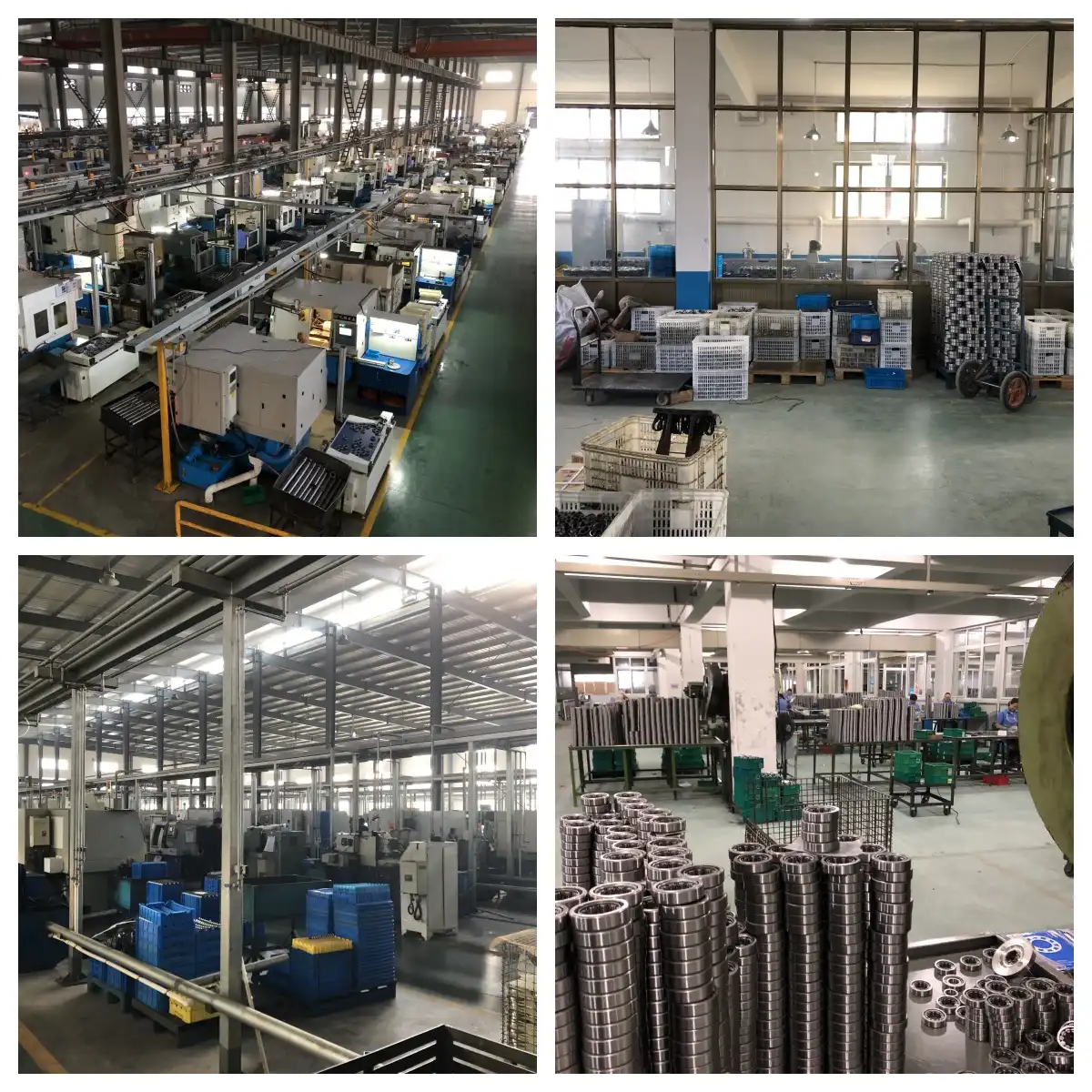
ATLYC works with Luoyang Auto Bearing Co., Ltd., a company that has been ISO 9001 and IATF 16949 certified for 15 years. They make precision 30305 tapered roller bearings that meet ISO 355 standards and have full material traceability and 100% Anderson vibration screening. As a reliable Tapered Roller Bearing 30305 manufacturer serving customers in the US, Germany, South Korea, and other places, we offer consistent quality at low prices and quick lead times. To get details, certifications, or a unique quote, email our engineering team at auto@lyautobearing.com.
References
1. Harris, T. A., & Kotzalas, M. N. Rolling Bearing Analysis: Essential Concepts of Bearing Technology. CRC Press, 2006.
2. International Organization for Standardization. ISO 355: Tapered Roller Bearings — Boundary Dimensions and Series Designations. ISO, 2019.
3. Deutsches Institut für Normung. DIN 720: Tapered Roller Bearings. DIN, 2016.
4. ASTM International. ASTM A295: Standard Specification for High-Carbon Anti-Friction Bearing Steel. ASTM, 2021.
5. SKF Group. SKF Bearing Maintenance Handbook. SKF, 2018.
6. Zaretsky, E. V. Fatigue Life and Reliability of Rolling Element Bearings. NASA Technical Reports Server, 2013.
Learn about our latest products and discounts through SMS or email