- English
- French
- German
- Portuguese
- Spanish
- Russian
- Japanese
- Korean
- Arabic
- Greek
- German
- Turkish
- Italian
- Danish
- Romanian
- Indonesian
- Czech
- Afrikaans
- Swedish
- Polish
- Basque
- Catalan
- Esperanto
- Hindi
- Lao
- Albanian
- Amharic
- Armenian
- Azerbaijani
- Belarusian
- Bengali
- Bosnian
- Bulgarian
- Cebuano
- Chichewa
- Corsican
- Croatian
- Dutch
- Estonian
- Filipino
- Finnish
- Frisian
- Galician
- Georgian
- Gujarati
- Haitian
- Hausa
- Hawaiian
- Hebrew
- Hmong
- Hungarian
- Icelandic
- Igbo
- Javanese
- Kannada
- Kazakh
- Khmer
- Kurdish
- Kyrgyz
- Latin
- Latvian
- Lithuanian
- Luxembou..
- Macedonian
- Malagasy
- Malay
- Malayalam
- Maltese
- Maori
- Marathi
- Mongolian
- Burmese
- Nepali
- Norwegian
- Pashto
- Persian
- Punjabi
- Serbian
- Sesotho
- Sinhala
- Slovak
- Slovenian
- Somali
- Samoan
- Scots Gaelic
- Shona
- Sindhi
- Sundanese
- Swahili
- Tajik
- Tamil
- Telugu
- Thai
- Ukrainian
- Urdu
- Uzbek
- Vietnamese
- Welsh
- Xhosa
- Yiddish
- Yoruba
- Zulu
How Light Are RA Series Crossed Roller Bearings?
In modern bearing choosing, weight determines how well a bearing works. Engineers look at every gram when they're making robotic joints, machining center rotary tables, or high-precision medical equipment. The RA Series Crossed Roller Bearings meet this need with an incredibly thin shape that goes against what you might expect. Bearings with inner sizes ranging from 20 mm to 350 mm and weights ranging from 0.5 kg to 15 kg, these systems are surprisingly small and light for how much load they can hold. Because they are made with crossed rollers and smart use of materials, they are lighter without sacrificing their structural integrity. This makes them perfect for uses where limited room and mass affect performance and cost-efficiency.
Introduction
When choosing the right bearing, you have to think about a lot of things, like load capacity, precision, sturdiness, and, more and more, weight. This guide looks at how the RA Series Crossed Roller Bearings are so light while still meeting high-performance standards. Everything is affected by weight, from the cost of shipping to the difficulty of placement to the amount of energy used during operation. It's hard for procurement managers and OEM engineers to optimize all of these factors at the same time, especially in fields like robots, automation equipment, and precise machinery, where the mass of each component affects how the system works.
When looking at long-term trade partnerships, it's important to know how weights behave. We organized this in-depth study to cover technical basics, comparative benefits, buying effects, and upkeep considerations. This gives B2B decision-makers useful information that makes choosing bearings easier and improves the stability of the supply chain.
Understanding RA Series Crossed Roller Bearings and Their Weight Characteristics
Defining the RA Series Design and Construction
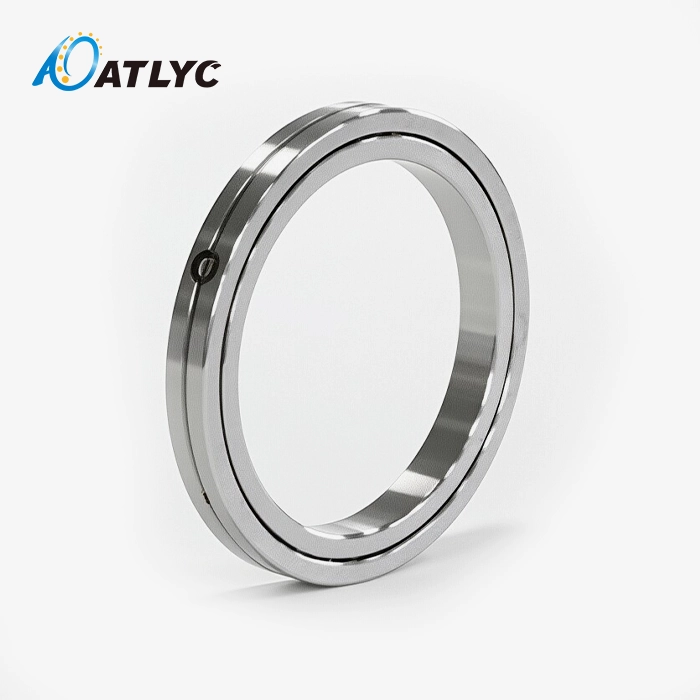
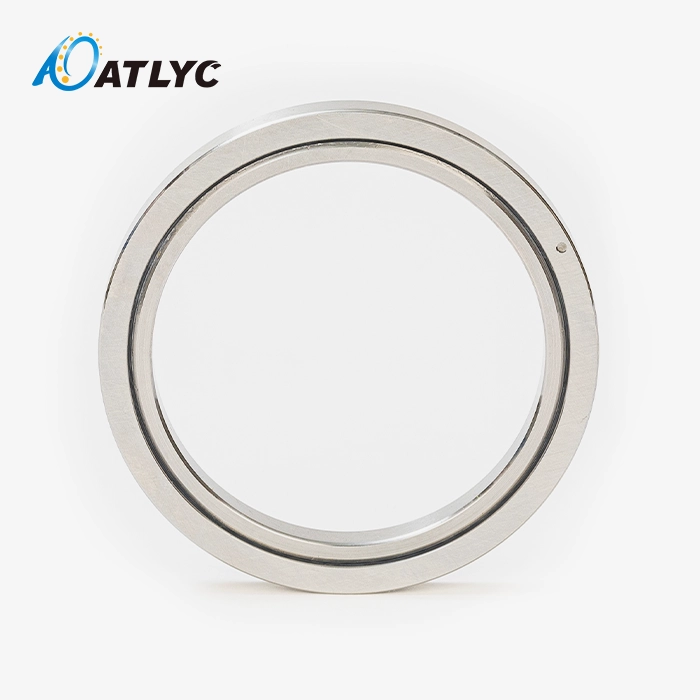
These bearings are precisely designed for use in a limited space. They have cylinder-shaped rollers placed perpendicularly between the inner and outer rings inside V-shaped precision raceways. The separate outer ring makes fitting easier, and the built-in inner ring makes sure that the spin is accurate enough to meet P4, P5, P6, and P0 tolerance classes. This design combines functions that usually need two angular contact bearings into a single, small unit.
Making things out of Gcr15 and Gcr15SiMn bearing-grade steels gives you the strength and weight control you need. Gcr15 is very hard (58–62 HRC after heat treatment) and doesn't wear down easily. Gcr15SiMn types make it easier to harden and make it tougher. The end bearing mass is directly related to the density of the material. However, these steel types still have the best hardness-to-weight ratios needed for industrial uses.
Standard Weight Ranges Across Available Sizes
Across the whole line of products of RA Series Crossed Roller Bearings, the link between size and weight is always the same. Bearings with an inner diameter of 20 mm and an outer diameter of 70 mm usually weigh between 0.5 and 0.8 kilos. Mid-range models with a bore diameter of 150 mm weigh between 4 and 6 kilograms. The biggest ones, with an inner diameter of 350 mm and an outer diameter of 540 mm, weigh about 12 to 15 kilograms. Widths ranging from 12mm to 45mm have a proportional effect on overall mass. However, the very thin shape of crossed roller designs keeps weight well below that of similar bearing arrangements.
| Bearing Size Range | Inner Diameter (mm) | Outer Diameter (mm) | Typical Weight Range (kg) |
|---|---|---|---|
| Small Series | 20-60 | 70-135 | 0.5-2.0 |
| Medium Series | 65-150 | 140-250 | 2.5-6.5 |
| Large Series | 155-350 | 255-540 | 7.0-15.0 |
Dimensional Influences on Overall Mass
Even when the hole and outer diameter are the same, the weight changes proportionally depending on the width. Bearing RA15013 (150mm ID, 180mm OD, 13mm width) is much lighter than bearing RA15025 (same sizes, 25mm width). This scalability lets engineers say exactly how much weight is needed without adding extra mass. The crossed roller arrangement makes it easier to distribute loads, which means that thinner parts can handle forces that would normally require larger profiles in other types of bearings.
The number of rollers and their width also affect the weight estimates. Larger rollers spaced out properly can hold more weight while keeping the number of parts to a minimum. When compared to bearings that need a lot of smaller rolling elements to achieve the same load ratings, this design philosophy—fewer rollers of carefully sized sizes—reduces the total mass.
Key Factors Influencing the Lightness of RA Series Crossed Roller Bearings
Advanced Material Selection and Properties
Material engineering is what makes it possible to reduce weight without lowering efficiency. The chromium content in Gcr15 steel (0.95–1.05%) makes through-hardening better, which lets makers get the necessary surface hardness while keeping the core toughness in relatively thin cross-sections. The silicon-manganese version (Gcr15SiMn) makes the material harder so that it can be used for bigger bearings. This makes sure that the material qualities stay the same throughout the part, even as it gets bigger.
Heat treatment methods turn raw materials into precise parts. Through-hardening cycles create martensitic structures with a surface hardness of 58–62 HRC. This makes raceways that are resistant to wear and can withstand millions of load cycles. Because the metal is stable, the thinner raceway parts work consistently, which directly reduces the total weight.
Crossed Roller Configuration and Load Distribution Efficiency
These bearings are different from others because the rollers are placed in an orthogonal way. Putting cylindrical rollers at right angles to V-groove raceways lets a single bearing handle radial, axial, and moment loads at the same time. This gets rid of the need for paired angular contact bearings or combined bearing arrangements, which take up more room and make the whole system heavier.
Load path optimization happens easily with this setup. When equipment uses combined forces, the crossed design spreads stress over many touch points instead of putting loads in one place. Engineers can choose thinner bearing cross-sections while still getting the rigidity they need. This directly cuts down on mass without affecting load capacity or operating dependability.
Manufacturing Innovations Minimizing Excess Mass
By precisely removing material, precision cutting technologies make it possible to reduce the weight of RA Series Crossed Roller Bearings. CNC grinding can get raceway errors as low as a few micrometres, which means that surfaces can be made with very little material thickness while still being geometrically accurate. Modern production gets rid of the extra stock material that older methods might keep as a safety cushion. This makes it possible to make parts that are exactly the right weight.
Quality control methods make sure that the dimensions are the same from one production run to the next. Our methods, which are ISO 9001 and IATF 16949 approved, make sure that every bearing meets certain weight and performance standards. To make sure that weight optimization hasn't hurt functional standards, automated inspection systems check the raceway profiles, wheel measurements, and assembly clearances.
It is easier to handle because the top ring can be taken off. Split design makes it easier to place in tight areas and easier to maintain. It also gets rid of the need for heavy mounting tools that would add to the weight of the unit beyond the bearing itself.
RA Series Crossed Roller Bearings vs. Other Bearing Types: Weight and Performance Comparison
Weight Differentials Across Bearing Categories
When you compare comparable load levels, you can see that lighter ones are much better. Because they only have to handle rotational loads going in one direction, standard cylindrical roller bearings usually need 20 to 30 percent more mass. This is because their cross-sections have to be larger. When paired to handle both axial and radial loads at the same time, angular contact ball bearings make assemblies that weigh 40 to 50 percent more than a single crossed roller unit with the same values.
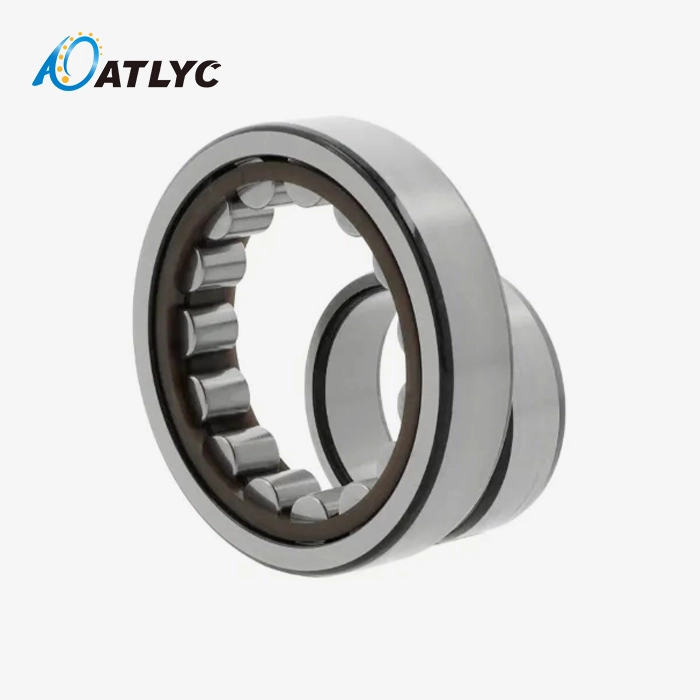
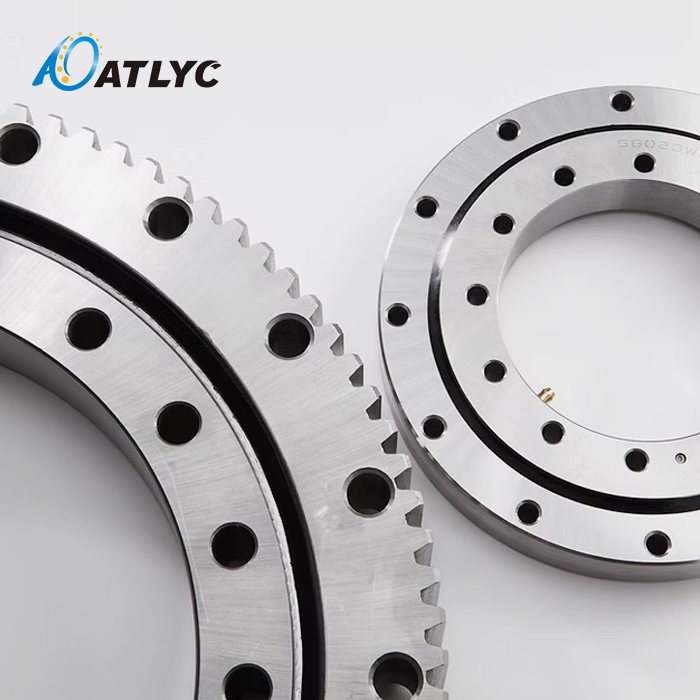
Crossed roller slewing bearings work in the same way as orthogonal roller bearings, but they are usually used for larger diameter uses and have mounting holes built in. Because they are gear-integrated, they are very heavy. In situations where combined gearing is not needed, the RA design offers the same moment capacity at a much lower mass.
| Bearing Type | Equivalent Load Capacity Configuration | Relative Weight Index | Installation Complexity |
|---|---|---|---|
| RA Series Crossed Roller Bearings | Single unit | 1.0 (baseline) | Low (separable design) |
| Paired Angular Contact Balls | Two bearings in tandem/back-to-back | 1.4-1.5 | Moderate (precise preload setup) |
| Standard Cylindrical Roller | Single direction + separate thrust bearing | 1.3-1.4 | Moderate (multiple components) |
| Crossed Roller Slewing | Single unit with mounting holes | 1.6-2.2 | Low (integrated mounting) |
Design Advancements Enabling Weight Reduction
The design of the continuous inner ring puts more material where it's needed most for strength. Instead of spreading the material out evenly, engineering research finds the most important load-bearing zones. This lets less material be used in places with lower stress. This kind of selective optimization cuts down on weight while keeping strength where it's needed for physics.
V-groove raceway design makes the most of the contact area. The groove shape with a 90-degree angle makes the best roller contact angles, which spread forces over a bigger surface area than point-contact designs. Because of this geometric benefit, smaller raceway sections can handle the same Hertzian contact stresses, which directly leads to a lower total bearing mass.
Performance Under Dynamic Operating Conditions
The crossed roller contact has low friction coefficients, which makes spinning smooth even when loads are added together. This economy is important, especially in uses that care a lot about weight, because lower rotational resistance means less need for a drive motor and less energy use. Test results regularly show that friction coefficients are 15–20% lower than those of equal angular contact arrangements that are handling the same loads.
Even though it is lightweight, the runout accuracy is still very good. Precision manufacturing gets radial and axial runout values that meet P4 and P5, tolerance classes. This is important for applications where positional accuracy directly affects output quality, such as semiconductor chip alignment stages and medical imaging equipment. The stiff crossed roller system keeps these tolerances even after millions of rotations, while lighter ball bearing options can shift and cause problems.
Practical Considerations for Procurement: Weight's Role in Selection and Supply Chain
Transportation and Logistics Impact
When it comes to bulk sales, bearing weight has a direct effect on freight classes and shipping costs. Cost differences can be seen in foreign logistics chains when medium-series units weigh an average of 5 kilograms each and heavier options weigh 7 kilograms each. These differences in weight affect carrier rates and customs values when purchasing managers figure out the total landed costs of orders going to sites in Germany, the US, or South Korea.
It is easier to package things that are lighter. Optimized bearing weight lets you put more in a shipping crate without going over the weight limits, which lowers the cost of sending each unit. Our logistics team works with our freight partners to get the most out of each container. Customers benefit from these cost savings because we offer low prices.
Installation Complexity and Equipment Requirements
Bearings that are lighter are easier to handle during setup. When technicians install RA Series Crossed Roller Bearings in robotic joints or machining center rotary tables, they can better handle parts, which cuts down on installation time and the chance that parts will fall and damage the surface. The design of the separate outer ring adds to this benefit; mounting the inner ring first and then setting the outer ring pieces means that heavy lifting equipment is not needed in many situations.
The mounting gear needs to go up as the bearing mass goes up. Assemblies that are lighter often allow for simpler fixing and smaller bolts, which saves weight all over the mechanical system. This effect really helps robotic manipulators and precision spinning tables, where the total mass has a direct effect on the size of the motor and how much energy it uses.
Customization Options for Specific Weight Requirements
Customers who need non-standard setups work with engineering support teams. When normal product weights don't work for a certain application, our technical staff looks into whether there are ways to change the material, the size, or the heat treatment to get the goal weight while keeping the performance properties that are needed. This freedom is helpful for OEM clients who are working on next-generation tools but have tight budgets for large orders.
Volume agreements make customization possible. Large orders support the engineering work needed for weight-optimized versions, which let manufacturers define exact mass factors along with load capacity, accuracy grade, and size needs. Our 15 years of experience making things helps with these joint development projects, and our ISO 9001 and IATF 16949 quality systems make sure that the results are the same from one production run to the next.
Supplier Relationship and Long-Term Reliability
For production planning, it's important that bearing weights are the same for repeat orders. When manufacturers put these parts into equipment that is used on a regular basis, they need to know that the bearing specs, such as weight, will stay the same between procurement rounds. For each production batch, our quality management systems keep track of material approvals, dimensional inspections, and weight checks. This makes it possible for customers to do quality tests and meet supply chain validation standards.
Technical help lasts after the initial buy. Questions about the best bearings for new uses, fixing speed issues, or looking into upgrade options are quickly answered by engineering staff who know how to use weight optimization methods. This ongoing partnership method makes supply relationships stronger, which is especially helpful for customers who work in demanding fields like making medical devices or tools for making semiconductors, where the quality of the finished product is directly affected by how reliable the parts are.
Maintenance Tips and Lifespan: Does Lightness Affect Durability?
Inspection Protocols for Lightweight Precision Bearings
Monitoring on a regular basis finds early signs of wear before they hurt performance. Visual exams check the integrity of the seal and look for contamination around the contact of the separate outer ring. The sides of the raceways should stay smooth and shiny, with no cracking, spalling, or discolouration that could mean they are getting too hot. Tracking changes in the bore and outer diameter using dimensional measures is a good way to see how wear is progressing. This is especially true for bearings that work under moment loads that cause uneven stress distributions.
Measuring torque gives you measurable information about performance. The starting torque values that were set during testing are used as a starting point for future evaluations. Gradual increases in torque may mean that the lubricant is wearing off or that dirt and debris are building up, while rapid changes could mean that the rollers or raceways are damaged and need quick repair. Recording these measures creates maintenance records that help with planned replacement strategies, which extend the life of bearings and stop them from breaking down when they're least expected.
Preventative Maintenance Addressing Weight-Related Stress Points
When lightweight bearing systems are loaded momentarily, they wear out in certain ways. When robotic arms use cantilevered loads, the forces are concentrated on certain roller parts, which could speed up wear in those areas. Strategies for lubrication need to take these stress densities into account to make sure that the film thickness is right at high-load contact spots. Instead of generic schedules, the amount of time between relubrication should be based on real working conditions, especially for bearings that are used in high-cycle situations.
Verifying the mounting state stops wear from happening too soon. Lightweight bearings need the right kind of support to stay in place when they're loaded. How well the bearing spreads forces is affected by the housing bore tolerances, shoulder squareness, and mounting bolt torque requirements. Misalignment puts most of the load on a small area of wheel contact, which defeats the purpose of the weight-optimized design and shortens its useful life.
Lifespan Expectations and Reliability Data
Properly maintained RA Series Crossed Roller Bearings in industrial robot joints usually last between 20,000 and 30,000 hours of use before they need to be replaced. When used in a machining center with irregular loads, rotary tables often last longer than 40,000 hours. These numbers are better than those of heavy-bearing options. This shows that reducing weight doesn't have to mean sacrificing durability as long as proper engineering care is taken with design and material choice.
To figure out the fatigue life, you use normal bearing theory and take into account the total loading. Because of how well the load is spread out in the crossed roller arrangement, rated dynamic load capacities are a good way to predict service life under certain situations. Our technical material includes L10 life calculations, which show how many hours of use 90% of bearings will still work properly. This lets maintenance planners plan replacements based on real reliability data instead of making up random times.
Troubleshooting Weight-Specific Performance Issues
Problems that come up with lightweight building can be found through vibration research. RA Series Crossed Roller Bearings work easily when they are working properly, but damage or contamination can be felt through the vibrations. Frequency analysis tells the difference between roller flaws and damage to the raceways, which helps with maintenance choices. Lighter bearing sets may be better at transmitting these vibrations than heavier ones. This is why condition tracking is so useful for finding problems early on.
As wear goes on, the noise patterns change. At first, bearings may work almost quietly, but they may start to make clicking or grinding sounds that mean the rollers or raceways are damaged. These sound patterns often show up before the performance starts to drop. This lets you plan maintenance instead of fixing problems as they happen. Keeping track of normal noise levels during opening sets standards for future evaluations.

Conclusion
Weight optimization in RA Series Crossed Roller Bearings design is a complex area of engineering that addresses different needs, such as load capacity, accuracy, longevity, and weight reduction. This balance is reached by the RA configuration's smart choice of materials, modern manufacturing methods, and physical design that makes the structure work as efficiently as possible. When purchasing bearings, procurement professionals should look at weight along with standard specs, knowing that it affects the cost of shipping, the difficulty of installation, and the performance of the whole system.
Long-term relationships will work out well if you choose a trustworthy bearing manufacturer with proven quality systems, technical know-how, and the ability to offer products all over the world. Our manufacturing has changed over the past 15 years, from a single workshop to six categories of production. This shows our dedication to ongoing growth and customer service, which are important when bearing performance affects your production outcomes directly.
FAQ
1. Can lightweight RA Series Crossed Roller Bearings handle high-load industrial applications reliably?
If you optimize the design instead of cutting down on materials, you can reduce weight without affecting the load capacity. Because the rollers are crossed, these bearings can handle radial, axial, and moment loads at the same time. Some types can handle loads that are similar to much heavier standard bearing setups. When you match the bearing's specs to its real working conditions using application engineering, you can be sure that it will work reliably in harsh industrial settings like robotic manipulators and precision cutting equipment.
2. What efficiency advantages does reduced bearing weight provide?
Lowering rotary inertia lowers the amount of energy used during rounds of speeding up and slowing down. This is especially helpful in robotic applications that need to change positions quickly. Less system mass means smaller drive motors and easier mounting structures, which saves weight all the way through the mechanical assembly. Improving the speed of transportation and handling cuts down on shipping costs for both buying new parts and keeping track of replacement parts.
3. Are custom weight specifications available for specialized applications?
Collaboration between engineers makes weight-optimized versions possible for large volume agreements. Technical teams look at the needs of the application and look for ways to change the dimensions or choose the materials that will help reach the weight goals while still meeting the load capacity and accuracy standards. This ability to customize helps OEMs make products where the mass of the parts has a direct effect on how well the finished product works and where it stands in the market.
Partner with ATLYC for Precision-Engineered Crossed Roller Solutions
ATLYC makes RA Series Crossed Roller Bearings that are both light and high-performance. Our ISO 9001 and IATF 16949 certifications show that we are committed to quality control and meeting international production standards. We have been making RA Series Crossed Roller Bearings for 15 years and have six specialized workshops. We sell precision parts to automakers, companies that make industrial equipment, and global bearing distributors in South Korea, the US, Germany, and other places. Our research team can help you choose the right bearings, find ways to make them fit your needs, and make them work better in specific situations. You can email us at auto@lyautobearing.com to talk about your bearing needs, get detailed specs, or get quotes for your next purchase cycle.
References
1. Harris, T.A. & Kotzalas, M.N. (2006). Advanced Concepts of Bearing Technology: Rolling Bearing Analysis (5th ed.). CRC Press.
2. Hamrock, B.J., Schmid, S.R. & Jacobson, B.O. (2004). Fundamentals of Fluid Film Lubrication (2nd ed.). Marcel Dekker.
3. ISO 492:2014. Rolling bearings — Radial bearings — Geometrical product specifications (GPS) and tolerance values. International Organization for Standardization.
4. Weck, M. & Brecher, C. (2006). Werkzeugmaschinen 5: Messtechnische Untersuchung und Beurteilung, dynamische Stabilität. Springer-Verlag.
5. Marsh, E.R. (2010). Precision Spindle Metrology. DEStech Publications.
6. Budynas, R.G. & Nisbett, J.K. (2015). Shigley's Mechanical Engineering Design (10th ed.). McGraw-Hill Education.
Learn about our latest products and discounts through SMS or email