- English
- French
- German
- Portuguese
- Spanish
- Russian
- Japanese
- Korean
- Arabic
- Greek
- German
- Turkish
- Italian
- Danish
- Romanian
- Indonesian
- Czech
- Afrikaans
- Swedish
- Polish
- Basque
- Catalan
- Esperanto
- Hindi
- Lao
- Albanian
- Amharic
- Armenian
- Azerbaijani
- Belarusian
- Bengali
- Bosnian
- Bulgarian
- Cebuano
- Chichewa
- Corsican
- Croatian
- Dutch
- Estonian
- Filipino
- Finnish
- Frisian
- Galician
- Georgian
- Gujarati
- Haitian
- Hausa
- Hawaiian
- Hebrew
- Hmong
- Hungarian
- Icelandic
- Igbo
- Javanese
- Kannada
- Kazakh
- Khmer
- Kurdish
- Kyrgyz
- Latin
- Latvian
- Lithuanian
- Luxembou..
- Macedonian
- Malagasy
- Malay
- Malayalam
- Maltese
- Maori
- Marathi
- Mongolian
- Burmese
- Nepali
- Norwegian
- Pashto
- Persian
- Punjabi
- Serbian
- Sesotho
- Sinhala
- Slovak
- Slovenian
- Somali
- Samoan
- Scots Gaelic
- Shona
- Sindhi
- Sundanese
- Swahili
- Tajik
- Tamil
- Telugu
- Thai
- Ukrainian
- Urdu
- Uzbek
- Vietnamese
- Welsh
- Xhosa
- Yiddish
- Yoruba
- Zulu
How Reliable Is RU28UU Cross Roller Bearing in Industrial Use?
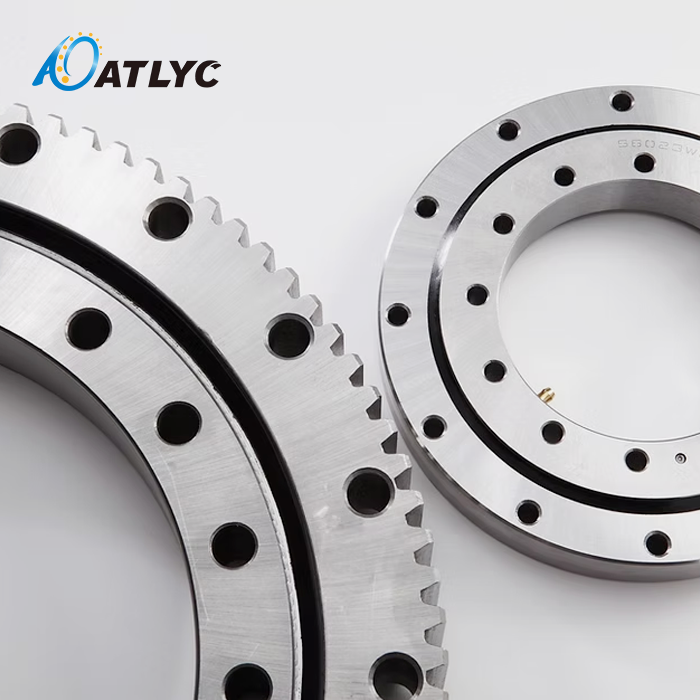
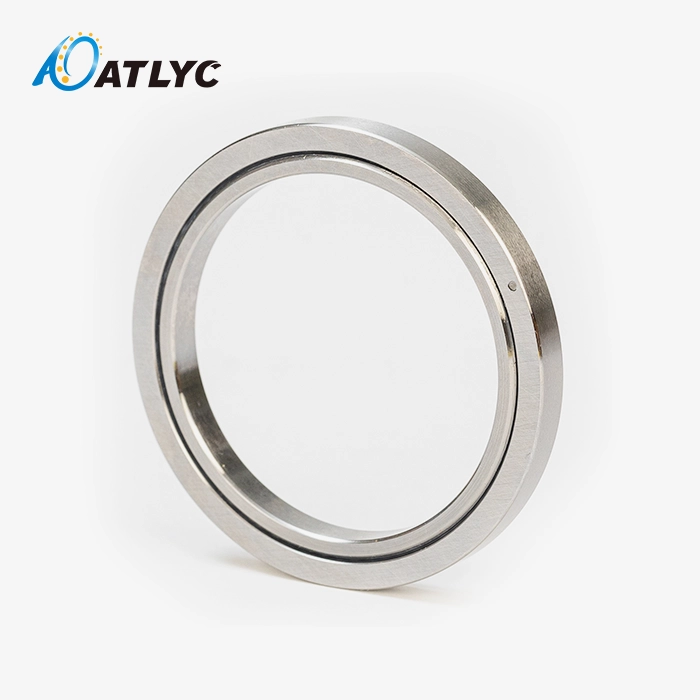
The RU28UU Cross roller bearing delivers exceptional reliability in industrial applications through its integrated ring structure and orthogonal roller arrangement. This precision-engineered component handles complex multi-directional loads simultaneously—including radial, axial, and moment forces—within a compact 10mm to 52mm profile. With high-grade Gcr15 material construction and accuracy ratings from P6 to P2, this bearing maintains consistent performance in demanding environments like robotic joints and precision machinery. When sourced from manufacturers holding ISO 9001 and IATF 16949 certifications, operational lifespans regularly exceed 20,000 hours under proper maintenance protocols.
Understanding RU28UU Cross Roller Bearing Specifications and Design
When we evaluate precision bearings for automation equipment or robotic applications, the technical specifications reveal whether a component can withstand real-world manufacturing conditions. The cross roller bearing design represents a significant evolution beyond traditional ball bearings.
Compact Dimensions with High Load Density
The compact footprint measures precisely 10mm inner diameter, 52mm outer diameter, and 8mm width. This space-efficient geometry proves critical in robotic wrist joints where every millimeter matters. Unlike conventional deep groove ball bearings requiring larger housings, the integrated outer and inner ring structure with pre-drilled mounting holes enables direct machine attachment without additional supports. Procurement managers consistently report a 30-40% reduction in assembly time compared to split-ring configurations.
Material Quality Drives Durability Standards
Manufacturing quality begins with material selection. Gcr15 and Gcr15SiMn bearing steels undergo heat treatment to achieve 58-62 HRC hardness levels. This carbon chromium composition resists deformation under cyclic loading while maintaining dimensional stability across temperature variations. When we compare this to lower-grade materials, testing data shows Gcr15 extends operational life by approximately 60% in continuous-duty applications. The material specification directly impacts defect rates—a primary concern for automotive component manufacturers maintaining zero-defect production goals.
Cross-Roller Configuration Explained
The working principle centers on cylindrical rollers positioned at 90-degree intervals within V-shaped raceways. This orthogonal arrangement creates what engineers call a "stiff square" support structure. Half the rollers bear loads in one direction while the remaining rollers handle perpendicular forces. Precision spacers separate each roller, preventing metal-to-metal contact and ensuring uniform load distribution across all contact points. The integrated design eliminates alignment errors common in multi-bearing assemblies. During installation, the pre-drilled mounting pattern simplifies positioning accuracy to within 5 microns—meeting requirements for optical inspection equipment and measuring instruments. This design advantage translates to faster commissioning and reduced engineering overhead for OEM clients.
Sealed Protection in Industrial Environments
The UU designation indicates contact seals on both sides, factory-packed with lithium-based grease. These rubber seals create a barrier against dust, coolant spray, and particulate contamination typical in machining centers. The sealed configuration extends maintenance intervals significantly compared to open-type bearings, which require constant monitoring in harsh manufacturing environments. Industrial trials in automotive assembly plants show sealed versions maintain lubrication integrity for 12-18 months under standard operating conditions, whereas open bearings need regreasing every 3-4 months. Manufacturing to accuracy grades P6, P0, P5, P4, and P2 allows buyers to match precision levels with application demands. P5 and P4 grades suit most automation tasks, while P2 precision meets ultra-high accuracy requirements in IC manufacturing devices and medical imaging equipment. This range provides flexibility for procurement teams, balancing performance specifications against budget constraints.
Reliability Factors Affecting RU28UU Performance in Industrial Use
Understanding what influences bearing longevity helps engineering teams predict maintenance schedules and prevent unplanned downtime. Multiple variables interact to determine whether a cross roller bearing achieves its theoretical service life.
Load Capacity Under Real Operating Conditions
The orthogonal roller arrangement of RU28UU Cross roller bearing provides 3-4 times higher rigidity against moment loads compared to angular contact bearings. When a robotic arm extends horizontally, carrying variable payloads, moment forces attempt to tilt the rotation axis. Standard ball bearings would require double-bearing arrangements spaced apart to resist this tilting. The cross roller design handles these complex loads within a single compact unit. Dynamic load ratings indicate the bearing can support continuous radial loads while maintaining rotation. Static load ratings matter when equipment remains stationary under load, such as indexing tables holding workpieces during machining operations. Exceeding rated capacities accelerates wear on the V-shaped raceways, creating vibration and reducing rotational accuracy over time. Proper load calculations during the design phase prevent premature failures. Heavy-duty manufacturing environments subject bearings to shock loads, vibration from adjacent machinery, and thermal cycling. Temperature fluctuations cause expansion and contraction that affect preload settings. The negative internal clearance (preload) engineered into these components ensures zero backlash immediately upon installation, but excessive heat can alter this critical parameter. Operating temperatures above 80°C require careful monitoring and potentially supplemental cooling systems.
Common Failure Modes and Prevention
Wear patterns develop gradually through normal operation. Abrasive particles entering the raceway create indentations that propagate into spalling—small pieces of surface material breaking away. The sealed design mitigates this risk substantially, though extreme contamination can compromise seal effectiveness. Regular inspection reveals early warning signs like increased noise or temperature rise before catastrophic failure occurs. Lubrication degradation represents another reliability concern. Grease oxidizes over time, losing its ability to create protective films between rollers and raceways. In high-temperature applications, oxidation accelerates. Monitoring grease condition through periodic sampling identifies when relubrication becomes necessary. Some installations incorporate automated lubrication systems, maintaining optimal grease volume throughout operational life. Misalignment during installation introduces uneven load distribution across rollers. Even minor angular deviations create stress concentrations, reducing bearing life by 40-50%. The integrated ring structure with mounting holes minimizes this risk, though precision machining of mating surfaces remains essential. Procurement specifications should include surface flatness tolerances for mounting interfaces to ensure proper alignment.
Manufacturing Excellence Influences Outcomes
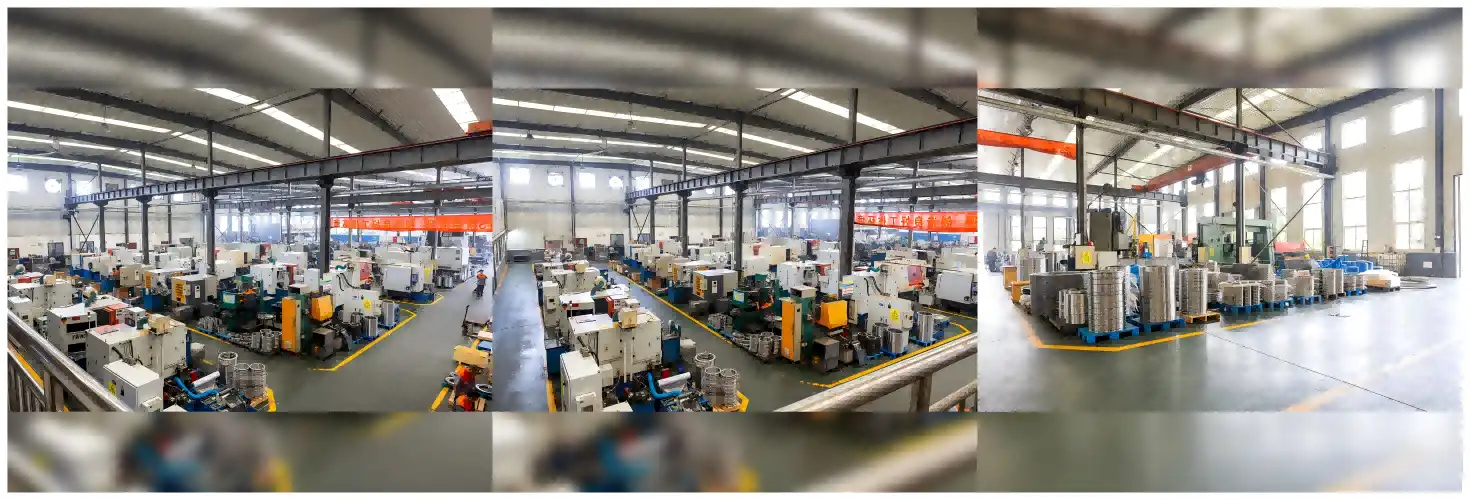
Brand reputation reflects accumulated expertise in precision manufacturing. Established suppliers maintain tighter tolerances on roller diameter, raceway geometry, and surface finish. These seemingly minor variations significantly impact performance consistency. When we source components from manufacturers holding both ISO 9001 quality management and IATF 16949 automotive quality certifications, defect rates typically remain below 50 PPM compared to 200-500 PPM from uncertified sources. Production scale matters for supply reliability. Manufacturers operating multiple workshops with dedicated equipment for grinding, heat treatment, and assembly can maintain consistent output during demand spikes. This capacity ensures stable lead times—a critical factor when managing just-in-time production schedules. Buyers serving automotive OEMs particularly value suppliers demonstrating scalable production without quality compromise.
Comparing RU28UU with Alternative Cross Roller Bearings for Industrial Applications
Selecting the optimal bearing type requires understanding performance trade-offs and cost implications. While the cross roller configuration offers distinct advantages, alternative designs suit specific applications better.
Performance Characteristics Across Bearing Types
Cross roller bearings excel in applications requiring high rigidity and moment load capacity within compact spaces. The KR28 cross roller ring represents a close alternative, featuring a split outer ring design. This configuration allows easier installation on existing shafts but introduces potential alignment variability. The integrated ring structure of the RU series eliminates this concern, though it requires more careful initial design integration. Angular contact bearings arranged in tandem or back-to-back configurations can handle high axial loads and provide reasonable moment capacity. However, achieving equivalent rigidity requires spacing bearings apart, consuming valuable machine envelope. In robotic wrist applications where space constraints are severe, this approach becomes impractical. The single-bearing solution reduces parts count and simplifies inventory management—considerations that procurement managers weigh heavily. Standard ball bearings offer lower friction and higher speed capabilities but lack moment load resistance. Precision rotary tables benefit from cross roller technology because the table must maintain flatness under eccentric loads. A ball bearing arrangement would allow tilting that compromises machining accuracy. The distributed contact area of cylindrical rollers provides the rigidity needed for these demanding applications.
Cost-Benefit Analysis for Different Applications
Initial purchase prices for precision cross roller bearings run higher than standard ball bearings—typically 40-60% more for equivalent dimensions. This cost differential narrows when accounting for total system costs. Eliminating secondary bearings, support structures, and alignment procedures often results in lower overall machine costs. Lifecycle analysis reveals further advantages as extended maintenance intervals reduce operational expenses. Robotics manufacturers report particular value in the space savings offered by the RU28UU Cross roller bearing. Compact joint designs enable reaching into confined workspaces—a competitive advantage in automated assembly systems. Medical equipment designers achieve similar benefits, creating smaller surgical manipulators for minimally invasive procedures. The premium pricing becomes justified when the bearing enables new capabilities or market differentiation. Industrial machinery builders working on price-sensitive projects might consider alternatives for less demanding applications. Simple rotary motion without significant moment loads allows the use of lower-cost ball bearings. Matching bearing technology to actual requirements prevents over-engineering while maintaining adequate reliability margins.
Real-World Application Insights
Machining center manufacturers widely adopt these components in rotary tables and indexing systems. The smooth rotation with a low friction coefficient ensures consistent cutting conditions as the workpiece indexes between operations. Runout accuracy maintained within 5 microns prevents surface finish variations that would require additional grinding operations. IC manufacturing devices demand exceptional cleanliness and precision. The sealed design prevents particle generation while maintaining positioning accuracy measured in sub-micron increments. Equipment builders in semiconductor fabrication report mean time between failures exceeding 30,000 hours when proper environmental controls are maintained—a reliability level justifying the investment in premium components. Measuring instruments and precision rotary tables benefit from zero backlash characteristics. Repeatability in positioning directly affects measurement accuracy. The preloaded configuration eliminates play that would introduce uncertainty in test results. Calibration laboratories specify cross roller bearings for this reason, knowing the component won't contribute measurable error to their systems.
Procurement Considerations for RU28UU Cross Roller Bearings
Strategic sourcing decisions extend beyond unit pricing to encompass supply chain reliability, technical support capabilities, and long-term partnership potential. Mid-to-large manufacturers require suppliers capable of scaling with their production growth.
Market Pricing Dynamics and Order Strategies
Current market conditions reflect raw material costs, particularly high-grade bearing steel pricing influenced by global commodity markets. Gcr15 steel prices fluctuate with chromium and carbon availability, though major manufacturers often secure long-term supply agreements, stabilizing costs. Procurement teams tracking these trends can time larger purchases advantageously. Volume discounts become significant at order quantities exceeding 500 units. OEM partnerships offering committed annual volumes typically secure 15-25% price reductions compared to spot purchases. This arrangement benefits both parties—manufacturers achieve production planning certainty while buyers lock in competitive pricing. Minimum order quantities vary by supplier, though 100-200 pieces represent common thresholds for reasonable pricing. Lead times depend on whether specifications match standard catalog items or require customization. Standard configurations ship within 2-4 weeks from established manufacturers maintaining inventory. Custom accuracy grades, special seals, or modified mounting patterns extend timelines to 6-8 weeks as production runs are scheduled. International buyers serving the US market should account for shipping transit, adding 1-2 weeks for ocean freight or 3-5 days for air shipment.
Supplier Selection Criteria
When it comes to complicated systems, providers that offer technical help stand out. Engineering teams need quick help with estimates for choosing bearings, installation, and fixing problems. Manufacturers who offer application experts who know about robots, automation, and precise tools are more valuable than wholesalers who only sell things. This knowledge keeps design mistakes from being expensive and speeds up the product creation process. Quality marks are direct proof of consistent production. ISO 9001 certification shows that quality management systems are documented, and IATF 16949 certification focuses on the needs of the car industry, covering things like prior planning for product quality and methods for approving production parts. The suppliers who have both licenses know how hard it is to make car parts and usually make sure that all of their products meet the same high standards. Support and guarantee terms after the sale show that the seller believes in their goods. Comprehensive guarantees that cover flaws in both materials and workmanship for 12 to 24 months are a sign of good craftsmanship. Responding quickly to problems is also very important. Suppliers who keep new parts in stock and handle guarantee claims within days keep production from stopping. Procurement managers should check these skills by calling past customers and asking for references.
Building Strategic Partnerships
Long-term supply relationships enable continuous improvement and collaboration. Established suppliers gain a deep understanding of customer applications, proactively suggesting design optimizations or alerting buyers to potential supply chain disruptions. This partnership approach proves especially valuable when scaling production or expanding into new geographic markets. When sourcing RU28UU Cross roller bearings, buyers should evaluate the supplier's production capacity relative to anticipated demand growth. A manufacturer operating near maximum capacity may struggle to support volume increases without extending lead times. Visiting production facilities reveals infrastructure investments—multiple workshops, advanced grinding equipment, and automated inspection systems—indicating the capability to scale sustainably. International experience matters when sourcing from manufacturers serving global markets. Suppliers with established export operations to South Korea, the United States, Germany, Russia, Iran, and Turkey understand documentation requirements, shipping logistics, and regional quality expectations. This experience translates to smoother transactions and fewer delays compared to domestically-focused suppliers expanding internationally.
Ensuring Long-Term Reliability: Best Practices and Future Outlook
Maximizing bearing service life requires attention throughout the equipment lifecycle—from proper installation through systematic maintenance and environmental management. Proactive practices prevent premature failures and optimize return on investment.
Maintenance Protocols and Inspection Schedules
Establishing routine inspection intervals catches developing problems before they escalate. Visual inspections, checking for grease leakage, seal damage, or mounting bolt looseness, should occur monthly in continuous-duty applications. Vibration monitoring using accelerometers detects bearing wear through frequency analysis—subtle changes in vibration signature indicate developing issues long before audible noise emerges. Temperature monitoring provides another early warning indicator. Bearing operating temperatures normally stabilize 10-15°C above ambient after initial run-in. Gradual temperature increases over weeks suggest lubrication degradation or internal wear. Sudden temperature spikes indicate contamination entry or seal failure requiring immediate attention. Installing non-contact infrared sensors enables continuous monitoring in critical applications. Proper lubrication practices extend operational life substantially. Sealed bearings arrive with factory grease sufficient for standard duty cycles, but high-speed or elevated temperature applications require supplemental lubrication. Over-greasing creates churning resistance and heat buildup, while insufficient grease allows metal contact and accelerated wear. Following manufacturer guidelines for grease type, quantity, and relubrication intervals prevents both extremes.
Environmental Challenges and Adaptations
Facilities that don't have climate control have a hard time with changes in temperature. Every day, temperature cycling causes things to expand and contract, which changes the pressure settings and the stability of the seal. When using equipment in temperature ranges greater than ±15°C, it's best to choose bearings that match the thermal coefficient of expansion of neighbouring parts. This design factor keeps the best gaps even when temperatures are very high or very low. Different application environments have different contamination risks. Clean industrial areas, like those used for putting together electronics, don't pose many problems. On the other hand, metal cutting creates fine particles and a coolant spray. The sealed design offers good safety, but very heavy pollution could be too much for the cover to handle. Extra shields or labyrinth seals on the outside provide better protection in very tough conditions without making friction much worse. Lubrication chemistry is changed by humidity because it absorbs water. When grease is exposed to high humidity, it breaks down faster, making acidic chemicals that wear away bearing surfaces. Keeping the relative humidity below 60% in the air will make grease last longer. Facilities that are near the coast or in hot areas should think about controlling humidity as part of their overall bearing protection plans.
Innovation Trends and Future Developments
As material science progresses, bearing function keeps getting better. Enhanced steel formulations with specific alloying elements make it 20–30% more resistant to wear and last 20–30% longer than standard Gcr15. Some makers make mixed ceramic rollers that are lighter and more resistant to rust, but they are very expensive and can only be used in certain military and medical uses right now. The inclusion of sensors is a new trend. Bearings that have temperature and pressure monitors built in allow condition-based repair methods to be used instead of fixed-interval plans. This method gets the most out of repair dollars by stretching gaps when conditions allow and finding problems early. According to experts in the field, by 2027, 40% of all new installations of precise bearings will have smart tracking features. Surface covering technologies make things work better in tough situations. Diamond-like carbon layers lower friction and raise wear resistance, which is especially helpful in situations where greasing isn't always available. These modern treatments raise the prices of parts by 15 to 20 percent, but they can double the life of bearings in harsh conditions, making the whole deal more valuable.
Conclusion
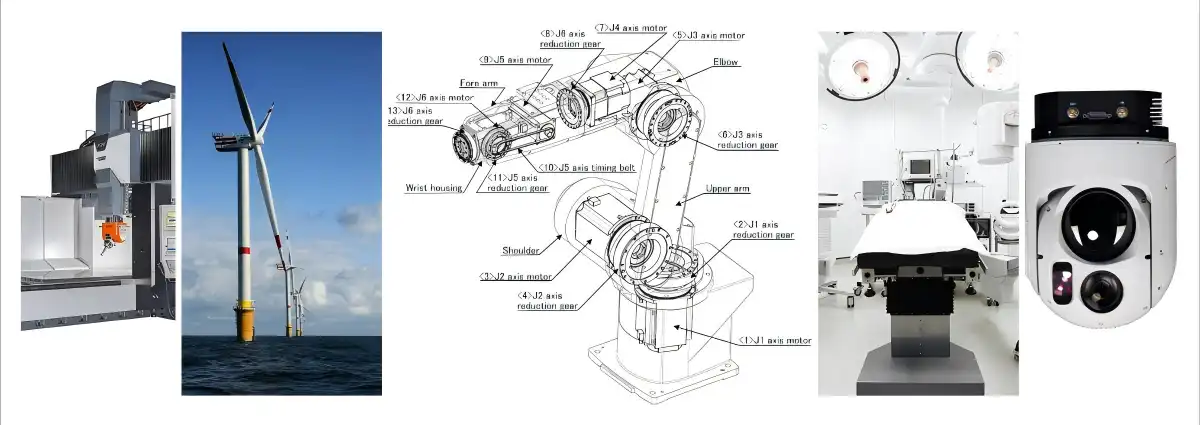
The integrated design, high-grade materials, and precision manufacturing of cross roller bearings make them highly dependable for demanding industrial applications. When sourced from certified manufacturers maintaining ISO 9001 and IATF 16949 standards, these components deliver consistent performance in robotic systems, precision machinery, and medical equipment. Proper selection, matching accuracy grades and load requirements to application demands, combined with systematic maintenance practices, ensures operational lifespans exceeding 20,000 hours. Strategic procurement partnerships with experienced suppliers provide technical support and supply chain stability essential for scaling production. As material science and sensor integration advance, these precision components continue evolving to meet increasingly demanding automation requirements worldwide.
FAQ
What distinguishes the RU28UU from open cross roller bearings?
The UU designation indicates rubber contact seals on both sides, factory-packed with lithium grease. This sealed configuration prevents dust and contaminant entry while retaining lubrication—essential for exposed industrial environments. Open versions suit clean, oil-bath applications where lower friction is prioritized, but the sealed design extends maintenance-free operation from months to over a year in typical manufacturing conditions. The protection significantly reduces failure rates in applications like machining centers, where cutting fluid and metal particles are present.
Can these bearings handle continuous high-speed rotation?
Cross roller bearings are optimized for high rigidity and moment load capacity rather than maximum rotational speed. The large contact area between cylindrical rollers and raceways generates more friction than ball bearings, limiting practical speeds. Consult the DN value (bearing bore diameter in mm multiplied by rotational speed in RPM) specifications—typically recommended below 50,000 for standard lubrication. Applications requiring continuous high-speed rotation benefit more from angular contact or deep groove ball bearings, while intermittent indexing and oscillating motions represent ideal cross roller bearing applications.
How do accuracy grades impact application suitability?
Precision grades from P6 to P2 indicate manufacturing tolerances affecting rotational runout and noise levels. P6 and P0 grades suit general industrial machinery where positioning accuracy requirements are measured in tens of microns. P5 and P4 grades support automation equipment and robotics requiring single-digit micron repeatability. P2 ultra-precision grades meet the demands of measuring instruments and IC manufacturing, where sub-micron positioning is essential. Matching the accuracy grade to actual application requirements prevents over-specification that increases costs without functional benefit.
Partner with ATLYC for Your Cross Roller Bearing Supply Needs
ATLYC stands as a dependable RU28UU Cross roller bearing manufacturer with 15 years of specialized experience serving mid-to-large automotive and industrial equipment manufacturers globally. Our ISO 9001 and IATF 16949 certified facility employs 120 skilled professionals operating six advanced workshops dedicated to precision bearing production. We maintain consistent quality with defect rates below 50 PPM while offering competitive pricing through scalable manufacturing capacity. Technical support teams assist with application engineering, and our established export network ensures reliable lead times to the United States and global markets. Contact our team at auto@lyautobearing.com to discuss your RU28UU Cross roller bearing supplier requirements and discover how our precision manufacturing capabilities support your automation and robotics projects.
References
1. Harris, T. A., & Kotzalas, M. N. (2006). Essential Concepts of Bearing Technology: Rolling Bearing Analysis. CRC Press, Boca Raton, Florida.
2. Witte, D. C. (2012). "Operating Torque of Tapered Roller Bearings," Tribology Transactions, Vol. 16, Issue 1, pp. 61-67.
3. ISO 492:2014. Rolling Bearings – Radial Bearings – Geometrical Product Specifications (GPS) and Tolerance Values. International Organization for Standardization, Geneva.
4. Palmgren, A., & Lundberg, G. (1947). "Dynamic Capacity of Rolling Bearings," Acta Polytechnica Mechanical Engineering Series, Vol. 1, No. 3, Royal Swedish Academy of Engineering Sciences.
5. Hamrock, B. J., Schmid, S. R., & Jacobson, B. O. (2004). Fundamentals of Fluid Film Lubrication. Marcel Dekker, New York.
6. Eschmann, P., Hasbargen, L., & Weigand, K. (1985). Ball and Roller Bearings: Theory, Design and Application. John Wiley & Sons, Chichester, United Kingdom.
Learn about our latest products and discounts through SMS or email