- English
- French
- German
- Portuguese
- Spanish
- Russian
- Japanese
- Korean
- Arabic
- Greek
- German
- Turkish
- Italian
- Danish
- Romanian
- Indonesian
- Czech
- Afrikaans
- Swedish
- Polish
- Basque
- Catalan
- Esperanto
- Hindi
- Lao
- Albanian
- Amharic
- Armenian
- Azerbaijani
- Belarusian
- Bengali
- Bosnian
- Bulgarian
- Cebuano
- Chichewa
- Corsican
- Croatian
- Dutch
- Estonian
- Filipino
- Finnish
- Frisian
- Galician
- Georgian
- Gujarati
- Haitian
- Hausa
- Hawaiian
- Hebrew
- Hmong
- Hungarian
- Icelandic
- Igbo
- Javanese
- Kannada
- Kazakh
- Khmer
- Kurdish
- Kyrgyz
- Latin
- Latvian
- Lithuanian
- Luxembou..
- Macedonian
- Malagasy
- Malay
- Malayalam
- Maltese
- Maori
- Marathi
- Mongolian
- Burmese
- Nepali
- Norwegian
- Pashto
- Persian
- Punjabi
- Serbian
- Sesotho
- Sinhala
- Slovak
- Slovenian
- Somali
- Samoan
- Scots Gaelic
- Shona
- Sindhi
- Sundanese
- Swahili
- Tajik
- Tamil
- Telugu
- Thai
- Ukrainian
- Urdu
- Uzbek
- Vietnamese
- Welsh
- Xhosa
- Yiddish
- Yoruba
- Zulu
RU Series Crossed Roller Bearing: Integrated Ring Benefits
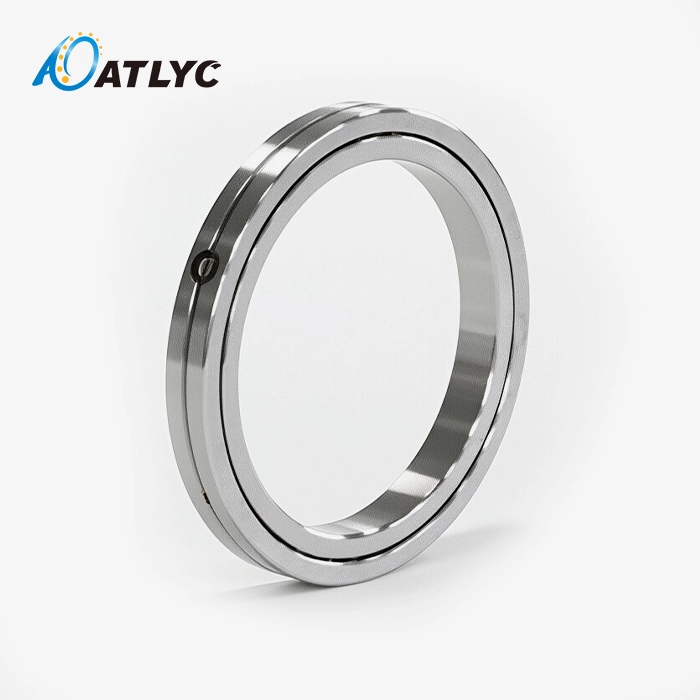
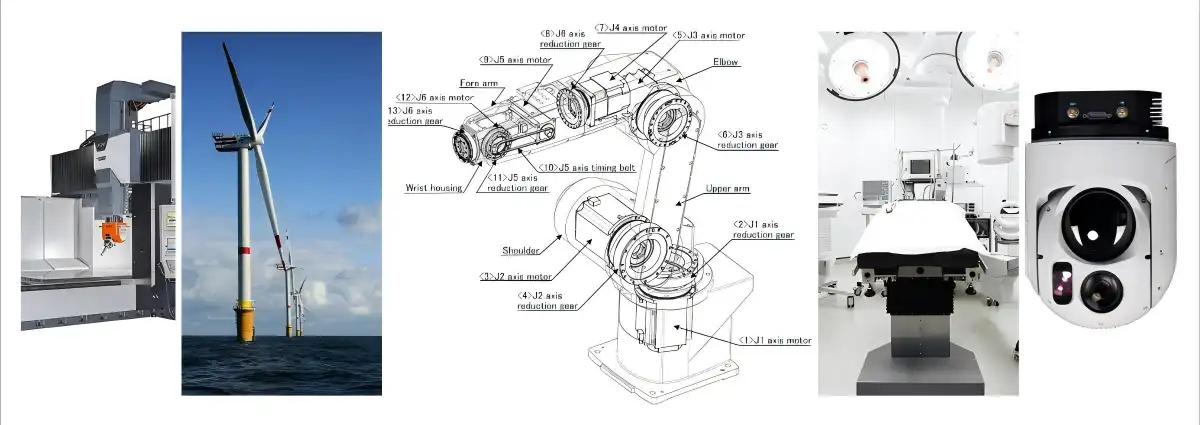
The RU Series Crossed Roller Bearing is a big step forward in combined design when your production line needs bearings that don't have any mounting problems and can handle a lot of weight. This type of bearing has outer and inner rings that are one piece and fastening holes that are pre-drilled at the factory. This lets it be bolted directly to equipment frames without the need for extra housings or flanges. The crossed roller design can handle radial, axial, and moment loads all at the same time in a small unit. This makes it essential for precision automation, robots, and medical equipment that need to meet high performance standards while also being small.
Understanding the RU Series Crossed Roller Bearing and Its Integrated Ring Design
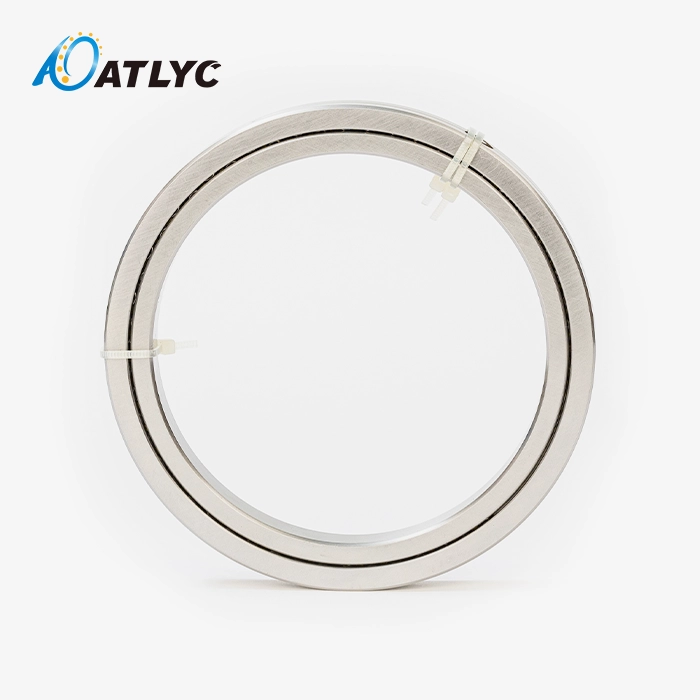
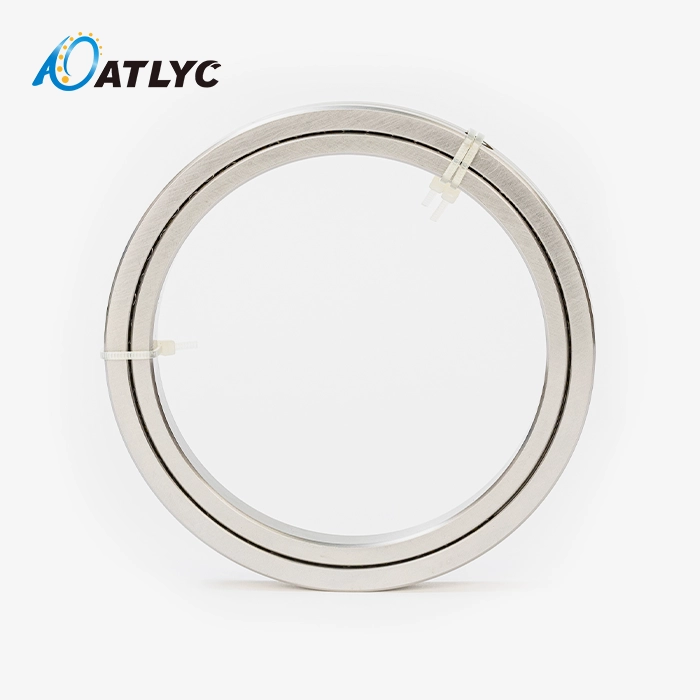
The RU Series Crossed Roller Bearing stands out because it has a special combined ring design that makes it both strong and small. Unlike split-ring designs that need to be carefully aligned during installation, the continuous construction comes precisely set from the factory and is ready to be mounted.
Structural Architecture and Load Distribution
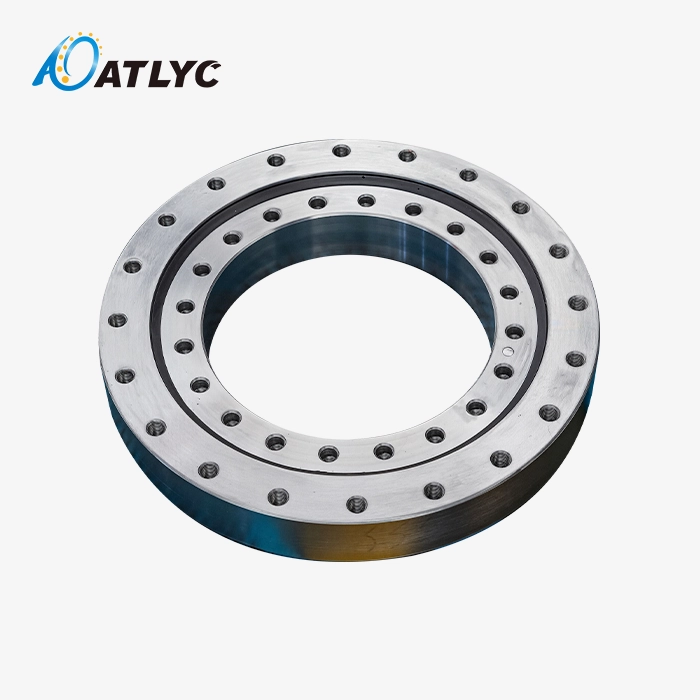
The crossed roller design sets up cylinder-shaped rollers at right angles to each other inside V-shaped raceways that have been ground to a precise thickness. This straight-line setup makes changing load lines that spread forces evenly around the bearing's edge. Precision spacers separate each roller, keeping metal from touching metal and making sure the spinning is smooth, even when the load is uneven. The bearing steel, GCr15 or GCr15SiMn, goes through a special heat treatment to get its hardness to the best range of 58 to 62 HRC. This gives it the wear protection needed for continued use in harsh conditions. These bearings come in a range of sizes, from 20 mm to 1100 mm inside diameter, up to 1500 mm outside diameter, and 12 mm to 110 mm width. This means they can be used for a wide range of application sizes. The built-in fixing holes, which were pre-drilled and checked for accuracy during production, can use standard bolts and get rid of the need to make a custom case. This feature cuts down on the total cost of assembly by getting rid of unnecessary secondary cutting tasks and speeding up the installation process.
Rigidity and Precision Performance
When compared to multi-piece bearing systems, the solid ring structure is much stiffer. When moment loads try to tilt the bearing, the combined design is better at keeping it from deforming than split-ring designs that depend on clamping forces from the outside. This stiffness keeps the contact angles between the wheels and the raceways constant, so the accuracy of the spinning stays the same even when the loads change during operation. Crossed roller bearings with combined rings are reliable choices for precision-driven industries like robots and aircraft, where performance and longevity are very important. They have features like excellent power handling, noise reduction, and long life spans. The low friction coefficient—often 30% less than with ball bearings when the loads are the same—is due to roller shape and surface cleaning that are optimised to lose as little energy as possible while the bearings spin. Runout accuracy classes from P6 (normal industry) to P2 (ultra-precision) can be used for a wide range of tasks, from standard CNC rotary tables to semiconductor chip inspection systems that need to be able to repeat positions within a micron.
Comparing RU Series Crossed Roller Bearings with Other Bearing Types
This section offers a detailed comparative analysis of integrated ring crossed roller bearings versus standard crossed roller, ball bearing, and angular contact bearing configurations. The distinctions matter significantly when procurement decisions impact production uptime and maintenance schedules.
Design Differences and Installation Complexity
When making standard crossed roller bearings, the outer or inner rings are often split to make installing the rollers easier. This method makes it easier to make bearings, but it makes the process of putting them together more complicated. For exact spinning, split rings need to be perfectly aligned and have the same amount of bolt force applied to all of them. During operation, changes in temperature can cause the split ring halves to expand and contract at different rates. This can lead to runout mistakes that lower the accuracy of placement. Because it is built all at once, the RU Series takes away these worries. The single-piece rings stay the same size at temperatures ranging from -30°C to 120°C, which is normal in industrial settings. Installation is as easy as bolting to matching surfaces with the right amount of force. There is no shimming, alignment, or special tools needed. Based on studies of how things are installed in the business, this design's simplicity cuts setup time by about 40% compared to split-ring designs.
Load and Torque Capabilities
Ball bearings perform well for high-speed applications but struggle with moment loads that create point stress concentrations. Angular contact bearings handle combined loads better but require matched pairs and precise preload adjustment to achieve adequate rigidity. The RU Series Crossed Roller Bearing design, by contrast, creates line contact between rollers and raceways, distributing loads across larger surface areas and enabling higher capacity within smaller envelope dimensions. Comparing specific models shows how these benefits work in real life. An RU230 type with an inner diameter of 167mm and an outer diameter of 295mm can handle moment loads of 7.5kN·m, radial loads of over 45kN, and axial loads of close to 35kN. For this kind of performance, you would normally need much bigger ball bearing sets. When the RU240 is scaled up to a 191mm inner circle, it improves capacities by the same amount while keeping the 30mm cross-sectional height that lets small rotary table designs work.
Material Benefits for Industrial Buyers
GCr15 bearing steel that meets AISI 52100 standards has been shown to last in industrial settings as long as the right amount of oil and dirt is kept away. For uses in harsh environments or at very high or low temperatures, GCr15SiMn is better at hardening and keeping its shape after being heated. The choice of material affects the life of the bearing. For example, using the right steel can increase operating life by 25 to 30 percent in highly aggressive settings like those found in food processing or pharmaceutical manufacturing. With this kind of information, B2B clients can figure out which bearing types will work best for their needs in terms of both cost and efficiency. Material approvals and mill test records that come with every batch of bearings make it possible to track them, which is needed by automotive and aircraft OEMs to keep up with IATF 16949 standards for supply chain quality paperwork.
Procurement Insights for RU Series Crossed Roller Bearings
Procurement managers benefit from a comprehensive understanding of sourcing considerations that extend beyond unit pricing. The total cost of ownership encompasses lead times, minimum order quantities, logistics reliability, and after-sales support—factors that separate capable suppliers from truly strategic manufacturing partners.
Sourcing Strategy and Supplier Qualification
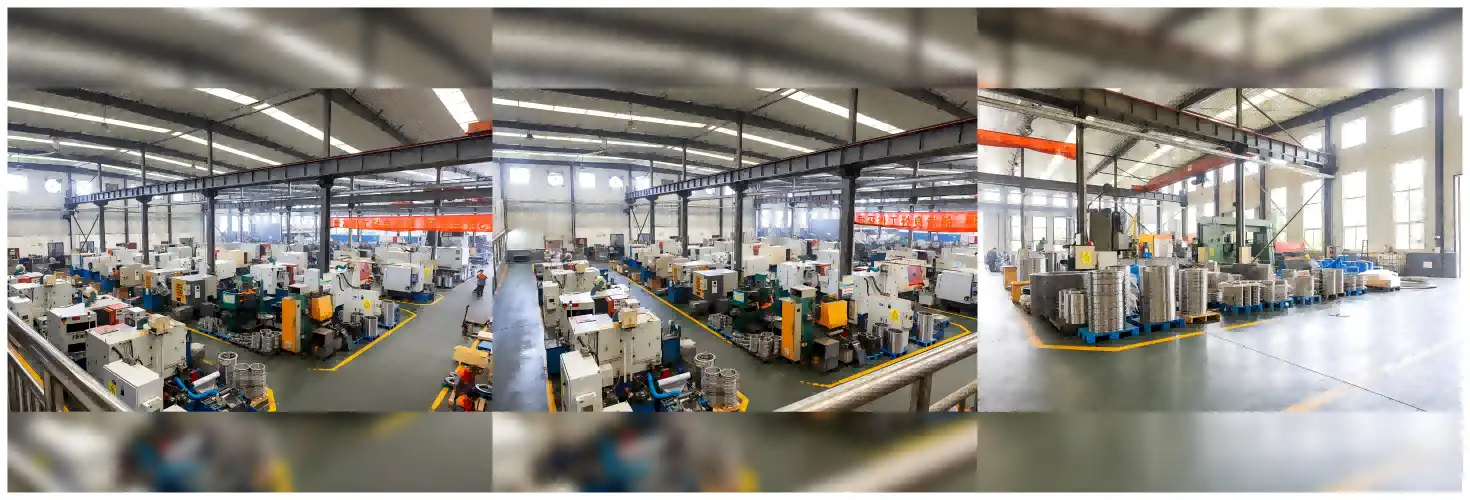
Qualified makers show they can make things by showing the size of their facilities and the certifications they have. ATLYC has 120 trained workers in six specialised workplaces who work on production, quality control, and technical support. Our ISO 9001 and IATF 16949 standards show that our processes are consistent, and our recorded efforts to improve quality all the time show that we are committed to moving quality forward. When looking at possible bearing sources, make sure to check these certifications directly with the organisations that issued them and ask for facility audit reports that show that the company can actually make the bearings, not just what the selling company says. Verification of authenticity is very important in global bearing markets where fake goods make tools less reliable. Crossed roller bearing makers that are doing business legally provide serialised product paperwork that connects each bearing to records of the production batch. Ask for material certificates, physical inspection records, and measures of the surface finish that show that they meet the range grades that were given. ATLYC includes detailed quality paperwork with every package. This makes it easy to track your products throughout the production process and make guarantee claims if problems happen.
Pricing Structures and Order Parameters
Pricing for integrated ring crossed roller bearings varies with precision class, size, and order volume. Standard precision grades (P6, P0) suit general industrial machinery where positioning accuracy requirements remain within ±50 microns. These grades typically carry lower unit costs and shorter lead times, with stock availability for common sizes. High-precision classes (P5, P4, P2) require additional grinding and inspection processes that extend manufacturing time but deliver the sub-10-micron runout accuracy essential for semiconductor equipment and precision measuring instruments. Minimum order quantities reflect the economic realities of precision manufacturing. Custom-sized bearings or non-standard precision classes may require minimum orders of 10-20 pieces to justify setup costs, while standard catalog items often ship in single quantities. Lead times range from two weeks for stock items to eight weeks for custom specifications requiring dedicated production runs. Global logistics options through established freight forwarders ensure predictable delivery to facilities in the USA, Germany, South Korea, and other major manufacturing regions. Container consolidation services accommodate smaller orders while optimizing freight costs.
After-Sales Services and Technical Support
International B2B clients demand reliability and supply chain transparency that extends beyond initial delivery. Technical support capabilities differentiate strategic suppliers from transactional vendors. Engineers with application experience provide bearing selection guidance, helping match specific models to your load conditions, speed requirements, and environmental factors. This consultation prevents over-specification that increases costs unnecessarily while avoiding under-specification that leads to premature failures and unplanned downtime. Warranty protocols covering material defects and manufacturing nonconformities provide recourse when issues occur. Standard warranty periods of 12-18 months from shipment date align with typical machinery commissioning timelines. Expedited replacement programs minimize production disruptions by shipping substitute bearings via air freight while defect analysis proceeds. Maintaining adequate spare inventory—typically 5-10% of installed bearing population—balances carrying costs against downtime risks for critical production equipment.
Maintenance and Longevity of RU Series Crossed Roller Bearings
To maximize bearing lifespan and maintain consistent performance, implementing structured maintenance protocols proves essential. Crossed roller bearings operating in precision applications require different care than general-purpose radial ball bearings, with specific attention to lubrication, contamination control, and periodic inspection.
Lubrication Practices for Optimal Performance
Proper lubrication of the RU Series Crossed Roller Bearing minimizes friction, dissipates heat, and prevents corrosive attack on bearing surfaces. The RU Series typically employs grease lubrication for simplicity and contamination resistance, though oil lubrication suits high-speed or high-temperature applications. Lithium-based greases with molybdenum disulfide additives provide excellent load-carrying capacity and water resistance for general industrial environments. Synthetic greases extend relubrication intervals in applications where maintenance access limitations make frequent servicing impractical. Relubrication frequency depends on operating conditions. Bearings running continuously at moderate speeds (10-50 RPM) in clean environments typically require greasing every 2000-3000 operating hours. Higher speeds, elevated temperatures, or contaminated atmospheres shorten intervals proportionally. Over-greasing increases operating torque and churning losses, potentially causing a temperature rise that accelerates grease degradation. Purge ports on equipment housings allow fresh grease introduction while expelling aged lubricant—a design feature worth specifying during machinery design phases.
Inspection Procedures and Wear Indicators
Regular inspections identify developing issues before catastrophic failures occur. Visual examination during scheduled maintenance reveals grease condition, with discoloration or consistency changes indicating contamination or thermal degradation. Operating temperature monitoring detects lubrication breakdown or abnormal loading conditions—temperature increases exceeding 15-20°C above baseline warrant immediate investigation. Noise and vibration characteristics provide early warning of bearing distress. Smooth-running crossed roller bearings produce minimal audible noise and consistent vibration signatures. Grinding sounds indicate roller-to-spacer contact from inadequate lubrication or contamination. Rhythmic clicking suggests roller spacing irregularities or raceway surface damage. Vibration analysis using accelerometers mounted near bearing locations quantifies condition changes, enabling predictive maintenance scheduling that prevents unplanned downtime.
Environmental Factors Impacting Durability
The operating environment significantly influences bearing longevity. Contamination from metal particles, abrasive dust, or corrosive fluids accelerates wear and reduces service life dramatically. Effective sealing systems keep contaminants away from rolling elements while retaining lubricant within the bearing zone. Labyrinth seals provide non-contact protection suitable for high-speed applications, while contact seals offer superior contamination exclusion in harsh environments despite slightly increased friction. Temperature extremes affect both bearing materials and lubricants. Sustained operation above 100°C accelerates lubricant oxidation and reduces viscosity, compromising the protective film between rolling surfaces. Sub-zero temperatures increase lubricant consistency, raising starting torque and potentially causing inadequate film formation during initial rotation. Selecting bearing configurations and lubrication appropriate for your specific temperature range ensures reliable performance throughout operational envelopes.
Why Choose RU Series Crossed Roller Bearings?
Highlighting core advantages reveals why engineering and procurement teams increasingly specify integrated ring designs for critical applications. The benefits extend beyond technical specifications to impact total cost of ownership, installation schedules, and long-term reliability.
Structural Integrity and Load Distribution
The integrated ring design of the RU Series Crossed Roller Bearing enhances structural integrity through monolithic construction that eliminates joints and potential weak points. When moment loads attempt to tilt the bearing axis, the continuous ring structure resists deformation uniformly. This characteristic maintains precise roller-to-raceway contact geometry even under dynamic loading conditions encountered in robotic arm movements or CNC rotary table indexing. Load distribution across the crossed roller array creates balanced stress patterns that extend component life. Alternating roller orientations mean radial forces engage one roller set while axial forces activate the perpendicular set simultaneously. This distribution prevents stress concentration found in single-row bearings where all rolling elements share identical load vectors. The result appears in extended L10 fatigue life—the operating duration before 10% of bearings show material fatigue, often exceeding 30,000 hours under rated loads.
Installation Simplification and Assembly Time Reduction
Simplified assembly resulting from pre-drilled mounting holes eliminates custom housing fabrication and complex alignment procedures. Installation involves straightforward bolting to equipment mounting surfaces with torque specifications provided in bearing documentation. This simplicity reduces skilled labor requirements, allowing technicians with standard mechanical training to complete bearing installation reliably. Assembly time reductions of 40-50% compared to housed bearing units translate directly into lower equipment commissioning costs and faster production line startups.
Reduced downtime during maintenance or bearing replacement amplifies these advantages throughout the equipment lifecycle. When bearing replacement becomes necessary, the integral mounting interface ensures replacement bearings bolt directly into existing locations without shimming or alignment adjustments. Maintenance windows shorten from hours to minutes, minimizing production interruptions and improving overall equipment effectiveness (OEE) metrics that drive manufacturing profitability.
Precision and Repeatability for High-End Manufacturing
The precision and repeatability provided by crossed roller bearings with integrated rings deliver measurable value for high-end manufacturing processes. Runout accuracy directly impacts workpiece quality in machining operations, finished product consistency in automated assembly, and measurement reliability in inspection systems. P5 precision class bearings limit radial runout to 5 microns, enabling CNC machining tolerances below 10 microns. P4 and P2 classes push accuracy into sub-micron ranges required for semiconductor lithography equipment and coordinate measuring machines.
Practical selection criteria guide bearing specification decisions. Match precision class to application requirements—over-specification increases costs without commensurate performance gains, while under-specification compromises quality and accelerates wear. Consider load characteristics including magnitude, direction, and duty cycle. Account for speed limitations based on bearing size and lubrication method. Environmental factors, including temperature, contamination exposure, and atmospheric conditions, influence material selection and sealing requirements.
Conclusion
The RU Series Crossed Roller Bearing with integrated ring design addresses critical pain points facing modern precision manufacturing: space constraints, installation complexity, and rigorous performance requirements. By eliminating separate housings and enabling direct mounting through factory-drilled holes, these bearings reduce assembly time and costs while maintaining exceptional load capacity and rotational accuracy. The crossed roller arrangement handles multi-directional forces within compact envelopes, making them indispensable for robotics, automation equipment, and precision instrumentation.
Procurement decisions benefit from understanding the total value proposition—not merely unit pricing but lifecycle costs, including installation labor, maintenance intervals, and reliability. ATLYC's 15-year manufacturing heritage, ISO 9001 and IATF 16949 certifications, and global supply experience provide the foundation for strategic partnerships with automotive OEMs, industrial machinery builders, and bearing distributors across North America, Europe, and Asia. Selecting the right bearing supplier impacts your production efficiency and product quality for years beyond the initial purchase decision.
FAQ
What distinguishes RU Series integrated ring bearings from standard split-ring designs?
RU Series bearings feature monolithic inner and outer rings manufactured as single pieces with factory-drilled mounting holes. This construction eliminates alignment challenges and tolerance stack-up issues inherent in split-ring designs requiring assembly precision. The integrated structure provides superior rigidity and dimensional stability across temperature variations, maintaining rotational accuracy without external clamping forces.
How do I verify authentic bearings from qualified manufacturers?
Request comprehensive quality documentation, including material certifications, dimensional inspection reports, and production batch traceability. Verify supplier certifications directly with ISO registrars rather than relying solely on certificate copies. Qualified manufacturers like ATLYC provide serialized products linked to production records and maintain transparent facility audit histories available to prospective customers.
What maintenance intervals optimize bearing performance and longevity?
Relubrication intervals depend on operating conditions. Clean environments with moderate speeds (10-50 RPM) typically require greasing every 2000-3000 hours. Higher speeds, elevated temperatures above 80°C, or contaminated atmospheres reduce intervals to 500-1000 hours. Monitor operating temperature and vibration signatures—changes exceeding 15-20°C or developing abnormal noise indicate immediate inspection needs regardless of elapsed time.
Partner with ATLYC for Your Precision Bearing Requirements
ATLYC combines 15 years of specialized manufacturing expertise with comprehensive quality systems to serve as your strategic RU Series Crossed Roller Bearing supplier. Our six dedicated production workshops and 120 skilled technical staff ensure consistent delivery of high-precision bearings meeting ISO 9001 and IATF 16949 standards. We understand the challenges facing automotive component manufacturers, industrial equipment OEMs, and bearing distributors requiring stable supply chains with predictable lead times.
Contact our engineering team at auto@lyautobearing.com to discuss your specific application requirements and receive technical consultation on bearing selection. We provide detailed specifications, competitive pricing structures reflecting volume commitments, and logistics coordination ensuring timely delivery to your facilities. Our global supply experience serving customers across the USA, Germany, South Korea, and emerging markets positions us to support your international operations with consistent quality and reliable availability. Request your quotation today and discover how ATLYC's precision-manufactured bearings enhance your equipment performance while reducing total ownership costs.
References
1. Harris, T.A. and Kotzalas, M.N. (2006). "Advanced Concepts of Bearing Technology: Rolling Bearing Analysis." CRC Press, Fifth Edition.
2. ISO 199:2014. "Rolling Bearings – Thrust Bearings – Geometrical Product Specifications (GPS) and Tolerance Values." International Organization for Standardization.
3. Wensing, J.A. (1998). "On the Dynamics of Ball Bearings." PhD Dissertation, University of Twente, Netherlands.
4. SKF Group. (2018). "Rolling Bearings Catalogue: Crossed Roller Bearings Design and Application Guidelines." SKF Industrial Division Technical Manual.
5. American Bearing Manufacturers Association. (2020). "Load Ratings and Fatigue Life for Ball and Roller Bearings." ABMA Standard 9-1990 (R2020).
6. Khonsari, M.M. and Booser, E.R. (2017). "Applied Tribology: Bearing Design and Lubrication." John Wiley & Sons, Third Edition.
Learn about our latest products and discounts through SMS or email