- English
- French
- German
- Portuguese
- Spanish
- Russian
- Japanese
- Korean
- Arabic
- Greek
- German
- Turkish
- Italian
- Danish
- Romanian
- Indonesian
- Czech
- Afrikaans
- Swedish
- Polish
- Basque
- Catalan
- Esperanto
- Hindi
- Lao
- Albanian
- Amharic
- Armenian
- Azerbaijani
- Belarusian
- Bengali
- Bosnian
- Bulgarian
- Cebuano
- Chichewa
- Corsican
- Croatian
- Dutch
- Estonian
- Filipino
- Finnish
- Frisian
- Galician
- Georgian
- Gujarati
- Haitian
- Hausa
- Hawaiian
- Hebrew
- Hmong
- Hungarian
- Icelandic
- Igbo
- Javanese
- Kannada
- Kazakh
- Khmer
- Kurdish
- Kyrgyz
- Latin
- Latvian
- Lithuanian
- Luxembou..
- Macedonian
- Malagasy
- Malay
- Malayalam
- Maltese
- Maori
- Marathi
- Mongolian
- Burmese
- Nepali
- Norwegian
- Pashto
- Persian
- Punjabi
- Serbian
- Sesotho
- Sinhala
- Slovak
- Slovenian
- Somali
- Samoan
- Scots Gaelic
- Shona
- Sindhi
- Sundanese
- Swahili
- Tajik
- Tamil
- Telugu
- Thai
- Ukrainian
- Urdu
- Uzbek
- Vietnamese
- Welsh
- Xhosa
- Yiddish
- Yoruba
- Zulu
Why Use RU Series Crossed Roller Bearing in Automation?
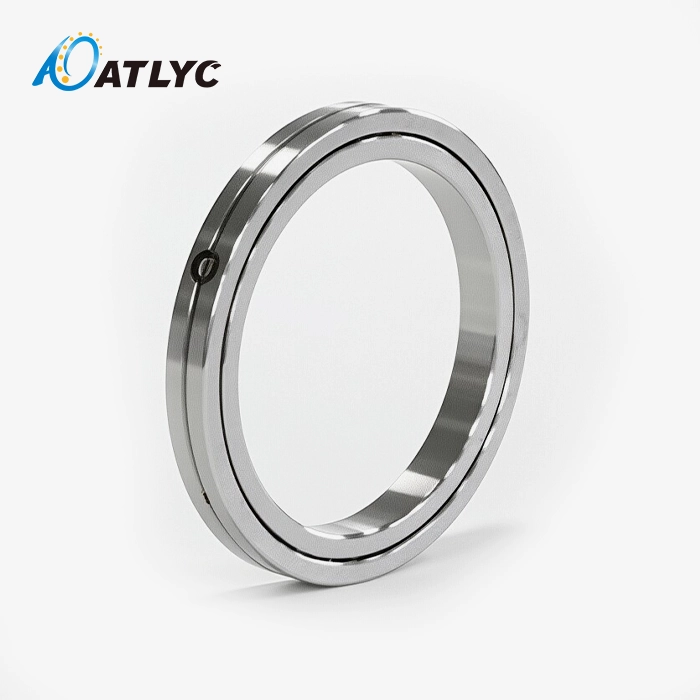
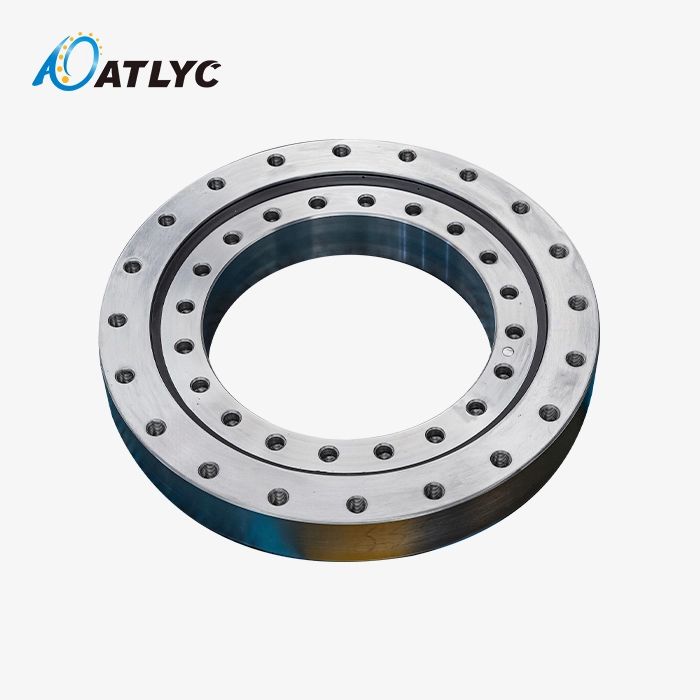
Modern machinery needs bearing solutions that can keep their precision even when loads are applied in multiple directions and can fit into equipment sizes that are getting smaller. The RU Series Crossed Roller Bearing solves this problem because its outer and inner rings are built into one piece and have fastening holes already made, so it can be installed directly without the need for extra housings. This design handles radial, axial, and moment loads all at the same time in a single small unit. It keeps its high level of rotational accuracy even when faced with complex force vectors that are common in robotic joints, precision rotary stages, and equipment used to make semiconductors.
Understanding the RU Series Crossed Roller Bearing
The research that went into making these bearings is the result of decades of improving precise motion control. In contrast to normal ball bearings, which focus contact stress at specific points, the crossed roller design spreads forces across line contact surfaces, greatly increasing the load capacity within the same envelope dimensions.
What Makes the Crossed Roller Design Unique
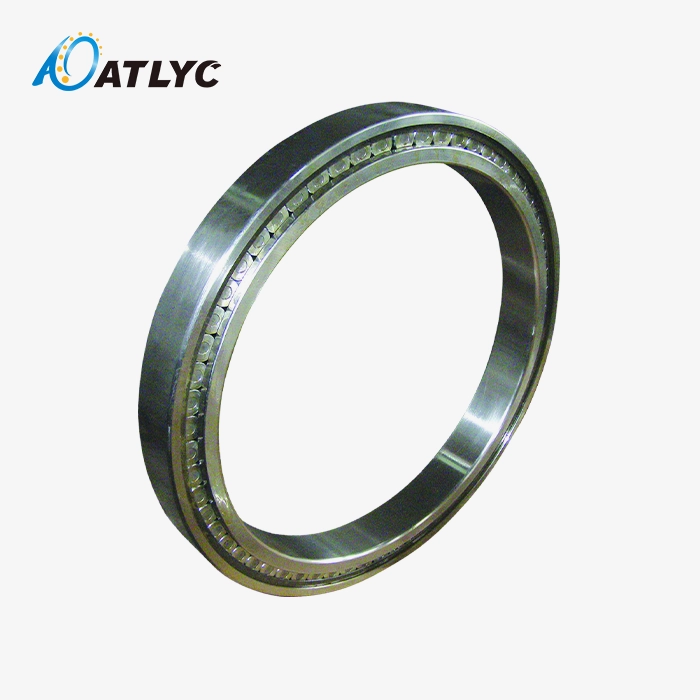
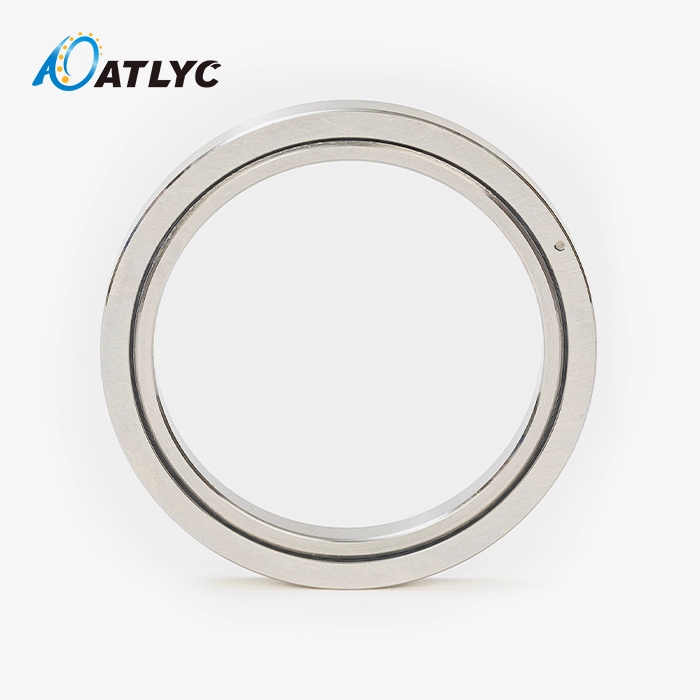
At 90-degree intervals, cylindrical rollers are set up perpendicular to each other in V-shaped raceways that are cut into the inner and outer rings that are one piece. Precision spacers separate wheels that are next to each other. This keeps metal from touching metal and makes sure that the load is evenly spread around the whole bearing. With this setup, a rigid frame is made that can handle complex pressure conditions that would be too much for most bearing types. The complete ring design gets rid of the tolerance stack-up issues that come up with systems with more than one part. When you bolt the bearing directly to the machine frame through the mounting holes that have already been cut, you get rid of any possible sources of inaccuracy that could affect the accuracy of the spin. This easier way of installing cuts down on the time it takes to put together and the chance of making a mistake while the equipment is being set up.
Material Composition and Manufacturing Standards
Steel that is high in carbon and chrome is the basis for solid performance. GCr15 and GCr15SiMn metals go through controlled heat treatment processes that make them hard enough to fight wear on the surface and tough enough to handle shock loads without breaking. Then, precise grinding processes set the shape of the raceways and the quality of the surface finish, which directly affects how smooth they run and how much runout there is. Inside diameters run from 20 mm to 1,100 mm, outside diameters from 70 mm to 1,500 mm, and widths from 12 mm to 110 mm. This wide range of dimensions can be used for everything from small medical tools to big industrial spinning tables. It gives buying teams options that can be scaled up or down to fit different automation platforms.
Comparing RU Series Crossed Roller Bearings with Other Solutions
When selecting rotating parts, equipment makers have a lot of bearing choices. When engineering teams know how different technologies work in the real world, they can make decisions that balance the original cost with the value over the product's lifetime.
Performance Against Standard Ball Bearings
To handle joint loads, angular contact ball bearings need complicated loading arrangements and matched designs. Even so, the moment load capacity is still lower than with crossed roller options. Because ball bearings have point contacts, there is more contact stress, which speeds up wear rates when they are used continuously. In situations with extended loads or a shifted center of gravity, normal ball bearings will have trouble staying in the right place. Crossed roller bearings get around these problems with their line contact shape and built-in structure. Instead of several ball bearings, thrust washers, and complicated loading systems, a single block is used. This merging cuts down on the number of parts needed, makes it easier to keep track of supplies, and makes the total assembly package smaller.
Advantages Over Slewing Ring Bearings
Because they are designed with gears built in, slewing ring bearings are best for uses with very large diameters, but they are less stiff. The process of cutting gears makes structural sacrifices that lower the accuracy of the runout that can be achieved. Large fastener designs are often needed for mounting, which makes fitting harder and costs more in labour. When crossed roller versions are mounted on the face, they have a similar load capacity but better stability. These bearings are perfect for precise uses where rotational accuracy has a direct effect on product quality because they give you better positional accuracy without the complexity of integrating gears.
How ATLYC Ensures Competitive Quality
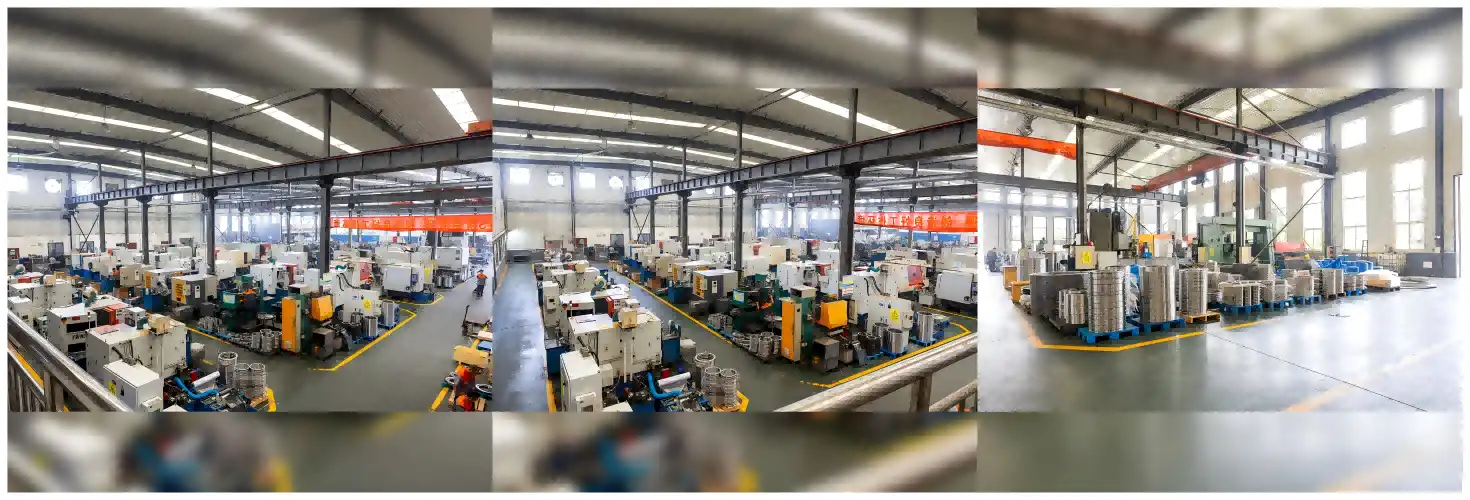
In its 15 years of existence, Luoyang Auto Bearing Co., Ltd. has spent money to improve its production skills so that they meet foreign quality standards. The company has ISO 9001 and IATF 16949 certificates, which show that they are committed to uniform production methods and methods for ongoing growth. These licenses give procurement workers clear proof of a mature quality system. This is especially important when setting up long-term supply relationships for important motion control parts. In 2010, the production facilities for RU Series Crossed Roller Bearing expanded from a single workshop to six specialized areas, each dedicated to manufacturing different bearing types. This growth has developed expertise in high-precision machining, controlled heat treatment, and rigorous quality inspection. A team of 120 skilled workers oversees production, quality control, and assembly, ensuring that every bearing meets required standards before shipment.
Key Specifications and Installation for RU Series Bearings
Technical paperwork helps you choose the right parts and put them together correctly. What makes a bearing good for a certain job is its dimensional accuracy, load rates, and precision class standards.
Dimensional Parameters and Tolerance Classes
Bearing accuracy grades go from P6 (for general industrial use) to P0, P5, P4, and finally P2 (for very precise tasks). With each grade, there is more precise control over the shape of the track, the difference in the roller width, and the runout features of the whole assembly. Choosing the right accuracy class combines cost and application needs. For example, P4 or P2 grades are needed to handle semiconductor wafers, while P5 or P0 grades are fine for basic industry rotary tables. In thorough measurement sheets, you can find information about the inner and outer circle limits as well as the width differences. These measurements work with the limits of the parts that go with them to determine how well the whole system works. When describing fits, engineering teams need to take thermal expansion factors into account. This is especially important for uses that experience big changes in temperature during operation.
Installation Best Practices
The function and life of a bearing are directly affected by how it is mounted. Compared to housed bearing units, the combined ring structure with pre-drilled holes makes installation easier. However, there are still a few important steps that must be taken to get the best results. Before putting them together, clean all of the connecting surfaces very well to get rid of any burrs, rust, or other junk that could cause high spots that make it hard for the load to be distributed evenly. Check the flatness of the bearing surface with precision straight lines or scale markers. Deviations in the surface focus loads at specific roller points, which speed up wear and lower accuracy. The thread contact depth in the fixing holes needs to be high enough to provide enough tightening force without distorting the ring. Tighten nuts using measured torque tools in a cross-pattern process that gets closer and closer to the final torque values over several passes. This method keeps the sitting pressure the same around the whole bearing circle.
Lubrication and Maintenance Requirements
Enough oil keeps the surfaces of rolling contacts from wearing down and controls the heat that is made by friction. Lithium-based grease that is appropriate for the projected working temperature range is usually used for the first greasing. When you buy sealed bearings, they stay oiled from the factory for the whole time they're working. This means you don't have to do any upkeep, even in dirty places where relubrication could let particles in. Open bearing designs need to be re-oiled on a regular basis, depending on how they are being used. Lubricants wear out faster in high-speed uses or places with high temperatures, so they need to be serviced more often. If the working area is dirty, check processes may need to be done more often to make sure the seals are still good and to find early signs of oil contamination.
Use Cases and Applications of RU Series in Automation
Understanding how bearings perform in actual production environments helps procurement teams evaluate long-term value beyond initial purchase price.
Industrial Robot Joint Applications
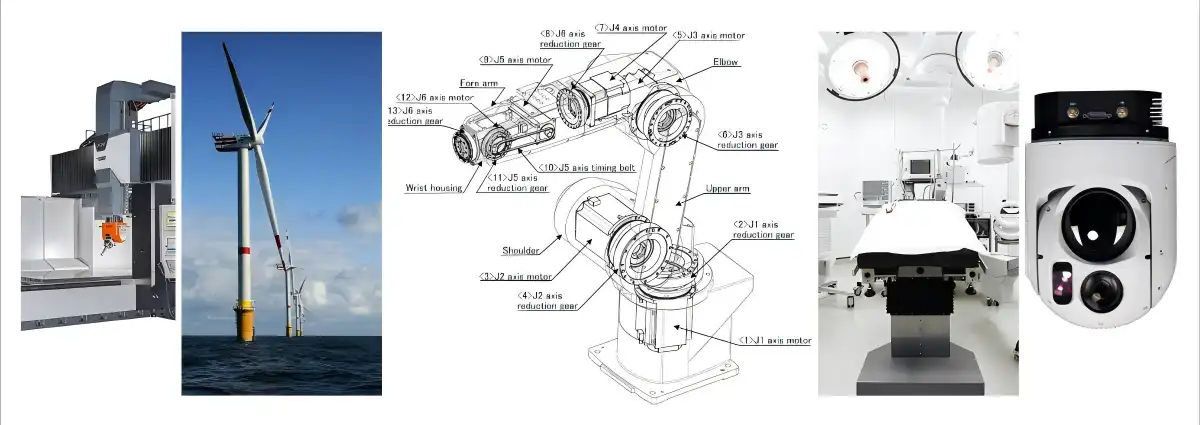
Six-axis articulated robots position the RU bearing design at critical rotation points where moment loads combine with dynamic acceleration forces. The shoulder and waist axes experience particularly demanding conditions—extended arm positions create substantial moment loads while rapid trajectory changes impose cyclic stress patterns. The crossed roller configuration of the RU Series Crossed Roller Bearing maintains positional accuracy despite complex loading conditions. Robotic cycle time improvements become possible when joint bearings deliver consistent performance without requiring frequent calibration adjustments. Production line downtime decreases when bearing service life extends beyond typical maintenance intervals, protecting manufacturers from unexpected equipment failures during peak production periods.
Precision Machining Center Rotary Tables
CNC machining centers depend on rotary table accuracy to maintain workpiece positioning throughout multi-axis operations. Any bearing deflection under cutting loads translates directly into dimensional errors on finished components. The high rigidity characteristics of face-mount crossed roller bearings resist these deflection forces, preserving positional accuracy even when heavy cutting forces attempt to displace the workpiece. The compact envelope dimensions prove particularly valuable in machining center applications where workspace limitations constrain equipment design. You can achieve the required load capacity and accuracy in a smaller package compared to traditional bearing arrangements, allowing machine tool builders to optimize overall equipment footprints without compromising performance.
Semiconductor Manufacturing Equipment
Wafer handling systems, inspection stages, and lithography equipment operate under extreme precision requirements. Positioning errors measured in micrometers disqualify entire wafer batches, making bearing performance directly impact production yield rates. The exceptional runout accuracy available in P4 and P2 precision grades meets these stringent requirements, enabling semiconductor manufacturers to maintain the tight process control necessary for advanced node production. Cleanroom compatibility represents another critical consideration in semiconductor applications. Sealed bearing variants prevent particle generation from internal components while blocking external contamination ingress. This protection maintains the pristine operating environment essential for defect-free wafer processing.
Medical Imaging Equipment
CT scanners and X-ray positioning arms rely on smooth, vibration-free rotation to maintain image quality. The low friction coefficient inherent in optimized roller geometry translates into consistent torque characteristics throughout the rotation cycle. Patients experience reduced scan times when equipment moves smoothly between imaging positions without jerky motions or positioning delays. Moment load capacity becomes particularly important in C-arm configurations where heavy imaging components extend from the rotation axis. Traditional bearing arrangements would require substantial support structures to manage these cantilever loads, increasing equipment weight and inertia. Crossed roller bearings consolidate load management within a single compact unit, enabling elegant equipment designs that balance functionality with patient accessibility.
Procurement and After-Sales Considerations for RU Series Bearings
Strategic sourcing decisions extend beyond technical specifications to encompass supply chain reliability, total cost of ownership, and long-term support availability.
Evaluating Supplier Capabilities
Manufacturing scale for RU Series Crossed Roller Bearing directly impacts a supplier's ability to maintain consistent quality and meet delivery commitments during demand fluctuations. ATLYC's six production workshops provide capacity redundancy that protects customers from supply disruptions—if one production line experiences equipment issues, alternative capacity absorbs the workload without delaying customer deliveries. Quality certifications offer objective evidence of process maturity. ISO 9001 certification demonstrates documented procedures for controlling production variables, while IATF 16949 certification specifically addresses automotive industry quality requirements, including rigorous statistical process control and continuous improvement methodologies. These certifications reduce procurement risk by confirming suppliers maintain systems capable of delivering consistent quality across high-volume production runs.
Understanding Total Cost of Ownership
The initial purchase price represents only one component of bearing lifecycle costs. Service life expectancy, maintenance requirements, and failure consequences combine to determine true economic value. Extended bearing life reduces replacement part consumption and cuts maintenance labor costs, while predictable performance protects production schedules from unexpected downtime events. The simplified installation characteristics of face-mount designs reduce initial assembly labor compared to housed bearing units, requiring precise alignment and complex preload adjustments. This efficiency advantage compounds across large equipment fleets where maintenance teams service multiple machines—labor savings accumulate quickly when each bearing replacement requires fewer person-hours to complete.
Technical Support and Customization Options
Application engineering assistance helps procurement teams optimize bearing selection for specific operating conditions. Experienced technical staff can recommend appropriate precision grades, suggest lubrication strategies for unusual environments, and identify potential design improvements that enhance overall equipment performance. Customization capabilities address specialized requirements that standard catalog products cannot accommodate. Modified mounting hole patterns, special seal configurations, or alternative materials expand application possibilities while leveraging proven base designs. OEM customers particularly value this flexibility when developing proprietary equipment that differentiates their offerings in competitive markets.
Conclusion
The RU Series Crossed Roller Bearing delivers measurable advantages for automation applications demanding multi-directional load capacity, exceptional accuracy, and compact integration. Its integral ring structure with pre-drilled mounting holes simplifies installation while eliminating tolerance stack-up issues common in multi-component assemblies. Available precision grades from P6 through P2 accommodate applications ranging from general industrial use to ultra-precision semiconductor manufacturing equipment. Selecting reliable suppliers with demonstrated manufacturing capabilities and quality certifications protects procurement investments. ATLYC combines 15 years of bearing production experience with ISO 9001 and IATF 16949 certified quality systems, providing global customers with consistent supply reliability across automotive, industrial machinery, and precision automation sectors.
FAQ
What advantages does the crossed roller bearing offer over angular contact ball bearings in robotic applications?
Crossed roller bearings handle radial, axial, and moment loads simultaneously within a single compact unit, whereas angular contact ball bearings require complex paired arrangements to manage combined loads. The line contact geometry of rollers distributes forces more evenly than point contact ball designs, resulting in higher load capacity and superior rigidity within comparable envelope dimensions.
How do I determine the appropriate precision grade for my application?
Match precision grade to application accuracy requirements and operating speeds. P6 and P0 grades suit general industrial machinery where moderate accuracy suffices. P5 grades serve precision machine tools and automation equipment requiring tighter runout control. P4 and P2 grades address ultra-precision applications like semiconductor manufacturing and metrology equipment, where positioning errors directly impact product quality.
What factors influence bearing service life in continuous operation environments?
Load magnitude relative to rated capacity, operating speed, lubrication adequacy, contamination exposure, and temperature extremes all affect service life. Maintaining loads below 50% of rated capacity, ensuring proper lubrication intervals, protecting against particle contamination, and avoiding temperature excursions beyond specified limits extend operational life significantly.
Partner with ATLYC for Your Precision Bearing Requirements
ATLYC manufactures high-precision crossed roller bearings that meet the demanding requirements of modern automation equipment. Our ISO 9001 and IATF 16949 certified production facilities deliver consistent quality across order volumes from prototype quantities to high-volume production runs. As an established RU Series Crossed Roller Bearing supplier serving customers in the United States, Germany, South Korea, and other global markets, we understand the supply chain reliability and technical support expectations of mid-to-large OEMs and industrial equipment manufacturers. Contact our engineering team at auto@lyautobearing.com to discuss your specific application requirements, request technical documentation, or obtain quotations for standard and customized bearing solutions.
References
1. Harris, T.A. and Kotzalas, M.N. "Advanced Concepts of Bearing Technology: Rolling Bearing Analysis, Fifth Edition." CRC Press, 2006.
2. Schaeffler Technologies AG & Co. "Rolling Bearings: Catalogue HR 1, Geometry and Design Principles." Schaeffler Group Industrial Division, 2018.
3. ISO 492:2014. "Rolling Bearings – Radial Bearings – Geometrical Product Specifications (GPS) and Tolerance Values." International Organization for Standardization.
4. Xu, H. and Zhang, L. "Load Distribution Analysis and Contact Stress Calculation of Crossed Roller Bearings." Journal of Mechanical Engineering Science, Vol. 233, Issue 12, 2019.
5. Weck, M. and Brecher, C. "Machine Tools: Design and Operation of Production Machines – Crossed Roller Bearing Applications in Rotary Tables." Springer-Verlag, 2010.
6. IATF 16949:2016. "Quality Management System Requirements for Automotive Production and Relevant Service Parts Organizations." International Automotive Task Force.
Learn about our latest products and discounts through SMS or email