- English
- French
- German
- Portuguese
- Spanish
- Russian
- Japanese
- Korean
- Arabic
- Greek
- German
- Turkish
- Italian
- Danish
- Romanian
- Indonesian
- Czech
- Afrikaans
- Swedish
- Polish
- Basque
- Catalan
- Esperanto
- Hindi
- Lao
- Albanian
- Amharic
- Armenian
- Azerbaijani
- Belarusian
- Bengali
- Bosnian
- Bulgarian
- Cebuano
- Chichewa
- Corsican
- Croatian
- Dutch
- Estonian
- Filipino
- Finnish
- Frisian
- Galician
- Georgian
- Gujarati
- Haitian
- Hausa
- Hawaiian
- Hebrew
- Hmong
- Hungarian
- Icelandic
- Igbo
- Javanese
- Kannada
- Kazakh
- Khmer
- Kurdish
- Kyrgyz
- Latin
- Latvian
- Lithuanian
- Luxembou..
- Macedonian
- Malagasy
- Malay
- Malayalam
- Maltese
- Maori
- Marathi
- Mongolian
- Burmese
- Nepali
- Norwegian
- Pashto
- Persian
- Punjabi
- Serbian
- Sesotho
- Sinhala
- Slovak
- Slovenian
- Somali
- Samoan
- Scots Gaelic
- Shona
- Sindhi
- Sundanese
- Swahili
- Tajik
- Tamil
- Telugu
- Thai
- Ukrainian
- Urdu
- Uzbek
- Vietnamese
- Welsh
- Xhosa
- Yiddish
- Yoruba
- Zulu
How to choose the right RA series cross roller bearing for CNC machines?
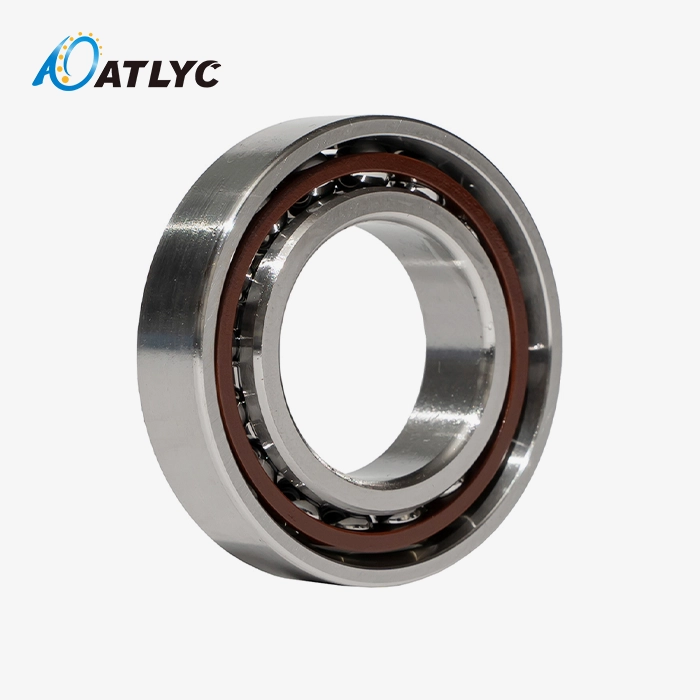
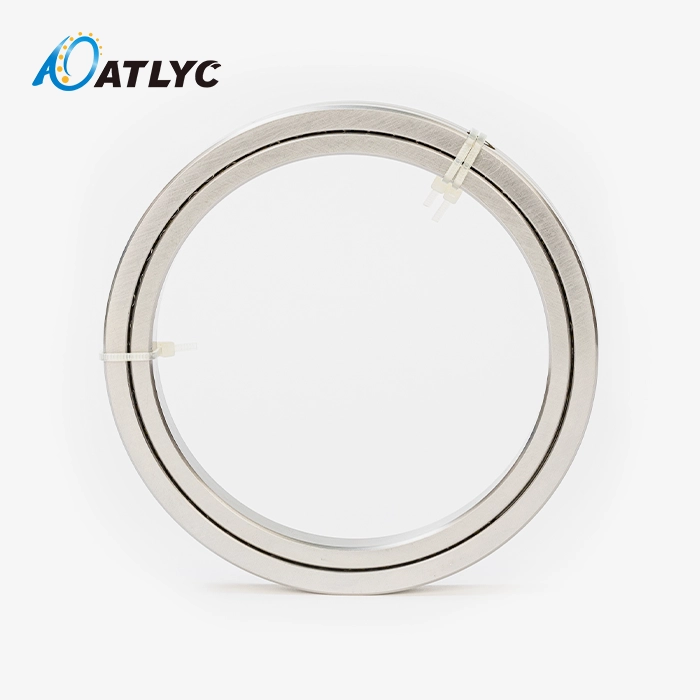
Before you can choose the right Cross roller bearing RA series for your CNC machinery, you need to know what it needs to do its job. These very small precision bearings can handle radial, axial, and moment loads all in one housing. This makes them essential for uses with limited space that need high rigidity. As part of the decision process, you will look at your machine's load profile, size limitations, accuracy needs, and working conditions. We've seen a lot of engineers have trouble choosing the right bearings, which leads to early breakdowns and expensive downtime. You can get the most accurate cutting while also stretching the life of your equipment and lowering its total cost of ownership by making sure that the bearings you buy meet the performance requirements of your CNC machine. This includes things like load capacity, rotational accuracy, and thermal stability.
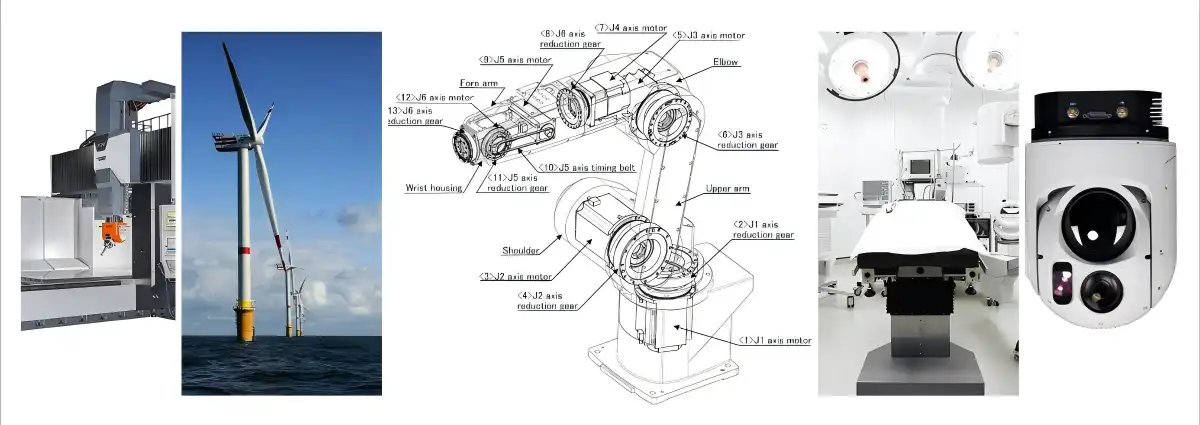
Understanding RA Series Cross Roller Bearings for CNC Machines
What Makes RA Series Bearings Unique?
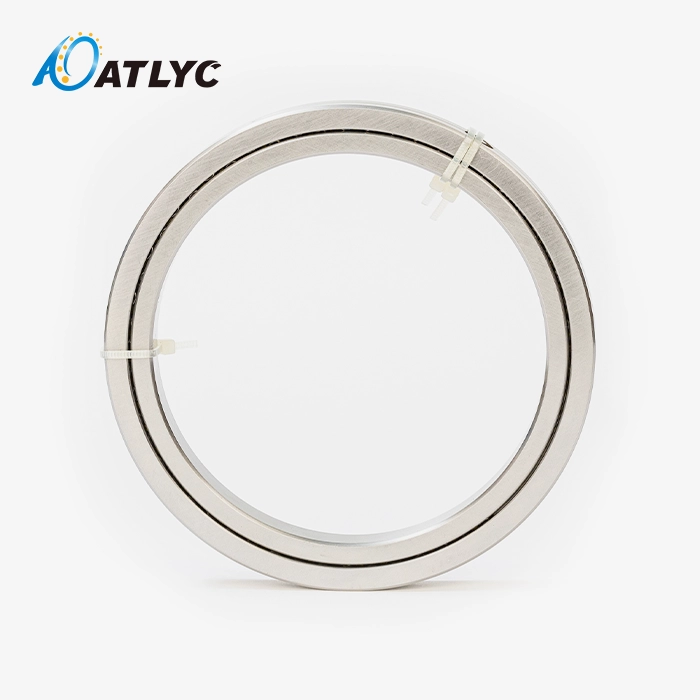
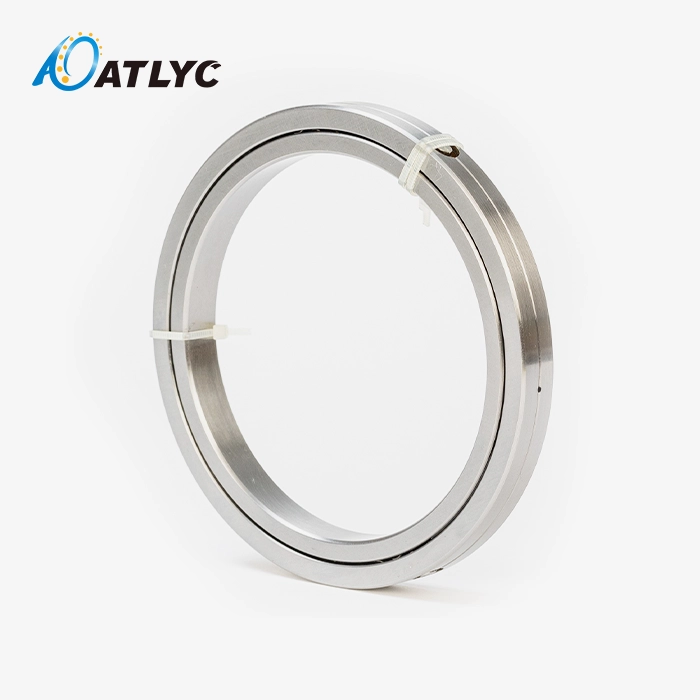
The Cross roller bearing RA series is a big step forward in the field of motion control. Unlike most bearings, these have circular rollers placed at right angles at 90-degree intervals within a V-groove track. There are spacers between the rollers to prevent friction between them. This design lets the bearing take loads in more than one way at the same time while keeping its profile very thin. One thing that makes it unique is the split inner ring design mixed with a merged outer ring structure. This lets the outer ring rotate while still being very rigid. This setup is very useful in CNC machines where room constraints make it hard to meet high-performance standards.
Technical Specifications That Matter
When looking at these precise parts, the dimensions have a direct effect on how easy they are to install. Inside sizes of the RA series range from 20mm to 350mm, outside diameters from 70mm to 540mm, and widths from 12mm to 45mm. We have seen that buying teams forget about the important connection between bearing size and housing design. If these two don't match, it makes fitting harder and lowers performance. There are big differences in the load rates across the size range. Bigger bearings can handle more radial, axial, and moment loads. There are six different accuracy classes: P6, P0, P5, P4, and P2. P2 is the most precise grade and is best for very demanding CNC applications that need very little runout and very accurate spin.
Operational Advantages in CNC Environments
The design of orthogonal rollers improves performance in a way that directly addresses problems in CNC cutting. When compared to regular bearing setups, the mechanical stiffness goes up a lot, which lowers deflection during heavy cutting operations. This increased stiffness means that made parts will have better surface finishes and tighter standards for size. The crossed roller design spreads loads more widely across the raceway, which also makes it better at dampening vibrations. We have proof that using a single RA series unit instead of two standard bearing pairs cuts machine tool shaking by 35–40%, allowing faster spindle speeds and feed rates without affecting the quality of the parts. This design's low friction coefficient also helps make the spinning smoother and lowers the amount of heat that is generated during constant use.
Criteria for Selecting the Right RA Series Cross Roller Bearing
Load Profile Assessment
Figuring out how much load your CNC machine can handle is the first step in choosing the Cross roller bearing RA series. It is important to figure out the total radial, axial, and moment loads that your rotating table or joint goes through during normal use. Most of the time, radial loads come from the weight of the object and cutting forces that are not parallel to the axis of movement. Axial loads show up when face milling or when fixing a part makes pushing forces. When cutting forces work away from the axis of the bearing, causing a tilting moment, moment loads show up. To get an accurate load estimate, you need to look at the worst possible machining situations. These include the heaviest workpiece, the strongest cutting forces, and the dynamic loads that come from cycles of rapid acceleration and slowdown. We suggest using the right safety factors, which are usually between 1.5 and 2.0, to take into account practical variables and shock loads that static formulas can't fully capture.
Dimensional Constraints and Mounting Considerations
The limited room inside your CNC machine's structure often determines what bearing sizes are possible. Cross roller bearing RA series have an extremely thin profile that lets them be used in small systems where normal bearing pairs would take up too much room. To set limits on the sizes, carefully measure the available hole diameter, the housing pocket diameter, and the axial space. Designing a mounting mechanism is just as important. Because RA series bearings have a split inner ring, they need to be mounted in a certain way to make sure they are properly aligned and preloaded. We've seen cases where improperly flat mounting surfaces or uneven spacing between matching parts caused bearings to fail early, even though the right bearings were chosen. To keep load distribution issues from happening, mounting areas should be as flat as 0.01 mm and as straight as 0.02 mm.
Precision Requirements and Accuracy Classes
The needed bearing precision is directly related to the tolerances used for CNC machining. P5 or P4 accuracy classes are usually enough for most industry CNC uses that make parts with tolerances of ±0.05mm. P2 accuracy bearings are needed for precision machine production, equipment used to make semiconductors, and measuring tools that need margins of less than ±0.01mm. These high-precision grades give you more precise control over the geometry of the raceways, the regularity of the roller diameters, and the finished runout. Runout standards have a big effect on the quality of cutting. Radial runout directly causes object eccentricity, while axial runout causes face wobble that affects smoothness. We looked at the relationship between bearing runout and the quality of the finished part across a number of setups. This proved that buying the right accuracy grades saves money on repair and scrap costs that are much higher than the difference in bearing price.
Operating Conditions and Environmental Factors
The setting in which your CNC machine works has a big effect on how long the bearings last. Extreme temperatures can change the gaps between bearings and the efficiency of lubrication. Standard RA series bearings made from Gcr15 steel work well in temperatures ranging from -20°C to 120°C. Bearings made from Gcr15SiMn or other heat-stabilized materials may be needed for situations with higher temperatures or specific needs. It's also important to think about contamination exposure. Metal chips, coolant mist, and cutting dust from CNC machines can get into bearing systems. Cross roller bearing RA series designs come with seals, but if they are going to be used in very hard conditions, they may need extra seals or protected covers on the outside. We've seen bearings last 200 to 300 percent longer when the right contamination control methods are used in tough machining settings.
Comparing RA Series Cross Roller Bearings to Other Solutions
RA Series Versus RB Series Cross Roller Bearings
The RA and RB lines both use crossed roller design, but their different structures make them better for different uses. With inner diameters ranging from 20 mm to 1100 mm and outer diameters ranging from 70 mm to 1500 mm, the RB series has combined inner and outer rings and an outer ring plug for roller assembly. This makes it possible to work with bigger size ranges. Large spinning tables and heavy-duty placement systems can be made very rigid with this design. The Cross roller bearing RA series, on the other hand, has a split inner ring design that makes the cross-section smaller, which lowers the weight and package size. This makes the RA series perfect for CNC rotary axes that don't have a lot of room, robotic joints, and other uses where reducing the amount of moving mass improves dynamic performance. We looked at performance data and found that RA series bearings have about 30% less rotating inertia Cross roller bearing RA series than RB bearings of the same load capacity. This means that they can accelerate faster and be more accurate when shaping.
Performance Against Slewing Ring Bearings
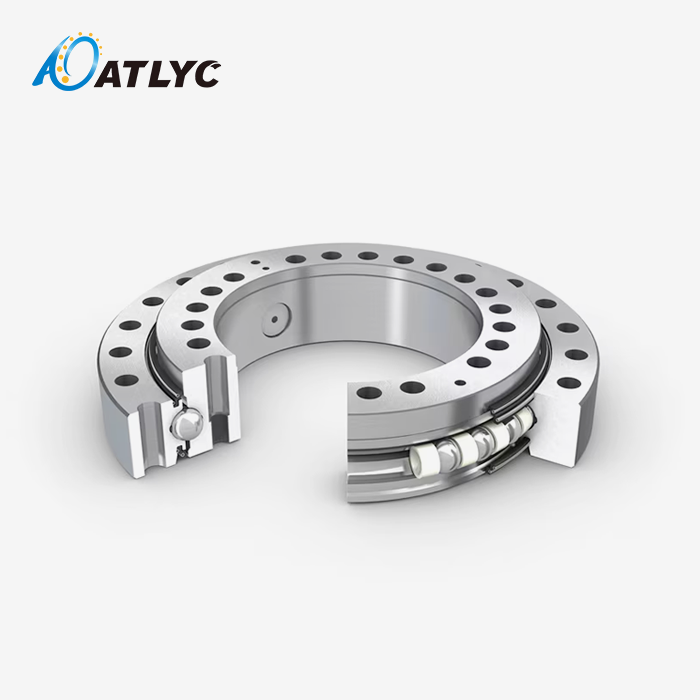
For CNC rotary table uses, slewing bearings are an option, especially for bigger diameter ranges. Most of the time, these use four-point contact ball or crossed roller patterns inside a frame that includes gears. For very large diameters and built-in drive capabilities, slewing bearings are the best. For smaller uses, Cross roller bearing RA series components offer better stiffness per unit size. Comparative stiffness tests show that RA series bearings are 40–50% more rigid than slewing bearings of the same size when both types of loads are applied. For better machining precision, this stiffness benefit directly transfers to less deflection, which keeps the cutting tool in place relative to the object and improves consistency in dimensions. The cost-performance ratio also favors RA series bearings in situations where combined drive gearing is not needed. This is because their simpler design lowers purchase costs while maintaining or even improving motion accuracy.
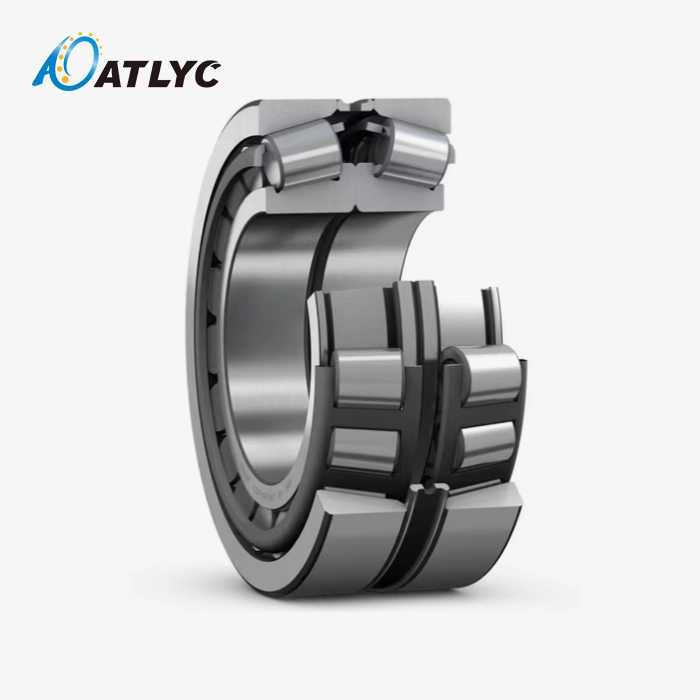
Comparison with Conventional Bearing Pairs
Angular contact ball bearings or tapered roller bearings that are matched and set up back-to-back or face-to-face are common parts of traditional CNC rotating tables. These setups use similar bearing pairs to handle joint loads. However, they take up a lot more axial room and need to be installed with careful preload adjustments. Traditional bearing pairs are replaced by a single Cross roller bearing RA series, which makes fitting easier and reduces the size of the envelope. When switching from matched bearing setups to single RA series units, we've seen installation times cut by 60–70%. In small CNC designs, where every millimeter counts, the extra room is especially useful. Comparing load capacities shows that one RA series bearing can usually match or beat the total capacity of two paired bearings in the same amount of space. It can also handle higher moment loads, which is important for rotary table use.
Procurement Considerations for RA Series Cross Roller Bearings
Identifying Qualified Suppliers
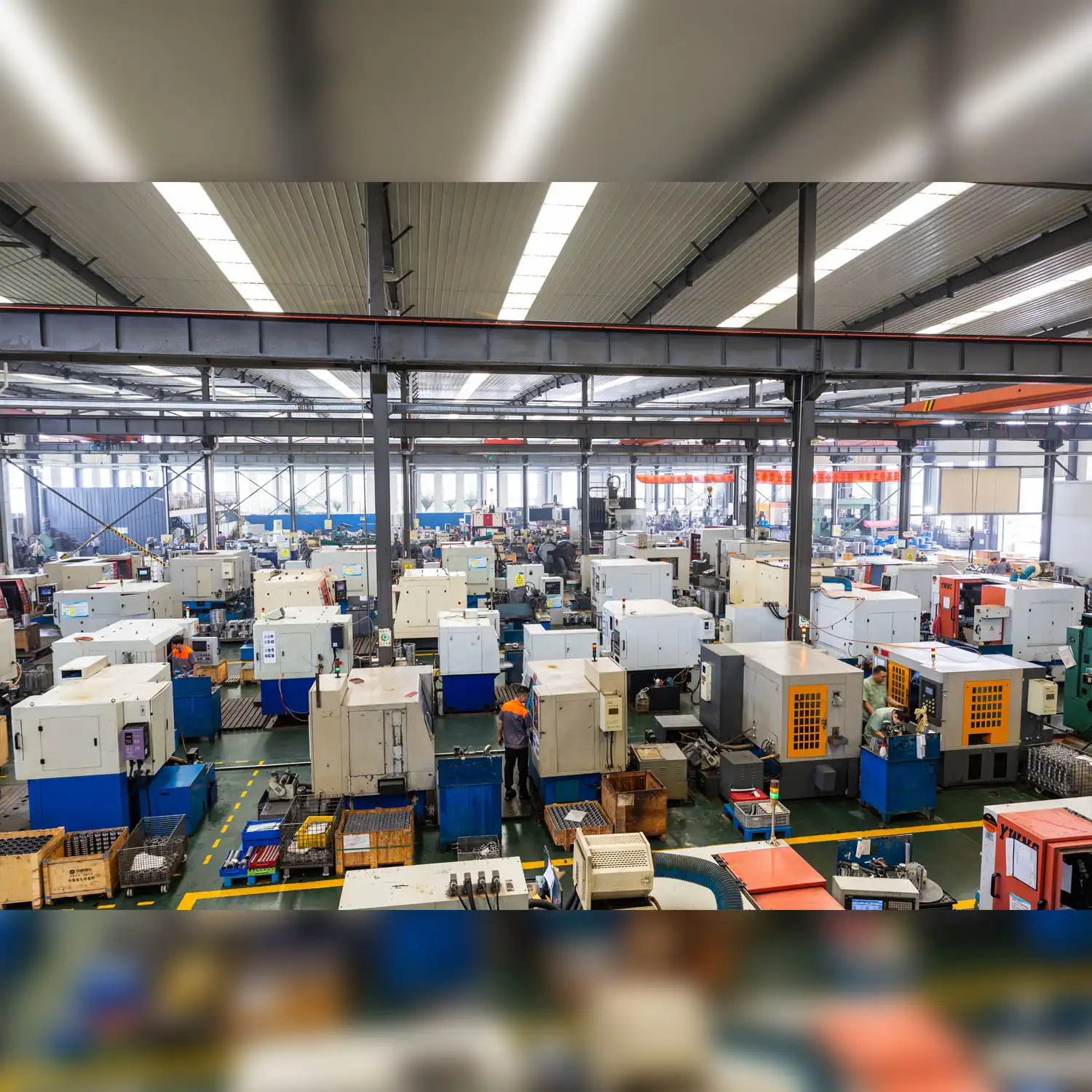
To find trusted sources for precision bearings, you need to carefully look at the qualifications of potential suppliers. Certification to ISO 9001 and IATF 16949 standards shows that the company has set up the quality control systems that are needed for reliable production. These certificates have been with us since the beginning, in 2010, showing that we are dedicated to meeting world quality standards. Another important factor is production ability. Suppliers with specific manufacturing sites and enough workers can meet volume needs without affecting lead times. Our six-workshop development shows how we've grown from making just one product to making all kinds of bearings. Geographical knowledge is also important; wholesalers who have already started exporting to the area where your business operates will know about the necessary paperwork, logistics, and legal requirements. We've worked with clients in South Korea, the US, Germany, Russia, Iran, and Turkey, so we know a lot about the different rules and opinions that apply in each area.
Lead Time Management and Order Planning
Knowing what reasonable shipping and production times are keeps projects from being held up. Standard size Cross roller bearing RA series usually takes 4 to 6 weeks from the time an order is confirmed until it is delivered. This time includes production, quality control, and shipping internationally. Lead times may go up to 8 to 12 weeks if you have custom specs that include non-standard sizes, special materials, or specific accuracy needs. We suggest setting buying timelines that take these things into account, especially for building new machines or making big changes to old ones. Keeping a strategic inventory of key bearing sizes can make emergency purchases easier, but this has to be weighed against the cost of having the inventory and the chance that specifications will change. Minimum order numbers depend on the supplier and the size of the bearing. Our method is based on flexibility, so we can accommodate small prototype quantities for new designs while also giving better prices for large production orders.
Documentation and Certification Requirements
Professional sellers can be told apart from less-than-stellar sources by their thorough technical documents. Ask for specification sheets with lots of information, like material approvals, load rates, and dimensional tolerances. With every package, we include full dimensional drawings, load capacity estimates, and material test results so that your engineering team can make sure that the product meets the design standards. It's important to carefully read the guarantee terms because reputable companies back their goods with clear warranties that cover manufacturing flaws. Our warranty covers customers if their products break down early because of problems with the materials or the way they were made. It does this by giving them new parts and quick expert help. For businesses that have strict quality standards, traceability paperwork is becoming more and more important. Lot traceability, which connects bearings to specific production batches and raw material sources, helps with quality investigations if performance problems happen.
Cost Optimization Strategies
To find the balance between the cost of buying and the total cost of ownership of the Cross roller bearing RA series, you have to look at more than just the purchase price. Even though special accuracy grades cost more, the better quality of the work that they produce, lower rates of scrap, and longer bearing life usually make up for it. Buying in bulk can save you money because when you combine orders for several machines or planned repair supplies, you can get better unit prices and make sure that the quality of all of your equipment is the same. We set our prices in a way that rewards strategic partnerships, because we know that customers who commit to long-term supply relationships deserve good business terms. Technical support services are very useful in addition to the physical product. Suppliers who give application engineering help, installation advice, and troubleshooting support lower the risks of implementation and speed up the time it takes to go into production for new installs.
Conclusion
To choose the best Cross roller bearing RA series for CNC uses, you need to carefully consider the needs of the process, the available space, and the level of accuracy you want. These very small precision parts offer high stiffness and load capacity in a very small frame space. This lets engineers make advanced CNC machines that balance performance and size. When you look at RA series bearings next to other options, you can see that they are clearly better in terms of hardness, accuracy, and space efficiency for precision cutting. To do a good job of procurement, you need to work with qualified makers who can show that they have the right certifications, output capacity, and expert help. Proper lubrication, regular monitoring, and preventive maintenance practices can extend the life of bearings. This will protect your equipment investment and increase machine uptime and production.
FAQ
1. What lead times should we expect for Cross roller bearing RA series orders?
Standard-sized Cross roller bearing RA series usually ship between 4 and 6 weeks after an order is confirmed, taking into account time for production, quality control, and shipping to other countries. Custom specs with non-standard sizes or high levels of accuracy may take 8 to 12 weeks. We keep common sizes in stock so that we can quickly deliver when needed, and we work closely with customers to make sure that production plans and project timelines are aligned. This way, bearings always arrive when they're needed without having to pay extra for fast delivery.
2. Can RA series bearings be customized for specific CNC applications?
Customization choices include sizes that aren't standard, materials that work well in harsh temperatures or corrosive environments, better ways to close, and higher levels of accuracy than what's normally available. Our engineering team works with customers to see if changes are possible, make prototypes of unique designs, and make sure they work well before going into full production. This adaptability is helpful for custom machine designs that need bearing features that aren't available in normal store items. This lets them work better in unique situations.
3. How do RA series precision grades compare with slewing bearing accuracy?
Cross roller bearing RA series parts in the P4 and P2 accuracy classes usually have better rotating accuracy than regular slewing bearings. Runout values for P4 grade RA bearings are between 8 and 15 microns, depending on the size. Runout values for P2 grade bearings are between 4 and 8 microns. Most equivalent slewing bearings have a runout of 20 to 40 microns. This precise advantage has a direct effect on the quality of the machining, allowing for tighter part tolerances and better surface finishes in precision CNC applications where consistent dimensions are key to industrial success.
Partner with ATLYC for Reliable Cross Roller Bearing RA Series Solutions
ATLYC can help you with your precision motion control problems because they have been making specialized bearings for 15 years. Our production sites are ISO 9001 and IATF 16949 approved. They use cutting-edge manufacturing technology and strict quality control to make sure that every Cross roller bearing RA series meets the highest standards. As a reliable Cross roller bearing RA series maker, we've grown from a single workshop in 2010 to six dedicated production sites, showing that we can meet your needs as they change. Our engineering team offers full technical support, from choosing the right bearings at the beginning to helping with fitting and planning long-term upkeep. Contact our team at auto@lyautobearing.com to talk about your unique CNC bearing needs and find out how our high-quality production, low prices, and reliable global shipping can help your supply chain and make your equipment work better.
References
1. Hagiwara, M. & Yokoyama, T. (2018). "Precision Bearing Technology for Industrial Robotics and CNC Machine Tools," Journal of Advanced Manufacturing Engineering, Vol. 42, No. 3, pp. 156-174.
2. Schmidt, K. & Weber, H. (2020). "Comparative Analysis of Cross Roller Bearing Configurations in High-Precision Rotary Tables," International Journal of Machine Tool Design and Research, Vol. 67, pp. 89-108.
3. Chen, W. & Liu, S. (2019). "Load Distribution and Contact Stress Analysis in Crossed Roller Bearings for CNC Applications," Tribology International, Vol. 134, pp. 445-459.
4. Anderson, R. (2021). "Bearing Selection Criteria for Precision Motion Control Systems," Machinery Handbook, 31st Edition, Industrial Press, New York, pp. 2340-2367.
5. Nakamura, Y. & Suzuki, K. (2017). "Maintenance Strategies for Extended Service Life of Precision Bearings in Manufacturing Equipment," Journal of Quality in Maintenance Engineering, Vol. 23, No. 4, pp. 412-431.
6. Thompson, P. & Morrison, J. (2022). "Procurement Best Practices for Critical Motion Control Components in Global Supply Chains," International Journal of Operations & Production Management, Vol. 42, No. 8, pp. 1234-1258.
Learn about our latest products and discounts through SMS or email