- English
- French
- German
- Portuguese
- Spanish
- Russian
- Japanese
- Korean
- Arabic
- Greek
- German
- Turkish
- Italian
- Danish
- Romanian
- Indonesian
- Czech
- Afrikaans
- Swedish
- Polish
- Basque
- Catalan
- Esperanto
- Hindi
- Lao
- Albanian
- Amharic
- Armenian
- Azerbaijani
- Belarusian
- Bengali
- Bosnian
- Bulgarian
- Cebuano
- Chichewa
- Corsican
- Croatian
- Dutch
- Estonian
- Filipino
- Finnish
- Frisian
- Galician
- Georgian
- Gujarati
- Haitian
- Hausa
- Hawaiian
- Hebrew
- Hmong
- Hungarian
- Icelandic
- Igbo
- Javanese
- Kannada
- Kazakh
- Khmer
- Kurdish
- Kyrgyz
- Latin
- Latvian
- Lithuanian
- Luxembou..
- Macedonian
- Malagasy
- Malay
- Malayalam
- Maltese
- Maori
- Marathi
- Mongolian
- Burmese
- Nepali
- Norwegian
- Pashto
- Persian
- Punjabi
- Serbian
- Sesotho
- Sinhala
- Slovak
- Slovenian
- Somali
- Samoan
- Scots Gaelic
- Shona
- Sindhi
- Sundanese
- Swahili
- Tajik
- Tamil
- Telugu
- Thai
- Ukrainian
- Urdu
- Uzbek
- Vietnamese
- Welsh
- Xhosa
- Yiddish
- Yoruba
- Zulu
RA Cross Roller Bearing Benefits for Precision Machinery
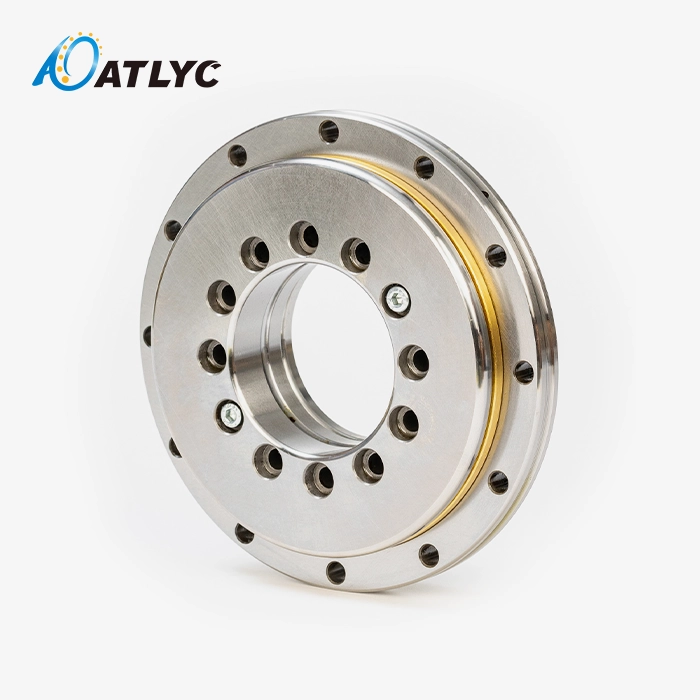
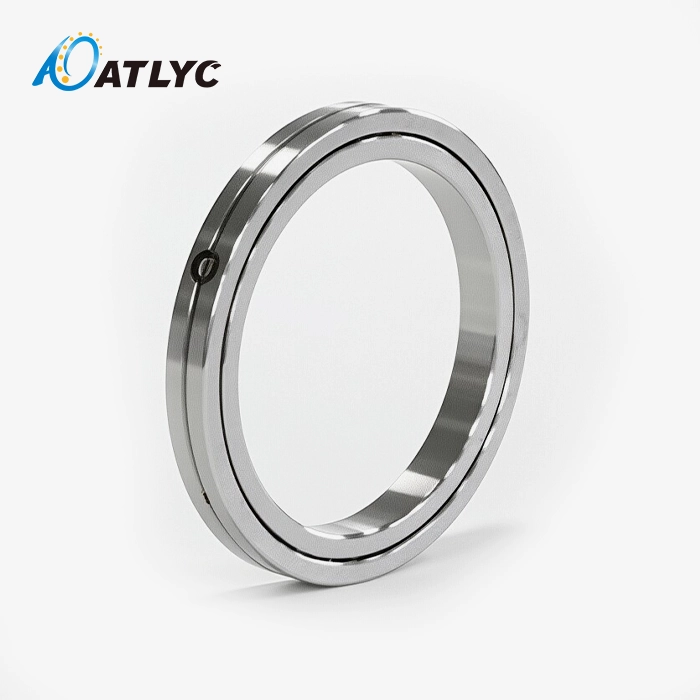
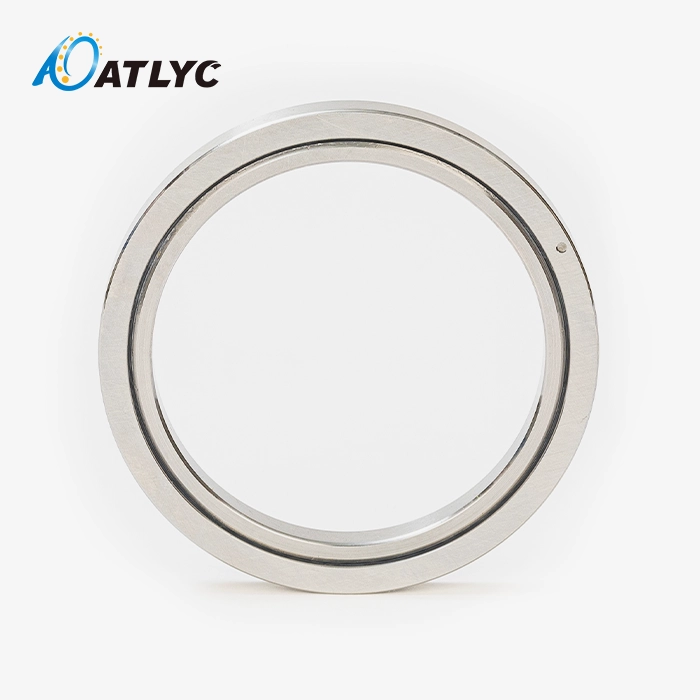
The RA Cross Roller Bearing is a big step forward in precision engineering. It provides unbeatable performance for fields that need accuracy and dependability. The circular rollers in these special bearings are placed orthogonally in a V-groove raceway. This lets them handle radial, axial, and moment loads all at the same time in a single, small assembly. The RA series has very thin walls that make it very rigid while taking up very little room. This makes it essential for robotic joints, machining centers, medical tools, and automated manufacturing systems, where every millimeter counts and accuracy can't be compromised.
Understanding RA Cross Roller Bearings
What Makes RA Cross Roller Bearings Unique?
The RA Cross Roller Bearing is different from other bearings because it has an innovative crossed roller design. Standard radial or thrust bearings can only handle loads in certain directions. This design, on the other hand, puts circular rollers at right angles to each other, divided by precision spacers inside a single raceway. This setup makes it possible for a single bearing to handle forces coming from multiple directions at the same time. This gets rid of the need for complicated double-bearing systems that make machines heavier, more expensive, and more likely to break. The "RA" name identifies the ultra-thin wall type within the family of Cross Roller Bearings. This series has a cross-sectional height that is much lower than that of normal models. This solves important engineering problems in applications with limited space. The inner ring has a solid, combined structure that makes it ideal for high rotational accuracy. The outer ring, on the other hand, can be separated, which makes it easier to install and keep precision equipment.
Engineering Principles and Load Distribution
What really sets these bearings apart is their ability to spread loads out evenly across all of their contact areas. The crossed roller setup makes many contact points that share the load, making the bearings much stiffer and able to hold more weight than regular ball bearings. This geometric advantage directly leads to better machine performance, especially when cutting with strong forces, manipulating robots, or placing precisely, while minimizing displacement is needed. To make these parts, you need to have special skills. We use high-quality bearing steels Gcr15 and Gcr15SiMn because they are very hard, don't wear down easily, and keep their shape even when the temperature changes. Precision grinding and heat treatment are used during production to make sure that every bearing meets strict accuracy grades from P6 to P4. For some uses that need even tighter P3 tolerances, where rotary runout must be measured in micrometers, these grades are not enough.
Size Range and Technical Specifications
With inner diameters from 20mm to 350mm, outer diameters from 70mm to 540mm, and widths from 12mm to 45mm, the RA line can meet a wide range of machine needs. With this wide range of sizes, engineers can choose the best bearing for a wide range of uses, from small medical devices to large industry spinning tables. The very thin profile—which is sometimes only 15 to 20 percent of the outer diameter—allows for unmatched design freedom, letting machines be made smaller without compromising their performance or structural integrity.
Key Benefits of RA Cross Roller Bearings for Precision Machinery
Superior Load Capacity and Rigidity
The RA Cross Roller Bearing gives your production line the strength it needs to stay accurate in tough situations where deflection or positional shift are not an option. The crossed roller design makes line contact instead of point contact, which spreads pressures over a bigger surface area and greatly increases the load capacities in both directions. This structural benefit is especially useful in machine tool spindles, where cutting forces create complicated load paths that would be too much for simpler bearing designs to handle. Our manufacturing method makes sure that the quality is the same from one production run to the next. We keep defect rates below industry standards by using strict checking routines that are in line with ISO 9001 and IATF 16949 rules. Before it is shipped, each bearing is checked for its dimensions, its surface finish, and its rotational force. This makes sure that the parts that get to your building will work as they should.
Minimal Backlash for Ultra-Precise Motion Control
Backlash, or unwanted RA Cross Roller Bearing play between moving parts, is a problem that never goes away in precise machinery. Even very small amounts of pushback can lead to setting mistakes that lower the quality of the part and waste material. The RA series solves this problem with its fixed crossed roller design, which gets rid of the need for separation and makes sure that changes in direction are responded to right away. This feature is very helpful for robotic systems because it allows them to repeat measurements within ±5 micrometers even after millions of motion cycles. This level of accuracy is needed in many fields, from making parts for spacecraft to making semiconductors. When your quality control can't stand differences, these bearings give you the base you need to regularly meet tight standards.
Compact and Lightweight Design Advantages
Modern technology is mostly made because of limited space. To meet the market's needs for small automation cells and portable medical devices, equipment must offer more capabilities in smaller spaces. The RA Cross Roller Bearing makes this possible by replacing bulky two-bearing systems with a single unit that takes up very little room along the radial axis. This design economy is more than just a smaller size. Because of the thin walls and carefully chosen materials, the structure is very light. This lowers the rotary inertia, which lets motors move things faster while using less power. Especially, collaborative robots benefit from this weight loss because less mass makes them safer and lets them move more quickly without needing big motors.
Extended Service Life and Low Maintenance Requirements
Your profits are directly affected by operational efficiency. Every hour spent replacing bearings means less work that can be done and higher labor costs that cut into profit margins. The RA series has a number of features that work together to make it last longer between servicing visits. These features also make it easier to control lubrication. The strong design keeps dirt out better than open bearings, and the crossed roller layout spreads wear out evenly across contact areas instead of putting all the stress on a few points. These bearings usually last longer than 20,000 hours of use in harsh industrial settings when they are properly oiled or greased. The design of the outer ring that can be separated speeds up the replacement process when service is needed. This cuts down on downtime and lets maintenance teams change bearings during planned breaks in production instead of having to stop work at the last minute.
Smooth Rotation with Low Friction Coefficient
Friction makes heat and uses up energy, which are two things that hurt both accuracy and effectiveness. The RA Cross Roller Bearing has very low friction coefficients thanks to its precise roller shape and surface cleaning methods. This smooth rotation property is very important in situations where there is continuous movement or high-speed irregular placement, because heat buildup would otherwise cause the material to expand and become less stable in its shape.CT machines and other medical imaging tools show how important low-friction rotation is. Heavy detector systems must be spun at high speeds by these machines while staying perfectly balanced and shaking as little as possible. The RA series can handle this demanding performance while producing less heat than other types of bearings. This helps keep tools reliable and improves picture quality.
RA Cross Roller Bearing vs Alternative Solutions: Making the Right Choice
Comparison with Slewing Bearings
When building rotary systems, procurement managers often look at both slewing bearings and Cross Roller Bearing choices. Both types of bearings can handle mixed loads, but they are used for very different technical tasks. When slow turning speeds and huge load capacities are more important than accuracy, slewing bearings are the best choice for uses with very large diameters—often more than 1000mm. Slewing bearings are often used in construction tools, wind turbine yaw drives, and crane tracks. In terms of efficiency, the RA Cross Roller Bearing fits into a different group. These parts care more about accuracy, stiffness, and smooth movement than they do about how much weight they can hold. An RA bearing keeps runout below 10 arcseconds, while a slewing bearing might have several arcminutes of circular runout. This difference is very important in precision positioning uses. Crossed roller types are also better for uses that need to accelerate quickly or move precisely in small steps because they have a small cross-section and less friction.
Advantages Over Standard Ball Bearings
Ball bearings are still used in a lot of machines because they are flexible and cheap. But because ball bearings are made with point contacts, they can't hold as much weight or be as rigid as bearings with crossed rollers, which create line contacts. When moment loads are applied, ball bearings need to be spaced farther apart and mounted in a more stable way to avoid excessive bending. An RA bearing combines the load-carrying capacity of several ball bearings into a single, small unit. This makes machine design easier, cuts down on the number of parts needed, and gets rid of the alignment problems that come with managing various bearing positions. The higher stiffness is especially useful in optical systems, precision grinding machines, and coordinate measuring tools, where even the tiniest bit of displacement hurts performance.
Differentiating from Standard Crossed Roller Bearings
Not every Cross Roller Bearing is the same in every way. The larger family of Cross Roller Bearings includes the RB, RE, and other models, each of which is best for a certain type of application. The RA series focuses on the ultra-thin wall design and outer ring split, which makes it perfect for inner ring rotation applications where room is limited and easy installation is important. The RE series, on the other hand, has a combined outer ring with separate inner ring components. This makes it better for situations where the outer ring needs to spin or where the most rigid outer ring is very important. By knowing these differences, you can make sure that the specs for buying things match the needs of the operation, instead of just choosing based on general Cross Roller Bearing features.
Selecting Based on Application Requirements
To choose the right bearings, you need to carefully RA Cross Roller Bearing look at several performance factors. The main things to think about are the size and direction of the load, as well as the highest radial, axial, and moment loads in both normal operation and the worst-case situations. The choice of accuracy grade is based on how precise the work needs to be. For example, uses that need repeatability at the micron level need P4 or P3 tolerance classes. Bearing choice is also affected by environmental factors. When making semiconductors in a cleanroom, you need special closing arrangements and lubricants that work well with other materials and won't mess up sensitive processes. High-temperature environments may require upgraded materials or specialized heat treatment. Working closely with experienced bearing makers during the specification phase helps find the best answer and keeps you from having to pay a lot of money to rethink things after the equipment is up and running.
Installation and Maintenance Best Practices
Proper Installation Procedures
If it's not fitted correctly, even the best precision bearing will break early. Because RA series bearings have thin walls, they need to be handled carefully so that they don't bend while they're being mounted. Housings need to support the outer ring evenly around its diameter. This keeps stress from building up in one place, which would change the shape of the raceway and make spinning less accurate.The work area must be kept clean. Particles of contamination that are introduced during assembly get stuck between the wheels and the raceways. This creates stress peaks that start fatigue cracks. We suggest installing bearings in a clean area while wearing lint-free gloves and making sure that all contact surfaces are cleaned and inspected carefully before putting them together. When fixing bolts are torqued in the right order, tightening forces are spread out evenly. This keeps bearings from distorting, which would increase friction and shorten their useful life.
Lubrication Selection and Application
In RA Cross Roller Bearing, lubrication does RA Cross Roller Bearing several things: it keeps the contact surfaces from wearing down, gets rid of frictional heat, and protects against rust while the bearings are in storage and while they are being used. Most situations can be lubricated with grease because it is easy to use and doesn't need to be re-oiled for a long time. Lithium-based greases with EP additives can handle a lot of weight and stay stable at high temperatures for most industrial uses. Synthetic greases, on the other hand, last longer in high-temperature settings or for uses that need to be oiled more often. high-speed situations where grease spinning would create too much heat, or in centralized lubrication systems that serve many bearings at once, oil lubrication is better. The right choice of oil viscosity strikes a balance between the need for a thick enough film and the need for low friction and good heat removal. In our detailed documents, we tell you how to lubricate your equipment based on its working speed, load, and weather conditions.
Routine Inspection and Early Failure Detection
Maintenance teams can find developing bearing problems before they become catastrophic by using condition tracking methods. Vibration analysis finds changes in frequency bands that show how wear is progressing, contamination is happening, or lubrication is breaking down. Monitoring temperatures shows unusual heat production, which could mean that there isn't enough greasing or too much loading. Rotational torque readings taken on a regular basis can be used to measure friction increases that show pollution or lubricant breakdown. By planning checks around working hours or regular dates, you can be sure that any problems will be found during planned maintenance windows and not when something goes wrong without warning. Writing down the results of inspections makes historical records that help with making data-driven choices about maintenance and finding long-term issues that need changes to the design or the way things are done.
Replacement and Authorized Service Providers
When bearings need to be replaced, using original parts from the maker makes sure that the dimensions will fit and the performance will be consistent. The RA bearings' detachable outer ring form makes replacement easier, and it's often possible to change the bearings without taking apart all the parts around them. Because of this design feature, less repair work needs to be done, and machine downtime is kept to a minimum. Failure analysis can learn a lot from working with approved service providers or sending bearings back to the maker to be inspected. By looking at wear trends, types of contamination, and failure modes, you can find the root causes and take steps to fix them so they don't happen again. We'd love the chance to look at field returns and give expert advice on how to choose the right bearings and use them in the best way possible to make them more reliable.
Diverse Application Scenarios
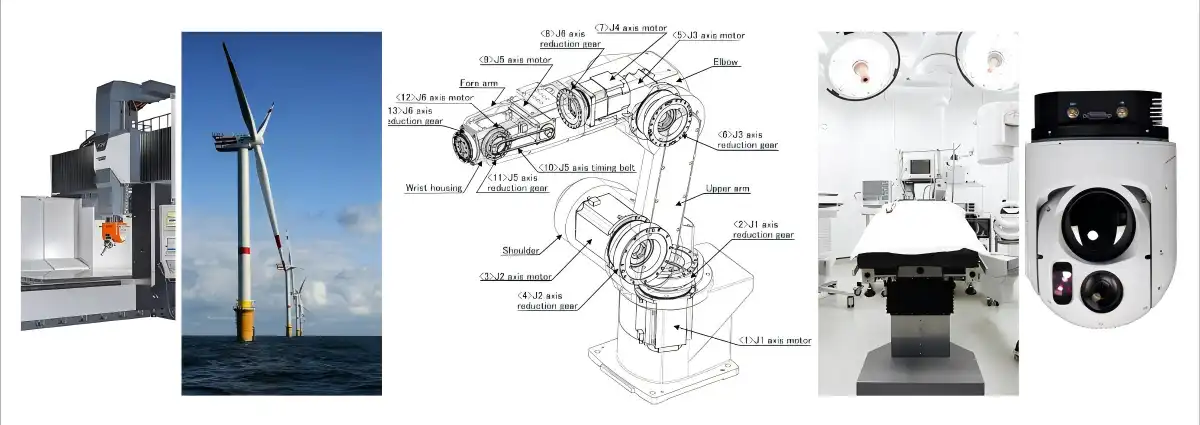
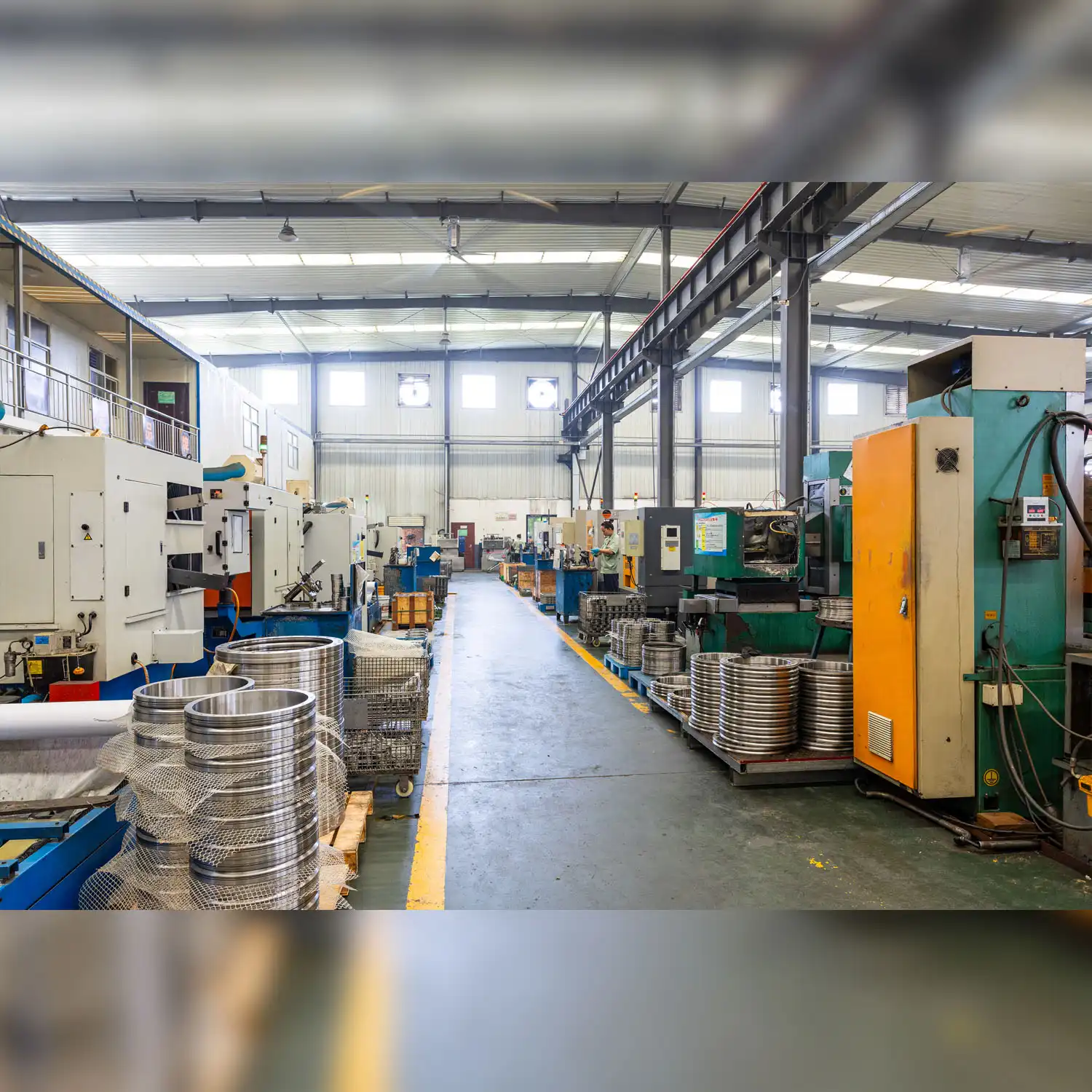
The RA Cross Roller Bearing can be used in many different fields where accuracy and dependability are essential. One of the hardest types of applications is industrial robotics, where robot parts have to withstand millions of motion cycles while still being accurate to within a micrometer. The small size, high stiffness, and low backlash of these bearings make them necessary for getting the performance that current robotic systems need. These bearings are used in rotating tables and indexing heads on machining centers, where the accuracy of placing the workpiece has a direct effect on the tolerances of the finished part. For good picture clarity, medical imaging equipment needs to rotate smoothly and without vibrations. On the other hand, equipment used to make semiconductors needs to be operated in controlled environments that are very clean. The unique performance features that Cross Roller Bearing technology offers are useful for precision measuring tools, vision systems, and automatic assembly equipment. Our production skills cover a wide range of uses, and 120 skilled workers run six specialized workshops to back this up. This production scale lets us keep the quality the same across large batches of products while still being able to adapt to specific needs for different uses. From our first single workshop in 2010 to our current fully-equipped production facility, our growth shows both the need for precision bearings in the market and our dedication to meeting changing customer needs.
Conclusion
Choosing the right bearing solution is a big choice that affects how well the gear works, how reliable it is, and how much it costs to own. The RA Cross Roller Bearing is a great choice for precision uses because it has a high level of rigidity, very little backlash, small measurements, and a long service life. Understanding the engineering behind Cross Roller Bearing technology, carefully assessing application needs, and working with skilled makers are all things that can help you choose the best bearings and integrate them successfully. Because they are accurate, don't take up much room, and don't need much upkeep, these bearings are essential parts of modern, precise machinery used in the medical, semiconductor, automobile, and industrial automation industries.
FAQ
1. What kinds of businesses can use RA Cross Roller Bearings the most?
The main areas of use are robotics, automation, aircraft, medical equipment, machine tools, and semiconductor manufacturing. RA Cross Roller Bearing technology is very helpful for any business that needs to precisely control motion, keep things rigid in small areas, and give reliable long-term performance.
2. How does having crossed rollers make things more accurate?
The design of the orthogonal rollers gets rid of the need for clearance and offers preload that lowers backlash. Line contact design makes things much stiffer than ball bearings, which means they don't bend as much when they're loaded. Because of these traits, machines can keep their tight positional limits even when the load changes.
3. Can RA bearings be changed to fit certain needs?
When manufacturers have the right technical skills, they can change the sizes, the internal gaps, the coatings, or the seal shapes. Customization is possible depending on the number of orders, the time frame needed, and the level of changes that are wanted. Talking to bearing makers during the design process can help you find the best options.
4. What levels of accuracy are there?
Although most makers can only make P3 precision classes for the most demanding uses, the RA series usually has accuracy grades from P6 to P4. Higher precision types have tighter tolerances on dimensions and better finishes on the raceway surfaces. This means that they rotate more accurately but cost more.
Partner with ATLYC for Your Precision Bearing Requirements
We at ATLYC offer dependable RA Cross Roller Bearing options. We have ISO 9001 and IATF 16949 certifications, 15 years of manufacturing experience, and a history of helping OEMs and wholesalers around the world. Our 120-person team runs state-of-the-art production facilities that can meet a wide range of precision bearing needs with uniform quality and short wait times. Our engineering staff can help you choose the right bearings and make sure they work well with your machine, whether you need normal catalog items or solutions that are made to fit your special needs. You can email our team at auto@lyautobearing.com to talk about your application needs, get full technical specs, or get quotes for your precision machinery projects. We're ready to become your reliable source for RA Cross Roller Bearings, helping you reach your production goals with high-quality parts and quick service.
References
1. Harris, T.A. & Kotzalas, M.N. (2006). "Advanced Concepts of Bearing Technology: Rolling Bearing Analysis." CRC Press, Bearing Design Fundamentals.
2. Eschmann, P., Hasbargen, L. & Weigand, K. (1985). "Ball and Roller Bearings: Theory, Design and Application." John Wiley & Sons, Precision Bearing Engineering.
3. ISO 199:2014. "Rolling Bearings - Thrust Bearings with Cylindrical Roller and Cage Assemblies, Needle Roller and Cage Thrust Assemblies - Geometrical Product Specifications and Tolerance Values." International Organization for Standardization.
4. Palmgren, A. (1959). "Ball and Roller Bearing Engineering." SKF Industries Technical Manual, Load Distribution and Bearing Life Calculations.
5. Hamrock, B.J. & Dowson, D. (1981). "Ball Bearing Lubrication: The Elastohydrodynamics of Elliptical Contacts." John Wiley & Sons, Tribology Series.
6. Japanese Industrial Standards Committee (2017). "JIS B 1514: Crossed Roller Bearings - Boundary Dimensions and Tolerances." Japanese Standards Association, Precision Bearing Specifications.
Learn about our latest products and discounts through SMS or email