- English
- French
- German
- Portuguese
- Spanish
- Russian
- Japanese
- Korean
- Arabic
- Greek
- German
- Turkish
- Italian
- Danish
- Romanian
- Indonesian
- Czech
- Afrikaans
- Swedish
- Polish
- Basque
- Catalan
- Esperanto
- Hindi
- Lao
- Albanian
- Amharic
- Armenian
- Azerbaijani
- Belarusian
- Bengali
- Bosnian
- Bulgarian
- Cebuano
- Chichewa
- Corsican
- Croatian
- Dutch
- Estonian
- Filipino
- Finnish
- Frisian
- Galician
- Georgian
- Gujarati
- Haitian
- Hausa
- Hawaiian
- Hebrew
- Hmong
- Hungarian
- Icelandic
- Igbo
- Javanese
- Kannada
- Kazakh
- Khmer
- Kurdish
- Kyrgyz
- Latin
- Latvian
- Lithuanian
- Luxembou..
- Macedonian
- Malagasy
- Malay
- Malayalam
- Maltese
- Maori
- Marathi
- Mongolian
- Burmese
- Nepali
- Norwegian
- Pashto
- Persian
- Punjabi
- Serbian
- Sesotho
- Sinhala
- Slovak
- Slovenian
- Somali
- Samoan
- Scots Gaelic
- Shona
- Sindhi
- Sundanese
- Swahili
- Tajik
- Tamil
- Telugu
- Thai
- Ukrainian
- Urdu
- Uzbek
- Vietnamese
- Welsh
- Xhosa
- Yiddish
- Yoruba
- Zulu
How to Install RU Series Crossed Roller Bearing Correctly?
To properly install the RU Series Crossed Roller Bearing, you need to know about its special integral design, how to carefully prepare the surface, how to precisely align the bearing, and how to apply force in a planned way. This bearing doesn't need a cover because it has mounting holes already drilled in both the inner and outer rings, so it can be bolted directly to equipment. To fix something correctly, you need to clean the areas that fit together, check the specs for size, place the rollers in the right position and use measured binding force. By following the steps set out by the maker, you can be sure that the bearing can handle all of its full load capability of radial, axial, and moment forces at the same time. It will also provide the high level of rotational accuracy needed by automation equipment, robotic joints, and precision machining centres.
Understanding RU Series Crossed Roller Bearings
When your manufacturing process needs to be able to handle a lot of weight and be very precise while still taking up very little space, crossed roller bearings are the technological answer. These parts are necessary for modern robotics and precision machinery because they solve a basic problem: how to handle complex loads that move in more than one way without stacking different types of bearings.
Design, Architecture, and Construction Principles
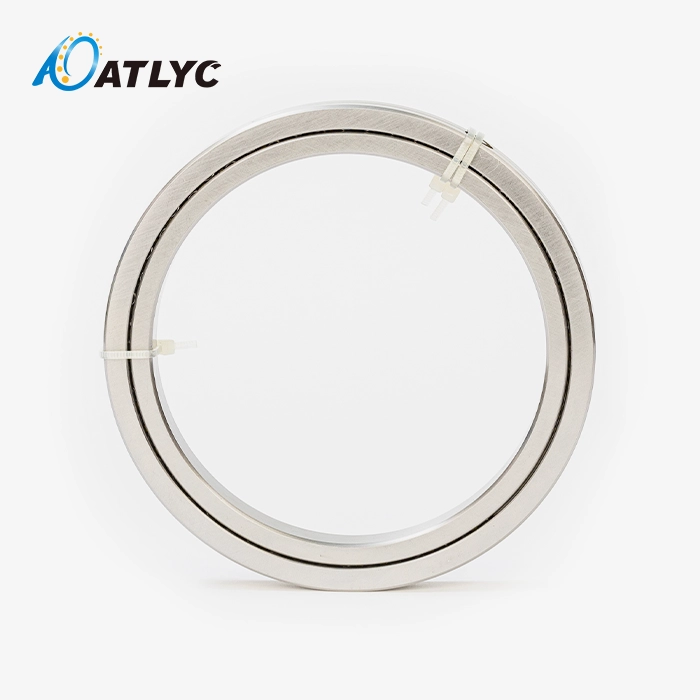
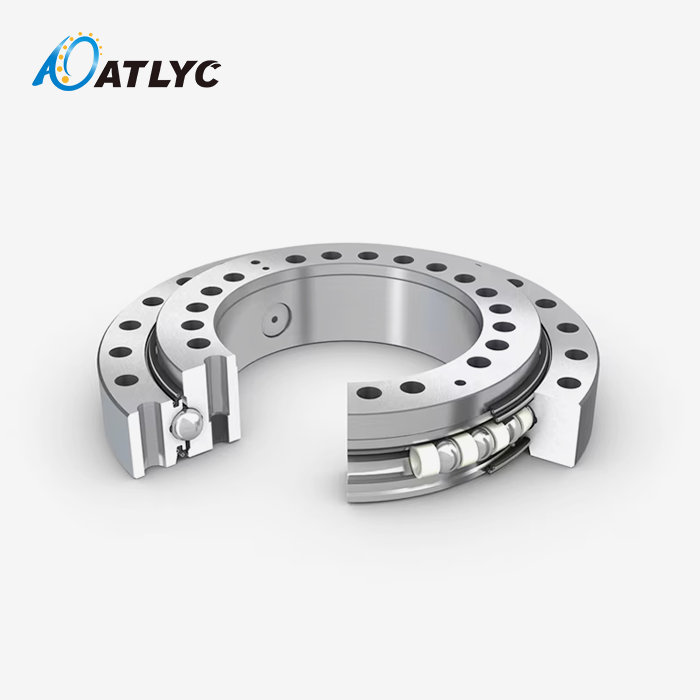
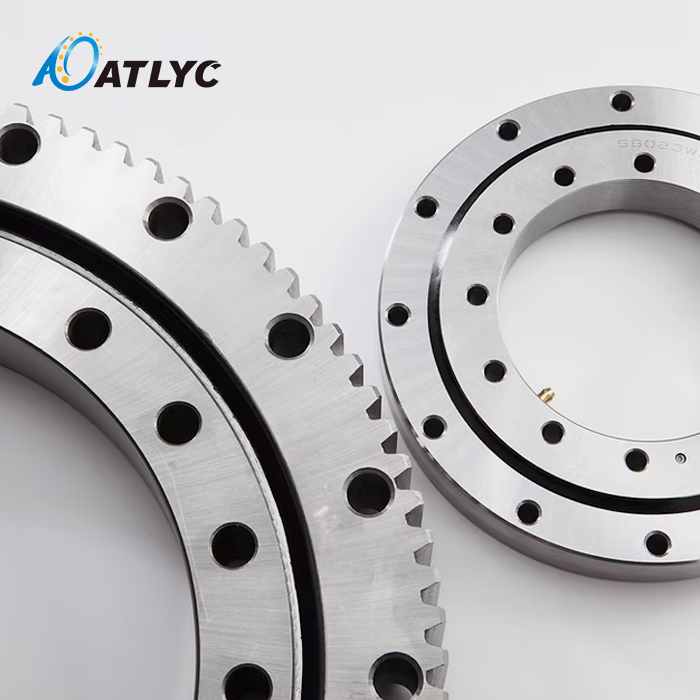
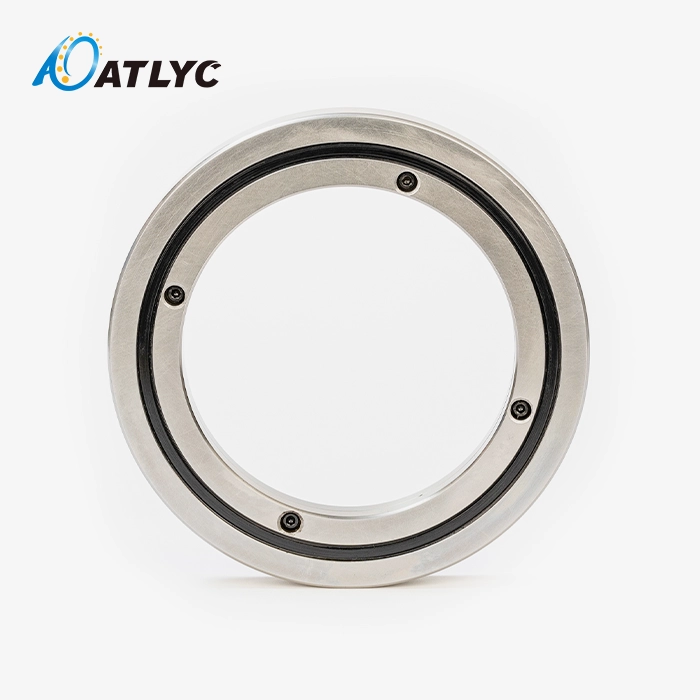
The design of the rollers is what makes this family of bearings unique. Cylindrical rollers are positioned 90 degrees to each other inside V-shaped raceways that are cut straight into the inner and outer rings. Precision spacers separate each roller, keeping the spacing even around the circle and stopping metal-to-metal touch between neighbouring parts. This crossed arrangement gives it a technical edge. A single bearing unit can handle all three types of loads at the same time when your equipment has spinning masses that create radial loads, thrust forces that create axial loads, and protruding parts that create moment loads. The V-groove shape guides forces through the roller contact patches in the best way possible.
Tolerance stack-up problems that happen with multi-piece systems are not a problem with the entire ring design. There are holes already made in both rings, so they can be attached directly to the frame of your machine. When compared to housed bearing units, these take up less vertical room, and they are easier to install because they don't have different housings to line. Instead, they use polished surfaces. The choice of material has a direct effect on performance and durability. GCr15 bearing steel is what most manufacturers choose for normal uses, while GCr15SiMn material has better qualities for harsh conditions. Both materials go through specific heat treatment processes that make them hard in the right places—tough cores for impact absorption and hard surfaces for wear resistance.
Technical Specifications and Available Sizes
The range of dimensions can be used for a wide range of tasks in many different industries. For small robotic wrist joints, the inner sizes range from 20 mm to 1100 mm for big rotating tables in horizontal machine centres. The outer lengths can be anywhere from 70 mm to 1500 mm, and the widths can be anywhere from 12 mm to 110 mm. This lets engineers fit the bearing section height to the room they have available. International standards apply to precision grades of RU Series Crossed Roller Bearing. P6 grade suits general industrial machinery where positioning accuracy requirements fall within typical tolerances. P5 and P4 grades serve CNC machines demanding stricter runout specifications. P2 grade represents the highest precision level for measuring instruments and semiconductor manufacturing, equipment, where angular orientation must remain accurate within seconds of arc.
Application Domains in Modern Manufacturing
Manufacturers of industrial robots use these bearings in joint directions where moment loads are the most important. When the arm moves out and in on a six-axis flexible robot, the shoulder and elbow joints feel a lot of twisting forces. How well the bearing can handle these moments while keeping the spin smooth has a direct effect on how accurate and repeatable the robot's path is. This bearing technology is what makes precision rotating tables in machine centres work well for indexing. When a horizontal machining centre sets up a piece of work to be worked on from more than one side, the table has to stop at exact angles over and over again during production runs. The runout accuracy and moment stiffness of the bearings keep the table from moving when cutting, so all made parts stay true to their dimensions.
The standards for medical imaging tools are especially tough. Heavy X-ray tube stacks are supported by gantries that spin constantly around the ring frame. The bearing has to work easily at different speeds, have very little shaking that could blur pictures, and be completely reliable because equipment breakdowns directly affect patient care.
Preparing for Installation: What You Need to Know
Successful installation outcomes depend heavily on preparation work completed before you ever position the bearing in its final location. Rushing this phase or skipping verification steps creates conditions for premature failure, unexpected downtime, and costly rework.
Essential Tools and Equipment Requirements
Before you start the installation work, get some accurate measuring tools. For checking runout, you need a number indicator with a magnetic base, micrometres to make sure the dimensions are correct, and torque wrenches that are set up to the fastener's specs. To keep things clean, you need lint-free cloths, approved bearing cleaner chemicals, and either compressed air or nitrogen to dry surfaces. Handling tools need to be the right size for the bearings. Smaller units with an outer diameter of less than 200 mm can be moved by hand if the right techniques are used, but bigger ones need lifting tools or overhead cranes. If you don't have the right tools, you could damage the precision-ground surfaces or drop the bearing during the move.
Pre-Installation Inspection Protocol
Unpack the bearing in a clean area that isn't near any places where it will be machined, where dust from the air could settle on the surfaces. Check the rollers through any access holes to see if they were damaged during shipping or if they are dirty. Turn the bearing by hand and make sure it moves smoothly. If it feels rough or stuck, it could mean that the wheels are out of place or the raceways are broken. Check that the marks on the items match the ones on the buy order and the models of the equipment. Check the size, precision class, and any other unique details, such as seal setups or preload specs. Unfortunately, putting in the wrong bearing loses assembly time and money.
Surface Preparation and Cleanliness Standards
Your equipment's fastening sides touch the bearing rings directly, so any flaws are transferred to the bearing as displacement. Check the areas that fit together for rust, burrs, or nicks. Use a tiny, gritty cloth to get rid of flaws, but be careful not to make new scratches that could act as stress collectors. Use a precise straight edge and feeler gauges to check how flat the fixing surface is. The flatness of the surface shouldn't be more than 0.02 mm per 100 mm of width. When you tighten mounting nuts, uneven tightening forces cause the bearing rings to warp, which lowers the accuracy of spinning.
Environmental and Loading Considerations
Operating conditions significantly influence RU Series Crossed Roller Bearing performance and longevity. Ambient temperature affects clearance values—bearings expand as temperature rises, potentially eliminating internal clearance if thermal effects are not accounted for in selection. Applications experiencing substantial temperature variations may require modified internal clearance specifications. Vibrations from nearby equipment or process forces can wear down fastening nuts and change the pressure on the bearing. If you're not sure how bad the vibrations are, use accelerometers to check the area. In situations with a lot of shaking, fixing bolts may need thread-locking solutions or different force values to keep them from coming loose.
Step-by-Step Guide to Installing RU Series Crossed Roller Bearings
Following a systematic installation procedure ensures the bearing reaches its performance potential while maximising service life. Each step builds on the previous one, so maintaining sequence and verifying work at each stage prevents compounding errors.
Surface Preparation and Alignment Verification
First, clean the fixing surfaces one last time right before you put the bearing in place. Even if the surfaces were cleaned before they were stored, dust may have gathered on them. Put a thin layer of clean bearing oil on the mounting surfaces. This will keep them from rusting and make it easier to make small changes while aligning. Place the bearing on the fastening surface so that the bolt holes line up with the equipment's threaded plugs or through-holes. You have to start all of the fastening bolts by hand and only turn them a few times. As you fix the screws one by one, the first loose assembly lets the bearing centre itself.
Positioning and Orientation Accuracy
Crossed roller bearings usually have identification lines that show the direction of movement or the alignment of the rollers. Find these marks and line up the bearing with the assembly plans. If the direction is wrong, it could stop the load from being spread out correctly or block the flow of lubricant. Make sure that the bearing fixing surface and any parts that will bolt to the other ring are parallel to each other. To find the gaps at different points around the circle, use precise gauge blocks or a clock indicator. If there are variations in parallelism, the bearing structure can bend when the mounting bolts are tightened, which could lead to the raceway spalling before it should.
Mounting and Fastener Torque Application
If the equipment manual says to or if you are worried about shaking, put thread-locking powder on the fastening nuts. Choose the compound strength that fits your upkeep needs. Medium-strength goods can be taken apart with common tools, while high-strength ones might need to be heated to be removed. Tighten the fixing bolts by making your way around the circle of bolts in a star design. On the first pass, use 30% of the total force, then 60%, and finally 100%. This stepwise method properly spreads the tightening force and stops ring misalignment that happens when you fully tighten one bolt before going on to the others.
Clearance Verification and Adjustment
After securing mounting bolts, measure the bearing's rotational torque. Attach a torque wrench to the rotating ring using an appropriate fixture. The breakaway torque and running torque should fall within manufacturer specifications. Excessive torque indicates over-tightening, contamination, or insufficient lubrication. Check axial play by applying a light force to the rotating ring while measuring displacement with a dial indicator. Crossed roller bearings typically operate with minimal clearance, but some axial movement should remain detectable. Zero clearance or preload conditions generate heat during operation and reduce service life unless specifically designed for that condition.
Final Testing and Operational Validation
Rotate the bearing through multiple complete revolutions by hand, feeling for smooth motion throughout the rotation cycle. Any binding, clicking, or roughness indicates installation problems requiring investigation. Don't operate the bearing under power until hand rotation confirms proper assembly. Install lubrication fittings or fill lubrication reservoirs according to equipment specifications. Apply the correct lubricant type and quantity. Excess grease creates churning resistance and temperature rise, while insufficient lubrication accelerates wear. Many precision bearings operate with minimal lubricant—just enough to coat contact surfaces.
Common Installation Challenges and How to Avoid Them
Even experienced technicians encounter installation difficulties that compromise bearing performance. Understanding typical failure modes and their prevention strategies protects your equipment investment and operational reliability.
Misalignment Issues and Correction Methods
Misalignment represents the most frequent installation error affecting RU Series Crossed Roller Bearing service life. Angular misalignment between the bearing's rotational axis and driven components forces the rollers to skew as they traverse the raceways. This skewing concentrates stress at the roller ends, creating wear patterns that eventually cause spalling and bearing failure.
Contamination Prevention Strategies
Foreign particles entering the bearing during installation cause immediate damage and long-term reliability problems. Metal chips from drilling mounting holes, abrasive dust from nearby grinding operations, or even fingerprint oils from handling introduce contaminants that accelerate wear.
Torque Application Errors and Their Consequences
Incorrect mounting bolt torque ranks among the top causes of premature bearing failure. Over-tightening distorts the rings, creating tight spots where rollers experience excessive friction. The bearing generates heat, consumes more power, and wears rapidly in the affected zones. Rotational accuracy deteriorates as the distorted rings force eccentric motion.
Maintenance Practices for Extended Service Life
Crossed roller bearings in precision applications benefit from periodic condition monitoring even when operating satisfactorily. Vibration analysis using accelerometers detects developing problems before they cause functional failures. Trending vibration levels over time reveal gradual deterioration that allows planned maintenance rather than emergency repairs.
Choosing the Right RU Series Crossed Roller Bearing Supplier
Bearing quality directly correlates with manufacturer expertise and production capabilities. Your supplier selection affects not just initial purchase price but total ownership costs throughout the bearing's service life.
Certification and Quality Management Systems
ISO 9001 certification demonstrates that a manufacturer maintains documented quality management procedures covering all operational aspects. This international standard requires controlled processes for design, production, inspection, and customer service. Suppliers holding this certification follow systematic approaches rather than ad hoc methods that introduce variability. IATF 16949 certification specifically addresses automotive industry quality requirements. This standard builds on ISO 9001 with additional provisions for defect prevention, variation reduction, and supply chain management. Even if your application falls outside the automotive sector, IATF 16949 certification signals manufacturing discipline that benefits any precision component production.
Manufacturing Capabilities and Production Scale
Production capacity affects supply reliability and delivery performance. Manufacturers operating multiple production lines can accommodate urgent orders or volume increases without disrupting existing commitments. Single-line producers may struggle with demand fluctuations, extending lead times when order backlogs develop. Equipment investment reveals manufacturing priorities. Modern CNC grinding machines achieve tighter tolerances with better consistency than older conventional equipment. Climate-controlled production environments prevent thermal expansion variations during machining. Automated inspection systems using laser measurement or coordinate measuring machines provide comprehensive quality verification.
Technical Support and Application Engineering
Pre-sale engineering support helps verify bearing selection matches your application requirements. Qualified application engineers review your load calculations, speed requirements, and environmental conditions, confirming adequate safety factors and identifying potential problems. This consultation prevents costly mistakes where purchased bearings prove inadequate or over-specified. Installation support services range from written instructions to on-site technical assistance during commissioning. Complex or critical applications justify the investment in expert installation supervision. The specialist identifies and corrects installation errors immediately, preventing the cascading problems that occur when defects remain undetected until failure.
Procurement Considerations and Supply Terms
Minimum order quantities impact procurement flexibility, especially during initial trials or prototype phases. Some manufacturers set high minimums that force large inventory investments before you've validated the bearing in your application. Others accommodate sample quantities, enabling evaluation without excessive financial commitment. Lead time consistency demonstrates production planning effectiveness. Suppliers reliably meeting delivery commitments allow you to minimise safety stock and optimise working capital. Erratic delivery performance forces buffer inventory increases that tie up cash and warehouse space.

Conclusion
Proper installation of crossed roller bearings directly determines whether your equipment achieves its performance specifications and reliability targets. The integral design with pre-drilled mounting holes simplifies installation compared to housed bearing units, but success still requires systematic procedures covering surface preparation, alignment verification, controlled torque application, and thorough operational validation. Common installation pitfalls—misalignment, contamination, and incorrect fastener torque—cause the majority of premature failures, yet all remain preventable through careful technique. Selecting a qualified supplier with documented quality systems and manufacturing experience provides the foundation for reliable bearing performance. These precision components enable the compact, high-rigidity rotational axes that modern automation and robotic systems demand, delivering simultaneous multi-directional load capacity in minimal space.
FAQ
What distinguishes crossed roller bearings from conventional ball or roller bearings?
Crossed roller bearings position cylindrical rollers at 90-degree orientations within V-shaped raceways, enabling a single bearing to handle radial, axial, and moment loads simultaneously. Conventional bearings typically require multiple units stacked or paired to achieve a similar load capacity in multiple directions. The crossed arrangement provides higher rigidity and more compact installation envelopes compared to traditional bearing combinations.
Can I reuse mounting bolts during bearing replacement?
Reusing mounting bolts for the RU Series Crossed Roller Bearing depends on their condition and specifications. Bolts that experienced proper torque application without over-stress typically remain serviceable if threads show no damage. However, if thread-locking compounds were applied, residue may prevent achieving accurate torque values during reinstallation. Critical applications warrant new fasteners that eliminate uncertainty about remaining fatigue life or compromised thread engagement.
How do I select the appropriate precision grade?
Match precision grade to your application's accuracy requirements and operating speeds. P6 grade suits general machinery where positioning tolerances exceed 0.05mm. P5 grade serves CNC equipment requiring repeatable positioning within 0.02mm. P4 and P2 grades become necessary for ultra-precision instruments or high-speed applications where runout directly affects performance. Higher precision grades cost more, so specify the minimum grade meeting actual requirements.
Partner with ATLYC: Your Trusted RU Series Crossed Roller Bearing Manufacturer
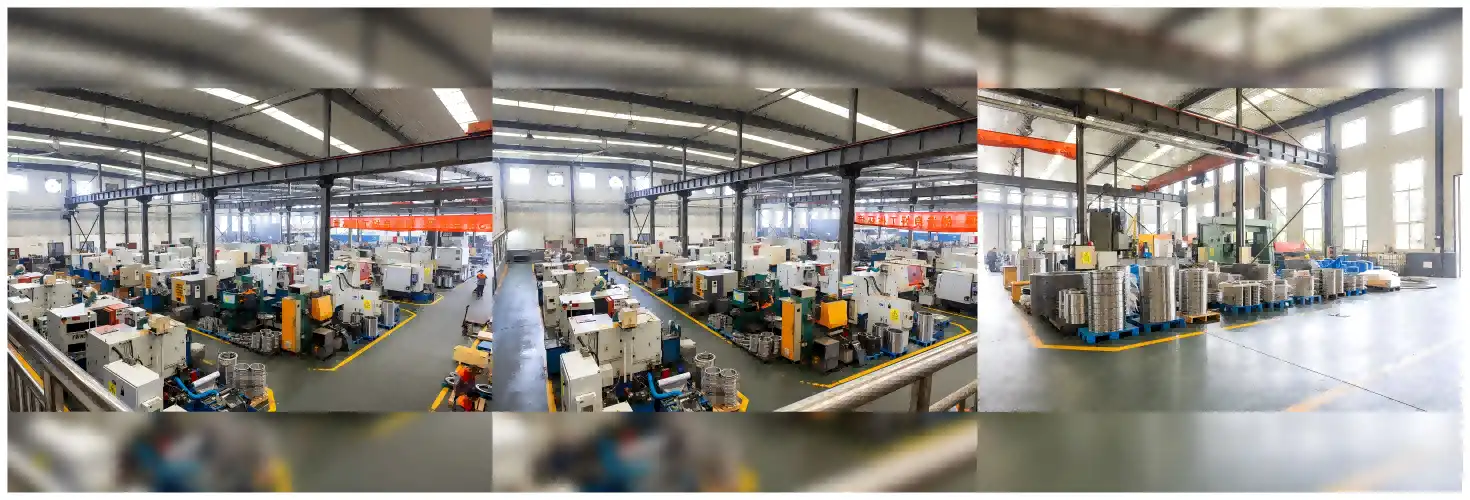
Luoyang Auto Bearing Co., Ltd. (ATLYC) delivers precision-engineered crossed roller bearings backed by 15 years of specialised manufacturing experience and ISO 9001/IATF 16949 certifications. Our six production workshops, staffed by 120 dedicated professionals, produce bearing sizes spanning 20mm to 1100mm inner diameters, meeting precision grades from P6 through P2 for diverse automation and robotics applications. We maintain competitive pricing structures with reliable lead times, supporting OEMs and distributors across South Korea, the United States, Germany, Russia, Iran, and Turkey with technical consultation services throughout the selection and installation phases. Contact our engineering team at auto@lyautobearing.com to discuss your specific requirements with a dependable Chinese bearing supplier combining manufacturing scale, international quality standards, and responsive customer support. We provide detailed technical documentation, application engineering assistance, and long-term partnership reliability that helps your operations achieve optimal performance from crossed roller bearing installations.
References
1. Harris, T.A., and Kotzalas, M.N. (2006). Advanced Concepts of Bearing Technology: Rolling Bearing Analysis, Fifth Edition. CRC Press, Boca Raton.
2. Eschmann, P., Hasbargen, L., and Weigand, K. (1985). Ball and Roller Bearings: Theory, Design and Application, Second Edition. John Wiley & Sons, Chichester.
3. Weck, M., and Brecher, C. (2006). Machine Tools Production Systems 2: Design and Calculation. Springer-Verlag, Berlin.
4. ISO 492:2014. Rolling Bearings — Radial Bearings — Geometrical Product Specifications (GPS) and Tolerance Values. International Organization for Standardization, Geneva.
5. Bossmanns, B., and Tu, J.F. (1999). "A Thermal Model for High Speed Motorized Spindles." International Journal of Machine Tools and Manufacture, Vol. 39, Issue 9, pp. 1345-1366.
6. Schaeffler Technologies AG & Co. (2016). Crossed Roller Bearings and Crossed Tapered Roller Bearings: Mounting and Dismounting Instructions Technical Manual. Herzogenaurach, Germany.
Learn about our latest products and discounts through SMS or email