- English
- French
- German
- Portuguese
- Spanish
- Russian
- Japanese
- Korean
- Arabic
- Greek
- German
- Turkish
- Italian
- Danish
- Romanian
- Indonesian
- Czech
- Afrikaans
- Swedish
- Polish
- Basque
- Catalan
- Esperanto
- Hindi
- Lao
- Albanian
- Amharic
- Armenian
- Azerbaijani
- Belarusian
- Bengali
- Bosnian
- Bulgarian
- Cebuano
- Chichewa
- Corsican
- Croatian
- Dutch
- Estonian
- Filipino
- Finnish
- Frisian
- Galician
- Georgian
- Gujarati
- Haitian
- Hausa
- Hawaiian
- Hebrew
- Hmong
- Hungarian
- Icelandic
- Igbo
- Javanese
- Kannada
- Kazakh
- Khmer
- Kurdish
- Kyrgyz
- Latin
- Latvian
- Lithuanian
- Luxembou..
- Macedonian
- Malagasy
- Malay
- Malayalam
- Maltese
- Maori
- Marathi
- Mongolian
- Burmese
- Nepali
- Norwegian
- Pashto
- Persian
- Punjabi
- Serbian
- Sesotho
- Sinhala
- Slovak
- Slovenian
- Somali
- Samoan
- Scots Gaelic
- Shona
- Sindhi
- Sundanese
- Swahili
- Tajik
- Tamil
- Telugu
- Thai
- Ukrainian
- Urdu
- Uzbek
- Vietnamese
- Welsh
- Xhosa
- Yiddish
- Yoruba
- Zulu
How to Maintain RA Series Cross Roller Bearings for Longevity?
Maintaining RA Series Cross Roller Bearings needs a planned method that includes keeping the bearings oiled, inspecting them regularly, and controlling the environment. To keep their amazing load-bearing capacity, these ultra-thin precision bearings need to be constantly checked. They have an outer ring that can be separated and an inner ring that can rotate. Maintenance that includes regular cleaning, using the right lube, and finding signs of wear early on can greatly extend the life of an operation. When these high-performance parts are used in industrial robots, spinning tables, or precision equipment, following thorough repair procedures will help you get the most out of your investment and reduce the chance of unexpected downtime in tough factory settings.
Understanding RA Series Cross Roller Bearings and Their Maintenance Needs
Structural Design and Operational Principles
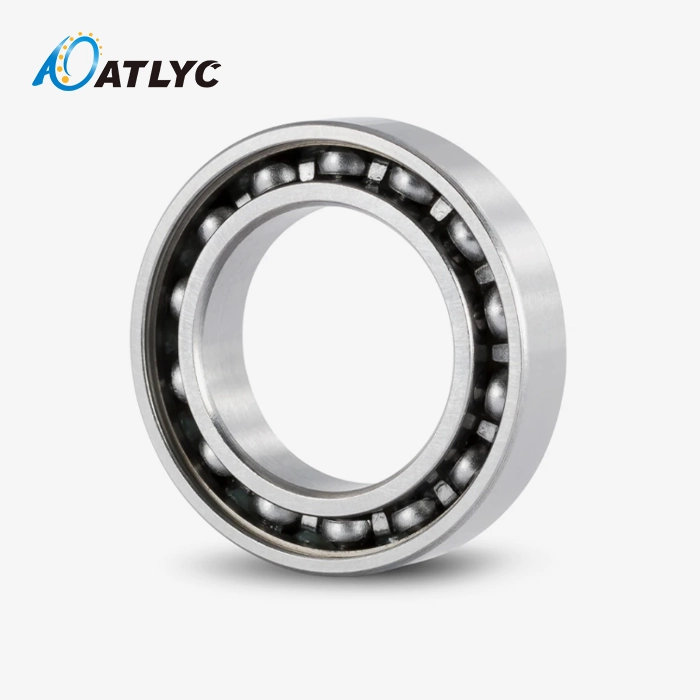
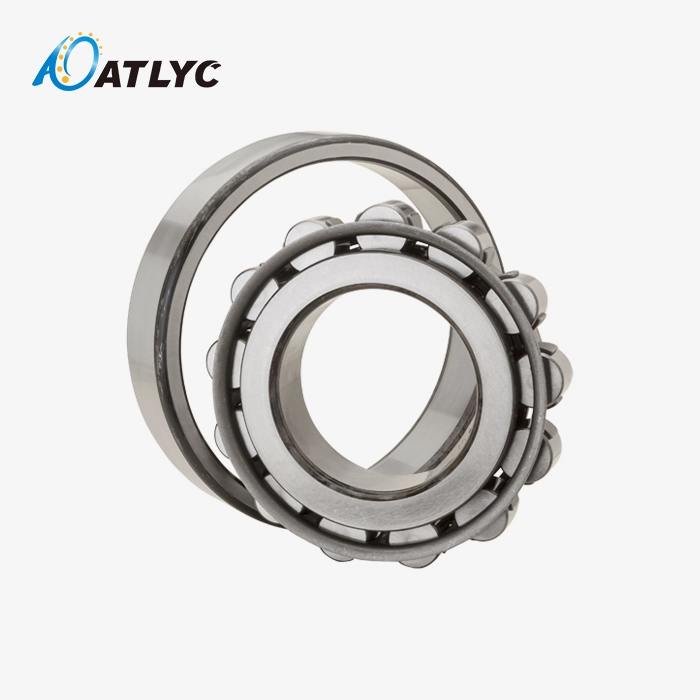
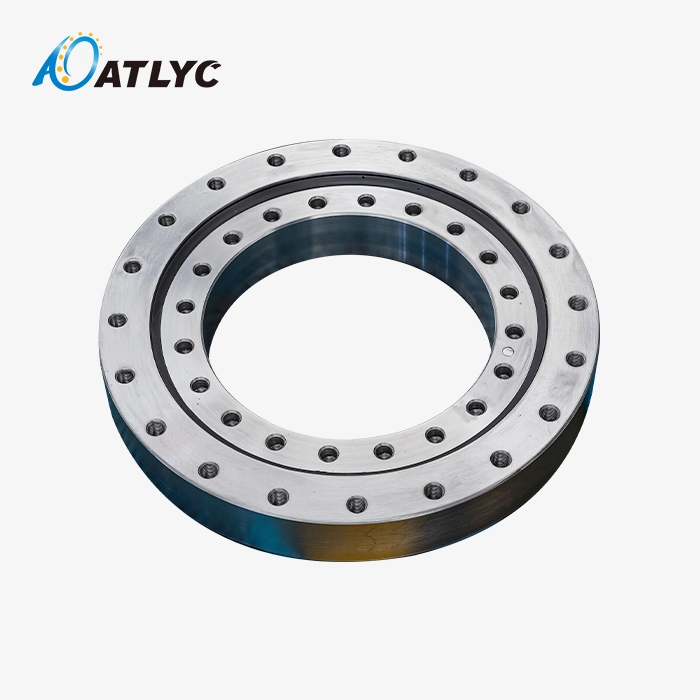
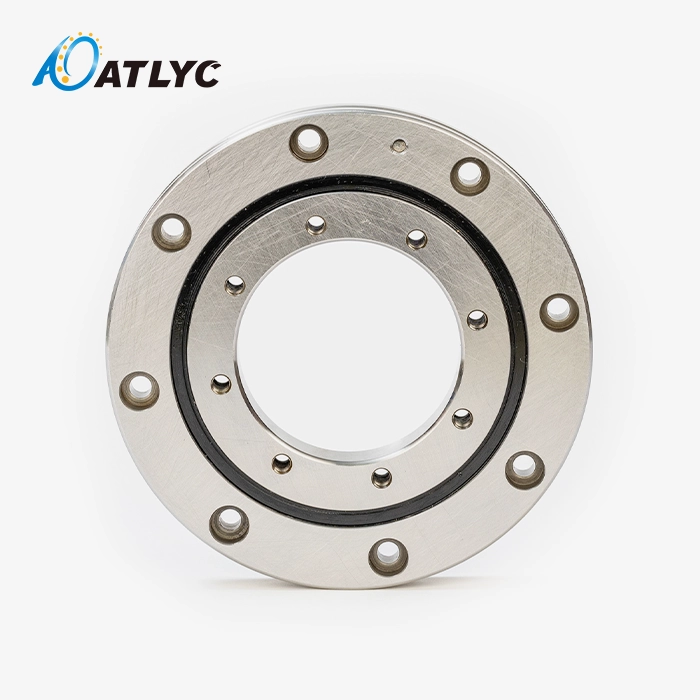
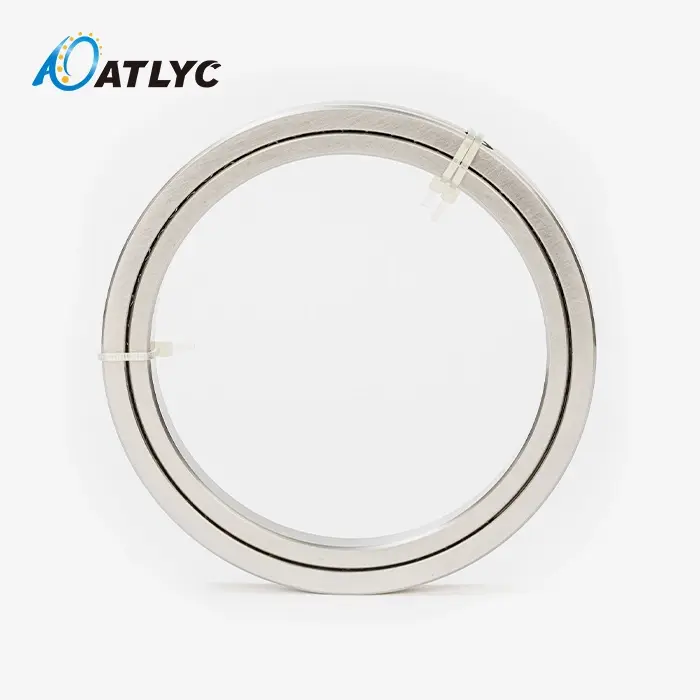
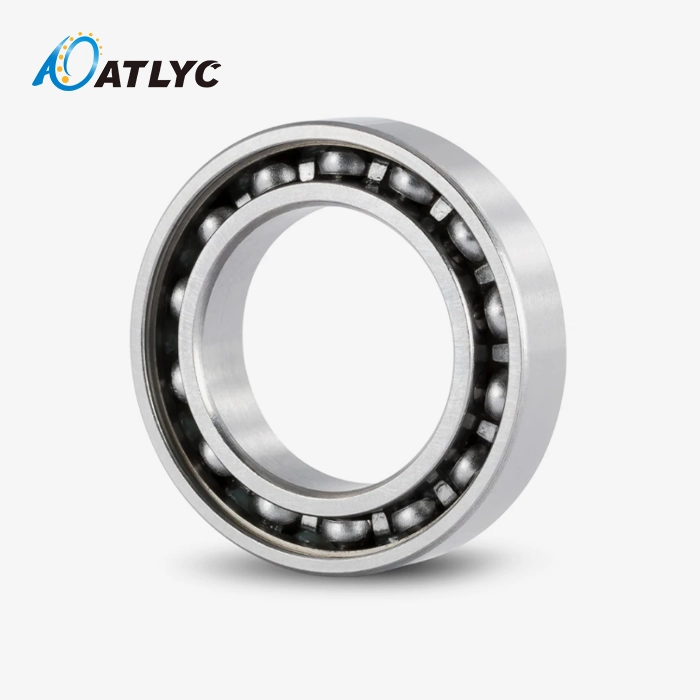
Cross roller bearings are different because they have circular rollers that are placed 90 degrees apart and across from each other inside V-groove raceways. With this design, the RA Series Cross Roller Bearing can handle loads that are applied in more than one way through a single, small unit. The outer ring's ability to be separated makes installation and upkeep easier, and the inner ring's built-in spinning structure makes sure movement is smooth and accurate. Spacers between neighbouring rollers keep them from touching directly, which lowers the friction coefficient and makes spinning easier than with traditional bearings. These bearings are made from high-quality Gcr15 or Gcr15SiMn steel and keep their shape even when they are used continuously. Inner diameters range from 20mm to 350mm, outer diameters from 70mm to 540mm, and widths range from 12mm to 45mm, so they can be used for a wide range of purposes. The thin walls of the building make great use of the room without losing strength. This design gets rid of the need for different thrust and radial bearing setups. This makes assembly designs easier and lowers the weight of the whole system. Knowing about this level of complexity in the structure helps maintenance teams understand why proper care leads to big performance gains.
Common Operating Environments and Wear Mechanisms
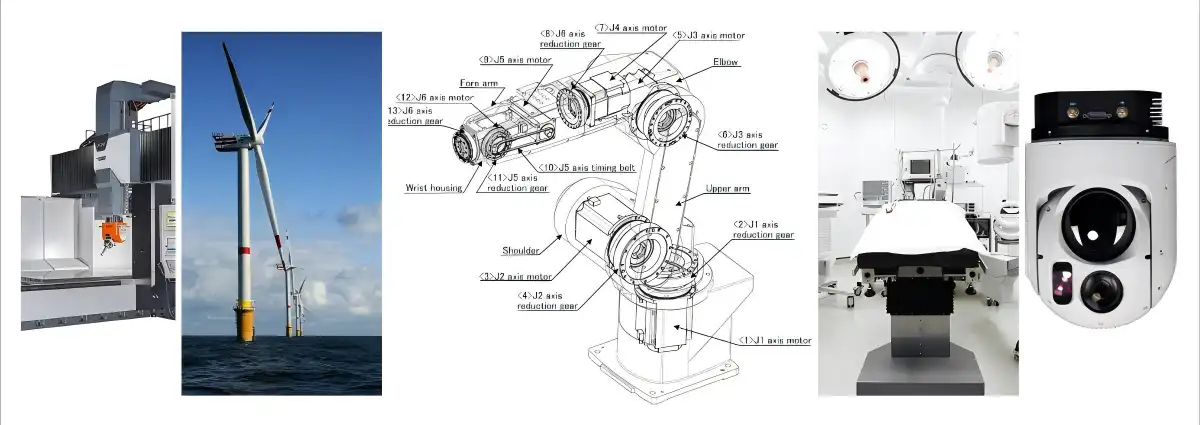
Depending on where they are installed, cross roller bearings used in industry can experience very different situations. In a clean room, semiconductor equipment must work without getting contaminated, but robots that put together cars have to deal with temperature changes and vibrations. Medical imaging devices need to be very quiet and have very little runout. On the other hand, machine center rotary tables have to handle constant loading cycles with cutting fluid contact. There are four main places where wear usually comes from. When grease breaks down chemically or moves away from load zones, metals touch each other. This is called lubrication breakdown. Abrasive particles damage precision raceway surfaces when they come in contact with dust, wetness, or process fluids. Misalignment makes the load spread unevenly across the rollers, which speeds up wear patterns in certain areas. Overload conditions are higher than what was planned, which leads to lasting damage or surface wear. Extreme temperatures make these problems even worse. High temperatures speed up the breakdown of lubricants, and cold places make grease thicker, which makes it harder for a film to form properly. Vibrations from nearby machines travel through mounting structures and cause tiny movements that mess up grease films. When maintenance teams are aware of these external factors, they can come up with focused protection plans instead of general service routines.
Precision Requirements and Performance Standards
Manufacturing accuracy has a direct effect on how long something works and how often it needs to be serviced. There are different accuracy classes for RA Series Cross Roller Bearings, such as P6, P5, P4, and P0. Each class specifies the runout limits and physical consistency. Because performance deterioration is more obvious and faster, higher accuracy grades like P4 need stricter repair procedures. Applications in measuring tools and equipment for making integrated circuits (ICs) need very accurate spinning performance over a long period of time. In these sensitive systems, even small amounts of wear can cause them to work less well. On the other hand, industrial robot manipulator joints may be able to handle a little more flexibility while still performing their duties. Allocating resources in the best way possible without sacrificing reliability is achieved by matching the level of care to the accuracy needs of the application.
Essential Maintenance Practices for RA Series Cross Roller Bearings
Lubrication Selection and Application Techniques
Maintenance plans that work depend on the right kind of grease. When used with cross rollers, the V-groove raceway design needs oils that keep the film width the same, even when the load is applied in different directions. Lithium-based greases that are consistent with NLGI Grade 2 work well in most industrial settings because they have the right thickness to form a film and don't separate when rotational forces act on them. Mineral-based greases break down quickly in hot places above 80°C, but synthetic oils last longer between services. However, for use in cold places below -20°C, greases made with synthetic base oils are needed to keep the flow when regular lubricants harden. Food-grade or low-outgassing oils that meet strict standards for contamination control are needed in clean rooms.
Inspection Protocols and Cleaning Procedures
Regular inspections find problems as they start to happen, before they get worse and cost a lot to fix. A visual check should be done once a month during regular repair times. The goals of the inspection are to check the integrity of the seals, the state of the mounting surfaces, and any obvious signs of oil leaks or contamination. Dark spots around seals mean that the grease is oxidising, and metal bits mean that the wear is progressing inside the machine. Visual review isn't enough; operational inspection is also needed. When the machine is turned off, rotating the inner ring by hand shows signs of damage to the raceways, such as unusual resistance, stopping spots, or roughness. Using infrared thermography to keep an eye on temperatures lets you know when bearings are running above their normal temperatures, which means they need more grease or are under too much load. Accelerometers on the bearing housings are used for vibration research to find high-frequency signals that are typical of raceway flaws or wheel wear.
Load Monitoring and Alignment Verification
The cross roller bearing is great at handling mixed loads, but going over its stated capacity speeds up wear by a huge amount. Instead of guessing, measurements are needed to understand real load conditions. Strain gauges attached to structural parts next to bearings measure real-world loads during operation. This shows if the design assumptions are met in real life. Dynamic loads from acceleration, braking, and impacts often are much higher than motionless loads that have been determined. In robotics, force spikes happen when the direction of movement changes quickly. On the other hand, cutting force changes on machine centers depending on how the tools are engaged. By keeping track of the highest load events, you can see if the way you use bearings puts them under situations that are outside their design limits.
Troubleshooting and Problem-Solving for RA Series Bearings
Identifying Symptoms and Diagnostic Approaches
A strange noise is the first sign that there are problems with a bearing. Cross roller bearings that are healthy run smoothly and quietly. Sounds like grinding, clicking, or rolling are signs that something is wrong inside. Grinding means that sharp bits get between the wheels and the raceways and cause corrosion. Most of the time, clicking is caused by broken roller spacers or raceway spalling. Rumbling means that there isn't enough grease to keep the metals from touching. Vibration research gives doctors medical data in the form of numbers. Baseline shaking patterns recorded during startup are used as comparison points for continued tracking. If the volume goes up in the high-frequency bands between 1,000 and 5,000 Hz, it means that the surface of the track is breaking down. Low-frequency rises below 100 Hz are usually caused by problems with the base or misalignment, not by problems with the bearings themselves.
Preventive Maintenance Case Study
An automotive component manufacturer operating machining centers with RA Series Cross Roller Bearings in rotary table assemblies faced recurring bearing failures every 8-10 months. Production interruptions and emergency replacement costs exceeded $50,000 annually across their facility. Implementing structured maintenance protocols transformed their reliability performance. Results proved dramatic. Average bearing service life extended to 36 months, reducing replacement frequency by 75%. Unplanned downtime attributed to bearing failures dropped to near zero. Annual bearing-related costs declined to $12,000, with additional productivity gains from eliminated production interruptions. This case demonstrates how comprehensive maintenance strategies deliver measurable financial returns beyond simple component preservation.
Replacement Decision Criteria
Determining whether to repair or replace cross roller bearings requires balancing multiple factors. Visible raceway damage, including pitting, spalling, or scoring, generally necessitates replacement. Attempting to operate bearings with these defects risks catastrophic failure and potential secondary equipment damage. The separable outer ring design simplifies inspection, enabling definitive condition assessment without complete disassembly. Economic analysis compares replacement costs against continued operation risks. Premium precision bearings represent significant capital investments, particularly in larger sizes. However, the cost of unplanned downtime, emergency shipping, and potential collateral damage from catastrophic failure typically exceeds scheduled replacement expenses substantially.
Comparing RA Series Cross Roller Bearings Maintenance with Alternatives
Performance and Maintenance Trade-offs
Cross roller bearing maintenance requirements differ from conventional ball or tapered roller bearing arrangements. Ball bearings typically tolerate wider maintenance intervals and less precise lubrication practices, but cannot match the combined load capacity and rigidity of cross roller designs. Applications requiring the RA Series Cross Roller Bearing performance envelope justify the more disciplined maintenance approach. The RB Series represents another cross roller variant with thicker cross-sections providing higher load ratings. While RB bearings tolerate heavier loads, their increased size and weight make them unsuitable for space-constrained applications where RA Series components excel. Maintenance practices remain similar between series, though RB configurations typically extend service intervals due to larger lubricant reservoirs.
Total Cost Analysis
Evaluating maintenance economics extends beyond component acquisition costs. Cross roller bearing precision manufacturing commands premium pricing compared to commodity bearing types. However, analyzing total ownership costs reveals the comprehensive value proposition. Reduced assembly complexity eliminates costs associated with multiple bearing arrangements, simplifying both initial installation and subsequent maintenance. Extended service life under proper maintenance lowers annualized bearing costs substantially. An RA Series Cross Roller Bearing operating 36 months between replacements costs significantly less annually than commodity bearings requiring replacement every 12 months, even if individual unit prices differ considerably. Reduced downtime delivers additional value through maintained production schedules and eliminates rush shipping charges for emergency replacements.
Procurement and Support Considerations for RA Series Cross Roller Bearings
Supplier Selection and Quality Verification
Sourcing genuine RA cross roller bearings from established manufacturers ensures product authenticity and performance consistency. Counterfeit bearings infiltrating supply chains present serious quality risks, offering substandard materials and inadequate dimensional precision despite appearing superficially similar. Procurement through authorized distributors or direct manufacturer relationships provides quality assurance essential for demanding applications. Certification documentation validates manufacturing standards compliance. ISO 9001 and IATF 16949 certifications demonstrate systematic quality management throughout production processes. Requesting material certifications confirming Gcr15 or Gcr15SiMn steel composition, along with dimensional inspection reports documenting accuracy class compliance, verifies product specifications before installation.
Strategic Procurement Planning
Bulk purchasing strategies reduce per-unit costs while ensuring component availability. OEM manufacturers incorporating cross-roller bearings across product lines benefit from volume pricing negotiated with bearing suppliers. Stocking agreements guarantee priority allocation during supply constraints, protecting production schedules from component shortages. Lead time planning prevents production delays. Custom bearing configurations meeting specific dimensional or performance requirements may require 8-12 weeks from order placement to delivery. Standard catalog sizes typically ship within 2-4 weeks, though popular specifications sometimes face extended lead times during peak demand periods. Maintaining a strategic inventory of critical bearing sizes buffers against supply chain variability.
After-Sales Support and Technical Resources
Comprehensive technical documentation supports effective maintenance implementation. Installation manuals detailing proper mounting procedures, lubrication specifications, and torque requirements prevent installation errors that compromise bearing performance. Maintenance guidelines tailored to specific bearing series inform service interval scheduling and procedure development. Training programs elevate maintenance team capabilities. Manufacturer-sponsored training covering bearing fundamentals, proper handling techniques, and troubleshooting methodologies develops in-house expertise. Investing in workforce development reduces reliance on external service providers while improving maintenance effectiveness through a better understanding of bearing technology and care requirements.
Conclusion
Maximizing RA Series Cross Roller Bearing longevity demands systematic attention to lubrication, inspection, and environmental control. The exceptional load capacity, compact dimensions, and precision performance these bearings deliver justify comprehensive maintenance protocols extending service life and optimizing operational reliability. Understanding the structural design, operating environments, and wear mechanisms specific to cross roller configurations enables maintenance teams to implement targeted prevention strategies rather than reactive repair approaches. Procurement decisions extending beyond initial component cost toward total ownership economics recognize the substantial value proper maintenance delivers. Strategic supplier relationships providing technical support, genuine components, and responsive service create foundations for long-term operational success across demanding manufacturing environments where equipment uptime directly impacts competitive performance.
FAQ
What lubrication intervals work best for RA Series Cross Roller Bearings?
Lubrication intervals depend heavily on operating conditions rather than fixed time schedules. Continuous operation under moderate speeds and stable loads typically requires fresh grease every 2,000-3,000 operating hours. High-temperature environments above 80°C or high-speed applications shorten intervals to 1,000-1,500 hours due to accelerated lubricant degradation. Clean-room applications may extend intervals to 4,000 hours when contamination risks remain minimal. Vibration monitoring and temperature tracking provide condition-based indicators prompting relubrication when the actual bearing condition warrants service rather than arbitrary time intervals.
Can cross roller bearings operate in high-temperature environments?
RA Series Cross Roller Bearings function effectively in elevated temperature environments when properly specified. Standard Gcr15 steel maintains dimensional stability to approximately 120°C, while Gcr15SiMn alloy extends capability to 150°C. Synthetic lubricants formulated for high-temperature service prevent premature oxidation and maintain adequate viscosity. Seal materials require temperature compatibility, with upgraded compounds available for extreme conditions. Applications consistently exceeding 100°C benefit from increased inspection frequency monitoring for accelerated wear patterns.
When should bearings be replaced versus repaired?
Visible raceway damage, including pitting, spalling, scoring, or discoloration, indicating overheating, generally necessitates replacement. The precision nature of cross roller bearings makes raceway restoration impractical compared to replacement costs. Contamination-related wear detected early through inspection sometimes allows bearing restoration through thorough cleaning and relubrication. Economic analysis weighing replacement costs against downtime risks and potential collateral damage typically favors proactive replacement when significant defects appear, particularly as bearings approach design life expectancy.
Partner with ATLYC for Premium Cross Roller Bearing Solutions
ATLYC stands as your reliable RA Series Cross Roller Bearing manufacturer, combining 15 years of precision manufacturing expertise with ISO 9001 and IATF 16949 certified quality systems. Our engineering team understands the critical performance requirements of industrial automation, automotive assembly, and precision machinery applications where bearing reliability directly impacts your production efficiency and product quality.
We manufacture cross roller bearings spanning inner diameters from 20mm to 350mm in accuracy grades from P6 to P4, delivering the specifications your equipment demands. Our Gcr15 and Gcr15SiMn steel components undergo rigorous quality inspection throughout six specialized production workshops, ensuring consistent dimensional precision and material integrity. Beyond component supply, we provide comprehensive technical support guiding bearing selection, maintenance protocol development, and troubleshooting assistance throughout your equipment lifecycle.
Contact our application engineering team at auto@lyautobearing.com for detailed technical consultation, custom quotations, and volume pricing on RA Series Cross Roller Bearing supplier partnerships. We serve automotive manufacturers, industrial equipment OEMs, and precision machinery builders across global markets with competitive lead times and reliable delivery performance supporting your production schedules.
References
1. Harris, T.A. & Kotzalas, M.N. (2007). Essential Concepts of Bearing Technology: Rolling Bearing Analysis, CRC Press, highlighting cross-roller bearing load distribution mechanisms and maintenance fundamentals.
2. Budynas, R.G. & Nisbett, J.K. (2015). Shigley's Mechanical Engineering Design, McGraw-Hill Education, covers bearing selection criteria and lifecycle analysis methodologies for precision applications.
3. Hamrock, B.J., Schmid, S.R. & Jacobson, B.O. (2004). Fundamentals of Fluid Film Lubrication, Marcel Dekker, explains lubrication theory applicable to cross roller bearing film formation and friction reduction.
4. Neale, M.J. (2001). The Tribology Handbook, Butterworth-Heinemann, provides comprehensive maintenance guidance for industrial bearing applications across varied operating conditions.
5. Eschmann, P., Hasbargen, L. & Weigand, K. (1985). Ball and Roller Bearings: Theory, Design and Application, John Wiley & Sons, detailing precision bearing manufacturing standards and quality specifications.
6. ISO 15243:2017. Rolling bearings - Damage and failures - Terms, characteristics and causes, International Organization for Standardization, establishing industry-standard failure analysis terminology and diagnostic approaches.
Learn about our latest products and discounts through SMS or email