- English
- French
- German
- Portuguese
- Spanish
- Russian
- Japanese
- Korean
- Arabic
- Greek
- German
- Turkish
- Italian
- Danish
- Romanian
- Indonesian
- Czech
- Afrikaans
- Swedish
- Polish
- Basque
- Catalan
- Esperanto
- Hindi
- Lao
- Albanian
- Amharic
- Armenian
- Azerbaijani
- Belarusian
- Bengali
- Bosnian
- Bulgarian
- Cebuano
- Chichewa
- Corsican
- Croatian
- Dutch
- Estonian
- Filipino
- Finnish
- Frisian
- Galician
- Georgian
- Gujarati
- Haitian
- Hausa
- Hawaiian
- Hebrew
- Hmong
- Hungarian
- Icelandic
- Igbo
- Javanese
- Kannada
- Kazakh
- Khmer
- Kurdish
- Kyrgyz
- Latin
- Latvian
- Lithuanian
- Luxembou..
- Macedonian
- Malagasy
- Malay
- Malayalam
- Maltese
- Maori
- Marathi
- Mongolian
- Burmese
- Nepali
- Norwegian
- Pashto
- Persian
- Punjabi
- Serbian
- Sesotho
- Sinhala
- Slovak
- Slovenian
- Somali
- Samoan
- Scots Gaelic
- Shona
- Sindhi
- Sundanese
- Swahili
- Tajik
- Tamil
- Telugu
- Thai
- Ukrainian
- Urdu
- Uzbek
- Vietnamese
- Welsh
- Xhosa
- Yiddish
- Yoruba
- Zulu
SX011814 Cross Roller Bearing Installation Guide and Tips
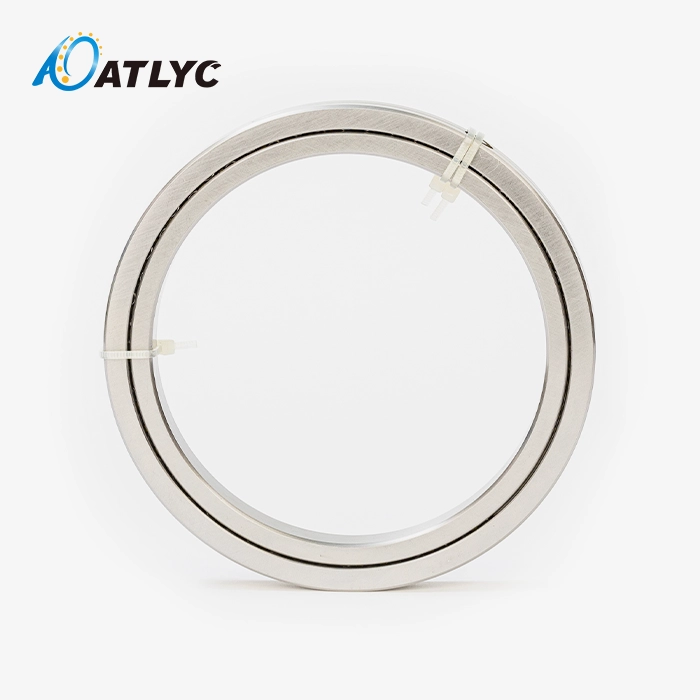
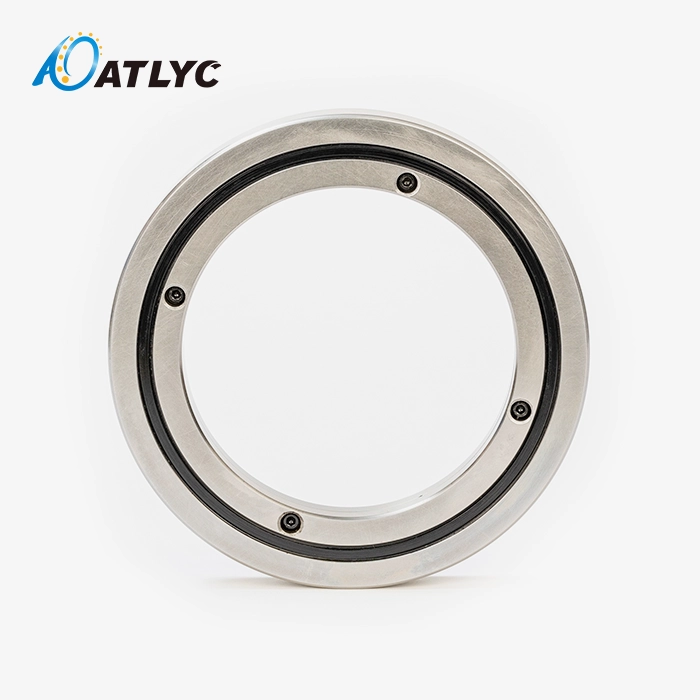
Proper installation of the SX011814 Cross roller bearing is fundamental to achieving optimal performance in precision machinery. This ultra-thin, high-rigidity bearing features a unique cross-roller configuration with a split outer ring design, delivering exceptional radial, axial, and moment load capacity within a compact 70mm inner diameter, 90mm outer diameter, and 10mm width profile. Correct installation procedures directly influence operational lifespan, rotational accuracy, and equipment reliability. We've developed this comprehensive guide specifically for procurement managers, OEMs, and maintenance engineers seeking to maximize bearing performance in robotic joints, CNC rotary tables, and precision automation equipment while minimizing downtime and maintenance costs.
Understanding the SX011814 Cross Roller Bearing
Design Architecture and Technical Specifications
The SX011814 represents an advanced solution in compact bearing technology. Its cross-roller arrangement positions cylindrical rollers at alternating 90-degree angles within precision V-groove raceways, creating line contact surfaces that deliver 3-4 times greater rigidity than conventional ball bearings. This configuration enables a single bearing unit to simultaneously handle complex loads that would typically require multiple bearing arrangements. Manufacturing from GCr15 or GCr15SiMn high-carbon chromium steel ensures exceptional wear resistance, with heat treatment achieving hardness levels between HRC 60-64. The material composition provides extended fatigue life even under continuous operational stress. Dimensional precision adheres to ISO tolerance standards, with accuracy grades ranging from P6 for standard applications through P0, P5, P4, to P2 for ultra-precision requirements where sub-micron runout tolerances become critical.
The structural design features an integral inner ring paired with a split outer ring secured by three fastening rings. This configuration allows precise clearance adjustment and preload control during installation. Plastic spacers positioned between individual rollers prevent metal-to-metal contact, reducing friction coefficients and ensuring smooth rotation throughout the operational envelope. The ultra-thin profile eliminates mounting holes in both rings, requiring flange and bearing seat arrangements for secure positioning—a design choice that maximizes load-bearing surface area while minimizing overall assembly height.
Industrial Applications and Performance Advantages
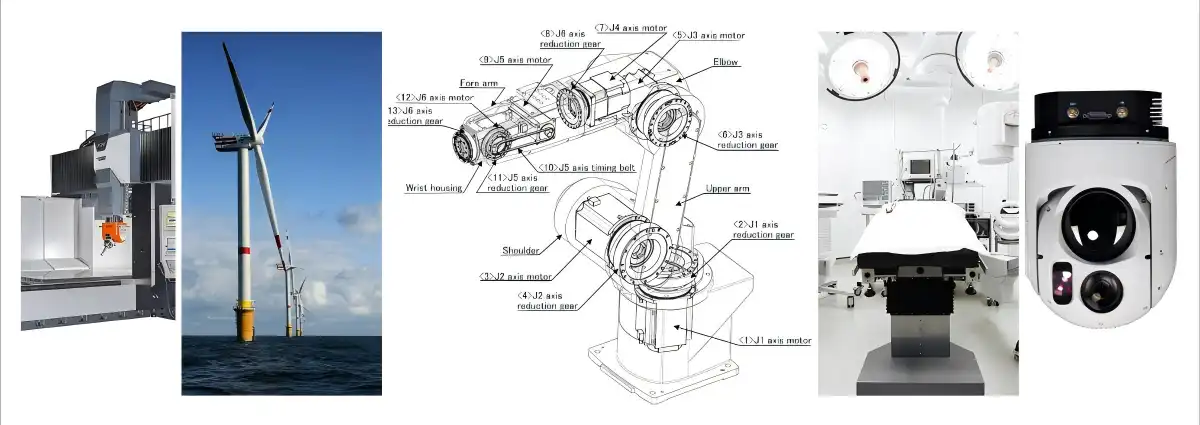
Cross roller bearings excel in applications where space constraints meet demanding accuracy requirements. We see these components deployed extensively across multiple sectors where precision directly impacts production quality and operational efficiency. Robotic Systems: In industrial robot joints and articulated arm assemblies, the bearing's ability to handle tilting moments without elastic deformation proves invaluable. The compact design reduces robot arm weight while maintaining positional repeatability within microns, even during rapid acceleration and deceleration cycles. Collaborative robots operating in cleanroom environments particularly benefit from the low-friction characteristics that minimize particle generation.
CNC Machine Tools: Precision rotary tables and indexing mechanisms in vertical machining centers demand bearings like the SX011814 Cross roller bearing that maintain angular positioning accuracy despite heavy cutting forces. The geometric moment rigidity inherent in the cross-roller design resists deflection under cantilever loads, directly contributing to improved surface finish on machined parts. Coolant exposure and temperature fluctuations characteristic of machining environments require bearing solutions with robust sealing compatibility and dimensional stability.
Medical Equipment: CT scanner gantries and optical targeting devices incorporate these bearings in rotating assemblies where noise, vibration, and positioning accuracy directly affect diagnostic image quality. The bearing must support the overhanging scanner mechanism's weight while delivering vibration-free rotation in temperature-controlled clinical settings. Medical applications particularly value the predictable service life and low maintenance requirements that minimize equipment downtime in critical healthcare facilities.
Precision Instruments: Measuring equipment and IC manufacturing devices rely on rotational accuracy for quality control processes. Semiconductor production equipment operates in controlled environments where contamination control and precise motion become paramount. The bearing's sealed design and smooth operation characteristics align well with these stringent operational requirements. These diverse applications share common performance expectations: high stiffness-to-weight ratios, multi-directional load capacity, minimal friction losses, and predictable operational characteristics across temperature ranges and duty cycles.
Preparing for SX011814 Cross Roller Bearing Installation
Workspace Setup and Environmental Controls
Installation success begins before touching the bearing. We recommend establishing a dedicated workspace with controlled temperature between 20-25°C and relative humidity below 60%. Temperature stability prevents dimensional changes during installation that could affect final clearances. Clean, dust-free conditions protect bearing surfaces from particulate contamination that accelerates wear and compromises precision.
Essential tools include calibrated torque wrenches for fastener tightening, dial indicators for runout verification, soft-faced hammers or hydraulic presses for mounting operations, and precision measuring instruments for clearance confirmation. Lint-free cleaning cloths, appropriate solvents for preservative removal, and recommended lubricants should be readily accessible. Handling equipment must accommodate bearing weight without imposing side loads during positioning.
Lighting quality matters more than many practitioners recognize. Adequate illumination enables visual inspection of bearing surfaces, detection of installation alignment issues, and verification of proper component seating. Magnification tools assist in identifying surface defects that might escape casual observation but could propagate into operational failures.
Pre-Installation Inspection Procedures
Before beginning installation, conduct a thorough bearing inspection to identify shipping damage or manufacturing defects. Carefully remove protective packaging and inspect the split outer ring halves for any separation or movement of the fastening rings. The integral inner ring should show uniform surface finish without scoring, discoloration, or dimensional distortion.
Rotate the bearing slowly by hand, feeling for smooth, consistent movement without binding or irregular resistance. Any grinding sensation, audible noise, or periodic drag indicates potential roller damage or contamination requiring investigation before proceeding. Measure radial and axial play using appropriate gauging techniques, comparing results against specification sheets to confirm proper internal clearances.
Examine V-groove raceways under good lighting for any indentations, scratches, or corrosion. Even minor surface damage can generate stress concentrations that reduce bearing life significantly. Plastic spacers between rollers should remain properly positioned without cracking or deformation. We've observed that spacer displacement during shipping occasionally occurs, requiring careful repositioning before installation.
Understanding load directions proves critical for proper bearing orientation. The cross-roller configuration provides balanced load capacity, but installation must align bearing axes with anticipated force vectors. Misorientation concentrates loads on fewer rollers, accelerating fatigue and reducing operational life. Documentation review should clarify which ring rotates in your application—the SX series optimizes for inner ring rotation scenarios.
Step-by-Step SX011814 Cross Roller Bearing Installation Process
Mounting Procedure and Critical Considerations
Installation demands methodical execution to preserve bearing integrity and achieve specified performance characteristics. We've developed this procedure based on field experience across diverse applications and environmental conditions.
Begin installation of SX011814 Cross roller bearing by cleaning mating surfaces on shafts and housings. Remove all burrs, paint residue, or surface imperfections that could prevent proper bearing seating. Dimensional verification of shaft and housing diameters ensures conformance to specified tolerances—typically h7 or js7 transition fits for rotating inner rings with H7 clearance fits for stationary outer rings. Tolerance deviations create either excessive play, compromising accuracy, or interference fits, generating damaging preload during installation.
Apply the specified lubricant to bearing raceways and rollers before mounting. This initial lubrication protects the installation process and initial operation before full lubrication film development. Avoid excessive lubricant application; filling 30-40% of available space provides adequate protection while preventing temperature rise from churning resistance.
Position the bearing carefully onto the shaft, ensuring alignment to prevent cocking during mounting. Apply force evenly to the inner ring face using appropriate tools—never strike rollers or the outer ring directly as impact loads cause indentation damage invisible to casual inspection but detrimental to operational performance. Hydraulic mounting tools provide controlled force application, reducing installation risks compared to hammer-driven methods.
The split outer ring requires particular attention during housing installation. Do not disassemble the outer ring halves unnecessarily, as reassembly complications may prevent proper clearance adjustment. Companion flanges must firmly compress the outer ring assembly, maintaining structural integrity and specified preload. Fastener torque specifications provided by bearing documentation should be followed precisely, using calibrated torque wrenches and proper tightening sequences to ensure uniform clamping force distribution.
Common Installation Mistakes and Avoidance Strategies
Installation errors often remain hidden until operational failures occur, making prevention preferable to correction. Misalignment during mounting represents the most frequent issue we encounter. Even slight angular deviation concentrates roller loads, accelerating raceway fatigue, and generating excessive friction. Using alignment fixtures and verification gauging during installation prevents this problem.
Improper torque application to fastening rings either allows bearing movement within housings or generates excessive preload that increases friction and temperature. Both conditions reduce bearing life substantially. Calibrated tooling and adherence to torque specifications eliminate this risk. Sequential tightening patterns, similar to cylinder head bolt procedures, ensure uniform clamp load development across fastener arrays.
Contamination introduction during installation often results from inadequate workspace cleanliness or improper handling practices. Dust particles, metal chips, or fingerprint residue on precision surfaces initiate wear patterns that progressively worsen throughout operational life. Wearing clean gloves, maintaining organized workspaces, and following proper cleaning protocols protect bearing surfaces during installation procedures.
Inadequate clearance verification before placing equipment into service allows dimensional errors to progress into operational failures. We recommend post-installation runout checks using dial indicators positioned against bearing rings during slow rotation. Total indicated runout exceeding specification limits indicates mounting problems requiring correction before operational loads apply damaging stresses.
Post-Installation Verification Testing
Confirmation testing validates installation quality and readiness for operational loading. Mount dial indicators to measure radial and axial runout at the inner ring outer diameter surface while slowly rotating the shaft through complete revolutions. Record maximum runout values and compare against bearing accuracy class specifications—P5 bearings typically maintain radial runout below 5 microns under proper installation conditions.
Axial play measurement verifies proper preload application. Excessive play indicates insufficient fastener torque or improper outer ring compression; insufficient play suggests over-preload conditions that elevate operating temperatures and reduce bearing life. Adjustment procedures vary by application specifics, but always involve systematic fastener torque modification while monitoring resulting dimensional changes.
Manual rotation testing provides a qualitative assessment of installation quality. Smooth, consistent resistance throughout rotation indicates proper bearing condition and alignment. Periodic drag, binding sensations, or unusual noise require investigation and correction before operational loads apply. Temperature monitoring during initial low-speed operation identifies friction issues from preload errors or contamination before damage becomes severe.
Maintenance Tips for Prolonged Bearing Performance
Inspection Schedule and Monitoring Protocols
Sustained performance of SX011814 Cross roller bearing throughout design life expectancy depends on systematic maintenance practices tailored to operational conditions. We recommend inspection intervals based on duty cycle severity, with initial checks occurring after 100-200 operational hours to detect installation-related issues before significant wear develops. Subsequent inspections at 500-hour intervals suit moderate-duty applications, while severe-service environments warrant more frequent attention. Visual inspection during scheduled maintenance intervals identifies lubricant condition, seal integrity, and mounting hardware security. Discoloration around bearing housings suggests elevated operating temperatures from inadequate lubrication or excessive preload. Lubricant leakage indicates seal degradation or housing damage requiring investigation. Fastener security verification prevents gradual loosening that allows bearing movement and generates fretting corrosion on mating surfaces.
Lubrication Best Practices and Common Issues
Proper lubrication fundamentally determines bearing operational life and performance consistency. Lithium-soap base greases with extreme pressure additives suit most applications, providing adequate protection across typical temperature ranges and loading conditions. Product selections like Alvania EP2 or equivalent formulations balance consistency, temperature stability, and load-carrying capacity appropriate for cross roller bearing applications. Lubrication quantity significantly influences operating characteristics. Insufficient lubricant allows metal-to-metal contact between rollers and raceways, accelerating wear and generating excessive friction. Conversely, over-lubrication creates churning resistance that elevates operating temperatures and wastes energy. We recommend filling 30-40% of available bearing space, providing adequate lubricant supply while minimizing friction losses from excess grease movement.
Troubleshooting Typical Bearing Problems
Early problem detection prevents minor issues from progressing into equipment failures and production disruptions. Unusual noise during operation—grinding, squealing, or periodic clicking—indicates developing problems requiring investigation. Grinding typically suggests contamination or inadequate lubrication, allowing roller-to-raceway contact; squealing often relates to improper preload or seal interference; clicking points toward damaged rollers or raceway indentations. Elevated operating temperatures above baseline measurements signal lubrication deficiency, excessive preload, misalignment, or unexpected loading conditions. Temperature rise patterns help diagnose causes—uniform heating suggests preload issues, while localized hot spots indicate specific component damage or lubrication distribution problems. Thermal imaging identifies temperature patterns that guide troubleshooting efforts toward root causes.
Comparing SX011814 Cross Roller Bearing with Alternatives
Performance Characteristics Versus Conventional Solutions
Understanding comparative advantages helps procurement professionals select optimal components for specific applications. Traditional ball bearings offer lower cost and simplified installation, but provide significantly reduced rigidity and moment load capacity. The cross-roller configuration delivers 3-4 times greater stiffness, enabling compact machine designs that would require much larger ball bearing arrangements to achieve equivalent performance. The SX011816 model provides similar cross-roller advantages with slightly different dimensional characteristics—90mm inner diameter, 110mm outer diameter, and 10mm width compared to the SX011814's 70/90/10mm envelope. Application requirements regarding shaft diameter and available space guide selection between models. Both share the split outer ring, integral inner ring architecture optimized for inner ring rotation scenarios.
Cost-Effectiveness and Lifecycle Considerations
Initial procurement costs represent only one component of total ownership expenses. We encourage assessment of lifecycle costs, including installation labor, maintenance requirements, energy consumption, and replacement frequency. Cross roller bearings command premium pricing compared to commodity ball bearings but deliver extended service life and reduced maintenance intervals that often justify higher initial investment. Energy efficiency considerations become increasingly significant in continuous-operation applications. Lower friction coefficients characteristic of properly installed and maintained cross roller bearings translate into reduced power consumption throughout operational life. The cumulative savings over multi-year service periods can substantially offset initial cost differentials, particularly in applications with multiple bearing positions.
Supplier Selection and Quality Assurance
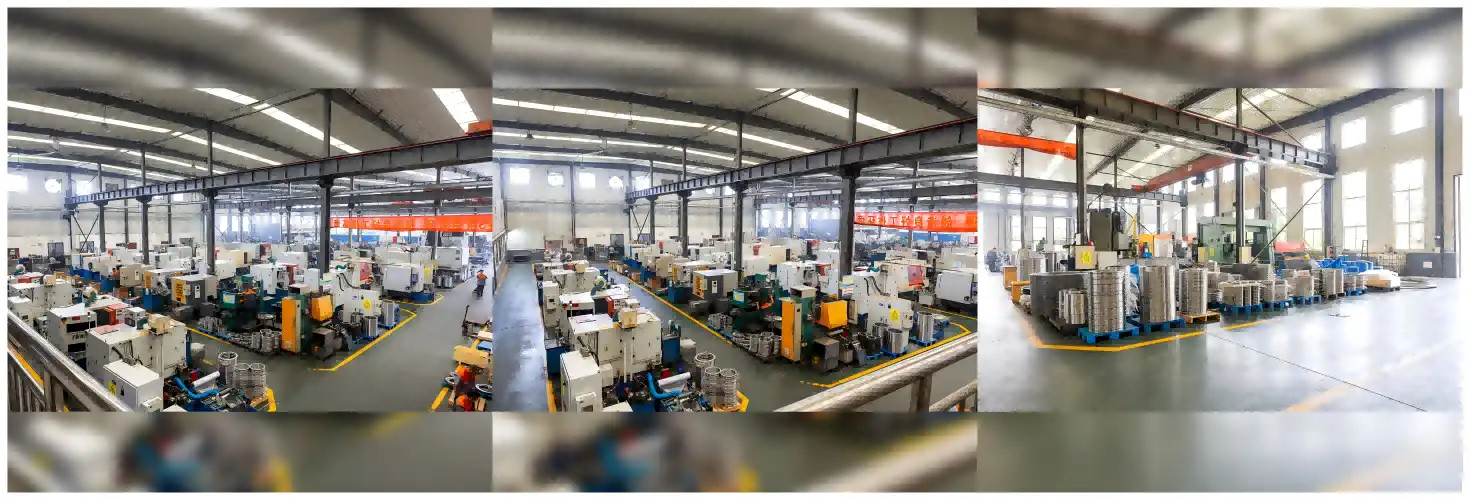
Bearing procurement decisions significantly impact operational reliability and total ownership costs. Established manufacturers, including SKF, NSK, KOYO, and Timken, maintain quality reputations built through consistent performance and comprehensive technical support. These brands command premium pricing reflecting investment in manufacturing precision, material quality, and engineering resources. Alternative suppliers offering competitive pricing warrant careful evaluation regarding manufacturing capabilities, quality management systems, and delivery reliability. ISO 9001 and IATF 16949 certifications demonstrate commitment to systematic quality control and continuous improvement practices. Manufacturing capacity, inspection equipment sophistication, and engineering support availability differentiate suppliers capable of supporting demanding applications from commodity-bearing distributors.
Conclusion
Proper installation and maintenance of the SX011814 Cross roller bearing directly determine equipment reliability, operational precision, and component service life. The ultra-compact design delivering exceptional multi-directional load capacity suits demanding applications in robotics, CNC machinery, and precision automation where space constraints meet rigorous performance requirements. Careful attention to installation procedures—including workspace preparation, mounting alignment, appropriate tooling, and post-installation verification—prevents common errors that compromise bearing performance. Systematic maintenance practices encompassing inspection schedules, proper lubrication techniques, and proactive troubleshooting extend operational life while minimizing unexpected failures. Procurement decisions balancing initial costs against lifecycle value, supported by careful supplier evaluation, optimize total ownership economics while ensuring supply chain reliability for mission-critical applications.
FAQ
How does the split outer ring affect installation complexity?
The split outer ring design of the SX011814 requires careful handling during installation to maintain proper alignment between the two halves. Avoid unnecessary disassembly of the outer ring components, as reassembly complications may prevent achieving specified clearances. Companion flanges must firmly compress the outer ring assembly using calibrated torque on fastening rings to maintain structural integrity. The design allows precise preload adjustment but demands attention to sequential tightening patterns that distribute clamping forces uniformly across the fastener array, similar to procedures used with critical bolted joints.
What shaft and housing fit work best for this bearing?
The SX011814 optimizes for inner ring rotation applications, requiring transition fits like h7 or js7 on shafts to ensure proper centering without excessive interference that complicates installation or generates unintended preload. The stationary outer ring requires clearance fits, typically H7, preventing pinching of the split outer ring components that would distort raceways and compromise performance. Tolerance verification of machined mating surfaces before installation prevents fit-related problems that become evident only after operational loading reveals dimensional incompatibilities.
Can lithium grease be used across all operating conditions?
Lithium-soap base greases with extreme pressure additives suit most applications within typical temperature ranges and moderate operating speeds. Higher-speed applications may require synthetic lubricants with superior temperature stability and lower churning resistance. Contaminated environments benefit from greases formulated with enhanced water resistance and particle suspension characteristics. Temperature extremes—either elevated or sub-zero conditions—demand specialized lubricants maintaining consistency and protective properties outside standard operating envelopes. Application-specific consultation ensures lubricant selection compatibility with operational requirements.
What inspection frequency suits moderate-duty applications?
Initial inspection after 100-200 operational hours detects installation-related issues before significant wear develops. Subsequent 500-hour intervals work well for moderate-duty service under clean environmental conditions with proper initial installation and appropriate lubrication practices. Severe-service environments—heavy loading, contamination exposure, temperature extremes, or continuous operation—warrant more frequent attention, potentially reducing intervals to 250 hours. Vibration monitoring and temperature trending provide condition-based assessment capabilities that optimize inspection scheduling based on actual bearing condition rather than arbitrary time intervals.
Partner with ATLYC for Reliable Cross Roller Bearing Supply
Sourcing high-precision bearings demands suppliers combining manufacturing expertise, quality assurance, and responsive technical support. ATLYC delivers these capabilities through our ISO 9001 and IATF 16949 certified facilities serving global automotive and industrial equipment manufacturers. Our SX011814 Cross roller bearing production maintains strict dimensional tolerances and material specifications across volume orders, backed by comprehensive inspection protocols ensuring consistent quality. We've supported OEM partners and bearing distributors throughout North America, Europe, and Asia with dependable lead times and engineering assistance for application-specific requirements. Contact our team at auto@lyautobearing.com to discuss your bearing specifications, request technical documentation, or receive quotations as an established SX011814 Cross roller bearing supplier. Our 15 years of manufacturing experience and commitment to customer success position us to support your precision bearing needs with confidence and reliability.
References
1. Harris, T.A. & Kotzalas, M.N. (2006). Advanced Concepts of Bearing Technology: Rolling Bearing Analysis. CRC Press, Taylor & Francis Group.
2. Schaeffler Technologies AG & Co. KG (2019). Rolling Bearings: Catalogue HR 1. Technical Documentation, Bearing Installation and Maintenance Guidelines.
3. ISO 492:2014. Rolling bearings — Radial bearings — Geometrical product specifications (GPS) and tolerance values. International Organization for Standardization.
4. Wensing, J.A. (1998). On the Dynamics of Ball Bearings. PhD Thesis, University of Twente, Netherlands, Department of Mechanical Engineering.
5. SKF Group (2018). SKF Rolling Bearings Catalogue: Cross Roller Bearing Design and Installation Guide. Publication 10000/1 EN.
6. Tallian, T.E. (1999). Failure Atlas for Hertz Contact Machine Elements. ASME Press, American Society of Mechanical Engineers.
Learn about our latest products and discounts through SMS or email