- English
- French
- German
- Portuguese
- Spanish
- Russian
- Japanese
- Korean
- Arabic
- Greek
- German
- Turkish
- Italian
- Danish
- Romanian
- Indonesian
- Czech
- Afrikaans
- Swedish
- Polish
- Basque
- Catalan
- Esperanto
- Hindi
- Lao
- Albanian
- Amharic
- Armenian
- Azerbaijani
- Belarusian
- Bengali
- Bosnian
- Bulgarian
- Cebuano
- Chichewa
- Corsican
- Croatian
- Dutch
- Estonian
- Filipino
- Finnish
- Frisian
- Galician
- Georgian
- Gujarati
- Haitian
- Hausa
- Hawaiian
- Hebrew
- Hmong
- Hungarian
- Icelandic
- Igbo
- Javanese
- Kannada
- Kazakh
- Khmer
- Kurdish
- Kyrgyz
- Latin
- Latvian
- Lithuanian
- Luxembou..
- Macedonian
- Malagasy
- Malay
- Malayalam
- Maltese
- Maori
- Marathi
- Mongolian
- Burmese
- Nepali
- Norwegian
- Pashto
- Persian
- Punjabi
- Serbian
- Sesotho
- Sinhala
- Slovak
- Slovenian
- Somali
- Samoan
- Scots Gaelic
- Shona
- Sindhi
- Sundanese
- Swahili
- Tajik
- Tamil
- Telugu
- Thai
- Ukrainian
- Urdu
- Uzbek
- Vietnamese
- Welsh
- Xhosa
- Yiddish
- Yoruba
- Zulu
How to Select the Right RA Crossed Roller Bearings?
To choose the right RA Crossed Roller Bearings, you need to look at the load requirements, room limitations, precision needs, and working conditions of your application. With a special cross-roller arrangement, these small bearings can handle radial, axial, and moment loads all at the same time. This makes them perfect for robots, machining centers, and medical equipment. Finding the right bearing accuracy class for your machine's tolerances is important for getting the best performance. Also, checking the supplier's certifications, material quality, and expert support services will ensure long-term dependability and value.
Understanding RA Crossed Roller Bearings: Design and Functionality
When precision machinery demands compact solutions without compromising performance, crossed roller bearing technology delivers remarkable results. These specialized components revolutionize how engineers approach space-limited applications requiring exceptional rigidity.
What Makes RA Crossed Roller Bearings Unique
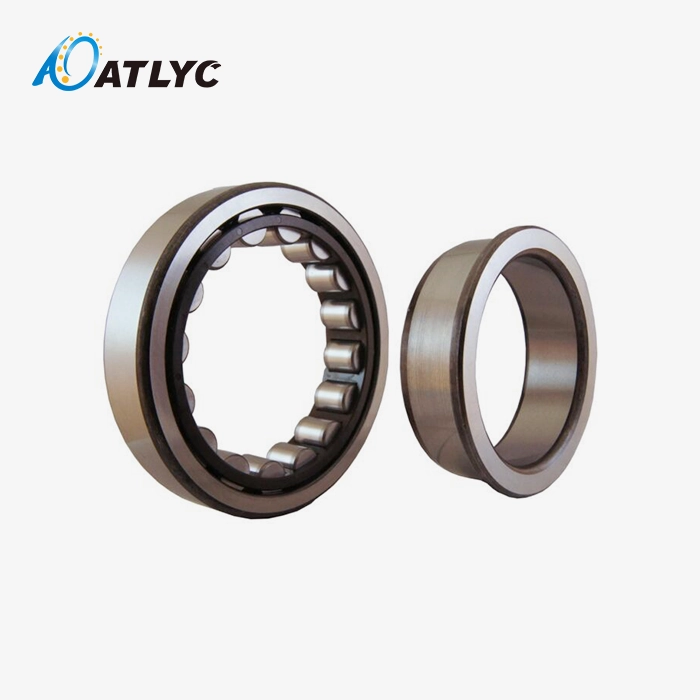
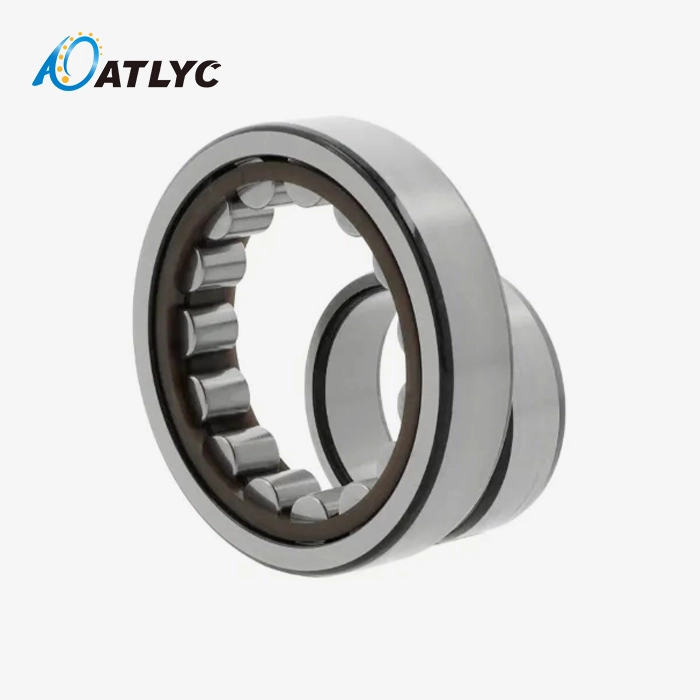
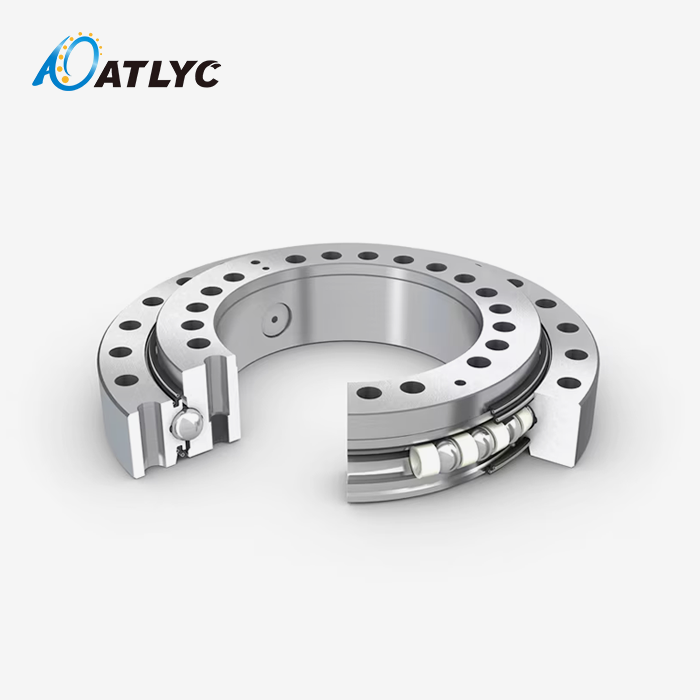
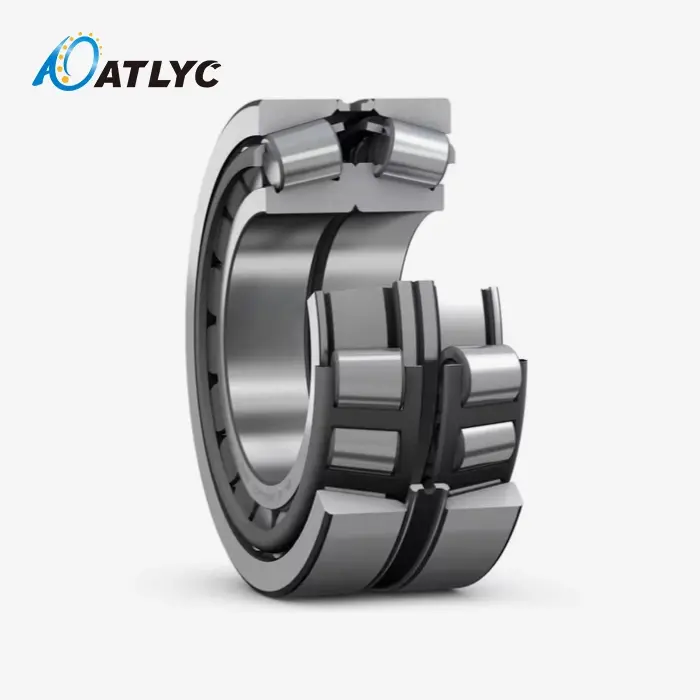
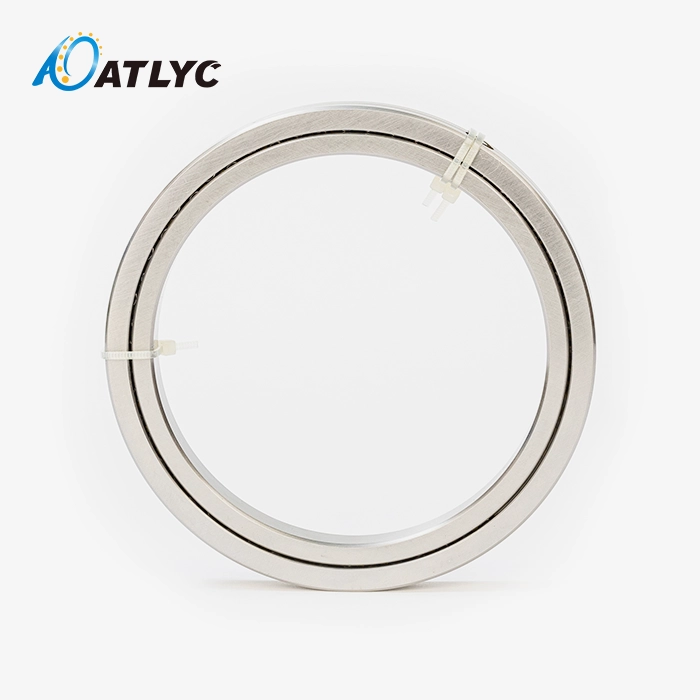
The outer ring of an RA Crossed Roller Bearing can be separated, and the inner ring is built in at the same time. In V-groove raceways, cylindrical wheels are placed at right angles to each other every other time, making line contact instead of point contact. This engineering method spreads loads across multiple contact surfaces, greatly increasing the load-carrying capacity within a small envelope size. The outer ring's ability to be separated makes installation a lot easier. Maintenance teams like this design because it lets them get to internal parts without taking apart all the other machines around it. The design of the inner ring rotation keeps the concentricity very accurate while it's working, which is very important for situations where micron-level precision affects the quality of the product.
Structural Advantages Over Traditional Bearing Types
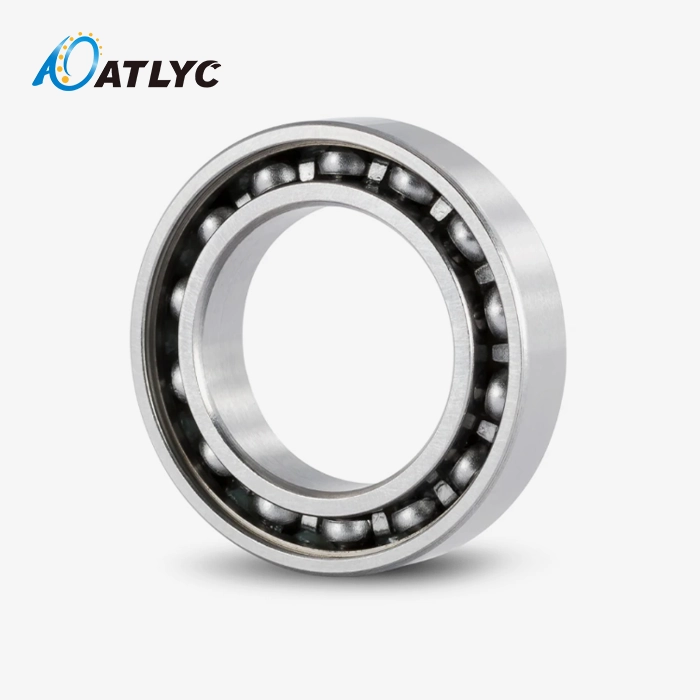
When you compare these precision parts to ball bearings or normal cylindrical roller bearings, you can see that they work very differently. Most of the time, ball bearings handle loads through point contact, which limits their capacity and makes stress densities higher. Cylindrical roller bearings are great at handling radial loads, but they need extra parts to handle axial forces. RA crossed roller bearing designs get rid of these problems. Radial forces of up to several tonnes, axial pressures, and tilting moments can all be handled at the same time by a single machine. The ability to move in more than one way comes from the orthogonal roller arrangement, in which each pair of rollers handles a different load vector. The thin-wall design cuts down on bearing weight by up to 40% compared to regular multi-bearing systems while keeping the same level of stiffness. Sizes range from 20mm to 350mm in diameter, 540mm in diameter, and 12mm to 45mm in width. This ability to change sizes is useful for many things, from small robotic joints to bigger rotating tables in machining centers.
Precision Grades and Operational Performance
Accuracy classifications directly impact application suitability. RA Crossed Roller Bearings are manufactured to P6, P0, P5, P4, and P3 tolerance standards, each serving distinct operational requirements. P6 and P0 grades suit general industrial equipment where positioning accuracy within 10-20 microns satisfies operational needs. P5 precision meets the demands of standard CNC rotary tables and automated handling equipment. High-precision applications—semiconductor manufacturing equipment, coordinate measuring machines, and medical imaging devices—require P4 or P3 accuracy. These grades maintain runout tolerances below 5 microns, ensuring positioning repeatability essential for microelectronics production and diagnostic imaging clarity. The material composition, typically Gcr15 or Gcr15SiMn bearing steel, provides hardness exceeding 58 HRC after heat treatment, contributing to dimensional stability across temperature variations and extended service intervals. Temperature performance remains stable across -20°C to +120°C operating ranges without auxiliary cooling in most installations. The low friction coefficient inherent in the cross-roller configuration generates minimal heat during rotation, preserving lubricant integrity and extending maintenance cycles.
Criteria for Selecting RA Crossed Roller Bearings in B2B Procurement
Procurement decisions affecting production line reliability, RA Crossed Roller Bearings demand a systematic evaluation of technical specifications against operational requirements. Understanding how bearing characteristics align with application demands prevents costly mismatches.
Analyzing Load Requirements and Application Dynamics
Load analysis forms the foundation of bearing selection. Calculating combined loads—radial forces from component weight, axial forces from processing pressures, and moment loads from cantilevered structures—determines necessary capacity ratings. RA crossed roller bearings excel when moment loads dominate, situations where ball bearing life would diminish rapidly. Rotational speed impacts bearing selection significantly. While these precision components handle speeds to 500 rpm effectively, applications exceeding this threshold may require specialized lubrication systems. Low-speed, high-torque applications benefit most from crossed roller technology, where load capacity and rigidity outweigh speed limitations. Environmental conditions influence material and seal choices. Clean manufacturing environments like semiconductor fabs permit open bearing configurations, reducing friction and heat generation. Conversely, machining centers with coolant exposure necessitate sealed variants protecting internal elements from contamination. Understanding your operational environment guides appropriate configuration selection.
Comparing RA Crossed Roller Bearings to Alternative Solutions
Slewing bearings and angular contact ball bearing pairs represent common alternatives. Slewing bearings handle large-diameter applications but occupy considerable axial space and add substantial weight—drawbacks when compactness matters. Their typical accuracy grades fall short of precision requirements in medical robotics or metrology equipment. Angular contact ball bearing arrangements, mounted in tandem or back-to-back configurations, achieve high precision but demand complex housing designs and precise preload adjustment. The assembly complexity increases manufacturing costs and introduces additional failure points. A single crossed roller bearing unit simplifies design, reduces part counts, and eliminates preload adjustment procedures. The cross-roller approach shines in applications requiring simultaneous multi-directional loading within restricted spaces. Robotic joint articulation exemplifies this scenario—compact envelopes, complex load vectors, and precision motion requirements align perfectly with crossed roller bearing capabilities.
Balancing Performance Specifications with Total Cost
Procurement professionals balance upfront costs against lifecycle expenses. Higher precision grades command premium pricing but deliver extended service life and reduced downtime in critical applications. A P3 grade bearing costs approximately 60% more than P5 equivalents, yet the investment proves worthwhile when production line stoppages cost thousands per hour. Lead times vary between stock and custom solutions. Standard catalog sizes ship within days, while customized bore diameters or special coatings extend delivery to 6-8 weeks. Planning procurement cycles around production schedules prevents costly expediting fees. Establishing relationships with bearing manufacturers who maintain inventory in your region mitigates supply chain disruptions. Maintenance intervals and operational costs deserve consideration. The low friction coefficient inherent in crossed roller designs reduces energy consumption—a meaningful advantage in battery-powered mobile robotics or energy-conscious facilities. Lubrication requirements remain modest, with many installations operating 10,000+ hours between regreasing cycles, lowering maintenance labor expenses.
Evaluating Suppliers and Product Options for RA Crossed Roller Bearings
Supplier selection determines whether your precision bearing investment delivers promised performance or becomes a procurement headache. Thorough vetting separates reliable partners from problematic vendors.
Assessing Manufacturer Credentials and Quality Systems
ISO 9001 and IATF 16949 certifications represent baseline quality management expectations. These standards ensure documented manufacturing processes, traceability systems, and continuous improvement cultures. Manufacturers holding both certifications demonstrate capability serving automotive and industrial sectors—industries intolerant of quality inconsistencies. At ATLYC (Luoyang Auto Bearing Co., Ltd.), we've maintained both certifications since expanding beyond our original 2010 single-workshop operation. Our current six-workshop facility houses 120 specialized personnel dedicated to production, R&D, quality inspection, and assembly. This 15-year journey transformed us into a trusted bearing manufacturer supplying precision components to Germany, the United States, South Korea, Russia, Iran, and Turkey. Production capacity impacts supply reliability. Manufacturers operating multiple production lines accommodate urgent orders and volume fluctuations better than single-line operations. Our scaled manufacturing infrastructure produces crossed roller bearings across the complete size range—20mm to 350mm inner diameters—with consistent quality, whether ordering dozens or thousands of units.
Comparing Global and Regional Bearing Brands
Established brands like NSK, THK, NTN, SKF, and Rexroth built reputations through decades of precision bearing innovation. Their comprehensive product catalogs, extensive distributor networks, and well-documented specifications simplify procurement for standard applications. Premium pricing reflects this brand heritage and global service infrastructure. Chinese bearing manufacturers now compete on quality, not merely cost. Advances in manufacturing technology, material science, and quality control systems enable production meeting international standards at competitive pricing. The cost-performance ratio becomes particularly compelling for mid-volume production runs where premium brand pricing significantly impacts total procurement budgets. When evaluating Chinese manufacturers, examine their export history and international client base. Companies consistently serving demanding markets—German automotive suppliers, American aerospace components manufacturers, Korean robotics firms—demonstrate quality competence validated by customers with rigorous standards. Our 15-year track record supplying these markets reflects a commitment to international quality expectations.
Optimizing Procurement Strategy for Stock and Custom Solutions
Stock availability determines delivery speed. Standard RA Crossed Roller Bearings catalog sizes ship rapidly from distributor inventory, ideal for maintenance replacements or project timelines measured in weeks. Custom specifications—modified bore tolerances, special coatings, or non-standard dimensions—require production lead times ranging from four to eight weeks, depending on complexity. Bulk purchasing strategies leverage economies of scale. Volume commitments often secure 15-25% pricing discounts and meaningful savings on high-volume production lines. Establishing blanket purchase orders with scheduled releases balances inventory carrying costs against procurement savings, particularly for predictable consumption patterns. Distributor relationships provide buffer inventory and local technical support. Authorized distributors stock popular sizes, enabling quick response to urgent needs. They also handle logistics complexities—import documentation, customs clearance, and regional transportation—simplifying international procurement. Building relationships with distributors experienced in your industry sector accelerates problem resolution and provides application insights drawn from serving similar clients.
Best Practices for Using and Maintaining RA Crossed Roller Bearings
Proper handling and maintenance procedures protect your precision bearing investment, maximizing operational life and equipment uptime.
Installation Procedures that Preserve Bearing Integrity
Cleanliness during installation cannot be overstated. Microscopic contaminants—metal particles, lint, or dust—create stress concentrations that initiate premature failure. Conduct bearing installation in clean environments, wiping mounting surfaces with lint-free cloths dampened with appropriate solvents. Never use compressed air for cleaning, as it propels contaminants into bearing raceways. The separable outer ring design simplifies RA crossed roller bearing installation but demands careful handling. Support the inner ring assembly during mounting to prevent roller misalignment. Improper support allows rollers to shift, potentially falling from raceways and requiring complete bearing disassembly for correction. Mounting tolerances directly affect performance. Shaft and housing bore dimensions must match bearing manufacturer specifications—typically h5 or h6 shaft tolerance and H7 housing bore tolerance. Deviations introduce preload variations affecting friction, heat generation, and load distribution. Measure actual dimensions before assembly rather than assuming machined components meet print specifications.
Maintenance Schedules Extending Service Life
Lubrication intervals depend on operating conditions. Light-duty applications—intermittent operation at low speeds—extend relubrication intervals to 10,000 operating hours. Continuous duty or contaminated environments require more frequent attention, potentially every 2,000-3,000 hours. Grease selection matters significantly; NLGI Grade 2 lithium complex greases suit general applications, while synthetic greases handle temperature extremes better. Inspection routines detect developing problems before catastrophic failure. Monthly visual inspections identify obvious issues—lubricant leakage, unusual noise, or excessive heat. Quarterly inspections should include vibration analysis using handheld vibration meters. Baseline vibration signatures established during commissioning provide comparison benchmarks revealing deteriorating conditions. Contamination monitoring through oil analysis applies primarily to recirculating lubrication systems. Particle counting identifies increased wear rates, while spectrographic analysis reveals specific wear metals indicating affected components. This predictive maintenance approach schedules bearing replacement during planned downtime rather than emergency breakdowns.
Real-World Performance in Automation Applications
Industrial robot manufacturers deploying RA crossed roller bearings in joint assemblies report service lives exceeding 20,000 operating hours in typical material handling applications. The compact design reduces arm inertia, improving acceleration performance and energy efficiency. One collaborative robot manufacturer switching from ball bearing pairs to crossed roller units reduced joint assembly weight by 35%, enabling faster cycle times and extending battery charge duration in mobile platforms. Machining center rotary tables equipped with precision-grade crossed roller bearings maintain positioning accuracy below 3 arc-seconds after five years of production service. This sustained precision eliminates periodic recalibration, reducing production interruptions. A medical device manufacturer producing orthopedic implants credits RA bearing stability for maintaining micron-level machining tolerances essential for FDA regulatory compliance. Semiconductor wafer handling systems operate in Class 10 cleanroom environments where particle generation must remain minimal.
Making the Final Decision: Matching RA Crossed Roller Bearings to Your Needs
Systematic evaluation processes eliminate guesswork, ensuring RA Crossed Roller Bearings selected bearings align with application requirements and procurement objectives.
Industry-Specific Application Profiles
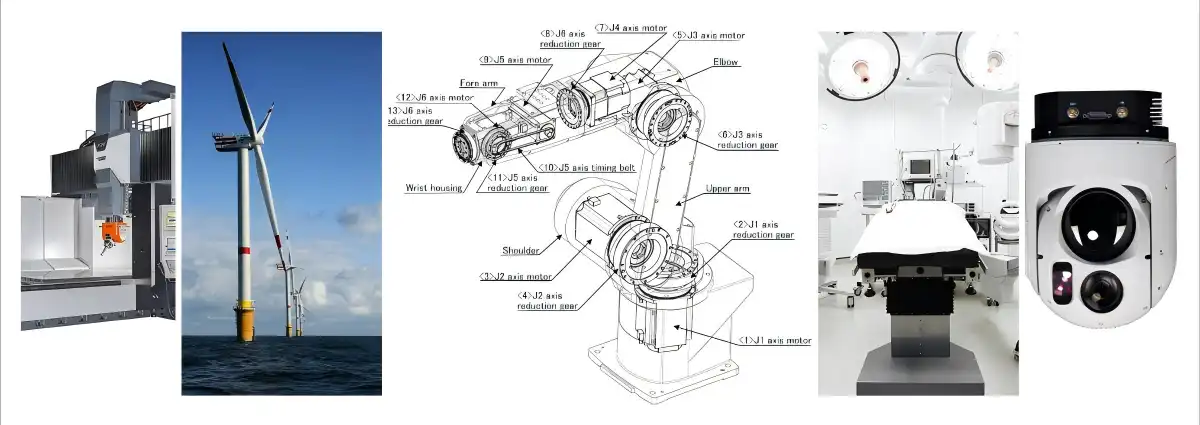
Robotics applications prioritize compactness and multi-axis load capacity. Joint assemblies experience constantly varying load vectors as robot arms extend and retract. RA crossed roller bearings handle these dynamic conditions within minimal envelopes, critical when designing collaborative robots operating safely alongside human workers. P5 accuracy typically suffices for material handling robots, while precision assembly robots benefit from P4 grades. Precision machinery—coordinate measuring machines, optical lens grinders, and semiconductor steppers—demands ultimate accuracy. P3 grade bearings maintain positioning repeatability essential for measurement validity or manufacturing nanoscale circuitry. The additional investment in the highest precision grades proves justifiable when end-product values reach thousands per unit, and defects prove costly. Medical equipment applications balance precision with reliability. Diagnostic imaging systems with rotating detector arrays require smooth, vibration-free motion to prevent image artifacts. Surgical robots demand fail-safe reliability, as equipment malfunction during procedures risks patient safety. Component selection for medical applications emphasizes proven track records and comprehensive quality documentation supporting regulatory submissions.
Procurement Evaluation Checklist
A structured assessment methodology ensures thorough supplier evaluation. Begin by requesting technical data sheets confirming specifications match application requirements. Verify dimensional tolerances, load ratings, and accuracy grades against calculated needs derived from application analysis. Quality certifications require verification beyond accepting provided documentation. Request certification numbers and audit dates, then confirm validity through certification body databases. This due diligence reveals expired certifications or fraudulent claims occasionally encountered when vetting unknown suppliers. Production capacity assessment involves understanding the manufacturer's capability beyond stated specifications. Can they scale production to meet growing demand? Do they maintain a safety stock of common sizes? What contingency plans address equipment breakdowns or material shortages? Suppliers with diversified production lines and established backup suppliers for raw materials demonstrate supply chain resilience. Sample testing validates claims before large-scale commitment.
Total Cost of Ownership Analysis
Purchase price represents only one component of bearing lifecycle cost. Installation labor, downtime for replacement, energy consumption during operation, and disposal expenses contribute to total ownership costs. Higher-quality bearings commanding premium purchase prices often deliver lower total costs through extended service life and reduced maintenance. Warranty coverage impacts risk allocation between buyer and supplier. Comprehensive warranties covering material defects, manufacturing flaws, and reasonable installation damage provide confidence in product quality. Understand claims procedures—complicated return authorization processes or unreasonable documentation requirements signal potential post-sale frustrations. After-sales technical support availability influences operational efficiency. Access to application engineers who troubleshoot installation issues or recommend solutions for unexpected operating conditions adds substantial value. We've built long-term partnerships with automotive OEMs and industrial equipment manufacturers by providing this consultative support, viewing customer success as our success.
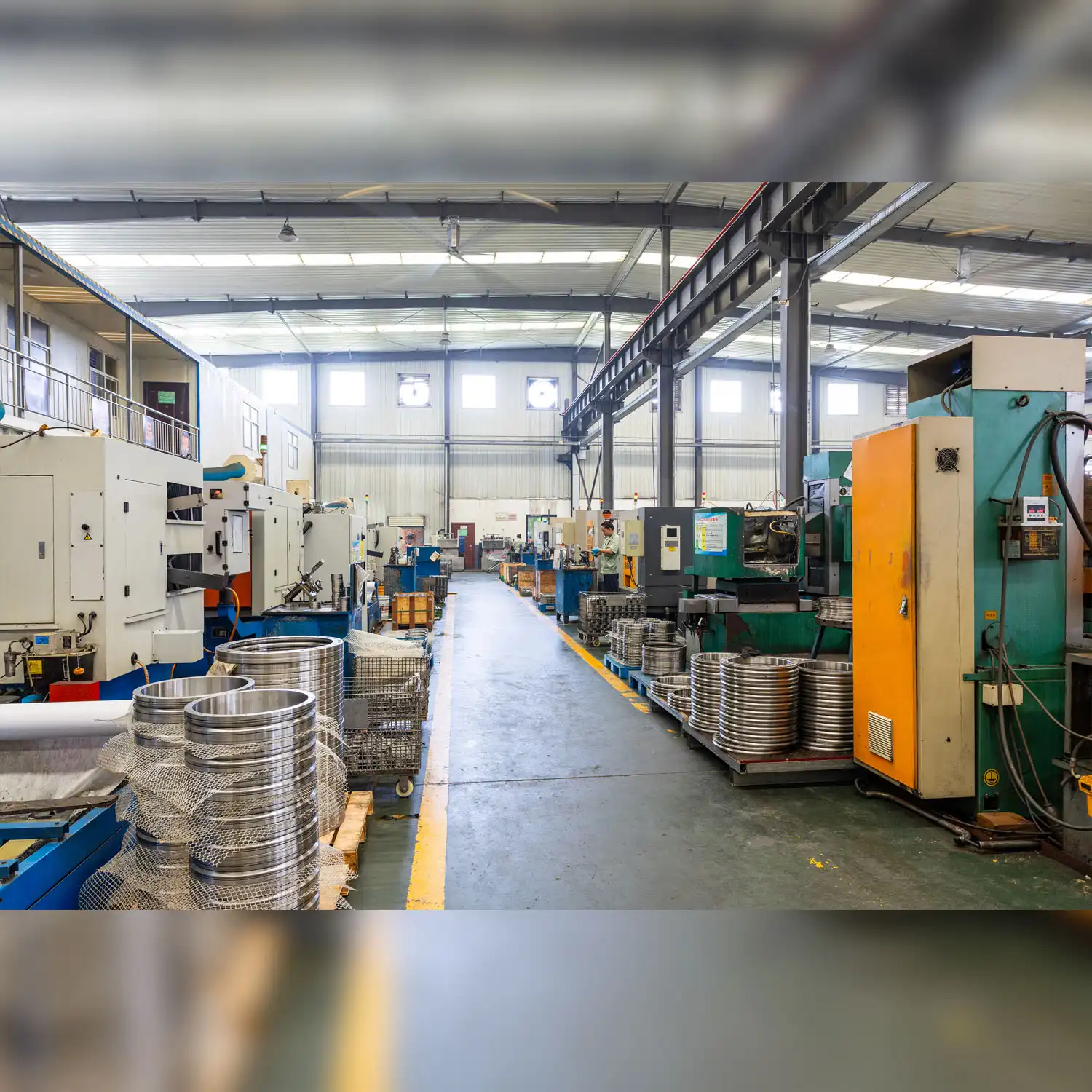
Conclusion
Selecting the right RA Crossed Roller Bearings involves balancing technical specifications against application demands, supplier capabilities, and lifecycle costs. These precision components deliver exceptional performance in robotics, machining centers, medical equipment, and precision instruments when properly matched to operational requirements. Evaluate accuracy grades, load capacities, and environmental suitability systematically. Assess supplier certifications, manufacturing capacity, and technical support capabilities thoroughly. Remember that lowest initial cost rarely equals best value—comprehensive analysis considering installation, maintenance, and replacement costs reveals true procurement optimization. Partner with manufacturers demonstrating quality commitment through international certifications, proven export histories, and collaborative engineering support.
FAQ
1. What distinguishes RA crossed roller bearings from standard ball bearings?
RA Crossed Roller Bearings employ cylindrical rollers arranged orthogonally between inner and outer rings, creating line contact that distributes loads across larger surface areas compared to ball bearing point contact. This design enables a single compact unit to handle radial, axial, and moment loads simultaneously—capabilities requiring multiple ball bearings in complex arrangements. The separable outer ring simplifies installation while maintaining superior rotational accuracy.
2. How do I verify selected bearings meet my machinery's operational demands?
Calculate the combined loading conditions, including radial forces, axial pressures, and moment loads, that your application generates. Compare these values against bearing manufacturer published load ratings, applying appropriate safety factors (typically 1.5-2.0 for industrial applications). Verify accuracy grade specifications align with positioning tolerance requirements. Request technical consultation from bearing manufacturers or distributors who can validate selections against application parameters and recommend appropriate configurations.
3. What factors influence pricing and lead times for custom bearing orders?
Custom specifications—non-standard dimensions, special coatings, or modified accuracy grades—require dedicated production runs extending lead times from stock availability to 6-8 weeks. Pricing reflects tooling costs, setup time, and smaller production quantities, lacking economies of scale. However, custom solutions optimized for specific applications often deliver better performance and longer service life than compromised standard-size selections. Discuss application requirements with manufacturers early in design phases to balance customization benefits against cost and timing impacts.
Partner with ATLYC for Your Precision Bearing Requirements
ATLYC stands ready to support your procurement objectives with RA Crossed Roller Bearings, high-precision RA Crossed Roller Bearings manufactured to international standards. Our ISO 9001 and IATF 16949 certified facility produces crossed roller bearings spanning 20mm to 350mm inner diameters, crafted from premium Gcr15 and Gcr15SiMn bearing steels to accuracy grades from P6 through P3. As an established bearing manufacturer with 15 years of serving automotive OEMs, industrial machinery producers, and precision equipment manufacturers across Germany, the United States, and South Korea, we combine Chinese manufacturing efficiency with global quality expectations. Our engineering team provides application analysis, custom specification development, and technical support throughout product lifecycles. Contact us at auto@lyautobearing.com to discuss your requirements with precision bearing specialists who understand procurement challenges facing mid-to-large manufacturers. Request detailed specifications, volume pricing, or sample bearings for evaluation—discover how partnering with a reliable RA Crossed Roller Bearings supplier streamlines your sourcing while ensuring the component quality your reputation depends upon.
References
1. Harris, T.A. & Kotzalas, M.N. (2006). Advanced Concepts of Bearing Technology: Rolling Bearing Analysis, 5th Edition. CRC Press, Boca Raton.
2. Weck, M. & Brecher, C. (2006). Werkzeugmaschinen 5: messtechnische Untersuchung und Beurteilung, dynamische Stabilität (Machine Tools 5: Measurement, Testing and Dynamic Stability). Springer-Verlag, Berlin.
3. International Organization for Standardization (2014). ISO 199:2014 - Rolling Bearings - Thrust Bearings - Geometrical Product Specifications (GPS) and Tolerance Values. ISO Standards Catalogue, Geneva.
4. Niku, S.B. (2010). Introduction to Robotics: Analysis, Control, Applications, 2nd Edition. John Wiley & Sons, Hoboken.
5. Bhushan, B. (2013). Principles and Applications of Tribology, 2nd Edition. John Wiley & Sons, Chichester.
6. Schweitzer, G. & Maslen, E.H. (2009). Magnetic Bearings: Theory, Design, and Application to Rotating Machinery. Springer-Verlag, Berlin.
Learn about our latest products and discounts through SMS or email