- English
- French
- German
- Portuguese
- Spanish
- Russian
- Japanese
- Korean
- Arabic
- Greek
- German
- Turkish
- Italian
- Danish
- Romanian
- Indonesian
- Czech
- Afrikaans
- Swedish
- Polish
- Basque
- Catalan
- Esperanto
- Hindi
- Lao
- Albanian
- Amharic
- Armenian
- Azerbaijani
- Belarusian
- Bengali
- Bosnian
- Bulgarian
- Cebuano
- Chichewa
- Corsican
- Croatian
- Dutch
- Estonian
- Filipino
- Finnish
- Frisian
- Galician
- Georgian
- Gujarati
- Haitian
- Hausa
- Hawaiian
- Hebrew
- Hmong
- Hungarian
- Icelandic
- Igbo
- Javanese
- Kannada
- Kazakh
- Khmer
- Kurdish
- Kyrgyz
- Latin
- Latvian
- Lithuanian
- Luxembou..
- Macedonian
- Malagasy
- Malay
- Malayalam
- Maltese
- Maori
- Marathi
- Mongolian
- Burmese
- Nepali
- Norwegian
- Pashto
- Persian
- Punjabi
- Serbian
- Sesotho
- Sinhala
- Slovak
- Slovenian
- Somali
- Samoan
- Scots Gaelic
- Shona
- Sindhi
- Sundanese
- Swahili
- Tajik
- Tamil
- Telugu
- Thai
- Ukrainian
- Urdu
- Uzbek
- Vietnamese
- Welsh
- Xhosa
- Yiddish
- Yoruba
- Zulu
How to Select the Right YRTM Rotary Table Bearing Size?
Choosing the right rotating table bearing size has a direct effect on the accuracy, durability, and efficiency of your equipment. When purchasing YRTM Rotary Table Bearings, procurement managers should look at the load needs, which include axial, radial, and moment forces, as well as the space and height limitations for placement. Conditions in the environment, such as temperature ranges and levels of contamination, also affect the choice of material and the way it is sealed. The YRTM series is unique because it has a small, compact structure. It combines thrust, rotational, and moment load capacities into a single unit, so there is no need for multiple bearing setups. This guide shows you the technical requirements, compared benefits, and buying strategies that will help you choose bearings that meet ISO 9001 and IATF 16949 standards and work well in CNC machines, automation equipment, and precision rotor applications.
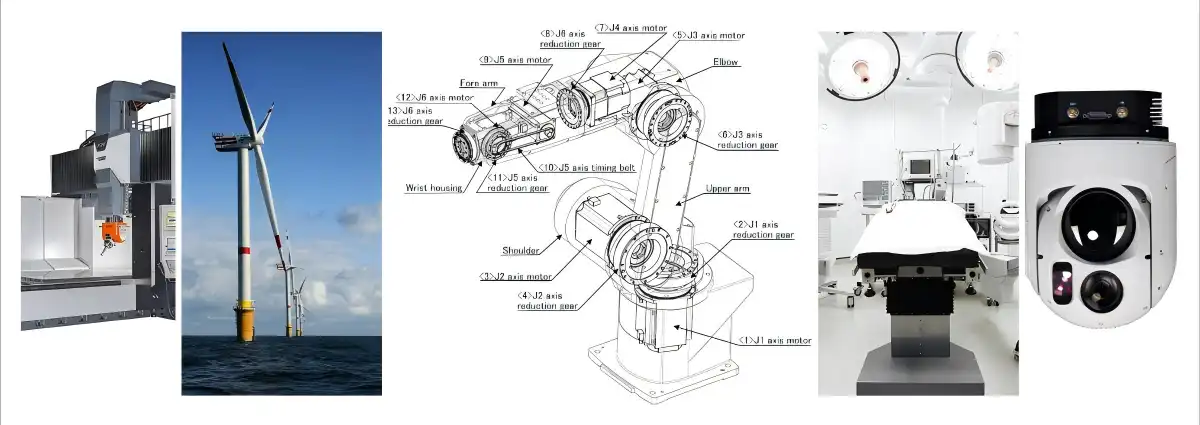
Understanding YRTM Rotary Table Bearings: Specifications and Working Principles
When the room is limited, and efficiency needs to be high, the tiny rotary table bearing version can help. In contrast to standard designs, these small bearings keep their important load-carrying abilities while decreasing the size of their cross-sections.
Integrated Three-in-One Design Architecture
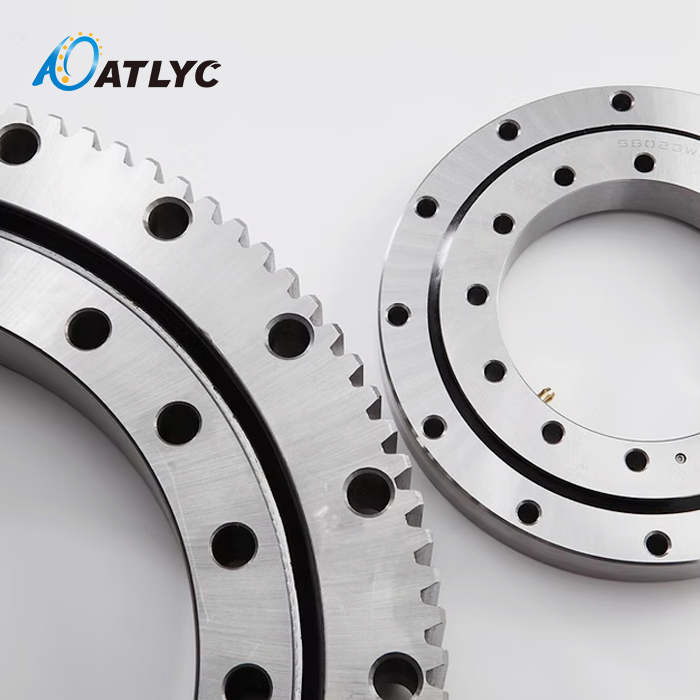
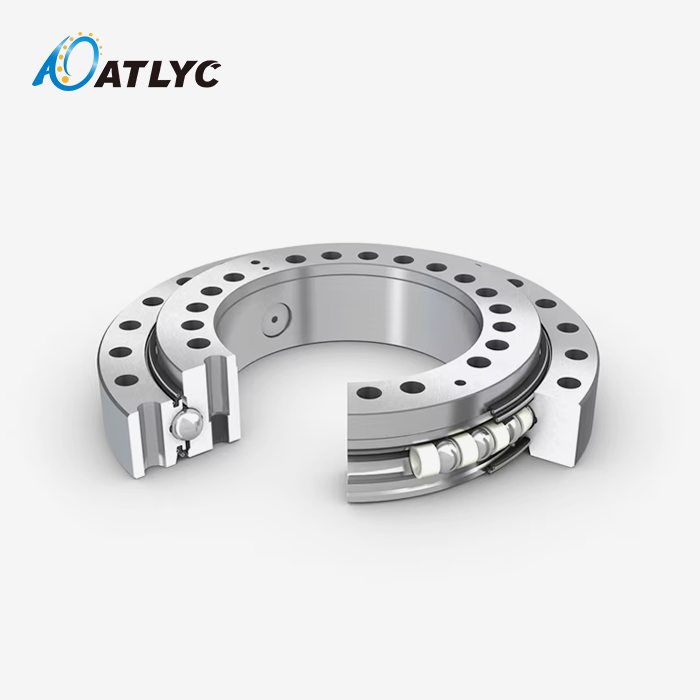
The bearing system combines three separate parts that do different jobs into a single unit. An outer ring stays attached to the housing, and the inner ring spins around on precision steel balls that are held in a cage that was carefully designed. This unified method makes installation easier and reduces the overall size of your mechanical system. Complex multi-bearing setups that used to take up valuable room in CNC rotating tables and automation systems can now be taken out, which is good for equipment makers.
The small combination solves a lot of problems that medium-sized to large makers have when they need stable supply lines for precision parts. Since it opened in 2010, our manufacturing plant has improved this production process across six specialised workshops. Precision grinding and super-finishing methods are used on raceway surfaces to ensure uniform numerical accuracy.
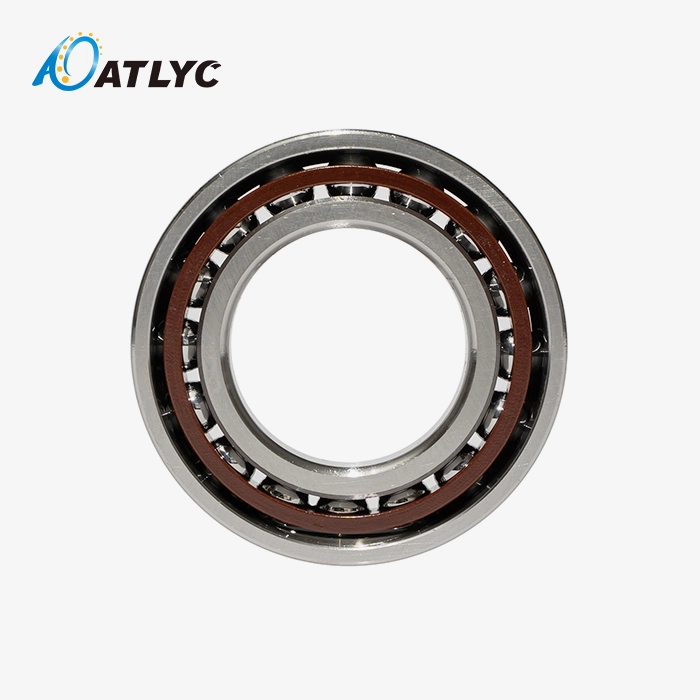
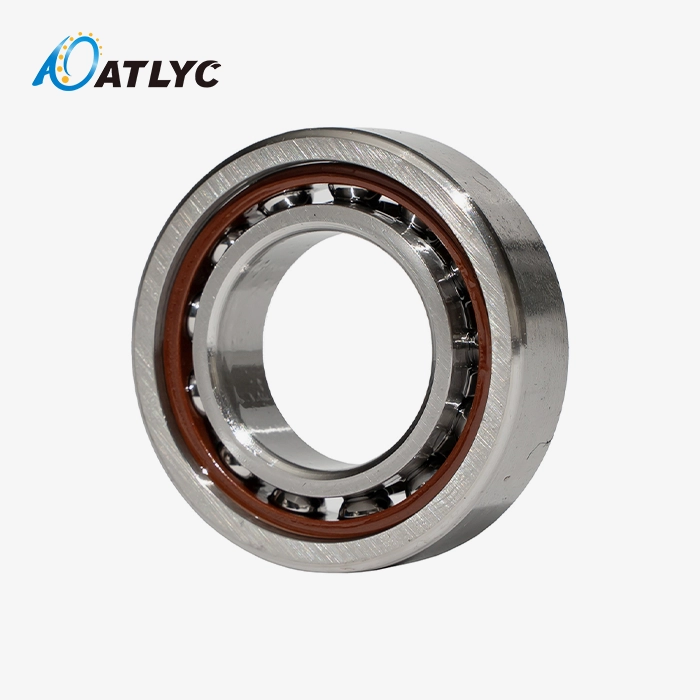
Double-Row Angular Contact Ball Configuration
Steel balls are arranged in two rows at specific contact angles, usually 45° or 60°. This lets the load be managed in more than one way at the same time. The bearing can handle axial pressure from cutting forces that are going up and down, radial loads from operations that are going across and down, and the composite shifting moments that happen during five-axis CNC movements because of how it is set up. When compared to single-row designs, the angled layout makes the system stiffer and improves the load capacity.
This ability to handle loads in more than one way is useful in industry, especially in automated production lines where force combinations are hard to predict. The double-row design keeps the system stable even when these complicated loading situations happen. This lowers shaking and makes repair times longer.
Precision-Ground Raceway Manufacturing
Precision grinding and superfinishing are used to make the surfaces of the inner and outer raceways as rough as possible so that there is as little friction and wear as possible. This level of strictness in the manufacturing process has a direct effect on the expected life span and accuracy of spin, meeting the low failure rate requirements that automakers and manufacturers of industrial machinery stress.
Our ISO 9001 and IATF 16949-certified quality management system uses multi-stage checking methods all the way through the creation of raceways. Coordinate measure tools check the accuracy of the geometry, and Taylor Hobson roundness tests make sure that the axial and radial runout stay within micrometre limits. These quality checks make sure that every bearing that leaves our factory meets the performance standards that bearing dealers around the world expect from markets in the US, Germany, and South Korea.
Core Criteria for Selecting the Right YRTM Bearing Size
Successful bearing selection begins with a systematic evaluation of operational parameters specific to your application. Procurement teams must gather comprehensive data before engaging suppliers to ensure quotations reflect actual requirements.
Load Analysis and Torque Requirements
Calculating load types for the YRTM Rotary Table Bearing represents the foundational step in sizing decisions. Axial loads originate from thrust forces perpendicular to the bearing plane, common in vertical machining operations. Radial loads act perpendicular to the rotation axis, generated by cutting tool pressures and workpiece weights. Moment loads, often overlooked, result from offset forces creating tilting tendencies that can compromise precision if bearing stiffness proves inadequate.
Torque calculations must account for rotational speed, load magnitude, and acceleration profiles. High-speed indexing applications demand bearings capable of rapid positioning without sacrificing accuracy, while heavy-duty machining centers prioritize load capacity over speed. Engineering teams should document peak and continuous load values, as many bearing failures stem from underestimating occasional overload conditions during tool changes or workpiece clamping operations.
The miniature bearing variant excels in applications where space limitations previously forced compromises in load capacity. Automotive equipment manufacturers integrating rotary tables into assembly line stations find these compact bearings deliver performance comparable to larger alternatives while fitting within constrained envelope dimensions.
Dimensional Constraints and Mounting Considerations
Installation space directly determines viable bearing sizes. Measure the available diameter for bearing mounting, considering both inner bore requirements for shaft attachment and outer diameter limits imposed by housing design. Height restrictions prove particularly critical in compact rotary table assemblies where vertical space constrains bearing selection.
Mounting surface preparation influences bearing performance regardless of size. Machined surfaces must achieve flatness and perpendicularity specifications outlined in installation documentation. Deviations introduce preload variations that accelerate wear and degrade rotational accuracy. Industrial machinery manufacturers should verify mounting tolerances using precision measurement equipment before bearing installation to avoid costly rework cycles.
Connection methods vary by application requirements. Flange mounting provides robust attachment suitable for heavy machining loads, while direct bolt mounting reduces assembly complexity in lighter-duty automation equipment. The selected bearing size must accommodate the chosen mounting strategy while maintaining load path integrity through the mechanical structure.
Precision Grade Selection for Application Accuracy
Bearing precision grades correspond to dimensional tolerances and running accuracy specifications. CNC machining centers require higher precision grades to maintain tight positional tolerances during multi-axis operations. Standard precision suits general industrial applications where positioning accuracy demands remain less stringent.
Grade selection impacts both initial cost and long-term performance. Higher precision grades command premium pricing but deliver extended service life in demanding applications through reduced vibration and improved load distribution. Procurement managers should balance upfront investment against lifecycle costs, considering maintenance intervals and replacement frequencies when calculating total ownership expenses.
Our engineering support team assists customers in matching precision grades to specific application requirements. With three decades of bearing manufacturing experience, we provide technical consultation that aligns bearing specifications with realistic performance expectations, helping avoid over-specification that inflates costs or under-specification that risks premature failure.
Environmental Factors Influencing Material and Seal Choices
Operating temperature ranges affect material selection and lubrication strategies. Extreme temperatures require special alloy steels and synthetic lubricants that maintain viscosity across broad thermal spans. Standard bearing materials suit ambient temperature applications found in most industrial settings.
Humidity and contaminant exposure dictate sealing configurations. Open bearings minimize friction but remain vulnerable to dust and moisture ingress that accelerates corrosion. Sealed variants protect internal components at the cost of slightly increased rotational resistance and reduced maximum speed ratings. Replacement aftermarket applications often prioritize sealed designs that extend maintenance intervals in harsh production environments.
Chemical exposure from cutting fluids and cleaning agents requires compatibility verification between seal materials and process chemicals. Nitrile seals handle petroleum-based lubricants effectively, while fluorocarbon seals resist aggressive coolants used in aerospace component machining. Industrial equipment OEMs should specify seal materials appropriate for their operational fluid environment to maximize bearing longevity.
Comparison: YRTM Rotary Table Bearings vs Other Bearing Types for Size Selection
Understanding how miniature rotary bearings compare against alternative designs helps clarify when each technology provides optimal value. Different bearing types offer distinct advantages depending on application priorities.
YRTM Series Versus Cross Roller Bearings
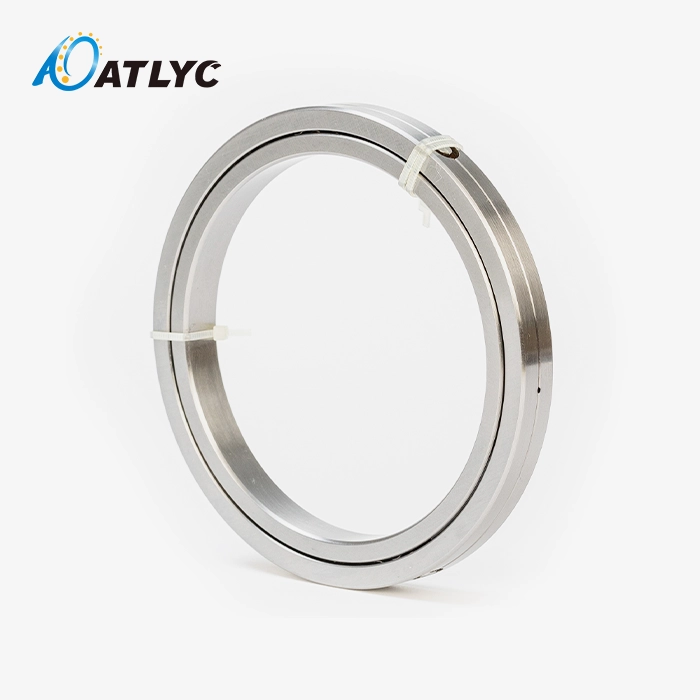
Cross roller bearings arrange cylindrical rollers perpendicular to each other between inner and outer rings, providing high rigidity in compact envelopes. These designs handle moment loads effectively and offer excellent rotational accuracy for precision positioning applications.
The miniature rotary bearing configuration typically delivers superior load capacity at comparable outer dimensions compared to cross roller alternatives. The double-row ball arrangement efficiently manages combined loading while maintaining rotational smoothness. Cross roller bearings may exhibit slight advantages in maximum speed capability, but often sacrifice moment load capacity relative to similarly sized rotary table bearings.
Cost considerations favor miniature rotary bearings in applications requiring balanced performance across multiple load directions. Manufacturing complexity for cross roller designs generally results in higher unit pricing, impacting procurement budgets for volume production equipment. Global bearing distributors serving the replacement aftermarket find rotary table bearings provide better inventory turnover due to broader application versatility.
Performance Against Slewing Bearings
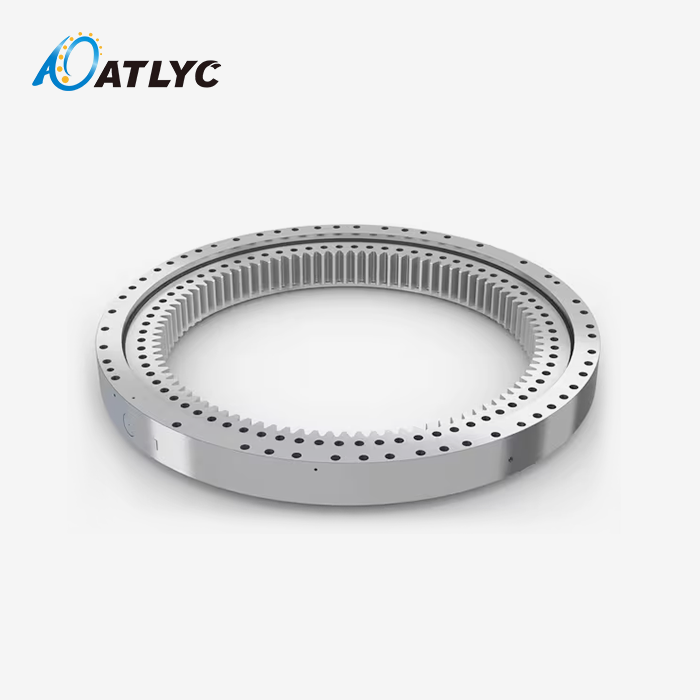
Slewing bearings, such as the YRTM Rotary Table Bearing, scale to much larger diameters, supporting heavy structural loads in construction equipment and large-diameter turntables. Their gear teeth integration enables direct drive configurations that simplify machine design.
Size requirements differ substantially between these bearing types. Slewing bearings address applications exceeding 500mm diameter, while miniature rotary bearings optimize performance in the 50-300mm range. Precision levels generally favor rotary table bearings, as slewing bearing manufacturing tolerances relax to accommodate larger scales and heavier loads.
Application context determines appropriate selection. Heavy industrial machinery requiring substantial load capacity gravitates toward slewing bearings despite their larger footprint and reduced accuracy. CNC machining centers and precision automation equipment prioritize the dimensional accuracy and compact integration offered by rotary table bearing designs.
Dimensional Options from Leading Manufacturers
Brand comparison reveals performance benchmarks and supply chain considerations relevant to procurement decisions. NSK offers extensive rotary bearing portfolios with strong technical documentation and global distribution networks. Their dimensional standards align with industry conventions, simplifying cross-referencing during specification phases.
INA bearings, part of the Schaeffler Group, provide comprehensive engineering support and customization capabilities for non-standard applications. Their precision grades suit high-accuracy CNC equipment, though premium positioning results in correspondingly higher pricing structures that impact project budgets.
Our manufacturing capacity addresses the stable supply requirements emphasized by automotive and industrial OEMs. Fifteen years of production experience across six specialized workshops enable us to maintain consistent quality while offering competitive pricing aligned with the cost-performance expectations of global customers. ISO 9001 and IATF 16949 certifications demonstrate our commitment to international quality standards, providing the supply reliability that long-term strategic partnerships demand.
Warranty support varies significantly across suppliers. Direct manufacturer relationships often provide more responsive technical assistance compared to multi-tier distribution channels. Procurement teams should evaluate supplier engineering capabilities alongside product specifications, as application troubleshooting and customization support prove invaluable during equipment development phases.
Installation & Maintenance Guidelines to Ensure Optimal Performance
Proper installation practices directly influence whether bearings achieve their design service life. Size selection loses value if mounting procedures introduce stress concentrations or misalignment that accelerates wear.
Step-by-Step Installation Protocol
Begin by verifying dimensional compatibility between bearing and mounting surfaces. Confirm that shaft and housing dimensions fall within the specified tolerance ranges documented in bearing technical literature. Out-of-tolerance conditions create interference fits that induce excessive preload or clearance situations that allow unwanted movement.
Clean all mounting surfaces thoroughly, removing machining debris, corrosion, and old lubricant residues. Contamination introduction during assembly accounts for a significant percentage of premature bearing failures. Use lint-free cloths and approved solvents to achieve cleanliness levels appropriate for precision bearing installation.
Lubrication Schedules Based on Bearing Size and Application Intensity
Maintenance intervals depend on operating conditions and bearing size. Continuous-duty applications running multiple shifts daily require more frequent lubrication compared to intermittent-use equipment. Bearing size influences lubricant volume and relubrication frequency, as smaller bearings contain less grease reservoir capacity.
High-speed rotation generates friction heat that degrades lubricant properties over time. Monitor bearing operating temperatures using infrared thermography or embedded sensors to detect lubrication breakdown before damage occurs. Temperature increases beyond baseline values signal inadequate lubrication or impending bearing distress requiring immediate attention.
Monitoring Wear Patterns and Performance Indicators
Vibration analysis of the YRTM Rotary Table Bearing reveals bearing condition trends before catastrophic failure occurs. Accelerometer sensors detect characteristic frequency patterns associated with raceway spalling, ball defects, or cage wear. Predictive maintenance programs using vibration monitoring reduce unplanned downtime by scheduling bearing replacement during convenient production breaks rather than reacting to unexpected failures.
Acoustic emission monitoring supplements vibration analysis in critical applications. Ultrasonic frequencies generated by microscopic crack propagation provide early warning of fatigue damage developing within bearing components. This monitoring approach suits high-value production equipment where bearing failure consequences justify advanced diagnostic investment.
Procurement Tips: Buying the Right YRTM Rotary Table Bearing Size for Your Business
Effective sourcing strategies balance cost objectives against quality and reliability requirements. Bearing procurement represents a critical supply chain component where supplier selection impacts production continuity.
Assessing Supplier Credibility and Quality Certifications
Quality certifications provide objective evidence of manufacturing capability. ISO 9001 certification demonstrates established quality management systems with documented procedures for process control and continuous improvement. IATF 16949 certification, specific to automotive industry suppliers, adds sector-specific requirements for defect prevention and supply chain management.
Request certification documentation during supplier evaluation, verifying accreditation body legitimacy and certificate validity dates. Expired or non-accredited certifications indicate potential quality system gaps that risk product consistency. Our certifications remain current through annual surveillance audits conducted by internationally recognized registrars, confirming ongoing compliance with quality standards.
Understanding Lead Times for Standard and Custom Orders
Standard bearing sizes ship from stock, enabling rapid delivery for replacement applications and prototype development. Custom specifications require a manufacturing lead time that varies based on design complexity and production queue status. Typical custom bearing lead times range from six to twelve weeks, depending on the extent of modification and order quantity.
Bulk ordering reduces unit costs through production efficiency gains but increases inventory carrying costs and obsolescence risk. Balance order quantities against consumption rates and storage capacity limitations. Just-in-time delivery programs suit high-volume production environments with predictable bearing usage patterns, while buffer inventory protects against supply disruptions in critical applications where equipment downtime costs exceed inventory carrying expenses.
Pricing Factors Linked to Size, Material, and Customization
Bearing size directly influences pricing through material content and manufacturing complexity. Larger diameters require more raw material and longer machining cycles, increasing production costs reflected in unit pricing. Precision grade selection impacts pricing as tighter tolerances demand additional grinding passes and quality verification steps.
Material specifications affect cost structures significantly. Standard alloy steels balance performance and economy for most applications. Specialty materials like stainless steel or ceramic hybrid designs command premium pricing justified only when corrosive environments or extreme temperatures exceed standard material capabilities. Procurement teams should specify materials appropriate for actual operating conditions rather than defaulting to premium grades, unnecessarily inflating project costs.
Direct Manufacturer Relationships Versus Distribution Channels
Direct manufacturer engagement provides access to engineering expertise and customization capabilities not available through distribution intermediaries. Technical questions receive responses from design engineers familiar with product development history and application limitations. Custom specifications proceed efficiently without communication layers that delay quotation responses and increase misunderstanding risks.
Distribution channels offer convenience through local inventory and established logistics networks. Multi-brand distributors simplify procurement for equipment using various bearing types from different manufacturers. Evaluate whether distribution value-added services like kitting and inventory management justify the markup compared to direct sourcing alternatives.

Conclusion
Selecting the correct rotary table bearing size requires systematic evaluation of load conditions, dimensional constraints, precision requirements, and environmental factors specific to your application. The miniature bearing variant offers compact integration with multi-directional load capability suited to space-constrained CNC equipment and automation systems. Comparing alternative bearing types clarifies when rotary table bearings provide optimal performance versus cross roller or slewing bearing solutions. Proper installation and maintenance practices maximize bearing service life, protecting your equipment investment through predictable operating costs. Procurement strategies emphasizing supplier quality certifications, transparent pricing, and responsive technical support ensure long-term supply reliability. Our ISO 9001 and IATF 16949 certified manufacturing delivers precision bearings meeting international standards, backed by engineering consultation that matches specifications to application demands, supporting your competitive manufacturing objectives.
FAQ
What technical data do I need to request an accurate bearing size quotation?
Provide rotational speed specifications, axial load values, radial load magnitudes, and moment load calculations for your application. Include dimensional constraints such as available mounting diameter and height restrictions. Specify operating temperature ranges and environmental exposure conditions, such as humidity or chemical contact. Precision requirements expressed as positioning accuracy or runout tolerances help our engineering team recommend appropriate bearing grades. This comprehensive data enables accurate quotations matching your performance requirements without unnecessary over-specification.
How often should I perform maintenance on miniature rotary table bearings?
Maintenance frequency for the YRTM Rotary Table Bearing depends on operating intensity and environmental conditions. Continuous three-shift operations in contaminated environments require lubrication inspections every 500-1000 operating hours. Clean environment applications with intermittent use extend intervals to 2000-3000 hours between services. Monitor bearing temperature and vibration signatures to detect deteriorating conditions requiring attention before scheduled maintenance. Our technical documentation includes application-specific guidelines tailored to your equipment usage patterns.
Can bearings be customized for non-standard dimensions?
We accommodate dimensional modifications and load capacity adjustments through custom engineering services. Provide detailed application specifications, including space constraints and performance requirements during inquiry phases. Custom bearing lead times typically range from eight to twelve weeks, depending on design complexity. Minimum order quantities for custom specifications vary based on the tooling investment required; our sales team discusses volume commitments during quotation development to ensure project feasibility.
Partner with ATLYC for Reliable YRTM Rotary Table Bearing Supply
Our bearing manufacturing expertise spans fifteen years of precision production serving global automotive and industrial equipment markets. As an established rotary table bearing supplier, we combine ISO 9001 and IATF 16949 certified quality systems with competitive pricing and reliable lead times that support your production schedules. Engineering consultation helps specify the optimal bearing size for your application requirements, backed by comprehensive technical documentation and responsive support throughout the product lifecycle. Contact our team at auto@lyautobearing.com to discuss your bearing specifications and receive a detailed quotation tailored to your project needs. We deliver the dependable supply partnership that OEM manufacturers and distributors require for long-term success.
References
1. Harris, T.A. and Kotzalas, M.N. (2006). "Advanced Concepts of Bearing Technology: Rolling Bearing Analysis." CRC Press, Taylor & Francis Group.
2. Escursell, S., Llorach, M. y Roncero, M.B. (2020). "Sustainability in e-commerce packaging: A review." Journal of Cleaner Production, Vol. 280, Article 124314.
3. Hamrock, B.J., Schmid, S.R., and Jacobson, B.O. (2004). "Fundamentals of Fluid Film Lubrication." Marcel Dekker, New York.
4. ISO 492:2014. "Rolling bearings — Radial bearings — Geometrical product specifications (GPS) and tolerance values." International Organization for Standardization.
5. Weck, M. and Brecher, C. (2006). "Machine Tools Production Systems 4: Automation of Machine Tools and Production Systems." Springer-Verlag Berlin Heidelberg.
6. Lynwander, P. (1983). "Gear Drive Systems: Design and Application." Marcel Dekker Inc., New York and Basel.
Learn about our latest products and discounts through SMS or email