- English
- French
- German
- Portuguese
- Spanish
- Russian
- Japanese
- Korean
- Arabic
- Greek
- German
- Turkish
- Italian
- Danish
- Romanian
- Indonesian
- Czech
- Afrikaans
- Swedish
- Polish
- Basque
- Catalan
- Esperanto
- Hindi
- Lao
- Albanian
- Amharic
- Armenian
- Azerbaijani
- Belarusian
- Bengali
- Bosnian
- Bulgarian
- Cebuano
- Chichewa
- Corsican
- Croatian
- Dutch
- Estonian
- Filipino
- Finnish
- Frisian
- Galician
- Georgian
- Gujarati
- Haitian
- Hausa
- Hawaiian
- Hebrew
- Hmong
- Hungarian
- Icelandic
- Igbo
- Javanese
- Kannada
- Kazakh
- Khmer
- Kurdish
- Kyrgyz
- Latin
- Latvian
- Lithuanian
- Luxembou..
- Macedonian
- Malagasy
- Malay
- Malayalam
- Maltese
- Maori
- Marathi
- Mongolian
- Burmese
- Nepali
- Norwegian
- Pashto
- Persian
- Punjabi
- Serbian
- Sesotho
- Sinhala
- Slovak
- Slovenian
- Somali
- Samoan
- Scots Gaelic
- Shona
- Sindhi
- Sundanese
- Swahili
- Tajik
- Tamil
- Telugu
- Thai
- Ukrainian
- Urdu
- Uzbek
- Vietnamese
- Welsh
- Xhosa
- Yiddish
- Yoruba
- Zulu
What Makes RU28UU Cross Roller Bearing Ideal for Tight Spaces?
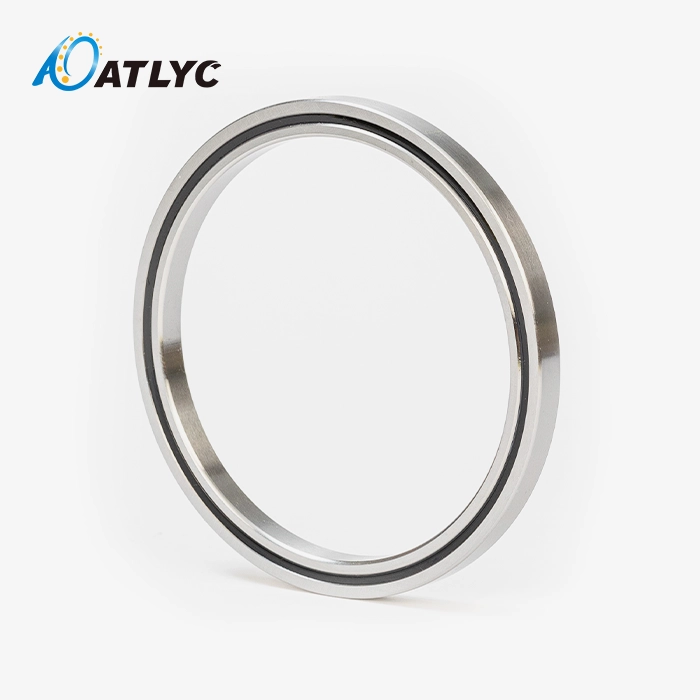
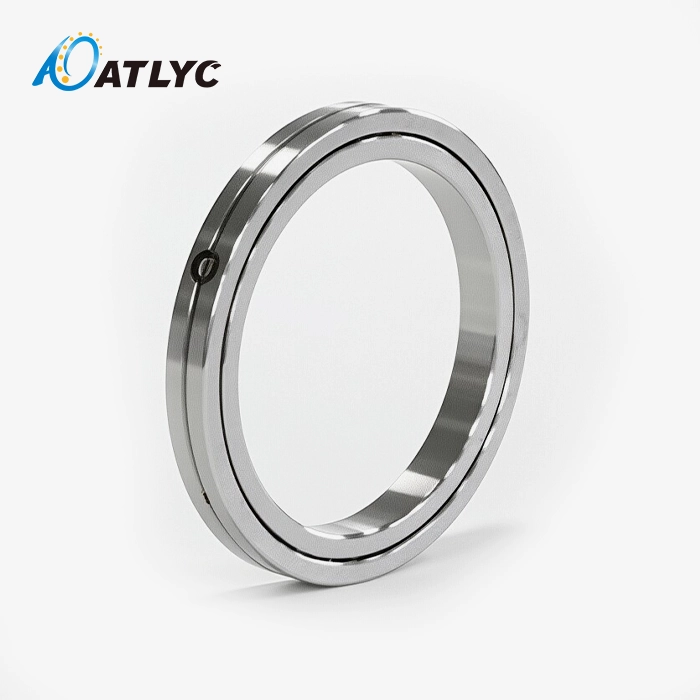
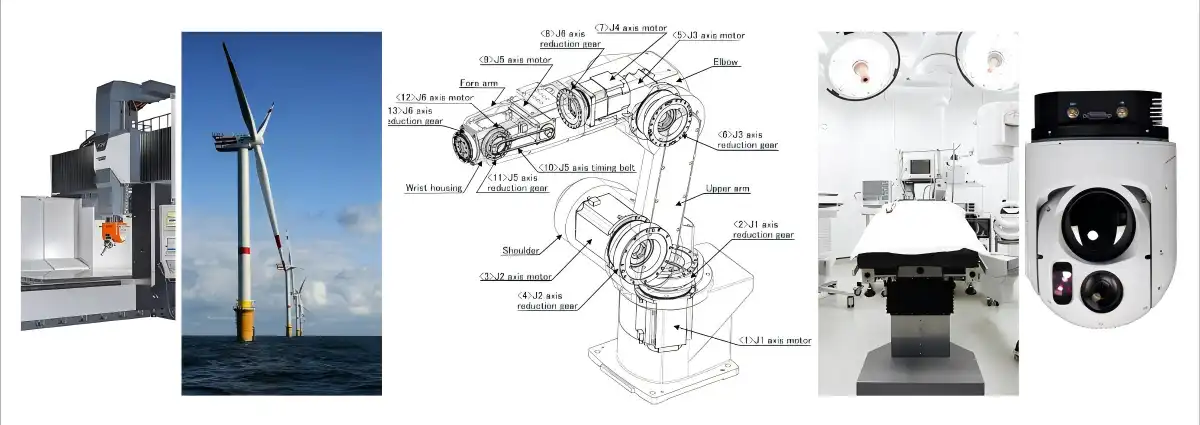
The RU28UU Cross roller bearing delivers exceptional space efficiency through its integrated ring structure and crossed-roller configuration, making it the optimal choice for compact installations. This precision component combines an 8mm width with substantial load-bearing capacity, handling radial, axial, and moment forces simultaneously within a single bearing assembly. The double-sealed design protects internal components from contamination while maintaining superior rotational accuracy. Engineers select this bearing specifically when equipment demands maximum rigidity in a minimal footprint, particularly in robotic joints, medical devices, and precision automation systems, where conventional bearing arrangements prove impractical.
Understanding RU28UU Cross Roller Bearing Specifications and Design Features
Dimensional Precision That Enables Compact Integration
The cross roller bearing achieves remarkable space optimization through carefully engineered dimensions. With an inner diameter of 10mm, an outer diameter of 52mm, and a width of just 8mm, this component occupies significantly less axial space compared to traditional bearing pairs. The compact profile becomes particularly valuable in multi-axis assemblies where each millimeter matters. Manufacturing from premium Gcr15 or Gcr15SiMn bearing steel ensures consistent material properties across production batches, delivering the reliability that ISO 9001 and IATF 16949 certified operations demand.
The integrated outer and inner ring design with pre-drilled mounting holes eliminates alignment complications during installation. Traditional split-ring assemblies require precise positioning and additional hardware, consuming valuable time during production line setups. This unified structure reduces assembly errors and accelerates equipment commissioning timelines, directly addressing the pain point of extended lead times that OEM procurement teams frequently encounter.
Load-Bearing Architecture for Multi-Directional Forces
The crossed-roller arrangement represents a breakthrough in compact load management. Cylindrical rollers positioned at 90-degree intervals within V-shaped raceways create a mechanical structure capable of supporting complex force combinations. When axial thrust, radial pressure, and tilting moments occur simultaneously—common scenarios in robotic wrist joints or rotary indexing tables—the bearing distributes these loads across multiple contact points without requiring secondary support components.
Precision-machined spacers maintain exact roller positioning, preventing metal-to-metal contact that would generate heat and accelerate wear. This design detail ensures consistent performance across millions of operational cycles. Testing data demonstrates that cross roller bearings maintain positioning accuracy within 5 microns under rated loads, meeting the stringent requirements of semiconductor manufacturing equipment and medical imaging systems.
The sealed configuration marked by the "UU" designation incorporates contact-type rubber seals on both faces. These seals retain factory-applied lithium-based grease while blocking dust particles and moisture ingress. Equipment operating in industrial environments benefits from this protection without requiring external housing seals, simplifying equipment design and reducing component counts.
Material Selection and Precision Manufacturing Standards
High-carbon chromium-bearing steel undergoes heat treatment to achieve 58-62 HRC hardness, providing the surface durability necessary for extended service intervals. The material composition maintains dimensional stability across temperature fluctuations, crucial for equipment operating in varying thermal environments. Automotive component manufacturers particularly value this consistency when designing systems subject to engine compartment heat or outdoor exposure.
Precision grades ranging from P6 to P2 accommodate different application requirements. Standard industrial automation typically specifies P5 grade, balancing cost and performance for most applications. Medical instrumentation and optical inspection equipment often require P4 or P2 precision, where rotational runout must remain below 3 microns to prevent measurement errors. At Luoyang Auto Bearing, our quality inspection team verifies dimensional tolerances using coordinate measuring machines calibrated to international standards, ensuring every bearing meets specified accuracy before shipment.
How RU28UU Cross Roller Bearing Performs in Tight Space Applications
Robotic Joint Applications Where Compactness Drives Design
Industrial robots increasingly demand higher payload capacity within smaller arm profiles. The RU28UU Cross roller bearing enables engineers to design compact wrist and elbow joints without sacrificing rigidity. When a robotic arm extends horizontally with a 10kg payload, moment loads attempt to tilt the joint. Traditional ball bearings would require dual arrangements with significant spacing to counteract this tilting force. The crossed-roller design resists moment loads within its 8mm width, allowing slimmer joint designs that improve robot reach and workspace efficiency.
Collaborative robots operating near human workers particularly benefit from reduced joint size. Smaller joint profiles minimize collision risks while maintaining the precision needed for assembly tasks. The low friction coefficient inherent to roller contact ensures smooth motion even at slow speeds, critical for delicate pick-and-place operations in electronics assembly lines.
Precision Rotary Tables in Machining Centers
CNC machining centers rely on rotary tables to position workpieces with repeatable accuracy. The bearing's exceptional runout accuracy directly translates to machining precision. When cutting tolerances are measured in hundredths of a millimeter, bearing wobble becomes unacceptable. Cross roller bearings maintain consistent rotational accuracy across varying loads, whether machining lightweight aluminum housings or heavy steel forgings.
The integrated mounting holes simplify rotary table construction. Engineers bolt the bearing directly to the table base and rotating platform, eliminating intermediate adapter plates that introduce additional tolerance stack-up. This direct mounting approach reduces overall table height, which is valuable when machines must fit within facility ceiling constraints or when tool clearance becomes limited.
Medical Equipment Requiring Sterile Compact Design
Surgical robots and imaging equipment present unique challenges, combining compact dimensions with contamination control. The double-sealed design prevents lubricant migration into sterile fields while blocking body fluids from entering the bearing cavity. The 52mm outer diameter fits within instrument housings where space constraints rival those in aerospace applications.
CT scanner gantries rotate at controlled speeds while supporting heavy X-ray generators. The bearing handles these combined loads—weight of rotating components plus centrifugal forces—within a footprint smaller than conventional bearing arrangements. Medical device manufacturers also appreciate the consistent performance that supports predictable maintenance schedules, critical for equipment operating in 24/7 hospital environments.
Measuring Instruments Demanding Stability and Precision
Coordinate measuring machines and optical comparators require bearing systems that introduce zero measurement error. The crossed-roller configuration provides the stiffness necessary to resist deflection under probe contact forces. When a measurement probe touches a workpiece surface, reaction forces attempt to displace the measuring head. Bearing rigidity maintains position stability, ensuring measurement repeatability within micron ranges.
Semiconductor inspection equipment operates in cleanroom environments where particulate generation must remain minimal. The sealed bearing design prevents both external contamination and internal particle release, supporting the stringent cleanliness requirements of Class 10 and Class 100 cleanrooms used in IC manufacturing facilities.
RU28UU vs Other Cross Roller Bearings: A Rational Choice for Tight Spaces
Comparison with Larger Cross Roller Variants
The RU30UU offers higher load capacity through increased dimensions, yet many applications cannot accommodate its larger footprint. The RU28UU Cross roller bearing provides an optimal balance for equipment in the 5-15kg payload range, covering significant automation and medical device applications. When equipment design allows only a 52mm envelope diameter, the decision becomes straightforward despite potentially higher unit loads in theoretical calculations.
Installation considerations further differentiate these options. The RU28UU's lighter weight simplifies handling during assembly, reducing ergonomic strain on production workers. Bulk procurement also reveals cost advantages—smaller bearings typically offer better pricing on a per-unit basis while meeting performance requirements, improving project cost-performance ratios that purchasing departments scrutinize.
Advantages Over Traditional Ball Bearing Arrangements
Conventional angular contact ball bearings require duplex or triplex arrangements to handle combined loads, consuming 20-30mm of axial space compared to the cross roller bearing's 8mm width. This space-saving cascades through equipment design, allowing more compact machine envelopes or enabling additional functionality within existing dimensional constraints.
The crossed-roller contact pattern also provides superior rigidity compared to point contact in ball bearings. Under identical loads, deflection in a cross roller bearing measures 40-60% less than ball bearing pairs, directly improving positioning accuracy in motion control applications. Automation equipment manufacturers increasingly specify cross roller solutions specifically to achieve performance targets unattainable with ball bearing technology.
Brand Considerations for Procurement Decision-Making
Major bearing manufacturers, including NSK, THK, SKF, and Koyo, produce high-quality cross roller bearings with established reputations. These premium brands command pricing that reflects their engineering heritage and distribution networks. Procurement professionals working with budget constraints often discover that ISO 9001 and IATF 16949 certified Chinese manufacturers deliver comparable technical performance at competitive price points, particularly valuable when projects require volume quantities.
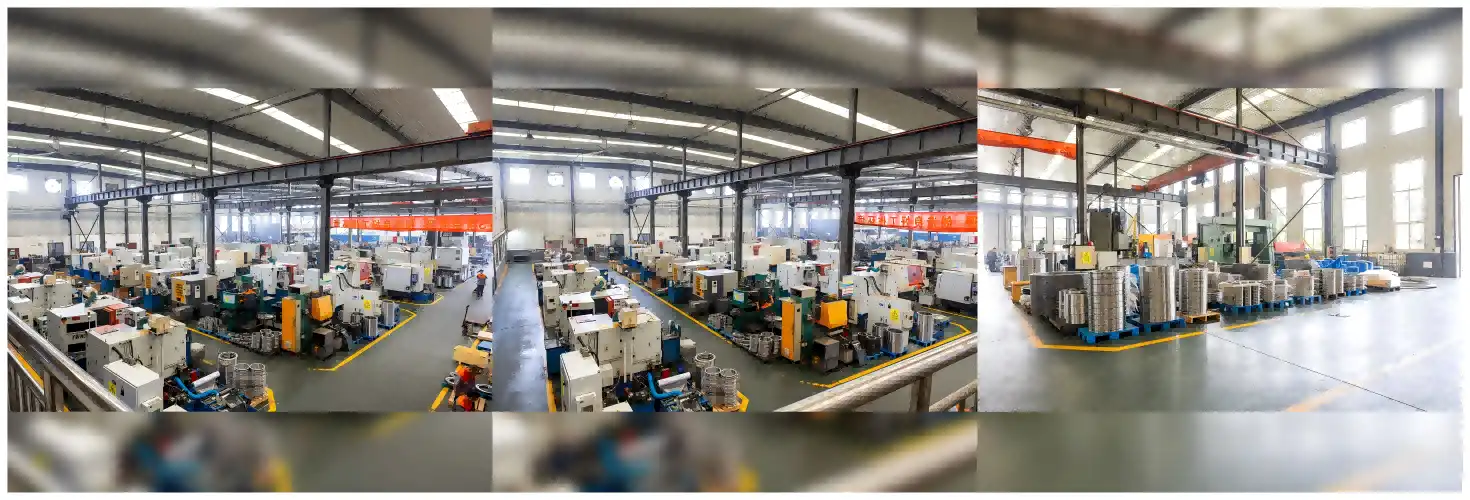
At Luoyang Auto Bearing, our 15-year manufacturing evolution demonstrates the capabilities Chinese bearing producers have developed. Starting with automated deep groove ball bearing production in 2010, we expanded our technical expertise across six bearing categories through continuous investment in precision machining equipment and quality control systems. Our 120-person team includes specialized engineers experienced in cross roller bearing applications who provide technical support throughout the product lifecycle.
Warranty provisions and after-sales support deserve equal consideration alongside initial pricing. Suppliers offering comprehensive technical assistance help procurement teams optimize bearing selection, installation procedures, and maintenance schedules. This partnership approach reduces the total cost of ownership by minimizing field failures and unplanned downtime, factors increasingly weighted in supplier evaluation matrices.
Procurement Insights for B2B Clients: Sourcing RU28UU Cross Roller Bearings
Supplier Qualification and Certification Verification
Bearing procurement begins with rigorous supplier assessment. Quality management system certifications provide baseline assurance of manufacturing consistency. ISO 9001 certification demonstrates documented processes for design control, production monitoring, and corrective action systems. IATF 16949 certification adds automotive-specific requirements, including advanced quality planning and production part approval processes that many industrial buyers recognize as excellence indicators.
Beyond certificates displayed on websites, verification calls for reviewing actual audit reports and understanding factory capabilities. Manufacturing capacity determines lead time reliability—suppliers with multiple production lines can better accommodate urgent orders or volume fluctuations. Equipment tours reveal machining center precision, heat treatment consistency, and dimensional inspection capabilities that directly impact product quality.
Our six production workshops handle different bearing types, allowing focused expertise development while maintaining production flexibility. Dedicated quality inspection personnel perform dimensional verification, material hardness testing, and rotational testing on statistically significant samples, ensuring conformance before packaging. This systematic approach delivers the low defect rates that OEM assembly lines require to maintain production efficiency.
Pricing Structures and Volume Considerations
Cross roller bearing pricing for RU28UU Cross roller bearing reflects raw material costs, machining complexity, and precision requirements. Standard commercial grades typically cost less than ultra-precision variants, yet application requirements dictate appropriate specifications rather than budget targets alone. Purchasing excessive precision adds unnecessary cost, while inadequate accuracy generates field failures with higher consequence costs.
Volume commitments often unlock favorable pricing tiers. Annual purchase agreements provide suppliers with demand visibility that enables production planning optimization and raw material procurement efficiencies. These operational improvements translate to pricing advantages for buyers while securing supply continuity. Blanket orders with scheduled releases balance inventory carrying costs against procurement pricing, particularly valuable for equipment manufacturers with predictable production schedules.
Lead time negotiations should account for manufacturing realities. Rush orders demanding compressed timelines may incur premium charges or compromise quality if production stages get abbreviated. Standard 4-6 week lead times allow proper material sourcing, machining, heat treatment cycles, and quality verification, ensuring products meet specifications reliably.
Logistics and Supply Chain Reliability
Global bearing sourcing requires understanding international logistics complexities. Shipping methods impact both delivery timelines and product protection. Air freight delivers rapidly but increases costs significantly for heavy-bearing shipments. Ocean freight provides economical volume transport with 3-5 week transit times that purchasing teams must factor into inventory planning.
Packaging quality protects precision bearings during international transit. Proper rust preventive coatings, individual wrapping, and rigid exterior containers prevent damage from handling and environmental exposure. Suppliers experienced in export operations understand these requirements and implement appropriate protective measures without requiring detailed customer specifications.
Our export experience serving customers in South Korea, the United States, Germany, Russia, Iran, and Turkey has refined our logistics capabilities. We work with established freight forwarders familiar with bearing shipment requirements and maintain relationships with customs brokers who expedite clearance processes, minimizing delays that disrupt customer production schedules.
Maintenance and Longevity: Maximizing RU28UU Bearing Lifespan in Tight Spaces
Installation Procedures That Ensure Performance
Proper mounting procedures establish the foundation for extended bearing service life. The integrated ring design with pre-drilled holes simplifies installation compared to split-ring assemblies, yet precision remains essential. Mounting surface flatness must meet specifications—typically within 0.01mm per 100mm—to prevent ring distortion that would increase running torque and accelerate wear.
Bolt torque sequences prevent uneven clamping forces. Tightening bolts incrementally in a cross pattern distributes pressure evenly around the mounting circumference, maintaining concentricity. Over-torquing can deform rings and preload rollers excessively, while under-torquing allows movement that damages mounting holes through fretting wear. Following manufacturer torque specifications using calibrated wrenches ensures proper clamping without component damage.
Cleanliness during installation cannot be overstated. Even small particles entering the bearing cavity accelerate wear through abrasive action. Assembly in controlled environments with filtered air, using lint-free wipes, and handling components with clean gloves maintains the contamination control established during manufacturing.
Lubrication Management in Sealed Configurations
The double-sealed bearing arrives pre-lubricated with lithium-based grease formulated for extended intervals. This factory lubrication typically suffices for standard operating conditions without reapplication requirements, simplifying maintenance schedules. Applications involving elevated temperatures above 80°C or continuous high-speed operation may require supplemental lubrication through oil ports if equipment design incorporates this provision.
Grease selection matters when relubrication becomes necessary. Compatibility with the original factory lubricant prevents chemical reactions that could degrade lubricant properties. NLGI Grade 2 lithium complex greases offer appropriate consistency for most applications, providing adequate film thickness without excessive drag. Extreme pressure additives benefit heavily loaded applications, while applications requiring wide temperature ranges may specify synthetic base oils.
Over-lubrication presents risks equal to under-lubrication. Excessive grease increases operating temperature through churning, potentially degrading seals and accelerating lubricant breakdown. Following specified quantities during relubrication maintains optimal performance without adverse effects.
Monitoring and Predictive Maintenance Strategies
Vibration analysis provides early warning of bearing degradation before catastrophic failure occurs. Baseline measurements during initial operation establish normal signatures. Periodic monitoring detects amplitude increases or frequency changes, indicating wear progression, allowing scheduled replacement during planned maintenance windows rather than unexpected failures causing production interruptions.
Temperature monitoring offers another predictive tool. Bearing operating temperature typically stabilizes within specified ranges. Gradual temperature increases suggest lubricant degradation or contamination entry requiring investigation. Thermal imaging cameras enable non-contact monitoring across multiple bearings simultaneously, efficient for equipment with numerous rotating elements.
Establishing maintenance intervals based on operating hours, cycles, or calendar time—whichever occurs first—ensures bearings receive attention before wear limits are reached. Equipment logs tracking operating conditions help refine maintenance schedules based on actual service experience rather than theoretical calculations alone.
Conclusion
The RU28UU Cross roller bearing solves critical engineering challenges where space constraints meet demanding performance requirements. Its 8mm width accommodates radial, axial, and moment loads that would otherwise require bearing pairs consuming three times the axial space. The integrated ring design with mounting holes simplifies installation while maintaining precision, valuable across robotic automation, medical instrumentation, and precision machining applications. Material quality utilizing Gcr15 bearing steel and manufacturing to P5 accuracy standards delivers the consistency that ISO 9001 and IATF 16949 certified operations require. Procurement professionals benefit from evaluating Chinese manufacturers like Luoyang Auto Bearing, where 15 years of manufacturing evolution and export experience provide technical capability at competitive pricing, supporting long-term supply reliability.
FAQ
What load types can the RU28UU Cross roller bearing handle simultaneously?
This bearing manages radial loads pressing perpendicular to the shaft, axial loads pushing along the shaft direction, and moment loads attempting to tilt the shaft—all within a single compact assembly. The crossed-roller configuration distributes these combined forces across multiple contact points, providing rigidity comparable to bearing pairs while occupying minimal space.
How does the sealed design affect maintenance requirements?
The double-sealed "UU" designation indicates contact seals retaining factory-applied grease while blocking contaminants. This configuration operates maintenance-free under standard conditions, eliminating relubrication schedules typical of open bearings. Applications with elevated temperatures or extreme environments may benefit from periodic inspection, yet the sealed design significantly extends service intervals compared to unsealed alternatives.
Can Chinese manufacturers match European and Japanese bearing quality?
ISO 9001 and IATF 16949 certified Chinese bearing manufacturers employ equivalent quality control processes and precision machining equipment used by established international brands. Material specifications, heat treatment protocols, and dimensional tolerances follow identical international standards. The key lies in selecting suppliers with demonstrated export experience, comprehensive testing capabilities, and engineering support—factors procurement teams can verify through facility audits and reference checks with existing customers.
Partner with ATLYC for Reliable RU28UU Cross Roller Bearing Supply
Selecting the right RU28UU Cross roller bearing manufacturer directly impacts your equipment performance and production reliability. ATLYC, through Luoyang Auto Bearing, combines precision manufacturing with customer-focused service developed over 15 years serving global OEMs. Our ISO 9001 and IATF 16949 certified facilities produce high-precision bearings meeting P5 accuracy standards, backed by comprehensive quality inspection protocols. With 120 dedicated employees across production, engineering, and quality departments, we deliver consistent product quality and technical support throughout your product lifecycle. Reach our engineering team at auto@lyautobearing.com to discuss your specific application requirements, request technical drawings, or obtain volume pricing for your next project.
References
1. Harris, T.A. & Kotzalas, M.N. (2006). Advanced Concepts of Bearing Technology: Rolling Bearing Analysis, Fifth Edition. CRC Press, Boca Raton.
2. ISO 492:2014. Rolling Bearings – Radial Bearings – Dimensions and Tolerances. International Organization for Standardization, Geneva.
3. Hamrock, B.J., Schmid, S.R. & Jacobson, B.O. (2004). Fundamentals of Fluid Film Lubrication, Second Edition. Marcel Dekker, New York.
4. SKF Group. (2018). Cross Roller Bearing Design and Application Guidelines. SKF Motion Technologies AB, Gothenburg.
5. Zhou, R.S. & Hoeprich, M.R. (1991). "Torque of Tapered Roller Bearings." Journal of Tribology, Vol. 113, Issue 3, pp. 590-597.
6. Tsuha, N.A.H. & Cavalca, K.L. (2020). "Stiffness and Damping of Elastohydrodynamic Line Contact Applied to Cylindrical Roller Bearing Dynamic Model." Journal of Sound and Vibration, Vol. 481, Article 115444.
Learn about our latest products and discounts through SMS or email