- English
- French
- German
- Portuguese
- Spanish
- Russian
- Japanese
- Korean
- Arabic
- Greek
- German
- Turkish
- Italian
- Danish
- Romanian
- Indonesian
- Czech
- Afrikaans
- Swedish
- Polish
- Basque
- Catalan
- Esperanto
- Hindi
- Lao
- Albanian
- Amharic
- Armenian
- Azerbaijani
- Belarusian
- Bengali
- Bosnian
- Bulgarian
- Cebuano
- Chichewa
- Corsican
- Croatian
- Dutch
- Estonian
- Filipino
- Finnish
- Frisian
- Galician
- Georgian
- Gujarati
- Haitian
- Hausa
- Hawaiian
- Hebrew
- Hmong
- Hungarian
- Icelandic
- Igbo
- Javanese
- Kannada
- Kazakh
- Khmer
- Kurdish
- Kyrgyz
- Latin
- Latvian
- Lithuanian
- Luxembou..
- Macedonian
- Malagasy
- Malay
- Malayalam
- Maltese
- Maori
- Marathi
- Mongolian
- Burmese
- Nepali
- Norwegian
- Pashto
- Persian
- Punjabi
- Serbian
- Sesotho
- Sinhala
- Slovak
- Slovenian
- Somali
- Samoan
- Scots Gaelic
- Shona
- Sindhi
- Sundanese
- Swahili
- Tajik
- Tamil
- Telugu
- Thai
- Ukrainian
- Urdu
- Uzbek
- Vietnamese
- Welsh
- Xhosa
- Yiddish
- Yoruba
- Zulu
How to Select RB Series Cross Roller Bearings?
To choose the right bearing for precise uses, you need to carefully Cross roller bearing RB series consider several technical and business factors. When you need to handle heavy loads in tight spaces, the Cross roller bearing RB series is a tried-and-true engineering answer. These precision parts have cylinder-shaped rollers spaced out at right angles of 90 degrees. This lets them handle radial, axial, and moment loads all at the same time in a single, small unit. Because of this one-of-a-kind feature, there is no need for dual bearing configurations. This makes installation much easier and tools much lighter. The RB series has great load distribution and rotational accuracy, and it comes with both an inner ring plug design and an outer ring integrity design. This makes it the best choice for industrial robots, CNC rotary tables, and medical imaging systems where reliability directly affects production outcomes.
Understanding the Basics of RB Series Cross Roller Bearings
The engineering behind cross roller bearings represents a fundamental shift in how precision motion systems manage complex loading conditions. Unlike conventional ball bearings that rely on point contact, the Cross roller bearing RB series utilizes line contact between cylindrical rollers and V-grooved raceways, significantly increasing load capacity while maintaining dimensional compactness.
Structural Architecture and Design Philosophy
The RB series has a complex structural design that makes it ideal for uses that need better rotational accuracy. The split outer ring with plug system makes accurate assembly and field servicing easier, and the integrated inner ring keeps the structure rigid while it's working. When maintaining expensive automation equipment, one of the biggest problems is that you can't replace bearings without taking apart all the other parts around them. This design solves that problem by using orthogonal rollers that move back and forth at 90-degree angles to create crossed paths that spread forces evenly across contact surfaces. Because of this shape, each bearing unit can support radial forces from gravity, axial forces from thrust operations, and moment loads from components that are hanging off the bearings at the same time. When these bearings are made from Gcr15 and Gcr15SiMn bearing steel, the material is guaranteed to be hard and stable in size, even when loaded and unloaded many times.
Load Distribution Mechanism
When you know how cross roller bearings handle complex loads, you can see how useful they are in precision uses. The 90-degree V-groove raceway design makes sure that the rollers and rings always have the best contact angles, so the load is evenly distributed no matter which way the force is coming from. This contact geometry reduces stress concentrations that usually lead to early failure in standard bearing arrangements. The line contact between cylindrical rollers and raceways provides a much larger contact area than with ball bearings, which means that the bearing can hold more weight without getting bigger. When designing small automation systems, this is especially helpful because the room limits the size of the bearing envelope while performance standards, such as the Cross roller bearing RB series, are still met.
Comparative Advantages Over Alternative Bearing Types
When looking at different types of bearings for high-precision uses, the Cross roller bearing RB series clearly performs better than other choices. Cross roller designs are more rigid and accurate at rotating than angular contact ball bearings, but they take up less room along the axis. The single-bearing solution replaces complicated preloaded bearing pairs, making the assembly simpler and removing the chance of misalignment problems. Compared to slewing bearings, which are often used in rotary applications, the RB series has much lower friction coefficients and better rotational accuracy. This means that the motion profiles will be smoother, which is important for applications like making semiconductors and using precision measuring tools, where the quality of the result depends on being able to position things very precisely. The small size also lowers the weight of the tools and the cost of materials, which has real economic benefits for large-scale production deployments.
Essential Selection Criteria for RB Series Cross Roller Bearings
Proper bearing selection begins with a comprehensive analysis of your application requirements, operating environment, and performance expectations. The criteria screening approach ensures you match bearing specifications precisely to operational demands, avoiding both over-engineering that increases costs and under-specification that compromises reliability.
Defining Application Load Requirements
A load study is the first step in choosing the right bearings. There are three different types of loads that you need to figure out: axial loads that run parallel to the shaft, radial loads that are perpendicular to the spinning axis, and moment loads that come from offset forces. Cross roller bearing RB series works great in situations where there are multiple loads, which would make it hard for other types of bearings to work. To figure out the highest expected loads, you need to include safety factors that take into account shock loads, vibration, and operational changes. Because they have a larger effective contact width and better load distribution, cross roller bearings can usually handle higher moment loads than other types of bearings. Robotic joints and machine tool rotating tables need to be able to do this because cantilevered masses create large moment forces.
Precision Grade Selection Strategy
The accuracy and consistency of your equipment's position are directly affected by how well the bearings are made. The RB series has several levels of precision, with P2 being the most accurate. These levels are P6, P0, P5, P4, and P2. Choose the precision grade that fits the tolerances and performance needs of your application. For example, coordinate measuring tools and optical systems usually need P4 or P2 grade bearings to keep their positioning accuracy within micron-level tolerances. P5 grade parts usually work well enough in industrial robot joints, as long as cost and function are taken into account. Higher precision grades work better in controlled environments for manufacturing equipment, while standard P0 grades can be used in less important systems for replacement aftermarket uses without affecting performance.
Dimensional Constraints and Envelope Specifications
In small automation designs, bearing choice is often limited by available space. With inner diameters from 20mm to 1100mm, outer diameters from 70mm to 1500mm, and widths from 12mm to 110mm, the Cross roller bearing RB line can fit a wide range of size needs. This wide range of sizes lets you choose the best bearings for the space you have available. When making your choice, think about the mounting surface configurations and shaft contact needs. The shape of the outer ring plug affects how it is installed and how the mounting holes are arranged in the housing of your equipment. Check that the chosen bearing dimensions give you enough mounting surface area and bolt circle diameters for a secure connection while still allowing the load to travel through the structure as planned.
Operating Environment Considerations
Environmental factors significantly impact bearing performance and service life. Temperature extremes affect lubricant viscosity and material dimensions, requiring careful evaluation when selecting bearings for applications in thermal processing equipment or outdoor installations. Standard cross roller bearing materials maintain dimensional stability across typical industrial temperature ranges, yet extreme conditions may necessitate special materials or surface treatments. Contamination exposure poses particular risks to precision bearings where particle ingress accelerates wear and degrades rotational accuracy. Applications in machining environments or outdoor settings benefit from additional sealing arrangements protecting bearing surfaces from coolant, metal chips, and environmental debris. Consider seal compatibility and lubrication maintenance requirements during selection to ensure sustained performance throughout the intended service interval.
Procurement Considerations for RB Series Cross Roller Bearings
Strategic procurement balances immediate cost considerations against long-term operational value. A comprehensive procurement approach evaluates supplier capabilities, product quality assurance, and total ownership costs throughout the bearing lifecycle.
Evaluating Supplier Capabilities and Quality Systems
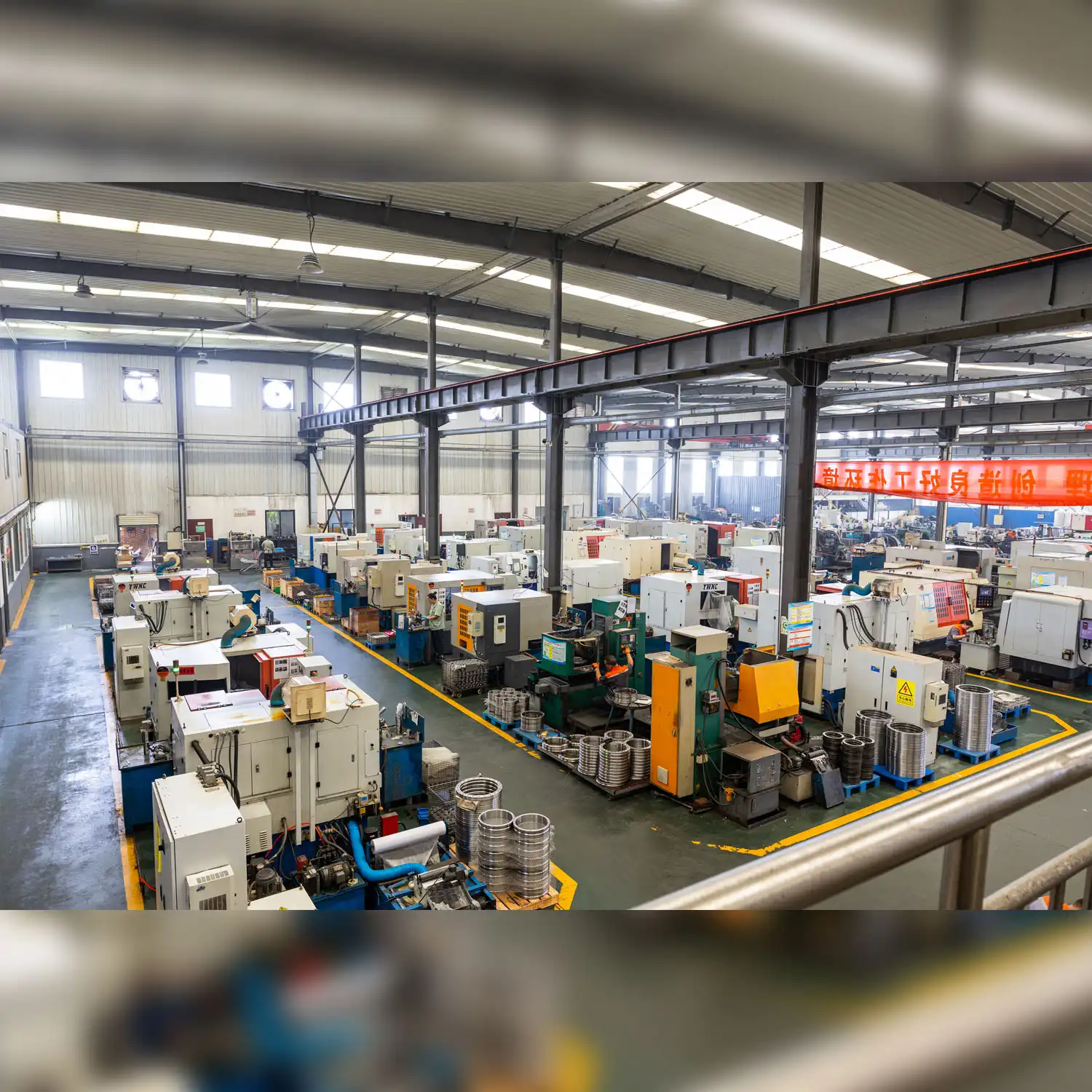
Supplier selection significantly influences product quality, cross roller bearing RB series, and supply chain reliability. Manufacturers holding ISO 9001 and IATF 16949 certifications demonstrate established quality management systems ensuring consistent production standards. These certifications assure that manufacturing processes incorporate systematic quality controls, traceability procedures, and continuous improvement methodologies. Luoyang Auto Bearing Co., Ltd. exemplifies quality-focused manufacturing, operating six specialized production workshops with 120 skilled employees dedicated to precision bearing production. Since its establishment in 2010, the company has developed comprehensive manufacturing capabilities serving global markets, including South Korea, the United States, Germany, Russia, Iran, and Turkey. This international experience demonstrates the capability to meet diverse regulatory requirements and customer specifications across varied industrial sectors.
Understanding Cost Structures and Value Propositions
Bearing pricing reflects multiple factors, including material quality, precision grade, manufacturing complexity, and order volume. The Cross roller bearing RB series commands premium pricing compared to standard ball bearings due to sophisticated manufacturing requirements and superior performance characteristics. However, total cost analysis reveals substantial value when considering reduced system complexity, longer service intervals, and improved equipment performance. Volume commitments typically yield favorable pricing structures, making long-term supply agreements economically attractive for OEM applications and ongoing maintenance programs. Minimum order quantities vary by bearing size and precision grade, requiring coordination between procurement planning and production scheduling. Manufacturers offering flexible MOQ terms provide advantages when you introduce new equipment designs or manage diverse product portfolios with varied bearing requirements.
Lead Times and Supply Chain Management
Production lead times for precision cross roller bearings typically range from four to eight weeks, depending on size, specification, and current production schedules. Custom configurations requiring special materials or dimensional modifications may extend lead times further, necessitating planning during equipment development phases. Establish clear communication with suppliers regarding timeline expectations and capacity constraints to avoid production delays. The global bearing market experiences periodic supply disruptions from raw material availability fluctuations and logistics challenges. Developing relationships with manufacturers, maintaining adequate inventory buffers, and flexible production capacity mitigate supply chain risks. Companies with established export operations and experience navigating international shipping logistics provide greater supply reliability, particularly when you operate multiple facilities across different geographic regions.
Verification of Product Authenticity and Quality
Counterfeit bearings represent a significant risk in industrial procurement, potentially causing catastrophic equipment failures and safety incidents. Implement verification procedures confirming product authenticity through manufacturer documentation, serial number validation, and packaging inspection. Reputable suppliers provide comprehensive product documentation, including material certifications, dimensional inspection reports, and traceability records linking finished products to raw material batches. Establish relationships with authorized distributors or direct manufacturer contacts to ensure genuine product sourcing. Companies like ATLYC, offering complete manufacturing transparency and quality documentation, provide assurance that supplied bearings meet specified standards. Request sample inspection and performance validation before committing to large-volume orders, particularly when evaluating new suppliers or transitioning from existing sources.
Installation and Maintenance Best Practices
Proper installation procedures and systematic maintenance protocols maximize bearing service life and equipment reliability. Even premium-grade cross roller bearings fail prematurely when subjected to installation errors or inadequate maintenance practices.
Pre-Installation Preparation Requirements
Successful bearing installation begins with thorough preparation of mounting surfaces and verification of dimensional tolerances. Clean all mounting surfaces, removing debris, burrs, and residual coatings that interfere with proper bearing seating. Inspect housing bores and shaft diameters, confirming conformance to specified tolerances, as dimensional variations create uneven loading and premature wear. Maintain clean working conditions during installation, minimizing particle contamination risks. Handle bearings with clean gloves, avoiding direct skin contact that transfers corrosive oils and acids to precision surfaces. Store bearings in original packaging until immediately before installation, protecting against environmental contamination and mechanical damage.
Precision Mounting Techniques
The Cross roller bearing RB series requires careful handling during installation to prevent roller displacement and raceway damage. Support bearing weight during positioning, avoiding impact loads and uneven pressure distribution. The outer ring plug design facilitates controlled assembly, enabling methodical roller positioning and verification before final closure. Apply mounting forces evenly across bearing faces using appropriate installation tools and fixtures. Avoid applying force through rolling elements or thin-section rings that deform under concentrated loads. Tighten mounting bolts following the specified torque sequences, ensuring even clamping force distribution around the bearing circumference. Verify rotational smoothness after mounting, checking for binding or rough spots indicating installation problems requiring correction before equipment operation.
Lubrication Standards and Procedures
Proper lubrication significantly influences bearing performance and service life. Select lubricants appropriate for operating temperature ranges, rotational speeds, and environmental conditions. Grease lubrication suits most cross roller bearing applications, providing effective contamination barriers and simplified maintenance requirements. Oil lubrication offers advantages in high-speed applications or systems with centralized lubrication distribution. Apply lubricant quantities according to manufacturer specifications, avoiding both insufficient lubrication, causing accelerated wear, and excessive lubrication, generating unnecessary drag and heat generation. Initial lubrication occurs during manufacturing, yet installation procedures may require supplemental lubrication before operation. Establish relubrication intervals based on operating conditions and manufacturer recommendations, monitoring bearing temperature and noise characteristics indicating lubrication degradation.
Routine Inspection and Troubleshooting
Systematic inspection programs detect developing problems before catastrophic failures occur. Monitor bearing temperature during operation, as elevated temperatures indicate lubrication problems, excessive loading, or mounting misalignment. Unusual noise or vibration patterns similarly signal developing wear or component damage requiring investigation. Visual inspections during scheduled maintenance intervals reveal contamination ingress, seal deterioration, and mounting hardware looseness. Rotational torque measurements identify increasing friction from wear progression or lubrication degradation. Document inspection findings and trending data, establish baseline performance characteristics, and facilitate early problem detection through comparative analysis.
Making the Right Choice: Matching RB Series Bearings to Your Needs
Application-specific requirements drive optimal bearing selection, balancing performance capabilities against cost constraints and operational considerations. The demand matching approach segments applications by industry requirements and operational characteristics, guiding you toward configurations delivering maximum value.
Robotics and Automation Applications
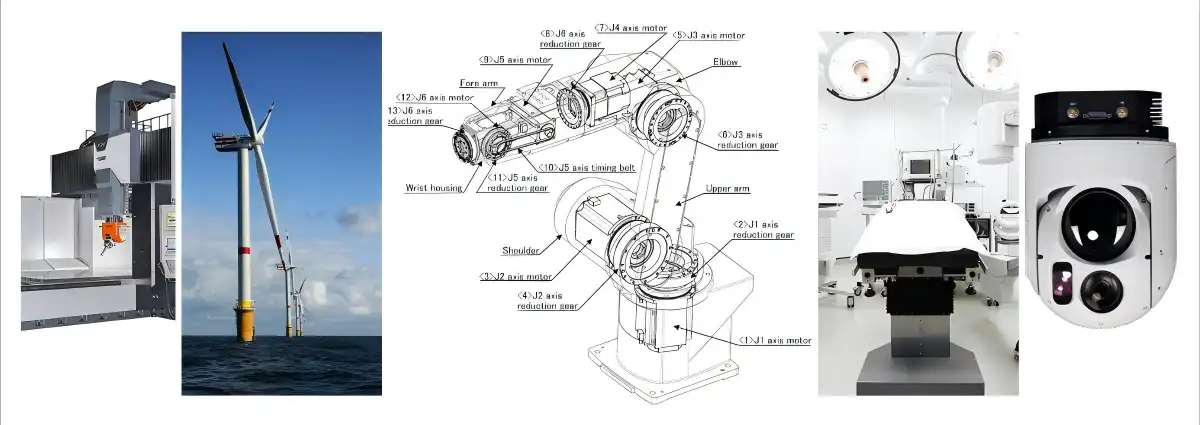
Industrial robots demand bearings combining high rigidity, low friction, and exceptional positioning accuracy. The Cross roller bearing RB series serves articulated robot joints, particularly waist and elbow positions, managing heavy cantilevered loads during rapid acceleration cycles. Zero backlash characteristics ensure repeatable positioning accuracy essential for precision assembly operations and welding applications. Collaborative robots operating alongside human workers benefit from the smooth motion profiles and predictable torque characteristics of cross roller bearings. The reduced friction coefficients compared to alternative bearing types minimize actuator power requirements, enabling compact motor selections and improved energy efficiency. Select P5 or P4 precision grades for Cross roller bearing RB series standard industrial robots, upgrading to P2 specifications for precision assembly applications requiring micron-level positioning accuracy.
Machine Tool Rotary Tables
CNC machining centers utilize rotary tables providing fourth-axis positioning capability for complex part geometries. These applications subject bearings to substantial cutting forces, moment loads from workpiece offset, and continuous rotational demands. The Cross roller bearing RB series delivers the rigidity required to maintain table planarity under heavy cutting loads while providing smooth indexing motion between positions. Precision grinding machines and coordinate measuring equipment demand higher accuracy grades, maintaining positional tolerances throughout extended operation cycles. The integrated inner ring design of the RB series provides superior rigidity compared to split ring configurations, minimizing deflection under cantilevered workpiece loads. This structural advantage directly translates to improved machining accuracy and surface finish quality.
Medical Equipment and Imaging Systems
Medical CT scanners and X-ray imaging equipment require bearings supporting gantry rotation with minimal vibration and exceptional service reliability. Patient safety considerations demand predictable bearing performance throughout extended service intervals. The Cross roller bearing RB series meets these requirements through robust construction, controlled rotational characteristics, and proven durability in continuous-duty applications. Surgical robots and patient positioning systems similarly benefit from the precise motion control and smooth operation characteristics of cross roller bearings. The low friction and predictable torque enable accurate force feedback control essential for delicate surgical procedures. Quiet operation contributes to comfortable patient environments, while superior cleanliness compared to alternative bearing types suits medical device hygiene requirements.
Precision Measurement and Semiconductor Manufacturing
Coordinate measuring machines and optical inspection systems demand ultimate positioning accuracy and motion stability. P2 grade cross roller bearings provide the precision required for nanometer-level measurement accuracy. The thermal stability of precision-grade bearings maintains dimensional consistency across laboratory temperature variations that otherwise compromise measurement validity. Semiconductor wafer handling equipment and IC manufacturing devices require contamination-free operation and exceptional positioning repeatability. The Cross roller bearing RB series accommodates these demanding requirements through precision manufacturing and clean-room compatible designs. Controlled outgassing characteristics and particle generation specifications suit cleanroom classifications typical of semiconductor production environments.
Conclusion
Selecting appropriate cross roller bearings requires a comprehensive evaluation of technical requirements, quality standards, and supplier capabilities. The RB series delivers exceptional performance in applications demanding combined load handling, precision positioning, and compact design. Successful implementation depends on matching bearing specifications to operational demands, implementing proper installation procedures, and maintaining systematic service protocols. Strategic procurement relationships with qualified manufacturers ensure consistent product quality and reliable supply chains supporting your production requirements. Companies demonstrating ISO 9001 and IATF 16949 certification, substantial manufacturing capacity, and international market experience provide the foundation for long-term supply partnerships. As precision automation continues advancing across industries, cross roller bearing technology remains essential, enabling compact, reliable, and high-performance motion systems meeting increasingly demanding application requirements.
FAQ
1. What maintenance intervals do cross roller bearings require?
Maintenance frequency depends on operating conditions, including load intensity, rotational speed, and environmental exposure. Typical applications require lubrication inspection every 6 to 12 months under normal operating conditions. High-speed or continuous-duty applications may necessitate more frequent service intervals. Monitor bearing temperature and noise characteristics between scheduled maintenance, as unusual conditions indicate developing problems requiring immediate attention. Proper initial installation and appropriate lubricant selection significantly extend service intervals and bearing lifespan.
2. How do cross roller bearings compare to slewing bearings for heavy loads?
Cross roller bearings and slewing bearings serve different application requirements despite superficial similarities. The Cross roller bearing RB series provides superior rotational accuracy and lower friction, suitable for precision positioning applications. Slewing bearings accommodate larger diameters and simpler mounting arrangements appropriate for cranes and excavators where positioning accuracy demands remain modest. Cross roller bearings suit applications requiring precise angular positioning and smooth continuous rotation, while slewing bearings handle extremely heavy loads in applications accepting higher friction and reduced accuracy.
Partner with ATLYC for Your Cross Roller Bearing RB Series Needs
ATLYC combines 15 years of specialized manufacturing expertise with comprehensive quality systems, ensuring a reliable supply of precision cross roller bearings. Our ISO 9001 and IATF 16949 certified production facilities employ 120 skilled professionals across six specialized workshops, delivering consistent product quality meeting international standards. We serve OEM manufacturers and bearing distributors across North America, Europe, and Asia, providing technical support throughout bearing selection, installation, and service lifecycle stages.
Contact our engineering team at auto@lyautobearing.com to discuss your specific Cross roller bearing RB series application requirements and receive detailed technical recommendations. As an established Cross roller bearing RB series manufacturer, we offer competitive pricing on volume orders, flexible MOQ terms supporting prototype development, and reliable lead times backed by substantial production capacity. Explore our comprehensive product catalog featuring complete dimensional specifications and performance data, enabling informed procurement decisions aligned with your operational objectives.
References
1. Harris, T.A. and Kotzalas, M.N. (2006). Advanced Concepts of Bearing Technology: Rolling Bearing Analysis, Fifth Edition. CRC Press, Boca Raton, Florida.
2. Eschmann, P., Hasbargen, L., and Weigand, K. (1985). Ball and Roller Bearings: Theory, Design and Application, Second Edition. John Wiley & Sons, Chichester, United Kingdom.
3. Hamrock, B.J., Schmid, S.R., and Jacobson, B.O. (2004). Fundamentals of Fluid Film Lubrication, Second Edition. Marcel Dekker, New York.
4. ISO 492:2014. Rolling Bearings - Radial Bearings - Geometrical Product Specifications and Tolerance Values. International Organization for Standardization, Geneva, Switzerland.
5. Bhushan, B. (2013). Principles and Applications of Tribology, Second Edition. John Wiley & Sons, New York.
6. Holmberg, K. and Erdemir, A. (2017). Influence of Tribology on Global Energy Consumption, Costs and Emissions. Friction Journal, Volume 5, Issue 3, Pages 263-284.
Learn about our latest products and discounts through SMS or email