- English
- French
- German
- Portuguese
- Spanish
- Russian
- Japanese
- Korean
- Arabic
- Greek
- German
- Turkish
- Italian
- Danish
- Romanian
- Indonesian
- Czech
- Afrikaans
- Swedish
- Polish
- Basque
- Catalan
- Esperanto
- Hindi
- Lao
- Albanian
- Amharic
- Armenian
- Azerbaijani
- Belarusian
- Bengali
- Bosnian
- Bulgarian
- Cebuano
- Chichewa
- Corsican
- Croatian
- Dutch
- Estonian
- Filipino
- Finnish
- Frisian
- Galician
- Georgian
- Gujarati
- Haitian
- Hausa
- Hawaiian
- Hebrew
- Hmong
- Hungarian
- Icelandic
- Igbo
- Javanese
- Kannada
- Kazakh
- Khmer
- Kurdish
- Kyrgyz
- Latin
- Latvian
- Lithuanian
- Luxembou..
- Macedonian
- Malagasy
- Malay
- Malayalam
- Maltese
- Maori
- Marathi
- Mongolian
- Burmese
- Nepali
- Norwegian
- Pashto
- Persian
- Punjabi
- Serbian
- Sesotho
- Sinhala
- Slovak
- Slovenian
- Somali
- Samoan
- Scots Gaelic
- Shona
- Sindhi
- Sundanese
- Swahili
- Tajik
- Tamil
- Telugu
- Thai
- Ukrainian
- Urdu
- Uzbek
- Vietnamese
- Welsh
- Xhosa
- Yiddish
- Yoruba
- Zulu
Is the Cross roller bearing RE series Suitable for Semiconductor Use?
The Cross roller bearing RE series works great in places that make semiconductors because it provides the accuracy, cleanliness, and dependability that modern IC production needs. This special bearing design meets the strict needs of the semiconductor industry with its very accurate movement, small size, and ability to handle loads in more than one way. These bearings support the ultra-precise positioning systems, chip handling equipment, and automatic inspection platforms that are necessary for making semiconductors. They are made of materials that are designed to work consistently well and have precision grades that reach the P2 level. Their combined outer ring design keeps the dimensions stable, which is important for sanitary operations and reduces the number of particles that are made.
Understanding the Cross Roller Bearing RE Series
Structural Design and Configuration
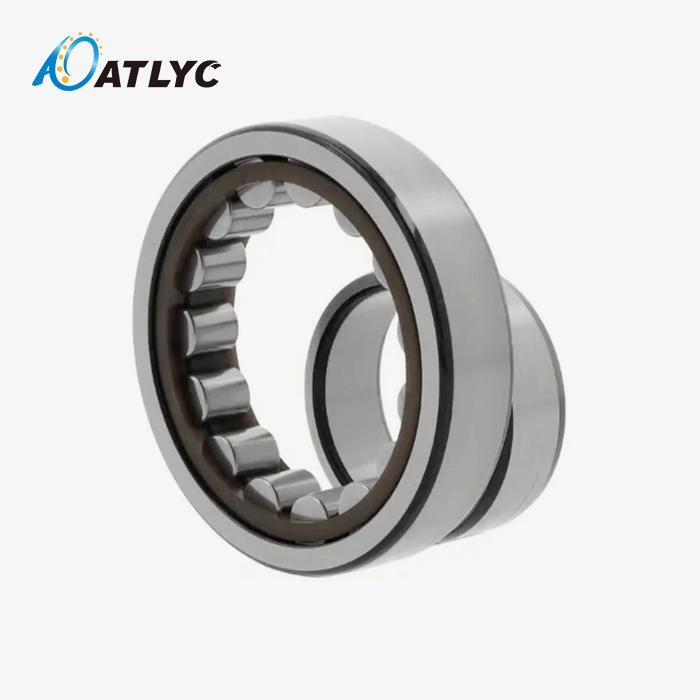
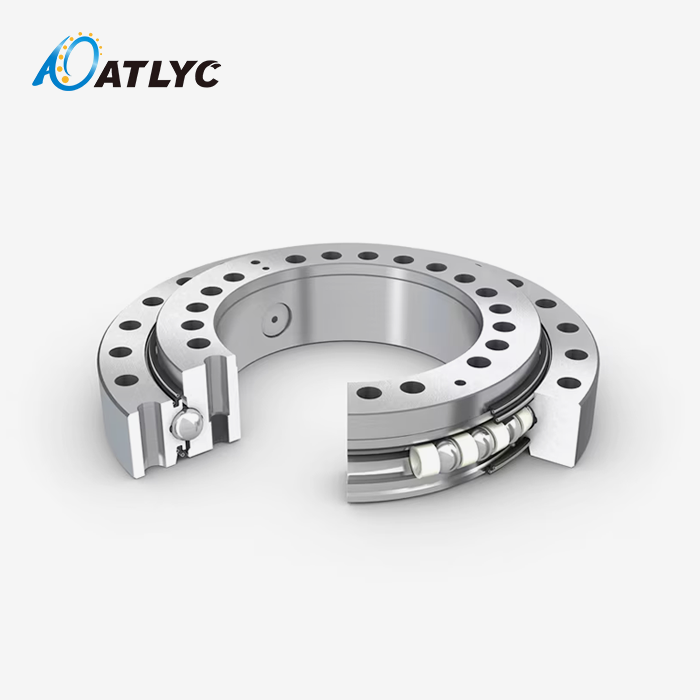
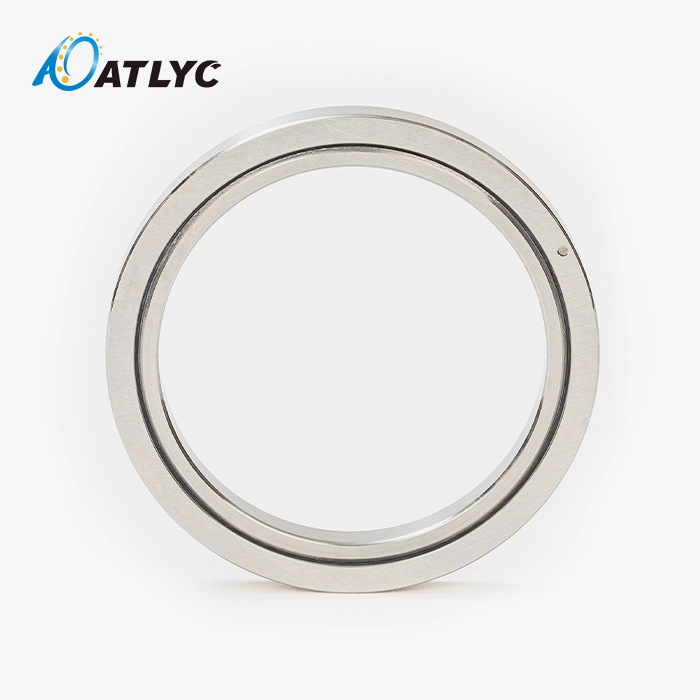
The RE series has a unique design based on an outer ring that is integrated and an inner ring piece that is different. This configuration flips the normal RB series design on its head, making it ideal for uses that need very accurate rotation of the outer housing. When compared to split-ring options, the solid outer ring design is more rigid, keeping the geometry stable while rotating.
Cylindrical rollers are arranged at exact 90-degree angles in machined V-grooves between the inner and outer raceways. There are spacers between neighbouring wheels that keep them from touching directly. This stops friction from building up and wear from spreading. This straight-line setup lets multiple axes handle loads at the same time within a single small assembly.
Manufacturing Specifications and Dimensional Range
Inner diameters can be anywhere from 20 mm to 1100 mm, and outer diameters can be anywhere from 70 mm to 1500 mm. Width choices range from 12mm to 110mm, so they can fit a wide range of equipment sizes. This ability to change sizes makes it possible to integrate them into a wide range of semiconductor processing platforms, from small inspection stations to large wafer transfer systems.
Gcr15 and Gcr15SiMn bearing steels are the main materials chosen because they keep their hardness, stay stable in size, and don't wear down easily. Heat treatment processes make sure that the raceway surfaces have the same hardness profile, which is important for keeping precision over long service intervals. Techniques for finishing the surface make it smooth enough to work in a cleanroom.
Precision Classifications and Performance Standards
Some of the accuracy marks that are offered for the Cross roller bearing RE series are P6, P0, P5, P4, and P2. P2 is the most accurate grade. This method of classification is directly linked to radial runout limits, changes in raceway shape, and uniformity in dimensions. Applications in semiconductors usually need grades P5 or higher to meet micrometre-level standards for pointing accuracy.
The table below shows how the following precise traits relate across popular accuracy grades:
| Precision Grade | Radial Runout Tolerance | Typical Application Context | Cost Relative to P0 |
|---|---|---|---|
| P6 | Standard tolerance | General industrial machinery | 0.9x |
| P0 | Reference standard | Moderate precision equipment | 1.0x (baseline) |
| P5 | High precision | Semiconductor handling systems | 1.4x |
| P4 | Very high precision | IC manufacturing devices | 1.9x |
| P2 | Ultra-high precision | Critical measurement instruments | 2.8x |
These precision levels directly impact positioning repeatability in semiconductor equipment, where wafer alignment tolerances often fall within 5 micrometres. Higher precision grades reduce cumulative positioning errors across multi-axis systems, improving process consistency.
Assessing the Suitability of the RE Series for Semiconductor Use
Precision Performance in Semiconductor Contexts
Precision positioning is needed for semiconductor equipment that goes beyond what standard bearings can do. Photolithography steppers, inspection systems, and automated test equipment need to be able to move in a way that is repeatable and accurate to within a few micrometres. The crossed roller design provides very accurate spinning because it has multiple points of contact that spread forces evenly across the rolling surfaces.
In these situations, runout timing is a very important factor. The design of the integral outer ring gets rid of the assembly interfaces that usually cause changes in the shape of the part. These bearings can achieve radial runout values below 2 micrometres in P5 grades when properly primed. This means they meet the needs of optical alignment systems and chip stage positioning systems.
It can handle loads in all three directions at the same time: radial, axial, and moment. This feature makes designing equipment easier because it gets rid of the need for separate thrust and radial bearing assemblies. This consolidation is good for semiconductor equipment because it makes assembly easier and makes better use of space inside equipment frames.
Contamination Control and Cleanroom Compatibility
In the semiconductor industry, particle growth is always a problem because contamination at the submicron level can ruin product results. The shape of the bearing naturally limits the creation of particles in a number of ways. Roller space keeps the rolling parts from touching each other, which is a main source of particles in traditional designs. Precision grinding of the raceway surfaces reduces surface roughness that could speed up the formation of wear debris.
The choice of lubricant has a big effect on how well it works in a lab. Synthetic oils or clean-grade greases that don't release toxic organic chemicals into controlled atmospheres keep greasing films in place. To lower the risk of contamination even more, some semiconductor applications call for solid lubricant coatings or strategies with little to no lubrication.
Sealed bearing designs have non-contact covers that keep lubrication inside and keep external contaminants from getting to internal parts. The purpose of these shields is to balance the need for protection with the higher friction that contact-type seals cause. This keeps the low torque properties that are necessary for precise motion control.
Operational Limitations and Environmental Considerations
In chip factories where process equipment makes a lot of heat, temperature changes can make bearing function difficult. Different rates of thermal expansion between bearing parts can change the preload sets and the connections between dimensions. The RE series stays stable over mild temperature ranges that are common in equipment settings. However, high thermal cycling may need special methods for adjustment.
Applications like electron beam lithography systems or plasma casting tanks face extra problems when they are used in vacuum settings. Standard oils disappear quickly in a vacuum, so you need to use different ways to lubricate. Dry-lubricated versions or vapour-phase lubrication systems make bearings more useful in these tough situations, but they cost more at first.
Any Cross roller bearing RE series system will wear out faster if it is used over and over again. When making semiconductors, production schedules are often 24 hours a day, with only short breaks. If you calculate and size the loads correctly, you can be sure that the bearings will last a long time. For example, L10 life projections for properly specified bearings in semiconductor applications usually go beyond 30,000 operating hours.
Comparing the Cross Roller Bearing RE Series with Alternatives
Performance Differentiation Across Bearing Types
When compared to other bearing designs, the RE series fits into a certain performance niche. Angular contact ball bearings can work at high speeds, but they need to be paired up in order to handle combined loads. Four-point contact bearings can hold loads in all directions in a small space, but they are not as rigid as crossed roller designs. While cylindrical roller thrust bearings are great for linear loads, they can't handle radial loads.
The RA series has a split outer ring and a complete inner ring. The RE series, on the other hand, is better for situations where the outer ring needs to spin. This structure reversal improves the accuracy of the outer raceway and gets rid of the problems with concentricity that come with outer ring assembly joints. This building choice directly benefits equipment designs that use mounting bearings with inner rings that stay in place and outer housings that rotate.
Slewing bearings are another option for rotary applications with a large diameter. Even though slewing systems are great for moment loads, they usually don't give the precision that semiconductor equipment needs. Because they are bigger and heavier, they can't be used with the small, high-accuracy positioning stages that are common in making semiconductors.
Manufacturing Quality and Supplier Considerations
Some of the biggest names in bearings, like FAG, NSK, THK, and KOYO, each offer products with unique features. Japanese companies usually put a lot of emphasis on precision grades and tight tolerance controls, making their goods fit for high-precision uses. For industrial longevity, European makers often put load capacity and strong design at the top of their lists.
Quality management systems have a direct effect on how consistent the parts are. ISO 9001 certification is a basic level of quality assurance, while IATF 16949 certification is only for high-reliability industrial and automotive uses. These licenses show that there are structured process controls, tracking standards, and models for ongoing growth that make it less likely that batches will be different from each other.
Manufacturing capacity affects how reliably deliveries happen and how many customisation options are available. Large-scale manufacturers keep a wider range of items in stock and have shorter lead times for common setups. Smaller, more specialised manufacturers may be able to make custom changes more easily, but they may have longer delivery times. Knowing about these trade-offs helps match the provider choice with the project's schedule and needs.
The table below shows some of the most important features of suppliers that are useful to chip applications:
| Manufacturer Origin | Precision Grade Focus | Customization Flexibility | Typical Lead Time (Standard) | Quality Certifications |
|---|---|---|---|---|
| Japanese Brands | P4, P2 ultra-precision | Moderate | 8-12 weeks | ISO 9001, JIS standards |
| European Brands | P5, P4 high precision | High | 10-16 weeks | ISO 9001, DIN standards |
| Chinese Manufacturers | P5, P4 competitive precision | High | 4-8 weeks | ISO 9001, IATF 16949 |
| Specialized OEMs | Custom precision levels | Very High | 12-20 weeks | Application-specific |
Chinese bearing manufacturers have substantially improved quality standards over the past decade, with leading facilities achieving precision levels comparable to established international brands. ATLYC exemplifies this advancement, operating under ISO 9001 and IATF 16949 certifications while maintaining competitive pricing through efficient production scaling.
Procurement Insights for Cross Roller Bearing RE Series
Sourcing Channels and Lead Time Management
There are several ways for procurement teams to get these precision bearings, and each has its own benefits. Authorised distributors keep common sizes in stock, which makes delivery faster for standard configurations. When you work directly with a maker, you can make more changes and get lower prices on larger orders, but the wait time is usually longer.
Standard bearing sizes usually ship within 4 to 8 weeks from well-known companies that can keep up with demand. Lead times can go up to 10 to 16 weeks for custom configurations that need non-standard sizes, special materials, or unique, precise grades. This depends on how deep the manufacturing queue is. Critical path delays during project execution can be avoided by planning equipment builds around these dates.
Different suppliers have very different minimum order amounts. For custom specs, large foreign makers may need a large number of agreements. On the other hand, specialised producers can usually handle smaller batch orders. This aspect of freedom is especially important when making prototypes or using limited-production equipment, which is common in the manufacturing of semiconductor capital equipment.
Total Cost Analysis and Value Assessment
The initial purchase price is only one part of the total cost of ownership. Long-term economic success is greatly affected by things like the need for maintenance, the expected service life, and the logistics of replacement. Higher precision grades cost more, but they last longer between service intervals because they distribute load better and wear down less quickly.
When you add the cost of fitting labour to the economic study, you find that there are other things to think about. The split inner ring design makes installation easier than options with an integrated inner ring, which could cut down on setup time and the need for special tools. This installation benefit adds up over a number of bearing positions in complicated equipment assemblies.
When production lines stop, it often costs more than $10,000 per hour for chip factories to be idle. Because of this, bearing problems that cause unexpected maintenance have big financial effects that go beyond the cost of replacing parts. These operational risk exposures can be cut down by including enough safety margins in bearing capacity ratings and choosing grades that have been proven to be reliable.
Installation and Maintenance Best Practices
The performance and life of a bearing are directly affected by how it is installed. Cleanliness during building stops the entrance of contaminants that speed up wear. Controlled application of preload ensures the best internal geometry without causing too much stress to build up. Verification of alignment makes sure that the equipment is oriented correctly in relation to load vectors and its own motion.
The working accuracy is affected by how well the mounting area is prepared. To keep the designed clearances and stop distortion, the shaft and housing tolerances must match the bearing specifications. Surface finish requirements for mounting interfaces usually say that the roughness level must be less than 1.6 micrometres Ra to make sure that the support is even and stress concentrations are kept to a minimum.
In semiconductor uses, maintenance times combine the need for preventive service with the need for working consistency. Condition tracking methods that use sound analysis or audio emission detection can spot problems as they start to appear before they become major problems. Regular re-application of lubricant keeps protected films in place that keep surfaces from touching and keep friction levels in check.
Real-World Applications and Case Studies
Semiconductor Equipment Integration Examples
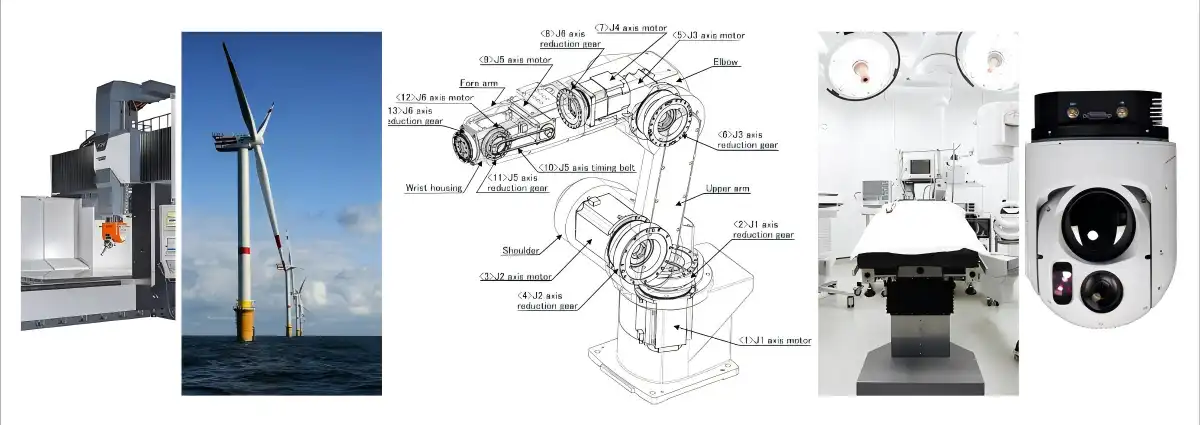
Wafer handling robots incorporate Cross roller bearing RE series in joint assemblies where compact size and omnidirectional load capacity enable efficient motion control. The low friction coefficient supports smooth acceleration profiles essential for preventing wafer slip during high-speed transfer operations. Precision grades ensure repeatable positioning across millions of pick-and-place cycles throughout equipment service life.
Inspection system stages utilise crossed roller bearings to achieve the positioning accuracy required for defect detection at submicron scales. The bearing's excellent runout accuracy maintains optical alignment between imaging sensors and wafer surfaces during scanning operations. Thermal stability prevents dimensional drift that would degrade measurement consistency across inspection runs.
Lithography equipment steppers demand extreme precision for aligning photomask patterns with wafer substrates. Multi-axis stages built with high-precision crossed roller bearings achieve the nanometer-level positioning accuracy these systems require. The bearings' moment load capacity supports cantilever stage configurations while maintaining geometric stability under acceleration forces.
Performance Validation and User Experience
Engineering teams implementing these bearings in IC manufacturing equipment report sustained accuracy performance over multi-year operational periods. Properly specified and maintained installations achieve L10 life values exceeding design predictions, validating calculated load ratings and material selections. Reduced maintenance frequency compared to alternative bearing types lowers total ownership costs while improving equipment availability.
Procurement managers value the competitive pricing that specialised manufacturers offer without compromising quality standards. Chinese bearing producers have demonstrated the capability to meet stringent semiconductor equipment requirements while maintaining delivery reliability. This supply chain diversity reduces dependency risks and provides negotiating leverage during procurement processes.
Emerging Technology Trends
Advanced materials development continues to expand bearing performance envelopes. Ceramic rolling elements offer reduced weight, enhanced corrosion resistance, and improved high-temperature capabilities compared to steel alternatives. Hybrid designs combining ceramic rollers with steel raceways balance performance improvements against cost considerations for selective applications.
Integrated sensor technologies enable real-time condition monitoring without external instrumentation additions. Bearings equipped with embedded temperature, vibration, or displacement sensors provide continuous performance data supporting predictive maintenance strategies. These smart bearing implementations align with Industry 4.0 initiatives, transforming semiconductor manufacturing operations.
Surface coating technologies enhance contamination resistance and reduce friction characteristics. Diamond-like carbon coatings and advanced ceramic layers extend service intervals while improving cleanroom compatibility. These surface treatments address specific application challenges without requiring fundamental design changes to proven bearing architectures.
Conclusion
The Cross roller bearing RE series delivers proven capabilities for semiconductor manufacturing applications where precision, contamination control, and reliability intersect. Its integral outer ring design, multi-directional load capacity, and compact footprint address core equipment requirements across wafer handling, inspection, and lithography systems. Available precision grades reaching P2 levels support the most demanding positioning accuracy specifications.
Procurement decisions should weigh application-specific requirements against bearing characteristics, balancing initial costs with long-term ownership economics. Proper supplier selection, considering manufacturing quality, delivery reliability, and technical support capabilities, ensures successful implementation. Installation and maintenance practices adapted to cleanroom environments maximise performance and service life.
As semiconductor manufacturing advances toward smaller feature sizes and larger wafer formats, precision bearing requirements will continue to intensify. The RE series architecture provides a foundation for these evolving demands while currently serving existing production equipment effectively.
FAQ
1. Can the RE series operate effectively in cleanroom environments required for semiconductor fabrication?
These precision bearings function well within cleanroom settings when properly specified with appropriate sealing and lubrication. Non-contact seals prevent external contamination while containing internal lubricants, and low-outgassing greases minimize volatile compound release. Proper material selection and surface treatments further enhance cleanroom compatibility.
2. What delivery timelines should procurement teams expect for custom bearing sizes?
Standard bearing configurations typically ship within 4-8 weeks from manufacturers maintaining adequate inventory and production capacity. Custom specifications requiring non-standard dimensions or special precision grades extend lead times to 10-16 weeks, depending on manufacturing schedules and complexity. Planning equipment projects around these timelines prevents critical path delays.
3. How does maintenance compare between crossed roller designs and conventional bearing arrangements?
Crossed roller bearings generally require less frequent maintenance than separate radial and thrust bearing combinations due to their integrated load handling. The reduced component count simplifies service procedures and decreases inventory requirements. Proper initial installation and adequate lubrication typically enable maintenance intervals exceeding 12-18 months in semiconductor equipment applications.
Partner with ATLYC for Your Precision Bearing Requirements
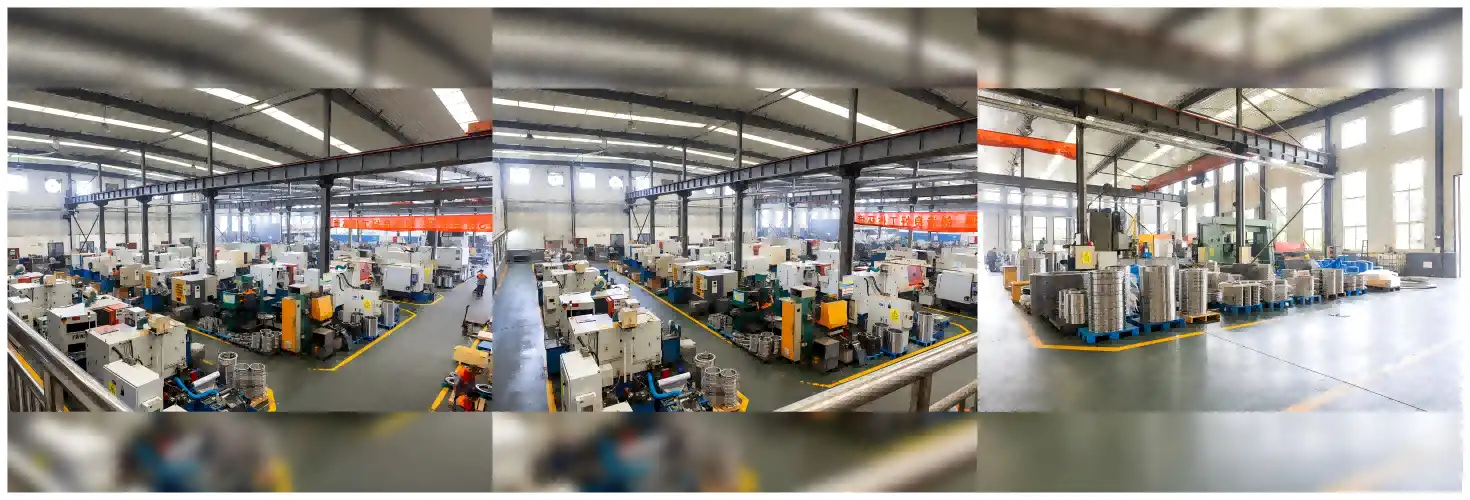
ATLYC combines 15 years of manufacturing expertise with comprehensive quality management under ISO 9001 and IATF 16949 certifications, delivering precision crossed roller bearings that meet semiconductor industry standards. Our production capabilities span six specialised workshops equipped to manufacture bearings from 20mm to 1100mm inner diameters with precision grades reaching P2 levels. We understand that semiconductor equipment demands consistent quality, reliable supply chains, and responsive technical support—capabilities we've demonstrated serving customers across South Korea, the United States, Germany, and other demanding markets.
As an experienced Cross roller bearing RE series manufacturer, we offer customisation options tailored to your specific application requirements, competitive volume pricing, and technical consultation supporting optimal bearing selection. Our engineering team works directly with equipment designers to address unique mounting challenges, load conditions, and environmental factors affecting bearing performance. Contact our specialists at auto@lyautobearing.com to discuss your project specifications, request detailed technical documentation, or arrange sample evaluation programs that validate bearing performance before full-scale implementation.
References
1. Harris, T.A., and Kotzalas, M.N. "Advanced Concepts of Bearing Technology: Rolling Bearing Analysis." CRC Press, 2006.
2. Bhushan, B. "Principles and Applications of Tribology." John Wiley & Sons, 2013.
3. Weck, M., and Brecher, C. "Werkzeugmaschinen Fertigungssysteme: Konstruktion, Berechnung und messtechnische Beurteilung." Springer-Verlag, 2006.
4. Semiconductor Equipment and Materials International. "SEMI Standards: Cleanroom and Contamination Control." SEMI International Standards, 2020.
5. Hamrock, B.J., Schmid, S.R., and Jacobson, B.O. "Fundamentals of Fluid Film Lubrication." Marcel Dekker, 2004.
6. ISO 492:2014. "Rolling Bearings - Radial Bearings - Geometrical Product Specifications and Tolerance Values." International Organisation for Standardisation, 2014.
Learn about our latest products and discounts through SMS or email