- English
- French
- German
- Portuguese
- Spanish
- Russian
- Japanese
- Korean
- Arabic
- Greek
- German
- Turkish
- Italian
- Danish
- Romanian
- Indonesian
- Czech
- Afrikaans
- Swedish
- Polish
- Basque
- Catalan
- Esperanto
- Hindi
- Lao
- Albanian
- Amharic
- Armenian
- Azerbaijani
- Belarusian
- Bengali
- Bosnian
- Bulgarian
- Cebuano
- Chichewa
- Corsican
- Croatian
- Dutch
- Estonian
- Filipino
- Finnish
- Frisian
- Galician
- Georgian
- Gujarati
- Haitian
- Hausa
- Hawaiian
- Hebrew
- Hmong
- Hungarian
- Icelandic
- Igbo
- Javanese
- Kannada
- Kazakh
- Khmer
- Kurdish
- Kyrgyz
- Latin
- Latvian
- Lithuanian
- Luxembou..
- Macedonian
- Malagasy
- Malay
- Malayalam
- Maltese
- Maori
- Marathi
- Mongolian
- Burmese
- Nepali
- Norwegian
- Pashto
- Persian
- Punjabi
- Serbian
- Sesotho
- Sinhala
- Slovak
- Slovenian
- Somali
- Samoan
- Scots Gaelic
- Shona
- Sindhi
- Sundanese
- Swahili
- Tajik
- Tamil
- Telugu
- Thai
- Ukrainian
- Urdu
- Uzbek
- Vietnamese
- Welsh
- Xhosa
- Yiddish
- Yoruba
- Zulu
Why Buy RB Series Crossed Roller Bearing Direct from Factory?
Buying RB Series Crossed Roller Bearings straight from the factory saves you money, makes sure you get the real thing, and makes the supply chain more reliable. When you communicate directly with the maker instead of going through a middleman, you get clear prices, the ability to customise, and technical help that middlemen can't offer. When you buy directly from the plant, you can be sure that the parts are compliant with ISO 9001 and IATF 16949 standards. You can also get longer warranties and technical support from the engineering teams that develop and test the parts. For their high-precision bearing needs, mid-sized to big car and industrial equipment makers want stable quality, expected lead times, and long-term relationship security. This method meets their main concerns.
Understanding RB Series Crossed Roller Bearings
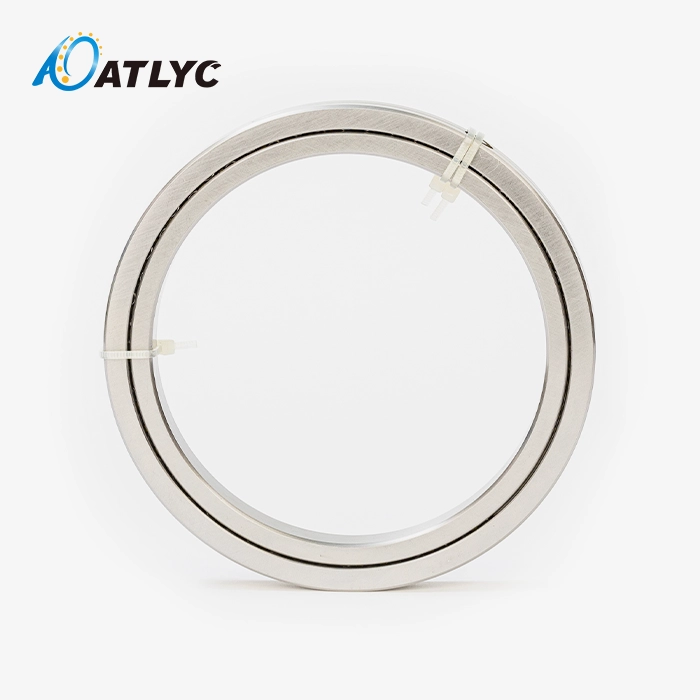
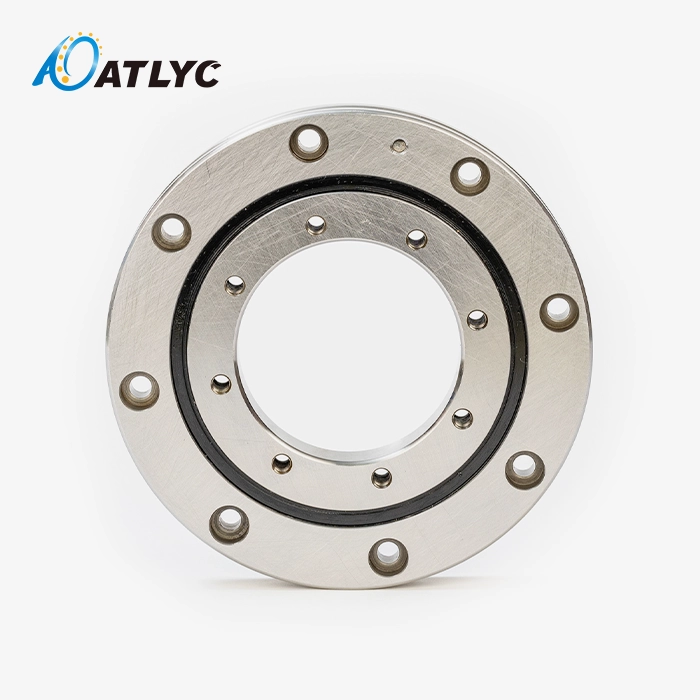
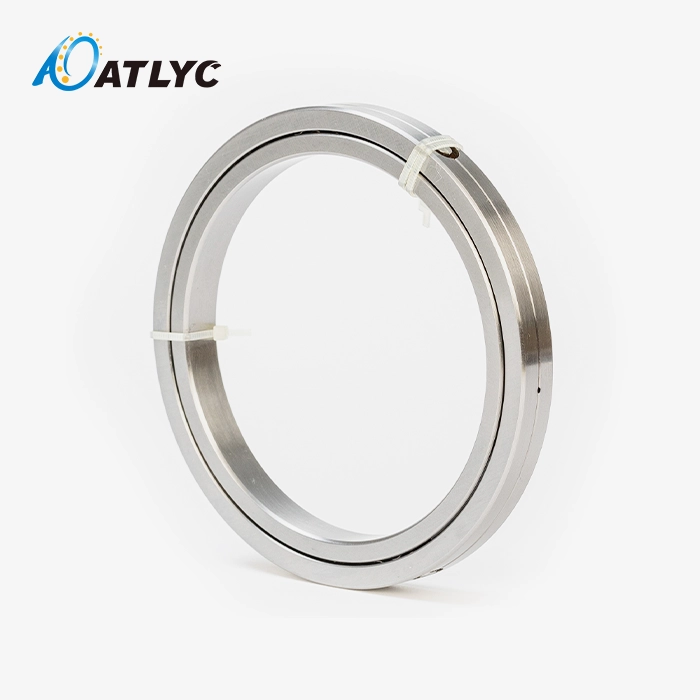
The RB Series is a special type of precision bearing that is made to handle radial, axial, and moment loads all at the same time in a small space. This crossed roller bearing design has an inner ring that is integral and an outer ring that is split and held in place by a plug. This makes for a strong structure that works well in situations where the inner ring needs to rotate.
Innovative Structural Design
The unique design of the bearing places cylindrical rollers at right angles to each other at 90 degrees inside precise V-groove raceways. This crossed design makes a lot of touch places that spread the load evenly in all directions. The split outer ring with plug makes installation and upkeep easier, and the combined inner ring gives the structure a lot of strength. Precision spacing spacers keep rollers from touching each other, which stops friction and any possible skewing problems that could happen during operation. This structure's design solves one of the most important problems in engineering: how to handle loads that come from different directions without losing space economy.
Technical Specifications and Materials
There is a wide range of available sizes to meet the needs of a wide range of industrial applications. The inside diameters range from 20 mm to 1100 mm, the outside diameters from 70 mm to 1500 mm, and the widths from 12 mm to 110 mm. Premium bearing steels, like Gcr15 and Gcr15SiMn alloys, are used in the bearings because they are very hard, don't wear down easily, and keep their shape when heated and cooled.
There are five different precise grades, ranging from P6 to P4. Each grade has tighter limits for both measurement accuracy and spinning precision. The P4 grade usually keeps axial runout within 5 micrometres, which makes it useful for situations where precise placement affects the quality of the product.
Performance Characteristics
With a crossing roller design, radial forces, axial pressure, and toppling moments can all be supported at the same time by a single bearing unit. This combination gets rid of the hassle and need for a room that comes with installing multiple bearings. The arrangement of the orthogonal rollers makes the system very rigid, which means it doesn't bend or stretch when it's under load. This is a quality that is needed to keep precision machinery in the right place.
In addition to their ability to hold a load, RB Series Crossed Roller Bearings have a low friction coefficient that ensures they can rotate smoothly even when the load changes. The V-groove raceway design and precise production give the bearings great runout accuracy, which is useful for demanding uses that need to precisely place and control movement. Crossed roller bearings are essential for industrial robots, machining center rotary tables, manipulator moving parts, precise rotary tables, medical machines, measuring tools, and devices that make integrated circuits (ICs).
| Specification | Range/Details |
|---|---|
| Inner Diameter | 20-1100mm |
| Outer Diameter | 70-1500mm |
| Width | 12-110mm |
| Material | Gcr15, Gcr15SiMn |
| Precision Grades | P6, P0, P5, P4 |
| Load Capacity | Radial, Axial, Moment (simultaneous) |
Why Buying Direct from the Factory Matters
Setting up a direct purchasing connection with the bearing maker changes the costs and stability of your supply chain in a basic way. There are real benefits to this method that go beyond just saving money.
Cost Efficiency and Pricing Transparency
When you buy crossed roller bearings directly from the factory, you skip the markups that distributors usually add, which can be anywhere from 15 to 30 percent. You can see clear lists of factory prices and discount structures based on volume that show how production really works instead of complicated margins. When you place a lot of orders, you can get better prices, and the factory can give you detailed cost breakdowns that help financial stakeholders understand why you should buy something.
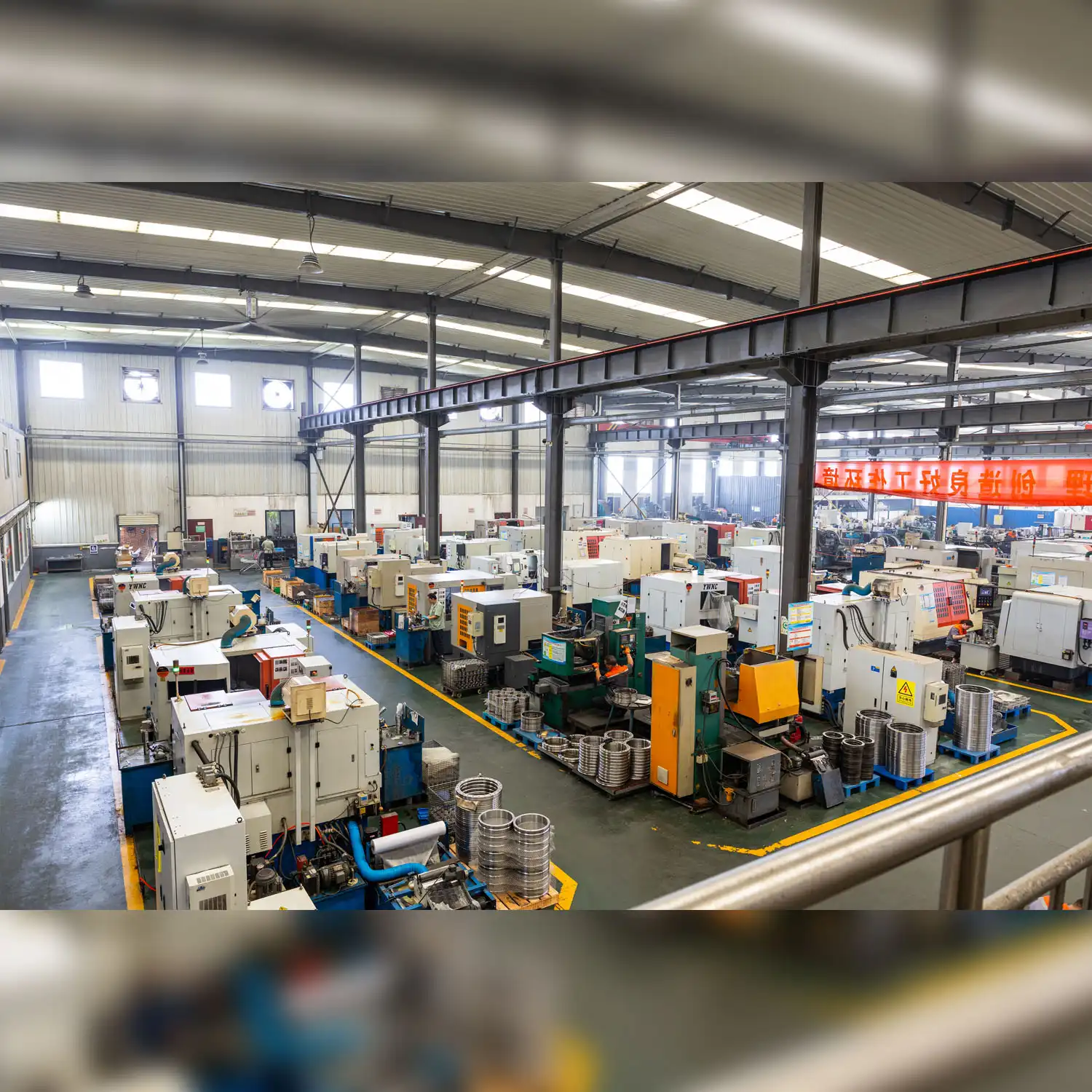
Luoyang Auto Bearing Co., Ltd. was founded in 2010 and has grown steadily over the past 15 years, from a single workshop to six specialised production sites. With this much manufacturing power, we can keep our quality standards up to ISO 9001 and IATF 16949 while still offering competitive pricing based on economies of scale. Our 120 trained workers in production, research and development, quality control, and assembly make sure that cutting costs never means sacrificing the quality of the product.
Guaranteed Product Authenticity
Directly sourcing from the factory gets rid of the risks that come with fake parts or low-quality materials that can get into the supply chain through distributors. You get bearings that were made following strict quality control procedures. You can track them all the way from inspecting the raw materials to making sure they are the right size. There is proof that meets both internal quality standards and external audit standards in the form of factory certificates of compliance, material test results, and measurement inspection records.
The factory's quality control system is made up of four main areas for review. Coordinate Measuring Machines (CMMs) are used for dimension accuracy verification to make sure that the tolerances between the inner and outer rings are in line with ISO standards. During rotational precision tests, radial and axial runout are measured to make sure they are within certain micrometre ranges. Checking the preload and clearance through torque testing confirms the interior clearance settings that ensure stiffness without making the part get too hot. Magnetic particle inspection is used in material integrity tests to find flaws on the surface, and Rockwell hardness tests check the depth of the heat treatment to make sure the bearings meet the predicted L10 life expectancy.
Customization and OEM Services
Factories can do technical work and make changes to production in ways that wholesalers can't. Direct factory involvement lets you really customise when your application needs different sizes, special materials, or specific loading requirements. Engineering teams can look at your specific operating conditions, such as load profiles, temperature ranges, contamination exposure, and maintenance intervals, and suggest changes to the bearings that will make them work better and last longer.
OEM services include more than just changing the size of an item; they also offer custom packaging, private labelling, and special protective coatings. These features are especially useful for companies that make tools and are making their own systems, where bearing specs help them stand out from the competition.
Streamlined Procurement and Logistics
Having direct ties with RB Series Crossed Roller Bearing factories changes the buying process from a simple one to a strategic partnership that makes the supply chain quicker and more predictable.
Reliable Production Schedules
When you work directly with the manufacturer, you can see their production schedule and capacity in a way that distributors can't. You get accurate lead times based on real manufacturing lines, not guesses that are hard to understand because of how distributors manage their stock. This openness lets you plan your own production more accurately, so you don't need as much extra stock to protect against supply instability.
Factories have flexible minimum order quantities that can be adjusted to fit the needs of different project sizes. If you need prototype quantities for developing a new product or full production volumes for existing product lines, you can work directly with the factory without having to meet the strict order minimums that distributors usually do.
Global Shipping Networks
Manufacturers of well-known bearings keep in touch with foreign freight forwarders and customs brokers who work with industrial parts. This knowledge of planning cuts down on transportation delays and makes it easy to meet customs paperwork requirements. Our factory regularly sends goods to important markets in North America, Europe, and Asia. The US, Germany, South Korea, Russia, Iran, and Turkey are some of the strongest markets for us.
With consolidated shipping choices, you can combine orders for bearings and other precision parts, which saves money on freight and makes getting orders easier. The plant can arrange deliveries to work with your production plans. This means you don't have to store as many goods and don't have to use as much working capital.
Local Support Networks
There are many good things about buying directly from a factory, but some people may worry about the local support. Progressive makers deal with this issue through authorised service partners in your area who can help you with technical issues. These partnerships keep the benefits of working directly with a plant while also making sure that local help is available for questions about installation or problems with operations.
| Procurement Aspect | Direct Factory Benefits |
|---|---|
| Pricing | 15-30% cost reduction, transparent pricing |
| Lead Times | Realistic schedules based on production capacity |
| Order Flexibility | Accommodates prototype to full production volumes |
| Shipping | Established global logistics networks |
| Customization | Engineering support for application-specific modifications |
| Quality Assurance | Full traceability and compliance documentation |
Technical Support and After-Sales Service from the Factory
The direct connection with the plant improves your working experience by giving you specialised technical help that lasts the whole duration of the product.
Engineering Consultation
Few wholesalers can match the level of knowledge that factory experts have in bearing design, material science, and application engineering. When you face tough technical problems like unusual loading conditions, pollution worries, high temperature conditions, or integration limitations, these experts can help you choose the best bearings and install them correctly. They look at your specific needs and come up with solutions based on a lot of testing data and real-world experience in a lot of different industries.
Your maintenance teams can get the most out of bearings by following detailed installation guides, care suggestions, and fixing steps. These resources are especially helpful when setting up new equipment for the first time and teaching existing employees how to maintain precision machinery.
Warranty Management
Direct warranty relationships make it easier to file claims and speed up the resolution of problems when they happen. Instead of going through a wholesaler and several levels of management, you talk directly to the manufacturing quality team, who can quickly figure out what's wrong and fix it. This streamlined process cuts down on equipment downtime and shows that the manufacturer trusts the reliability of the product.
If you buy directly from the factory, you can get extended warranty coverage options that give you extra protection in critical situations where failure would have consequences that go beyond just replacing the bearing. These programs show that the company wants to build long-term connections with customers instead of just making sales.
Continuous Improvement Partnership
Continuous direct communication makes it possible for people to work together on product development. Your experience in the field with how bearings work in certain situations gives us useful information that helps us make design and material changes. Modern makers see their connections with customers as partnerships where both parties can gain from sharing information and working to make things better all the time.
Making an Informed Decision: RB Series Crossed Roller Bearing vs Alternatives
When purchasing and engineering managers know how the RB Series Crossed Roller Bearing stacks up against other types of bearings, they can better match the right parts to the needs of each application.
Comparative Performance Analysis
Conventional ball bearings work great for high-speed tasks, but not so well for moment loads. To handle mixed loads, they need to be paired up. Slewing rings are good at handling large moment loads, but they take up a lot more room and weigh a lot more than crossed roller designs. Cylindrical roller bearings can hold a lot of horizontal load, but they need separate thrust bearings to handle vertical loads.
The RB Series crossing roller bearing combines these features into a single small block. The orthogonal roller system is stiffer than ball bearings, operates more quietly than cylindrical rollers, and takes up less room than slewing rings. This combination works really well in robotic joints where weight, envelope size, and positioning accuracy are all very important design factors.
Manufacturer Reputation Considerations
In the crossed roller bearing market, well-known bearing brands like NSK, SKF, and KOYO have built good names. NSK focuses on precision grades that can be used in equipment for making semiconductors. SKF uses its knowledge of metallurgy to make sure that bearing materials are perfectly made so that they last longer. KOYO works on making factory control systems more cost-effective while also improving performance.
Luoyang Auto Bearing Co., Ltd. has built its reputation over the past 15 years by consistently delivering high-quality goods and growing its production capabilities. Our ISO 9001 and IATF 16949 certifications show that we follow a structured approach to quality management, and the fact that we are growing our international customer base in six key markets shows that we can be trusted in tough situations. We meet the high standards for accuracy that you'd expect from well-known bearing makers, but we're also flexible and quick to respond, which is something that big international suppliers don't always manage to do.
Application-Specific Selection Criteria
For robotics uses, small size, light weight, and high pointing accuracy are very important, so P4 and P5 precise grades are needed. To keep cutting accurately under changing loads, machine tool rotary tables need to be very rigid, with a focus on their moment load capacity. Medical equipment needs to work smoothly, with little vibration, and with long service intervals without any maintenance. To keep measurement mistakes from happening, measuring tools need to have the tightest runout limits possible.
Matching the bearing specs to these unique needs guarantees the best performance and the lowest cost. This alignment process is made easier when you work directly with the factory. They will provide engineering advice that takes into account your entire operating environment instead of just matching catalogue specifications.

Conclusion
Direct factory procurement of crossed roller bearings transforms supplier relationships from transactional exchanges into strategic partnerships that enhance both operational performance and financial results. The combination of cost efficiency, product authenticity guarantees, customization capabilities, and comprehensive technical support delivers measurable advantages for mid-to-large manufacturers and OEMs. Luoyang Auto Bearing's 15-year evolution from a single workshop to a six-facility manufacturing enterprise demonstrates the stability and continuous improvement that long-term partnerships require. Our ISO 9001 and IATF 16949 certifications, combined with proven reliability across major international markets, position us as a dependable precision bearing manufacturer committed to your success.
FAQ
1. What determines load capacity in crossed roller bearings?
Load capacity depends on roller diameter, number of rollers, contact angle, raceway hardness, and bearing size. The crossed arrangement at 90-degree angles enables simultaneous support of radial, axial, and moment loads. Larger bearing dimensions accommodate more rollers and greater roller diameters, directly increasing load capacity. Material selection and heat treatment quality affect raceway durability under sustained loading.
2. Can crossed roller bearings be customized for unique industrial needs?
Direct factory relationships enable extensive customization, including modified dimensions, specialized materials, adjusted preload specifications, and protective coatings. Engineering teams analyze specific operating conditions and recommend modifications that optimize performance. Custom options address unique temperature ranges, contamination exposure, maintenance intervals, and integration constraints that standard catalog bearings cannot accommodate.
3. How does direct factory sourcing improve after-sales support compared to distributors?
Direct relationships provide immediate access to engineering expertise, simplified warranty claims, and faster problem resolution. Factory engineers possess comprehensive product knowledge and testing data unavailable through distributor channels. Warranty management eliminates intermediary delays, and ongoing communication enables continuous improvement and collaboration based on field performance feedback.
Partner with ATLYC for Your Precision Bearing Requirements
ATLYC invites procurement managers and engineering teams to experience the advantages of direct factory engagement for high-precision bearing solutions. As an established crossed roller bearing manufacturer with ISO 9001 and IATF 16949 certifications, we deliver the quality consistency, technical expertise, and supply chain reliability your operations demand. Our engineering team stands ready to analyze your specific application requirements and recommend optimized bearing configurations that enhance equipment performance.
Contact our technical sales team at auto@lyautobearing.com to discuss your RB Series Crossed Roller Bearing requirements. We provide detailed specifications, competitive pricing for various volume levels, customization capabilities, and global shipping coordination to major industrial markets. Whether you need prototype quantities for new product development or established supply relationships for ongoing production, ATLYC combines manufacturing scale with responsive service. Connect with a trusted RB Series Crossed Roller Bearing supplier committed to your long-term success.
References
1. Harris, T.A. and Kotzalas, M.N. (2006). Advanced Concepts of Bearing Technology: Rolling Bearing Analysis, Fifth Edition. CRC Press.
2. ISO 492:2014. Rolling bearings — Radial bearings — Geometrical product specifications (GPS) and tolerance values. International Organization for Standardization.
3. Wensing, J.A. (1998). On the Dynamics of Ball Bearings. Ph.D. Dissertation, University of Twente, Netherlands.
4. SKF Group. (2018). Rolling Bearings Catalogue: Technical Reference for Bearing Selection and Application. SKF Motion Technologies AB.
5. Eschmann, P., Hasbargen, L., and Weigand, K. (1985). Ball and Roller Bearings: Theory, Design and Application, Second Edition. John Wiley & Sons.
6. American National Standards Institute. (2013). ANSI/ABMA Standard 20-1996 (R2013): Radial Bearings of Ball, Cylindrical Roller and Spherical Roller Types — Metric Design. American Bearing Manufacturers Association.
Learn about our latest products and discounts through SMS or email