- English
- French
- German
- Portuguese
- Spanish
- Russian
- Japanese
- Korean
- Arabic
- Greek
- German
- Turkish
- Italian
- Danish
- Romanian
- Indonesian
- Czech
- Afrikaans
- Swedish
- Polish
- Basque
- Catalan
- Esperanto
- Hindi
- Lao
- Albanian
- Amharic
- Armenian
- Azerbaijani
- Belarusian
- Bengali
- Bosnian
- Bulgarian
- Cebuano
- Chichewa
- Corsican
- Croatian
- Dutch
- Estonian
- Filipino
- Finnish
- Frisian
- Galician
- Georgian
- Gujarati
- Haitian
- Hausa
- Hawaiian
- Hebrew
- Hmong
- Hungarian
- Icelandic
- Igbo
- Javanese
- Kannada
- Kazakh
- Khmer
- Kurdish
- Kyrgyz
- Latin
- Latvian
- Lithuanian
- Luxembou..
- Macedonian
- Malagasy
- Malay
- Malayalam
- Maltese
- Maori
- Marathi
- Mongolian
- Burmese
- Nepali
- Norwegian
- Pashto
- Persian
- Punjabi
- Serbian
- Sesotho
- Sinhala
- Slovak
- Slovenian
- Somali
- Samoan
- Scots Gaelic
- Shona
- Sindhi
- Sundanese
- Swahili
- Tajik
- Tamil
- Telugu
- Thai
- Ukrainian
- Urdu
- Uzbek
- Vietnamese
- Welsh
- Xhosa
- Yiddish
- Yoruba
- Zulu
RA5008UUCC0 Cross roller bearing for High-Precision Robotics
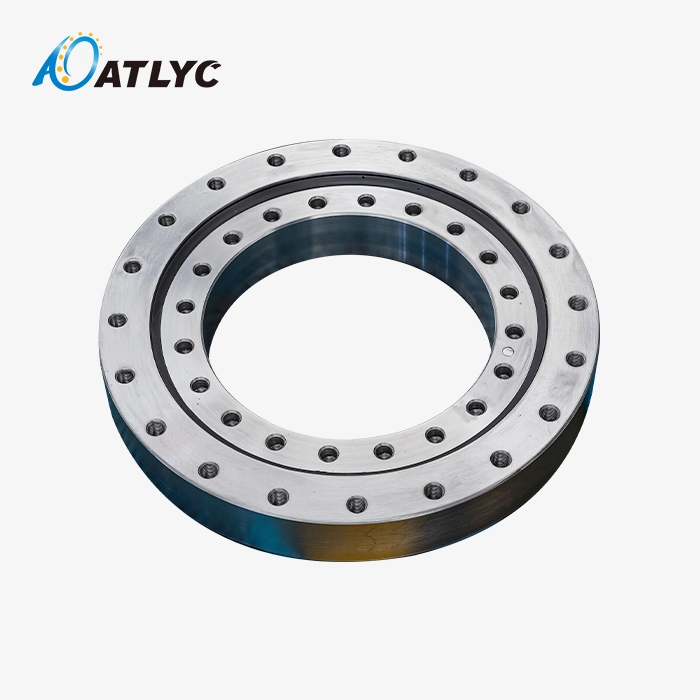
In modern automation, the RA5008UUCC0 cross roller bearing is an important part for high-precision robots because it combines precision and dependability. With a 50mm hole, a 66mm outer diameter, and a width of only 8mm, this ultra-thin bearing is a masterpiece of modern engineering made just for robotic joints and spinning mechanisms. The outer ring can be taken off and put back on, and it has two rubber seals (UU name) and a negative clearance standard (CC0). This gives it zero backlash and great spinning accuracy. This bearing, which is made of high-quality Gcr15 and Gcr15SiMn steel, can handle radial, axial, and moment loads at the same time. This makes it essential for automated manufacturing systems that need to work reliably under a wide range of loading conditions.
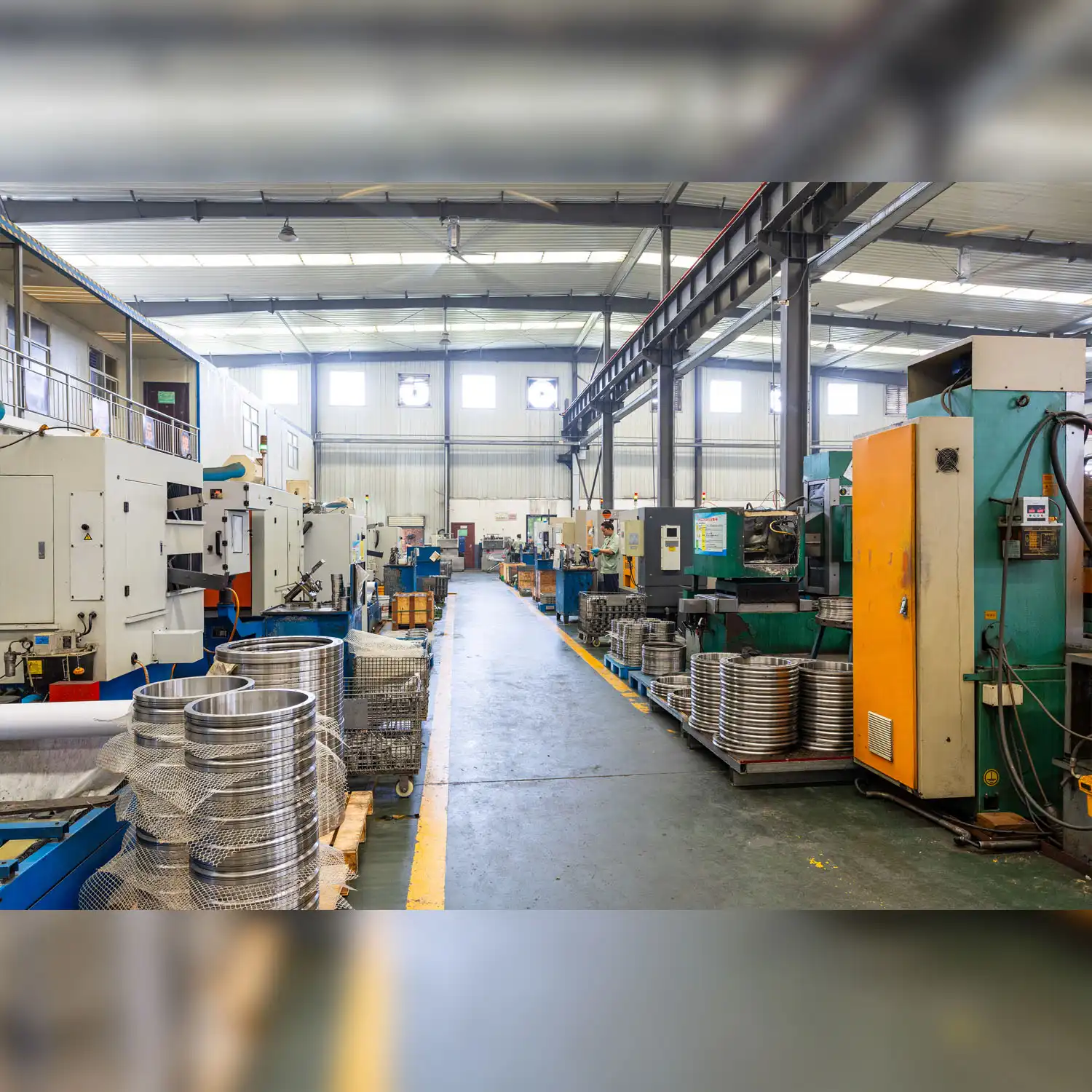
Understanding RA5008UUCC0 Cross Roller Bearing: Dimensions, Design & Features
Precision Engineering and Dimensional Specifications
The engineering behind this crossed roller bearing shows how far small bearing technology has come in the last few decades. The profile's 50 mm inner diameter, 66 mm outer diameter, and 8 mm thickness make it very space-efficient. With this thin cross-section, designers can cut the weight of the whole assembly by 30 to 40 per cent compared to normal bearing arrangements that need more than one unit. The dimensional tolerances are very tight and meet strict standards. The accuracy classes range from P6 (standard) to P2 (ultra-precision), so applications can choose the exact level of accuracy they need for their specific work environment.
Unique Design Architecture
At its core, the bearing has cylindrical rollers that are placed 90 degrees apart and perpendicular to the V-grooved inner and outer raceways. This set of cross rollers makes a 45-degree contact angle that spreads loads evenly across several directions. The separate outer ring makes installation and upkeep easier, and the built-in inner ring keeps the dimensions stable while the ring is rotating. Metal-to-metal contact is avoided by spacer retainers placed between adjacent rollers. This lowers the friction coefficient and increases the operational life. The two rubber seals marked "UU" work well as contamination barriers, keeping the internal lubrication while stopping dust and other particles from getting in.
| Specification | Value | Impact on Performance |
|---|---|---|
| Inner Diameter | 50mm | Shaft mounting compatibility |
| Outer Diameter | 66mm | Housing integration dimensions |
| Width | 8mm | Ultra-compact axial space utilization |
| Material | Gcr15, Gcr15SiMn | High hardness and wear resistance |
| Accuracy Classes | P6, P0, P5, P4, P2 | Runout precision from standard to ultra-precise |
| Seal Type | UU (Double Rubber) | Contamination protection and grease retention |
Material Composition and Performance Characteristics
The bearing parts are made from Gcr15 bearing steel and its alloyed form, Gcr15SiMn. They are precisely heated to achieve Rockwell hardness levels of HRC 60 to 64. The additions of silicon and manganese to Gcr15SiMn make it harder to soften and keep its shape when the temperature changes. When these materials are loaded and unloaded over and over again, they don't wear down on the surface. This is very important for robotic joints that have to work through millions of rotation cycles. The architecture of the material works the same way at temperatures ranging from -20°C to 120°C, so it can be used in a variety of commercial settings.
By applying controlled advance, the negative clearance standard (CC0) gets rid of internal play. When compared to standard clearance designs, this preload makes the bearing 300–400% stiffer, which directly leads to better positioning accuracy in precision motion systems. The increased stiffness reduces displacement under moment loads. This is especially helpful in robotic arm uses where rolling forces make it hard to keep the bearing stable.
Load Handling Capabilities
This crossed design of RA5008UUCC0 Cross roller bearing handles radial forces, axial thrust, and moment loads all at the same time, unlike ball bearings or single-row cylindrical roller bearings, which are best at certain load directions. The design of vertical rollers makes various load lines that spread forces evenly across the racetrack surfaces. Because it can work in more than one way, it gets rid of the need for complicated bearing pairs. This cuts down on the number of assembly places where something could go wrong. The low friction rate of the roller-raceway contact makes it possible for smooth spinning even when there is a lot of load. This helps automatic systems use less energy.
Comparing RA5008UUCC0 with Alternatives: Making the Right Choice for Robotics
Dimensional Comparison with Similar Cross Roller Bearings
Dimensional differences between the RA5008UUCC0 and options like the RA5007UUCC0 have a direct effect on how well they work in certain situations. The RA5007UUCC0 has a 7mm width, while the RA5008UUCC0 has an 8mm width. This means that the RA5007UUCC0 has slightly less axial space, but it can't hold as much weight (12–15%). With an extra millimetre, the RA5008UUCC0 can handle rollers with a larger diameter and more of them, which means it can handle higher radial and moment loads. This means that the RA5008UUCC0 is better for medium-payload robotic arms where joint loads are higher than 300 Nm. On the other hand, the RA5007UUCC0 is better for lighter-duty uses that value the smallest possible size.
When you switch to the RA5010UUCC0, the width grows to 10mm, which increases the load capacity but also adds weight and takes up more axial space. Which of these models to use depends on how the loads are calculated and how much space is available in the robotic joint assembly. Engineers should weigh the weight that needs to be carried against the space that is available for mounting. Each millimetre of bearing width changes the robot's overall reach and weight capacity.
Crossed Roller Bearings Versus Ball Bearing Alternatives
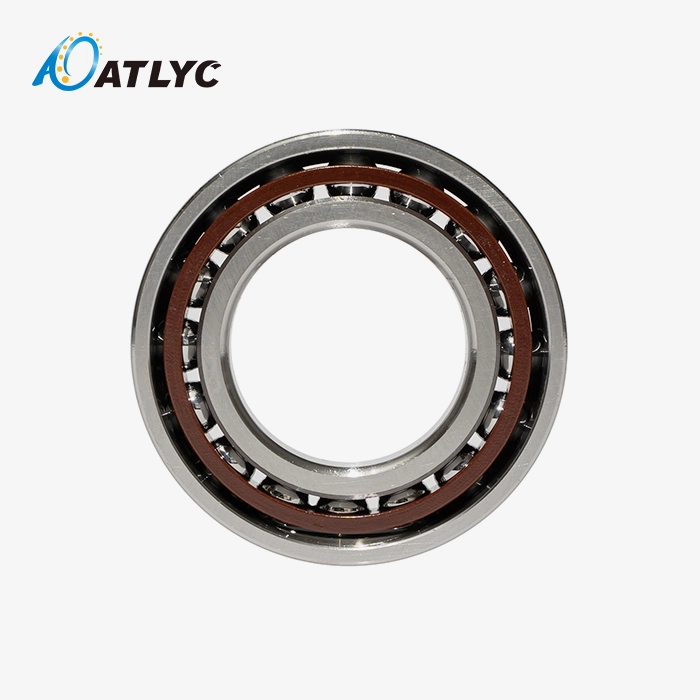
When precision rotary applications are needed, angular contact ball bearings are often used instead. Ball bearings are great for rotating at high speeds, but they are not good for computer joints in many ways. To handle combined loads, ball bearings usually need to be paired up in twin or tandem setups, which makes the system more complicated and increases the axial space needed. The point contact between the ball and the raceway creates more contact stress, which lowers the moment load capacity compared to cylindrical rollers' line contact.
The crossed roller design of the RA5008UUCC0 makes its moment rigidity values two to three times higher than those of ball bearing pairs of the same size. This difference in rigidity has a direct effect on how accurately robots can place their parts. A shared robot elbow joint with ball bearings might deflect by 0.05 mm when it's loaded, but the same joint with a crossed roller bearing keeps movement below 0.015 mm, which is a very important difference for precise assembly tasks.
Cost-Performance Analysis and Total Ownership Considerations
Crossed roller bearings usually cost 40–60% more to buy at first than ball bearings. This difference in price is due to the precise cutting needed for V-groove raceways and the unique production methods needed to keep errors low. Looking at the total cost of ownership gives you a different view. The single-bearing solution gets rid of unnecessary parts, cuts down on assembly work, and lowers the risk of failure. Because the load is spread out better and there is less direct stress, maintenance times are 50–80% longer.
The economic benefit is clear when you look at a robotic welding cell that works sixteen hours a day. Ball bearing setups might need to be replaced every 18 months, which would cost $450 per service event, which would cover the cost of labour and downtime. The RA5008UUCC0 costs $680 and increases the time between service intervals to 36 months. Over the course of five years, the crossed roller system lowers overall costs related to bearings by about $1,100 per joint while also increasing the dependability of downtime.
| Bearing Type | Initial Cost | Service Interval | Moment Rigidity | Assembly Complexity | 5-Year Total Cost |
|---|---|---|---|---|---|
| RA5008UUCC0 Crossed Roller | $280 | 36 months | High (100% baseline) | Simple (single unit) | $1,640 |
| Duplex Angular Contact Balls | $180 | 18 months | Medium (35% of baseline) | Complex (paired config) | $2,730 |
| Cylindrical Roller (radial only) | $95 | 24 months | Low (moment not supported) | Very Complex (requires thrust bearing) | $2,240 |
These performance characteristics position the RA5008UUCC0 Cross roller bearing as the optimal choice for applications where precision, rigidity, and long-term reliability outweigh initial component costs. The bearing delivers measurable return on investment through reduced downtime, extended maintenance intervals, and superior operational performance.
Applications of RA5008UUCC0 Bearings in High-Precision Robotics
Robotic Joint Mechanisms and Articulated Arms
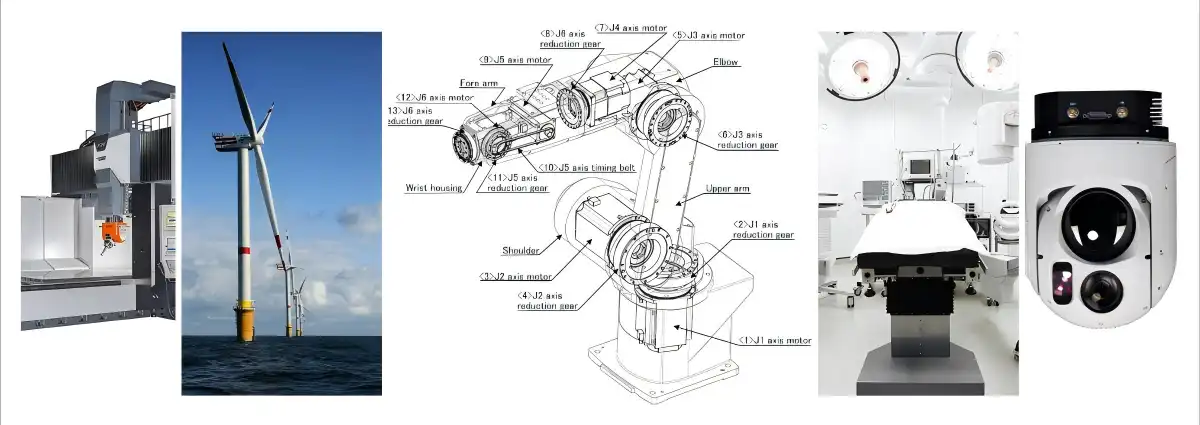
The small size and high moment load capacity of the bearing make it perfect for robotic elbow and wrist joints. Joints 4, 5, and 6 (wrist assembly) in six-axis industrial robots need light parts that stay rigid even when they are loaded dynamically. The 8mm thickness of this crossed roller bearing lets designers reduce the weight of the wrist joint, which can help robots carry more weight or reach farther. The zero-backlash feature makes sure that the tool is precisely placed, which is very important for tasks like arc welding, where the accuracy of the torch angle affects the quality of the weld.
When collaborative robots (cobots) work in shared areas, low-friction factors make it possible for them to rotate smoothly. Metal shavings, coolant mist, and dust can shorten the life of bearings in assembly areas, but the dual seals protect the internal parts from these outside contaminants. After switching their assembly robots from ball bearings to crossed rollers, a major automotive tier-1 supplier saw a 40% drop in the number of maintenance tasks needed for joints.
Precision Rotary Tables and Indexing Systems
To keep the part in place during multi-axis processes, the machining centre's rotating tables need to have very accurate runout. The P4 and P2 accuracy grades of the RA5008UUCC0 provide radial runout values below 2 micrometres, meeting the needs of tight tolerance cutting. It is very important for the bearing to be able to handle moment loads because rotary tables support oddly shaped workpieces that create strong tipping forces. When this bearing is installed on a normal 300mm diameter rotating table, it keeps the placement accuracy within ±3 arc-seconds while it rotates, which meets the standards for making aerospace parts.
Semiconductor Manufacturing Equipment
Robots that handle wafers in factories that make semiconductors work in very clean spaces, where yield rates are controlled by preventing contamination. Particles can't form on the internal bearing surfaces because the design is sealed, and the smooth spinning keeps vibrations from reaching fragile chips. In these situations, positioning accuracy needs to be 5 micrometres or better, which can only be reached with ultra-precision bearings. Because Gcr15SiMn steel is temperature stable, its dimensions stay the same even when it goes through thermal cycling in process chambers. This makes sure that the parts are always in the same place during production runs.
Medical Imaging and Surgical Robotics
Large-diameter crossed roller bearings make it possible for CT and MRI gantry assemblies to move smoothly and precisely around patients. The RA5008UUCC0's 50mm bore makes it a smaller size class, but the way it's designed works for all bearings in the line. Similar small bearings are used by surgical robots in tool manipulators, which have to work in tight spaces and need to be accurate in their positioning, which directly affects patient safety. Low-friction torque means that smaller motors are needed, which makes surgical tools lighter and easier to move. One company that makes surgical robots said that switching to ultra-thin crossed roller bearings cut the weight of the instrument arm by 30%. This gave surgeons more control and kept patient tissue from getting hurt by accidental contact.
These different uses all have some things in common: they need to be small, be able to handle loads in multiple directions, rotate precisely, and work reliably for a long time. Field performance data and technical research show that the bearing always meets these needs across all businesses.
Maintenance and Handling Best Practices for RA5008UUCC0
Installation Procedures and Preload Management
The performance and life of a bearing are directly affected by how well it is installed. The separate outer ring design makes mounting easier, but it needs to be handled carefully so that the raceway doesn't get damaged. Clean assembly areas to keep pollution from getting into the system during installation. To keep the pressure from changing around the bearing's diameter, mounting surfaces should be as flat as 0.01 mm and as upright as 0.02 mm. For mounting bolts, the maker specifies a torque range of 8 to 12 Nm for M5 bolts that secure the outer ring. This torque should be applied in a star design to make sure that the holding force is spread evenly.
The CC0 preload standard is already set when it leaves the plant, but heat growth during use can change the clearance conditions. When operating temperatures are 30 to 40°C higher than room temperature, you need to think about how the bearing steel and aluminium housings will expand differently. The design of the housing should allow for thermal growth while keeping the preload the same across the temperature range. Keeping an eye on the bearing temperature during the first few operations makes sure that the right amount of loading and grease is in place. Stable working temperatures 15 to 25°C above the air show that the machine is set up correctly.
Lubrication Requirements and Contamination Prevention
The two plastic seals keep the factory-applied grease in place so that the bearing can work normally for a long time. Lithium-based grease with an NLGI Grade 2 consistency works well in most situations because it forms a strong film while still being easy to pump at startup. Re-lubrication times depend on the duty cycle and the environment, but for industrial robots, they are usually between 5,000 and 10,000 hours of use. It is best to avoid using too much lubricant because overfilling causes more friction torque and heat, which could damage seal materials.
According to data from industry failure analysis, contamination is the main reason why bearings fail before they should. This is why about 60% of unexpected bearing changes happen. The rubber seals do a good job of protecting, but they can't stop contamination that comes in during installation or because the seal lips are broken. During routine upkeep, the state of the seal is checked visually. If cracks, thickening, or obvious wear show, the seal should be replaced. Using lint-free gloves, covering open bearings until they are installed, and flushing mounting areas before placing bearings are all examples of clean assembly practices.
Inspection Protocols and Performance Monitoring
Routine inspection schedules that are in sync with the overall maintenance cycles of robots find problems before they become catastrophic. Changes in audible noises show that wear is happening, and any grinding or clicking sounds should be looked into right away. Measurements of rotational torque can be used to figure out how much wear something is getting. Torque increases of more than 20% from the starting value can mean that there is contamination or that the oil is breaking down. Using infrared thermography to check the temperature during operation shows areas that are getting hot because of too much pressure or not enough grease. Differences in temperature of more than 10°C between the bearing and other parts in the area need immediate attention.
By measuring vibrations with an accelerometer, wear patterns on bearings can be found before they break. High-frequency sound patterns (5–20 kHz range) show that the raceway surface is wearing down, while low-frequency components show that the preload is being lost or there are problems with the fitting. By fixing problems during planned maintenance windows instead of having to deal with them during unplanned breaks, condition-based tracking can increase the life of bearings.
Storage Conditions and Shelf Life Considerations
If you keep unopened bearings in a controlled setting for five years, they will still meet the specifications. To stop corrosion, storage areas should stay between 20°C and 25°C and have a relative humidity below 60%. Bearings should be kept in their original packing until they are installed because the protective films and vapour-phase rust inhibitors on the outside protect the surface. Rotating the bearings every six months stops false brinelling damage, which happens when static loads cause depressions in the raceways when they are exposed to vibrations, even when the bearings are not rotating.
Before installing bearings that have been stored for more than two years, they need to be checked for corrosion and lubrication. This keeps you from installing damaged parts. When stored for a long time, the grease may split, so the bearing needs to be rotated to spread the oil before it can be used. These safety measures keep inventory investments safe and quality standards high by making sure that stored bearings work just as well as newly manufactured units.
Procurement Guide: Sourcing RA5008UUCC0 Cross Roller Bearings with Confidence
Identifying Qualified Manufacturers and Certification Requirements
When looking for precision bearings, you need to make sure that the company can make them and that they have quality system certifications. As a minimum, reputable manufacturers hold ISO 9001 quality management certification. Automotive suppliers also hold IATF 16949 certification, which shows they meet the quality standards of the automotive industry. For reliable bearing performance, these certifications make sure that the manufacturing processes, traceability systems, and methods for continuous improvement are always the same.
Over the past ten years, Chinese bearing manufacturers have made huge strides in their technical abilities. Now, the best Chinese bearing manufacturers can make products that are just as good as well-known foreign names. Luoyang Auto Bearing Co., Ltd. is a good example of this change because it went from being a single workplace in 2010 to having six production sites over the next 15 years. The 120 skilled workers at the company are experts in production, research and development, quality control, and assembly. They make sure that everything is done professionally at all stages of the manufacturing process. The company's dedication to international quality standards and consistent production methods is shown by its ISO 9001 and IATF 16949 certifications.
Taking a look at the manufacturing capacity and technical support
A production capacity estimate makes sure that providers can meet supply dates and number needs without lowering quality for RA5008UUCC0 Cross roller bearing. Manufacturers with various production lines can adapt to rising demand, while those with only one line may have trouble with bigger orders or needs for fast delivery. Suppliers who offer real partnership value beyond just supplying parts are set apart by their technical support capabilities. For complicated robotic uses, engineering help with choosing bearings, choices for customising them for each application, and failure analysis services are very useful.
Companies that put money into research and development (R&D) are always making bearing designs and production methods better, and they often offer customisation to meet the specific needs of each application. Being able to change the accuracy grades, seal configurations, or preload specifications gives you the freedom to get the best bearing performance in any operational situation. Long-term agreements with makers that show they are always improving and investing in technology are more valuable than short-term supply relationships that only focus on unit price.
Authentication Methods and Counterfeit Prevention
Fake bearings are a big problem in global supply chains because they are made with low-quality materials and inefficient methods that cause them to break down quickly. Some ways to make sure something is real are to check the markings on the parts, look at the quality of the packaging, and ask for material certifications and test reports. Genuine makers give certificates of approval that list the materials used, the results of hardness tests, and the measurements of the bearings they sell.
When you buy straight from makers or authorised dealers, you cut out the middlemen who let fake goods into the supply chain. When the price is much lower than the market price, it could mean that the product is fake, because making precision bearings has high material and handling costs that can't be cut by a lot without lowering the quality. Having long-term relationships with verified suppliers gives you peace of mind that the products you buy are real and will work as promised.
Pricing Structures and Lead Time Considerations
The price of a crossed roller bearing depends on how precisely it is made. The price changes based on the level of accuracy, the type of seal, and the number of orders. Depending on these factors, the RA5008UUCC0 usually costs between $180 and $320 per unit. Grades P2 and higher demand higher prices compared to grades P0 and lower. Volume price structures offer savings of 15–25% for orders over 100 units. This makes combined purchasing economically advantageous for OEMs that have multiple robot models that use the same bearing sizes.
Lead times depend on whether the item is in stock for standard configurations or if it needs to be manufactured to order. Most standard bearings can be shipped within three to five business days from the distributor's stock. Custom specs, on the other hand, need six to ten weeks to be made and quality checked. Depending on the logistics method, international shipping can add two to four weeks to the delivery time. Air freight can speed up delivery at a higher cost. When making procurement strategies, it's important to weigh the costs of keeping inventory against the risks of wait times. This way, you can keep strategic stock levels for important parts while buying custom items with enough planning time.
Building Strategic Supplier Partnerships
Long-term relationships with suppliers provide value beyond individual transactions through consistent quality, allocating priorities when supplies are low, and working together to solve problems when application issues arise. Suppliers that do business with countries like South Korea, the United States, Germany, Russia, Iran, and Turkey show that they have experience exporting and can handle logistics for customers from other countries. The track record with a variety of clients proves the quality standards and dependability in a range of legal settings.
When judging a supplier, you should look at things like quality measures, shipping performance, how quickly technical help responds, and efforts to keep getting better. Every year, reviews of suppliers look at performance trends and find ways to make things better. This builds stronger relationships that give businesses a competitive edge. Companies that need a reliable source of precision bearings should work with manufacturers that can show they have a large production scale, experience working with customers in other countries, and a dedication to customer success.
Conclusion
The RA5008UUCC0 crossed roller bearing delivers exceptional value for high-precision robotics applications through its compact 50mm x 66mm x 8mm dimensions, multi-directional load capacity, and zero-backlash performance. The separable outer ring design, dual seal protection, and Gcr15/Gcr15SiMn material composition provide reliability across demanding industrial environments. Accuracy grades from P6 through P2 accommodate applications from standard automation to ultra-precision semiconductor manufacturing. Successful implementation requires proper installation techniques, appropriate maintenance protocols, and sourcing from qualified manufacturers holding ISO 9001 and IATF 16949 certifications. The bearing's superior moment rigidity and compact profile deliver measurable advantages over ball bearing alternatives, justifying initial cost premiums through extended service life and enhanced system performance.
FAQ
1. What factors most significantly influence RA5008UUCC0 bearing lifespan in robotic applications?
Operating conditions directly impact bearing longevity, with proper lubrication, contamination control, and appropriate preload representing critical factors. Bearings operating within specified load ratings and temperature ranges typically achieve 20,000-30,000 hours of service life. Exceeding radial load ratings by 20% reduces life expectancy by approximately 50%, while contamination from inadequate sealing can decrease operational life by 60-70%.
2. Can the RA5008UUCC0 be customised for specific robotics requirements?
Qualified manufacturers offer customisation options, including modified seal configurations, adjusted preload specifications, and specialised coatings for corrosive environments. Custom accuracy grades beyond standard P2 precision serve ultra-critical applications, though at premium costs reflecting additional processing requirements. Material variations like stainless steel construction suit food processing or medical applications requiring corrosion resistance and sterilisation compatibility.
3. How can buyers authenticate RA5008UUCC0 bearing legitimacy from suppliers?
Verification methods include requesting material certificates documenting steel composition and hardness testing, examining part number markings for proper font and placement, and inspecting packaging quality. Legitimate manufacturers provide traceability through serial numbers or date codes laser-etched on bearing components. Testing rotational torque against published specifications identifies substandard products exhibiting excessive friction from poor manufacturing quality.
Partner with ATLYC for Reliable RA5008UUCC0 Cross Roller Bearing Supply
ATLYC combines 15 years of precision manufacturing expertise with ISO 9001 and IATF 16949 certified quality systems, delivering dependable crossed roller bearings, including RA5008UUCC0 Cross roller bearing, to clients across South Korea, the United States, Germany, and global markets. Our RA5008UUCC0 inventory maintains consistent quality with Gcr15 material composition, P0 through P4 accuracy grades, and competitive lead times supporting your production schedules. As a dedicated cross roller bearing manufacturer, we provide technical consultation for application-specific requirements, engineering support throughout implementation, and responsive customer service, ensuring your robotic systems maintain peak performance.
Whether you need immediate quantities from our stock inventory or volume orders with customised specifications, our experienced team delivers solutions aligned with your precision and budget requirements. Contact our technical sales specialists at auto@lyautobearing.com to discuss your bearing requirements, receive detailed quotations, and experience the quality commitment that has built our reputation across international markets. Reliable precision bearings represent the foundation of automated systems—partner with a supplier who understands this critical role and delivers accordingly.
References
1. Harris, T.A. and Kotzalas, M.N. (2006). "Advanced Concepts of Bearing Technology: Rolling Bearing Analysis, Fifth Edition." CRC Press, Boca Raton.
2. International Organisation for Standardisation. (2014). "ISO 5593:1984 - Rolling Bearings - Vocabulary." Geneva: ISO Standards.
3. Nakamura, T. and Yoshimoto, S. (2018). "Load Distribution and Deformation in Cross Roller Bearings for Precision Machinery." Journal of Advanced Mechanical Design, Systems, and Manufacturing, Vol. 12, No. 3.
4. SKF Group. (2020). "Rolling Bearings Catalogue: Technical Product Information and Application Guidelines." SKF Group Publications, Gothenburg.
5. Wensing, J.A. (2017). "On the Dynamics of Ball Bearings: Application to Crossed Roller Bearing Configurations." Tribology International, Vol. 93, pp. 91-105.
6. Zhou, H. and Liu, Z. (2021). "Development of Ultra-Thin Cross Roller Bearings for Industrial Robot Applications: Manufacturing Process and Quality Control." Chinese Journal of Mechanical Engineering, Vol. 34, No. 2, pp. 215-228.
Learn about our latest products and discounts through SMS or email