- English
- French
- German
- Portuguese
- Spanish
- Russian
- Japanese
- Korean
- Arabic
- Greek
- German
- Turkish
- Italian
- Danish
- Romanian
- Indonesian
- Czech
- Afrikaans
- Swedish
- Polish
- Basque
- Catalan
- Esperanto
- Hindi
- Lao
- Albanian
- Amharic
- Armenian
- Azerbaijani
- Belarusian
- Bengali
- Bosnian
- Bulgarian
- Cebuano
- Chichewa
- Corsican
- Croatian
- Dutch
- Estonian
- Filipino
- Finnish
- Frisian
- Galician
- Georgian
- Gujarati
- Haitian
- Hausa
- Hawaiian
- Hebrew
- Hmong
- Hungarian
- Icelandic
- Igbo
- Javanese
- Kannada
- Kazakh
- Khmer
- Kurdish
- Kyrgyz
- Latin
- Latvian
- Lithuanian
- Luxembou..
- Macedonian
- Malagasy
- Malay
- Malayalam
- Maltese
- Maori
- Marathi
- Mongolian
- Burmese
- Nepali
- Norwegian
- Pashto
- Persian
- Punjabi
- Serbian
- Sesotho
- Sinhala
- Slovak
- Slovenian
- Somali
- Samoan
- Scots Gaelic
- Shona
- Sindhi
- Sundanese
- Swahili
- Tajik
- Tamil
- Telugu
- Thai
- Ukrainian
- Urdu
- Uzbek
- Vietnamese
- Welsh
- Xhosa
- Yiddish
- Yoruba
- Zulu
Is YRT100 Rotary Table Bearing Pre-Greased and Ready to Mount?
Most YRT100 Rotary Table Bearings that come from reputable manufacturers have an anti-corrosion oil layer on top of them instead of operating grease. This coating keeps the bearing safe while it's being shipped and stored, but it's not oily enough to use right away in demanding CNC rotary tables or indexing heads. Procurement teams need to check with sellers about the state of greasing, as some specialised OEM versions may come with initial operating grease. Knowing the difference between these two terms helps engineering teams set installation dates, make budgets for the right oils, and make sure that equipment is properly protected from the start.
Understanding YRT100 Rotary Table Bearing: Design and Specifications
Core Technical Dimensions and Material Composition
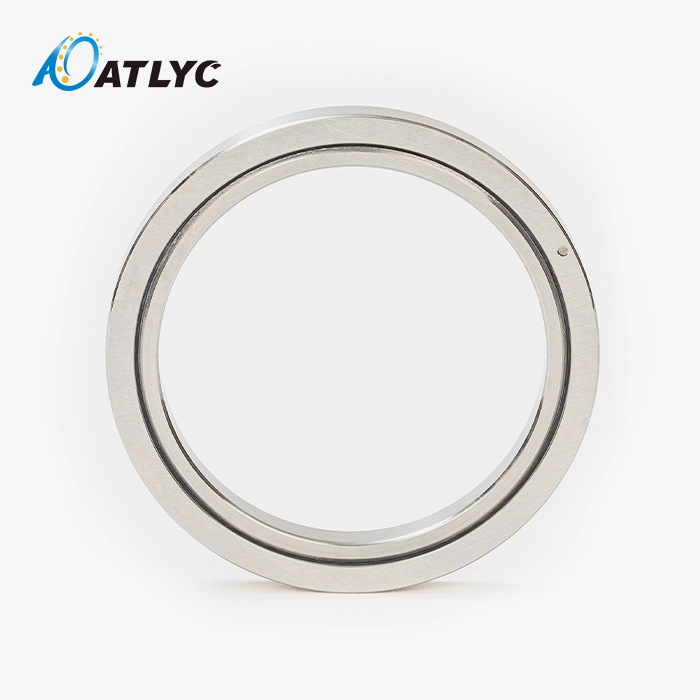
The bearing features precise measurements critical to equipment integration. The 100mm inner diameter accommodates standard shaft dimensions found in medium-capacity rotary tables, while the 185mm outer diameter and 38mm height create a compact footprint suitable for space-constrained machine designs. Manufacturers construct these units from GCr15 bearing steel (equivalent to AISI 52100), hardened to HRC 58-64 through controlled heat treatment processes that ensure consistent hardness throughout raceways and rolling elements.
| Specification | Value | Application Impact |
|---|---|---|
| Inner Diameter | 100mm | Standard shaft compatibility |
| Outer Diameter | 185mm | Compact housing integration |
| Height | 38mm | Low-profile machine design |
| Mounting Holes | 18 (inner) + 18 (outer) | Direct bolt-on installation |
| Precision Class | ISO P4/P2 | Sub-3-micron runout accuracy |
| Static Load Rating | ~185 kN | Heavy tilting moment capacity |
Integrated Three-in-One Structural Advantage
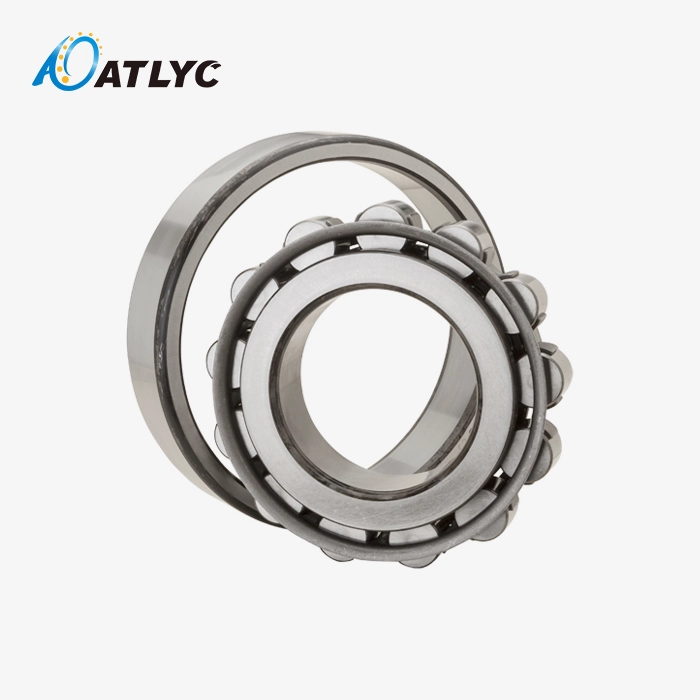
Traditional rotor systems need different support housings, thrust bearings, and radial bearings, which makes assembly harder and increases the chance of alignment mistakes. This problem is solved by the bearing's built-in three-row roller design. Two axial needle roller assemblies handle the thrust loads that come from cutting forces that go up and down, and one radial full-complement cylindrical roller set handles the lateral loads that come from spinning at high speeds. By separating the load paths, each row can work within its ideal stress range, which increases the service life in tough situations.
Double-Row Angular Contact Ball Arrangement
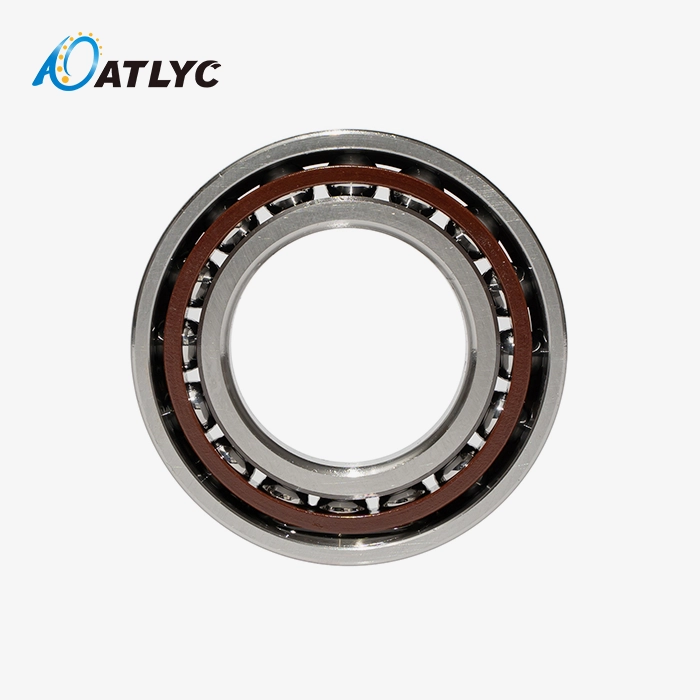
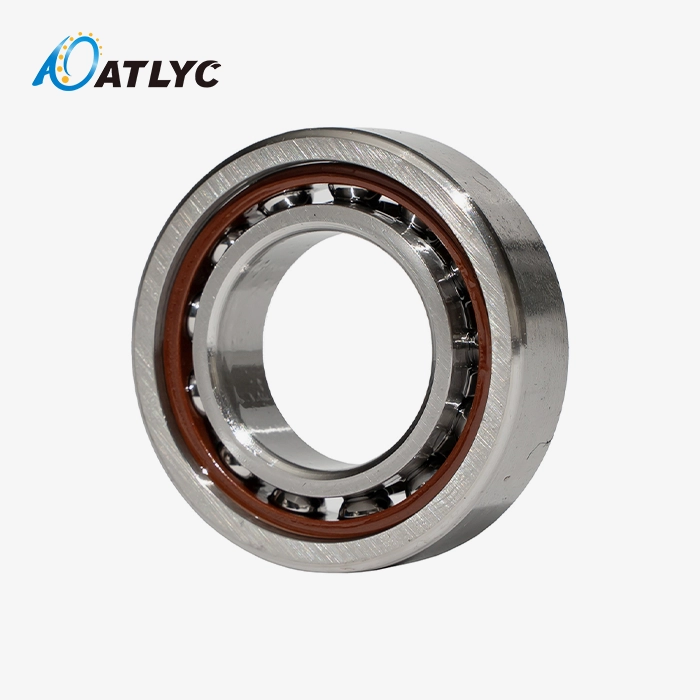
When steel balls are placed at certain contact angles in the YRT100 Rotary Table Bearing, usually 45° to 60°, they make load lines that resist axial, radial, and tilting moments all at the same time. When compared to other bearing pairs, this physical design is more rigid. When a CNC milling head cuts a piece of work that is attached to the rotating table, the bearing stays in place within micrometres, even when loads are applied in many directions. The ability of equipment to make tight tolerances in finished parts is directly related to how precisely the balls are arranged during manufacturing.
Precision-Ground Raceway Surface Quality
Multiple stages of grinding and superfinishing are used on both the inner and outer raceways to get surface roughness values below Ra 0.1 micrometres. This exceptional surface quality lowers friction, lowers heat production, and increases the useful life. During production, we use coordinate measuring machines to check that the geometric accuracy meets P4 or P2 standards for precision. These quality controls make sure that the contact stress is spread evenly across all rolling elements. This stops early wear patterns that could affect the accuracy of the equipment.
Knowing these design principles can help procurement teams decide if a bearing really meets the needs of the application. The combined structure makes fitting easier, but it also means that oil has to get to all three roller paths efficiently. This is a very important thing to think about when judging how well the pre-greasing was done.
Is the YRT100 Rotary Table Bearing Pre-Greased and Ready to Mount?
Industry Standard Manufacturer Practices
During the final steps of production, most companies that make precise bearings use an anti-corrosion protective oil instead of operating grease. This layer keeps bearing surfaces from rusting during long periods of international shipping, storage, and storing that can last for months. The coating is usually made of low-viscosity mineral oil that has corrosion inhibitors added to it. Its purpose is to protect the metal temporarily rather than lubricate it during use.
Manufacturers of bearings that follow ISO 9001 quality systems know that different uses call for different types of lubricants. When CNC rotary tables are working at low speeds with heavy loads, they need grease with extreme pressure additives. On the other hand, tracking heads that work at high speeds do better with thinner formulations. Instead of using a single type of grease that might not work for everyone, makers ship bearings with protective oil and include full instructions on how to lubricate them in their technical paperwork.
Types of Lubricants and Their Benefits
Manufacturers usually choose lithium complex or polyurea-based formulations for operational grease when they make it. Lithium complex greases are good for general industrial settings because they are very stable mechanically and don't get wet easily. In equipment that is used all the time, polyurea greases last longer between relubrication cycles because they work better at high temperatures and don't oxidise.
Initial greasing at the factory makes sure that the lubricant gets to all of the roller paths properly before the bearing is put under operational loads. When rolling elements touch raceways without enough lubrication film, this pre-distribution stops the dry-start condition. Factory-applied grease also goes through quality checks that make sure it has the right amount of filler and no contamination, which is something that field applications might not always be able to do.
When Onsite Lubrication Becomes Necessary
Even bearings that are shipped with working grease may need to be inspected and re-greased after being stored for more than six months. When stored for a long time, grease can split or harden, especially in warehouses where the temperature changes often. Engineering teams should come up with procedures that include checking the condition of the grease visually, making sure it is spread evenly across all the roller rows, and adding more lubricant if the current amount doesn't seem to be enough.
Lubrication needs to be changed depending on the operating conditions. Grease formulations with better sealing properties are helpful for equipment that works in dirty environments. For high-speed uses, synthetic greases with a lower base oil viscosity may be needed to cut down on grinding losses. Extremes of temperature, like arctic cold or foundry heat, call for special formulations that stay consistent across the whole range of operations.
At ATLYC, we know that solutions that are ready to be installed save engineers a lot of time with the YRT100 Rotary Table Bearing. As part of our production process, we offer extra operating cleaning services. This is where bearings get lubricants that are made for their specific use, are wrapped in protected packaging, and are sent out with a certificate that lists the type of grease used, the amount used, and the date it was applied. This service gets rid of the guesswork about field lubrication and lets you mount right away after delivery.
Comparing YRT100 with Alternative Bearings: Which Fits Your Needs?
Dimensional and Load Capacity Differences
Depending on the needs of the product, different bearing options offer different benefits. Cross roller bearings put circular rollers across from each other and rotate them so that they can handle combined loads. When compared to the YRT shape, this design gets high stiffness in smaller cross-sections. This makes cross roller bearings perfect for situations where axial room is very limited. However, the alternating roller arrangement makes more heat and friction when speeds go above 300 RPM, which makes them less useful for fast indexing tasks.
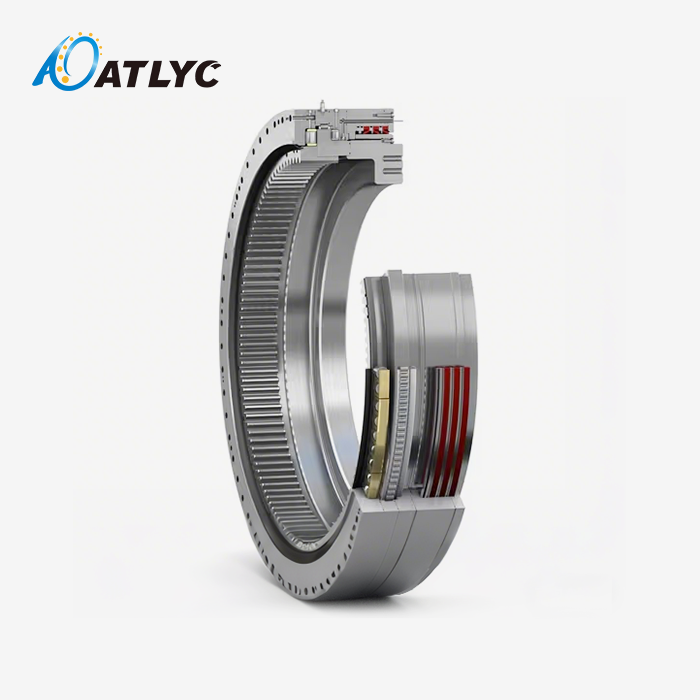
Slewing ring bearings can support loads up to several meters in diameter, which is big enough for excavators, wind turbines, and harbour cranes. Their gear teeth built into the outer or inner ring allow for direct drive operation. Slewing rings work great for heavy-duty, slow-rotation tasks, but their bigger size and heavier weight make them useless for precise CNC equipment, where the bearing would take up too much space inside the machine.
The usual setup is in the middle, giving you good performance across modest speed ranges, a large load capacity, and a small size. Its three-row roller design is better at handling tilting moments than cross roller bearings. Compared to slewing rings, it is lighter and costs less.
| Bearing Type | Optimal Speed Range | Tilting Moment Capacity | Space Efficiency | Cost Position |
|---|---|---|---|---|
| YRT100 | 100-800 RPM | High | Excellent | Moderate |
| Cross Roller (100mm bore) | 50-300 RPM | Moderate | Superior | Higher |
| Slewing Ring (500mm+) | 1-50 RPM | Very High | Poor | Much Higher |
| Angular Contact Ball Pair | 500-3000 RPM | Low | Good | Lower |
Application Suitability Analysis
Fifth-axis CNC machining centers need bearings that can keep the position of the workpiece accurate to within 5 micrometres even when cutting forces are over 10 kN. The rigid structure and preloaded roller arrangement of the bearing meet this need well. Precision measurement gimbals need to be able to rotate with no backlash and predictable friction torque. The full complement roller design of the bearing makes this possible.
Cross roller bearings may be better for robotic wrist joints and shared robot arms because their smaller shape lets the joints move in a wider range of directions. Offshore crane pedestals that deal with shock loads from moving waves and cargo hits would choose slewing rings because they are better at resisting impacts and spreading out loads over a larger area.
To choose the right bearing type, you need to match the mechanical properties to the needs of the application instead of just going with what you know. To find the best cost-performance matches, procurement teams should compare actual load sizes, rotation speeds, accuracy needs, and environmental conditions to bearing specifications.
Lifecycle Value Consideration
The initial buying price is only a small part of the total cost of bearings over the life of the equipment. A bearing that costs 30% less than more expensive options might need to be oiled every 500 hours instead of every 2000 hours, which would require more maintenance work and stop production. Failure too soon results in emergency replacement costs, faster shipping fees, and lost production value that is much higher than the savings from buying the original part.
Quality bearings made to IATF 16949 car standards have a measurably longer service life because they are more precisely sized, made of more consistent materials, and treated with heat treatment methods that have been proven to work. When equipment works three shifts a day, the difference in stability between good and average bearings adds up to a big effect on the economy. Buying strategies that focus on lifetime value instead of minimum purchase cost are in line with the goals of making a business profitable.
Procurement and Ordering Guide for YRT100 Rotary Table Bearing
Sourcing from Certified Suppliers
Global bearing distribution uses complicated supply chains where fake goods sometimes get into real channels. Purchasing teams should check the credentials of suppliers, such as whether they are authorised by the manufacturer and have the right quality system certifications and documentation for tracking products. To keep things in good shape, authorised distributors keep temperature-controlled warehouses that stop grease from breaking down and corrosion from forming while the goods are in stock.
When you buy directly from ISO 9001-certified manufacturers, you get better technical support, the ability to make changes, and a steady supply. Manufacturers can help with engineering when choosing bearings, suggest the best lubrication for different uses, and give dimensional inspection reports that compare measured values to specifications. Direct relationships with manufacturers also allow for custom changes, such as different mounting hole patterns, seal configurations, or preload values that are specific to the needs of the equipment.
Logistics and Warranty Considerations
International goods need to be carefully packed to keep them from getting damaged or contaminated during shipping. To keep things dry during shipping, good providers use inner wrapping that doesn't rust, outer packages with foam padding, and desiccant packets. Shipments should come with manufacturer certificates that list the materials used, their measurements, and the results of any quality checks. These are important pieces of paper for the process of qualifying equipment.
Standard warranties usually cover problems with the way the product was made for 12 months after delivery or 2000 hours of use, whichever comes first. However, the warranty only applies if the product is installed correctly, oiled properly, and used within the load and speed limits that were set. To avoid disagreements when problems appear, purchase agreements should clearly spell out the terms of the guarantee, how to file a claim, and how to get a replacement.
Lead times vary a lot depending on how much material is available and how much customisation is needed. Shipping times for standard configurations from authorised wholesalers may be one week, but for unique configurations that need special manufacturing, it could take six to eight weeks. Planning equipment builds with realistic purchase timelines keeps projects on track and lowers the pressure to use less-than-ideal alternatives when chosen bearings are out of stock.
Communicating Technical Requirements for Bulk Orders
When you buy a lot of something, you can negotiate the terms so that the bearings work best with your production equipment. Buyers should talk about the operating conditions, such as the speed of rotation, the size of the load, the duty cycle, the range of temperatures in the area, and the risk of contamination. With this information, manufacturers can tell you the best internal clearance, preload level, seal configuration, and lubrication requirements.
Most of the time, volume discounts start when you order more than 50 units, and prices go down even more when you order 100, 500, or 1000 units. In addition to the unit price, large sales allow for customised packing that makes managing the warehouse easier, planned delivery programs that lower the cost of keeping goods, and specialised expert support that speeds up the process of fixing problems with equipment.
ATLYC has streamlined its bulk purchasing processes so that they work better for OEM manufacturers and equipment builders. Our production capacity includes six specialised workshops that can make consistent batches of more than 10,000 units per year. We keep technical documentation in several languages, give dimensional inspection reports for each production lot, and offer delivery schedules that work with the way customers want to put things together. When procurement teams work with dependable bearing providers, they turn finding parts from a business problem into a long-term relationship that helps production grow.
Maintenance Tips and Installation Guide for Long-Term Performance
Pre-Installation Inspection and Preparation
Before installing the YRT100 Rotary Table Bearing, engineering teams should use precise measuring tools to compare the bearing size to the equipment's specs. Check that the mounting holes are lined up, that the bore and shaft diameters are compatible, and that the housing fits snugly. To keep mounting stress from damaging the raceways too soon, surfaces that touch the bearing should be smooth, clean, and free of burrs. They should also be within certain flatness limits.
If the bearing comes with anti-corrosion oil instead of operational grease, it needs to be cleaned from top to bottom. To get rid of preservative coatings on raceways and rolling elements, use the right solvents, which are usually white spirit or isopropyl alcohol. Avoid cleaners that are based on petroleum because they leave behind residue that can't be removed with grease. As soon as you're done cleaning, put on operating grease to keep wetness out, which could cause rust.
Mounting Procedure and Torque Specifications
Mounting the bearing to machine parts is easy because both the inner and outer rings have bolt holes in them. This integrated mounting gets rid of the need for separate bearing housings, which makes installation easier. To make sure the load is spread evenly and the ring doesn't bend, the bolts should be tightened in a star pattern, going across the diameter and back again. For M8 fasteners, manufacturers usually say that the mounting bolt torque should be between 25 and 35 Nm, but the exact value will depend on the bolt grade and the depth of the thread engagement.
Correctly adjusting the preload has a big effect on how well the bearing works. If there isn't enough loading, there is interior space, which makes the spin less accurate and makes noise when the direction changes. Too much loading causes friction, heat, and faster wear that aren't needed. Many precision bearings come with a preload that was set at the factory during production. This is shown by a mark on the bearing or information on the package that says "preload class." If a field change is needed, make sure you follow the manufacturer's instructions to the letter. This usually means adjusting shims or measuring controlled axial movement.
Routine Maintenance and Relubrication Intervals
Maintenance schedules are set based on how the system is operating. When something keeps going at a reasonable speed, it usually needs new grease every 2000 to 3000 hours of use. When temperatures are above 70°C, and the machine is running at high speeds, the grease may need to be re-oiled every 800–1000 hours because it wears out faster. When used intermittently in clean areas, intervals can go beyond 5000 hours.
When choosing relubrication grease, make sure it works with the current lube, or get rid of the old grease fully before adding a new one. Mixing greases that don't work well together can change the consistency, separate, or harden, which stops the flow of lubricant to the rolling elements. About 30 to 40 percent of the bearing's free space should be filled with grease. This is not enough to fully lubricate the bearing, but it also keeps the temperature from rising too much from overfilling.
Finding wear early stops fatal problems before they happen. Watch the temperature of the bearing while it's working; slow rises in temperature can mean that the grease is wearing out or getting dirty. Strange noises, like grinding or shaking that don't seem normal, are signs of possible damage that needs to be checked out right away. Checking the rotational torque regularly can help find problems with wear or lubrication that are causing friction to rise before they cause damage that can be seen.
Builders of machines that use these bearings in production should write down repair methods, list acceptable oils, and teach maintenance staff the right way to do their jobs. Standardised repair procedures created when equipment is first put into service lower differences in the quality of service in the field and increase the life of bearings across entire machine groups. ATLYC's technical team includes detailed care guides with every supply of bearings. These guides include instructions on how to lubricate, how often to check, and how to fix problems in common use cases.

Conclusion
Rotary table bearings rarely arrive with complete operational lubrication despite their critical role in precision equipment. Most manufacturers apply protective coatings rather than application-specific grease, requiring procurement teams to plan for field lubrication as part of installation procedures. Understanding this distinction prevents commissioning delays and ensures equipment starts with appropriate protection.
The bearing's integrated three-row design, precision-ground raceways, and compact dimensions make it exceptionally suited for CNC rotary tables, indexing heads, and precision measurement systems. Compared to alternatives like cross roller bearings or slewing rings, it delivers balanced performance across moderate speed ranges while handling substantial tilting moments in space-efficient configurations.
Successful procurement depends on partnering with certified manufacturers who maintain ISO 9001 and IATF 16949 quality systems, provide detailed technical documentation, and offer customization capability for specialized requirements. Lifecycle value considerations—encompassing reliability, maintenance intervals, and technical support—outweigh initial price differences when evaluating supplier options.
Proper installation following manufacturer torque specifications, appropriate lubrication selection matching operating conditions, and scheduled maintenance programs maximize bearing service life and equipment uptime, protecting substantial capital investments in production machinery.
FAQ
1. Are rotary table bearings typically shipped with operational grease already applied?
Most precision bearing manufacturers apply anti-corrosion preservative oil rather than operational grease during production. This protective coating prevents rust during shipping and storage, but does not provide adequate lubrication for equipment operation. Buyers should verify lubrication status with suppliers and plan for field greasing using application-appropriate lubricants before commissioning equipment.
2. What grease formulation works best for CNC rotary table applications?
Lithium complex or polyurea-based greases suit most industrial rotary applications. Lithium complex offers excellent mechanical stability and water resistance for general environments, while polyurea provides superior high-temperature performance. Select grease with NLGI Grade 2 consistency, EP (extreme pressure) additives for heavy loads, and temperature ratings matching equipment operating conditions. Verify compatibility with bearing materials and avoid mixing different grease types.
3. What are typical lead times when ordering bearings in bulk quantities?
Standard configurations from authorized distributors often ship within 5-10 business days when inventory is available. Custom specifications requiring special manufacturing extend lead times to 6-8 weeks, depending on production schedules and order quantities. Planning equipment builds with realistic procurement timelines and maintaining a strategic inventory of critical components prevents project delays and reduces reliance on expedited shipping that increases costs.
Partner with ATLYC for Installation-Ready Bearing Solutions
ATLYC stands as your trusted YRT100 Rotary Table Bearing manufacturer, combining 15 years of precision manufacturing expertise with comprehensive quality systems certified to ISO 9001 and IATF 16949 standards. Our six specialized production workshops deliver consistent bearing quality through controlled heat treatment, precision grinding, and rigorous dimensional inspection—ensuring every unit meets P4 accuracy specifications critical for CNC and precision equipment applications.
We understand installation readiness drives project timelines. Our optional pre-greasing service applies application-specific lubricants matched to your operating conditions, eliminating field lubrication uncertainty and enabling immediate mounting upon delivery. Whether you need standard configurations or custom specifications with modified mounting patterns, our engineering team provides technical guidance throughout bearing selection and integration.
Global logistics capabilities support customers across North America, Europe, and Asia with scheduled delivery programs, multilingual documentation, and responsive technical support. Volume pricing structures make quality bearings accessible for both prototype equipment and full production runs. Contact our procurement specialists at auto@lyautobearing.com to discuss your rotary table bearing requirements, request dimensional inspection reports, or explore customized solutions that enhance your equipment performance and reliability.
References
1. Harris, T.A. & Kotzalas, M.N. (2006). "Rolling Bearing Analysis: Essential Concepts of Bearing Technology." CRC Press, Taylor & Francis Group.
2. ISO 492:2014. "Rolling bearings — Radial bearings — Geometrical product specifications (GPS) and tolerance values." International Organization for Standardization.
3. Weck, M. & Brecher, C. (2006). "Machine Tools Production Systems 4: Automation of Machine Tools and Production Systems." Springer-Verlag Berlin Heidelberg.
4. SKF Group. (2018). "Rolling Bearings Catalogue: Technical Product Information and Engineering Data." SKF Group Publication.
5. Budynas, R.G. & Nisbett, J.K. (2020). "Shigley's Mechanical Engineering Design, 11th Edition." McGraw-Hill Education.
6. IATF 16949:2016. "Quality Management System Requirements for Automotive Production and Relevant Service Parts Organizations." International Automotive Task Force.
Learn about our latest products and discounts through SMS or email