- English
- French
- German
- Portuguese
- Spanish
- Russian
- Japanese
- Korean
- Arabic
- Greek
- German
- Turkish
- Italian
- Danish
- Romanian
- Indonesian
- Czech
- Afrikaans
- Swedish
- Polish
- Basque
- Catalan
- Esperanto
- Hindi
- Lao
- Albanian
- Amharic
- Armenian
- Azerbaijani
- Belarusian
- Bengali
- Bosnian
- Bulgarian
- Cebuano
- Chichewa
- Corsican
- Croatian
- Dutch
- Estonian
- Filipino
- Finnish
- Frisian
- Galician
- Georgian
- Gujarati
- Haitian
- Hausa
- Hawaiian
- Hebrew
- Hmong
- Hungarian
- Icelandic
- Igbo
- Javanese
- Kannada
- Kazakh
- Khmer
- Kurdish
- Kyrgyz
- Latin
- Latvian
- Lithuanian
- Luxembou..
- Macedonian
- Malagasy
- Malay
- Malayalam
- Maltese
- Maori
- Marathi
- Mongolian
- Burmese
- Nepali
- Norwegian
- Pashto
- Persian
- Punjabi
- Serbian
- Sesotho
- Sinhala
- Slovak
- Slovenian
- Somali
- Samoan
- Scots Gaelic
- Shona
- Sindhi
- Sundanese
- Swahili
- Tajik
- Tamil
- Telugu
- Thai
- Ukrainian
- Urdu
- Uzbek
- Vietnamese
- Welsh
- Xhosa
- Yiddish
- Yoruba
- Zulu
SX011848 Crossed Roller Slewing Bearing: When to Use Over RB Series?
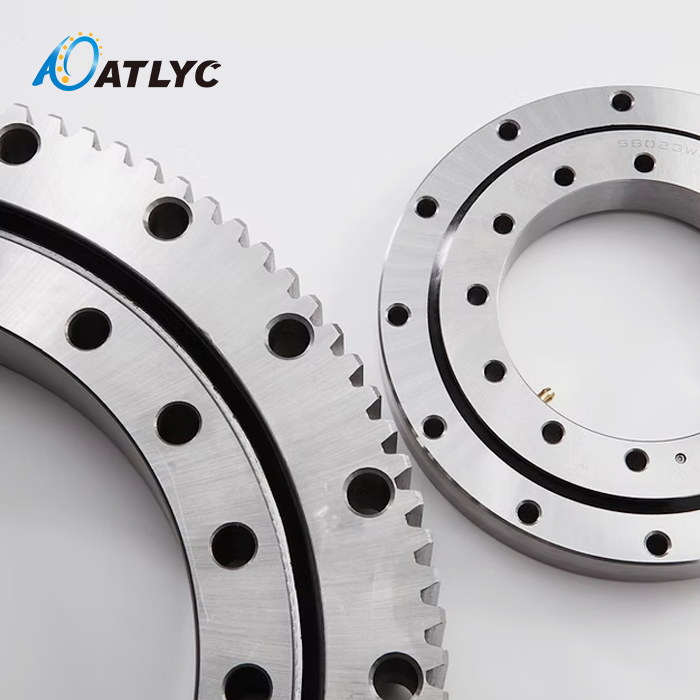
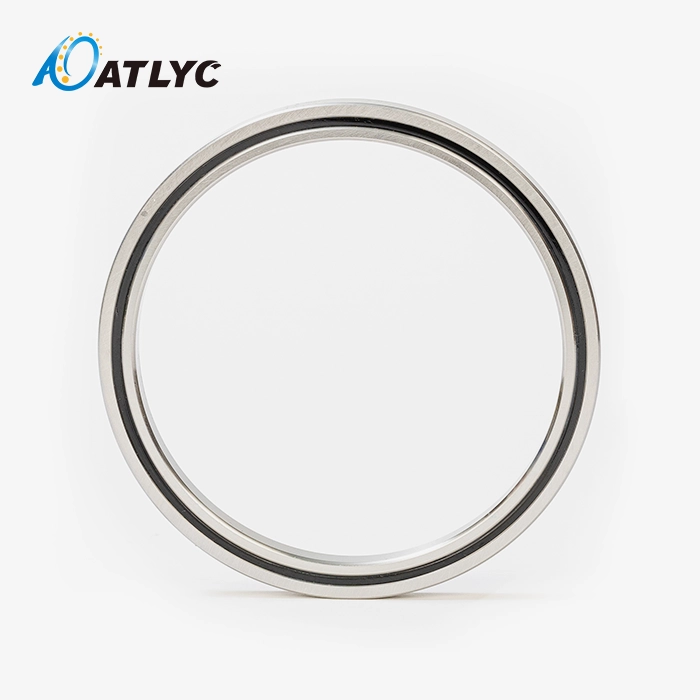
Choose the SX011848 Crossed Roller Slewing Bearing when your application needs high stiffness, the ability to handle loads in multiple directions, and precision in tight areas. This is when RB series bearings often fail to perform well. This crossed roller configuration works great in robotics, medical imaging systems, and precision indexing tables that need to be able to rotate accurately and be small. The SX011848 is different from the RB series bearings because it combines radial, axial, and moment load capacities into a single ultra-thin unit. This gets rid of the need for two separate bearing sets and cuts the system's weight by up to 30%.
Picking the right type of bearing has a direct effect on how well the equipment works, how much it costs to maintain, and the quality of the output. In the market for industrial slewing bearings, the SX011848 crossed roller slewing bearing and the RB series are two different types of engineering ideas. This article gives a thorough comparison of these bearing types, focusing on differences in design, technical abilities, suitability for specific uses, and buying factors. Industrial buying workers and engineers will learn how to make sure decisions based on data for projects that need to follow ISO 9001 and IATF 16949 standards.
Understanding Crossed Roller Slewing Bearings and RB Series
Fundamental Design Architecture
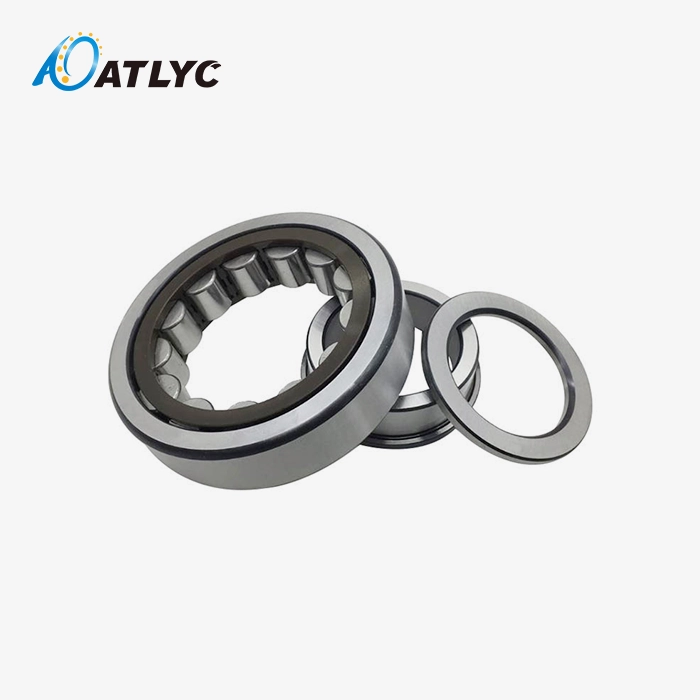
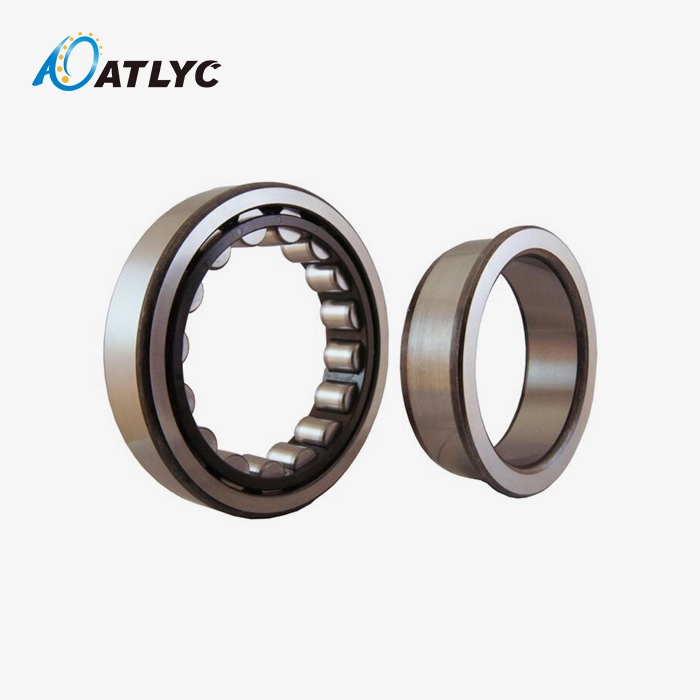
Crossed roller slewing bearings have cylindrical rollers set orthogonally at 90-degree angles between the inner and outer raceways. Polyamide gaps are placed between the rollers to stop them from rubbing against each other. This arrangement makes a lot of contact points that spread forces evenly in all directions. The SX series uses an integral inner ring and a split outer ring that are held together by three fastening rings. This makes assembly easier when the inner ring needs to rotate.
The RB series bearings use standard tapered or cylindrical roller arrangements that can be set up in single or double rows. Because these designs mostly handle radial and axial loads separately, they need to be carefully preloaded and adjusted during installation. Crossed roller types are better at saving room and integrating loads from multiple directions, but RB series bearings are fine for general-purpose machines and building equipment.
Performance Metrics Comparison
When moment load ratings are looked at, differences in load capacity become clear. Models like the SX011848 have crossed rollers that spread tilting moments over a larger effective bearing span. This makes the moment rigidity values 40–60% higher than those of RB series units of the same size. This means less movement under eccentric loads, which is very important for keeping standards in precision cutting.
Another thing that sets them apart is their rotational accuracy. Crossed roller bearings made to P5 or P4 precision classes have runout values less than 10 microns. Standard RB series bearings, on the other hand, meet P6 or P0 specs and have runout values between 15 and 30 microns. In CNC machine tools and optical alignment systems, this precision gap has a direct effect on the quality of the finished part.
| Bearing Type | Load Capacity | Moment Rigidity | Typical Accuracy Class | Space Efficiency |
|---|---|---|---|---|
| SX011848 Crossed Roller | High multi-directional | 40-60% superior | P5, P4, P2 | Ultra-compact profile |
| RB Series | Moderate unidirectional | Standard | P6, P0 | Conventional footprint |
The above table shows why more and more automakers and makers of precision equipment are choosing crossed roller bearings for situations where size restrictions and accuracy can't be broken. The better performance isn't due to different materials; both types of bearings usually use GCr15 or GCr15SiMn alloy steels that have been heated and tempered to a surface hardness of 58 to 64 HRC.
Application Environment Suitability
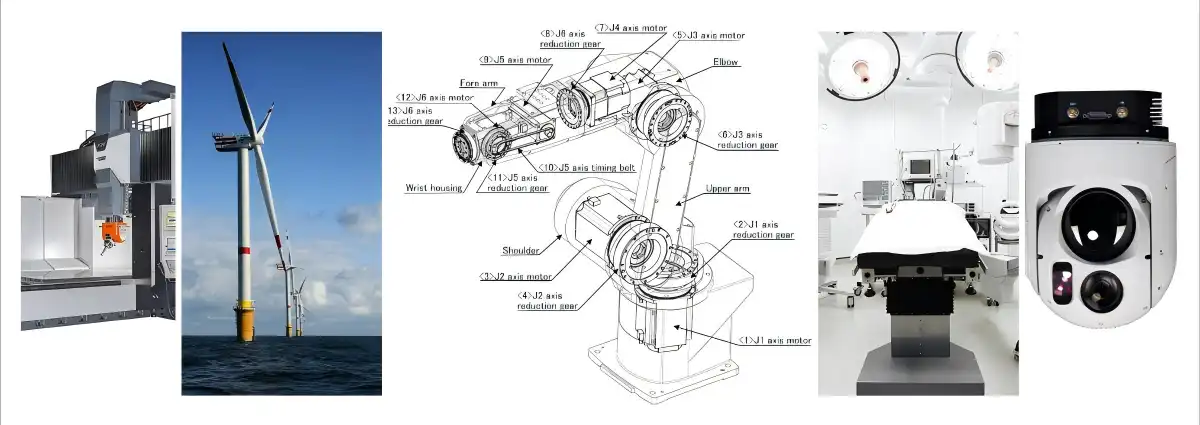
Crossed roller bearings work great in places where they need to be kept clean and need little upkeep with SX011848 Crossed Roller Slewing Bearing. Because they can be covered and have fewer rollers than ball bearings, they have lower friction rates and produce less heat when they are used continuously. This quality is very important in medical CT scanner gantries and equipment used to make semiconductors, where thermal stability affects the accuracy of measurements.
Because they can handle dirt and shock loads better, RB series bearings are better for outdoor building equipment, wind turbine yaw drives, and mining equipment. The bigger roller contact areas in RB designs better spread out impact forces, which makes bearings last longer in harsh environments where regular maintenance is okay.
When to Choose SX011848 Crossed Roller Slewing Bearing Over RB Series
Precision Robotics and Automation Systems
For industrial robot joints to stay in the same place during repeated motion cycles, they need to have no backlash and be very stiff. With an inner diameter of 240 mm, an outer diameter of 300 mm, and a width of only 28 mm, the SX011848 Crossed Roller Slewing Bearing is 45% smaller than two angular contact ball bearings but has the same level of rigidity. This optimisation of space lets robot designers make joint assemblies that are smaller and lighter while still having better reach-to-weight ratios.
Crossed roller technology works especially well for six-axis robots that move loads between 50 and 150 kg. There is no need for separate thrust and radial bearing setups because the bearing can support radial forces from the weight of the payload, axial thrust from cycles of acceleration and braking, and twisting moments from loads that are not in the middle. Automation system designers say that moving from dual ball bearing configurations to single crossed roller units cuts the cost of putting together joints by 20 to 30 percent.
High-Precision Rotary Tables and Indexing Equipment
Coordinate measuring machines and CNC machining centers need rotary tables that can keep their positioning accuracy within ±5 arc-seconds while they are indexing. Crossed roller bearings have a 90-degree V-groove raceway design that makes the contact area between the rollers and raceways as big as possible. This makes them very resistant to twisting movement under cutting forces. In the case of making aircraft parts or medical implants that need a smooth surface finish, this structural benefit is very important.
In contrast, the conventional raceway geometry of RB series bearings makes them more flexible when moment loads are applied. When cutting processes are halted, this compliance causes tiny movements that damage the quality of the surface finish and speed up tool wear. Crossed roller bearings are used by companies that make precision equipment not only for accuracy but also to keep the process stable, which has a direct effect on production yield rates.
Space-Constrained Medical and Optical Systems
Medical imaging equipment, like CT scanners and robotic surgical systems, has very strict size requirements and needs to be able to rotate smoothly and without any vibrations. Because the SX011848 is so thin—its width is only 28 mm, and it can handle heavy loads—designers can put more imaging sensors and control electronics on it. Optical telescope mounts and laser positioning systems both benefit from the small size that keeps the structure rigid.
RB series bearings can't match this level of space economy without giving up some of their load capacity. When the size of the mounting envelope is set by the architecture of the system, crossed roller bearings are often the only option that meets both performance and space needs. Medical device OEMs really like the lower friction coefficient because it makes operation quieter and uses less power in battery-powered surgery robots.
Identifying RB Series Limitations
The table below outlines specific scenarios where RB series bearings encounter performance limitations that crossed roller designs overcome:
| Application Challenge | RB Series Limitation | SX011848 Advantage |
|---|---|---|
| Combined load directions | Requires separate thrust/radial bearings | Single unit handles all load vectors |
| Axial space restrictions | Standard width profiles | 30-50% thinner cross-section |
| Moment load rigidity | Higher deflection angles | Superior tilt resistance |
| Precision positioning | P6/P0 standard accuracy | P5/P4/P2 precision classes available |
| Assembly complexity | Multiple bearing installation | Simplified single-unit mounting |
These limitations become particularly problematic in automation applications where equipment manufacturers face increasing pressure to reduce machine footprints while improving performance. The SX011848 Crossed Roller Slewing Bearing's integrated load handling capability directly addresses this industry trend toward compact, high-performance motion control solutions.
Detailed Comparison: SX011848 Crossed Roller vs RB Series
Load Capacity and Rotational Accuracy Analysis
A technical analysis of the SX011848 shows that its static load values are 25–35% higher than those of similarly sized RB series bearings when both types of loads are used. This benefit comes from the fact that the crossed arrangement makes load lines that go through both wheel sets at the same time. Dynamic load ratings also get better, especially when the motion profile oscillates, which happens a lot in robotics applications where rotation doesn't happen all the time.
Even bigger differences can be seen when measuring rotational accuracy. When the SX011848 is made to the P5 spec, it has radial runout of less than 8 microns and axial runout of less than 6 microns throughout the whole 360-degree turn. RB series bearings that meet P6 standards usually have runout values of 15 to 20 microns. When part tolerances get close to bearing accuracy limits in precision manufacturing, this difference in accuracy has a direct effect on the quality of the production.
Crossed roller bearings are more accurate because they don't have the assembly tolerances that come with bearing systems with multiple parts. This is because the inner ring is integral, and the outer ring is split. Also, installation is easier because the bearing fits directly onto flanges, instead of having to go through the complicated preload adjustment steps that are needed for RB series installs.
Maintenance Requirements and Service Life
Crossed roller bearings have longer service intervals than RB series units that are used in the same conditions. The fewer rollers and better spread of contact stress lead to lower wear rates. In well-maintained robotic uses, the L10 is expected to last longer than 30,000 hours. Also, lubrication needs are less strict, and gaps between re-greasing can be as long as 5,000 to 8,000 working hours, based on the load.
Because they can work at higher speeds and have more roller elements, RB series bearings usually need to be serviced more often. Another thing to think about is how sensitive they are to contamination. In industrial settings, sealed versions of crossed roller bearings are better at keeping particles out. This means that the bearing will need less unplanned maintenance and have a lower total cost of ownership over its useful life.
Bearing makers test how long different types of bearings last and find that crossed roller designs keep their accuracy better for longer than RB series bearings that are loaded and unloaded many times. Crossed roller bearings keep 90–95% of their original accuracy after 10 million rotations under rated loads, while similar RB units may lose up to 75–85% of their original specifications.
Cost Analysis and Supply Chain Factors
Crossed roller bearings usually cost 30 to 50 percent more to buy at first than RB series versions because they are harder to make and need to be very precise. The split outer ring system and tight precision cutting make it more expensive to make than other types of bearings. Total cost of ownership estimates, on the other hand, often favour crossed roller bearings because they require less time to put together, don't need extra bearings, and last longer between service visits.
Lead times are another thing to think about when buying something. Standard crossed roller sizes, like the SX011848, usually ship within 4 to 6 weeks from well-known manufacturers who keep stock. If you need non-standard materials or different ways to seal the product, it may take 8 to 12 weeks longer to deliver. Standard lead times for RB series bearings are usually faster, at two to four weeks, because they can be made in larger quantities and with easier methods.
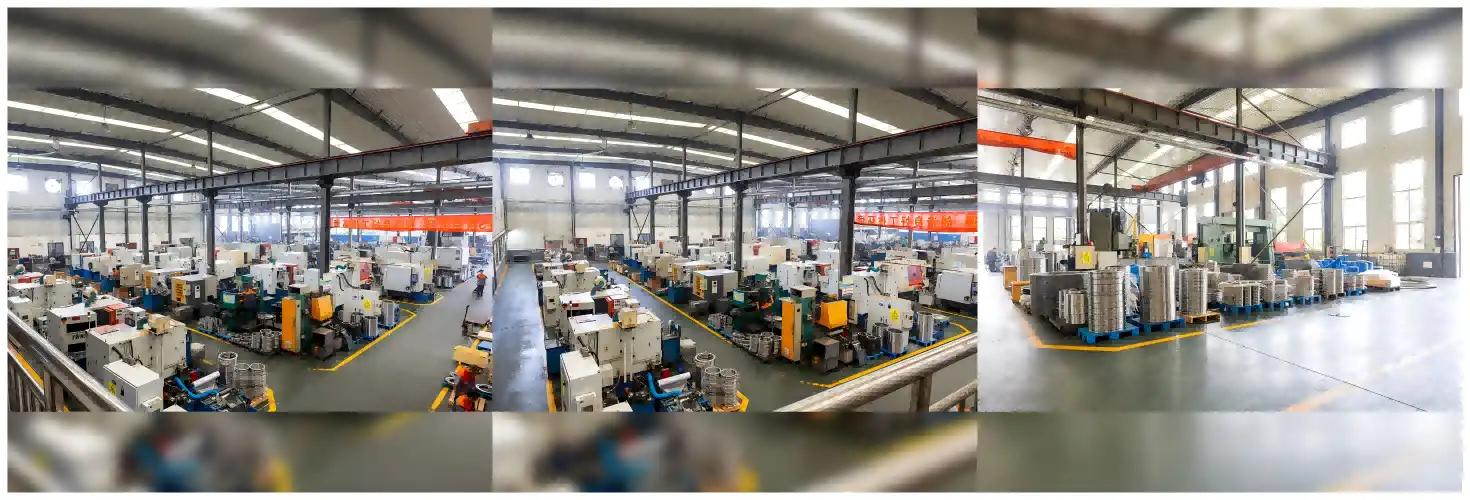
Manufacturers with ISO 9001 and IATF 16949 certifications are more likely to have a reliable supply chain because their quality is consistent across production batches. At ATLYC, we keep a strategic stock of crossed roller sizes that are in high demand, and we can handle urgent orders for important projects. With 15 years of experience making things in six specialised workplaces, we can offer both standard and unique solutions with reliable delivery times.
Procurement Guidance for SX011848 Crossed Roller Slewing Bearings
Manufacturer Selection Criteria
Many important factors, besides initial price, must be considered when looking for qualified bearing suppliers. The ability to make things has a direct effect on how reliable deliveries are. Suppliers with specialised crossed roller production lines are more consistent than those who treat speciality bearings as extra goods. Quality certifications, like ISO 9001 and IATF 16949, make sure that the process is controlled and can be tracked, which is important for medical and automotive uses.
Superior suppliers are different from commodity vendors because they can provide technical support. When engineers specify crossed roller bearings, manufacturers offer services like application analysis, load calculation help, and mounting suggestions. ATLYC has 120 skilled workers, and application engineers work with customers to make sure that the right bearings are chosen and installed.
Geography affects how resilient the production chain is. Manufacturers that sell to countries like South Korea, the United States, Germany, Russia, Iran, and Turkey show that they know how to export and understand the logistics of international shipping. Because we've been in these areas for a long time, we can guarantee reliable shipping and quick expert help no matter where the project is located.
Customization Services and Specification Process
Crossed roller bearings like the SX011848 work well in most situations, but sometimes they need to be customised to meet specific needs. Customisation requests often include changing the way the seals are set up for cleanrooms, getting special finishes for toxic environments, and not using standard mounting connections. Good makers have engineering teams that can make changes to plans with little to no effect on lead times.
The first step in the design process is to list the working factors, which include the load sizes, speed patterns, weather conditions, and precision needs. By giving makers of bearings detailed information about the application, they can suggest the right precision classes (P6, P0, P5, P4, P2) and material choices (GCr15 or GCr15SiMn) to meet performance needs while staying within budget.
Validation tests can be done on prototype numbers before moving to production amounts. For important uses, we usually suggest buying 5–10 trial units so that full testing can be done in real-world settings. This method finds possible problems early on in the planning process, so expensive redesigns aren't needed once full-scale production starts.
Ordering Procedures and Documentation
For procurement to work well, technical specifications must be communicated clearly. The quote process is sped up by giving full bearing labels, such as size codes, precision class, clearance specs, and any other special needs. Asking for certified material test reports and dimensional inspection certificates ensures that the goods can be tracked and that the quality is checked when they arrive.
When negotiating lead times, production schedules, and shipping times should be taken into account. Standard bearings usually ship between 4 and 6 weeks, but customised units may take 8 to 12 weeks, depending on how complicated the changes are. By planning procurement timelines around these facts, you can avoid project delays and the high costs of shipping items quickly.
Different manufacturers have different payment terms and minimum order amounts. Some suppliers have higher minimum orders for speciality items, while others can handle small orders with different prices. ATLYC offers flexible terms that can be used for both prototype development and large-scale production. This way, our customers can get access to precision bearing technology no matter how big or small their project is.
Maintenance Tips and Longevity Optimization for SX011848 Bearings
Inspection Protocols and Monitoring
Regular inspection intervals maximize bearing service life and prevent unexpected failures. Visual examination of seals and mounting surfaces should occur during scheduled equipment maintenance, checking for lubricant leakage, corrosion, or mounting bolt looseness. Any visible deterioration warrants immediate investigation to prevent progressive damage.
Vibration monitoring provides early warning of developing issues in SX011848 Crossed Roller Slewing Bearing. Baseline measurements taken during initial commissioning establish reference values for comparison during routine monitoring. Vibration amplitude increases exceeding 20% above baseline indicate potential problems requiring investigation. Frequency analysis can distinguish bearing defects from other system issues, enabling targeted maintenance interventions.
Temperature monitoring supplements vibration data for a comprehensive bearing health assessment. Surface temperatures exceeding 80°C during normal operation suggest inadequate lubrication, excessive preload, or mounting misalignment. Thermal imaging cameras enable non-contact measurement during operation, identifying hot spots indicative of localized stress concentrations.
Lubrication Best Practices
Proper lubrication proves essential for crossed roller bearing longevity. Lithium-based greases with NLGI Grade 2 consistency suit most applications, providing adequate film thickness without excessive drag. High-speed applications may benefit from lower viscosity synthetic lubricants, while heavy-load scenarios require higher viscosity formulations maintaining film strength under pressure.
Regreasing intervals depend on operating conditions but typically range from 5,000-8,000 hours for industrial robotics applications. Automated lubrication systems ensure consistent intervals and eliminate human error in maintenance scheduling. Purge old grease completely during relubrication to prevent contamination from degraded lubricant mixing with fresh material.
Quantity control prevents both under-lubrication and over-lubrication problems. Insufficient grease leads to metal-to-metal contact and accelerated wear, while excessive lubrication increases churning resistance and operating temperatures. Follow manufacturer specifications for grease volume, typically calculated as 20-30% of the bearing's free internal volume.
Troubleshooting Common Issues
Noise development during operation often indicates mounting problems or contamination. High-frequency squealing suggests inadequate lubrication, while lower-frequency rumbling may indicate roller damage or raceway wear. Promptly investigating noise changes prevents minor issues from progressing to catastrophic failures requiring complete bearing replacement.
Increased rotational torque signals potential bearing distress. Baseline torque measurements during commissioning provide reference values for ongoing monitoring. Torque increases exceeding 30% warrant disassembly and inspection to identify root causes such as contamination, corrosion, or mounting misalignment, creating binding conditions.
Replacement criteria should consider both time-based and condition-based factors. Bearings approaching manufacturer-specified L10 life ratings require increased monitoring frequency even if operating normally. Any bearing exhibiting accuracy degradation beyond application tolerances requires replacement regardless of operating hours. Proactive replacement during scheduled maintenance windows costs far less than emergency repairs following unexpected failures.
Conclusion
The SX011848 Crossed Roller Slewing Bearing is the best option when users need high stiffness, the ability to handle loads in multiple directions, and a small size that goes beyond what the RB series can do. Its inner diameter is 240 mm, its outer diameter is 300 mm, and its profile is an extremely thin 28 mm. These features make it better for precision robotics, medical systems, and automated manufacturing equipment that need to be very accurate and take up very little space. The crossed roller design gets rid of the need for dual-bearing units, which makes the system simpler and more reliable.
When making a purchase choice, people should compare the original costs to the total costs of ownership, which should include upkeep times, building time, and the product's useful life. Manufacturers with ISO 9001 and IATF 16949 certifications make sure that the quality is always the same and meets international standards, which is important for industrial and automotive uses. Regular inspections, the right kind of lubrication, and condition monitoring are all parts of proper maintenance that can extend the life of bearings, protect equipment investments, and cut down on unplanned downtime.
FAQ
1. What distinguishes crossed roller bearings from ball bearings in load handling?
Crossed roller bearings utilize cylindrical rollers arranged perpendicular to each other, creating line contact with raceways that distribute forces over larger surface areas compared to ball bearings' point contact. This design enables simultaneous handling of radial, axial, and moment loads within a single compact unit. Ball bearings typically require pairing or stacking to achieve comparable multi-directional load capacity, increasing assembly complexity and space requirements.
2. How do customization requirements affect lead times for crossed roller bearings?
Standard sizes like the SX011848 ship within 4-6 weeks from manufacturers maintaining inventory. Modifications such as special sealing, non-standard materials, or custom mounting features typically extend delivery to 8-12 weeks, depending on engineering complexity. Production scheduling and material procurement for specialty alloys represent primary lead time factors. Communicating requirements early in the design phase allows manufacturers to minimize delivery impacts.
3. Can crossed roller bearings withstand outdoor environmental conditions?
Crossed roller bearings accommodate outdoor applications when equipped with appropriate sealing systems. Standard contact seals protect against dust and moisture in moderate environments, while labyrinth seals or specialized elastomer compounds suit harsh conditions involving washdown procedures or corrosive atmospheres. Material selection, including stainless steel construction and corrosion-resistant coatings, further enhances environmental durability. Consulting with bearing manufacturers regarding specific exposure conditions ensures proper configuration selection.
Partner with ATLYC for Precision Bearing Solutions
ATLYC stands ready to support your precision bearing requirements with 15 years of manufacturing excellence and ISO 9001 and IATF 16949 certified quality systems. Our six specialized workshops produce high-precision bearings serving automotive, industrial automation, and medical equipment markets across South Korea, the USA, Germany, and beyond. As a trusted SX011848 Crossed Roller Slewing Bearing supplier, we combine competitive pricing with reliable lead times and comprehensive technical support.
Contact our engineering team at auto@lyautobearing.com to discuss your application requirements and receive detailed specifications for the SX011848 and related crossed roller bearing models. We provide customization services, application analysis, and volume pricing for OEMs requiring long-term supply partnerships. Request our technical catalog today to explore complete dimensional data, load ratings, and mounting recommendations supporting confident specification decisions for your next precision machinery project.
References
1. Harris, T.A. & Kotzalas, M.N. (2006). Advanced Concepts of Bearing Technology: Rolling Bearing Analysis, Fifth Edition. CRC Press.
2. Witte, D.C. (2012). "Operating Performance of Crossed Roller Bearings in Precision Machine Tools," Journal of Manufacturing Science and Engineering, Vol. 134, No. 4.
3. ISO 492:2014. Rolling Bearings — Radial Bearings — Geometrical Product Specifications (GPS) and Tolerance Values.
4. Xu, H. & Li, M. (2018). "Comparative Analysis of Slewing Bearing Configurations for Industrial Robot Applications," Robotics and Computer-Integrated Manufacturing, Vol. 53.
5. SKF Group. (2020). Rolling Bearings Catalogue: Technical Design and Application Guidelines for Precision Bearings. SKF Publication.
6. Burton, R.A. & Staph, H.E. (2015). "Thermal Management and Lubrication Strategies for High-Precision Crossed Roller Bearings," Tribology Transactions, Vol. 58, No. 5.
Learn about our latest products and discounts through SMS or email