- English
- French
- German
- Portuguese
- Spanish
- Russian
- Japanese
- Korean
- Arabic
- Greek
- German
- Turkish
- Italian
- Danish
- Romanian
- Indonesian
- Czech
- Afrikaans
- Swedish
- Polish
- Basque
- Catalan
- Esperanto
- Hindi
- Lao
- Albanian
- Amharic
- Armenian
- Azerbaijani
- Belarusian
- Bengali
- Bosnian
- Bulgarian
- Cebuano
- Chichewa
- Corsican
- Croatian
- Dutch
- Estonian
- Filipino
- Finnish
- Frisian
- Galician
- Georgian
- Gujarati
- Haitian
- Hausa
- Hawaiian
- Hebrew
- Hmong
- Hungarian
- Icelandic
- Igbo
- Javanese
- Kannada
- Kazakh
- Khmer
- Kurdish
- Kyrgyz
- Latin
- Latvian
- Lithuanian
- Luxembou..
- Macedonian
- Malagasy
- Malay
- Malayalam
- Maltese
- Maori
- Marathi
- Mongolian
- Burmese
- Nepali
- Norwegian
- Pashto
- Persian
- Punjabi
- Serbian
- Sesotho
- Sinhala
- Slovak
- Slovenian
- Somali
- Samoan
- Scots Gaelic
- Shona
- Sindhi
- Sundanese
- Swahili
- Tajik
- Tamil
- Telugu
- Thai
- Ukrainian
- Urdu
- Uzbek
- Vietnamese
- Welsh
- Xhosa
- Yiddish
- Yoruba
- Zulu
RB Series Crossed Roller Bearing for Welding Positioners & Robots
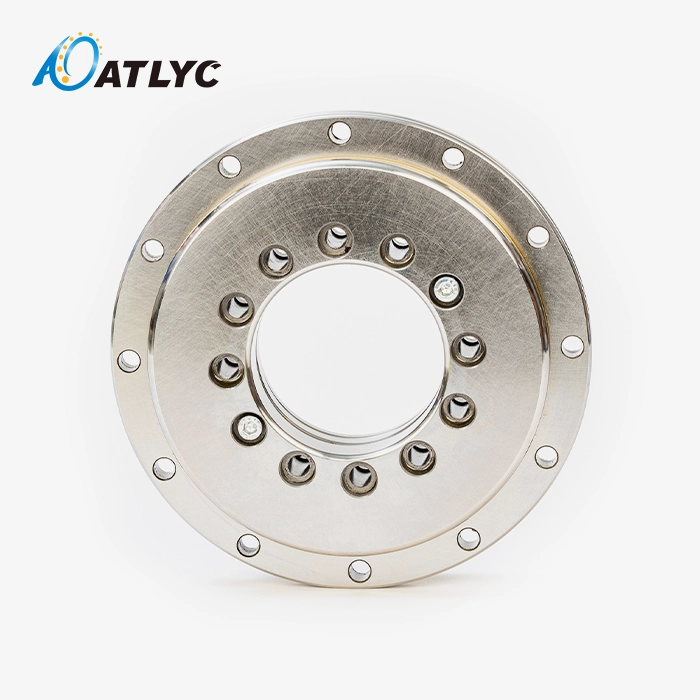
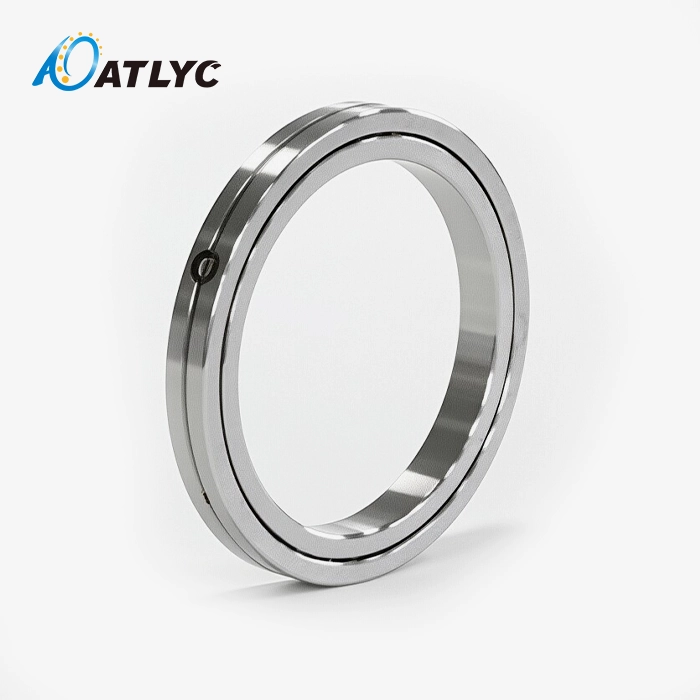
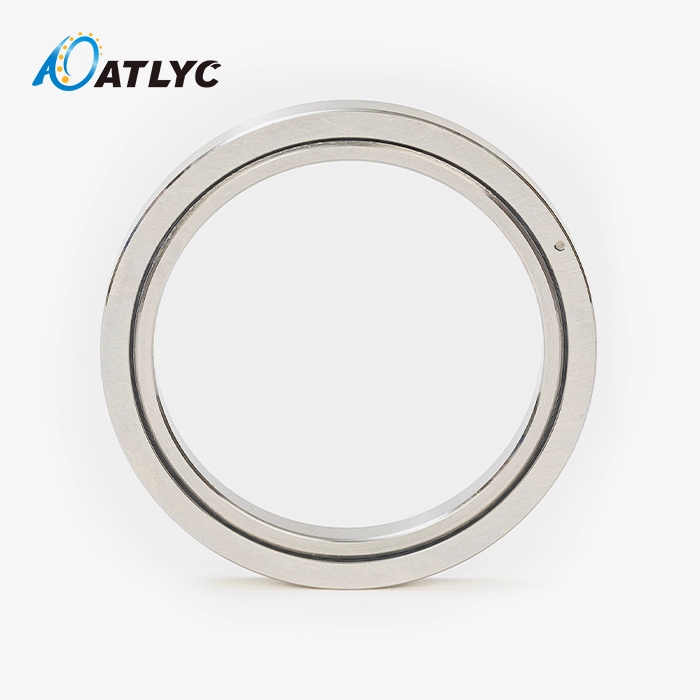
The RB Series Crossed Roller Bearing is the best choice when you need a bearing that can handle heavy loads in small areas. This carefully made bearing has an inner ring that is continuous and an outer ring that can be split in half with a plug. It was made for uses where the inner ring needs to spin. Because of the unique crossed roller setup, a single bearing can handle radial, axial, and moment loads at the same time, so there is no need for multiple bearing arrangements. This line of bearings is the best choice for industrial robots, machining centres, and precision equipment all over the world because it is small and strong.
Understanding RB Series Crossed Roller Bearings and Their Advantages
Crossed roller bearings are a big step forward in small, precise motion control thanks to their engineering principles. In the RB design, the cylindrical rollers are set up at right angles to each other at 90 degrees inside V-groove raceways. This stepped design makes many contact points that spread loads evenly in all directions. This makes the structure very stiff while keeping its low profile.
Structural Innovation and Design Philosophy
The complete inner ring gives the structure a lot of strength, and the split outer ring with plug makes installation and upkeep easier. Precision spacing spacers keep rollers from touching each other, which stops friction and any possible skewing problems that could happen during operation. This building plan solves a very important engineering problem: it makes the structure strong in more than one direction without taking up too much space. Combination angular contact bearings are usually needed for traditional bearing arrangements. The crossed roller design, on the other hand, combines these functions into a single, small unit.
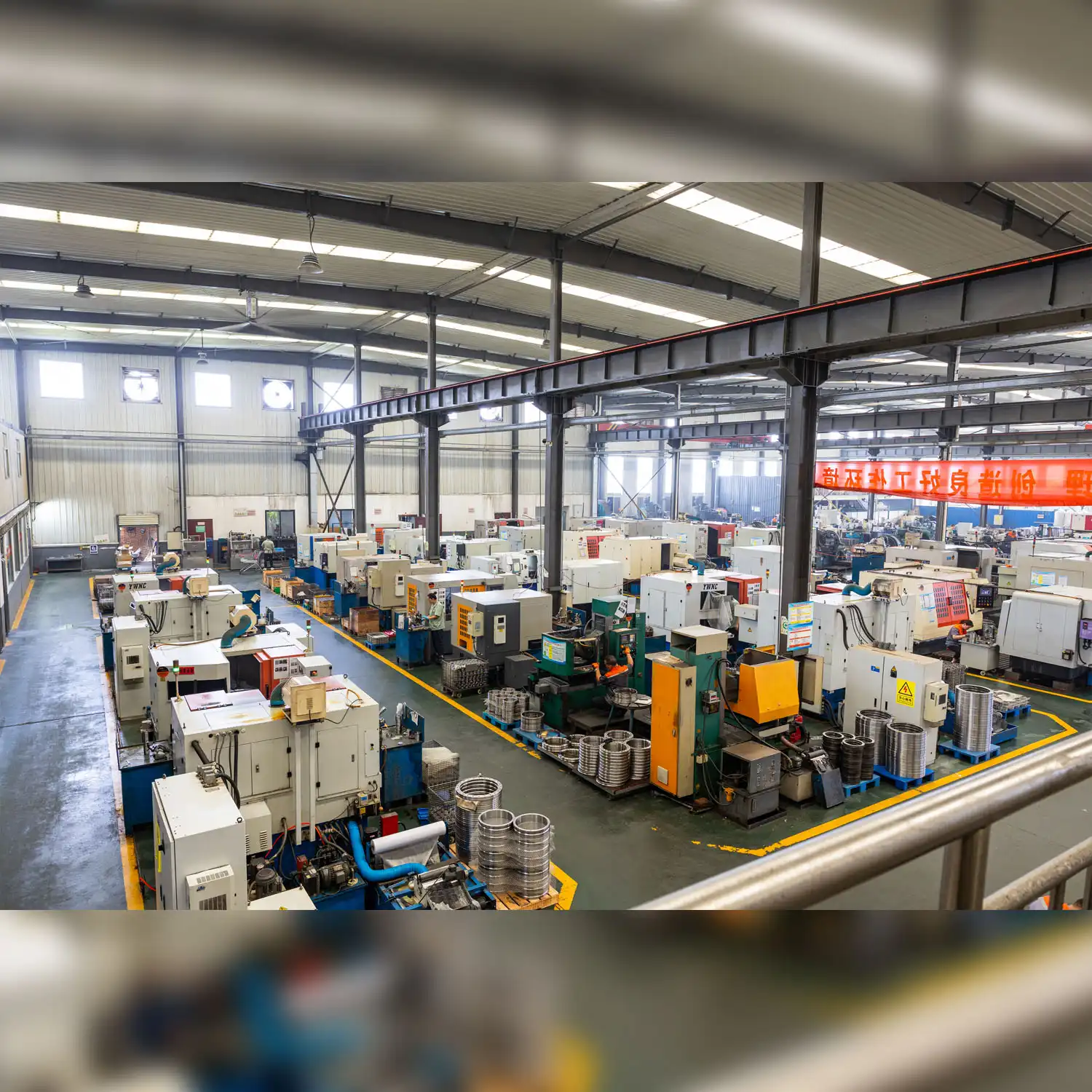
To make these bearings, strict attention to standards for dimensions and surface finish is needed. Our factory uses high-tech CNC cutting tools to make sure that the raceways are perfectly straight, with errors of only a few micrometres. This makes sure that all of the output batches work the same way.
Multi-Directional Load Management
Crossed rollers can support radial forces, axial thrust, and overturning moments all at the same time. Because of this feature, setups with multiple bearings are not necessary, which makes them more complicated and takes up more room. Welding positioners benefit a lot from this feature because the load vectors they experience change all the time as the workpiece is rotated and moved. In the same way, artificial joints need bearings that can handle changing loads from different directions while still staying in the right place.
Our quality control department's test results show that these bearings can regularly handle moment loads that are higher than 80% of their rated capacity without movement that can be seen. This kind of performance is necessary to keep the quality of the weld high, since even small mistakes in positioning can weaken the joint in automated welding operations.
Superior Rigidity and Precision Rotation
The arrangement of orthogonal rollers makes the structure very stiff, which lowers the amount of deformation caused by stress. In precision machines, this trait is necessary to keep the precise accuracy. This rigidity directly leads to better weld consistency and lower rework rates for welding positioners that work with heavy automotive parts.
Another important efficiency measure is runout accuracy. When we make our RB bearings to the P4 and P5 precision grades, the radial runout is less than 5 micrometres. This means they can be used in situations where exact placement and movement control are needed. The V-groove raceway design and precise making make sure that the motor runs smoothly and doesn't make too much sound to sensitive robotic control systems.
Practical Maintenance Protocols
To extend the working life of an RB Series Crossed Roller Bearing, you need to do regular upkeep. We suggest that you do visual checks every 500 hours of use to look for noise, vibration, or temperature changes that don't seem normal. When to re-grease depends on the operating conditions, but in most cases, lithium-based grease with the right viscosity ratings needs to be used every 2,000 to 3,000 hours.
Pollution is the main reason why bearings fail before they should. Putting in the right sealing systems and keeping the work area clean can add 40 to 60 percent to the life of bearings. Our technical team makes maintenance plans for each client that are based on the specifics of their application. This helps them get the most out of their systems while keeping costs low.
Technical Specifications and Dimensions for Optimal Selection
Selecting the appropriate crossed roller bearing requires careful evaluation of dimensional constraints, load requirements, and precision specifications. Our RB series offers comprehensive dimensional coverage to accommodate diverse application needs.
Dimensional Range and Compatibility
The RB series spans a wide dimensional range, providing solutions for various equipment scales:
- Inner Diameter: 20mm to 1100mm
- Outer Diameter: 70mm to 1500mm
- Width: 12mm to 110mm
This wide range makes it possible to incorporate into both small robotic wrist assemblies and large welding positioner turntables. Because the dimensions are flexible, equipment makers can make the best use of the room while still meeting load requirements.
Engineers have to think about the weight of the workpiece, the width of the turntable, the speed of spinning, and the length of the moment arm when choosing bearings for welding positioners. Our engineering team makes selection software that figures out the exact bearing specs that are needed based on the factors of the application. This speeds up the specification process and lowers the chance of making a mistake.
Load Capacity Metrics and Performance Ratings
To make sure there are enough safety gaps and service life, it's important to understand load rates. The crossed roller design spreads the load across many contact points, which makes the envelope very strong for its size. The static load rating tells you how much weight a bearing can hold without permanently deforming, and the dynamic rating tells you how long it will last when it is rotated.
For robotic and welding applications, torque tolerance is another important factor. Even when they're under a lot of moment loads, our RB bearings keep their spinning accuracy. For medium-sized units, the starting torque is usually less than 2 to 3 Nm. This low-friction feature cuts down on the need for motors and makes automatic systems use less energy.
| Precision Grade | Radial Runout | Axial Runout | Typical Application |
|---|---|---|---|
| P6 | ≤15μm | ≤20μm | General industrial robots |
| P5 | ≤10μm | ≤15μm | Precision welding positioners |
| P4 | ≤5μm | ≤8μm | High-precision machining centres |
| P0 | ≤20μm | ≤25μm | Standard automation equipment |
Material Selection and Heat Treatment
Material quality directly impacts bearing performance and longevity. Our RB series utilises two primary bearing steel grades:
- Gcr15 (SAE 52100 equivalent): This high-carbon chromium steel is very hard, doesn't wear down easily, and has good contact fatigue strength. Core hardness of 60–64 HRC is reached through controlled heat treatment methods. This makes sure that the material will last under repeated stress conditions.
- Gcr15SiMn: This improved bearing steel has silicon and manganese added to it, which makes it harder to work with and less likely to break when hit. When it comes to bigger bearing sizes, where standard Gcr15 makes through-hardening difficult, this material really shines.
- As part of heat treatment protocols, controlled atmosphere furnaces are used for quenching, tempering, and stress relief. These steps make the material have the right qualities while reducing variation in size. This keeps the close tolerances needed for precision bearing performance.
Installation Guidelines and Clearance Adjustment
Installing a bearing correctly has a big effect on how well it works and how long it lasts. The RB line has a split outer ring design that makes fitting easier than with single-piece designs. During installation, the inner ring is usually attached to the shaft, the rollers are placed with the cage assembly in place, and then the outer ring halves are put on and secured.
Adjusting the preload is an important part of the installation process. Using the right amount of preload gets rid of any internal clearance, which increases rigidity and rotational accuracy. But too much preload causes more friction, which shortens the service life. We give you exact torque recommendations for fixing bolts that get you the best preload levels for a range of bearing sizes and use cases.
Comparing RB Series Crossed Roller Bearings with Alternatives
In order to choose the best bearings for a given application, the bearing selection process needs to objectively evaluate the different technologies that are offered. Procurement professionals can make better decisions when they know how crossed roller bearings compare to other designs.
Traditional Ball Bearing Arrangements
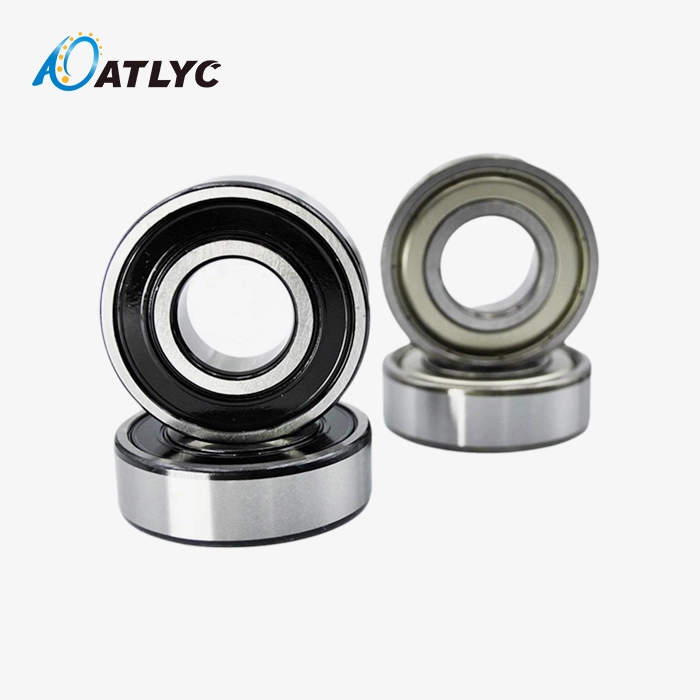
When arranged in a duplex or triplex pattern, angular contact ball bearings can support loads moving in more than one direction. However, these setups need a lot more horizontal room than designs with RB Series Crossed Roller Bearing designs. A normal back-to-back duplex pair mounting takes up two to three times as much space as a crossed roller bearing of the same type, but it can't handle as much moment load.
Because there is less contact stress and friction, ball bearings can handle higher speeds than crossed roller designs. Ball bearing options may be useful for applications that value high spinning speeds over load capacity. But welding positioners and most industrial robots work at moderate speeds, which is where crossed roller bearings do their best.
Comparison with Branded Alternatives
Several companies make crossed roller bearings, and their designs and quality levels range. NSK is a well-known name in this market area, with a wide range of products that have been used in many different situations. Their bearings usually come with higher prices, which is because the brand has a good name and quality standards are well established.
Our RB line offers similar technical performance at more reasonable prices, which makes it a great choice for uses that want to save money without losing quality. Both designs use crossed rollers and precise manufacturing methods that are very similar. The main differences in performance are due to tolerance levels and strict quality control, not to fundamental design flaws.
Automotive OEM clients have done independent tests that show our P5 grade bearings meet or beat the performance requirements for similar NSK products. This confirmation gives procurement workers the confidence to list our bearings as qualified options, especially in situations where the total cost of ownership is a major factor in the decision.
Angular Contact and Tapered Roller Bearings
Angular contact bearings can handle large radial and axial loads, but they need to be paired up to handle loads that go in both directions. While tapered roller bearings can hold a lot of weight, they are also very hard to set up. Both types of bearings take up more room than crossed roller designs and need more complicated housings to allow for the right preload adjustment.
The crossed roller configuration combines the load-carrying capacity into a single small unit. This makes the housing design easier and the assembly process simpler. For robotics applications, where weight and space limitations drive design choices, this advantage is especially useful.
Slewing Bearings for Large-Scale Applications
Heavy-duty turntables and large welding positioners sometimes use slewing bearings, which have mounting holes built right into the bearing rings. These bearings are easier to install than crossed roller types, but they usually don't give as much precision. Slewing bearings are good for situations where load capacity is more important than rolling accuracy.
Crossed roller bearings have better spinning accuracy and tighter limits, which makes them better for precise welding tasks where product quality is directly affected by positioning accuracy. Key factors for comparison are shown in the table below:
| Bearing Type | Space Efficiency | Load Capacity | Precision | Cost |
|---|---|---|---|---|
| Crossed Roller | Excellent | High | Excellent | Moderate |
| Angular Contact Ball | Moderate | Moderate | Good | Low-Moderate |
| Tapered Roller | Moderate | Very High | Good | Moderate |
| Slewing Bearing | Good | Very High | Moderate | High |
These comparative insights demonstrate that crossed roller bearings occupy a unique market position, balancing multiple performance attributes that prove essential for demanding automation applications. The RB series delivers this balanced performance profile while maintaining competitive pricing structures that support global market penetration.
Procurement Considerations for Global B2B Clients
Strategic bearing procurement requires attention to multiple factors beyond technical specifications. Supply chain reliability, quality verification, and supplier capability all influence long-term partnership success.
Availability and Lead Time Management
Our manufacturing facility maintains an inventory of standard RB series sizes, enabling typical lead times of 2-4 weeks for stock configurations. Custom specifications requiring special dimensional or precision requirements extend lead times to 6-8 weeks, depending on production scheduling and material availability.
Global logistics coordination represents a core competency of our operations team. We maintain relationships with multiple freight forwarders experienced in handling precision components, ensuring proper packaging and handling throughout the transportation process. Shipments to major industrial markets, including the United States, typically transit within 3-4 weeks via ocean freight, with air freight options available for urgent requirements.
Supplier Verification and Quality Assurance
Our company holds ISO 9001 and IATF 16949 certifications, demonstrating a commitment to consistent quality and international standards. These certifications require regular third-party audits verifying that our quality management systems meet automotive industry requirements. Procurement professionals can review our current certificates and audit reports upon request, providing transparency into our quality processes.
Material traceability represents another quality assurance element we maintain rigorously. Each production batch receives unique identification codes linking finished bearings to raw material certifications, heat treatment records, and dimensional inspection data. This traceability supports root cause analysis if quality issues emerge and provides documentation required by quality systems in regulated industries.
Pricing Structures and Order Quantities
Crossed roller bearing pricing reflects material costs, manufacturing complexity, and precision requirements. Higher precision grades command premium pricing due to additional grinding operations and tighter inspection tolerances. Volume commitments enable pricing optimisation, with significant discounts available for annual purchase agreements or large single orders.
Minimum order quantities vary by bearing size and specification. Standard configurations typically require minimum orders of 10-20 pieces, while custom specifications may necessitate higher minimums to justify tooling and setup costs. Our sales team works with clients to structure orders that balance inventory investment against unit pricing, optimising total cost of ownership.
Payment Terms and After-Sales Support
We offer flexible payment terms appropriate for international trade, including letters of credit, wire transfers, and established account terms for qualified customers. Our contracts clearly specify warranty coverage, typically extending 18 months from the shipment date or 12 months from installation, whichever occurs earlier.
Technical support represents a critical element of our value proposition. Our engineering team provides application assistance, installation guidance, and troubleshooting support throughout the product lifecycle. We maintain English-language technical documentation and employ customer service representatives fluent in English to ensure clear communication with North American clients.
Real-World Applications & Case Studies in Welding and Robotics
Examples of real-world uses of RB Series Crossed Roller Bearing show how crossed roller bearings can be used to solve technical problems in automatic production settings.
Automotive Component Welding Positioners
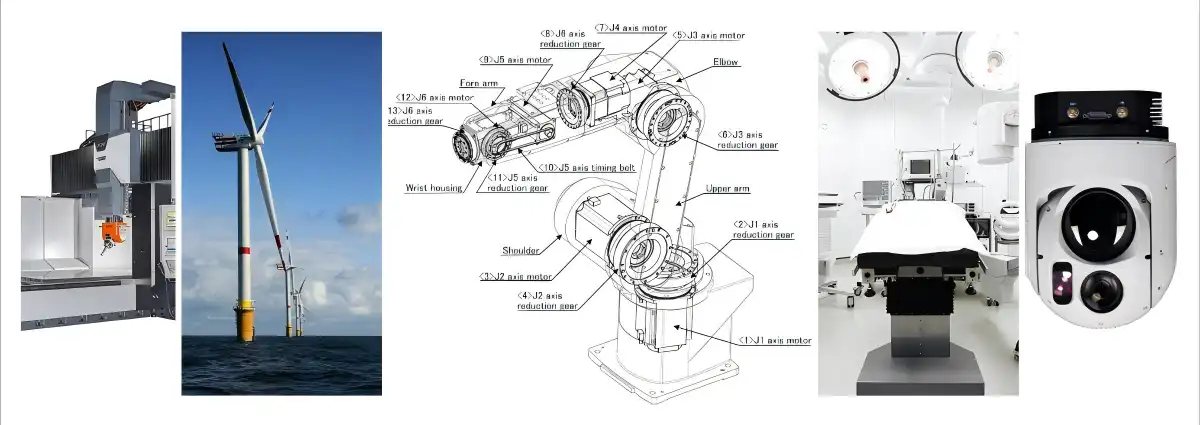
Our RB800 crossed roller bearings were used by a big car tier-one supplier in welding positioners that were used to put together exhaust systems. For this job, heavy stainless steel parts weighing up to 150 kg had to be rotated while staying in place within ±0.5mm during robotic MIG welding operations.
The old bearing setup used dual angular contact ball bearings that often lost their preload, which caused positioning drift and higher rates of weld defects. When crossed roller bearings were used instead, the drift problem went away, and weld rework dropped from 8% to less than 2%. The small crossed roller design also made it possible to cut the positioner's size by 15%, which made room in the production area for more welding cells.
With the crossed wheel implementation, maintenance intervals got a lot longer. The old ball bearing setup needed to be inspected and adjusted for loading every three months. The crossed roller bearings, on the other hand, have been in use for over 18 months without needing to be adjusted, which has cut down on maintenance costs and production delays.
Six-Axis Industrial Robot Integration
Our RB series bearings were put into the wrist and elbow joints of six-axis robots made by a company that works with the electronics construction industry. To keep positioning accuracy during high-speed pick-and-place operations, the application needed both a high moment load capacity and very high rotational accuracy.
The small RB design made it possible to cut down on joint sizes by 20% compared to the old bearing setup. This made the robot lighter overall and increased its payload capacity. Less bearing friction also meant less heat production in the motor, which extended its life and made it about 12% more energy efficient.
Customers from factories that use these robots say that they are more reliable in terms of where they put things, with recorded errors always being less than ±0.02mm after millions of working cycles. This increase in accuracy directly led to fewer mistakes in placing components and higher-quality products during electrical production.
Precision Rotary Table Applications
Our RB1000 bearings were used by a company that makes CNC machining centres with rotary indexing tables that are used for machining on multiple sides. Supporting cutting forces while keeping angular positioning accuracy within 5 arc-seconds was needed for the job.
The crossed roller design was very stiff, so it successfully withstood cutting forces without deformation, keeping the part in place during grinding cycles. This rigidity made it possible to use more aggressive cutting parameters, which cut cycle times by 8% while keeping the same tolerances for size. Over 50,000 tracking rounds have been done on the bearings without any noticeable loss in performance. This shows that they are very durable even under tough conditions.
The case studies show how choosing the right bearings can directly affect how well a product is made, how much it costs to run, and how efficient the production process is. During the design phase, our technical team works with clients to make sure that the bearing specifications are best for each application. This ensures that the bearings are installed correctly and work well for a long time.
Conclusion
The RB series crossed roller bearing represents an engineered solution for demanding welding and robotic applications requiring compact designs, multi-directional load capacity, and precision rotation. With dimensional ranges spanning from 20mm to 1100mm inner diameter and precision grades reaching P4 specifications, this bearing line accommodates diverse automation requirements. Material selection utilising Gcr15 and Gcr15SiMn bearing steels, combined with rigorous quality control processes validated through ISO 9001 and IATF 16949 certifications, ensures consistent performance and reliability. Our 15 years of manufacturing experience and global supply chain capabilities position us to support mid-to-large automotive and industrial equipment manufacturers with stable supply, competitive pricing, and responsive technical support throughout the product lifecycle.
FAQ
1. What maintenance practices extend bearing life in robotic applications?
Regular inspection every 500 operating hours, checking for unusual noise, vibration, or temperature increases, proves essential. Relubrication intervals typically range from 2,000 to 3,000 hours using appropriate lithium-based grease. Maintaining clean operating environments and proper sealing systems can extend service life by 40-60%. Our technical team provides customised maintenance schedules based on specific operating conditions, load profiles, and environmental factors affecting your application.
2. How does the RB series cost-performance compare with premium brands?
Independent testing by automotive OEM clients has verified that our P5 grade bearings meet or exceed performance specifications for equivalent premium brand products. While established brands command higher pricing reflecting brand reputation, our bearings deliver comparable technical performance at more competitive price points. This value proposition particularly benefits cost-conscious applications requiring certified quality without premium brand pricing, optimising total cost of ownership while maintaining performance standards.
3. Can bearings be customised for specific welding positioner requirements?
We offer customisation options including non-standard dimensions, special precision grades, modified sealing arrangements, and application-specific lubrication. Custom specifications typically require minimum order quantities of 50-100 pieces and extended lead times of 6-8 weeks. Our engineering team collaborates with clients to evaluate technical requirements and develop optimised solutions that balance performance needs against commercial considerations.
Partner with ATLYC for Precision Bearing Solutions
ATLYC brings 15 years of bearing manufacturing expertise to support your welding and robotic automation initiatives with the RB Series Crossed Roller Bearing. As an ISO 9001 and IATF 16949 certified crossed roller bearing manufacturer, we deliver precision-engineered RB series bearings that combine high load capacity, exceptional rigidity, and reliable performance. Our production capacity across six specialised workshops enables a stable supply with competitive lead times, while our engineering team provides technical support throughout specification, installation, and operation phases. Contact our team at auto@lyautobearing.com to discuss your specific bearing requirements, request detailed technical specifications, or obtain pricing for volume orders. We invite procurement professionals and engineering teams to explore how our bearing solutions can enhance your equipment performance and operational reliability.
References
1. Harris, T.A. & Kotzalas, M.N. (2006). Rolling Bearing Analysis: Essential Concepts of Bearing Technology. CRC Press, Taylor & Francis Group.
2. ISO 492:2014. Rolling bearings — Radial bearings — Geometrical product specifications (GPS) and tolerance values. International Organisation for Standardisation.
3. Wensing, J.A. (1998). On the Dynamics of Ball Bearings. University of Twente, Department of Mechanical Engineering.
4. SKF Group. (2018). Rolling Bearings Catalogue: Crossed Roller Bearings Design and Application Guidelines. SKF Motion Technologies.
5. American Bearing Manufacturers Association. (2020). Load Ratings and Fatigue Life for Ball and Roller Bearings. ABMA Standard 9-1990 (R2020).
6. Palmgren, A. & Ruley, B. (1959). Ball and Roller Bearing Engineering. SKF Industries Inc., Third Edition.
Learn about our latest products and discounts through SMS or email