- English
- French
- German
- Portuguese
- Spanish
- Russian
- Japanese
- Korean
- Arabic
- Greek
- German
- Turkish
- Italian
- Danish
- Romanian
- Indonesian
- Czech
- Afrikaans
- Swedish
- Polish
- Basque
- Catalan
- Esperanto
- Hindi
- Lao
- Albanian
- Amharic
- Armenian
- Azerbaijani
- Belarusian
- Bengali
- Bosnian
- Bulgarian
- Cebuano
- Chichewa
- Corsican
- Croatian
- Dutch
- Estonian
- Filipino
- Finnish
- Frisian
- Galician
- Georgian
- Gujarati
- Haitian
- Hausa
- Hawaiian
- Hebrew
- Hmong
- Hungarian
- Icelandic
- Igbo
- Javanese
- Kannada
- Kazakh
- Khmer
- Kurdish
- Kyrgyz
- Latin
- Latvian
- Lithuanian
- Luxembou..
- Macedonian
- Malagasy
- Malay
- Malayalam
- Maltese
- Maori
- Marathi
- Mongolian
- Burmese
- Nepali
- Norwegian
- Pashto
- Persian
- Punjabi
- Serbian
- Sesotho
- Sinhala
- Slovak
- Slovenian
- Somali
- Samoan
- Scots Gaelic
- Shona
- Sindhi
- Sundanese
- Swahili
- Tajik
- Tamil
- Telugu
- Thai
- Ukrainian
- Urdu
- Uzbek
- Vietnamese
- Welsh
- Xhosa
- Yiddish
- Yoruba
- Zulu
How to Select RE Crossed Roller Bearings with Confidence?
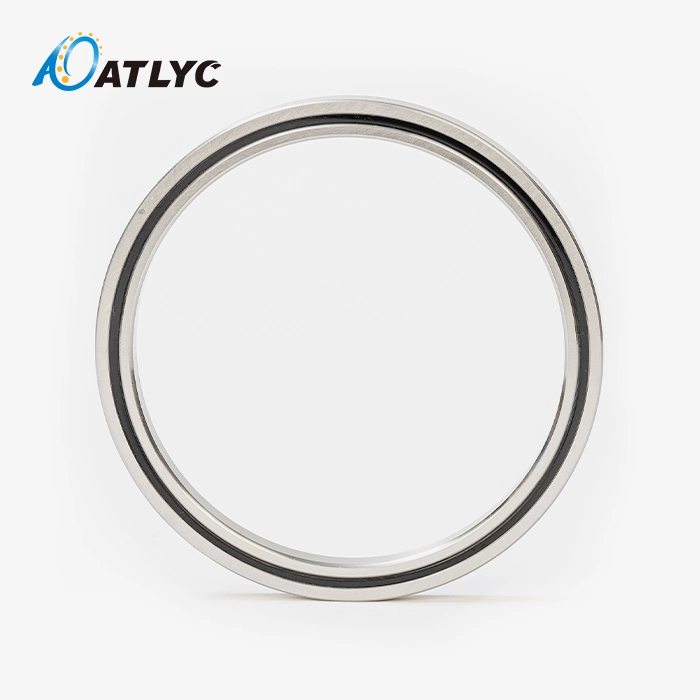
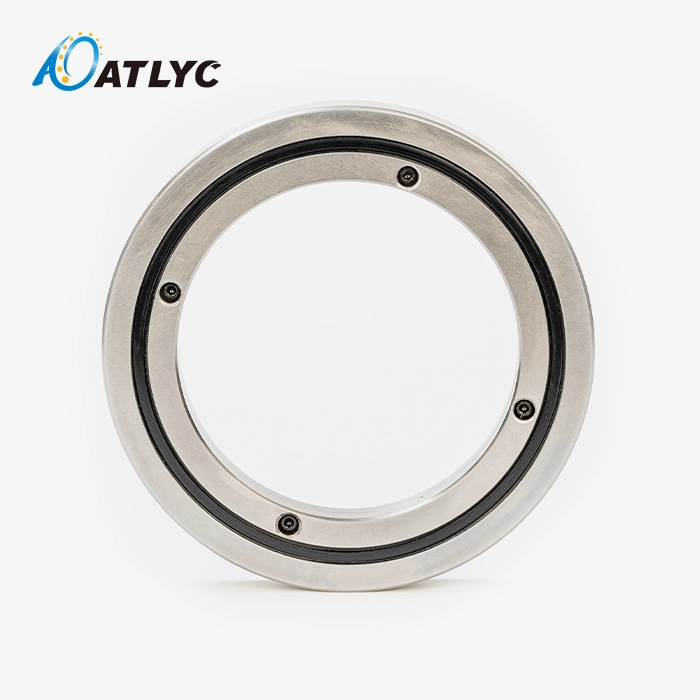
The first step to feeling good about using RE crossed roller bearings is to understand what makes them different from traditional bearing types. These precise components include cylindrical rollers set at alternating 90° angles inside a single V-groove raceway, enabling a single unit to handle radial, axial, and moment loads concurrently. For OEMs, industrial equipment makers, and bearing distributors, the correct selection procedure includes load analysis, precision grade, material specification, supplier certification, and long-term supply dependability. This tutorial will clearly lead you through each step.
Understanding RE Crossed Roller Bearings: Fundamentals and Design Features
Internal Structure and Load Distribution
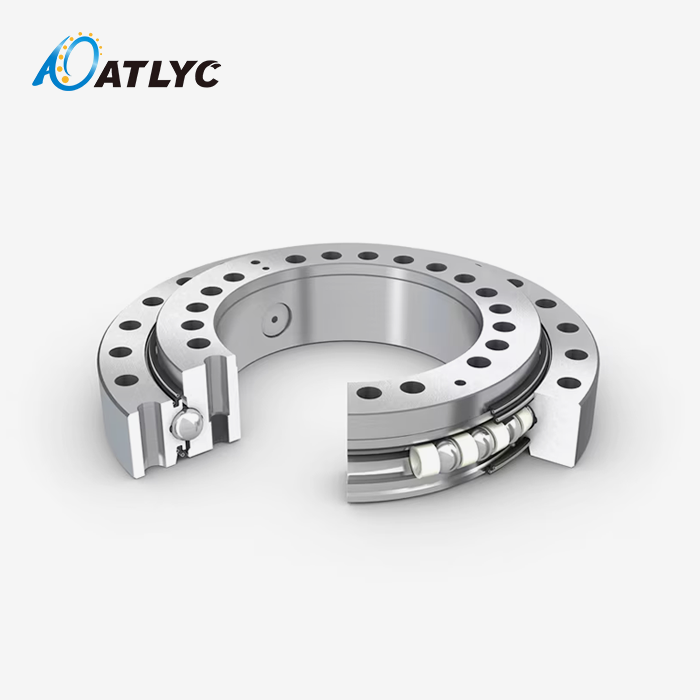
REM Crossed Roller Bearings contain an inbuilt outer ring and an inner ring divided into two halves. The rollers travel reciprocally; therefore, there is no need for double-bearing sets. This immediately reduces the weight and axial length of the unit. One RE series unit is three to four times stiffer than a conventional angular contact ball bearing of the same size. This is a recognized performance benefit documented in bearing engineering standards.
Key Material and Precision Specifications
Most of the RE Crossed Roller Bearings are manufactured from GCr15 high-carbon chromium bearing steel, which is heated to make the surface hardness 58-64 HRC. For areas prone to rust, variants constructed of stainless steel (SUS440C) are available. ISO tolerances are P5, P4, or P2 levels (precision classes). Runout accuracy is assessed in micrometers. This is highly crucial for robotic joints, CNC rotating tables, and medical imaging equipment.
| Specification | Standard Range |
|---|---|
| Precision Grade | ISO P5 / P4 / P2 |
| Material (Standard) | GCr15 (58–64 HRC) |
| Material (Corrosion) | SUS440C Stainless Steel |
| Load Types Supported | Radial, Axial, Moment |
| Rigidity vs. Angular Contact | 3–4× higher |
Sealing Options and Internal Clearance
The RE Crossed Roller Bearings are available as open, shielded, or sealed units in case of risk of contamination. The size of the blowback is governed either by the internal clearance or by the negative clearance created by preloading. In automated jobs where positional precision directly correlates to product quality, zero-backlash preload is the standard.
Comparing RE Crossed Roller Bearings with Other Bearing Types: Making the Right Choice
RE Series vs. Ball Bearings
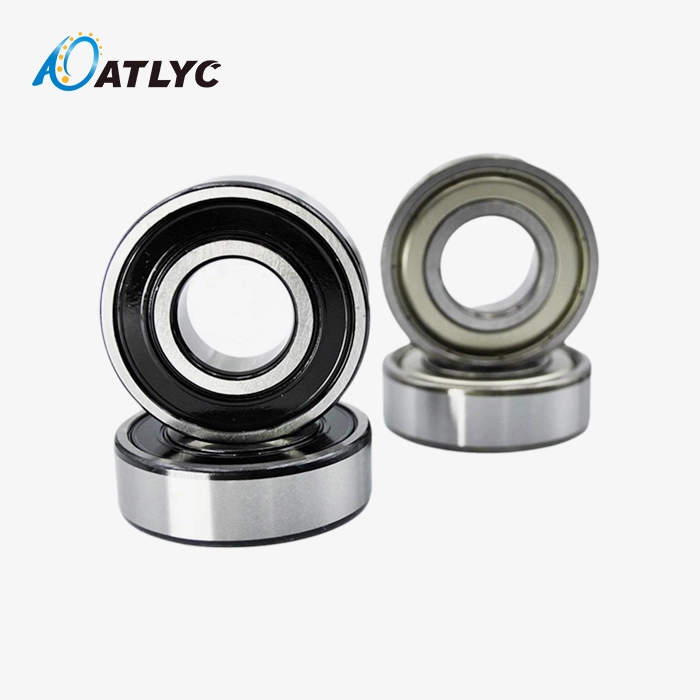
Standard deep groove ball bearings are good at handling low to moderate radial loads but not combination or moment loads. RE Crossed Roller Bearings are much superior in rigidity and in adapting to diverse load directions than others. This makes them the ideal solution if a compact assembly has to withstand several directional stresses with no deflection.
RE Series vs. Slewing Rings and Cylindrical Roller Bearings
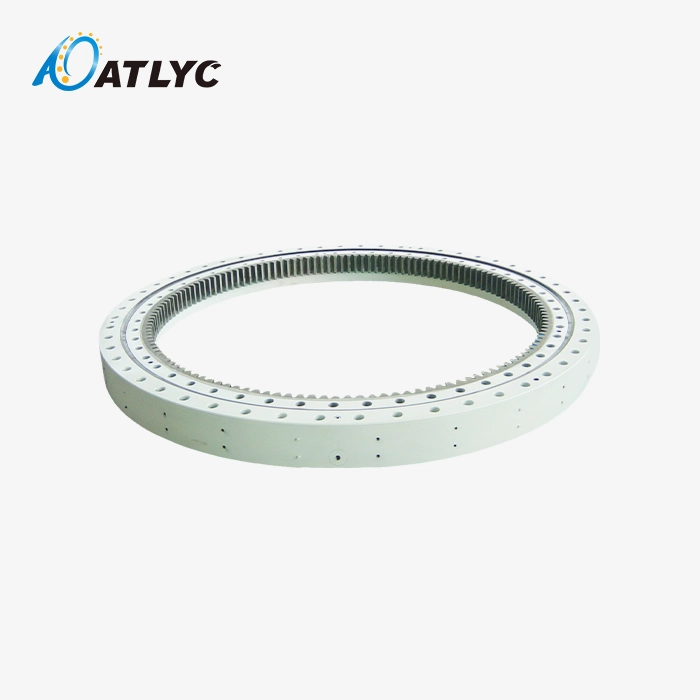
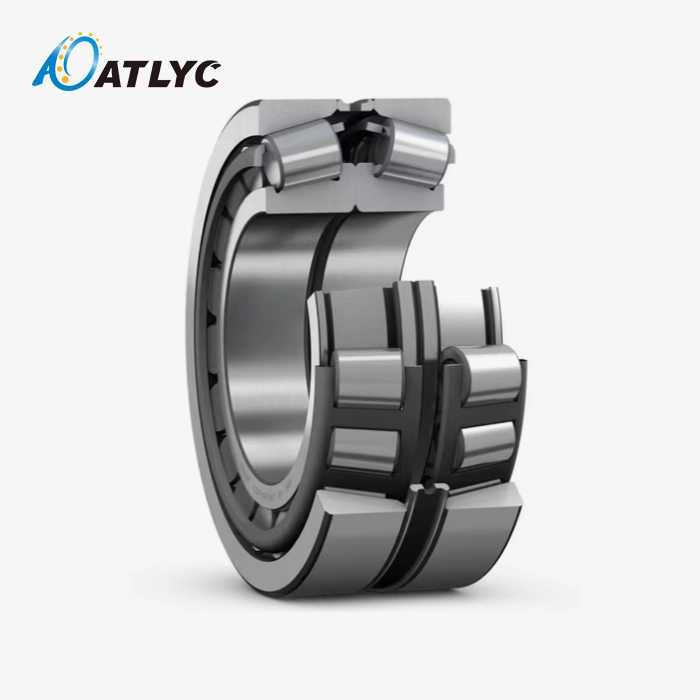
Turntable bearings are ideal for low-speed, big-diameter applications like solar trackers or cranes. RE Crossed Roller Bearings use far less radial space and are capable of carrying the same amount of moment load at higher levels of precision. Cylindrical roller bearings work effectively for large radial loads but cannot support axial or moment loads without add-ons. The RE design overcomes this challenge in one unit.
Application Fit Summary
The sort of bearing you require will depend on the load profile, how much space you have, and how precise you need the bearings to be. Here’s a side-by-side comparison to help you decide:
| Application Scenario | Recommended Bearing Type | Reason |
|---|---|---|
| Robotic joint with combined loads | RE Crossed Roller Bearing | Multi-load, compact, zero backlash |
| Heavy radial load, low speed | Cylindrical Roller Bearing | Cost-efficient for single-axis radial |
| Large-diameter turntable | Slewing Ring | Size and torque capacity |
| Light radial load, high speed | Deep Groove Ball Bearing | Low friction at speed |
| High-precision CNC rotary table | RE Crossed Roller Bearing | Rigidity and positional accuracy |
Practical Criteria and Metrics for Selecting the Right RE Crossed Roller Bearing
Matching the bearing’s rated performance to how it will be utilized is key to making the appropriate decision. Incorrect size or clearance in production may lead to early failure, warranty claims, and unscheduled downtime, all of which are costly.
The key considerations for purchasing engineers when selecting a supplier before agreeing to a specification are:
Static and Dynamic Load Ratings (C0 and C): Check that the bearing’s rated capacity surpasses the total load you’ve calculated with an appropriate safety factor, often 1.5× or more for industrial gear.
Moment load capacity: The RE crossed roller bearing is certified for moment loads specifically. Compare this rating to the maximum offset load condition for your application, particularly in cantilevered assemblies.
Dimensional envelope: Make sure bore diameter, outside diameter, and breadth will suit your housing and shaft without expensive redesign.
Required precision: P5 for general automation; P4 and P2 for semiconductor equipment and precise measurement devices.
Preload or clearance class: Negative clearance (preload) removes backlash from servo-driven systems; normal clearance is appropriate for situations where some play is allowed.
These variables directly affect the quality and service life. If you match them precisely at the design stage, you will not need to make costly revisions later.
Evaluating Supplier Certifications
At the very least, a qualified RE crossed roller bearing supplier should be certified by ISO 9001 and IATF 16949. Throughout the production cycle, these standards control how processes are consistent, how they can be tracked, and how defects are handled. IATF 16949 compliance is a must for OEM supply chains in the automotive and industrial sectors. Before signing a long-term supply deal, you should always ask for proof and make sure it is still legal.
Balancing Cost and Performance
). Take into account how long the bearings will last, how often they need to be replaced, the cost of fitting work, and the cost of downtime. A cheaper option with less consistent standards and less frequent service intervals is likely to have a higher total cost of ownership than a crossed roller ring bearing with verified precision grades and approved manufacturing.
Procurement Insights: Where and How to Source RE Crossed Roller Bearings Effectively
Identifying the Right Manufacturer or Supplier
If you want to acquire RE Crossed Roller Bearings, you should only contact manufacturers who can prove that they can create the bearings and provide experienced assistance. Established in 2010, Luoyang Auto Bearing Co., Ltd. (ATLYC) has evolved from one workshop to six manufacturing facilities in the last 15 years. It presently has 120 professional personnel doing manufacturing, research and development, quality control, and assembly. This firm is ISO 9001 and IATF 16949 certified and has acquired personnel from the US, Germany, South Korea, Russia, Iran, and Turkey.
Understanding MOQs, Lead Times, and Customization
Look into minimum order amounts and typical wait periods before signing a supply agreement. Good firms that manufacture crossed roller bearings will provide regular catalog sizes, as well as unique requirements such as differing bore diameters, different coatings, or differing preload classes. Make sure your supplier has documented their ability to assist with non-standard engineering demands.
After-Sales Support and Supply Continuity
Unit pricing isn’t the whole story. Check how well a supplier has performed in the past in terms of on-time delivery, response to quality claims, and technical communication. It makes it simpler for customers in North America and Europe and reduces variability in lead times when manufacturers have export teams and expertise in shipping items all over the globe.
Case Studies and Best Practices for Confident RE Crossed Roller Bearing Selection
Robotics Joint Assembly: Compact Load Management
A collaborative robot manufacturer reduced the weight of a joint assembly by 22% by replacing two bearings with a single RE crossed roller bearing. The preloaded unit maintained its positional consistency of ±2 arcseconds throughout cycle moment loading. This is something that regular ball bearing setups couldn't perform in the same situation.
CNC Rotary Table: Accuracy Under Cutting Forces
An OEM of machine tools that purchased P4-grade RE Crossed Roller Bearings saw an improvement in part roundness error after switching from angular contact pairs. The single-unit construction made assembly simpler, had less axial runout, and lowered installation time by around 30 minutes per unit.
Lessons from Common Procurement Errors
Most individuals make sourcing blunders by selecting just on the basis of pricing, without checking the accuracy grade, or missing the processes of supplier audit. These errors lead to more frequent replacement of bearings than expected and thus increase the overall manufacturing cost. Most of these hazards may be avoided by having a formal supplier qualification checklist before the first purchase.
Conclusion
Choosing the ideal RE Crossed Roller Bearings means making sure that the load ratings, accuracy grades, and size constraints are all correct for your application. It’s also crucial to purchase from a producer that can demonstrate regular quality, certification compliance, and a constant supply of items. The RE series provides a proven path to high stiffness bearing performance for robotics, automation, and industrial machines. It is preferable to be organized when completing a technical evaluation and seller qualification. This will lead to increased procurement trust and long-term success.
FAQ
1. What is the main difference between RE crossed roller bearings and standard ball bearings?
Because their rollers move back and forth, RE Crossed Roller Bearings can handle radial, axial, and moment loads all at the same time. Most of the time, standard ball bearings can only handle rotational loads and not much else. RE series bearings are the technically stronger choice for combined-load uses that need to fit in small areas.
2. How do I determine the right precision grade for my application?
The ISO P5 grade is good for most types of automation and large machinery. High-precision CNC machines and servo-driven systems use the P4 type. P2 grade is used to make accurate tools and semiconductors. Choose based on how accurate you need the position to be for your system.
3. Can RE crossed roller bearings be customized for non-standard dimensions?
Yes. Good makers let you change the width of the bore, the shape of the outer ring, the preload class, and the way the seals are set up. Before asking for non-catalog specifications, make sure you know if your provider can provide engineering help.
4. What certifications should I require from my bearing supplier?
ISO 9001 is a standard for managing quality in general. IATF 16949 is the standard for the automotive industry that covers process traceability and preventing defects. Together, these two certificates show that the maker can meet the needs of industrial-grade supply.
5. How do RE bearings compare to slewing rings for rotary table applications?
REM Crossed Roller Bearings work well with small, precise rotating tables that need to have low runout and moment load capacity in a small space. If you don't care about size, slewing rings work best for heavy-load, large-diameter turntable applications.
Get Precision RE Crossed Roller Bearings from ATLYC — Your Trusted Manufacturer
ATLYC (Luoyang Auto Bearing Co., Ltd.) has been selling ISO 9001 and IATF 16949 RE Crossed Roller Bearings to businesses in the US, Germany, and other places for 15 years. No matter if you need standard catalog sizes or a specific RE crossed roller bearing specification, our engineering team is ready to help you with your order from the quote stage to the delivery stage. Please email us at auto@lyautobearing.com if you need more information or a price quote.
References
1. Harris, T. A., & Kotzalas, M. N. — Rolling Bearing Analysis: Essential Concepts of Bearing Technology, Taylor & Francis, 2006.
2. ISO 492 — Rolling Bearings — Radial Bearings — Dimensional and Geometrical Tolerances, International Organization for Standardization, 2014.
3. IATF 16949 — Quality Management System Requirements for Automotive Production and Relevant Service Parts, IATF, 2016.
4. Hamrock, B. J., Schmid, S. R., & Jacobson, B. O. — Fundamentals of Machine Elements, McGraw-Hill, 2005.
5. Palmgren, A. — Ball and Roller Bearing Engineering, SKF Industries / Burbank, 1959.
6. ISO 76 — Rolling Bearings — Static Load Ratings, International Organization for Standardization, 2006.
Learn about our latest products and discounts through SMS or email