- English
- French
- German
- Portuguese
- Spanish
- Russian
- Japanese
- Korean
- Arabic
- Greek
- German
- Turkish
- Italian
- Danish
- Romanian
- Indonesian
- Czech
- Afrikaans
- Swedish
- Polish
- Basque
- Catalan
- Esperanto
- Hindi
- Lao
- Albanian
- Amharic
- Armenian
- Azerbaijani
- Belarusian
- Bengali
- Bosnian
- Bulgarian
- Cebuano
- Chichewa
- Corsican
- Croatian
- Dutch
- Estonian
- Filipino
- Finnish
- Frisian
- Galician
- Georgian
- Gujarati
- Haitian
- Hausa
- Hawaiian
- Hebrew
- Hmong
- Hungarian
- Icelandic
- Igbo
- Javanese
- Kannada
- Kazakh
- Khmer
- Kurdish
- Kyrgyz
- Latin
- Latvian
- Lithuanian
- Luxembou..
- Macedonian
- Malagasy
- Malay
- Malayalam
- Maltese
- Maori
- Marathi
- Mongolian
- Burmese
- Nepali
- Norwegian
- Pashto
- Persian
- Punjabi
- Serbian
- Sesotho
- Sinhala
- Slovak
- Slovenian
- Somali
- Samoan
- Scots Gaelic
- Shona
- Sindhi
- Sundanese
- Swahili
- Tajik
- Tamil
- Telugu
- Thai
- Ukrainian
- Urdu
- Uzbek
- Vietnamese
- Welsh
- Xhosa
- Yiddish
- Yoruba
- Zulu
SX011814 Cross Roller Bearing for High Rigidity Applications
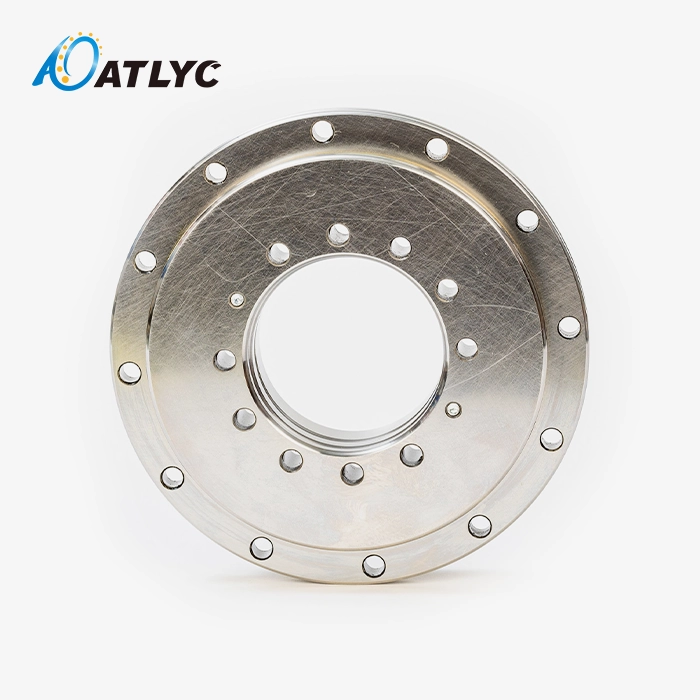
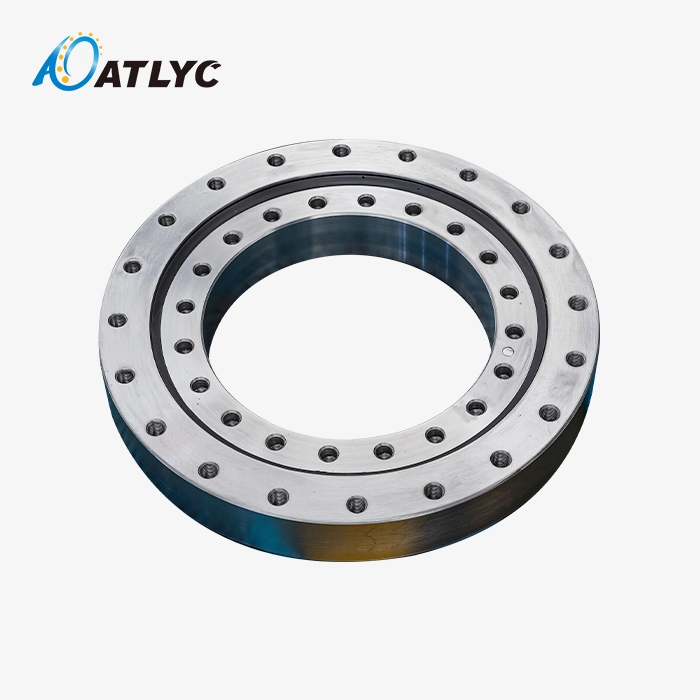
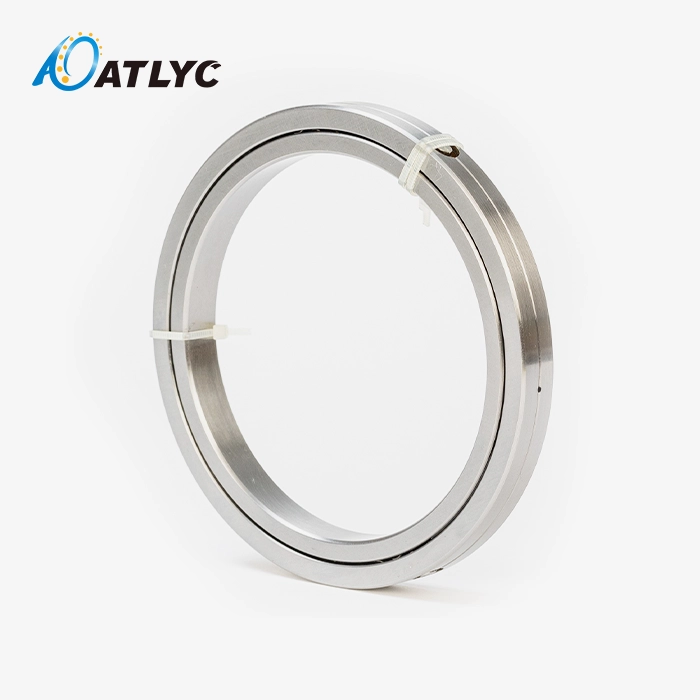
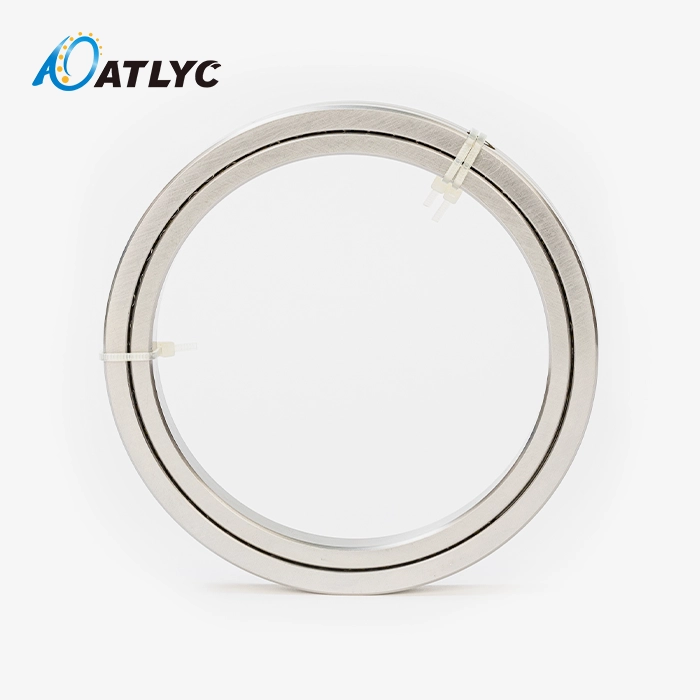
The SX011814 cross roller bearing is the best choice for engineers who need to control precise motion and handle loads in more than one direction in a small package. This very thin, very accurate bearing is part of the SX standard line. It has a split outer ring held in place by three locking rings and an inner ring that is built in and designed to rotate. Crosswise, the cylinder-shaped rollers are set at 90-degree angles within V-groove raceways. Spacers are placed between them to prevent wear and friction. Because of its unique shape, the bearing can handle radial, axial, and moment loads all at the same time. It is 3–4 times stiffer than regular ball bearings while taking up almost no room.
Understanding SX011814 Cross Roller Bearing and Its Core Advantages
Cross roller bearings are the result of decades of progress in making precise motion systems work better. Since we started ATLYC in 2010, we've seen how the development of these parts has changed industrial robotics and the efficiency of production.
Fundamental Design Architecture
The SX011814 has a unique way of building its structure that makes it stand out in the bearing business. Cross-roller design puts cylinder-shaped rollers at right angles to each other every 90 degrees, making line contact surfaces instead of point contact. This design choice directly meets the stiffness needs that purchasing engineers have when they are choosing parts for robotic joints or spinning tables. The split outer ring design lets you precisely change the clearance and pressure while the part is being put together. The outer ring halves are held together by three fastening rings, and the complete inner ring keeps the rings centred and rotates accurately. Precision-molded spacers separate each roller from the ones next to it, keeping them from touching, which would cause friction and heat. Looking at the cross-section of the bearing, you'll see that this setup makes load lines that cross each other, which effectively spreads forces across the raceway surfaces.
Material Excellence and Manufacturing Standards
There are strict rules about what materials you can use and how to heat them when making the SX011814. A high-carbon chromium steel called GCr15 and GCr15SiMn is used. It is heated in a controlled way to make the surface hard (HRC 60–64). The material is very resistant to wear in this range of hardnesses, but it is still tough enough to handle shock loads. There are accuracy classes for the bearing ranging from P6 (standard) to P0, P5, P4, and P2 (ultra-precision). This is possible because the V-groove raceways are ground to less than a micron. Any business that makes car parts and wants to meet IATF 16949 standards needs to have this amount of physical control. We have a quality control system that is ISO 9001 and IATF 16949 approved. It makes sure that these standards are met by every batch of products.
Core Performance Advantages
For you to understand what makes the SX011814 Cross roller bearing special, you need to look at how it works. Its compact dimensions—70 mm inner diameter, 90 mm outer diameter, and only 10 mm width—provide exceptional rigidity while maintaining an extremely slim profile. This space efficiency solves a long-standing machine design challenge: achieving high rigidity without creating excessive bulk or weight.
Here are the core advantages that distinguish this bearing in industrial applications:
- Multi-directional Load Capacity: The crossed roller arrangement enables the bearing to handle radial forces, axial thrust, and tilting moments simultaneously. This eliminates the need for paired angular contact bearings or complex bearing arrangements, reducing assembly complexity and potential points of failure. In robotic wrist assemblies, this translates to fewer components, lower weight, and improved payload capacity.
- Superior Geometric Moment Rigidity: The line contact between rollers and raceways provides exceptional resistance to elastic deformation under moment loads. When a cantilevered load creates a tilting force, conventional bearings may deflect measurably, compromising positional accuracy. The SX series maintains its geometric integrity, ensuring that precision rotary tables in machining centers hold positioning accuracy within arc-seconds even during heavy cutting operations.
- Low Friction and Smooth Rotation: The roller-to-raceway contact generates lower friction torque compared to ball bearings under equivalent loads. The spacer-separated design ensures each roller maintains optimal positioning, preventing skidding and the associated wear patterns. This characteristic proves valuable in medical imaging equipment, where smooth, vibration-free rotation directly affects image quality.
- Excellent Runout Accuracy: Radial and axial runout—the wobble or deviation during rotation—remains within tight tolerances across the bearing's operational life. For measuring instruments and IC manufacturing devices, where sub-micron positioning accuracy determines product quality, this stability becomes a critical specification rather than merely a performance benefit.
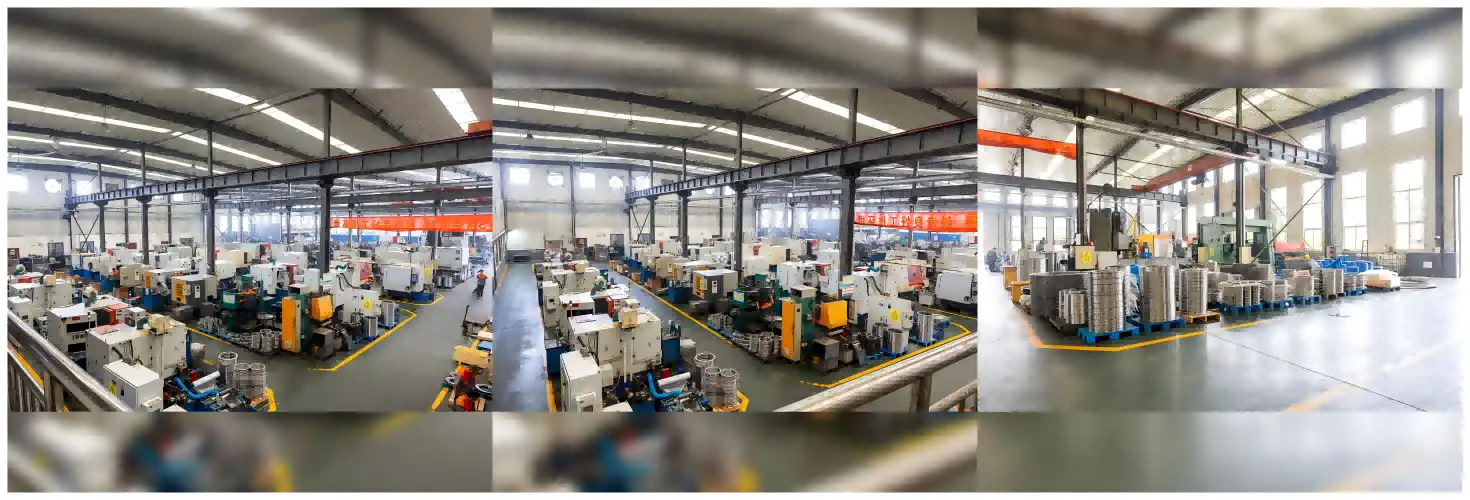
These advantages collectively address the pain points that mid-to-large OEMs encounter: balancing performance demands with space constraints while maintaining cost-effectiveness across production volumes. Our manufacturing capacity, built across six specialized workshops at our Luoyang facility, enables us to deliver these precision components with the consistency and scalability that global distributors require.
Comparing SX011814 with Other Bearing Options for Informed Procurement
Long-term choices about what to buy affect how well the equipment works and how much it costs to maintain. When comparing bearing choices, it's important to know not only the specs but also how those specs can be used in the real world.
SX Series versus Alternative Cross Roller Configurations
There are various kinds of cross roller bearings, and each one works best with a specific kind of joint. The SX series is one of a kind because its inner and outer rings are both joined together. Because of this, it works great when the inner ring needs to spin. On the other hand, the RB series has a solid outer ring and a split inner ring. This makes it better for cases where the outer ring needs to turn. The sectional height is what makes the SX011814 stand out from other models of the same size from other names. Before, parts that were 15-20 mm wide were needed to hold the same amount of weight as this bearing's 10 mm width. This difference can mean the difference between a system fitting the needed shape or needing to be rebuilt from scratch for robotic joint builders who are short on room.
Performance Comparison with Cylindrical and Tapered Roller Bearings
Most cylinder roller bearings work great when it comes to how much weight they can hold. On the other hand, you need different push bearings to deal with horizontal loads. Tapered roller bearings can handle many types of loads, but to handle moment loads best, they should be put back-to-back or face-to-face. All of these things are done by the cross roller bearing. A company that makes vertical cutting tools used to include paired angular contact ball bearings in their turning table systems to show how useful this feature is. For 40% less height, cross roller bearings were used instead of roller bearings. No longer did preloads wander happen during heat cycles, and maintenance times went from 2,000 to 8,000 hours. It became 45% cheaper to own something when the cost of work, less downtime, and longer service life were all taken into account. The cost of the parts that start the engine went up by about 30%.
Rigidity and Durability Analysis
Positional accuracy in precision equipment is closely related to rigidity, which is the resistance to movement under force. The crossed roller design gives "geometric moment rigidity," which is measured in Newton-meters for every microradian of displacement. This number for the SX011814 usually falls between 15,000 and 20,000 Nm/μrad, based on the pressure settings. For deep groove ball bearings of the same size, it's between 4,000 and 6,000 Nm/μrad. Wear resistance and fatigue life are both integral to the durability of the SX011814 Cross roller bearing. When properly heat-treated and operated within specified load limits, the bearing steel achieves an L10 life exceeding 20,000 hours in standard industrial robotic applications. This extended service life results from line-contact stress distribution, which keeps contact forces lower than those in point-contact designs under equivalent loads.
Decision Criteria for Engineering Teams
Selecting the appropriate bearing involves balancing multiple factors against application requirements. Rigidity requirements, space constraints, load characteristics, rotational speed, and environmental conditions all influence the optimal choice. The SX011814 performs best in applications where:
- A compact cross-section is mandatory
- Multi-directional loads exist simultaneously
- Rotational speeds remain moderate (typically under 1,000 RPM)
- High positioning accuracy is required
- Inner ring rotation is the primary mode
Alternative bearing types may prove more suitable when ultra-high speeds, extreme temperatures, or purely radial loading conditions dominate the application profile.
Procurement Guide: Where and How to Buy SX011814 Cross Roller Bearings
Securing a reliable supply of precision bearings requires understanding the supply chain landscape and establishing relationships with manufacturers who demonstrate production capability and quality consistency.
Sourcing from OEM Manufacturers versus Distributors
Two primary procurement paths exist: direct sourcing from manufacturers like ATLYC or purchasing through authorized distributors. Direct manufacturer relationships offer advantages when order volumes justify the engagement, providing access to technical support, customization capabilities, and typically better pricing for production quantities. Our facility in Luoyang has supplied cross roller bearings to OEMs across South Korea, the United States, Germany, Russia, Iran, and Turkey, building expertise in international logistics and quality standards across diverse markets. Authorized distributors provide value through local inventory, smaller order quantities, and consolidated purchasing across multiple component types. The key consideration is ensuring authenticity—counterfeit bearings represent a persistent risk in the industrial supply chain, with inferior materials and dimensional inaccuracies that compromise performance and safety.
Pricing Structures and Volume Considerations
The cost of precision cross roller bearings reflects the manufacturing complexity and material quality involved. Pricing for the SX011814 typically ranges from $45-$85 per unit, depending on accuracy class, order quantity, and additional specifications such as special coatings or seal configurations. Volume pricing structures generally offer breaks at 100, 500, and 1,000-piece quantities, with unit costs potentially decreasing 20-35% at higher volumes. Minimum order quantities vary by manufacturer and product specification. Standard configurations may have MOQs as low as 10-20 pieces, while custom specifications typically require 100-500 pieces minimums to justify tooling and setup costs. For procurement managers balancing inventory costs against supply security, understanding these thresholds enables strategic purchasing decisions.
International Logistics and Lead Times
Production lead times for standard SX011814 bearings typically range from 3-6 weeks, depending on current production schedules and order complexity. Custom specifications may extend to 8-12 weeks when special materials or dimensional modifications are required. Our manufacturing capacity across six specialized workshops enables flexibility in production scheduling, helping customers manage both planned production builds and urgent replacement requirements. International shipping involves multiple considerations. Air freight offers 5-7 day delivery to major industrial centers in the United States and Europe, ideal for urgent orders or high-value, low-weight shipments. Sea freight provides cost advantages for volume orders, with transit times of 25-35 days to US West Coast ports and 35-45 days to East Coast destinations. Understanding customs classification (typically HS code 8482.50 for cylindrical roller bearings) and documentation requirements prevents delays at import.
Quality Certifications and Warranty Support
ISO 9001 and IATF 16949 certifications represent baseline expectations for automotive and industrial equipment manufacturers. These certifications demonstrate systematic quality management and continuous improvement processes. Beyond certification, requesting inspection reports, material certifications, and dimensional verification data provides additional assurance. Warranty terms typically cover manufacturing defects for 12-24 months from the delivery date or 12 months from installation, whichever comes later. The warranty generally excludes failures from improper installation, inadequate lubrication, overloading, or operation outside specified parameters. Establishing clear warranty terms and technical support protocols during supplier selection prevents disputes and ensures rapid resolution when issues arise. As an SX011814 cross roller bearing manufacturer with 15 years of production experience, ATLYC maintains comprehensive quality records and offers technical consultation to ensure proper bearing selection and application. This support becomes particularly valuable when adapting designs or troubleshooting unexpected performance issues.
Installation, Maintenance, and Technical Support for SX011814 Bearings
Proper installation and ongoing maintenance directly impact bearing performance and service life. Precision components demand precision handling throughout their operational lifecycle.
Step-by-Step Installation Guidelines
Installing cross roller bearings requires attention to cleanliness, alignment, and mounting force distribution. Contamination represents the leading cause of premature bearing failure, making clean room or controlled environment assembly essential for optimal results. The installation process begins with a thorough cleaning of mating surfaces on shafts and housings. Any burrs, nicks, or dimensional irregularities must be addressed before bearing mounting. The integral inner ring typically receives a transition fit (h7 or js7 tolerance) on the shaft to ensure centering without excessive interference that could distort the raceway geometry. The split outer ring requires a clearance fit (H7 tolerance) in the housing to prevent binding that would restrict the ring halves from seating properly.
Lubrication Requirements and Practices
Proper lubrication creates the thin film that separates rollers from raceways, preventing metal-to-metal contact while minimizing friction. The SX011814 typically uses lithium soap base grease with extreme pressure additives for most industrial applications. The grease should fill approximately 30-40% of the bearing's free space—overfilling generates excessive churning resistance and temperature rise, while underfilling risks inadequate lubrication film formation.
Troubleshooting Common Issues
Bearing problems with the SX011814 Cross roller bearing typically manifest as noise, vibration, temperature increase, or unexpected wear patterns. Diagnosing the root cause requires systematic evaluation of symptoms and operating conditions. Grinding or clicking noises often indicate contamination or inadequate lubrication. Vibration may result from mounting surface irregularities, misalignment, or bearing damage. Temperature increases beyond normal operating range suggest excessive preload, lubrication problems, or overloading.
Access to Technical Documentation
Comprehensive technical resources empower engineering teams to specify, install, and maintain bearings effectively. Datasheets provide dimensional specifications, load ratings, speed limits, and mounting tolerances. CAD drawings in multiple formats (STEP, IGES, SolidWorks) enable integration into equipment designs. Installation manuals offer detailed procedures and best practices specific to bearing type and configuration.
Applications and Future Prospects of SX011814 Cross Roller Bearings
The versatility of cross roller bearings has expanded their application scope across multiple industries, each demanding reliable performance under distinct operating conditions.
Industrial Robotics and Automation
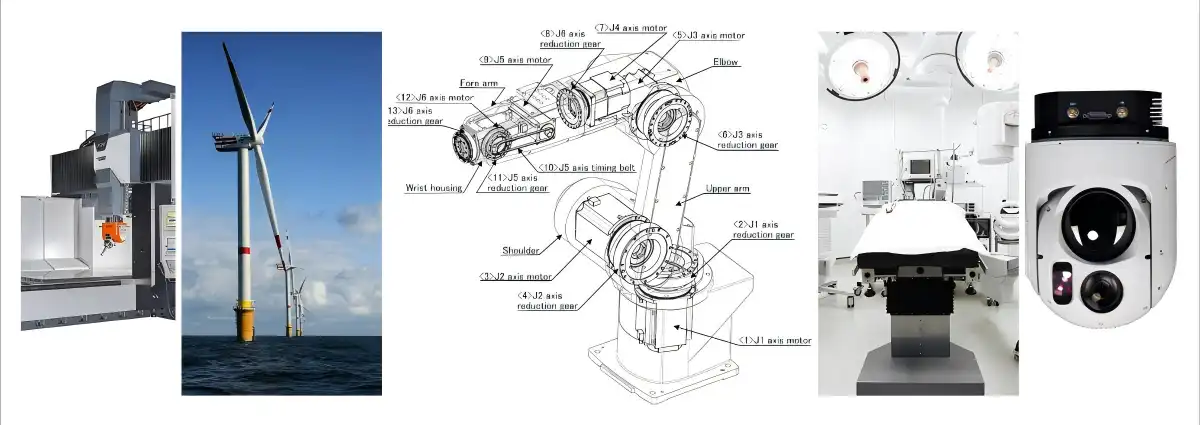
Robotic systems represent perhaps the most demanding application environment for precision bearings. The combination of rapid acceleration, repetitive motion, variable loads, and positioning accuracy requirements creates challenging operational conditions. The SX011814 serves in robotic wrist joints, shoulder assemblies, and rotary actuators, where its compact size and multi-directional load capacity enable designers to maximize payload capacity while maintaining positioning accuracy.
Precision Machine Tools and Manufacturing Equipment
Machining center rotary tables and indexing systems depend on bearing rigidity to maintain workpiece positioning accuracy during cutting operations. The forces generated during milling or turning create complex load combinations that would deflect less rigid bearing arrangements. Cross roller bearings in these applications directly influence the surface finish quality and dimensional accuracy of manufactured parts.
Medical Imaging and Diagnostic Equipment
CT scanners and other medical imaging systems require smooth, vibration-free rotation while supporting heavy, cantilevered gantry assemblies. The bearing must perform quietly in temperature-controlled clinical environments while maintaining positioning accuracy that directly affects image resolution. Cross roller bearings meet these requirements through their low-friction characteristics and structural rigidity.
Emerging Applications and Market Trends
The precision motion control market continues evolving, driven by automation expansion, miniaturization demands, and performance improvements. Several trends are shaping cross roller bearing development and adoption.
Conclusion
The SX011814 cross roller bearing represents a proven solution for applications demanding high rigidity, multi-directional load capacity, and compact dimensions. Its unique crossed roller arrangement delivers 3-4 times higher rigidity than conventional alternatives while occupying minimal space, addressing the core challenges that OEMs and industrial equipment manufacturers face in precision motion control. The bearing's ability to simultaneously handle radial, axial, and moment loads within a single unit simplifies assembly design, reduces component count, and improves overall system reliability. With proper selection, installation, and maintenance, these precision components deliver extended service life across demanding applications from robotic automation to medical imaging systems, supporting the performance and reliability that modern manufacturing operations require.
FAQ
What makes the SX011814 suitable for robotic joint applications?
The bearing's compact 10mm width, combined with its multi-directional load capacity, makes it ideal for robotic joints where space constraints are severe. The crossed roller design handles the complex combination of radial forces, axial loads, and tilting moments that occur during robotic arm movement, eliminating the need for multiple bearing arrangements. Its geometric moment rigidity maintains positioning accuracy even during rapid acceleration and deceleration cycles, directly supporting the repeatability specifications that modern collaborative robots require. The low friction coefficient minimizes torque requirements, extending motor life and improving energy efficiency.
How do I determine the appropriate accuracy class for my application?
Accuracy class selection depends on your positioning tolerance requirements and rotational speed. P6 and P0 classes suit general industrial applications where positioning accuracy of 0.01-0.02mm is acceptable. P5 serves precision machinery requiring 0.005-0.010mm accuracy. P4 and P2 classes are specified for ultra-precision applications like measuring instruments or semiconductor equipment, where sub-micron positioning is required. Higher accuracy classes involve additional manufacturing cost, so matching the specification to actual application requirements optimizes cost-effectiveness without unnecessarily over-specifying.
What are the primary causes of premature bearing failure?
Contamination accounts for approximately 40% of premature bearing failures, entering through inadequate sealing or during installation. Improper lubrication—whether inadequate quantity, wrong grease type, or extended intervals—causes another 30% of failures. Installation errors, including misalignment, excessive mounting force, or improper preload settings, contribute roughly 20%. The remaining 10% stems from overloading, operation beyond speed limits, or corrosion in harsh environments. Addressing these factors through proper handling, installation procedures, and maintenance protocols significantly extends bearing service life.
Partner with ATLYC for Reliable Cross Roller Bearing Supply
ATLYC has manufactured precision bearings since 2010, growing from a single workshop to a comprehensive six-facility operation employing 120 skilled professionals dedicated to production, quality assurance, and technical support. Our ISO 9001 and IATF 16949 certifications demonstrate a commitment to international quality standards that automotive and industrial OEMs require. We supply cross roller bearings to manufacturers and distributors across the United States, Germany, South Korea, and additional global markets, building long-term partnerships through consistent quality and reliable delivery. Contact our engineering team at auto@lyautobearing.com to discuss your SX011814 cross roller bearing requirements. As an established supplier with proven manufacturing capacity and technical expertise, we can support your procurement needs from initial specification through ongoing production supply.
References
1. Harris, T.A. & Kotzalas, M.N. (2006). "Rolling Bearing Analysis: Essential Concepts of Bearing Technology." CRC Press, Taylor & Francis Group.
2. ISO 492:2014. "Rolling Bearings - Radial Bearings - Geometrical Product Specifications (GPS) and Tolerance Values." International Organization for Standardization.
3. Weck, M. & Brecher, C. (2006). "Machine Tools Production Systems 3: Precision Engineering, Measurement and Testing." Werkzeugmaschinenlabor WZL, RWTH Aachen University.
4. Schaeffler Technologies AG & Co. (2019). "Rolling Bearings: Catalogue HR 1 - Principles, Calculations, Examples." Schaeffler Group Industrial Division.
5. Hamrock, B.J., Schmid, S.R., & Jacobson, B.O. (2004). "Fundamentals of Fluid Film Lubrication." Marcel Dekker, CRC Press.
6. Park, J.H. & Kim, D.E. (2018). "Precision Motion Control of Cross Roller Bearings in Industrial Robotics." Journal of Mechanical Science and Technology, Vol. 32, Issue 8, pp. 3845-3856.
Learn about our latest products and discounts through SMS or email