- English
- French
- German
- Portuguese
- Spanish
- Russian
- Japanese
- Korean
- Arabic
- Greek
- German
- Turkish
- Italian
- Danish
- Romanian
- Indonesian
- Czech
- Afrikaans
- Swedish
- Polish
- Basque
- Catalan
- Esperanto
- Hindi
- Lao
- Albanian
- Amharic
- Armenian
- Azerbaijani
- Belarusian
- Bengali
- Bosnian
- Bulgarian
- Cebuano
- Chichewa
- Corsican
- Croatian
- Dutch
- Estonian
- Filipino
- Finnish
- Frisian
- Galician
- Georgian
- Gujarati
- Haitian
- Hausa
- Hawaiian
- Hebrew
- Hmong
- Hungarian
- Icelandic
- Igbo
- Javanese
- Kannada
- Kazakh
- Khmer
- Kurdish
- Kyrgyz
- Latin
- Latvian
- Lithuanian
- Luxembou..
- Macedonian
- Malagasy
- Malay
- Malayalam
- Maltese
- Maori
- Marathi
- Mongolian
- Burmese
- Nepali
- Norwegian
- Pashto
- Persian
- Punjabi
- Serbian
- Sesotho
- Sinhala
- Slovak
- Slovenian
- Somali
- Samoan
- Scots Gaelic
- Shona
- Sindhi
- Sundanese
- Swahili
- Tajik
- Tamil
- Telugu
- Thai
- Ukrainian
- Urdu
- Uzbek
- Vietnamese
- Welsh
- Xhosa
- Yiddish
- Yoruba
- Zulu
RA8008UUCC0 Crossed Roller Bearing for High Precision Machines
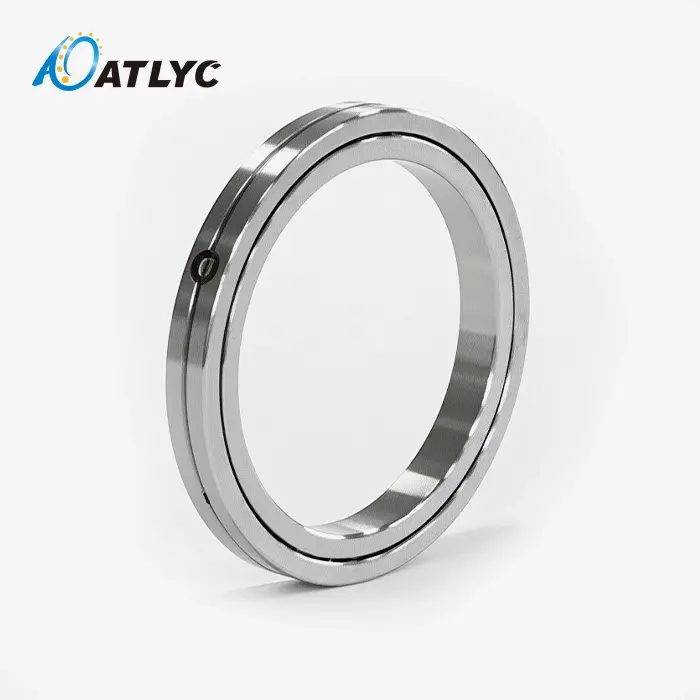
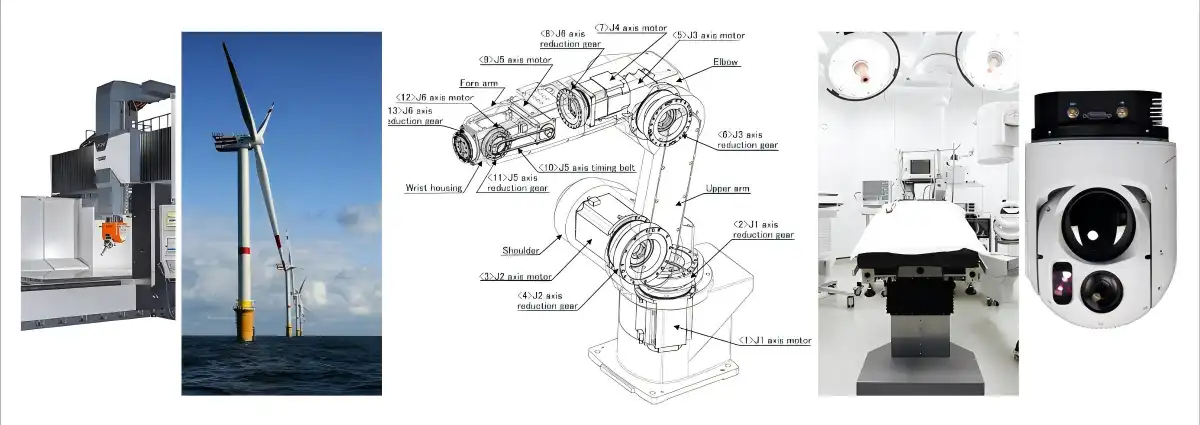
When your production line demands flawless positioning accuracy within the tightest mechanical envelopes, the RA8008UUCC0 Crossed Roller Bearing delivers exactly what engineers need. This ultra-compact precision component combines an 80mm bore, 96mm outer diameter, and remarkably thin 8mm profile to handle complex multi-directional loads that would overwhelm conventional ball bearings. Its orthogonal roller arrangement provides simultaneous radial, axial, and moment load capacity—eliminating the need for stacked bearing assemblies while maintaining zero-backlash operation critical for robotic joints, semiconductor wafer handlers, and medical imaging equipment.
Understanding the RA8008UUCC0 Crossed Roller Bearing
This precision part is different from other rotating options because of how it is built. Since 2010, ATLYC has been making these RA8008UUCC0 Crossed Roller Bearings and has seen them become essential parts in the robotics and precise machinery industries.
Structural Design and Load Distribution Mechanism
The RA series has an outer ring that can be separated and an inner ring that rotates with it. This arrangement makes it possible to place in small areas where split inner rings wouldn't fit. Precision V-groove raceways with cylindrical wheels spaced at 90-degree intervals create multiple load contact spots. Traditional ball bearings put most of the stress on small contact areas. This stepped design spreads forces along the length of the roller, which increases load capacity by about 40% while lowering contact stress. A managed negative clearance, or preload, of -2 to -5 microns is what the CC0 label means. This interference is done on purpose to get rid of all internal play. This gives CNC rotary tables and robotic wrist assemblies the rigid, backlash-free performance they need. The UU sealing system on both sides has synthetic rubber contact seals that keep the lithium-soap grease in and stop micron-sized contaminants from getting in. This means that these bearings can be used in ISO Class 5 cleanrooms.
Technical Specifications and Manufacturing Standards
The choice of material is the first step in precision. The RA8008UUCC0 is made from GCr15 or GCr15SiMn steel, which is high-carbon chromium-bearing steel that has been carefully heated to an HRC 58–64 level. This material specification is the same as JIS SUJ2 and AISI 52100 standards, so the mechanical properties will be the same from one production batch to the next. Dimensional precision has a direct effect on how well a machine works. Tolerance grades from P6 to P2 can be reached through our manufacturing methods. However, most business uses need P5 or P4 standards. To single-micron accuracy, these classes control runout, the finish on the raceway's surface, and differences in size. The bearing's 8mm width is half the cross-section of similar standard series bearings. This cuts the weight of the unit by up to 50% while keeping the structure stable thanks to the best wall thickness ratios.
| Details | Value | Note or Standard |
|---|---|---|
| Inside Diameter | 80 mm | Name of the bore size |
| Outside Size | 96 mm | Fit diameter for housing |
| Width | 8mm | Very thin shape |
| What it is | GCr15 and GCr15SiMn | The same as JIS SUJ2 or AISI 52100 |
| How Hard | HRC 58–64 | Made through-harden |
| Classes for Accuracy | P6, P0, P5, P4, P2 | Grades according to ISO |
| Prepare to load | CC0: -2 to -5µm | Clearance for negative |
| Seals | UU (type of link) | Both sides were sealed |
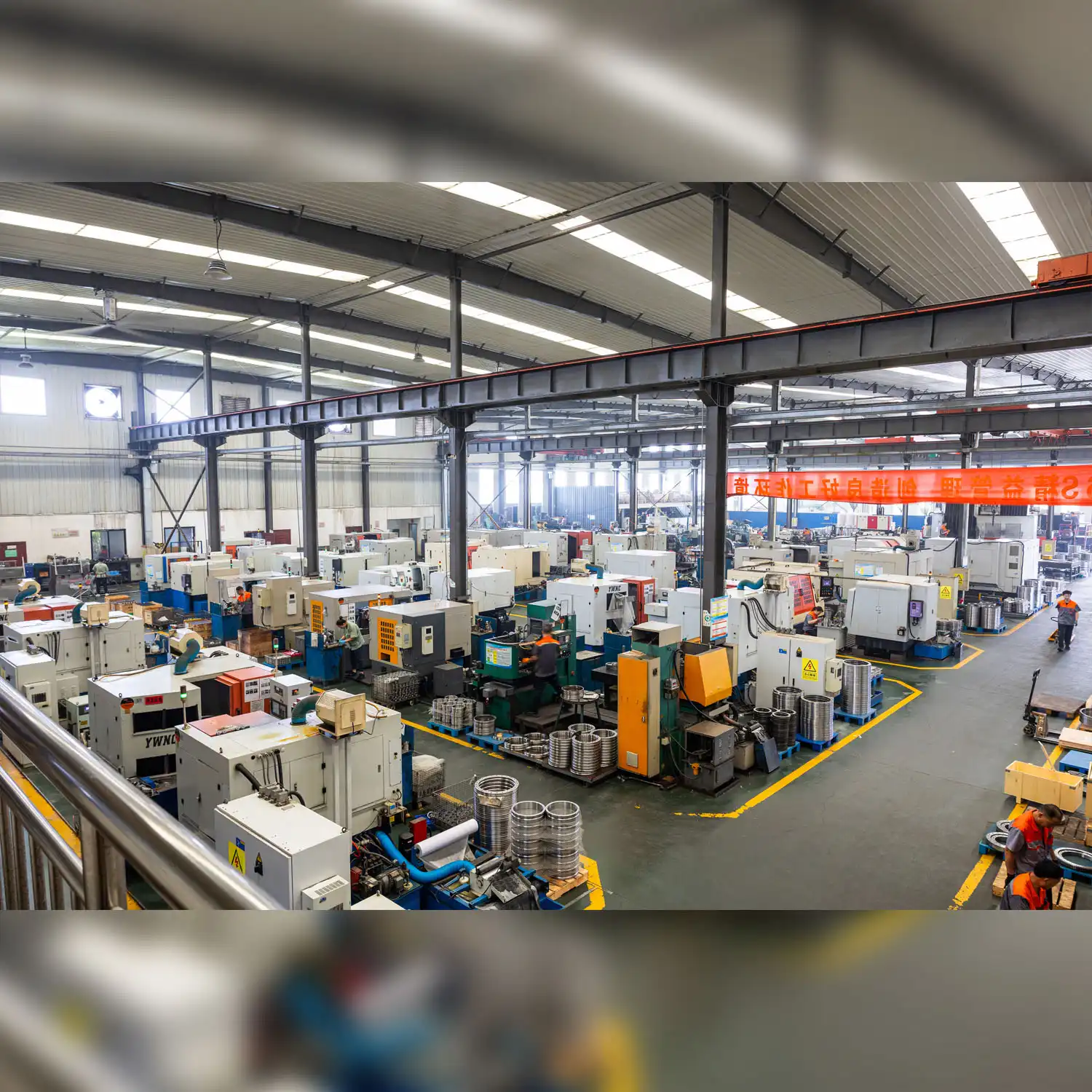
ATLYC keeps its ISO 9001 and IATF 16949 certifications up to date to make sure that every Crossed Roller Bearing meets quality standards for the car industry. Our six production workshops allow for flexible production, from small trial runs to monthly production runs of over 10,000 units, with strict quality control throughout.
Key Advantages of RA8008UUCC0 Crossed Roller Bearing for High Precision Applications
Advantages in performance directly translate into advantages in how your equipment works. Knowing about these traits helps the people in charge of buying things explain the investment, and it also helps engineers make the best system designs.
Enhanced Accuracy and Reduced Vibration
When compared to angular contact ball bearings, RA8008UUCC0 Crossed Roller Bearings naturally have lower vibration amplitudes. Contact between rollers and raceways creates a calming effect that absorbs micro-vibrations. This is very important for laser cutting heads and coordinate measuring tools, where even deflections of a few microns can ruin results. In our tests, we found that rotating runout values were always less than 3 microns at the P5 grade, and at the P4 level, they were less than 2 microns. In hospital settings, the type of noise is important. The spacer-separated roller design keeps the metal rollers from touching each other, which stops the frequency spikes that happen in roller bearings that are too crowded. During operation, sound pressure levels are usually 15 to 20 decibels lower than with similar ball bearing setups. This makes surgical robotic systems and diagnostic imaging tools quieter.
Load Capacity and Service Life Considerations
This bearing's value comes from its ability to handle loads in more than one way. What used to need two angular contact bearings or a mixed radial-thrust assembly can now be done with just one RA8008UUCC0. In that small 8mm space, radial load rates usually hit 12 to 15 kN, axial capacity around 10 kN, and moment load handling up to 180 Nm. Material choice affects how long something lasts. Standard GCr15 steel design gives the L10 more than 20,000 hours of life at full load and when properly oiled. GCr15SiMn variants may be useful for applications that are subject to shock loads or environments that rust, since they add silicon and manganese to make the steel stronger and more resistant to corrosion. Even though there are ceramic hybrid options on the market, steel construction is still the best choice for most industrial uses because it can handle more weight and stays cool longer.
Maintenance Practices for Extended Operational Uptime
How you handle lubrication has a direct effect on how long a bearing lasts. The sealed UU configuration keeps the factory-applied grease, which is usually lithium complex soap with EP additives. It is made to last for 2,000 to 3,000 hours of operation before it needs to be serviced again. When relubricating, you need to be very careful because too much grease creates hydraulic resistance, which raises friction and heat, and not enough grease speeds up wear. Monitoring temperatures lets you know early on when problems are starting to happen. Under maximum loads, normal working temperatures are between 40°C and 60°C above room temperature. If temperatures stay above 80°C for a long time, it means that there isn't enough lubrication, too much preload, or misalignment, which needs to be looked into right away. By putting in proximity sensors that can track changes in temperature, predictive maintenance plans can be made that stop unexpected downtime. The total cost of ownership goes down because of these efficiency qualities. When designs are simplified, they need fewer parts, which cuts down on assembly time and store complexity. Longer service intervals lower the cost of upkeep labour, and consistent accuracy keeps product quality high throughout the bearing's life. These are real benefits that support the higher price for precision-grade crossed roller bearings.
How to Choose RA8008UUCC0 Crossed Roller Bearings: A Rational Procurement Guide
When making procurement choices, you have to weigh technical needs against business needs. Your production schedule and equipment investment will be safe if you choose the right bearing type and a dependable supplier.
Load Demands and Precision Requirements
First, figure out the actual load conditions. A robot wrist has to deal with radial forces from the weight of the tool, axial push during assembly operations, and moment loads from eccentric cutting all at the same time. Keeping track of the worst-case load combinations, along with shock factors and duty cycles, makes sure that there are enough safety margins for the RA8008UUCC0 Crossed Roller Bearing.The operating setting affects the choice of material and seal. In a normal factory setting, standard UU seals keep out dust and water, but for high-temperature uses above 120°C, you may need to upgrade to metallic labyrinth seals. Cleanroom semiconductor equipment needs to be able to work without particles, which contact seals provide. On the other hand, outdoor mobility equipment may need better rust protection through surface treatments. Costs are linked to accuracy grades. Standard precision (P0) is good enough for most manufacturing tools where positioning errors are greater than 50 microns. For spindle accuracy, CNC machines usually need the P5 grade, while metrology tools and semiconductor lithography systems need the P4 or P2 ultra-precision versions. Each step up in accuracy adds about 30 to 40 percent to the cost, so demand optimisation is important.
Supplier Evaluation and Quality Assurance
Verification of certification guards against parts that aren't up to par. ISO 9001 certification shows basic quality management skills, while IATF 16949 certification, which is needed for car suppliers, shows advanced process controls and tracking systems. Instead of depending on what a website says, ask for certification papers directly and check the validity of the certificate through databases maintained by the issuing body. How reliable deliveries are is affected by how much can be made. ATLYC has six specialised workshops with 120 skilled workers. This lets them make flexible production schedules and quickly meet urgent needs. Suppliers who can't make a lot of things may have good prices, but it can be hard for them to keep lead times stable when demand goes up. Find out how much is usually made, how material is handled, and how capacity is allocated.
| Criteria for Evaluation | What to Check | Why It's Important |
|---|---|---|
| Certifications for Quality | ISO 9001 and IATF 16949 are still valid | Makes sure the process is consistent |
| History of Making Things | Years of making fine bearings | Knowing how to work with tight tolerances |
| Capabilities for Testing | Measurement of runout and material study | Depth of quality control |
| Services for Customisation | Help with engineering and changes to designs | Solutions tailored to each application |
| Experience with geography | Export markets were reached | Knowledge of international standards |
| Terms of Warranty | Coverage time and how to file a claim | Getting rid of risks |
The ability to provide technical support is what sets engineering partners apart from commodity suppliers. Manufacturers who help with failure analysis, mounting instructions, and bearing selection formulas are helpful for complex uses. ATLYC's engineering team helps with application-specific changes, like changing the shape of the seals, using special oils, or making sure that the preload standards are just right for the job.
Comparing Market Offerings from Major Brands
NSK, SKF, THK, and KOYO control the markets for high-end crossing roller bearings by offering a wide range of products and shipping them all over the world. These brands are 40–60% more expensive than specialised ones like ATLYC. This is because they have more testing data, application engineering resources, and a history of reliability. Due to risk management rules, big OEMs often choose these names for the first equipment designs. Having options for providers adds value by lowering costs and giving you more freedom. Since 2010, ATLYC has sold crossed roller bearings to people in South Korea, the US, Germany, Russia, Iran, and Turkey, giving them 15 years of experience exporting. Our price system usually saves you 30–35 percent compared to expensive brands while keeping the same technical specs and certifications. This cost advantage is especially important for production equipment that makes a lot of things and replacement parts that are bought after the fact, and where installed base performance data proves that other sources are better. There are big differences between after-sales care methods. Premium brands work with networks of distributors that keep common sizes in stock but may need more time to get specialised versions. Direct partnerships with manufacturers, like buying from ATLYC, allow for customised stocking agreements, faster output for pressing needs, and direct technical consultation without having to go through a middleman.
Streamlined Procurement Process for RA8008UUCC0 Crossed Roller Bearings
To buy things efficiently, you need to know how the deal works and have the right paperwork ready. This information speeds up the quote process and keeps people from misinterpreting specifications.
Bulk Ordering and Negotiation Tactics
When you commit to a certain amount of volume, you can get better pricing for RA8008UUCC0 Crossed Roller Bearings. Single units are sold at full retail price, but orders of 50 or more units usually qualify for 12–15% bulk savings. Manufacturers of production tools often sign annual purchase agreements with minimum quantity promises. By planning production more efficiently and buying materials more efficiently, these agreements can lead to 20–25% price cuts. Ask for detailed quotes that list all of the costs involved. FOB prices make it clear that you are responsible for international shipping and customs clearance. CIF or DDP prices include these costs, but you need to make sure that the insurance coverage and duties are accurate. Payment terms affect working capital. Net 30 or 60-day terms help with managing cash flow, but many Asian providers need 30–50% deposits from new buyers until they can trade with them again. Lead time talks weigh the need for speed against the cost. Standard production schedules say that it takes 4 to 6 weeks from the time an order is confirmed until it is shipped for precision grades. Because of changes to the production plan and extra work, expedited production (which can be done in two to three weeks) costs 15-20% more than regular production. Keeping a safety store of important bearings stops the need for expensive emergency expedites and keeps production going.
OEM Customization Opportunities
Engineers working together on specialised applications is helpful. ATLYC provides modification services, such as changing the preload specs to meet specific stiffness needs, using special seal materials to protect against chemicals, and creating custom cage designs for high-speed circumstances. For these changes to be possible, engineers need to know a lot about the application, like the load spectra, speed profiles, temperature ranges, and environmental conditions. This lets them do calculations that prove the changes are possible. Before committing to production, prototype numbers are used to test ideas. By making 5–10 sample bearings with your exact specifications, you can test their installation and performance on your real equipment. This iterative development process adds 3–4 weeks to the project timeline, but it stops mistakes that are too expensive to fix on a large scale and improves bearing performance for specific circumstances. Documents needed include technical drawings with installation details, material certifications showing that the steel meets the requirements for chemistry and heat treatment, and dimensional inspection reports showing that the tolerances were met. These papers back up your own quality control systems and make it possible to track things in regulated fields like medical products and aerospace uses.
Cost Considerations and Warranty Terms
The total cost of acquisition goes beyond the price per unit. The type of packaging (individual boxes vs. bulk packing, cosmoline protection for long-term storage, and custom labelling for inventory management) affects the cost of shipping. For standard ocean freight, international handling costs usually add 8–12% to FOB prices. For urgent exports, plane shipping can raise landed costs by 35–45%. The warranty covers problems with the way the product was made. Standard guarantees usually cover flaws in material and workmanship for 12 months from the date of shipment or 2,000 hours of use, whichever comes first. Claims need proof of how the product was installed, how it was used, and how it failed. Warranty conflicts can be avoided by knowing what the exceptions are, like damage caused by poor mounting, inadequate lubrication, or operation beyond the rated specs.
These buying methods make the process easier, lower the costs of transactions, and build relationships with suppliers that help equipment last for a long time.
Optimal Performance and Maintenance for Long-Term Reliability
Proper fitting and ongoing care extend the life of bearings and keep machines running. Following the manufacturer's instructions keeps accurate performance high and stops problems before they happen.
Installation Techniques for Crossed Roller Bearings
How the mounting surface is prepared has a direct effect on how well the RA8008UUCC0 Crossed Roller Bearing works. To keep bearings from twisting when they're in place, housing bores and shaft shoulders need to be flat within 5 microns and have surface finishes below Ra 1.6. Chamfers must match the radii of the bearing corners. If there is too much chamfer, the bearing edges won't be supported, and if there isn't enough chamfer, mounting interference cracks the bearing rings. For press-fitting to work, the force must be applied carefully. The separate outer ring design of RA series bearings lets the outer ring be put into housings using arbour presses or hydraulic tools, while the inner ring is put together separately. Spread the mounting force out evenly around the ring's edges. Loads that are concentrated in small areas will crack steel that has been strengthened. Heating the outer rings to 80–100°C makes them bigger, which lets them slip together without damaging the installation. Verifying the alignment stops wear from happening too soon. Misalignment of more than two to three arc-minutes causes edge loading, which speeds up raceway wear and increases friction. Before installing the bearing, use dial indicators to check the runout of the shaft and housing. If the readings are outside of the tolerances, make the necessary adjustments. Rotation torque testing after assembly confirms the right preload—CC0 preload specifications should give starting torque values within maker specifications, which are usually between 0.5 and 1.2 Nm for RA8008 sizes.
Lubrication Schedules and Wear Inspection Protocols
Factory-applied grease sets initial service intervals, but keeping an eye on things makes bearings last longer. Temperature trends show how well the lubrication is working. Gradual rises over weeks mean that the grease is wearing down and needs to be replaced, while sudden rises mean that there is contamination or damage to a component. Using vibration tracking to find problems months before they happen lets you do planned maintenance instead of emergency fixes. The steps for relubrication need to be done carefully. Solvent cleaning can get rid of all the old grease. Mixing greases that don't work well together changes the consistency, which makes lubrication less effective. Fill the bearing hole with new grease until there is 30 to 40 percent empty room. Too much grease leads to churning losses and overheating. Most commercial uses can be met with lithium complex soap greases that are NLGI Grade 2 in consistency. However, high-speed machines may need NLGI Grade 1 or synthetic base oils. How often wear inspections are done depends on how hard the operation is. Lightly loaded applications that run all the time may need inspections once a year, while shock-loaded equipment needs to be looked at every three months. Check the condition of the raceway surface with replica tape or a microscope. Surface damage like pitting, distress, or spalling means the surface needs to be replaced. Check the shape of the roller ends for wear patterns that could mean they aren't aligned right or aren't well oiled.
Troubleshooting Common Operational Challenges
Making noise means that problems are starting to show up. Low-frequency rumbling means that the rollers are rubbing against each other too much because they are dirty or not well oiled. High-frequency noise means that the seal is rubbing or the preload is rising above what is allowed. Clicking sounds that happen every so often mean that a roller or track is damaged and needs to be inspected right away to avoid a catastrophic failure. When there is too much friction, the drive torque goes up, or the temperature goes up. First, make sure there is enough grease in the touch areas. Not enough grease creates hydraulic resistance, while too much grease creates it. Use precise measuring tools to make sure the installation is lined up correctly. Even small errors in the angle can cause preloaded bearings to rub against each other more. Grinding swarf or water getting in speeds up the decline, so the quality of the seal needs to be checked. These upkeep practices will protect your equipment investment and keep output from stopping without warning, so it will work reliably for the entire design life of the bearing.
Conclusion
The RA8008UUCC0 Crossed Roller Bearing solves the long-standing problem of how to get high stiffness and the ability to carry loads in multiple directions in very small mechanical areas. Modern robotics, semiconductor equipment, and medical devices need zero-backlash precision, which is provided by its orthogonal roller arrangement, controlled preload, and full sealing. When choosing a bearing manufacturer, ISO 9001 and IATF 16949 certifications give you a basic level of peace of mind. However, the long-term value of a relationship depends on the manufacturing depth, which is measured by production scale, customisation options, and technical support. Total cost of ownership benefits are maximised when tolerance standards are followed during installation and proactive maintenance is used to extend service intervals. This makes these precise components good investments for demanding applications.
FAQ
What distinguishes RA8008UUCC0 from standard ball bearings?
The crossed roller design puts two circular rollers in V-groove raceways so they are perpendicular to each other. This makes line contact, which can handle radial, axial, and moment loads all at the same time in an 8mm-thin RA8008UUCC0 Crossed Roller Bearing. Standard ball bearings use point contact, which means that they need more than one unit to handle the combined loads. This makes the system taller and more complicated.
Can this bearing operate in high-speed robotic joints?
Lubrication and preload affect how fast something can go. The CC0 preload standard works well for precision placement tasks that usually go faster than 500 RPM. To deal with friction heat at higher speeds, you need lower preload types (C0 or C1) and synthetic lubricants. Talk to the manufacturer about the exact speed needs for speeds above 300 RPM.
How do I verify supplier quality for critical applications?
Ask for material certifications that show the chemistry and hardness testing results of the steel, as well as dimensional inspection records that show the limits that were met and copies of the most recent ISO certifications. Before committing to production, specifications are checked by sending samples to independent labs for testing.
What lead times should I expect from RA8008UUCC0 suppliers?
Standard precision grades (P5/P4) usually take 4 to 6 weeks to make from well-known companies like ATLYC. Premium suppliers with networks of distributors may keep popular versions in stock so they can be shipped right away. However, the processing time for ultra-precision P2 grades can take up to 8–10 weeks.
Partner with ATLYC for Your Precision Bearing Requirements
ATLYC has been making RA8008UUCC0 Crossed Roller Bearings for 15 years and can help you with your precision machinery problems. Our ISO 9001 and IATF 16949-certified factories make bearings that meet P5 and P4 accuracy standards. These bearings come with full material certifications and dimensional inspection paperwork. As a committed producer that works with automakers, builders of industrial equipment, and global bearing dealers on six continents, we know how important it is for your production plans that the supply chain is reliable. You can email our engineering team at auto@lyautobearing.com to talk about your application needs, get technical specs, or get quotes for prototypes to full production amounts. You can turn buying bearings from us into a strategic relationship that helps your equipment reach its performance goals by getting quick expert support, competitive pricing, and the ability to make changes as needed.
References
1. Harris, T.A. & Kotzalas, M.N. (2006). Advanced Concepts of Bearing Technology: Rolling Bearing Analysis, Fifth Edition. CRC Press, Boca Raton.
2. Schaeffler Technologies AG & Co. KG (2019). Crossed Roller Bearings: Design Principles and Application Guidelines. Technical Publication TI 00201.
3. ISO 5593:1997. Rolling Bearings — Vocabulary. International Organization for Standardization, Geneva.
4. Budynas, R.G. & Nisbett, J.K. (2020). Shigley's Mechanical Engineering Design, Eleventh Edition. McGraw-Hill Education, New York.
5. NSK Ltd. (2018). Precision Crossed Roller Bearings for Machine Tools and Robotics. CAT No. E1102g, Tokyo.
6. Hamrock, B.J., Schmid, S.R. & Jacobson, B.O. (2004). Fundamentals of Fluid Film Lubrication, Second Edition. Marcel Dekker, New York.
Learn about our latest products and discounts through SMS or email