- English
- French
- German
- Portuguese
- Spanish
- Russian
- Japanese
- Korean
- Arabic
- Greek
- German
- Turkish
- Italian
- Danish
- Romanian
- Indonesian
- Czech
- Afrikaans
- Swedish
- Polish
- Basque
- Catalan
- Esperanto
- Hindi
- Lao
- Albanian
- Amharic
- Armenian
- Azerbaijani
- Belarusian
- Bengali
- Bosnian
- Bulgarian
- Cebuano
- Chichewa
- Corsican
- Croatian
- Dutch
- Estonian
- Filipino
- Finnish
- Frisian
- Galician
- Georgian
- Gujarati
- Haitian
- Hausa
- Hawaiian
- Hebrew
- Hmong
- Hungarian
- Icelandic
- Igbo
- Javanese
- Kannada
- Kazakh
- Khmer
- Kurdish
- Kyrgyz
- Latin
- Latvian
- Lithuanian
- Luxembou..
- Macedonian
- Malagasy
- Malay
- Malayalam
- Maltese
- Maori
- Marathi
- Mongolian
- Burmese
- Nepali
- Norwegian
- Pashto
- Persian
- Punjabi
- Serbian
- Sesotho
- Sinhala
- Slovak
- Slovenian
- Somali
- Samoan
- Scots Gaelic
- Shona
- Sindhi
- Sundanese
- Swahili
- Tajik
- Tamil
- Telugu
- Thai
- Ukrainian
- Urdu
- Uzbek
- Vietnamese
- Welsh
- Xhosa
- Yiddish
- Yoruba
- Zulu
RB cross roller bearing for heavy load
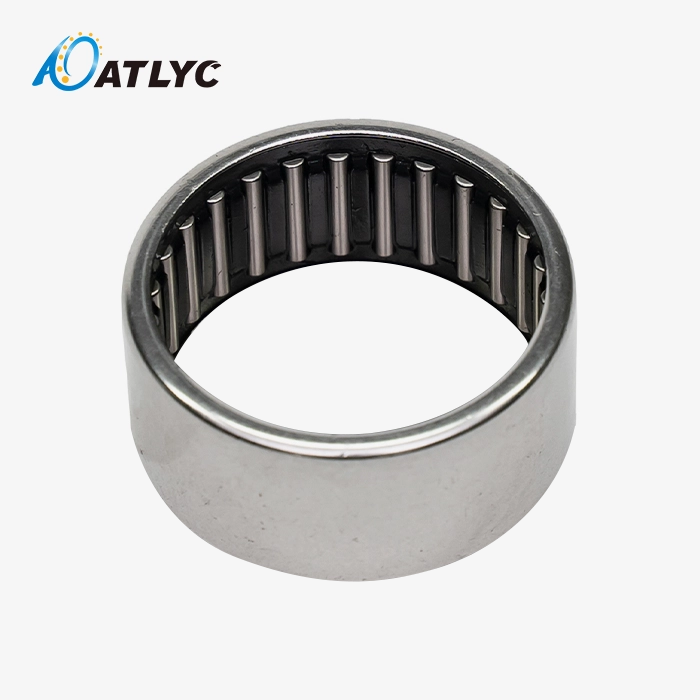
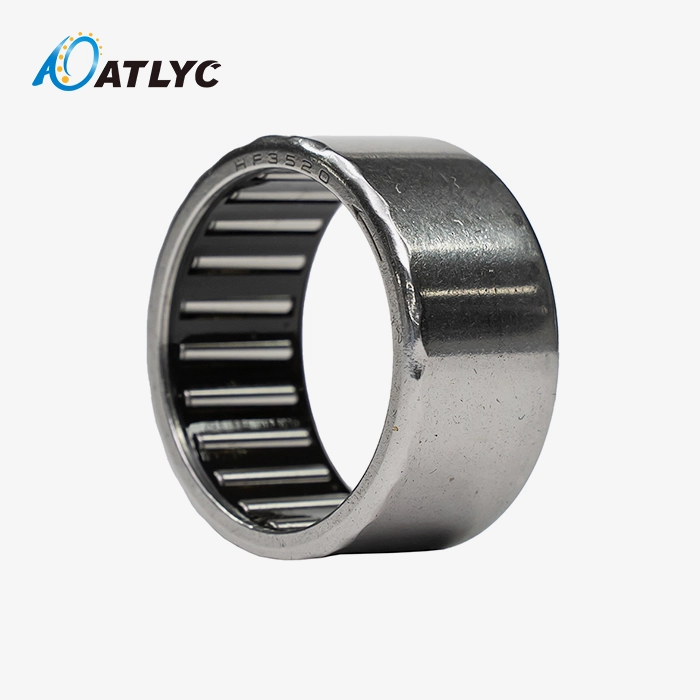
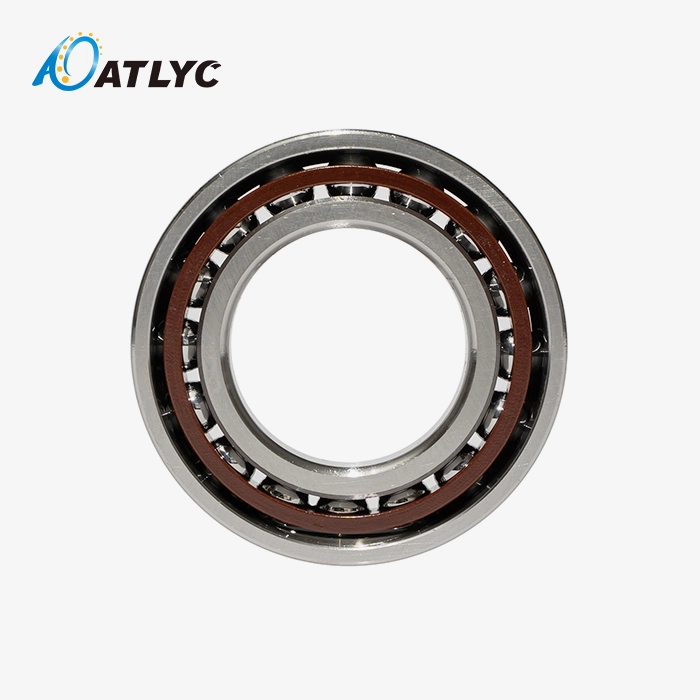
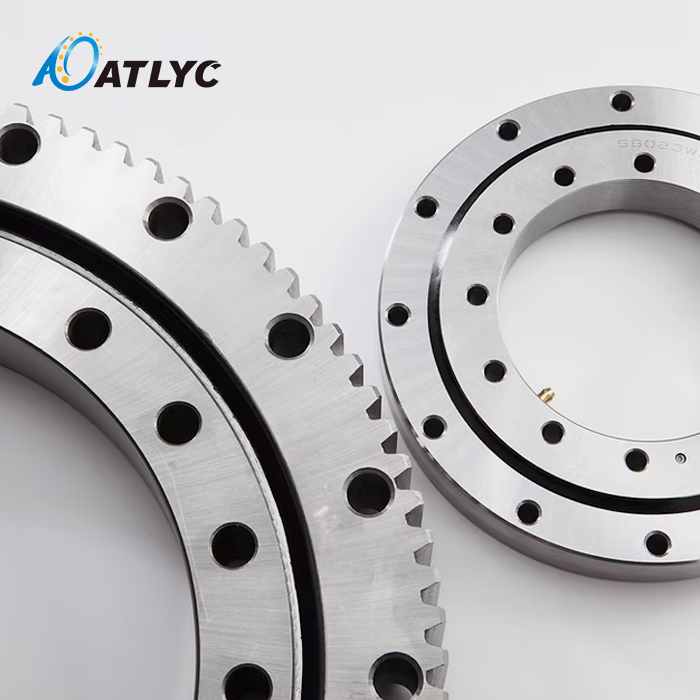
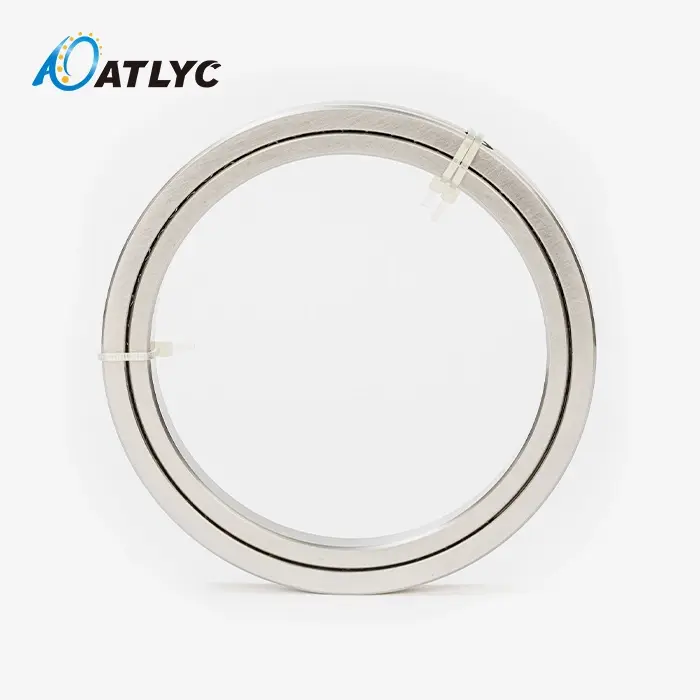
When your industrial machinery demands simultaneous handling of radial, axial, and moment loads without compromising precision, RB Crossed Roller Bearings emerge as the engineered solution. These specialized components feature an integral inner and outer ring configuration with cylindrical rollers arranged perpendicular to each other at 90-degree intervals. This crossed arrangement enables a single compact bearing to support multi-directional forces that would typically require multiple conventional bearing assemblies. With outer ring plug construction ensuring structural integrity and simplified installation, these bearings solve critical challenges faced by OEMs and equipment manufacturers: achieving exceptional load capacity within confined spaces while maintaining micron-level rotational accuracy essential for robotics, machining centers, and precision rotating equipment.
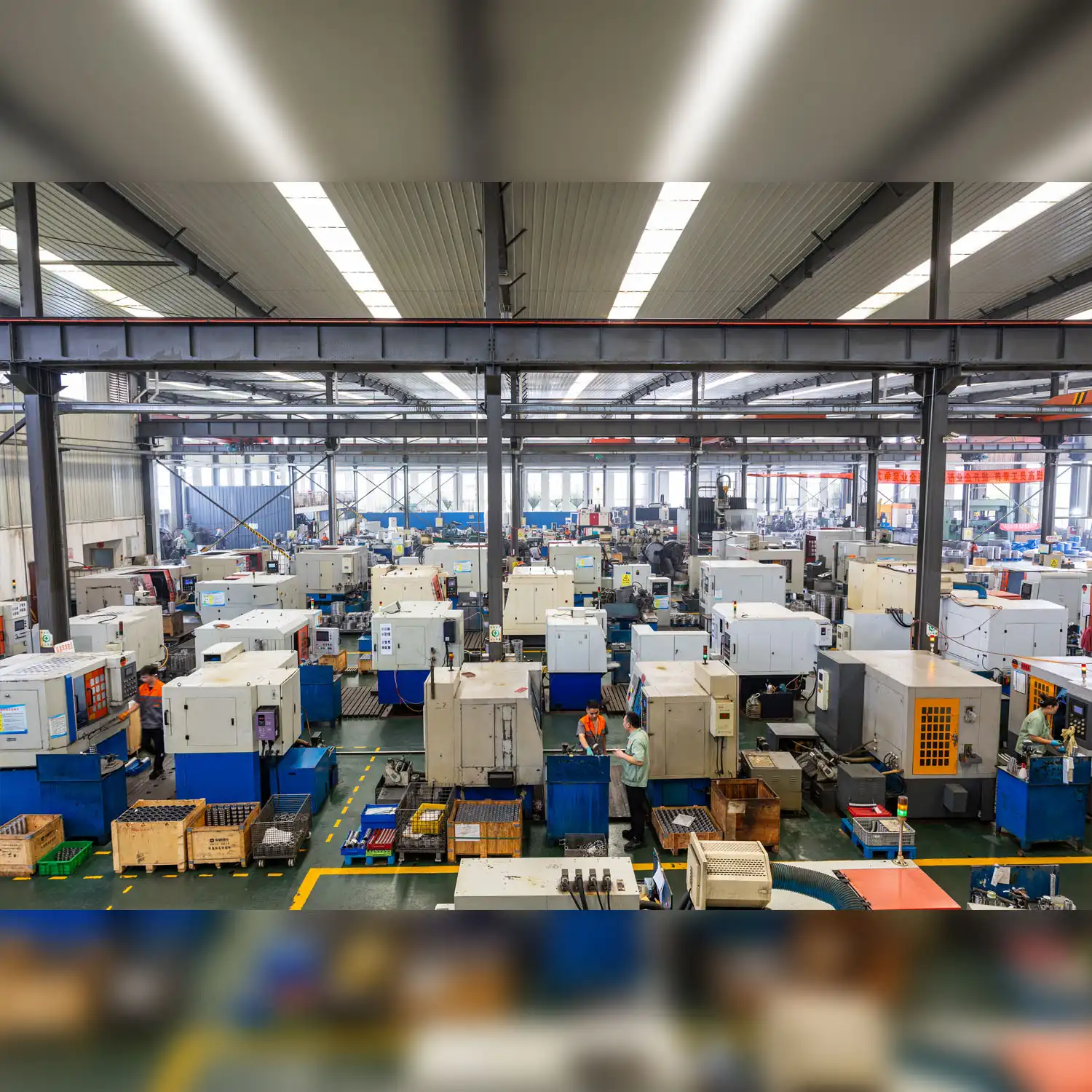
Understanding RB Crossed Roller Bearings and Their Design Features
The mechanical advantage of crossed roller bearing technology lies in its fundamental construction philosophy. Unlike traditional deep groove ball bearings that primarily handle radial loads or angular contact bearings requiring paired configurations, the RB series integrates multidirectional load support into a singular component through its distinctive roller orientation.
The Core Engineering Behind Crossed Roller Technology
At the heart of this design, cylindrical rollers sit in V-shaped raceways alternating at precise right angles. This orthogonal arrangement creates multiple load paths within one bearing assembly. When external forces act upon the bearing—whether from the side (radial), along the shaft axis (axial), or as a tilting moment—the crossed rollers distribute these stresses across their contact surfaces rather than concentrating them at point contacts as seen in ball bearings. The integral outer ring with plug design eliminates potential weakness at split joints while simplifying mounting procedures. We manufacture these rings from premium Gcr15 and Gcr15SiMn bearing steels, materials selected for their exceptional hardness after heat treatment and dimensional stability under cyclic loading. Advanced grinding processes achieve surface finishes and geometric tolerances that support precision classes from P6 (standard grade) through P3 (ultra-precision grade), meeting diverse application requirements from general industrial machinery to semiconductor manufacturing equipment.
Technical Specifications That Define Performance
Our RB series production range encompasses dimensions addressing nearly all industrial scale requirements. Inner diameters span from 20mm for compact robotic joints to 1100mm for heavy rotary tables in large machining centers. Corresponding outer diameters range from 70mm to 1500mm, with section widths between 12mm and 110mm. This dimensional versatility allows design engineers to optimize equipment layouts without compromising structural requirements. The low friction coefficient inherent to roller contact—combined with optimized internal geometry—enables smooth rotation even under substantial preload conditions. Runout accuracy specifications meet stringent standards, with total indicated runout (TIR) values controlled to single-digit microns in precision grades. This level of accuracy proves critical in applications like measuring instruments and IC manufacturing devices, where positioning errors directly impact product quality.
Material Science Supporting Heavy Load Applications
The selection of Gcr15 bearing steel aligns with international standards for high-carbon chromium steel (equivalent to AISI 52100 or DIN 100Cr6). Through controlled quenching and tempering processes, we achieve core hardness values between 58-65 HRC while maintaining adequate toughness to resist impact loads. Gcr15SiMn variants incorporate silicon-manganese alloying for enhanced hardenability in larger cross-sections, ensuring uniform material properties throughout heavy-section outer rings. This metallurgical foundation supports the bearing's ability to sustain contact stresses exceeding 4000 MPa under peak loading conditions—a requirement frequently encountered in robotic arm joints carrying tooling loads or rotary table indexing operations with workpiece masses exceeding several tons.
Comparing RB Crossed Roller Bearings with Other Bearing Types
Procurement decisions in heavy-load applications require a clear understanding of performance trade-offs between bearing technologies. While multiple bearing types can physically fit a given envelope, their operational characteristics differ significantly under real-world loading conditions.
Performance Metrics Against Ball Bearing Solutions
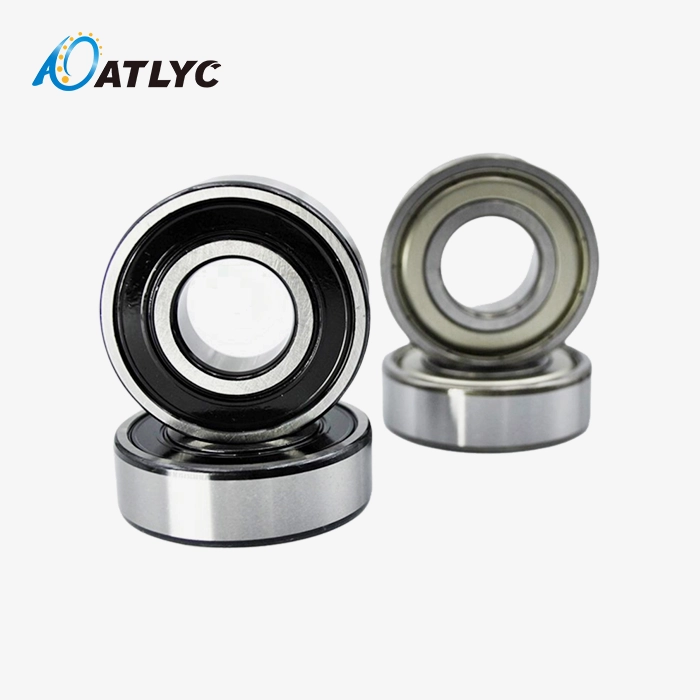
Standard ball bearings excel in high-speed applications with moderate loads, but their point contact geometry limits load capacity. A deep groove ball bearing of comparable size to a Cross roller bearing typically supports only 30-40% of the radial load capacity. When axial loads combine with radial forces, ball bearings require paired angular contact configurations with spacers and precise preload adjustment—adding complexity, cost, and axial space. The crossed roller approach consolidates these functions. Rigidity comparisons reveal even starker differences: the linear contact of rollers versus point contact of balls yields 2-3 times greater stiffness, directly translating to reduced deflection under moment loads. This rigidity advantage proves decisive in applications like robot joints, where positioning accuracy must remain consistent across the entire load spectrum from no-load indexing to full-load operation.
Structural Differences Versus Cylindrical Roller Bearings
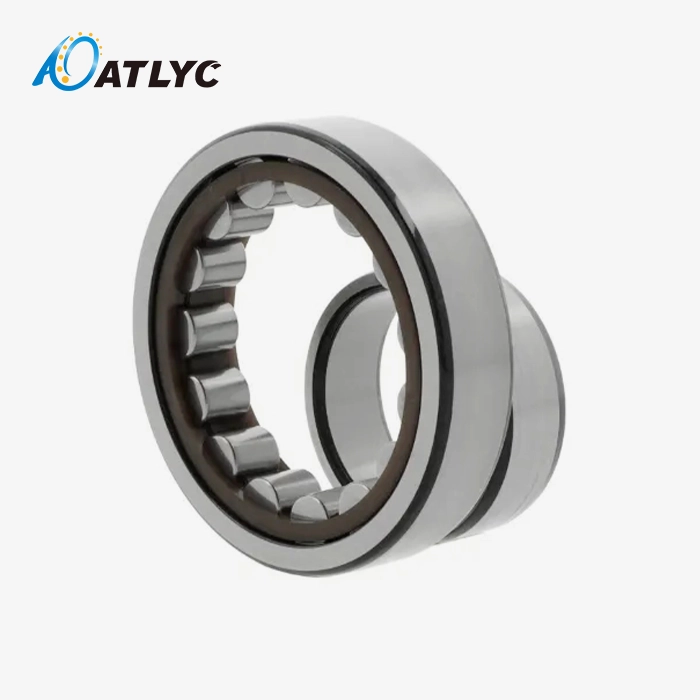
Cylindrical roller bearings handle substantial radial loads through full-line contact but require separate thrust bearings for axial loads—a design limitation that increases overall assembly complexity. The RB series eliminates this compromise through its crossed geometry, where alternating roller sets provide load paths for all force directions. In heavy machinery applications such as vertical machining center rotary tables, this becomes particularly valuable. The table must support both the workpiece weight (radial load when horizontally mounted) and the cutting forces that generate axial and moment loads. A single crossed roller bearing replaces what would otherwise require a cylindrical roller bearing plus thrust bearing combination, reducing assembly height by 40-50% while improving moment stiffness due to the wider effective load distribution.
Use Case Evaluation for Optimal Selection
The decision matrix for bearing selection should weigh several operational factors. Crossed roller bearings demonstrate clear advantages when applications demand high rigidity in compact envelopes, combined loading conditions, and precise rotational accuracy. Industrial robot joints represent an ideal use case—compact size requirements, multi-axis moment loads during manipulation, and positioning repeatability demands align perfectly with crossed roller capabilities. Conversely, high-speed spindle applications above 3000 RPM might favor ball bearing solutions despite lower load capacity, as the roller inertia and sliding friction components in crossed configurations become limiting factors at elevated speeds. Understanding these application boundaries guides engineers toward selections that optimize equipment performance rather than merely meeting minimum specifications.
Selecting the Right RB Crossed Roller Bearing for Your Heavy Load Application
Effective bearing selection extends beyond dimensional fit, requiring systematic evaluation of operational parameters and supplier capabilities that determine long-term reliability.
Load Analysis and Bearing Sizing
Accurate load calculation forms the foundation of proper bearing selection. Procurement teams should work with engineering departments to establish not just average loads but peak transient forces during startup, emergency stops, or process variations. The RB series handles combined loads through its static and dynamic load ratings, but proper sizing requires applying appropriate safety factors. We recommend calculating equivalent dynamic loads using established formulas that convert combined radial, axial, and moment forces into a single reference value for bearing life calculation using the L10 method. Temperature conditions influence these calculations significantly—elevated operating temperatures reduce material hardness and consequently load capacity. Our technical team provides application-specific guidance for installations operating beyond standard 80°C reference conditions, recommending appropriate derating factors or material upgrades.
Environmental Factors and Sealing Considerations
The operating environment dramatically impacts bearing longevity. Contamination from metal chips, coolant, or dust particles represents the leading cause of premature bearing failure in industrial machinery. While the RB series features outer ring plug construction that provides inherent protection compared to split-ring designs, additional sealing often proves necessary. Applications in machining centers typically require contact seals or labyrinth seal combinations to exclude coolant and swarf. We offer custom seal integration for OEM applications where standard catalog options prove inadequate. Corrosive environments—such as food processing equipment or marine applications—may necessitate specialty materials or coatings beyond standard bearing steels. Our ISO 9001 and IATF 16949 certified quality systems support material traceability and specification verification essential for such critical applications.
Customization Capabilities and Supplier Evaluation
Standard catalog RB Crossed Roller Bearings addresses perhaps 70% of industrial applications, but OEM equipment often requires dimensional or performance customization. Our manufacturing capabilities support modified dimensions, non-standard accuracy grades, special cage materials for extreme temperatures, and integrated mounting features that simplify assembly. Procurement professionals should evaluate potential suppliers not merely on unit pricing but on engineering support responsiveness, customization flexibility, and quality system certifications. Our 15-year manufacturing evolution from a single workshop to a comprehensive six-category production demonstrates both scale and continuous improvement commitment. We serve customers across South Korea, the United States, Germany, Russia, Iran, and Turkey—markets with demanding quality expectations that validate our production standards and supply reliability.
Maintenance and Longevity of RB Crossed Roller Bearings in Heavy Load Environments
Achieving projected bearing life requires attention to installation practices and ongoing maintenance protocols that preserve design performance throughout operational service.
Installation Best Practices
Proper mounting determines whether a bearing achieves its calculated life or fails prematurely. The integral ring structure of RB bearings simplifies installation compared to separable designs, but precision remains essential. Mounting surfaces must meet flatness and perpendicularity tolerances—typically within 0.02mm for precision applications—to prevent load concentration on roller ends. We provide detailed installation specifications with each bearing, including recommended mounting bolt torques and preload adjustment procedures. Cleanliness during installation cannot be overstated; even microscopic contaminants embedded during assembly accelerate wear. Installation tooling should prevent damage to precision-ground surfaces, particularly the outer ring mounting flange where surface defects can create stress concentrations under moment loads.
Lubrication Requirements and Schedules
Adequate lubrication maintains the elastohydrodynamic film that separates rollers from raceways, preventing metal-to-metal contact and consequent wear. Grease lubrication suits most industrial applications, with lithium-based greases providing a good balance of load capacity and operating temperature range. Relubrication intervals depend on operating conditions—higher speeds, temperatures, or contamination levels necessitate more frequent service. As a general guideline, bearings in clean environments operating below 50°C and 100 RPM may require regreasing every 5000 operating hours, while contaminated or higher-temperature applications might demand quarterly maintenance. Automated lubrication systems offer advantages in inaccessible installations, ensuring a consistent lubricant supply without disassembly. Synthetic lubricants extend relubrication intervals and temperature capabilities but require verification of compatibility with seal materials.
Troubleshooting Common Issues
Maintenance teams can often detect developing problems before catastrophic failure through regular inspection. Increased operating temperature suggests insufficient lubrication or developing damage. Abnormal noise—particularly changes in sound character from smooth to rough—indicates contamination or wear progression. Measurement of rotational torque provides a quantitative assessment; gradual torque increase suggests lubricant degradation or contamination, while sudden changes may indicate damaged rollers or raceways. For critical applications, vibration monitoring systems detect developing defects through frequency analysis, enabling condition-based maintenance rather than fixed-interval servicing. We support our customers with technical troubleshooting assistance, helping maintenance teams distinguish normal operational characteristics from conditions requiring intervention.
Procurement Insights: Pricing, Lead Time, and Purchase Strategies for RB Crossed Roller Bearings
Strategic procurement planning optimizes both acquisition costs and supply chain reliability for precision bearing components.
Understanding Price Determinants
Bearing pricing for RB Crossed Roller Bearings reflects multiple factors beyond basic size. Precision grade exerts substantial influence—P3 ultra-precision bearings require additional grinding operations and more stringent inspection compared to P6 standard grade, typically adding 40-60% to unit cost. Customization similarly impacts pricing; non-standard dimensions require dedicated tooling and setup time that amortizes across order quantities. Material specifications and special treatments like corrosion-resistant coatings add incremental costs but may prove essential for application requirements. Volume commitments provide opportunities for cost optimization. Our pricing structure recognizes the value of long-term partnerships; customers placing annual blanket orders with scheduled releases benefit from volume pricing while maintaining inventory flexibility. This approach particularly suits OEMs with predictable production schedules who can commit to annual volumes without obligating immediate delivery.
Lead Time Variables and Supply Chain Planning
Standard catalog items from our inventory typically ship within one week, supporting maintenance and repair requirements where downtime costs exceed premium pricing for rapid delivery. Custom configurations require manufacturing lead times that vary with complexity—minor dimensional modifications might add two weeks, while entirely new designs involving tooling fabrication could extend to 8-10 weeks. We maintain transparent communication regarding lead times during quotation, enabling procurement teams to plan accordingly. Our IATF 16949 certification reflects automotive industry supply chain discipline, with production planning systems that track order status and proactively communicate potential delays. International logistics add time beyond manufacturing—ocean freight from China to US ports typically requires 3-4 weeks, while air freight reduces transit to days but at substantially higher cost. We collaborate with customers to balance inventory holding costs against expedited freight expenses, often recommending scheduled sea shipments for production replenishment supplemented by small air-shipped safety stock for urgent requirements.
Building Strategic Supplier Relationships
Transactional purchasing approaches miss opportunities that strategic supplier partnerships provide. When we understand a customer's product roadmap and volume projections, we can invest in tooling, maintain material inventory, and prioritize capacity allocation that supports their growth. Technical collaboration during design phases ensures bearing selections optimize performance rather than merely meeting minimum requirements. Our engineering team regularly assists customers in application analysis, sometimes recommending alternative bearing series that better suit their requirements—even when it means a lower-value sale—because long-term relationship value exceeds individual transaction margins. Quality issues, while rare given our certified systems, receive immediate attention with root cause analysis and corrective action verification. We maintain full traceability of material lots and processing parameters, supporting any investigation requirements. This quality commitment, combined with competitive pricing and delivery reliability, forms the foundation for enduring partnerships that benefit both parties.
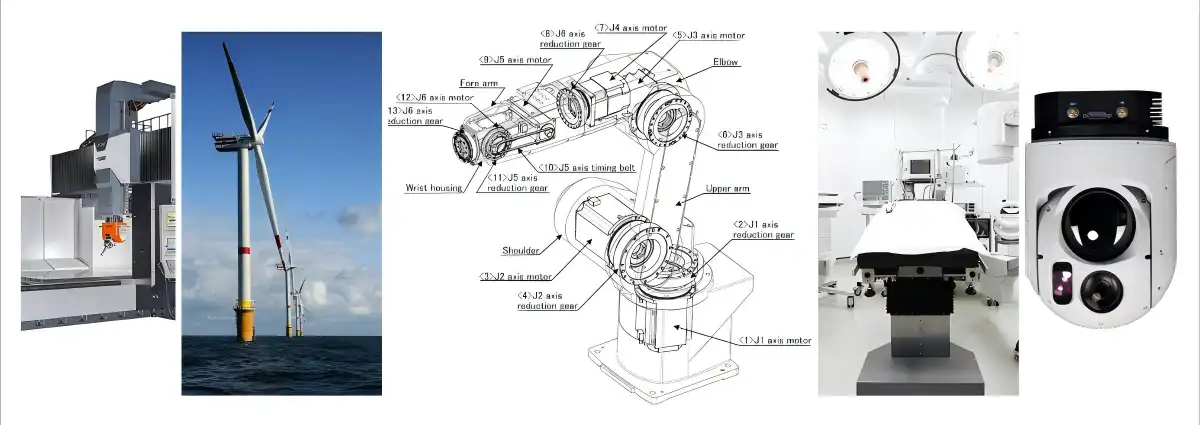
Conclusion
Heavy-load industrial applications demand bearing solutions that deliver multidirectional load capacity, precision, and long-term reliability within compact designs. RB crossed roller bearings address these requirements through proven engineering principles—orthogonal roller orientation, integral ring construction, and precision manufacturing standards. Compared to conventional bearing types, they consolidate multiple functions into singular components, simplifying machinery design while improving performance. Successful implementation requires proper selection considering load conditions and environmental factors, installation following best practices, and maintenance programs preserving operational characteristics. Procurement strategies emphasizing supplier partnerships, quality certifications, and technical support capabilities yield better outcomes than purely price-focused approaches. Our manufacturing expertise, international certifications, and commitment to customer success position us as a reliable partner for OEMs and distributors requiring precision bearing solutions that support their competitive advantage in global markets.
FAQ
How do RB crossed roller bearings handle simultaneous radial and axial loads?
The alternating 90-degree roller arrangement creates load paths in all directions. Rollers oriented vertically support radial forces, while horizontally positioned rollers bear axial loads. This geometry enables a single bearing to replace multiple conventional bearing types, with moment load capacity arising from the wide effective spread between roller contact points. Load ratings account for combined loading using vector mathematics that converts multi-directional forces into equivalent radial loads for life calculation purposes.
Can RB bearings be customized for specific OEM requirements?
We routinely customize dimensions, materials, accuracy grades, and mounting features. Non-standard bore or outer diameter dimensions accommodate unique shaft or housing designs. Special cage materials suit extreme temperatures, while integrated mounting flanges simplify assembly. Our engineering team collaborates during specification development to ensure custom designs meet performance requirements while remaining manufacturable at a reasonable cost and lead time.
What maintenance intervals do you recommend for heavy load industrial environments?
Relubrication frequency depends on operating conditions. Clean environments with moderate speeds and loads typically require service every 5000 hours, while contaminated or high-temperature applications may need quarterly attention. Monitor temperature and noise characteristics between scheduled maintenance; significant changes warrant immediate inspection. Proper initial installation and adequate sealing often prove more important than maintenance frequency in determining bearing longevity.
Partner with ATLYC for Premium RB Crossed Roller Bearings Supply
ATLYC brings 15 years of precision bearing manufacturing excellence to your heavy load applications. As a certified RB crossed roller bearings manufacturer holding ISO 9001 and IATF 16949 quality certifications, we combine advanced production capabilities across six specialized workshops with engineering expertise supporting both standard and custom solutions. Our RB series crossed roller bearings—featuring integral ring construction, premium Gcr15 and Gcr15SiMn materials, and precision grades from P6 through P3—serve demanding applications in industrial robotics, machining centers, and precision equipment worldwide. We offer competitive pricing through volume commitments, reliable lead times supported by transparent communication, and technical collaboration that optimizes bearing selection for your specific requirements. Contact our team at auto@lyautobearing.com to discuss your application requirements and receive detailed quotations that address your procurement priorities of quality assurance, delivery reliability, and long-term supply partnership value.
References
1. Harris, T.A. & Kotzalas, M.N. (2006). "Advanced Concepts of Bearing Technology: Rolling Bearing Analysis, Fifth Edition." CRC Press, Boca Raton.
2. Eschmann, P., Hasbargen, L. & Weigand, K. (1985). "Ball and Roller Bearings: Theory, Design and Application, Second Edition." John Wiley & Sons, Chichester.
3. ISO 492:2014. "Rolling Bearings — Radial Bearings — Geometrical Product Specifications (GPS) and Tolerance Values." International Organization for Standardization, Geneva.
4. Palmgren, A. (1959). "Ball and Roller Bearing Engineering, Third Edition." SKF Industries Inc., Philadelphia.
5. Zaretsky, E.V. (2013). "Rolling Bearing Steels: A Technical and Historical Perspective." Materials Science and Technology, Volume 28, Issue 1, pp. 58-69.
6. Witte, D.C. (1973). "Operating Torque of Tapered Roller Bearings." ASLE Transactions, Volume 16, Issue 1, pp. 61-67.
Learn about our latest products and discounts through SMS or email