- English
- French
- German
- Portuguese
- Spanish
- Russian
- Japanese
- Korean
- Arabic
- Greek
- German
- Turkish
- Italian
- Danish
- Romanian
- Indonesian
- Czech
- Afrikaans
- Swedish
- Polish
- Basque
- Catalan
- Esperanto
- Hindi
- Lao
- Albanian
- Amharic
- Armenian
- Azerbaijani
- Belarusian
- Bengali
- Bosnian
- Bulgarian
- Cebuano
- Chichewa
- Corsican
- Croatian
- Dutch
- Estonian
- Filipino
- Finnish
- Frisian
- Galician
- Georgian
- Gujarati
- Haitian
- Hausa
- Hawaiian
- Hebrew
- Hmong
- Hungarian
- Icelandic
- Igbo
- Javanese
- Kannada
- Kazakh
- Khmer
- Kurdish
- Kyrgyz
- Latin
- Latvian
- Lithuanian
- Luxembou..
- Macedonian
- Malagasy
- Malay
- Malayalam
- Maltese
- Maori
- Marathi
- Mongolian
- Burmese
- Nepali
- Norwegian
- Pashto
- Persian
- Punjabi
- Serbian
- Sesotho
- Sinhala
- Slovak
- Slovenian
- Somali
- Samoan
- Scots Gaelic
- Shona
- Sindhi
- Sundanese
- Swahili
- Tajik
- Tamil
- Telugu
- Thai
- Ukrainian
- Urdu
- Uzbek
- Vietnamese
- Welsh
- Xhosa
- Yiddish
- Yoruba
- Zulu
What Makes 60 Series Ball Bearings So Reliable?
With their small size and high performance, 60 Series ball bearings are the best choice when you need precise bearings. These parts have a good image because they have been used for decades in automotive, industrial machinery, and automation equipment. Their dependability comes from advanced material engineering, high standards for accurate manufacturing, and geometries that are optimised to reduce friction while increasing load capacity. These deep groove ball bearings are made from GCr15 bearing steel, which has a hardness rating of 60–64 HRC. They work consistently in applications with limited space and a need to reduce weight. Their ISO-compliant sizes, range of sealing options, and high precision grades make them essential for a wide range of uses, from micro-motors to complicated industrial systems that need reliable rotational performance.
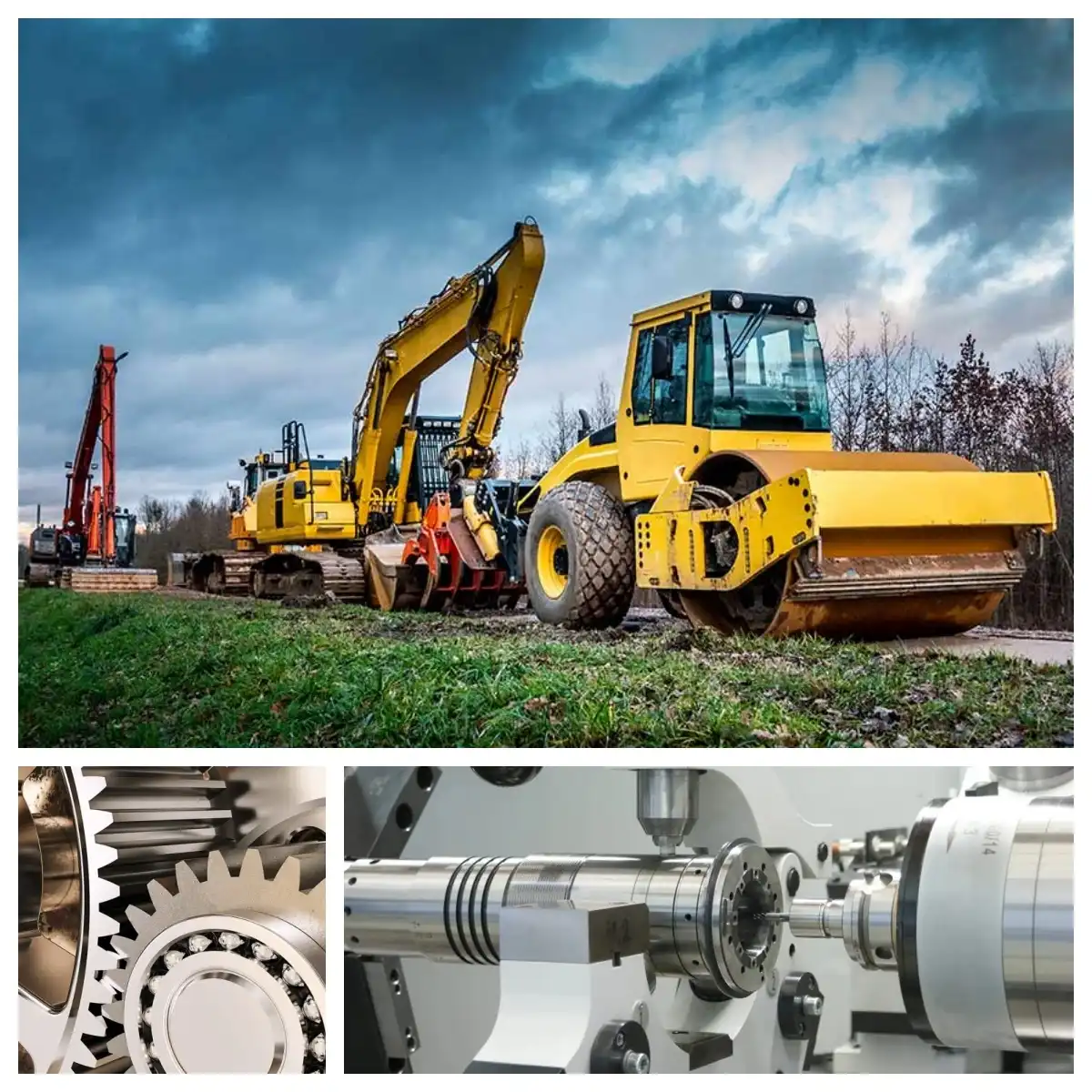
Understanding 60 Series Ball Bearings: Core Specifications and Features
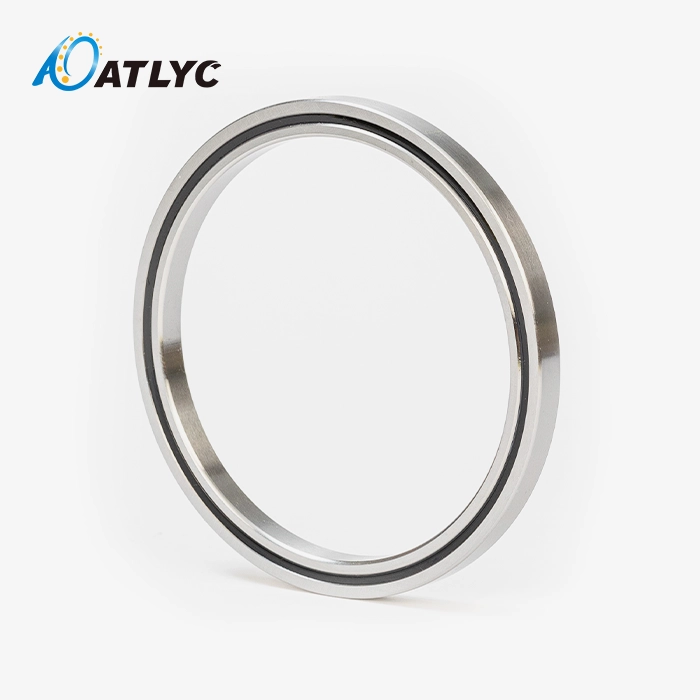
The foundation of reliability in any bearing system begins with understanding its fundamental design characteristics and engineering specifications. Deep groove ball bearings in the 60 series classification follow strict dimensional standards that ensure interchangeability and predictable performance across manufacturers. These single-row radial bearings accommodate both radial loads and moderate axial loads in both directions, making them versatile components for diverse mechanical applications.
Defining the 60 Series Classification
The numerical designation in bearing nomenclature carries significant meaning that procurement professionals should understand. The "60" classification indicates the width series, where these bearings feature a smaller cross-section relative to the bore size compared to the 62 and 63 series alternatives. This compact outer diameter allows engineers to minimize housing dimensions without sacrificing rotational precision, directly addressing the miniaturization demands in modern mechatronics and high-efficiency electric motors. These bearings conform to ISO 15 and DIN 625 dimensional standards, ensuring global compatibility and simplifying replacement sourcing across international supply chains.
Material Composition and Heat Treatment
Material selection forms the cornerstone of bearing reliability, and the 60 series utilizes GCr15 bearing steel—equivalent to SAE 52100 high-carbon chrome steel. This alloy undergoes specialized heat treatment processes that achieve optimal hardness levels between 60 and 64 HRC, creating a microstructure that resists wear and withstands cyclic loading stresses. The heat treatment process involves precise temperature control during quenching and tempering phases, transforming the steel's crystalline structure to maximize fatigue life. This metallurgical refinement enables these bearings to maintain dimensional stability under thermal cycling conditions commonly encountered in automotive and industrial applications. The material properties directly influence performance characteristics that matter to OEM manufacturers. High carbon content provides the necessary hardness for resisting surface deformation under load, while chromium additions enhance corrosion resistance in moderately harsh environments. Alternative materials like stainless steel variants exist for specialized applications requiring enhanced corrosion protection, though these typically sacrifice some load capacity compared to standard chrome steel versions.
Precision Grades and Tolerance Classes
Dimensional accuracy determines how smoothly and quietly a bearing operates, which directly affects machinery performance and maintenance intervals. The 60 series is available in multiple precision grades ranging from P0 (ABEC-1) standard grade through P4 (ABEC-7) ultra-precision classifications. Standard P0 grade bearings suit general industrial applications where moderate accuracy suffices, while P6 and P5 grades serve applications requiring reduced vibration and improved rotational accuracy. High-precision P4 variants, with radial runout values less than 5 micrometers, meet the stringent requirements of precision instrumentation and high-speed spindle applications. Tolerance specifications govern the dimensional variations in bore diameter, outer diameter, width, and raceway geometry. Tighter tolerances in P5 and P4 grades reduce vibration amplitudes and acoustic emissions, which becomes critical in applications like precision encoders and medical equipment where noise levels must remain below specific thresholds. The manufacturing precision of the 60 Series ball bearings also affects bearing preload uniformity, ensuring consistent torque characteristics across production batches.
Cage Systems and Internal Geometry
The cage—sometimes called a retainer or separator—maintains proper spacing between rolling elements and prevents metal-to-metal contact during operation. Standard configurations utilize steel stamped cages that offer excellent strength-to-weight ratios and cost-effectiveness for general applications. Brass cages (designation M) provide superior heat dissipation and dimensional stability in high-temperature environments, making them suitable for electric motor applications where thermal management challenges exist. Polyamide cages (designation TN) reduce operating friction and enable quieter operation, particularly valuable in office equipment and consumer appliances where acoustic performance matters. The internal raceway geometry plays an equally important role in reliability. Deep, continuous groove profiles with osculation ratios around 52-53% create optimal contact conditions between balls and raceways. This geometric relationship balances load distribution, rolling resistance, and stress concentration factors. The curved raceway paths allow balls to roll freely while distributing applied loads across a broad contact area, minimizing contact stress and extending operational life.
Sealing and Lubrication Configurations
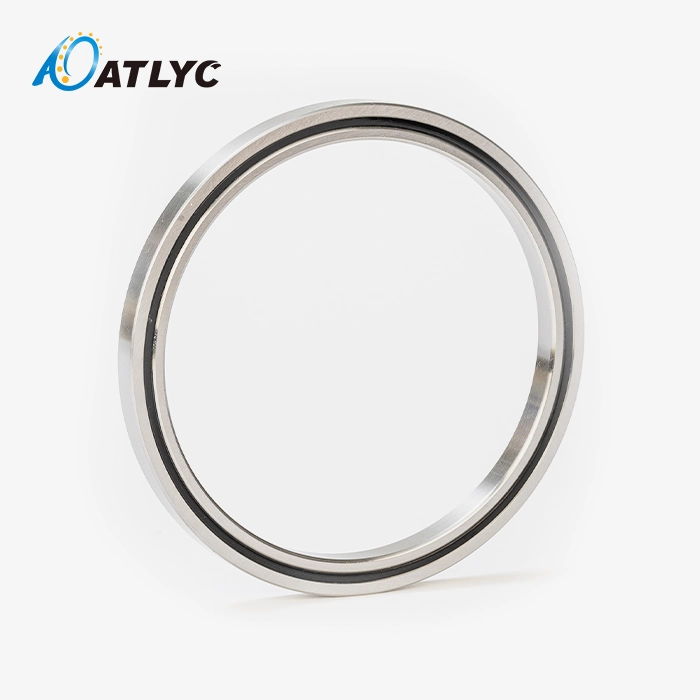
Environmental protection significantly impacts bearing service life, particularly in applications exposed to contaminants or moisture. Open bearings without shields or seals offer the lowest friction torque but require external sealing arrangements and frequent relubrication. Shielded variants with ZZ designation incorporate non-contact metal shields that prevent large particle intrusion while maintaining low friction characteristics. Sealed versions with 2RS designation use rubber or synthetic seals that contact the inner ring, providing superior contamination exclusion at the cost of slightly higher friction torque. Factory lubrication typically employs lithium-based greases with appropriate viscosity grades for the intended operating temperature range. Grease-lubricated sealed bearings eliminate maintenance requirements in many applications, reducing the total cost of ownership.
Comparing 60 Series Ball Bearings with Alternative Bearing Types
Making informed procurement decisions requires understanding how different bearing series and types compare in terms of dimensions, load capacities, and application suitability. The bearing market offers numerous alternatives, each optimized for specific operational parameters and installation constraints. Comparative analysis reveals where the 60 series delivers distinct advantages and where alternative designs might better serve particular applications.
Dimensional Differences Between 60, 62, and 63 Series
The main difference between these series is the size of their outer diameter and cross-sectional thickness for a given bore size. As you move from the 60 series to the 62 series to the 63 series, a bearing with the same bore diameter will have increasingly larger outer diameters. This changes how the housing needs to be built and how much radial room the bearing takes up. The 60 series reduces the size of the radial envelope as much as possible, which lets engineers make small machines when room is limited. The lighter part also lowers the bearing mass, which is helpful in situations where the speed is sped up and slowed down a lot. But the small size means that the load capacity is lower. The 62 series can handle 30–40% more weight than the 60 series bearings with the same hole size. This is because the 62 series bearings have bigger balls and bigger contact areas between the balls and the raceways. In the same way, the 63 series can hold even more weight, which makes it better for heavy-duty commercial uses. When choosing between these series choices, procurement professionals have to weigh how much space they need against how much weight they need to carry.
Ball Bearings Versus Roller Bearing Alternatives
While ball bearings are best for situations where both radial and axial loads need to be handled with low friction, cylindrical roller bearings are better for situations where only radial loads need to be handled. The line contact between the rollers and raceways in roller bearings enables them to handle more rotational load than ball bearings, which only have point contact. However, this design gives up the ability to handle axial loads and usually leads to higher friction torque. This means that roller bearings aren't as good for high-speed uses or designs that need to handle combined loads. Tapered roller bearings have a very high combined load capacity and adjustable preload features. However, their more complicated geometry makes them more expensive and harder to install. Needle roller bearings use even less radial space than the 60 series, but the shaft and housing surfaces have to be used as raceways, which makes production more difficult and limits the number of bearings that can be used together. One good thing about the 60 series is that it fits into a small space and has balanced features, such as the ability to handle both circular and axial loads, high speeds, low friction, and easy installation. Because they are so flexible, they are used in a wide range of industries.
Sealed Versus Open Design Selection Criteria
Choosing between sealed and open bearing configurations involves analyzing the operating environment and maintenance strategy. Sealed bearings with 2RS designation provide lifetime lubrication and contamination protection, eliminating scheduled maintenance requirements. This reduces labor costs and downtime in applications where bearing access involves extensive disassembly. The pre-lubricated sealed design also ensures consistent lubrication quality, removing variability 60 Series ball bearings introduced by field maintenance practices. Open or shielded bearings require external sealing systems and periodic relubrication but offer advantages in specific scenarios. They generate less friction heat at high speeds, making them preferable for spindle applications operating above 10,000 RPM. Open designs also facilitate oil lubrication systems that provide superior cooling capacity in thermally demanding applications. The ability to flush contaminants and replenish lubricant extends service life in clean environments with proper maintenance protocols.
Procurement Strategies for 60 Series Ball Bearings in B2B Markets
Sourcing precision bearings involves navigating complex supply chains that span global manufacturing networks and distribution channels. Successful procurement strategies balance quality assurance, pricing optimization, delivery reliability, and supplier relationship management. Understanding market dynamics and identifying qualified suppliers enables purchasing professionals to secure components that meet technical specifications while controlling costs.
Identifying Qualified Manufacturers and Suppliers
There are well-known foreign brands in the bearing market, as well as new companies that have ISO 9001 and IATF 16949 certifications. Leading global suppliers like SKF, NSK, Timken, FAG, and NTN offer a wide range of products with a history of high quality, but their premium standing usually means that their prices are higher. Over the past 20 years, Chinese manufacturers have made huge strides in quality, and now the best factories make bearings that meet international standards at prices that are competitive. These brands offer detailed technical documentation, application engineering support, and global distribution networks that make the specification and sourcing processes easier. Luoyang Auto Bearing Co., Ltd., which was founded in 2010 and has grown from a single workshop to six specialised production sites in 15 years, is a good example of this change. This group of manufacturers has 120 skilled workers and full ISO 9001 and IATF 16949 certifications. They offer reliable quality with shorter lead times and flexible minimum order amounts that fit the needs of mid-volume production. Teams in charge of buying things should look at possible suppliers' certifications, production capacity, quality control systems, and past work in similar industries. Site audits are a great way to learn about how production works and how quality control is done. References from current customers who are using similar applications can give you a good idea of how well delivery works and how quickly technical help responds.
Understanding Pricing Structures and Volume Considerations
Bearing prices depend on many things, such as the cost of materials, how hard they are to make, the exact grade, and the number of orders that come in. Standard P0 grade bearings with steel cages and open designs are the least expensive choice. On the other hand, high-precision P4 grades with ceramic balls cost a lot more. Because they need more covering parts and to be oiled, sealed bearings cost more than open ones. Materials made of stainless steel usually cost 40 to 60 percent more than materials made of chrome steel. When you buy a certain number of items, usually around 1,000, you can get a big discount on the price. At 5,000 and 10,000 units, you can get even bigger discounts. Buyers can get volume discounts and keep their inventories low with annual blanket purchase deals that include scheduled releases. This method also keeps supply lines stable by making sure that manufacturing capacity is allocated during times of high market demand. Lead times depend on how much stock is available and when the products are made. Standard configurations in popular sizes usually ship within 7–10 business days from reputable suppliers who keep stock on hand. Custom orders that need special materials, non-standard locks, or cage designs that aren't found on the market may take 6 to 8 weeks to make. Keeping a safety stock of key bearings and planning procurement cycles around production schedules can help reduce schedule risks in assembly operations.
Leveraging Technical Support and Customization Capabilities
Beyond supplying standard catalog items, qualified bearing manufacturers offer application engineering support that adds substantial value. Technical specialists can recommend optimal bearing configurations based on load calculations, speed requirements, temperature ranges, and environmental conditions. This consultation helps procurement teams avoid over-specification that unnecessarily increases costs while ensuring adequate performance margins for reliable operation. Customization capabilities enable manufacturers to modify standard designs for specific application requirements. Modified internal clearances optimize preload conditions for particular speed ranges or temperature swings. Special cage materials or lubricants suit unique environmental conditions. Custom seal designs accommodate non-standard housing configurations or enhanced contamination protection requirements. OEM partnerships facilitate the co-development of optimized bearing solutions that improve overall system performance while potentially reducing total component costs through design integration. Luoyang Auto Bearing Co., Ltd. supports OEM customization requirements with engineering resources dedicated to developing application-specific solutions. This flexibility proves particularly valuable during new product development phases when standard catalog items may not perfectly align with design objectives. The combination of competitive pricing, 7-day standard delivery, and customization support creates a compelling value proposition for automotive and industrial equipment manufacturers seeking reliable supply partnerships.
Common Challenges and Solutions for 60 Series Ball Bearings
Even properly specified and installed bearings occasionally encounter operational challenges that affect performance and service life. Understanding common failure modes, their root causes, and effective countermeasures enables maintenance teams to maximize equipment uptime while minimizing unplanned repair costs. Proactive monitoring and timely interventions prevent minor issues from escalating into catastrophic failures that damage associated machinery components.
Addressing Noise and Vibration Issues
Too many noise outputs or vibration amplitudes are often signs of problems that need to be looked into. Most of the time, installation mistakes like imbalance, too much preload, or contamination introduced during assembly cause new bearings to operate louder than specified. Noise levels that slowly get louder during operation could mean that the lubricant is wearing off or that stress damage is building up in the raceways or rolling elements. Low-frequency rumbling means that the raceway is damaged or contaminated, while high-frequency tones mean that the balls aren't working right. The first step in fixing noise problems is to find the cause using vibration analysis and acoustic measurements. Common problems can be fixed by making sure the installation parameters are correct. These include the shaft and housing tolerances, the mounting method, and the accuracy of the alignment. Problems caused by lack of or degradation of lubricant are often fixed by re-lubricating with the right type and amount of grease. If problems don't go away even after corrective actions are taken, the bearings should be replaced before they completely fail. For sensitive applications, specifying better vibration quality grades (Z3V3 or Z4V4) during initial procurement stops noise problems. These better specs work well for electric motors, precise instruments, and office gear where sound quality directly impacts how the user feels. Even though it costs a little more, the better sound quality is well worth it in situations where quiet operation is very important.
Preventing Premature Wear and Extending Service Life
How long a bearing lasts relies on how it is used in relation to its design limits. Overloading causes fatigue damage to happen faster, and not enough lubrication leads to glue wear and surface degradation. When gritty particles get on precision surfaces, they cause three-body wear that wears them down over time. Temperature changes that are too big or too small can damage lubricants and change the dimensions of parts, which can change the clearances inside them. To get the most out of their service life, they need to be used within the design envelopes that are set by their load values, speed limits, and temperature ranges. Lubricant starvation can be avoided by doing regular maintenance on the lubrication system as directed by the manufacturer. A good sealing system keeps out the things that cause mechanical wear. By keeping an eye on working temperatures, you can find problems with the cooling system or too much load before they cause damage. Vibration monitoring programs find problems early enough so that planned actions can be taken instead of emergency repairs. Many industrial applications are able to extend the life of bearings by 50–100% beyond what the catalogue says they will last by using strict condition monitoring and best working practices. Maintenance that isn't done or activity that goes beyond what was planned can, on the other hand, shorten service life to very small amounts of what was expected. Investing in proper installation, good sealing, the right lubrication, and condition tracking pays off in a big way by lowering maintenance costs and making equipment more available.
Troubleshooting Performance Degradation
Performance gets worse over time, which can be seen in higher friction torque, higher temperatures, or spinning that is less exact. An organised analysis gets to the bottom of things and helps people fix things the right way. Tracking temperatures shows heat issues brought on by too much preload, not enough grease, or misalignment, causing friction. If you measure torque, you can tell when resistance is going up because of dirt, wear, or issues with the grease. Problems with the fitting that affect the bearing's performance can be found by measuring the shaft's runout and the bore health of the housing. A final failure analysis is done by carefully checking the bearing again after it has been taken out. Different colour patterns show harm from heat caused by not enough cooling or too many loads. Cracks and chips indicate normal wear and tear, while scores and spreads indicate that the greasing has failed. Damage like dents and brinelling can be caused by bad handling or impact loading. These detective insights help with going over specs and making changes that work and keep problems from happening again. Case studies from business show how useful it is to use structured ways to fix problems. A company that made micro-motors that were breaking down early found that they were using the wrong press-fit forces during assembly, which caused too much preload. The problem was fixed by watching the press force and changing how the bearings were put in. The bearings then had a normal life again. In the same way, a business that makes automation equipment fixed positioning issues that came up every once in a while by switching to P5 precision grade bearings. This made the rotation more accurate enough to meet the needs of the machine.
Why 60 Series Ball Bearings Are the Trusted Choice for Industrial Applications
Decades of successful service across diverse industries have established deep groove ball bearings in the 60 series classification as default choices for applications requiring compact dimensions with reliable performance. This widespread adoption reflects fundamental engineering advantages that align well with common design requirements. Understanding why 60 Series ball bearings have achieved such market prominence helps procurement professionals appreciate their value proposition.
Engineering Excellence in Design and Manufacturing
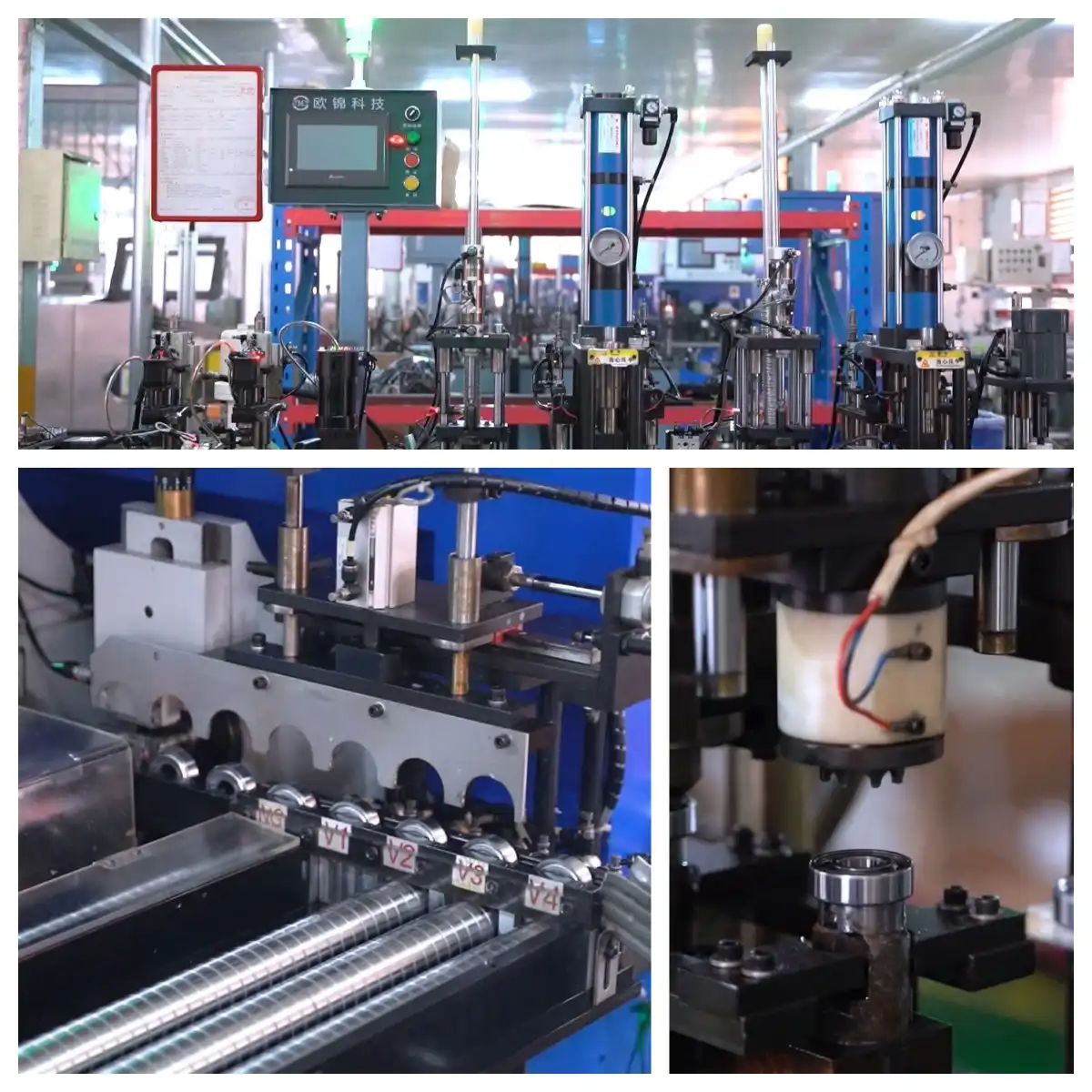
The dependability of these bearings comes from production methods that have been improved over many years. Precision grinding processes make raceway surfaces that are as smooth as a mirror, which reduces wear and friction. Heat treatment methods that are carefully controlled make sure that the properties of materials are the same from one production batch to the next. Coordinate measuring tools are used for dimensional inspection to make sure that tight tolerance requirements are met. Statistical process control methods keep quality consistent, which lets important applications work as expected. Modern factories use automatic handling systems to keep things from getting dirty or broken while they're being made. During final assembly, particles that could hurt the performance of the bearings are kept out of clean rooms. When filling grease, accurate dosing equipment makes sure that the right amount of lubricant is used. Before shipping, each bearing goes through a full final test that includes measurements of rotational torque, vibration, and sound. Well-known makers are always investing in new technologies and better ways to do things. Simulation tools make internal shapes work best for certain types of applications. Newer coatings and materials make the capabilities last longer in harsher circumstances. These improvements keep the 60 series as a competitive option even though new technologies are coming out. This shows that it is still useful in industries that are changing.
Cost-Effectiveness and Maintenance Simplicity
Economic factors play a big role in choosing which components to use, and the 60 series has a low total cost of ownership over its entire lifecycle. Low acquisition costs are due to high production numbers and standardisation of designs, which make the manufacturing process more efficient. When compared to more complicated bearing setups, installation that is easy to do saves money on labour costs. Sealed variants remove the need for regular maintenance costs while providing reliable service throughout the design life of the equipment. The fact that standard sizes are available from many suppliers creates a competitive market that benefits buyers by offering better prices and supply security. Being able to switch between quality makers gives you more options for where to get your supplies and makes managing your inventory easier. Standardised measurements let designers choose from catalogue items instead of custom parts, which speeds up development times and lowers engineering costs. Replacing parts during maintenance is easy and only requires basic tools and skills. Because it has deep grooves, it can handle some installation flaws that would damage more sensitive bearing types. This ability to forgive lowers the chance of installation damage that would require more fixes. These useful benefits that make field service work easier are appreciated by maintenance teams.
Adaptability Across Diverse Applications
Deep groove ball bearings in the 60 series can be used in a huge range of situations because they are very flexible. In consumer gadgets, micromotors use miniature versions that can run at high speeds with little friction. Precision grades are used in industrial robotics to provide the rotational accuracy needed for exact positioning. Office technology needs to be able to run quietly, which is possible with better vibration quality standards. Automotive auxiliary systems depend on sealed configurations that work reliably in dirty settings. This wide range of uses comes from the balanced nature of the basic design. The right amount of load capacity can handle the usual radial and vertical forces found in everyday use. High-speed capability works well with current motor designs that run at high RPMs. Small sizes make them suitable for installations with a limited area. Different setup choices for sealing, accuracy, and materials let you get the best results for your needs. Because they are so flexible, the 60 series can be found in a wide range of tools. New uses for these tried-and-true parts keep growing. They are used in cooling pumps and actuators in electric car auxiliary motors. They are used in solar tracking drives and pitch control devices for wind turbines as part of renewable energy systems. Precision grades are used in diagnostic and surgical tools and other medical products. The fact that it still works with new technologies shows that the design is sound in a way that goes beyond industry trends.
Conclusion
Deep groove ball bearings in the 60 series are very reliable because they are made with modern materials, are precisely manufactured, and have optimised geometries that have been improved over many years of use in industry. Their small size lets designers make designs that use space well without losing the load capacity and accuracy of rotation that modern machines need. Because there are many precision grades, sealing configurations, and cage materials to choose from, engineers can find the best specifications for each application while balancing performance and cost. Procurement professionals also benefit from a competitive market, which is made possible by widespread standardisation and a large number of qualified suppliers. Buyers can get solid supply chains at good prices by using strategic sourcing methods that focus on a supplier's certifications, manufacturing capacity, and technical support skills. Knowing about common operating problems and how to fix them gives maintenance teams the power to extend the life of bearings by installing them correctly, lubricating them well, and keeping an eye on them all the time to stop them from breaking down too soon.
FAQ
1. What distinguishes 60 series bearings from 62 series alternatives?
The primary difference lies in dimensional proportions relative to bore size. These bearings feature smaller outer diameters and reduced cross-sections compared to 62 series equivalents, minimizing radial space requirements. This compact design reduces load capacity by approximately 30-40%, making the 62 series preferable for heavy-duty applications, while the 60 series excels where space constraints dominate design decisions.
2. How can I maximize bearing service life in harsh operating environments?
Selecting sealed configurations with a 2RS designation provides optimal contamination exclusion in dirty environments. Ensuring proper sealing of the surrounding housing prevents external contaminant intrusion. Maintaining operating temperatures within design limits prevents lubricant degradation. Implementing vibration monitoring programs enables early detection of developing problems before catastrophic failures occur, allowing planned maintenance rather than emergency repairs.
3. Which industries benefit most from these compact bearing designs?
Micro-motor manufacturers extensively use them in compact electric motors for automotive auxiliary systems, consumer electronics, and HVAC equipment. Precision instrument builders incorporate them in measurement devices, encoders, and analytical equipment requiring rotational accuracy. Office appliance manufacturers rely on quiet operation for printers, copiers, and document scanners. Automation equipment designers specify them in compact actuators and robot joints where space limitations drive component selection.
Partner with ATLYC for Premium 60 Series Ball Bearings
ATLYC delivers precision-engineered deep groove ball bearings that 60 Series ball bearings meet the demanding requirements of automotive and industrial equipment manufacturers worldwide. Our manufacturing facility produces GCr15 bearing steel components in precision grades from P0 through P4, with steel stamped, brass, or polyamide cage options and versatile ZZ or 2RS sealing configurations. Every bearing meets ISO 9001 and IATF 16949 quality standards, ensuring consistent performance and low defect rates that minimize production disruptions.
As an established manufacturer with 15 years of bearing production experience, we combine competitive pricing with 7-day standard delivery and comprehensive OEM customization capabilities. Our engineering team supports application-specific modifications, including special clearances, lubrication formulations, and cage materials optimized for your unique requirements. Whether you need standard catalog items or customized solutions, ATLYC functions as a reliable bearing supplier supporting your growth through scalable production capacity and consistent quality. Contact our team at auto@lyautobearing.com to discuss your bearing requirements and discover how our precision manufacturing capabilities can enhance your equipment performance while optimizing your supply chain efficiency.
References
1. Harris, T.A. and Kotzalas, M.N., "Advanced Concepts of Bearing Technology: Rolling Bearing Analysis," Fifth Edition, CRC Press, 2006.
2. Eschmann, P., Hasbargen, L., and Weigand, K., "Ball and Roller Bearings: Theory, Design and Application," Third Edition, John Wiley & Sons, 1985.
3. ISO 15:1998, "Rolling bearings — Radial bearings — Boundary dimensions, general plan," International Organization for Standardization, Geneva, Switzerland.
4. Tallian, T.E., "Failure Atlas for Hertz Contact Machine Elements," Second Edition, ASME Press, 1999.
5. Hamrock, B.J. and Dowson, D., "Ball Bearing Lubrication: The Elastohydrodynamics of Elliptical Contacts," Wiley-Interscience, 1981.
6. SKF Group, "Rolling Bearings Catalogue: Technical Reference for Bearing Selection and Application," SKF Group Technical Publication, 2018.
Learn about our latest products and discounts through SMS or email