- English
- French
- German
- Portuguese
- Spanish
- Russian
- Japanese
- Korean
- Arabic
- Greek
- German
- Turkish
- Italian
- Danish
- Romanian
- Indonesian
- Czech
- Afrikaans
- Swedish
- Polish
- Basque
- Catalan
- Esperanto
- Hindi
- Lao
- Albanian
- Amharic
- Armenian
- Azerbaijani
- Belarusian
- Bengali
- Bosnian
- Bulgarian
- Cebuano
- Chichewa
- Corsican
- Croatian
- Dutch
- Estonian
- Filipino
- Finnish
- Frisian
- Galician
- Georgian
- Gujarati
- Haitian
- Hausa
- Hawaiian
- Hebrew
- Hmong
- Hungarian
- Icelandic
- Igbo
- Javanese
- Kannada
- Kazakh
- Khmer
- Kurdish
- Kyrgyz
- Latin
- Latvian
- Lithuanian
- Luxembou..
- Macedonian
- Malagasy
- Malay
- Malayalam
- Maltese
- Maori
- Marathi
- Mongolian
- Burmese
- Nepali
- Norwegian
- Pashto
- Persian
- Punjabi
- Serbian
- Sesotho
- Sinhala
- Slovak
- Slovenian
- Somali
- Samoan
- Scots Gaelic
- Shona
- Sindhi
- Sundanese
- Swahili
- Tajik
- Tamil
- Telugu
- Thai
- Ukrainian
- Urdu
- Uzbek
- Vietnamese
- Welsh
- Xhosa
- Yiddish
- Yoruba
- Zulu
RB cross roller bearing for rotary table
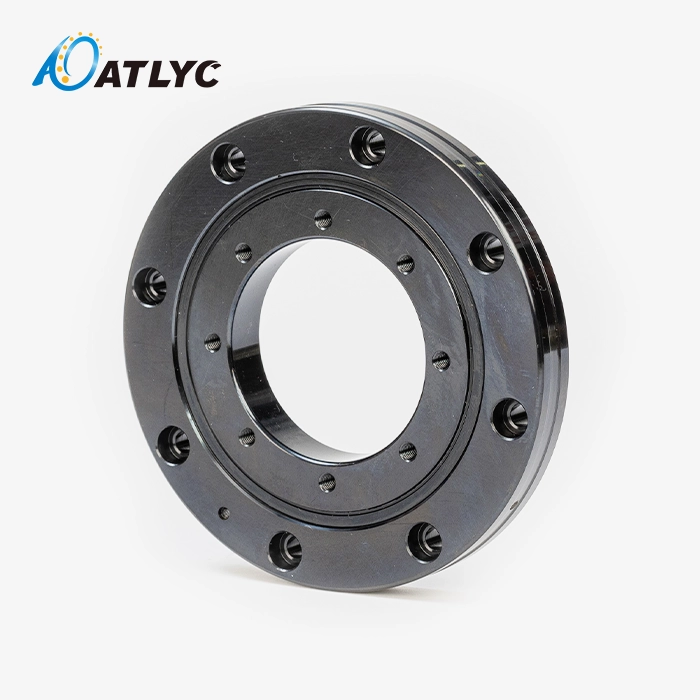
RB Crossed Roller Bearings are the designed answer that industrial equipment makers trust when they need precise circular motion and load demands in more than one way. These special bearings have a combined ring design with circular rollers placed orthogonally at 90-degree intervals. This makes a single small unit that can handle radial, axial, and moment loads at the same time. They have a low friction coefficient that makes sure the spin is smooth, and their high runout accuracy makes them essential in rotating tables, robotic joints, and machine centers where accurate measurements directly affect the quality of the work that is made.
Understanding the Design and Working Principle of RB Crossed Roller Bearings
With their unique design, these precise parts are a big step forward in bearing technology that is made for high-quality uses. In traditional bearing systems, different load lines need different units. A crossed roller unit, on the other hand, combines all load-bearing functions into a single, space-saving package.
Integral Ring Structure with Outer Ring Plug Design
The one-piece building method is what makes this type of bearing unique. The inner ring and outer ring keep their structural integrity as separate parts. The outer ring has a plug device that makes it easier to put together while still keeping its stiffness. This design gets rid of the weak spots that can appear in split-ring arrangements and makes sure that the load is evenly spread around the whole circle. High-quality Gcr15 or Gcr15SiMn steel is used to make this structure because it is hard and stable in its dimensions, which is important for precision uses. The plug design makes assembly easier than with traditional multi-piece systems. This means that mounting mistakes that could affect performance are less likely to happen.
How Crossed Roller Configuration Delivers Multi-Directional Load Capacity
Cylindrical rollers set up perpendicular to each other in a V-shaped track groove are what make it unique. By placing them in an orthogonal way, contact points are made that engage both the inner and outer ring raceways at the same time. One set of wheels takes the load when rotational forces push inward. The vertical roller set moves when there is a horizontal push. Instead of focusing on stress, moment loads are spread out over many touch points. This setup makes the contact area between the moving elements and the raceways as big as possible. This spreads the forces out widely and stops the wear from happening too soon. Spacers between the rollers keep the metals from touching directly, which lowers friction and keeps the rollers in the same place during spinning cycles.
Precision Manufacturing Standards and Material Properties
To meet the performance requirements of industrial tools and medical devices, manufacturing practices must be in line with global quality standards. Our factory has ISO 9001 and IATF 16949 certifications, which show that quality control is carried out in a planned way throughout the whole production process. Bearings come in six different levels of precision: P6, P0, P5, P4, and P3. This lets buying teams choose the level of accuracy that best fits the needs of each application. The methods used to heat treat Gcr15 and Gcr15SiMn steel improve their hardness profiles while keeping their core toughness. This makes the surfaces immune to wear and tear from touch while keeping their ability to absorb shock. Advanced grinding processes smooth out raceways to surfaces that are as smooth as mirrors. This lowers the friction coefficient and increases the operating life.
Size Range and Dimensional Flexibility
The broad dimensional range of the cross roller bearing accommodates diverse rotary table configurations and load requirements. Inner diameters span from 20 mm to 1100 mm, outer diameters from 70 mm to 1500 mm, and widths from 12 mm to 110 mm, enabling application across small robotic joints as well as large machining centers. This dimensional flexibility allows engineers to select bearings precisely matched to their equipment’s space constraints and load profiles. Custom size options remain available for unique applications requiring non‑standard dimensions, with engineering support provided to ensure successful design integration.
These basic design elements work together to make bearing solutions that solve the biggest problems that auto part makers and industrial machinery OEMs have: getting very accurate rotation in small installation spaces and handling complicated load conditions without using big dual-bearing setups.
Advantages and Applications of RB Crossed Roller Bearings in Rotary Tables
To choose the best type of bearing for precision rotor uses, you need to know how different designs work in real-life situations. The crossed roller design gives measured performance benefits that lead to better equipment capabilities and lower costs over its entire lifecycle.
Superior Load Capacity in Compact Envelope
To get the same load rates, traditional ball bearings need much bigger sizes, which takes up important fitting space. Line contact from circular rollers instead of point contact from balls spreads pressures over a larger surface area, which lets the bearing hold more weight without getting bigger. This makes good use of the room, which is especially helpful in robotic arm joints, where weight and size directly affect how much can be carried and how fast it can move. Designers of manufacturing equipment like how this simplicity makes machine construction easier while still keeping the structural stiffness that is needed for accurate measurements.
Enhanced Rigidity for Improved Machining Accuracy
Rotating tables used for grinding, cutting, and measuring lose their positional accuracy when they are loaded. The crossed roller design makes the structure very stiff, so it doesn't bend at an angle when moment loads happen during cutting operations. This stiffness keeps the item in place during cutting processes, which leads to better surface finishes and tighter tolerances on dimensions. Manufacturers of CNC rotating tables say that the quality of the parts gets better when they switch from traditional bearing systems to crossed roller designs.
Low Friction Coefficient and Smooth Rotation
When spherical elements roll, they create a lot less resistance than when moving contact bearings do. This means that less force is needed to turn an element. This efficiency lowers the amount of power used by the motor and lets you precisely control the speed of setting actions. The even spread of touch pressure stops stick-slip problems that can make action less smooth in low-speed situations. This vibration-free spinning feature is especially useful for measuring tools and equipment used to make semiconductors.
Proven Applications Across Industrial Sectors
Real-world implementations demonstrate the versatility and reliability of these precision components across demanding environments:
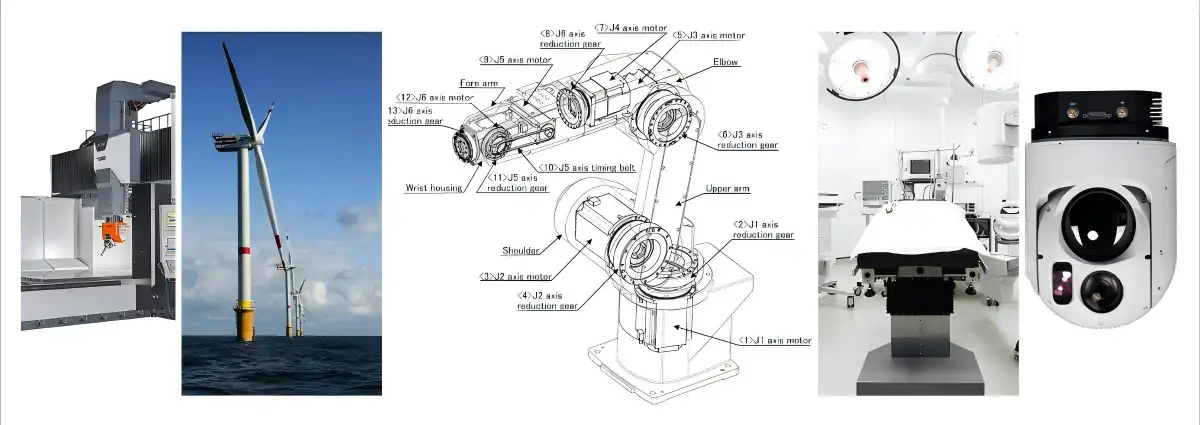
Automotive Manufacturing: Assembly line robotic welders utilize these bearings in wrist joints and positioning axes, where consistent accuracy directly affects weld quality across thousands of daily cycles. The bearings withstand moment loads from extended tool attachments while maintaining positional repeatability within microns.
Aerospace Production: Five-axis machining centers producing turbine components rely on rotary table bearings that maintain accuracy under varying cutting forces. The ability to handle simultaneous radial and axial loads while resisting thermal expansion proves essential when machining temperature-sensitive alloys.
Medical Equipment: CT scanners and radiotherapy devices incorporate these bearings in rotation mechanisms where smooth motion prevents image artifacts and ensures precise radiation delivery. The low vibration characteristics contribute to diagnostic image quality and patient safety.
IC Manufacturing: Wafer handling robots and inspection stages depend on sub-micron positional accuracy that crossed roller bearings enable. Contamination resistance and long service intervals reduce maintenance disruptions in cleanroom environments.
Maintenance Requirements and Longevity
Proper maintenance protocols for RB Crossed Roller Bearings extend service life and preserve performance characteristics throughout operational lifecycles. Regular lubrication intervals depend on operating conditions, with sealed variants requiring minimal intervention. Visual inspections detect early signs of contamination or seal degradation before they compromise bearing function. When lubrication schedules and operating parameters align with manufacturer specifications, service lives often exceed 30,000 operating hours in industrial environments. This durability reduces replacement frequency and unplanned downtime, lowering the total cost of ownership compared to less robust bearing types.
Comparing RB Crossed Roller Bearings with Alternative Bearing Solutions
Informed procurement decisions require objective comparisons between available bearing technologies. Understanding how each design performs across critical parameters enables specification choices aligned with application priorities.
Performance Comparison with Angular Contact Bearings
Angular contact ball bearings handle combined radial and axial loads through contact angle geometry, making them common in machine tool spindles. They excel at high-speed operation where centrifugal forces favor ball elements. However, achieving high rigidity requires preloaded duplex or triplex arrangements that consume axial space and complicate installation. The crossed roller alternative delivers comparable rigidity in a single unit with shorter axial length. Load capacity per unit volume favors the crossed roller design, particularly when moment loads dominate. Angular contact bearings remain preferable for applications prioritizing maximum rotational speed over load capacity and compactness.
Cylindrical Roller Bearing Trade-offs
Standard cylindrical roller bearings provide excellent radial load capacity through line contact but require separate thrust bearings for axial loads. This dual-bearing approach increases assembly complexity and cumulative tolerance stack-up that can compromise accuracy. Cylindrical rollers handle higher radial loads than crossed rollers of equivalent size, making them suitable for heavy-duty applications where axial and moment loads remain minimal. When rotary tables experience multi-directional loading, the crossed roller's integrated approach simplifies design and improves overall system rigidity compared to separate radial and thrust bearing combinations.
Ball Bearing Limitations in Precision Rotary Applications
Deep groove ball bearings offer low friction and accommodate moderate combined loads, making them economical choices for general-purpose rotation. Their point contact geometry limits load capacity compared to roller designs, requiring larger sizes to achieve equivalent ratings. Deflection under load exceeds that of crossed roller bearings, making balls less suitable for precision positioning applications. Ball bearings remain competitive in high-speed, light-load scenarios where their lower mass and contact stress characteristics provide advantages.
Slewing Ring Bearing Considerations
Large-diameter rotary tables sometimes utilize slewing ring bearings designed specifically for turntable applications. These specialized bearings integrate mounting holes and gear teeth, simplifying installation. Their crossed roller variants share similar load-handling principles but differ in mounting methodology and size ranges. Slewing rings excel in very large diameter applications above 1500mm where standard bearing types become impractical. Below this threshold, standard crossed roller bearings often provide more economical solutions with greater availability and standardized dimensions.
This comparative analysis reveals that crossed roller bearings occupy a unique performance niche: applications demanding high rigidity, multi-directional load capacity, and precision in compact envelopes. The design strikes an optimal balance between load capacity, stiffness, and space efficiency that alternative bearing types struggle to match across this combination of requirements.
Procurement Considerations for Sourcing RB Crossed Roller Bearings
Successful procurement extends beyond technical specifications to encompass supplier evaluation, cost management, and supply chain reliability. Strategic sourcing decisions impact both immediate project budgets and long-term operational costs.
Identifying Qualified Manufacturers and Suppliers
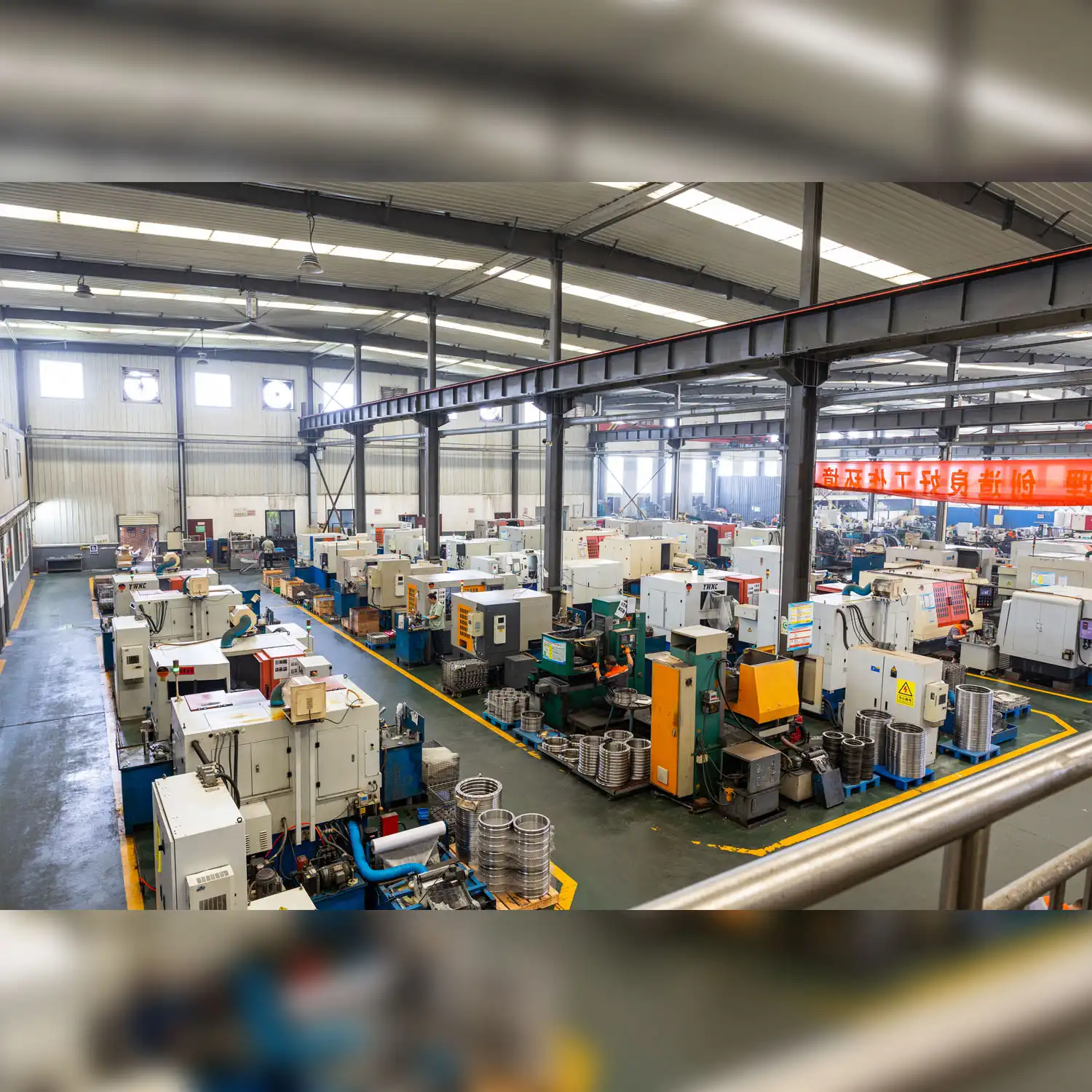
The global bearing market includes established international brands alongside capable regional manufacturers. Major Japanese and European producers—including NSK, THK, KOYO, SKF, and NTN—maintain extensive product lines with comprehensive technical documentation. Their premium positioning reflects decades of engineering refinement and global distribution networks. Chinese bearing manufacturers like ATLYC have invested heavily in precision manufacturing capabilities and quality systems, achieving ISO 9001 and IATF 16949 certifications that demonstrate a commitment to international standards. Our facility in Luoyang has expanded from a single workshop in 2010 to six specialized production areas supporting comprehensive bearing manufacturing. This growth trajectory reflects continuous improvement in precision grinding technology, heat treatment processes, and quality control methodologies. Procurement teams increasingly recognize that manufacturing location correlates less with quality than certification compliance, production scale, and technical support capabilities.
Cost Factors and Price Structure Analysis
Bearing pricing for RB Crossed Roller Bearings reflects multiple variables beyond basic manufacturing costs. Order volume significantly impacts unit pricing, with quantity breaks typically occurring at 50, 100, and 500-piece thresholds. Customization requirements—such as non-standard dimensions, special materials, or unique accuracy grades—add engineering and tooling costs that affect pricing. Lead times vary from stock items shipped within days to custom productions requiring 4-8 weeks. Expedited delivery options carry premium charges that can increase costs by 15-30%. Transportation logistics impact landed costs, with container shipments from Chinese manufacturers to US ports typically requiring 3-4 weeks transit. Air freight reduces delivery time to 5-7 days but multiplies transportation costs substantially. Warranty terms and after-sales support represent less visible cost factors that affect total lifecycle expenses. Extended warranty coverage and responsive technical support reduce risks of premature failure and operational disruptions.
Preparing Effective Request for Quotation Documents
Detailed technical specifications accelerate quotation processes and ensure accurate pricing. Essential information includes inner diameter, outer diameter, and width dimensions with tolerances. Operating conditions such as load magnitudes, rotational speeds, and temperature ranges help suppliers validate application suitability. Accuracy grade requirements determine manufacturing processes and associated costs. Annual volume forecasts and delivery schedules enable suppliers to optimize production planning. Including application descriptions and installation drawings allows engineering teams to recommend optimal configurations and identify potential issues before production. This collaborative approach during quotation stages prevents costly specification errors and ensures alignment between component capabilities and application demands.
Supply Chain Risk Management
Diversified sourcing strategies mitigate disruptions from supplier-specific issues or regional logistics challenges. Dual-sourcing approaches maintain relationships with both international brand distributors and direct manufacturers, balancing premium quality with cost competitiveness. Safety stock levels should account for lead time variability and the criticality of bearing applications. For mission-critical production equipment, maintaining spare inventory prevents extended downtime from unexpected failures. Establishing long-term supply agreements with qualified manufacturers stabilizes pricing and prioritizes production capacity during high-demand periods.
Installation Guidelines and Best Practices for Rotary Table Applications
Proper installation procedures directly impact bearing performance and service life. Even precision-manufactured components fail prematurely when mounting practices introduce contamination, misalignment, or excessive preload.
Pre-Installation Preparation and Inspection
Clean working environments prevent particulate contamination that accelerates wear. Inspection procedures verify that mounting surfaces exhibit specified flatness and perpendicularity tolerances. Dimensional measurements confirm that shaft and housing dimensions fall within tolerance bands. Detecting out-of-specification conditions before assembly prevents installation difficulties and premature bearing damage. Cleaning procedures remove protective coatings and storage preservatives using appropriate solvents that leave no residue. Handling practices avoid direct finger contact with precision raceway surfaces, as skin oils and perspiration cause corrosion.
Mounting Techniques and Alignment Procedures
Press-fit installations require controlled force application perpendicular to the bearing face, distributed evenly around the circumference. Hydraulic presses with alignment fixtures ensure uniform force distribution. Thermal installation methods, heating housings to create interference-fit clearance, suit larger bearings where press forces become impractical. Temperature control prevents overheating that degrades material properties. Bolt-mounting designs require even torque distribution following cross-pattern tightening sequences. Torque specifications from manufacturer documentation prevent over-tightening that preloads bearings excessively or under-tightening that allows fretting movement.
Post-Installation Verification Testing
Run-in procedures at reduced speeds and loads allow rollers and raceways to achieve optimal contact patterns before full operational loading. Temperature monitoring during initial operation detects abnormal friction from misalignment or contamination. Vibration measurements establish baseline signatures for condition monitoring programs. Clearance measurements using dial indicators verify that axial and radial play fall within specified ranges. Rotation torque measurements confirm smooth operation without binding or excessive resistance. These validation procedures provide confidence that the installation achieved design intent before committing the equipment to production service.
Common Installation Mistakes and Avoidance Strategies
Contamination during assembly remains the most frequent installation error, introducing abrasive particles that generate three-body wear. Maintaining clean conditions and using filtered lubrication prevents this failure mode. Misalignment between the shaft and housing axes creates uneven load distribution that reduces life substantially. Alignment procedures using precision measurement tools ensure geometric compliance. Excessive mounting forces damage rolling elements or deform raceways, creating localized stress concentrations. Following the manufacturer's force specifications and using proper tooling prevents mechanical damage. Inadequate lubrication during initial operation causes boundary lubrication conditions and surface damage. Applying specified lubricants before installation and during run-in ensures full-film lubrication from startup.
Conclusion
Selecting the right bearing solution for precision rotary tables requires balancing technical performance, procurement economics, and supply chain reliability. RB Crossed Roller Bearings deliver exceptional multi-directional load capacity, rigidity, and accuracy in compact configurations that simplify equipment design while enhancing capabilities. Their proven performance across automotive manufacturing, aerospace machining, medical equipment, and semiconductor production demonstrates versatility and reliability in demanding applications. Strategic procurement from certified manufacturers with demonstrated production scale and quality systems ensures a consistent supply of components meeting international standards. Proper installation and maintenance practices maximize service life and preserve performance throughout operational lifecycles. As industrial automation and precision manufacturing continue advancing, these bearing solutions provide the foundation for equipment achieving tighter tolerances and higher productivity.
FAQ
What distinguishes RB Crossed Roller Bearings from RE and RA variants?
The primary difference lies in ring separability and rotation design. RB types feature integral inner and outer rings with an outer ring plug, optimizing rigidity for fixed outer ring installations. RE variants have separable inner rings facilitating installation in confined spaces. RA designs incorporate separable outer rings suited for inner ring rotation applications. Each configuration addresses specific mounting conditions while maintaining the fundamental crossed roller load-handling advantages. Selection depends on installation accessibility and rotation requirements.
How frequently should maintenance procedures occur for optimal performance?
Maintenance intervals depend on operating conditions, including load intensity, speed, temperature, and environmental contamination. Sealed bearings in clean environments may operate 12-18 months between inspections. Open bearings in harsh conditions require quarterly examination and lubrication. Condition monitoring programs using vibration analysis and temperature tracking enable predictive maintenance that prevents failures while avoiding unnecessary interventions. Following manufacturer lubrication specifications and monitoring performance trends establishes optimal service schedules.
Can custom dimensions and accuracy grades be manufactured for specialized rotary table applications?
Customization capabilities accommodate non-standard dimensional requirements and precision grades beyond catalog offerings. Engineering collaboration during specification development ensures design feasibility and manufacturing efficiency. Custom production typically requires minimum order quantities of 50-100 pieces and extended lead times of 6-10 weeks. Detailed application information, including load profiles, speed ranges, and environmental conditions, helps engineering teams optimize design parameters for specific operational demands.
Partner with ATLYC for Reliable RB Crossed Roller Bearing Solutions
ATLYC combines 15 years of bearing manufacturing expertise with ISO 9001 and IATF 16949 certified quality systems to deliver precision components that meet the demanding requirements of automotive OEMs, industrial machinery manufacturers, and global distributors. Our production capacity spanning six specialized workshops ensures a stable supply of high-accuracy bearings across a comprehensive size range from 20mm to 1100mm inner diameter. We manufacture RB Crossed Roller Bearings using premium Gcr15 and Gcr15SiMn materials, processed to P6, P0, P5, P4, and P3 accuracy grades matching your exact application specifications. Our engineering team provides technical support throughout specification development, ensuring optimal bearing selection for rotary tables, robotic joints, and precision positioning systems. Competitive pricing combined with reliable lead times and responsive customer service makes ATLYC your dependable crossed roller bearing supplier for growing and diversified applications. Contact our team at auto@lyautobearing.com to discuss your requirements and receive detailed quotations tailored to your project needs.
References
1. Harris, T.A. and Kotzalas, M.N. (2006). Advanced Concepts of Bearing Technology: Rolling Bearing Analysis. CRC Press, Boca Raton.
2. Eschmann, P., Hasbargen, L., and Weigand, K. (1985). Ball and Roller Bearings: Theory, Design and Application. John Wiley & Sons, Chichester.
3. Hamrock, B.J. and Dowson, D. (1981). Ball Bearing Lubrication: The Elastohydrodynamics of Elliptical Contacts. Wiley-Interscience, New York.
4. ISO 492:2014. Rolling Bearings — Radial Bearings — Geometrical Product Specifications (GPS) and Tolerance Values. International Organization for Standardization, Geneva.
5. Palmgren, A. (1959). Ball and Roller Bearing Engineering. SKF Industries Inc., Philadelphia.
6. Weck, M. and Brecher, C. (2006). Machine Tools Production Systems 3: Mechatronic Systems, Automation, Control Systems. Springer-Verlag, Berlin.
Learn about our latest products and discounts through SMS or email
_1772782093670.webp)