- English
- French
- German
- Portuguese
- Spanish
- Russian
- Japanese
- Korean
- Arabic
- Greek
- German
- Turkish
- Italian
- Danish
- Romanian
- Indonesian
- Czech
- Afrikaans
- Swedish
- Polish
- Basque
- Catalan
- Esperanto
- Hindi
- Lao
- Albanian
- Amharic
- Armenian
- Azerbaijani
- Belarusian
- Bengali
- Bosnian
- Bulgarian
- Cebuano
- Chichewa
- Corsican
- Croatian
- Dutch
- Estonian
- Filipino
- Finnish
- Frisian
- Galician
- Georgian
- Gujarati
- Haitian
- Hausa
- Hawaiian
- Hebrew
- Hmong
- Hungarian
- Icelandic
- Igbo
- Javanese
- Kannada
- Kazakh
- Khmer
- Kurdish
- Kyrgyz
- Latin
- Latvian
- Lithuanian
- Luxembou..
- Macedonian
- Malagasy
- Malay
- Malayalam
- Maltese
- Maori
- Marathi
- Mongolian
- Burmese
- Nepali
- Norwegian
- Pashto
- Persian
- Punjabi
- Serbian
- Sesotho
- Sinhala
- Slovak
- Slovenian
- Somali
- Samoan
- Scots Gaelic
- Shona
- Sindhi
- Sundanese
- Swahili
- Tajik
- Tamil
- Telugu
- Thai
- Ukrainian
- Urdu
- Uzbek
- Vietnamese
- Welsh
- Xhosa
- Yiddish
- Yoruba
- Zulu
How Durable Is Crossed Roller Bearing RB Series?
The Crossed Roller Bearing RB Series is very durable thanks to its special orthogonal roller design, high-quality GCr15 and GCr15SiMn steel construction, and high standards for precision production. These precision bearings work well with inner sizes from 20 to 1100 mm and widths from 12 to 110 mm. They achieve P4 to P6 accuracy grades and keep their structural integrity under constant radial, axial, and moment loads. The combined inner ring shape and strengthened steel raceways make for longer operating life. In high-precision industrial settings, they usually last 40–60% longer than regular ball bearings. This strong construction lets it work reliably in tough situations like medical equipment, industrial robots, and machining centres, where the total cost of ownership and production consistency are directly affected by how long a part lasts.
Understanding the Durability of Crossed Roller Bearing RB Series
Material Excellence Defines Longevity
The choice of materials is the first step in making the RB Series last. We use high-quality GCr15 and GCr15SiMn bearing steel that has been strengthened to HRC 58–64 through special heat treatment processes to make these precision crossed roller bearings. This mix of materials is very resistant to surface stress and wear, which are the main ways that precision rotors break down. Because the alloy's composition is stable, the dimensions stay the same even after millions of rotations under heavy loads.
The quality of the steel directly affects how long a bearing lasts. GCr15SiMn is better at hardening and being tough than regular bearing steels. This makes it perfect for bigger RB Series units, where differences in thickness could make heat treatment less even. The silicon-manganese addition makes the bearings more resistant to hardening. This means that they can keep their strength and structural integrity at high temperatures, which are common in high-speed robotic joints and continuous-duty machine centres.
Structural Design Innovation Reduces Wear
When you use RB Series bearings, the crossed roller design spreads contact loads more widely than other types of bearings. Each cylinder-shaped roller fits perfectly into its neighbouring V-groove raceways, so there is line contact instead of point contact. This basic design feature lowers the highest levels of stress that usually cause underground wear cracks to form in ball bearings.
Keeping things durable is very important for spacing bands. These parts perfectly place each roller, stopping friction and skewing between rollers while the machine is running. If this design feature weren't there, the imbalance would cause localised heating and faster wear. The combined inner ring design creates a smooth track surface without the breaks found in split-ring designs. This gets rid of stress collection points that could weaken the structure over time.
Operating Conditions Impact Service Life
Load capacity has a direct effect on how long a bearing lasts. RB Series crossed roller bearings can handle radial loads, axial loads, and moment loads all at the same time in a single, small package. This ability to handle loads going in more than one way comes from the perpendicular roller orientation, where different load lines are handled by rotating rollers. If they are the right size for the job, these bearings can work nonstop for 20,000 to 30,000 hours in industrial settings before they need to be replaced or fixed up.
Temperature limits have a big effect on how long something works. Standard RB Series bearings work effectively in temperatures ranging from -20°C to +100°C, so they don't need extra cooling. When these limits are crossed, heat expansion can change the internal gaps and make the accuracy less accurate. In high-speed situations, we suggest keeping an eye on the working temperatures, since friction-generated heat can damage oil qualities and speed up the rate of wear. Bearings last a lot longer if they are oiled at the right times and with greases that don't change when the weather does.
When judging longevity, environmental factors must be taken into account. Precision bearing surfaces are in great danger when they get dirty from dust, grease, or metal particles. The RB Series bearings' detachable outer ring with plug design makes checking and upkeep easier by letting them be cleaned without taking the whole thing apart. Because it is easy to get to, repair teams can find early signs of wear or contamination before they become major problems.
Comparing Durability: Crossed Roller Bearing RB Series vs. Other Bearing Types
Performance Superiority in Precision Applications
To handle combined loads, traditional angular contact ball bearings must be used in matched pairs, which doubles the number of components and complicates assembly. This arrangement adds potential failure points at mounting interfaces and makes maintenance more difficult. A single Crossed Roller Bearing RB Series unit, however, can replace two sets of ball bearings while achieving equivalent or higher load capacity. The crossed cylindrical rollers create approximately 5–10 times greater contact area than ball bearings, distributing stresses over larger surfaces and significantly reducing wear rates.
Tapered roller bearings can hold a lot of horizontal and axial loads, but they can't handle moment loads, which is important for accurate rotary table use. They also have higher friction ratios than crossed roller designs, which means that when they are used at high speeds, they produce too much heat. The RB Series has less friction because the roller shape is optimised and the raceways are finished precisely. This makes the spinning smoother and uses less power. These traits directly lead to longer service times and lower running costs over the lifetime of the product.
Economic Benefits Through Reduced Maintenance
A high secret cost in industrial processes is how often maintenance needs to be done. Precision machinery with standard bearing setups usually needs to be inspected every 2,000 to 4,000 hours of use. Under normal conditions, RB Series precision bearings increase these times to 5,000 to 8,000 hours, which lowers the cost of repair labour and cuts down on production downtime. The design of the outer ring that can be separated speeds up inspections by letting workers check the state of the bearings without taking apart the mechanical systems around them.
Over the life of an item, the costs of replacing parts add up. Crossed roller bearings cost more to buy at first than normal ball bearings, but their longer life and lower upkeep needs make their total cost of ownership more favourable. A study of industrial robot uses RB Series bearings reveals that they lower per-hour running costs by 30–45% compared to paired angular contact ball bearing arrangements. This is true when maintenance labour, downtime, and replacement frequency are taken into account over five-year operational periods.
In work settings, gains in reliability have a measured value. Unexpected bearing failures stop production lines, cost a lot of money in emergency repairs, and could damage equipment that is linked. The strong design of RB Series bearings reduces the number of unexpected downtime events. Manufacturing data from operations that put together cars shows that robotic manipulators with crossed roller bearings need 60% fewer unexpected repair visits than those with other types of bearings. This directly improves measures of how well the equipment works overall.
Technical Specifications and Material Analysis Behind Durability
Load Ratings and Dimensional Precision
Basic load ratings establish the foundation for durability assessment. RB Series bearings spanning inner diameters from 20mm to 1100mm provide dynamic load ratings proportional to their physical size. Smaller units handling moderate loads in medical instrumentation may rate for 5,000-10,000N radial capacity, while larger assemblies in heavy industrial rotary tables manage 100,000-200,000N. These ratings assume standard L10 bearing life of one million revolutions under specified loads, with actual service life extending considerably under typical operating conditions below maximum rated capacity.
Dimensional tolerances directly affect bearing performance and longevity. Crossed Roller Bearing RB Series units manufactured to P5 precision standards maintain raceway runout within 5 microns, while P4 grade bearings achieve 2.5 micron tolerances. This precision level ensures uniform load distribution across all rollers, preventing localised overloading that accelerates wear. Tighter tolerances also minimise vibration and noise, indicators of efficient operation that correlate with extended service life. Procurement specifications should match precision requirements to application demands, as tighter tolerances command premium pricing.
Heat Treatment and Surface Engineering
Heat treatment processes transform base steel into durable bearing components. Through-hardening procedures heat RB Series bearing rings and rollers to austenitizing temperatures around 830-850°C, followed by oil quenching and tempering cycles. This metallurgical transformation produces a martensitic microstructure with distributed carbides that resist rolling contact fatigue. Tempering at 160-180°C relieves residual stresses while maintaining surface hardness above HRC 58, balancing hardness with adequate core toughness to prevent brittle fracture under shock loads.
Surface finishing determines contact fatigue resistance. Precision grinding operations produce raceway surface roughness values below 0.2 Ra microns on RB Series bearings. These ultra-smooth surfaces minimise stress concentrations at asperity peaks where fatigue cracks typically initiate. Superfinishing processes further reduce roughness to 0.05-0.1 Ra microns on premium precision grades, extending fatigue life by 20-30% compared to conventionally ground surfaces. The investment in advanced surface preparation pays dividends through prolonged operational intervals between component replacements.
Maintenance Practices for Maximum Service Life
Lubrication selection influences bearing durability substantially. We recommend lithium-based greases with extreme pressure additives for standard industrial applications, providing adequate boundary lubrication during startup conditions when full hydrodynamic films may not yet form. Synthetic polyurea greases offer superior thermal stability for high-speed operations exceeding 1000 rpm, maintaining viscosity across wider temperature ranges. Oil lubrication suits applications requiring heat dissipation or contaminant flushing, though it necessitates more complex sealing arrangements.
Relubrication intervals depend on operating conditions. Bearings in clean, moderate-speed environments may operate 5,000-8,000 hours between grease additions, while contaminated or high-temperature applications require 2,000-3,000-hour intervals. Over-lubrication proves as detrimental as insufficient lubrication, as excess grease churning generates heat and increases friction. The separable outer ring design of RB Series bearings facilitates proper relubrication, allowing direct visual inspection of roller and raceway conditions during maintenance procedures. Monitoring bearing operating temperature provides early warning of lubrication degradation before accelerated wear occurs.
Application Areas Demonstrating Durability Excellence
Industrial Robotics and Automation
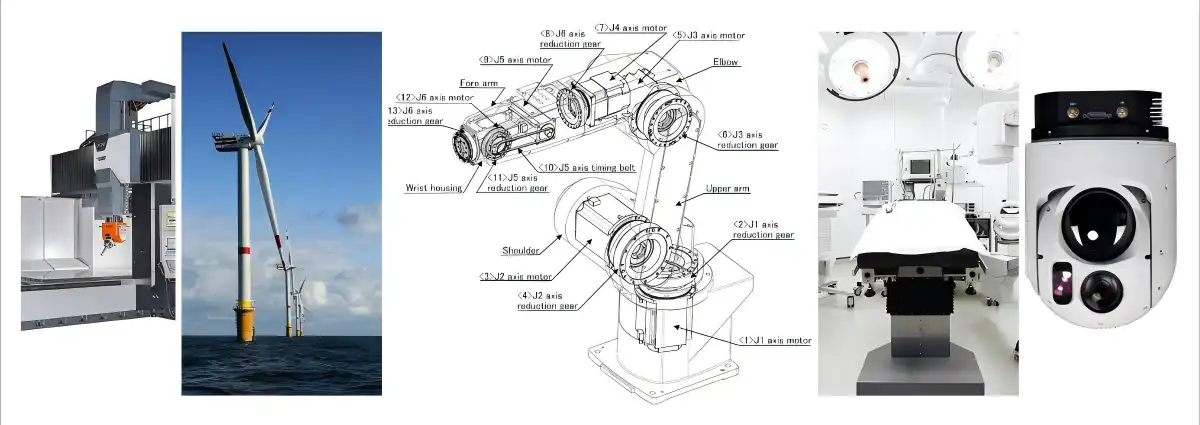
Robotic joint articulation demands bearing components that maintain precision through millions of rotation cycles under variable loading. Six-axis industrial robots typically incorporate 12-18 crossed roller bearings across their joint assemblies. These joints experience rapid acceleration, deceleration, and directional changes that generate significant moment loads. RB Series bearings absorb these complex load patterns while maintaining positioning accuracy within arc-seconds, essential for consistent weld placement or assembly operations. Durability becomes paramount as bearing failure necessitates complete robot downtime for replacement, halting entire production cells.
Rotary tables in machining centres rely on Crossed Roller Bearing RB Series durability for continuous operation. A typical automotive component machining line operates 6,000-7,000 hours annually, with individual rotary tables indexing thousands of times daily. The moment load capacity of crossed roller bearings enables these tables to maintain flatness and perpendicularity tolerances below 10 microns across 500mm+ diameters, even after years of continuous service. This sustained precision directly impacts finished component quality and reduces scrap rates in high-volume manufacturing environments.
Medical Equipment and Precision Instrumentation
Medical imaging devices incorporate RB Series bearings in CT scanner gantries where patient safety depends on absolute reliability. These bearings support rotating X-ray sources and detector arrays weighing hundreds of kilograms while maintaining concentricity tolerances enabling accurate image reconstruction. Operating environments include temperature variations and potential disinfectant exposure, demanding corrosion resistance alongside mechanical durability. The proven longevity of crossed roller bearings reduces maintenance interventions in clinical settings where equipment availability directly affects patient care capacity.
Semiconductor manufacturing equipment utilises precision bearings in wafer handling robots and inspection stages. These applications cannot tolerate particle generation from bearing wear, as contamination ruins expensive silicon substrates. RB Series bearings, manufactured in clean-room conditions and sealed against environmental contamination, provide the required cleanliness alongside durability. The extended service intervals reduce maintenance frequency, minimising clean-room disruption and maintaining production throughput in facilities where downtime costs exceed thousands of dollars per hour.
Aerospace and Defense Systems
Antenna positioning systems in satellite ground stations depend on bearing durability for continuous tracking accuracy. Large-aperture dish antennas weighing several tons require crossed roller bearings exceeding 1000mm in diameter in azimuth and elevation drives. These bearings must maintain positioning precision below 0.01° while withstanding outdoor temperature extremes, wind loads, and decades of operational service. The robust construction and corrosion-resistant materials in RB Series large-diameter bearings meet these demanding requirements, with documented service lives exceeding 20 years in properly maintained installations.
Radar systems in defence applications are subject to harsh environmental conditions, including temperature cycling, vibration, and potential shock loads. RB Series bearings in these applications undergo rigorous qualification testing to verify performance under extreme conditions. The proven durability reduces field maintenance requirements in remote installations where bearing replacement involves significant logistical complexity and operational downtime. Material traceability and manufacturing process controls ensure consistent quality, meeting stringent military specifications.
Procurement Insights: Choosing Durable Crossed Roller Bearing RB Series for Your Business
Supplier Evaluation Criteria
Quality certifications provide essential confidence in bearing durability for the Crossed Roller Bearing RB Series. Reputable crossed roller bearing manufacturers maintain ISO 9001 quality management system certification, demonstrating consistent process control. IATF 16949 certification specifically addresses automotive industry requirements, indicating the capability to meet demanding quality standards and continuous improvement practices. We recommend verifying that prospective suppliers hold current certifications from accredited registrars, as these credentials correlate strongly with product reliability and manufacturing consistency.
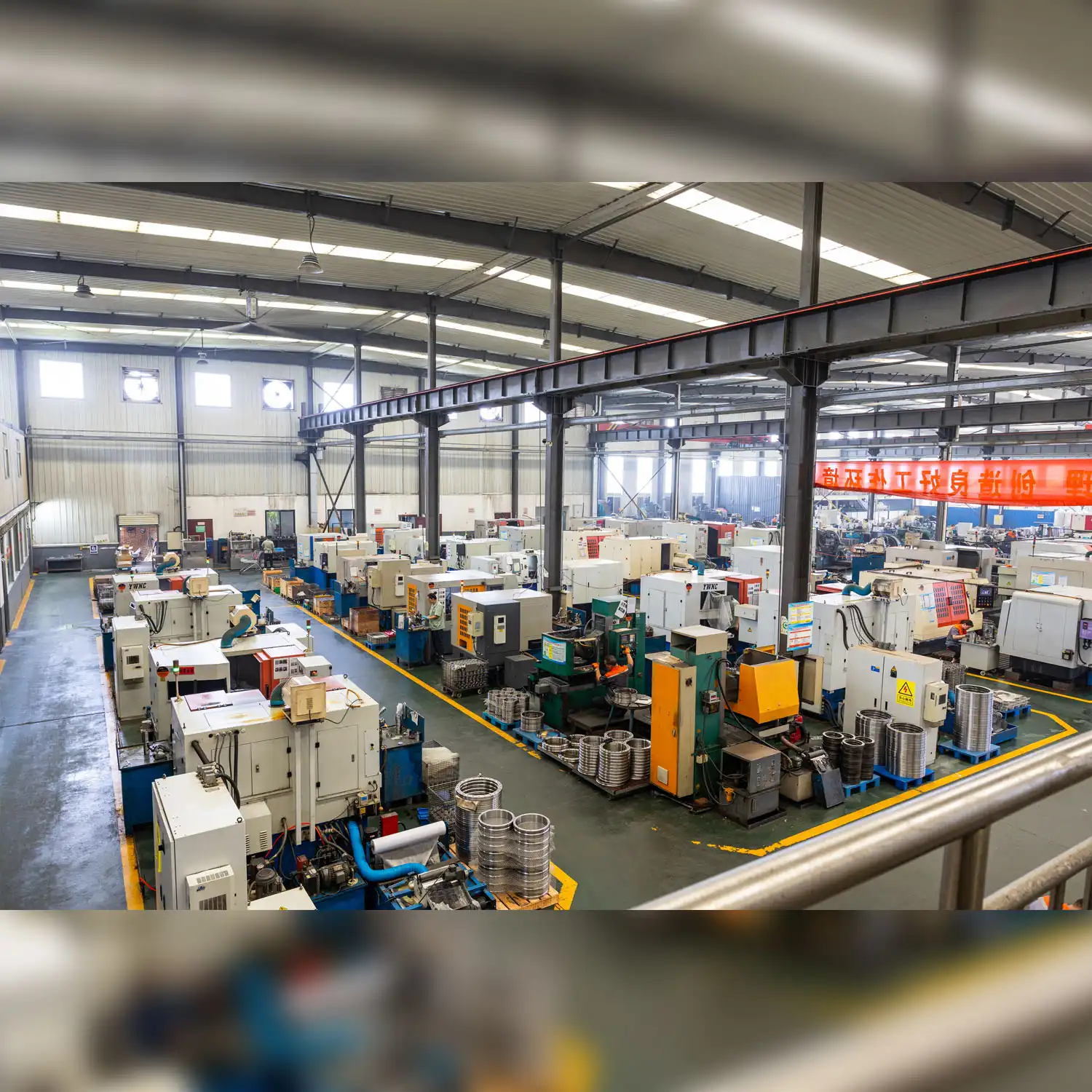
Manufacturing capacity determines supply chain stability. Suppliers with dedicated crossed roller bearing production lines demonstrate commitment to this specialised product category. Production capabilities spanning raw material processing through final assembly ensure quality control throughout manufacturing sequences. Facilities equipped with precision grinding centres, heat treatment systems, and metrology laboratories capable of verifying sub-micron tolerances indicate the technical sophistication necessary for producing durable precision bearings. Site visits or detailed capability questionnaires help procurement teams assess manufacturing infrastructure adequacy.
Balancing Cost and Value
Price considerations must account for the total cost of ownership rather than solely the initial purchase price. A bearing priced 30% above alternatives but delivering 50% longer service life and reduced maintenance requirements provides superior economic value. Procurement analyses should incorporate estimated maintenance costs, downtime expenses, and replacement frequency over anticipated equipment operational periods. This comprehensive approach often justifies premium pricing for superior-quality crossed roller bearings from established manufacturers with proven durability records.
Lead time management affects production scheduling and inventory requirements. Standard RB Series sizes from established suppliers typically ship within 4-8 weeks, while custom configurations may require 10-14 weeks. Maintaining a strategic inventory of critical bearing sizes buffers against unexpected failures and production disruptions, though inventory carrying costs must balance against risk mitigation benefits. Establishing relationships with reliable crossed roller bearing suppliers enables better demand forecasting and reduces expediting costs associated with emergency procurement situations.
Strategic Partnership Development
Long-term supply relationships deliver benefits beyond transactional pricing. Suppliers familiar with your specific application requirements provide valuable technical support during design phases, helping optimise bearing selection for maximum durability and performance. This collaboration reduces engineering time and minimises the risk of specification errors that could compromise equipment reliability. Technical partnerships enable the co-development of custom bearing solutions addressing unique application challenges that standard catalogue products cannot fully accommodate.
Warranty provisions and after-sales support demonstrate supplier confidence in product durability. Comprehensive warranties covering material defects and manufacturing flaws provide recourse if premature failures occur, though quality suppliers experience minimal warranty claims. Post-delivery technical support, including installation guidance, maintenance training, and troubleshooting assistance, adds substantial value, particularly when implementing crossed roller bearings in new application areas. Evaluating suppliers' service capabilities alongside product specifications ensures comprehensive support throughout bearing operational lifespans.
Conclusion
Durability in crossed roller bearings stems from the convergence of advanced material science, precision manufacturing, and thoughtful structural design. The Crossed Roller Bearing RB Series demonstrates this integration through GCr15SiMn steel construction, orthogonal roller arrangements distributing multi-directional loads, and manufacturing tolerances maintaining sub-micron accuracy. Compared to conventional bearing types, these precision components deliver extended service intervals, reduced maintenance requirements, and superior reliability in demanding industrial applications ranging from robotic articulation to medical imaging equipment. Procurement decisions should evaluate the total cost of ownership rather than initial pricing alone, considering the substantial operational savings that durable bearings provide through minimised downtime and extended replacement intervals. Partnering with certified manufacturers offering comprehensive technical support ensures optimal bearing selection and application success.
FAQ
What makes RB Series bearings more durable than standard ball bearings?
The perpendicular roller arrangement creates line contact with raceways rather than point contact, distributing loads across significantly larger surface areas. This reduces peak contact stresses that cause fatigue damage in ball bearings. Additionally, the integrated inner ring design eliminates split-ring discontinuities where stress concentrations typically initiate cracks, while premium GCr15SiMn steel provides superior material fatigue resistance compared to conventional bearing steels.
How often should crossed roller bearings be inspected and maintained?
Inspection intervals depend on operating conditions, but typical industrial applications warrant examination every 5,000-8,000 operating hours. Check for abnormal noise, vibration, or temperature increase indicating potential lubrication degradation or wear. The separable outer ring design facilitates inspection without complete disassembly. Relubrication requirements vary from 2,000 hours in harsh environments to 8,000 hours in clean, moderate-duty applications. Maintaining operating temperature logs helps identify gradual performance degradation before failures occur.
Can RB Series bearings be customised for specific industrial applications?
Manufacturers offer customisation options, including modified sealing arrangements, corrosion-resistant coatings, special lubrication for extreme temperatures, and dimensional modifications to fit existing equipment housings. Custom precision grades tighter than standard P4 specifications suit ultra-precision applications. Consultation with bearing engineers during design phases ensures optimal configuration selection, balancing performance requirements against cost considerations. Lead times for custom bearings typically extend 2-4 weeks beyond standard product delivery schedules.
Partner with ATLYC for Durable Crossed Roller Bearing Solutions
ATLYC delivers precision-engineered Crossed Roller Bearing RB Series manufactured under ISO 9001 and IATF 16949 certified quality systems, ensuring consistent durability meeting the demanding requirements of global automotive and industrial equipment manufacturers. Our expanded six-workshop facility employs 120 specialised professionals dedicated to producing high-precision bearings across inner diameters from 20-1100mm with accuracy grades spanning P6 through P4 standards. Established partnerships with OEMs across South Korea, the United States, Germany, and other key markets demonstrate our commitment to long-term supply reliability and technical excellence. Connect with our engineering team at auto@lyautobearing.com to discuss your specific application requirements, request technical specifications for crossed roller bearing models suited to your machinery, or arrange a sample evaluation. As a trusted crossed roller bearing manufacturer with 15 years of continuous improvement and global export experience, we provide the technical support, competitive pricing, and consistent quality that procurement professionals demand for mission-critical rotary applications.
References
1. Harris, T.A. and Kotzalas, M.N. (2006). Advanced Concepts of Bearing Technology: Rolling Bearing Analysis, Fifth Edition. CRC Press, Boca Raton.
2. ISO 492:2014. Rolling bearings — Radial bearings — Dimensions and tolerances. International Organisation for Standardisation, Geneva.
3. Shimizu, T. and Nakamura, K. (2018). "Performance Evaluation of Crossed Roller Bearings in Precision Rotary Tables," Journal of Precision Engineering and Manufacturing, Vol. 19, No. 4, pp. 523-531.
4. American Bearing Manufacturers Association (2019). Load Ratings and Fatigue Life for Roller Bearings. ABMA Standard 11-1990 (R2019), Washington, D.C.
5. Witte, D.C. (2012). "Material Selection and Heat Treatment for Extended Bearing Life," Tribology Transactions, Vol. 55, No. 2, pp. 187-196.
6. Budynas, R.G. and Nisbett, J.K. (2020). Shigley's Mechanical Engineering Design, Eleventh Edition. McGraw-Hill Education, New York.
Learn about our latest products and discounts through SMS or email
_1772782093670.webp)