- English
- French
- German
- Portuguese
- Spanish
- Russian
- Japanese
- Korean
- Arabic
- Greek
- German
- Turkish
- Italian
- Danish
- Romanian
- Indonesian
- Czech
- Afrikaans
- Swedish
- Polish
- Basque
- Catalan
- Esperanto
- Hindi
- Lao
- Albanian
- Amharic
- Armenian
- Azerbaijani
- Belarusian
- Bengali
- Bosnian
- Bulgarian
- Cebuano
- Chichewa
- Corsican
- Croatian
- Dutch
- Estonian
- Filipino
- Finnish
- Frisian
- Galician
- Georgian
- Gujarati
- Haitian
- Hausa
- Hawaiian
- Hebrew
- Hmong
- Hungarian
- Icelandic
- Igbo
- Javanese
- Kannada
- Kazakh
- Khmer
- Kurdish
- Kyrgyz
- Latin
- Latvian
- Lithuanian
- Luxembou..
- Macedonian
- Malagasy
- Malay
- Malayalam
- Maltese
- Maori
- Marathi
- Mongolian
- Burmese
- Nepali
- Norwegian
- Pashto
- Persian
- Punjabi
- Serbian
- Sesotho
- Sinhala
- Slovak
- Slovenian
- Somali
- Samoan
- Scots Gaelic
- Shona
- Sindhi
- Sundanese
- Swahili
- Tajik
- Tamil
- Telugu
- Thai
- Ukrainian
- Urdu
- Uzbek
- Vietnamese
- Welsh
- Xhosa
- Yiddish
- Yoruba
- Zulu
RU Series Crossed Roller Bearing for High-Precision Equipment
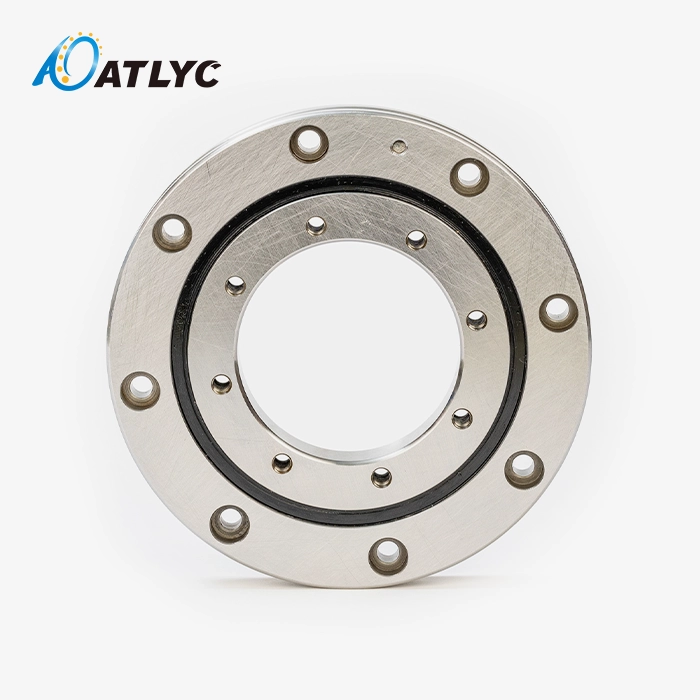
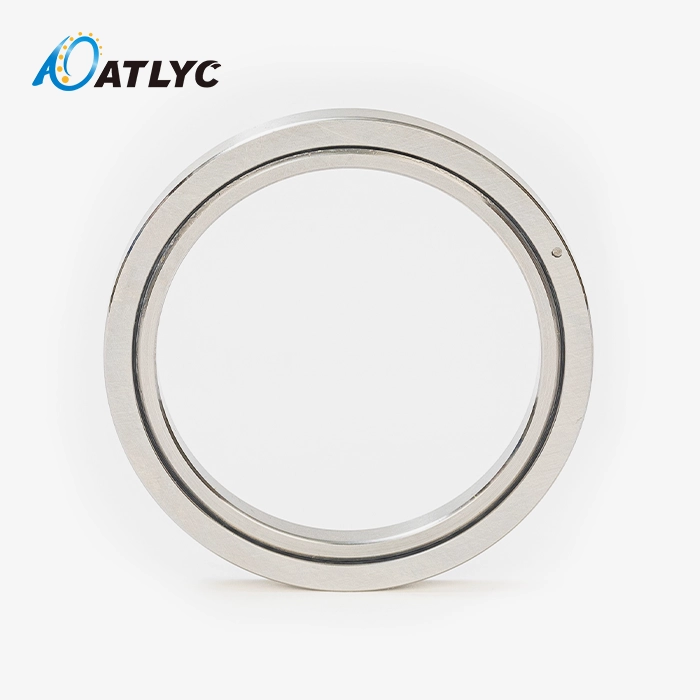
When your production line needs spinning parts to be very accurate, the RU Series Crossed Roller Bearing is the perfect option because it can handle loads in multiple directions and takes up little space. In this type of bearing, cylinder-shaped wheels are placed orthogonally inside a single unit. This unit supports radial forces, axial thrust, and overturning moments all at the same time. The outer and inner rings are built in and have fastening holes already drilled in them. This lets them be bolted directly to equipment frames without the need for extra housings. This setup is used by manufacturers in robots, semiconductor tools, and CNC machining centers to get repeatable placement down to the micron level while making mechanical designs easier.
Understanding RU Series Crossed Roller Bearings
Fundamental Design Principles
The crossed roller bearing design places cylindrical rollers at right angles to V-shaped raceways that are made into solid inner and outer rings every 90 degrees. Precision spacers separate each roller, keeping metal from touching metal and spreading the force evenly across all the rolling parts. With this setup, a single bearing can be used as a multi-axis load receiver. With ball bearings, you need two sets to handle complex loads. With a crossed roller unit, one unit can replace several parts. The entire ring design gets rid of the tolerance stack-up issues that come up with split-ring systems. Precision drilling is used to make every mounting hole while the raceways are being made. This makes sure that the bolt patterns and circular centerlines are perfectly lined up.
Technical Specifications and Dimensional Range
Our production range includes bore sizes from 20 mm to 1100 mm, outer diameters up to 1500 mm, and widths from 12 mm to 110 mm. This range of sizes can fit a wide range of items, from small robot wrist joints to big scanning tables. The bearing steel, which is made of GCr15 or GCr15SiMn, goes through controlled heat treatment processes that make the surface harder than 58 HRC while keeping the core tough. Raceway grinding methods can hold geometric limits up to ISO precision classes P6, P0, P5, P4, and P2. For ultra-precision uses, P2 can give runout values below 2 microns. Load rates go up as the size goes up. For example, a 100 mm hole model can usually handle 50 kN of horizontal force and 35 kN of axial force, while 500 mm models can handle loads over 400 kN.
Material Science and Manufacturing Quality
We only buy bearing steel from approved mills that let us fully track the material. The GCr15 metal has between 0.95 and 1.05% carbon and between 1.30 and 1.65% chromium. It is designed to be resistant to contact wear. GCr15SiMn adds silicon and manganese to make the steel harder in bigger cross-sections. Before rough cutting, rings go through stress-relief cooling after they have been forged. A vacuum heat treatment at 840°C, followed by oil cooling and tempering at 160°C, creates a microstructure that is martensitic and keeps less than 8% of the austenite. Cylindrical grinding machines with CBN wheels smooth out the raceways until the surface is Ra 0.2, and coordinate measuring machines make sure that all of the measurements are correct throughout the whole production process. This controlled production method makes sure that each batch is the same, which is very important for automatic assembly lines.
Advantages of RU Series Crossed Roller Bearings for High-Precision Applications
Performance Benefits in Critical Systems
Crossed roller bearings are used when the needs of the product are greater than what a normal bearing can handle. The benefits come straight from the unique design of rollers and the way the parts are built together. Knowing about these benefits helps buying teams explain why they need to change specifications or make investments.
Because the loads are handled at the same time, there is no need for complicated support setups. One crossed roller bearing can be used instead of two back-to-back angular contact ball bearing pairs or two radial-thrust bearing sets that work together. This makes things easier, cuts down on assembly time, lowers the chance of alignment mistakes, and lowers the overall cost of the parts. The rigid frame keeps its position accuracy even when the load changes. Changing moment loads would cause movement in less rigid bearing systems when a robot arm stretches and retracts. This would lead to positioning mistakes at the end effector. These deflections can't happen because the crossed wheel design keeps accuracy within ±5 arc-seconds. Most of the time, friction coefficients are much lower than those of many precise bearings, ranging from 0.002 to 0.004. In mechanical systems, this means that they will need fewer drive motors, produce less heat, and use less energy overall.
Real-World Applications Across Industries
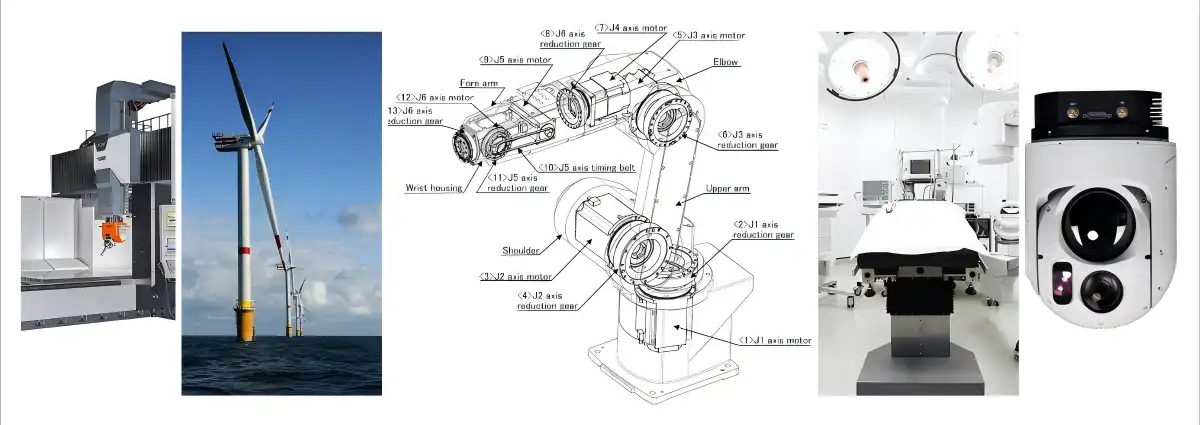
Industrial Robotics: Six-axis articulated robots integrate RU Series Crossed Roller Bearing at the waist and shoulder joints, where moment loads peak during rapid acceleration cycles. The direct mounting capability allows robot manufacturers to machine mounting surfaces directly into aluminum joint housings, reducing component count and overall robot weight. Lower rotating mass improves cycle times and extends the servo motor's lifespan.
Medical Imaging Equipment: CT scanner gantries require whisper-quiet rotation while supporting imaging components weighing several hundred kilograms in cantilevered configurations. The smooth operation and high moment capacity of crossed roller bearings enable continuous 360-degree rotation at variable speeds without vibration that would degrade image quality. The sealed design options protect internal components from exposure to cleaning agents used in medical environments.
Precision Machine Tools: CNC rotary tables and indexing heads demand positioning accuracy measured in arc-seconds. Crossed roller bearings provide the rotational accuracy necessary for fifth-axis machining operations, maintaining workpiece positioning throughout cutting cycles that generate variable radial and axial forces. The rigid mounting through bolted connections ensures the table's rotational centerline remains fixed relative to machine coordinate systems.
Maintenance Protocols for Extended Service Life
Implementing proper maintenance practices maximizes bearing longevity and protects your equipment investment. We recommend establishing routine inspection schedules based on operating hours rather than calendar intervals, as load cycles impact bearing condition more than elapsed time. During shutdowns, check mounting bolt torque values—vibration and thermal cycling can cause gradual loosening. Inspect seals for damage or displacement, as contamination represents the primary cause of premature failure. Clean external surfaces with lint-free cloths and approved solvents; avoid high-pressure washing that forces contaminants past seals.
Lubrication management requires attention to grease type, quantity, and replenishment intervals. We specify lithium-based NLGI Grade 2 greases with EP additives for standard applications, switching to synthetic formulations above 80°C or below -20°C operating temperatures. Initial grease fill typically occupies 30-40% of the bearing's free volume—excessive grease causes churning losses and temperature rise. Relubrication intervals depend on speed and load: a bearing running at 10 rpm under moderate load may operate 8,000 hours between greasing, while high-speed applications require lubrication every 500-1,000 hours. Automated lubrication systems ensure consistent grease delivery without disassembly, particularly valuable in sealed environments or hard-to-reach installations.
Comparative Analysis: RU Series vs Other Crossed Roller Bearings
Performance Comparison With Alternative Bearing Types
Selecting optimal bearing technology requires understanding how different designs perform under specific application conditions. Crossed roller bearings occupy a distinct performance zone between conventional roller bearings and more specialized configurations.
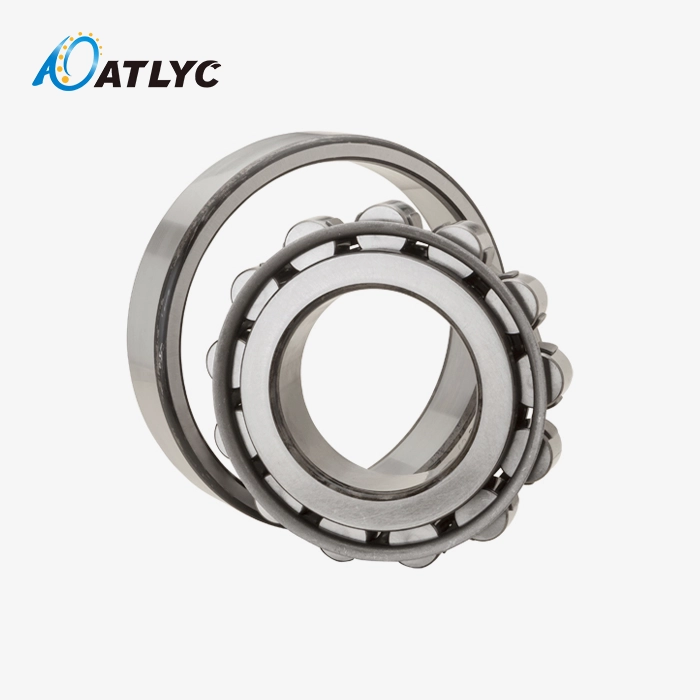
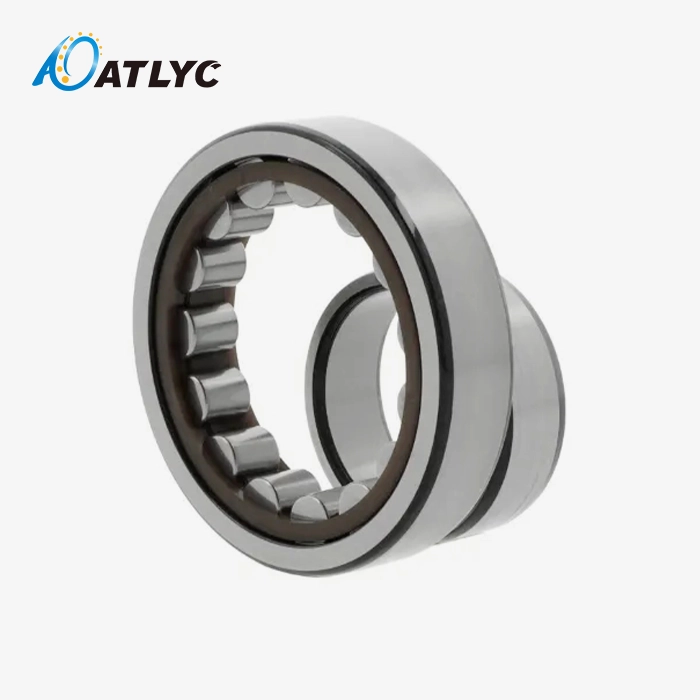
Versus Standard Cylindrical Roller Bearings: Traditional cylindrical roller bearings, including RU Series Crossed Roller Bearing, excel at pure radial loads but require separate thrust bearings for axial forces. They cannot handle moment loads without auxiliary support. A typical machining center might use four cylindrical roller bearings plus two thrust bearings to support a rotary table, whereas one crossed roller bearing accomplishes the same function. The crossed configuration reduces bearing count by 85% while improving rigidity. However, cylindrical roller bearings operate at higher speeds—20,000 rpm versus 500 rpm, typical limits for crossed rollers—making them preferable for high-speed spindle applications where loads remain primarily radial.
Versus Angular Contact Ball Bearings: Angular contact bearings handle combined radial-axial loads through pairs arranged in back-to-back or face-to-face configurations. They achieve higher speed capabilities than crossed roller bearings—suitable for machine tool spindles operating above 5,000 rpm. But angular contact bearings exhibit lower rigidity under moment loads and require precise preload adjustment during assembly. A robot joint using angular contact bearings needs complicated preload mechanisms and achieves lower positioning accuracy compared to a crossed roller solution. When speed remains below 300 rpm and moment capacity drives design requirements, crossed roller bearings provide superior performance.
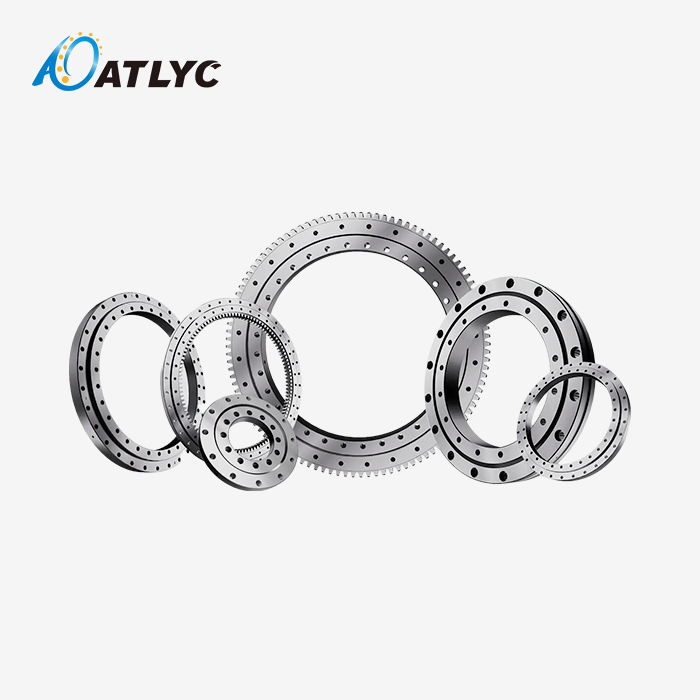
Versus Slewing Ring Bearings: Slewing bearings (also called turntable bearings) handle similar load combinations but feature gear teeth integrated into the ring structure for direct drive applications. They suit large-diameter, low-speed applications like crane turrets and wind turbine yaw drives. Slewing bearings typically start at 400 mm bore diameter, while crossed roller bearings serve applications from 20 mm upward. The geared design of slewing bearings adds cost and complexity unnecessary for applications requiring pure rotational support without integrated drive capability. Crossed roller bearings deliver higher rotational accuracy—slewing bearings typically achieve P6 precision while crossed roller options extend to P2 ultra-precision grades.
Dimensional and Load Rating Considerations
The compact cross-section of crossed roller bearings creates space-saving advantages in constrained envelopes. Comparing equivalent load capacities, a crossed roller bearing requires 40% less axial space than an angular contact ball bearing pair with a spacer and a preload mechanism. This dimension reduction proves critical in robot joint designs where each millimeter of length reduction improves the manipulator's reach-to-weight ratio. Load ratings scale differently across bearing types: ball bearings achieve higher speed-load products (DN values) while roller bearings excel in static load capacity. Crossed roller bearings optimize for high static and moment load capacity rather than speed capability, aligning perfectly with precision positioning applications.
Total Cost of Ownership Analysis
Procurement decisions benefit from evaluating lifecycle costs rather than initial purchase price alone. Crossed roller bearings command premium pricing compared to standard bearings—typically 3-5 times the cost of equivalent-capacity cylindrical roller bearings. This initial cost disadvantage diminishes when accounting for total system costs. The elimination of bearing housings, spacers, preload mechanisms, and additional mounting hardware reduces BOM costs by 20-30%. Simplified assembly procedures lower labor costs and reduce potential assembly errors that cause premature failures. Extended service intervals due to superior load distribution reduce maintenance costs. Over a 10-year equipment lifecycle, crossed roller bearings frequently deliver 15-25% lower total cost of ownership despite higher initial acquisition costs. These economics improve further in high-precision applications where positioning accuracy directly impacts product quality and scrap rates.
How to Select and Procure RU Series Crossed Roller Bearings
Technical Selection Criteria
Proper bearing selection starts with a comprehensive load analysis. Calculate maximum radial force, axial force, and overturning moment your application generates across all operating conditions—include startup transients, emergency stops, and worst-case load combinations. Compare these values against bearing catalog ratings, applying appropriate safety factors: 2.0 for static loads, 1.5 for dynamic loads in variable-duty applications. Verify that the calculated bearing life exceeds your target service interval—typically 20,000-30,000 hours for industrial equipment operating multiple shifts. Precision class selection depends on your rotational accuracy requirements: P6 or P0 suffices for general industrial machinery, P5 suits precision automation, while P4 and P2 serve ultra-precision applications like semiconductor manufacturing, where angular runout below 3 arc-seconds proves necessary.
When selecting a RU Series Crossed Roller Bearing, environmental conditions significantly influence design choices. Operating temperatures beyond -10°C to +80°C require special materials or heat treatment modifications. For contaminated environments, sealed bearing versions provide protection—use contact seals for static or slow-speed applications, and non-contact labyrinth seals for speeds above 100 rpm where seal friction becomes critical. In corrosive atmospheres or applications requiring frequent washdown, stainless steel construction or special protective coatings are necessary. Mounting configuration also matters: confirm whether your design requires inner ring rotation, outer ring rotation, or provisions for both. Additionally, verify that bolt hole patterns match your equipment design—custom hole patterns often extend lead times by 2-4 weeks.
Evaluating Supplier Qualifications
Quality assurance begins with supplier selection. Manufacturers holding ISO 9001 and IATF 16949 certifications demonstrate established quality management systems with documented process controls. Request certification documentation and review audit results—look for zero non-conformances in recent surveillance audits. Manufacturing capacity assessment prevents supply disruptions: evaluate whether monthly production volume accommodates your requirements plus 30% buffer for demand fluctuations. Established manufacturers typically maintain 4-6 weeks of finished goods inventory of standard sizes, while custom configurations require 8-12 week production cycles. Technical support capability distinguishes competent suppliers: engineering teams should provide application-specific load calculations, mounting recommendations, and integration drawings. Expect response times under 24 hours for technical inquiries during the quotation phase.
Strategic Procurement Approaches
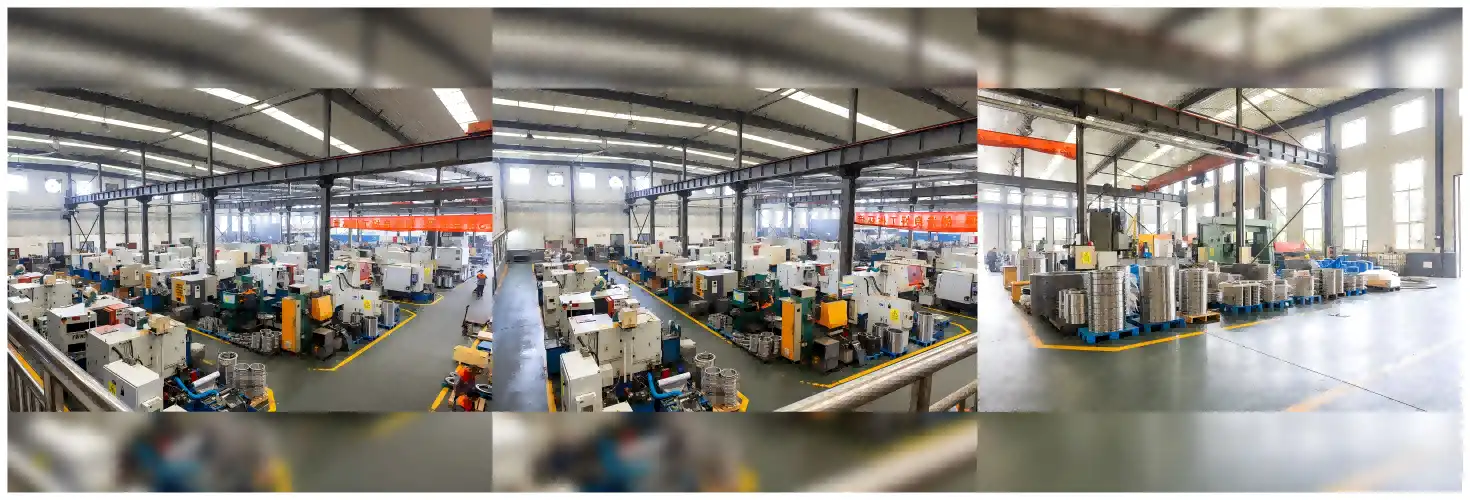
Building long-term supplier relationships delivers advantages beyond unit pricing. We established operations in 2010 and developed from a single workshop into an integrated manufacturing facility housing six specialized production areas staffed by 120 skilled professionals. This 15-year operational history demonstrates the stability and continuous improvement essential for strategic partnerships. Our ISO 9001 and IATF 16949 certifications validate process consistency, while our global customer base spanning South Korea, the United States, Germany, Russia, Iran, and Turkey confirms international quality acceptance. Annual supply agreements lock pricing for 12-month periods, protecting against raw material cost volatility while guaranteeing manufacturing capacity allocation. Volume commitments above 500 units annually typically qualify for 8-12% pricing reductions compared to spot purchases. Consignment inventory programs place stock at your facility without payment until withdrawal, improving your cash flow while ensuring immediate availability.
Prototype and sampling strategies reduce production risks. Order 3-5 sample bearings for evaluation before committing to production volumes. Conduct thorough dimensional inspection, measure runout accuracy, perform load testing under actual application conditions, and run extended duration trials exceeding 100 hours. Document performance against specifications and resolve any discrepancies before production orders. Request first-article inspection reports for production runs, verifying that manufacturing processes maintain sample quality at volume. Establish clear warranty terms: industry-standard bearing warranties cover manufacturing defects for 12 months from the delivery date or 2,000 operating hours, whichever occurs first. Clarify warranty exclusions related to improper installation, inadequate lubrication, or operation beyond specified parameters.
Future Trends and Innovations in Crossed Roller Bearing Technology
Advanced Materials and Surface Engineering
Bearing technology evolution for the RU Series Crossed Roller Bearing focuses on extending service life and expanding operating envelopes. Silicon nitride ceramic rolling elements are replacing steel rollers in demanding applications, offering 60% lower density that reduces centrifugal forces at high speeds, along with superior corrosion resistance and electrical isolation properties valuable in medical and semiconductor equipment. These ceramic hybrid bearings operate at temperatures reaching 300°C and achieve 3-5 times longer fatigue life compared to all-steel designs. Surface coating technologies deposit ultra-hard films—such as diamond-like carbon or chromium nitride—onto bearing surfaces, reducing friction coefficients to 0.001 and dramatically improving wear resistance in contaminated environments. These coatings prove particularly valuable in vacuum applications or extreme temperature conditions where conventional lubrication fails.
Smart Bearing Integration and Predictive Maintenance
Industry 4.0 connectivity transforms bearings from passive components into intelligent sensors monitoring their own condition. Integrated sensor packages embed temperature probes, vibration accelerometers, and load cells within bearing assemblies, transmitting real-time data to equipment controllers. Machine learning algorithms analyze vibration signatures to detect developing defects months before failure occurs, enabling predictive maintenance that schedules bearing replacement during planned shutdowns rather than responding to unexpected breakdowns. This condition monitoring capability reduces unplanned downtime by 70% while extending bearing life through optimized lubrication triggered by actual wear indicators rather than conservative time-based intervals. Wireless sensor nodes eliminate installation complexity, reporting via Bluetooth or industrial IoT protocols to centralized monitoring systems.
Application Evolution in Automated Manufacturing
The expansion of collaborative robots, autonomous mobile robots, and flexible manufacturing systems drives cross-roller bearing demand. Collaborative robots operating alongside human workers require exceptionally smooth motion—crossed roller bearings deliver the low friction and zero backlash necessary for compliant force control. Autonomous mobile robots navigating factory floors use crossed roller bearings in sensor turret mechanisms and manipulator joints, where compact size and multi-axis load capacity prove essential. Modular automation platforms that reconfigure for different products rely on quick-change tooling interfaces using crossed roller bearings for precise, repeatable positioning. These growing application areas ensure sustained market expansion, with industry analysts projecting 8-12% annual growth in precision bearing demand through 2030.
Conclusion
The RU Series Crossed Roller Bearing addresses critical requirements in high-precision equipment through its unique combination of multi-directional load capacity, compact dimensions, and exceptional rotational accuracy. The integral ring design with pre-drilled mounting holes simplifies installation while eliminating tolerance stack-up issues common in complex bearing arrangements. Applications across industrial robotics, medical imaging, precision machine tools, and semiconductor manufacturing benefit from the rigid structure that maintains positioning accuracy under variable loading conditions. Careful supplier selection, focusing on certifications, manufacturing capacity, and technical support capability, ensures successful procurement outcomes. Understanding comparative advantages versus alternative bearing types enables optimal specification decisions aligned with application demands and budget constraints. As manufacturing technology advances toward increased automation and precision requirements, crossed roller bearings will continue serving essential roles in equipment where accuracy and reliability prove non-negotiable.
FAQ
What operating speeds suit crossed roller bearings?
Crossed roller bearings optimize for high load capacity and positioning accuracy rather than speed capability. Typical operating speeds range from stationary indexing to 300 rpm for standard designs. Specialized high-speed variants using optimized cage designs and synthetic lubricants extend this limit to 500 rpm. Applications requiring higher rotational speeds should consider angular contact ball bearings or cylindrical roller bearings better suited to those operating conditions.
How do crossed roller bearings compare to angular contact ball bearings in robotic joints?
Crossed roller bearings deliver superior moment load capacity and positioning accuracy compared to angular contact ball bearing pairs. A robot joint using crossed rollers achieves ±5 arc-second repeatability versus ±15 arc-seconds typical for angular contact arrangements. The simplified mounting reduces joint assembly time by 40%. Angular contact bearings suit applications above 500 rpm where speed capability outweighs moment capacity requirements.
Can manufacturers customize crossed roller bearings for bulk OEM orders?
Custom modifications accommodate specific application requirements for orders exceeding 100 units. Common customizations include non-standard mounting hole patterns, special seal configurations, modified internal clearance, alternative materials, and precision grades tighter than catalog standards. Customization typically adds 2-3 weeks to standard lead times and requires engineering review to confirm feasibility. Providing detailed application specifications during quotation enables accurate custom solution proposals.
Partner With ATLYC for Your Crossed Roller Bearing Requirements
ATLYC has evolved into a comprehensive bearing manufacturer since our establishment in 2010, developing specialized expertise in precision crossed roller bearing production. Our 120-person team operates six dedicated manufacturing workshops equipped to produce crossed roller bearings from 20 mm to 1100 mm bore diameters, maintaining precision grades from P6 through P2 to match your exact application requirements. ISO 9001 and IATF 16949 certifications validate our quality management systems, ensuring every bearing meets international standards. As an experienced RU Series Crossed Roller Bearing supplier, we support global OEM partnerships across automotive components, industrial automation, and precision machinery sectors with reliable lead times, competitive pricing, and comprehensive technical assistance. Contact our engineering team at auto@lyautobearing.com to discuss your project specifications, request detailed technical documentation, or obtain quotations for prototype samples through production volumes. We provide application-specific load analysis, mounting recommendations, and customization capabilities that transform your design concepts into reliable rotating assemblies.
References
1. Harris, T.A. & Kotzalas, M.N. (2006). Advanced Concepts of Bearing Technology: Rolling Bearing Analysis, Fifth Edition. CRC Press.
2. Weck, M. & Brecher, C. (2006). Werkzeugmaschinen 2: Konstruktion und Berechnung. Springer-Verlag Berlin Heidelberg.
3. Marsh, E.R. (2010). Precision Spindle Metrology. DEStech Publications, Inc.
4. ISO 492:2014. Rolling bearings — Radial bearings — Geometrical product specifications (GPS) and tolerance values. International Organization for Standardization.
5. Gao, W., Kim, S.W., Bosse, H., Haitjema, H., Chen, Y.L., Lu, X.D., Knapp, W., Weckenmann, A., Estler, W.T., & Kunzmann, H. (2015). "Measurement technologies for precision positioning." CIRP Annals - Manufacturing Technology, 64(2), 773-796.
6. Neugebauer, R., Denkena, B. & Wegener, K. (2007). "Mechatronic Systems for Machine Tools." CIRP Annals - Manufacturing Technology, 56(2), 657-686.
Learn about our latest products and discounts through SMS or email