- English
- French
- German
- Portuguese
- Spanish
- Russian
- Japanese
- Korean
- Arabic
- Greek
- German
- Turkish
- Italian
- Danish
- Romanian
- Indonesian
- Czech
- Afrikaans
- Swedish
- Polish
- Basque
- Catalan
- Esperanto
- Hindi
- Lao
- Albanian
- Amharic
- Armenian
- Azerbaijani
- Belarusian
- Bengali
- Bosnian
- Bulgarian
- Cebuano
- Chichewa
- Corsican
- Croatian
- Dutch
- Estonian
- Filipino
- Finnish
- Frisian
- Galician
- Georgian
- Gujarati
- Haitian
- Hausa
- Hawaiian
- Hebrew
- Hmong
- Hungarian
- Icelandic
- Igbo
- Javanese
- Kannada
- Kazakh
- Khmer
- Kurdish
- Kyrgyz
- Latin
- Latvian
- Lithuanian
- Luxembou..
- Macedonian
- Malagasy
- Malay
- Malayalam
- Maltese
- Maori
- Marathi
- Mongolian
- Burmese
- Nepali
- Norwegian
- Pashto
- Persian
- Punjabi
- Serbian
- Sesotho
- Sinhala
- Slovak
- Slovenian
- Somali
- Samoan
- Scots Gaelic
- Shona
- Sindhi
- Sundanese
- Swahili
- Tajik
- Tamil
- Telugu
- Thai
- Ukrainian
- Urdu
- Uzbek
- Vietnamese
- Welsh
- Xhosa
- Yiddish
- Yoruba
- Zulu
RB Cross Roller Bearing vs Ball Bearing: Which Performs Better?
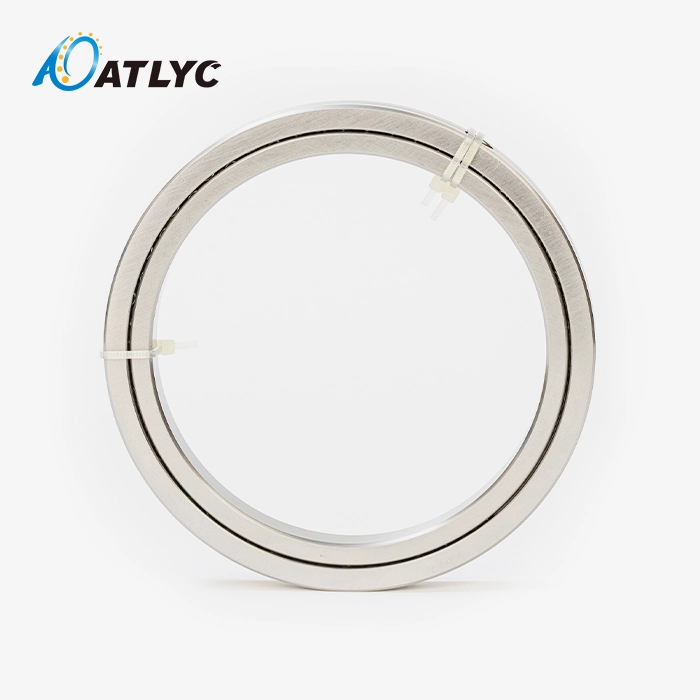
When precision and load capacity define the success of your equipment, the bearing you choose matters enormously. The RB cross roller bearing and the conventional ball bearing represent two distinct engineering philosophies. The RB cross roller bearing uses cylindrical rollers arranged at 90-degree angles to simultaneously carry radial, axial, and moment loads within a single compact unit—eliminating the need for multiple bearing assemblies. Ball bearings, by contrast, rely on spherical elements suited for lighter, higher-speed applications. For demanding industrial environments, the crossed-roller design consistently delivers superior rigidity, accuracy, and service life.

Understanding RB Cross Roller Bearings and Ball Bearings
What Is an RB Cross Roller Bearing?
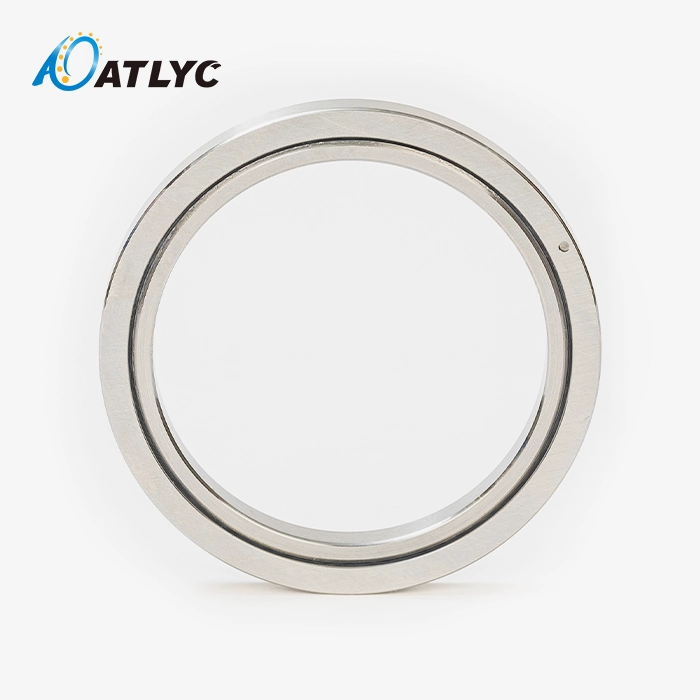
The RB Cross Roller Bearing has V-shaped precision-ground raceways with circular rollers placed alternately at 90-degree intervals. One bearing can handle radial, axial, and moment loads at the same time because of this structure. The design has inner and outer rings that are built in. The outer ring has a plug on it to hold the rollers in place and keep them oiled while the parts are being put together. These bearings come with inner diameters ranging from 20 mm to 1,100 mm and outer diameters ranging from 70 mm to 1,500 mm. They can be used with a lot of different industrial scales. You can choose from GCr15 and GCr15SiMn bearing steel as materials, and the accuracy grades are P6, P0, P5, P4, and P2.
What Is a Ball Bearing?
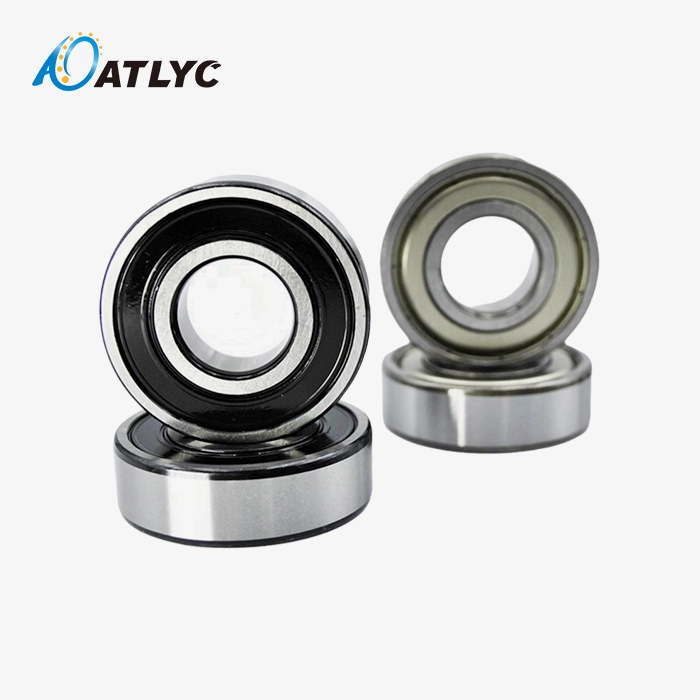
There are spherical rolling parts between the inner and outer raceways of a normal ball bearing. Because the ball and raceway touch at a point, they can rotate smoothly and with little friction. This makes ball bearings useful in the automobile, consumer electronics, and general machinery industries. On the other hand, point contact in roller-type systems reduces the load capacity and rigidity more than line contact. Ball bearings work well for high spinning speeds and light loads, but they don't do well when they need to handle loads in more than one direction or keep their place accurately while under a lot of stress.
Structural Differences at a Glance
The main differences in structure between the two types of bearings are shown in the table below:
| Feature | RB Cross Roller Bearing | Ball Bearing |
|---|---|---|
| Rolling Element | Cylindrical rollers (crossed 90°) | Spherical balls |
| Contact Type | Line contact | Point contact |
| Ring Structure | Integrated inner + outer ring with plug | Standard inner and outer rings |
| Load Direction | Radial + axial + moment (combined) | Primarily radial or axial |
| Accuracy Grades | P6, P0, P5, P4, P2 | Various, typically ABEC 1–9 |
Performance Comparison: RB Cross Roller Bearing vs Ball Bearing
Load Capacity and Rigidity
Crossed rollers make line contact along the whole length of the roller, which spreads forces evenly across the raceway surface. This shape makes the static and dynamic load ratings much higher than ball bearings of the same size. When testing artificial joints, cross roller bearings have been shown to be able to handle moment loads that are many times higher than paired angular contact ball bearings that are in the same axial space. This merging cuts down on the number of parts needed, the difficulty of putting them together, and the time needed for upkeep.
Precision and Runout Accuracy
When it comes to CNC rotating tables and tools for making integrated circuits, precision is very important. The line contact design across multiple rollers in the RB Cross Roller Bearing cuts down on eccentricity and wobble, which lets it handle runout very well. When the accuracy level is P4 or P2, the horizontal and axial runout numbers stay within a few microns. Even though there are high-precision grades of ball bearings, they don't have the moment stiffness that keeps a rotating table stable when cutting forces or positioning loads aren't applied evenly.
Durability and Maintenance
GCr15 and GCr15SiMn steels have deep-hardening properties and great fatigue resistance, which means they last longer between repairs in heavy-duty cycles. The RB Cross Roller Bearing's outer ring plug design keeps grease in well. It should be re-oiled with lithium-soap grease (like Alvania EP2 or an equivalent) every 6 to 12 months, depending on how it is used. When ball bearings are loaded together, they may need to be inspected more often because point contact causes more stress in one area, which speeds up wear over time.
Key Advantages of RB Cross Roller Bearings Over Ball Bearings
When precision is important and loads are high, the difference in performance between these two types of bearings is most clear. When it comes to tough B2B uses, the crossed-roller design has these main benefits:
Combined multi-directional load handling: A single RB cross roller bearing replaces what would otherwise require two or more angular contact ball bearings or tapered roller bearings arranged in tandem. This consolidation saves axial space, reduces housing design complexity, and lowers total part count in robot joint assemblies and precision rotary tables.
Higher moment load resistance: The 90-degree alternating roller arrangement creates a symmetric load path that resists tilting moments far more effectively than ball-based designs. In six-axis robot arms, this prevents arm deflection and maintains end-effector positioning accuracy during rapid directional changes.
Reduced backlash with preload control: The split outer ring of the RB series allows controlled preload application, eliminating internal clearance. This zero-backlash characteristic is non-negotiable in medical imaging systems and optical measurement instruments where even micron-level positional drift causes functional errors.
These benefits directly address production issues that are common in automation and precision machining, such as location errors caused by bearings, unplanned downtime due to premature wear, and the limited space of small machine designs.
Choosing the Right Bearing for Your Application: Decision Factors
Load Profile and Environmental Conditions
The crossed-roller design is the best one if the bearing has to handle radial, axial, and tilting moment loads all at the same time, like in robotic joints, manipulator pivot points, and precision rotary stages.
| Application Scenario | Recommended Bearing Type | Reason |
|---|---|---|
| Industrial robot joint | RB cross roller bearing | High moment + combined load capacity |
| CNC rotary table | RB cross roller bearing | High rigidity, low runout |
| Medical CT gantry | RB cross roller bearing | Smooth rotation, high moment load |
| Electric motor spindle | Ball bearing | High speed, moderate radial load |
| Conveyor drive shaft | Ball bearing | Cost-effective, single-direction load |
Precision Requirements and Speed Constraints
Low to medium rolling speeds are best for the RB Cross Roller Bearing. Line contact creates more friction per unit area than point contact, so going faster than the recommended speed makes heat build up. Ball bearings are still the best choice for uses that run at high steady RPM. The crossed-roller design is more accurate than ball bearings of the same size when it comes to tasks like positioning, indexing, oscillating, or intermittent rotation.
Cost and Procurement Practicality
While RB Cross Roller Bearings cost more per unit than regular ball bearings, the overall cost of ownership often works out better for the crossed-roller design. Using one RB unit instead of two angular contact bearings cuts down on the cost of housing machining, assembly work, and extra parts stock. This consolidation saves OEMs money on each machine build when they specify parts for large production runs.
Why ATLYC's RB Cross Roller Bearings Stand Out for B2B Buyers
Since 2010, Luoyang Auto Bearing Co., Ltd., which does business under the ATLYC brand, has been making precision bearings. The company has grown from a single production workshop to six specialized buildings over the past 15 years. It now has 120 employees working in production, research and development, quality control, and assembly. ATLYC is certified by both ISO 9001 and IATF 16949, which means it meets the quality control standards needed by OEMs of cars and industrial equipment around the world.
ATLYC's RB Cross Roller Bearing line has inner sizes ranging from 20 mm to 1,100 mm, and can meet the most exacting requirements with an accuracy grade of P2. Before it is shipped, each bearing goes through a CMM-based measurement inspection, runout testing, internal clearance verification, and a magnetic particle inspection. ATLYC has long-term supply deals with OEMs and wholesalers in the car and industrial automation sectors. The company has customers in South Korea, the United States, Germany, Russia, Iran, and Turkey.

Conclusion
In the process of working on an application, choosing between a crossed-roller design and a ball RB Cross Roller Bearing is not a matter of picking between the two; rather, it is a matter of matching the mechanical qualities of the bearing to the load and accuracy requirements of the application that you are working on. This is the process that you will go through when making your selection. During the time when you are working on an application, this is the situation. On the occasion that you are engaged in the process of developing an application, this is the circumstance.
FAQ
1. How does a cross roller bearing improve precision over a ball bearing?
In a crossed-roller bearing, the alternating cylindrical rollers make line contact along the whole length of the roller. This makes the load more evenly distributed, lowers the amount of deformation caused by elastic forces, and keeps runout within a few microns at high accuracy grades. Point contact is what ball bearings depend on. This means that they can bend more when loads are added together, which makes them less stable in precise applications.
2. Can one RB cross roller bearing replace two angular contact ball bearings?
Yes. One RB Cross Roller Bearing can handle radial, axial, and moment loads at the same time. Two angular contact bearings placed back-to-back would normally be needed to do these jobs. This replacement makes designing the housing easier, lowers the height of the assembly, and gets rid of the need to adjust the preload in a complicated way between each pair of bearings.
3. What lubrication does an RB cross roller bearing require?
It is normal to use lithium-soap grease, like Alvania EP2 or something similar. Re-lubrication should be done every 6 to 12 months, depending on the speed of operation and the weather. The outer ring plug design keeps grease inside the joint, which helps keep things lubricated between service times.
4. What accuracy grades are available for RB cross roller bearings?
The standard marks that can be given are P6, P0, P5, P4, and P2. The P4 and P2 grades are good for uses that need micron-level runout control, like IC manufacturing equipment, optical measurement instruments, and medical imaging systems.
Request a Quote From ATLYC — Your Trusted RB Cross Roller Bearing Manufacturer
Precision RB Cross Roller Bearings are made by ATLYC, which has been making them for 15 years and has ISO 9001 and IATF 16949 certifications. Our engineering team can help you with your needs from the design review process all the way through production, whether you need standard sizes or unique measurements. Please email us at auto@lyautobearing.com to talk about your needs and get a cheap bulk price.
References
1. Harris, T. A., & Kotzalas, M. N. Rolling Bearing Analysis: Essential Concepts of Bearing Technology. Taylor & Francis, 2006.
2. Schmann, P., Hasbargen, L., & Weigand, K. Ball and Roller Bearings: Theory, Design and Application. John Wiley & Sons, 1985.
3. NSK Ltd. Precision Machine Components Catalog: Cross Roller Bearings. NSK Technical Publications, 2019.
4. ISO 492:2014. Rolling Bearings — Radial Bearings — Dimensional and Geometrical Tolerances. International Organization for Standardization, 2014.
5. JTEKT Corporation. Bearing Technical Handbook: Selection and Application of Precision Bearings. JTEKT Engineering Publications, 2020.
6. Hamrock, B. J., Schmid, S. R., & Jacobson, B. O. Fundamentals of Fluid Film Lubrication. Marcel Dekker, 2004.
Learn about our latest products and discounts through SMS or email