- English
- French
- German
- Portuguese
- Spanish
- Russian
- Japanese
- Korean
- Arabic
- Greek
- German
- Turkish
- Italian
- Danish
- Romanian
- Indonesian
- Czech
- Afrikaans
- Swedish
- Polish
- Basque
- Catalan
- Esperanto
- Hindi
- Lao
- Albanian
- Amharic
- Armenian
- Azerbaijani
- Belarusian
- Bengali
- Bosnian
- Bulgarian
- Cebuano
- Chichewa
- Corsican
- Croatian
- Dutch
- Estonian
- Filipino
- Finnish
- Frisian
- Galician
- Georgian
- Gujarati
- Haitian
- Hausa
- Hawaiian
- Hebrew
- Hmong
- Hungarian
- Icelandic
- Igbo
- Javanese
- Kannada
- Kazakh
- Khmer
- Kurdish
- Kyrgyz
- Latin
- Latvian
- Lithuanian
- Luxembou..
- Macedonian
- Malagasy
- Malay
- Malayalam
- Maltese
- Maori
- Marathi
- Mongolian
- Burmese
- Nepali
- Norwegian
- Pashto
- Persian
- Punjabi
- Serbian
- Sesotho
- Sinhala
- Slovak
- Slovenian
- Somali
- Samoan
- Scots Gaelic
- Shona
- Sindhi
- Sundanese
- Swahili
- Tajik
- Tamil
- Telugu
- Thai
- Ukrainian
- Urdu
- Uzbek
- Vietnamese
- Welsh
- Xhosa
- Yiddish
- Yoruba
- Zulu
Can XU Series Cross Roller Bearing Improve Robot Accuracy?
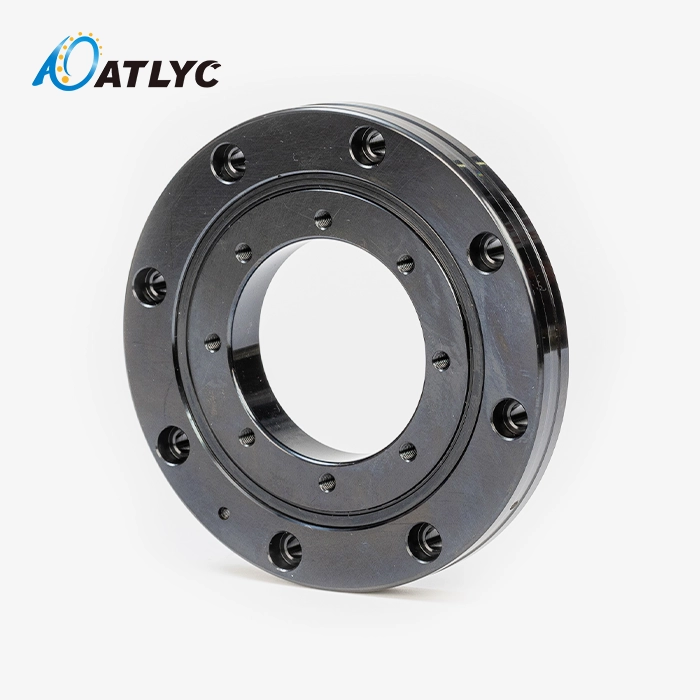
The XU Series Cross Roller Bearing is specifically built to address the positional accuracy demands of modern industrial robots. Its orthogonally arranged cylindrical rollers within a V-groove raceway deliver near-zero backlash, high moment load resistance, and rotational runout often under 2 microns. For manufacturers running 6-axis robots, collaborative arms, or precision indexing tables, this bearing type directly reduces positioning error and extends system repeatability — two factors that define robot performance in high-throughput production lines.

Understanding XU Series Cross Roller Bearings and Their Role in Robotics Accuracy
What Is a Cross Roller Bearing — and Why Does the XU Design Stand Apart?
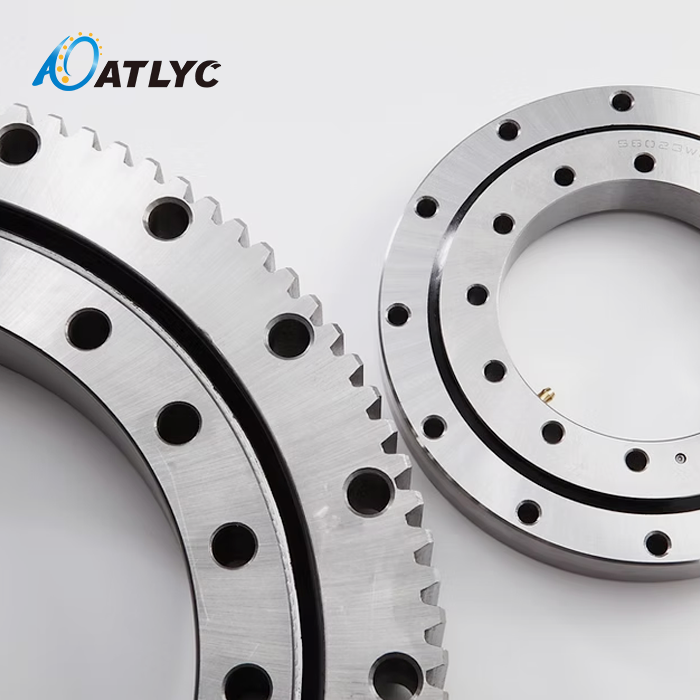
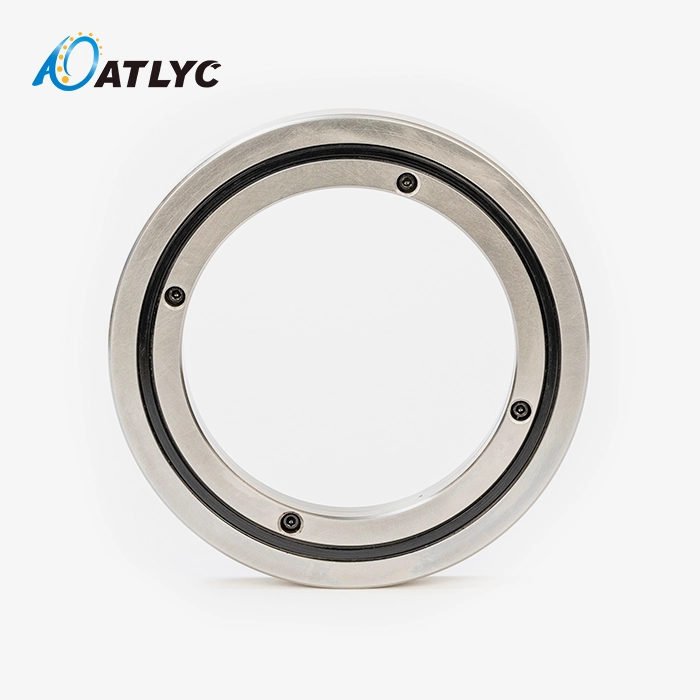
Inside a V-shaped raceway, cross roller bearings have cylindrical rollers that are placed in alternate vertical directions. With this design, a single bearing can handle radial, axial, and moment loads all at the same time. The XU Series takes this idea a step further by having an inner and outer ring structure that is fully integrated (not split). This eliminates the risk of the rings coming apart that comes with split-ring designs. There are pre-machined mounting holes on both rings that allow straight end-face installation. This means that you don't need any extra flanges or housings, which makes assembly easier in robot joints with limited room.
Core Specifications You Need to Know
There is a large spread of sizes in the XU Series. The inner diameter is 20 mm to 1,100 mm, the outer diameter is 70 mm to 1,500 mm, and the width is 12 mm to 110 mm. The raceway is made of high-carbon chromium bearing steel (GCr15 or GCr15SiMn) that has been heated to 58–64 HRC to make it resistant to wear. The available accuracy grades are P6, P0, P5, P4, and P2. These can be used in a wide range of situations, from general industrial use to ultra-precision electronics and medical tasks. Isolation blocks between the rollers keep the torque output fixed over the life of the bearing by stopping them from skewing.
How the Integrated Ring Structure Supports Rotational Stability
The XU design's one-piece ring construction keeps it from deforming under mixed loads, unlike the RB or RE split-ring series. This rigidity makes it possible for robotic arms to position their joints in the same way over and over again. In a normal 6-axis robot, each joint adds up to a positioning error, and a bearing with even a small amount of ring flex can make that error bigger along the kinematic chain. The solid structure of the XU Series keeps geometric standards tighter, which means that the total amount of error stays within acceptable limits for automation on an assembly line.
Why XU Series Cross Roller Bearings Improve Robot Accuracy
The Role of Crossed Roller Geometry in Reducing Mechanical Play
The 1:1 cross-arrangement of the rollers means that each roller touches the track four times at the same time. This contact shape spreads the load out evenly and gets rid of the tiny movements that make positional drift happen in regular ball bearings. When negative or zero clearance is set during the manufacturing process, it eliminates backlash from the moment it is installed. In real life, it is possible to get rotational runout values below 2 microns, which is a very important number for things like chip alignment or precision welding robots.
The following table shows how the XU Series and regular deep groove ball bearings compare in important robotics performance areas:
When it comes to performance, the XU Series Cross Roller Bearing is a standard deep groove ball bearing. It has a high moment load capacity (single-unit handling) and a low moment load capacity (requires paired setup).
| Performance Metric | XU Series Cross Roller Bearing | Standard Deep Groove Ball Bearing |
|---|---|---|
| Moment Load Capacity | High (single-unit handling) | Low (requires paired setup) |
| Rotational Runout | < 2 microns (P4/P2 grade) | 5–15 microns typical |
| Backlash | Near-zero (pre-adjusted) | Moderate |
| Assembly Height | Compact (integrated rings) | Taller (requires housing) |
| Load Direction | Radial + Axial + Moment | Radial primary |
Thermal Stability and Wear Resistance Under Industrial Conditions
When heat-treated correctly, GCr15 steel keeps its shape over a wide range of working temperatures. This is important for continuous-cycle robots because the growth of bearing parts due to heat can change the preload and the accuracy of spinning. The XU Series is made with controlled hardening depth to make sure that the structure of the raceways stays the same even after long thermal cycles. This is an important factor that is often forgotten during buying but is needed for long-term positioning accuracy.
Comparison With Alternative Crossed Roller Bearing Types
When engineers look at the XU Series, they often compare it to the RB, RE, and RA series of crossed roller bearings. The non-separable ring form of the XU is its main benefit. This makes it better for uses with heavy moment loads and frequent direction changes, which are popular in collaborative robot joints. The XU Series makes installation easier and cuts down on the number of connecting parts, which lowers the total assembly tolerance stack-up. This is in contrast to the RE series bearings, which need outer ring clamping.
Selecting the Right Bearing: Criteria for B2B Procurement Managers
Matching Accuracy Grade to Application Requirements
Before making a purchase decision, you should know how accurate you need the robot's axis to be in terms of its position. P6 or P0 grade XU bearings work well enough for basic automation at a reasonable price. P4 or P2 grade is the right standard for surgical robots, optical screening systems, or tools used to handle semiconductors. If you choose a grade greater than what is needed, it will cost you more without giving you any real benefits. If you choose a grade too low, it will cause drift that lowers the quality of the product at the line level.
Key Procurement Checklist for Cross Roller Bearings
To make sure they get the following information from their supplier before placing a large order for any cross roller bearing:
CMM-verified dimensional reports: Confirm bore diameter, mounting hole positions, and width parallelism meet stated tolerances.
Rotational accuracy test records: Inner and outer ring radial and axial runout must be within the declared tolerance class (e.g., ≤ 0.005 mm for P5).
Hardness and material certification: Raceway hardness should be uniformly within 58–64 HRC, verified by testing documentation.
Starting torque uniformity test: Confirms preload is evenly distributed, preventing localized fatigue from tight spots.
ISO 9001 and IATF 16949 certificates: Both certifications indicate the manufacturer operates under audited quality management systems.
These checkpoints make it easier for incoming inspections and keep field failures from happening, which are hard to find after the robot is put together and cost a lot of money.
Customization and OEM Support Considerations
Standard catalog sizes might not fit all joint shapes for OEM buyers who are making their own robot platforms. A good company that makes XU Series Cross Roller Bearings should offer engineering help for non-standard bore sizes, changed mounting hole patterns, or different surface coating choices. Both clear lead times and proven production capacity are important, especially for projects that ramp up volume every three months. When it comes to foreign programs, suppliers who have experience exporting to countries like the US, Germany, and South Korea usually have better paperwork and logistics systems in place.
The following table shows a summary of the main selection criteria and how they apply to different types of robot use:
As a selection criterion, you can choose from General Industrial Robots, Collaborative Robots (Cobots), and Precision Optical/Medical Robots. The recommended accuracy grade is P6/P0, P5/P4, and P4/P2. The moment load priority is moderate, high, and moderate. The customization need is low, medium, and high. The inspection documentation is standard, and it includes full CMM reports and a torque test.
| Selection Criterion | General Industrial Robot | Collaborative Robot (Cobot) | Precision Optical/Medical |
|---|---|---|---|
| Recommended Accuracy Grade | P6 / P0 | P5 / P4 | P4 / P2 |
| Moment Load Priority | Moderate | High | Moderate |
| Customization Need | Low | Medium | High |
| Inspection Documentation | Standard | Full CMM reports | Full CMM + torque test |
Maintenance and Longevity: Ensuring Consistent Robot Performance
Lubrication Schedules and Grease Selection
Most of the time, grease is better than oil bath systems for lubricating XU Series bearings in robotic joints. The type of grease should fit the speed and temperature range. For example, a low-viscosity synthetic grease works well in high-speed, low-load situations, while a medium-viscosity lithium complex grease is better for situations with higher moment loads. When to re-oil depends on how often the cycle happens, but most industrial robotic joints should be inspected every 2,000 to 3,000 hours of use.
Early Warning Signs of Bearing Wear
Early signs of track wear or roller damage include more power when starting, noise that can be heard when the motor is turning slowly, or a noticeable rise in joint backlash. Using thermal images during operation can also find heat that isn't spreading evenly because of load loss. If you notice these signs early, you can keep the robot's gear train or motor encoders from getting damaged, which would cost a lot more to repair than the bearing itself.
Environmental Controls That Extend Service Life
Metal chips, coolant mist, or airborne particles can make the raceways in XU Series bearings wear out faster. Practical steps include making sure the housing contact is properly sealed and not over-lubricating, which can attract dirt. In harsh settings, choosing a bearing with a tighter seal contact or adding external labyrinth shields can make service intervals longer and keep the accuracy over a longer period of time.
Applications and Case Studies: Real-World Impact of XU Series Bearings in Robotics
Robotic Joint Articulation in 6-Axis Arms
When it comes to 6-axis industrial robots, the wrist and elbow joints are under the most stress. The XU Series bearing is a good choice for these joints because it can handle radial, axial, and moment loads all in one small unit. When engineers switch from angular contact ball bearing pairs to cross roller bearings in joint designs, the assembly height goes down, and accuracy at the tool center point gets better.
Hollow Rotary Indexing Tables in Automated Assembly Lines
Bearings that keep sub-micron positional accuracy during high-speed, intermittent rotation are needed for hollow rotary indexing tables that are used to put together automotive parts. During the index cycle, the XU Series bearing keeps the table centered while supporting the full load. This has a direct effect on how accurately the part is placed for processes like laser welding or torque fastening, which need to be able to accept a position error of ±0.05 mm or less.
Medical Imaging and Semiconductor Handling Equipment
Stick-slip behavior, even at the nanometer scale, lowers picture quality or leads to alignment mistakes in CT scanners and semiconductor chip guides. The XU Series bearing has zero clearance and smooth roller-spacer contact, which makes the torque constant throughout the whole spin cycle. Several engineers who work on medical devices have said that this feature is the main reason why they choose cross roller bearings over other types of precision bearings.

Conclusion
The XU Series Cross Roller Bearing solves a well-known issue in precision robotics: keeping the robot's position accurate under mixed loads for long service cycles. A combined ring structure, crossed roller geometry, and high-grade steel raceway all work together to keep the error in rotation very small. The XU Series is a technically sound and certified bearing option for procurement managers and design engineers looking for bearings for robot joints, indexing tables, or optical platforms. It balances performance with long-term dependability.
FAQ
1. How does the XU Series differ from standard crossed roller bearings like the RB or RE series?
The XU Series uses a non-separable, integrated inner and outer ring. The RB and RE series have split outer rings, which makes them easier to install in certain housing configurations but less rigid under heavy moment loads. The XU design is preferred when ring rigidity and installation simplicity are both priorities.
2. What accuracy grade should I specify for a collaborative robot joint?
P5 or P4 grade is appropriate for most cobot joints. P4 delivers rotational runout under 3 microns and suits applications requiring precise torque sensing. P2 grade is reserved for ultra-precision optical or measurement applications where cost is secondary to accuracy.
3. Can the XU Series bearing be ordered in custom dimensions?
Yes. The standard size range covers inner diameters from 20 mm to 1,100 mm, but manufacturers with OEM capability — including Luoyang Auto Bearing — can accommodate non-standard bore sizes, modified hole patterns, and specific material or coating requirements upon request.
4. What is the recommended inspection interval for XU Series bearings in robotics?
Most robotic applications benefit from a functional inspection every 2,000–3,000 operating hours. This includes checking starting torque, listening for abnormal noise, and verifying joint backlash against the baseline measurement taken at installation.
5. Are XU Series cross roller bearings compliant with ISO 9001 and IATF 16949 standards?
Bearings produced under ISO 9001 and IATF 16949 certified quality management systems meet the documentation and process control requirements expected by automotive and industrial OEMs. Always request the relevant certificates from your supplier before placing production orders.
Partner With ATLYC for Your XU Series Cross Roller Bearing Supply
Since 2010, ATLYC, which is part of Luoyang Auto Bearing Co., Ltd. and is ISO 9001 and IATF 16949 certified, has sold high-precision bearings to OEMs and distributors in the US, Germany, South Korea, and other places. We have been making XU Series Cross Roller Bearings for 15 years and have six factories where they are made. We offer full CMM inspection records, special technical support, and reliable lead times for both trial and bulk orders. Please email your technical drawings or specifications to auto@lyautobearing.com. Our engineering team will get back to you with a full quote.
References
1. Hamrock, B. J., Schmid, S. R., & Jacobson, B. O. Fundamentals of Machine Elements. McGraw-Hill, 2014.
2. SKF Group. Rolling Bearings Technical Handbook. SKF Publications, 2018.
3. International Organization for Standardization. ISO 492: Rolling Bearings — Radial Bearings — Dimensional and Geometrical Tolerances. ISO, 2014.
4. Nakagawa, T., & Yoshida, A. "Accuracy and Stiffness Analysis of Cross-Roller Bearings for Industrial Robot Joints." Journal of Advanced Mechanical Design, Systems, and Manufacturing, 2019.
5. Radzevich, S. P. Precision Gear Shaving. CRC Press, 2020.
6. International Federation of Robotics. World Robotics Report: Industrial Robots. IFR Statistical Department, 2023.
Learn about our latest products and discounts through SMS or email