- English
- French
- German
- Portuguese
- Spanish
- Russian
- Japanese
- Korean
- Arabic
- Greek
- German
- Turkish
- Italian
- Danish
- Romanian
- Indonesian
- Czech
- Afrikaans
- Swedish
- Polish
- Basque
- Catalan
- Esperanto
- Hindi
- Lao
- Albanian
- Amharic
- Armenian
- Azerbaijani
- Belarusian
- Bengali
- Bosnian
- Bulgarian
- Cebuano
- Chichewa
- Corsican
- Croatian
- Dutch
- Estonian
- Filipino
- Finnish
- Frisian
- Galician
- Georgian
- Gujarati
- Haitian
- Hausa
- Hawaiian
- Hebrew
- Hmong
- Hungarian
- Icelandic
- Igbo
- Javanese
- Kannada
- Kazakh
- Khmer
- Kurdish
- Kyrgyz
- Latin
- Latvian
- Lithuanian
- Luxembou..
- Macedonian
- Malagasy
- Malay
- Malayalam
- Maltese
- Maori
- Marathi
- Mongolian
- Burmese
- Nepali
- Norwegian
- Pashto
- Persian
- Punjabi
- Serbian
- Sesotho
- Sinhala
- Slovak
- Slovenian
- Somali
- Samoan
- Scots Gaelic
- Shona
- Sindhi
- Sundanese
- Swahili
- Tajik
- Tamil
- Telugu
- Thai
- Ukrainian
- Urdu
- Uzbek
- Vietnamese
- Welsh
- Xhosa
- Yiddish
- Yoruba
- Zulu
RB cross roller bearing with P4 precision grade
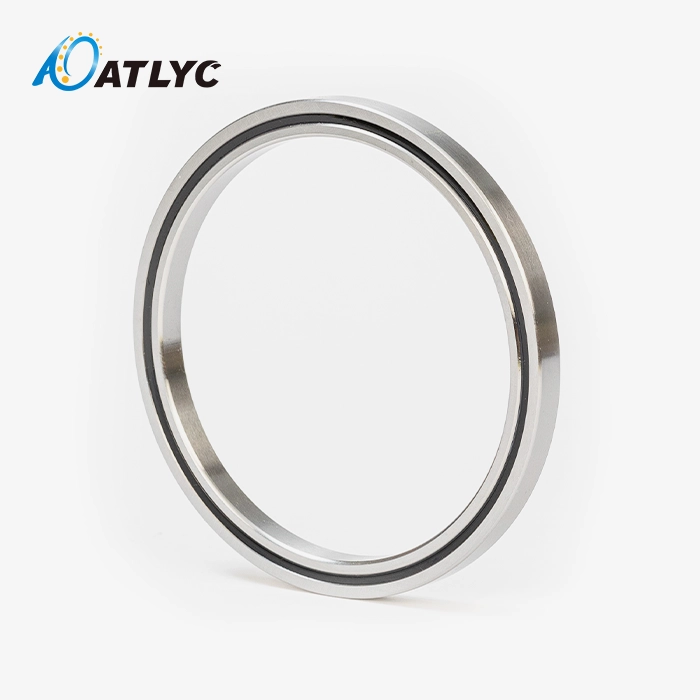
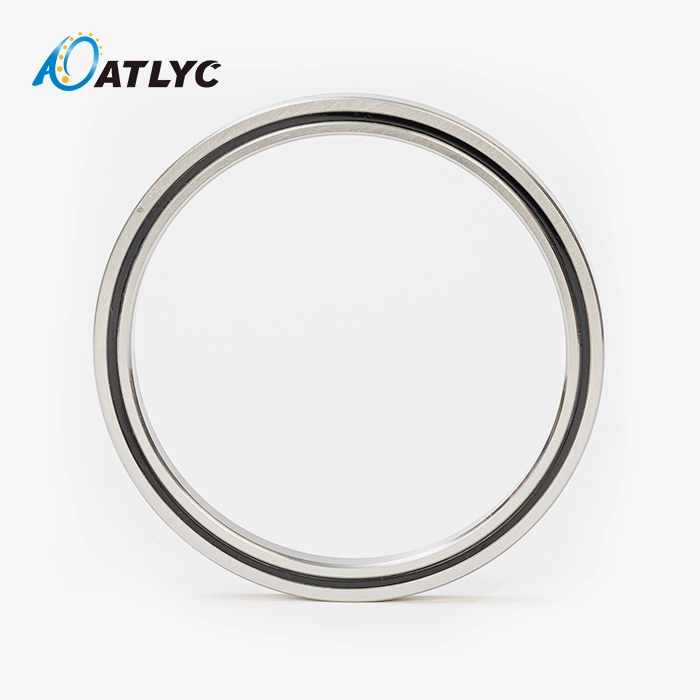
When your precision engineering projects need very accurate spinning and the ability to handle loads in multiple directions in tight areas, RB Crossed Roller Bearings with P4 precision grade give you the performance you need. These unique parts have cylinder-shaped wheels set up perpendicularly at 90-degree intervals within V-shaped grooves. This lets a single bearing unit handle radial, axial, and moment loads all at the same time. The P4 precision classification is one of the most accurate standards out there. Dimensional errors measured in microns make sure that the product always works well in tough industrial settings. With an outer ring plug design and an integrated inner and outer ring construction, these bearings make installation easier while giving automatic systems, robots, and precision machinery the strength they need.
Understanding RB Crossed Roller Bearings and P4 Precision Grade
Crossed roller bearing technology solves a problem that equipment makers have been having for a long time: how to get the most stiffness and load capacity in a small fitting area. Traditional bearing methods often need more than one unit to handle loads going in different directions. This makes the system more complicated and increases the number of places where it could fail.
What Makes the Crossed Roller Configuration Unique
The feature that makes it unique is the alternate roller design. When you put two cylindrical rollers at right angles to each other, you get more contact lines than points. This means that the force you apply is spread out over a much bigger surface area. Because of this arrangement, engineers can combine parts that used to need separate radial and thrust bearings into a single, small unit.
The outer ring plug construction and continuous ring structure get rid of any weak spots that might be present in split-ring designs. Loads move evenly through the roller complement while it is in use, so there are no stress points that speed up wear. This structural benefit is especially useful in places where there is a lot of pressure or shock, because regular bearings might become loose or out of line over time.
Decoding P4 Precision Classification
The precision scores are based on ISO standards, and P4 means the highest level of accuracy in measurements. The system goes from P0 (normal) to P6, P5, P4, and P2. Each step means that the manufacturing limits are getting tighter. P4 grade bearings keep the runout accuracy of the inner and outer ring raceways to within 2.5 microns. This makes sure that spinning stays true even when the conditions are tough.
In industry settings, this level of accuracy directly leads to measurable performance gains. Machine centers with P4 precision bearings have lower shaking amplitudes, which lets them achieve better surface finishes and better control over dimensions. Robotic systems make it easier to repeat positions, which cuts down on mistakes that happen during complicated building processes.
To get P4 specs in the manufacturing process, you need to use specific cutting methods and strict quality control rules. Coordinate measure tools are used to check the dimensions of each bearing. The specs are compared to the hole diameter, outside diameter, width, and raceway design. P4 labelling only goes to parts that meet all the requirements. This makes sure that all output runs are the same.
Load Distribution Principles in Crossed Roller Design
When you know how crossed roller bearings handle applied forces, you can see why they are so good for accurate uses. The design of vertical rollers makes a load path that uses about half of the roller complement, no matter which way the load is going. When radial forces work on the bearing, the main load is carried by wheels that are parallel to the force direction. At the same time, the perpendicular rollers keep the geometry stable and protect against moment loads.
This even spread of loads stops the localised stress buildups that happen in older systems. Ball bearings, on the other hand, focus contact forces at specific places, which limits their ability and speeds up surface wear. When circular wheels make straight contact, these forces are spread out. This makes the bearing last longer and keeps its accuracy over its entire working life.
Advantages and Key Applications of RB Crossed Roller Bearings with P4 Grade
More and more, precision manufacturing relies on parts that keep working well even after long periods of time without being serviced. When equipment has to be taken apart to repair or change bearings, it throws off production plans and lowers profits. This is why component dependability is a strategic worry.
Compact Design Enabling Space-Efficient Equipment
Machine designers can create more compact equipment without sacrificing performance because the RB Crossed Roller Bearings consume less envelope space. What previously required multiple bearing arrangements and housing modifications now needs only a single RB unit, simplifying assembly and reducing component count. This consolidation proves particularly valuable in robotics, where joint design must balance stiffness requirements against weight constraints and range-of-motion limitations.
Manufacturers of equipment for the electronics and car industries say that using these bearing solutions allowed them to rethink products in a way that cut machine sizes by 15 to 20 percent while also increasing output. Because the cross-section is small, motors, spinning tables, and positioning systems take up less floor space. This lets makers put more equipment in the same amount of area.
Elevated Load Capacity Supporting Demanding Applications
In real life, forces don't usually act along a single axis, so the ability to handle loads in more than one way is useful. When industrial robots move materials, they are loaded in complicated ways, with rotational and moment forces changing during work cycles. Cutting forces and the weight of the item are applied to the machine tool spinning tables at the same time, causing radial, axial, and rotating moments.
Sizes from 20 mm to 1100 mm in diameter, 70 mm to 1500 mm in diameter, and 12 mm to 110 mm in width are available to fit a variety of machine scales. GCr15 and GCr15SiMn bearing steel are two types of materials that can be used because they are hard enough to last in harsh situations. These materials are heated to get a top hardness of more than 58 HRC while keeping their core toughness, which keeps them from breaking when they are hit.
Minimal Backlash Maintaining Positional Accuracy
Backlash, or the space between parts that fit together, is a very important issue in accurate tracking systems. Even small amounts of play can make kinematic chains worse, which lowers the accuracy of the conclusion. When crossed roller bearings are used in a preset arrangement, this gap is eliminated. This means that commands for movement directly translate to real movement with no lost motion.
Manufacturers of measuring instruments depend on this feature to keep the calibration stable. For example, coordinate measuring tools need the position of the probe to stay the same within a few microns for thousands of measurement rounds. P4 precision crossed roller bearings provide stable, backlash-free spinning that supports quality control processes for precision-manufactured parts. This ensures measurement accuracy.
Real-World Performance in Critical Industries
Assembly automation in the production of gadgets shows how bearing choice affects real life. A company that makes electronic control units for cars set up robotic assembly cells with P4 precision crossed roller bearings in the arms that can move in different directions. Positional repeatability went from ±0.08mm to ±0.02mm after the launch. This cut the number of defects by 40% and made it possible to tighten the tolerances for where parts are placed. Within eight months, the investment paid off thanks to less rework and higher output yield.
Machining parts for aerospace is another interesting use case. Five-axis machining centers that used these bearings in rotary table units got an average 30% better surface finish than machines that used older bearings. The increased stiffness kept the tool from deflecting during broken cuts, which increased tool life and cut cycle times. Several defence companies that make precision guidance parts have started using this bearing technology because it is accurate, reliable, and comes in small packages.
Comparison of RB Crossed Roller Bearings with Alternative Bearing Types
Procurement decisions require understanding not just a component's capabilities but how it compares against alternatives. Different bearing technologies offer distinct advantages, making selection dependent on application-specific requirements.
Ball Bearings: Speed Versus Rigidity Trade-offs
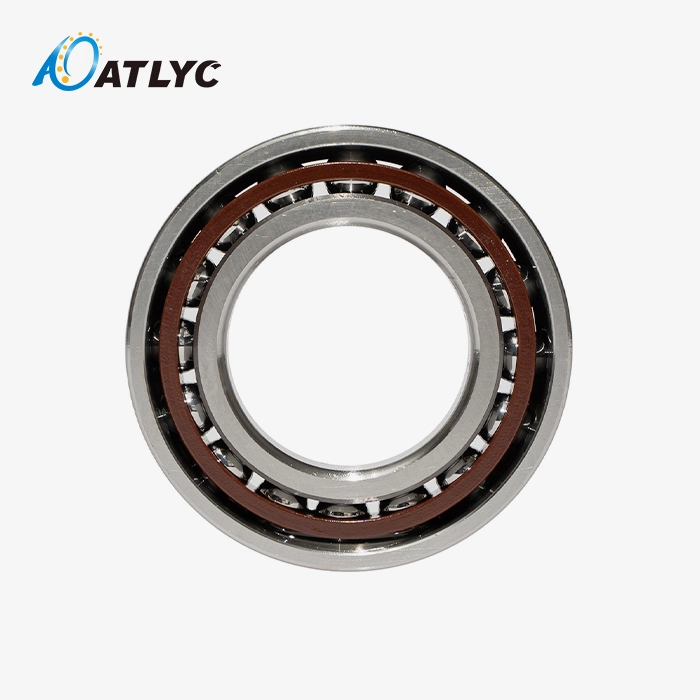
Angular contact ball bearings handle combined loads and achieve high rotational speeds with relatively low friction. However, the point contact between balls and raceways limits load capacity compared to the line contact of cylindrical rollers. Rigidity, measured as the resistance to deflection under load, typically remains 3-5 times lower in ball bearing configurations of equivalent size.
Applications prioritizing speed over load capacity, such as spindle bearings in high-RPM machining centers, favor ball bearing technology. Conversely, robotic joints and rotary tables benefiting from maximum rigidity within space constraints achieve superior performance with crossed roller designs. The crossed roller bearing configuration maintains positional accuracy under variable loading conditions where ball bearings might exhibit measurable deflection.
Slewing Bearings: Large Diameter Solutions
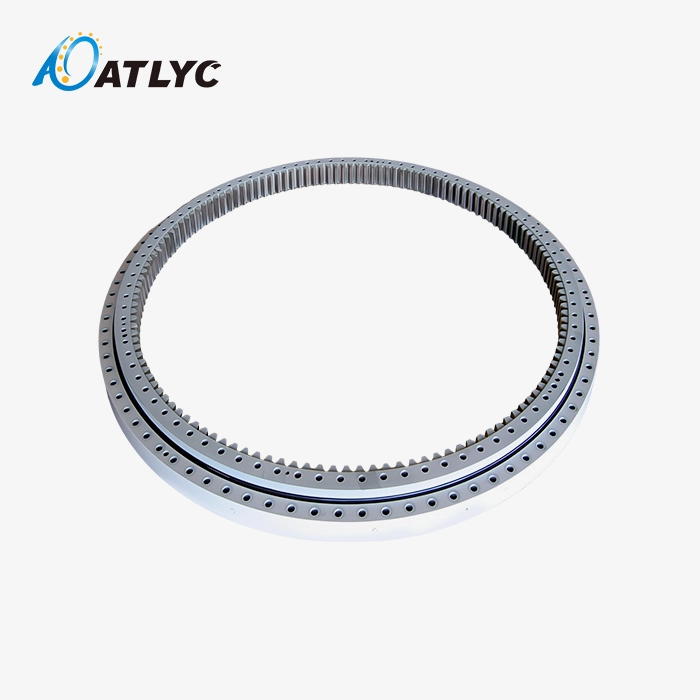
Slewing ring bearings address applications requiring very large diameter rotation, such as construction equipment turntables and wind turbine yaw systems. These typically feature gear teeth integrated into the bearing rings, enabling direct drive configurations. The design philosophy differs fundamentally, prioritizing large-scale load handling over precision rotation.
RB Crossed Roller Bearings serve applications where accuracy matters alongside load capacity. While slewing bearings might maintain positional accuracy within 0.1 degrees, P4 precision crossed roller units achieve runout specifications measured in microns. The distinction makes crossed roller technology appropriate for precision manufacturing equipment, while slewing bearings suit heavy machinery where positioning tolerances measured in millimeters remain acceptable.
Tapered and Cylindrical Roller Bearings: Unidirectional Limitations
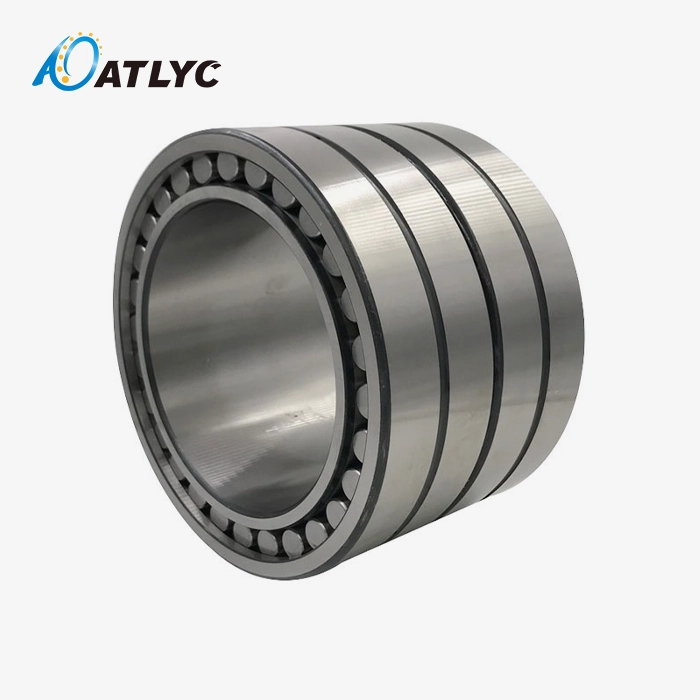
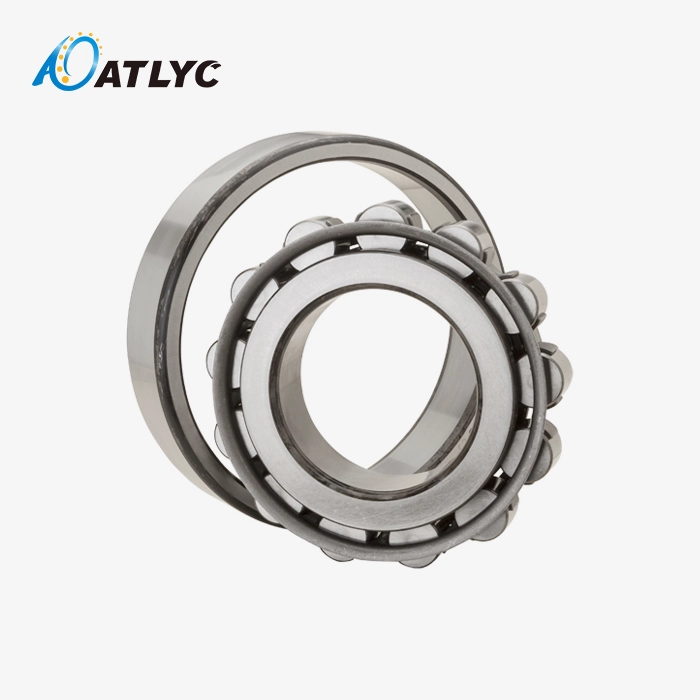
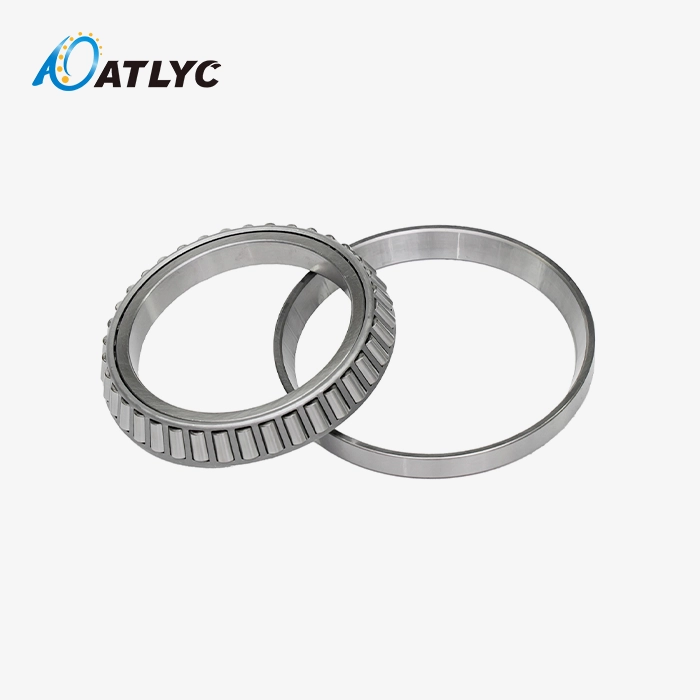
Conventional tapered roller bearings excel at handling combined radial and thrust loads but require opposed mounting arrangements to manage bidirectional thrust. Cylindrical roller bearings provide high radial capacity but limited thrust capability. Both require housing designs accommodating shoulder-based thrust support, complicating assembly and increasing space requirements.
The crossed roller configuration eliminates these constraints by integrating multi-directional load handling within a single compact unit. Equipment designers avoid the complexity of calculating bearing arrangements, preload values, and housing tolerances required when combining multiple conventional bearings. Installation becomes straightforward, with the integral ring design simplifying assembly and reducing opportunities for installation errors that compromise performance.
How to Choose the Right RB Crossed Roller Bearing for Your Needs
Effective bearing selection requires matching component specifications to operational requirements while considering long-term supply chain reliability. Procurement teams face pressure to balance performance demands against budget constraints and delivery schedules.
Assessing Load Capacity Requirements
Begin by calculating the forces your application will impose on the bearing. Radial loads, axial loads, and moment loads all require consideration, with peak values during acceleration, deceleration, and emergency stops potentially exceeding normal operating forces. Bearing manufacturers provide load rating data that allows calculation of expected service life under specific operating conditions.
The high radial, axial, and moment load capacity inherent to crossed roller designs provides built-in safety margins. Equipment experiencing variable loading benefits from this characteristic, as occasional overloads remain within bearing capabilities rather than risking premature failure. The low friction coefficient ensures smooth rotation even under substantial loads, maintaining energy efficiency throughout equipment operation.
Operational Speed and Precision Grade Selection
While P4 precision delivers exceptional accuracy, lower grades may suffice for applications with less demanding tolerances. P5 grade bearings provide excellent performance for many industrial applications at reduced cost compared to P4 specifications. P0 and P6 grades serve general industrial equipment where standard tolerances meet operational needs.
Consider the relationship between required accuracy and operational costs. Machine tools producing aerospace components justify P4 precision through the value of parts produced and costs associated with scrapping out-of-tolerance components. General material handling equipment may achieve satisfactory performance with P5 or P0 grades, optimizing the total cost of ownership.
Material Selection Considerations
Standard bearing steel, including GCr15 and GCr15SiMn, serves the majority of industrial applications, providing proven performance across temperature ranges from -20°C to 120°C. These materials offer excellent dimensional stability, wear resistance, and resistance to rolling contact fatigue. The manufacturing processes applied to these steels have been refined over decades, ensuring consistent metallurgical properties across production batches.
Specialized applications involving corrosive environments, extreme temperatures, or food processing equipment may warrant alternative materials. Stainless steel variants provide corrosion resistance, while ceramic hybrid designs offer reduced weight and enhanced performance at elevated temperatures. The material decision should reflect actual environmental conditions and maintenance capabilities rather than specifying premium options unnecessarily.
Evaluating Manufacturer Credentials and Support
Beyond component specifications for the cross roller bearing, supplier selection significantly impacts project success. Manufacturers demonstrating ISO 9001 and IATF 16949 certification maintain quality management systems aligned with automotive and industrial standards. These certifications indicate documented processes, traceability, and commitment to continuous improvement that reduce supply chain risk.
Technical support capabilities matter equally to product quality. Equipment designers benefit from manufacturers offering application engineering assistance, helping optimize bearing selection and integration. After-sales support, including troubleshooting guidance and warranty coverage, provides additional risk mitigation, particularly for critical production equipment where bearing failure could halt operations.
Established manufacturers with international experience understand export logistics, documentation requirements, and quality expectations across different markets. Suppliers serving customers in demanding markets, including the United States, Germany, and South Korea, demonstrate proven capability to meet stringent standards and delivery schedules.
Maintenance Tips and Best Practices for Longevity
Maximizing bearing service life requires attention to installation, lubrication, and operational monitoring. Proper maintenance practices prevent premature failures and extend intervals between equipment overhauls.
Precision Installation Procedures
Bearing installation directly impacts subsequent performance and longevity. Mounting surfaces must meet flatness and perpendicularity tolerances specified in bearing documentation. Surface finish requirements typically call for Ra values below 1.6 microns, ensuring uniform support and preventing stress concentrations that could distort bearing geometry.
Cleanliness during installation cannot be overstated. Contamination represents the leading cause of premature bearing failure, with particles as small as 10 microns capable of damaging precision-ground surfaces. Assembly should occur in clean environments, with components protected from dust and debris. Handling practices should prevent moisture contamination, as water promotes corrosion and degrades lubricant properties.
Torque specifications for mounting bolts require strict adherence. Under-tightening allows movement between bearing and mounting surfaces, creating fretting wear and loss of accuracy. Over-tightening distorts bearing geometry, increasing internal clearances or creating localized stress that accelerates fatigue. Use calibrated torque wrenches and follow recommended tightening sequences to ensure uniform clamping forces.
Lubrication Selection and Application
Proper lubrication minimizes friction, dissipates heat, and protects against corrosion. The crossed roller bearing configuration responds well to both grease and oil lubrication, with selection based on operational conditions. Grease lubrication suits applications with moderate speeds and temperatures, providing simplicity and reduced maintenance requirements. Oil lubrication becomes necessary at higher speeds or where heat dissipation presents challenges.
Lubricant selection should match operational parameters, including speed, temperature, and load. High-performance synthetic greases provide extended service intervals and temperature stability compared to conventional petroleum-based products. The lubrication interval depends on operating conditions, with more frequent relubrication required under contaminated environments or continuous operation.
Avoid over-lubrication, which increases churning losses and operating temperatures. Follow manufacturer recommendations regarding lubricant quantity and reapplication frequency. Excess lubricant can migrate to adjacent components, potentially contaminating workpieces or interfering with sensors and instrumentation.
Operational Monitoring and Troubleshooting
Proactive monitoring detects developing issues before they escalate into failures. Temperature monitoring provides early warning of lubrication breakdown or excessive loading. Vibration analysis identifies developing defects, with changes in vibration signatures indicating wear progression. Regular inspection intervals allow identification of contamination, corrosion, or abnormal wear patterns.
Warning signs requiring investigation include increased operating temperatures, unusual noise, increased vibration, or changes in rotational smoothness. Addressing these symptoms promptly through inspection and corrective action prevents minor issues from developing into catastrophic failures requiring extended downtime and expensive repairs.
Maintenance documentation supports long-term equipment reliability. Recording installation dates, lubrication intervals, operating conditions, and any abnormal observations creates a service history that aids troubleshooting and informs future procurement decisions. This documentation becomes particularly valuable for equipment operating in multiple shifts or locations where different personnel may encounter the same equipment.
Conclusion
Precision manufacturing demands bearing solutions that deliver consistent accuracy, exceptional load handling, and reliable performance across extended service intervals. RB Crossed Roller Bearings, a crossed roller bearing technology with P4 precision grade, meets these requirements through an innovative design combining perpendicular roller arrangements with integral ring construction. The resulting components provide multi-directional load capability, compact packaging, and micron-level accuracy that support critical applications across robotics, machine tools, medical equipment, and precision instrumentation. Proper selection requires evaluating load capacity, speed requirements, precision needs, and supplier capabilities to ensure components match application demands. With appropriate maintenance practices including precision installation, proper lubrication, and proactive monitoring, these bearings deliver long service life and sustained performance that justifies their investment.

FAQ
What distinguishes P4 precision from other grades?
P4 precision represents one of the highest accuracy classifications available, maintaining dimensional tolerances measured in microns. The grade ensures runout accuracy within 2.5 microns, significantly tighter than P5 (5 microns) or P0 (standard grade) specifications. This translates to measurably improved rotational accuracy, reduced vibration, and enhanced positional repeatability in precision applications. Manufacturing P4 components requires specialized grinding equipment and rigorous quality control, justifying the premium pricing through performance delivered in demanding applications.
Can these bearings be customized for specific applications?
Manufacturers offer customization options, including specialized seal configurations, modified mounting features, and material variants suited to specific environmental conditions. Custom sizes beyond standard catalog offerings become available for volume commitments, allowing equipment designers to optimize bearing selection rather than compromising design around available components. Discussing application requirements with engineering teams ensures that customization efforts address actual performance needs cost-effectively.
What are typical delivery times and minimum order quantities?
Delivery schedules for RB Crossed Roller Bearings depend on whether requirements match standard catalog items or involve custom specifications. Standard configurations typically ship within 2-4 weeks from order confirmation, while custom designs require 8-12 weeks, accounting for engineering review and specialized manufacturing. Minimum order quantities vary by bearing size and specification, with manufacturers often accommodating smaller initial orders for testing and validation before committing to volume production requirements.
Partner with ATLYC: Your Trusted RB Crossed Roller Bearings Supplier
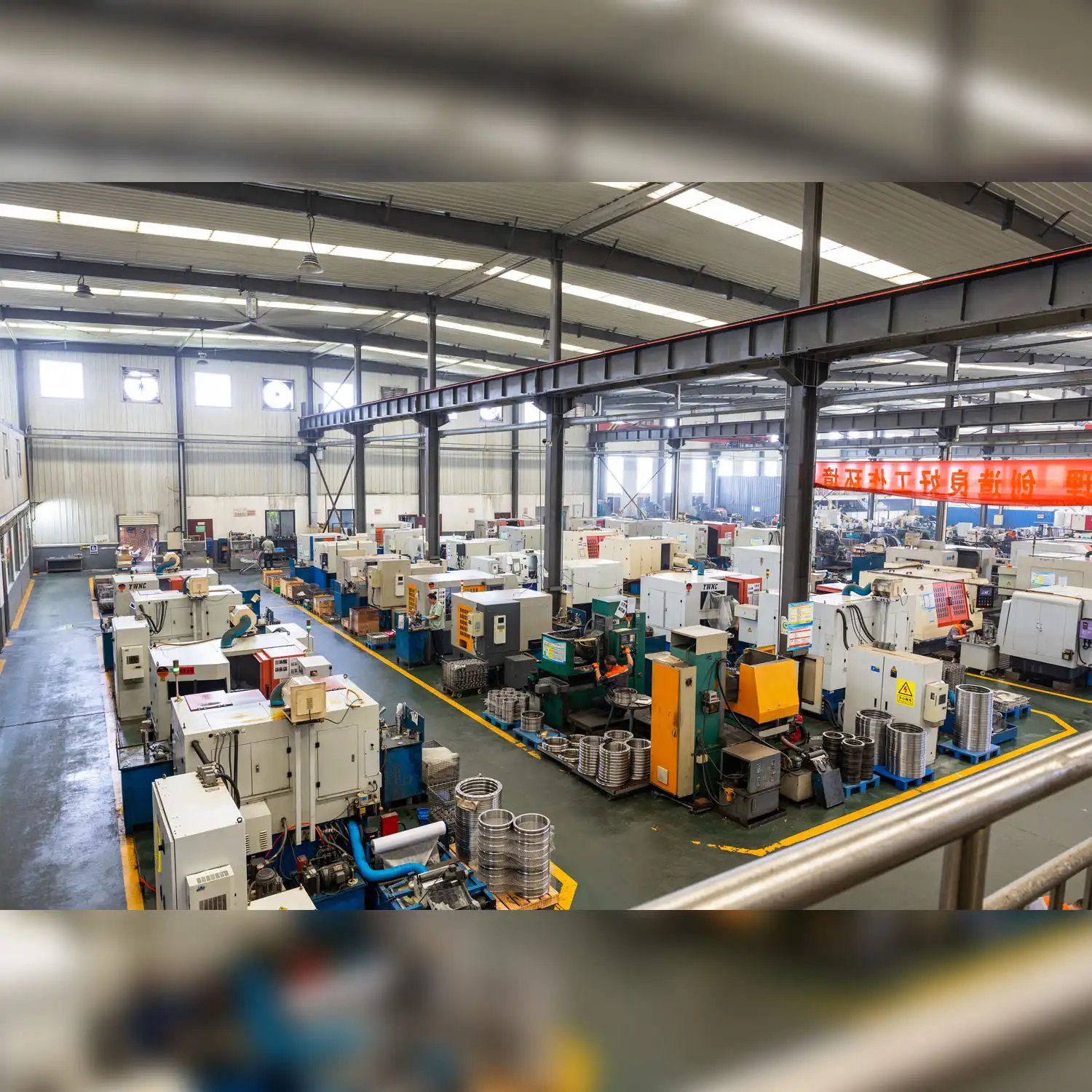
Luoyang Auto Bearing Co., Ltd. (ATLYC) brings 15 years of bearing manufacturing excellence to your precision engineering projects, combining specialized technical knowledge with scalable production capacity. Our ISO 9001 and IATF 16949 certified facilities produce crossed roller bearings meeting P4 precision specifications, backed by comprehensive quality control and testing protocols. With 120 skilled employees dedicated to production, engineering, and quality assurance, we deliver consistent component quality supporting automation equipment, robotic systems, and precision machinery across global markets. Our technical team collaborates with your engineering staff to optimize bearing selection, ensuring specifications align with operational requirements and budget parameters. Contact ATLYC at auto@lyautobearing.com to discuss your RB crossed roller bearing requirements and discover how our manufacturing capabilities support your equipment performance objectives with a reliable supply chain partnership.
References
1. Harris, T.A., and Kotzalas, M. N. "Advanced Concepts of Bearing Technology: Rolling Bearing Analysis, Fifth Edition." CRC Press, 2006.
2. Eschmann, P., Hasbargen, L., and Weigand, K. "Ball and Roller Bearings: Theory, Design and Application, Third Edition." John Wiley & Sons, 1985.
3. ISO 492:2014. "Rolling Bearings - Radial Bearings - Geometrical Product Specifications and Tolerance Values." International Organization for Standardization, 2014.
4. Khonsari, M.M., and Booser, E. R. "Applied Tribology: Bearing Design and Lubrication, Second Edition." John Wiley & Sons, 2008.
5. Hamrock, B.J., Schmid, S.R., and Jacobson, B. O. "Fundamentals of Fluid Film Lubrication, Second Edition." Marcel Dekker, 2004.
6. Tallian, T. E. "Failure Atlas for Hertz Contact Machine Elements, Second Edition." ASME Press, 1999.
Learn about our latest products and discounts through SMS or email