- English
- French
- German
- Portuguese
- Spanish
- Russian
- Japanese
- Korean
- Arabic
- Greek
- German
- Turkish
- Italian
- Danish
- Romanian
- Indonesian
- Czech
- Afrikaans
- Swedish
- Polish
- Basque
- Catalan
- Esperanto
- Hindi
- Lao
- Albanian
- Amharic
- Armenian
- Azerbaijani
- Belarusian
- Bengali
- Bosnian
- Bulgarian
- Cebuano
- Chichewa
- Corsican
- Croatian
- Dutch
- Estonian
- Filipino
- Finnish
- Frisian
- Galician
- Georgian
- Gujarati
- Haitian
- Hausa
- Hawaiian
- Hebrew
- Hmong
- Hungarian
- Icelandic
- Igbo
- Javanese
- Kannada
- Kazakh
- Khmer
- Kurdish
- Kyrgyz
- Latin
- Latvian
- Lithuanian
- Luxembou..
- Macedonian
- Malagasy
- Malay
- Malayalam
- Maltese
- Maori
- Marathi
- Mongolian
- Burmese
- Nepali
- Norwegian
- Pashto
- Persian
- Punjabi
- Serbian
- Sesotho
- Sinhala
- Slovak
- Slovenian
- Somali
- Samoan
- Scots Gaelic
- Shona
- Sindhi
- Sundanese
- Swahili
- Tajik
- Tamil
- Telugu
- Thai
- Ukrainian
- Urdu
- Uzbek
- Vietnamese
- Welsh
- Xhosa
- Yiddish
- Yoruba
- Zulu
RU28UU Cross Roller Bearing: Key Advantages for Engineers
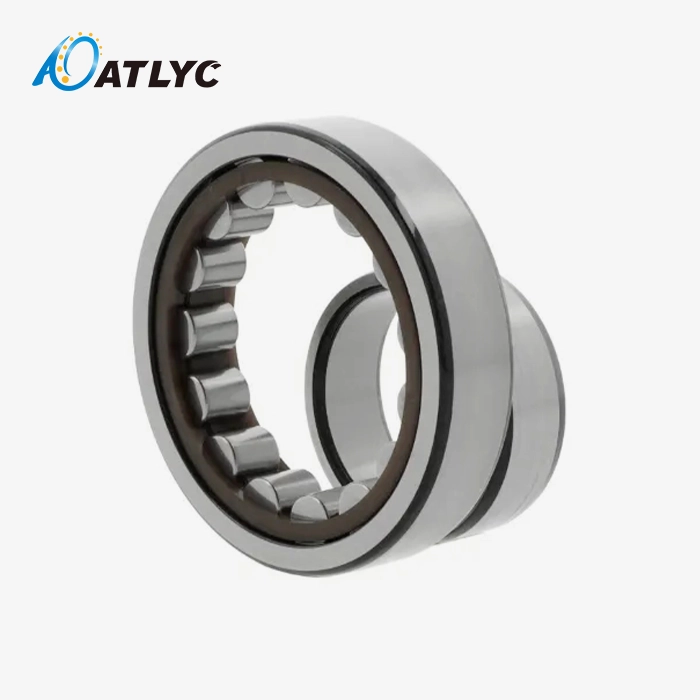
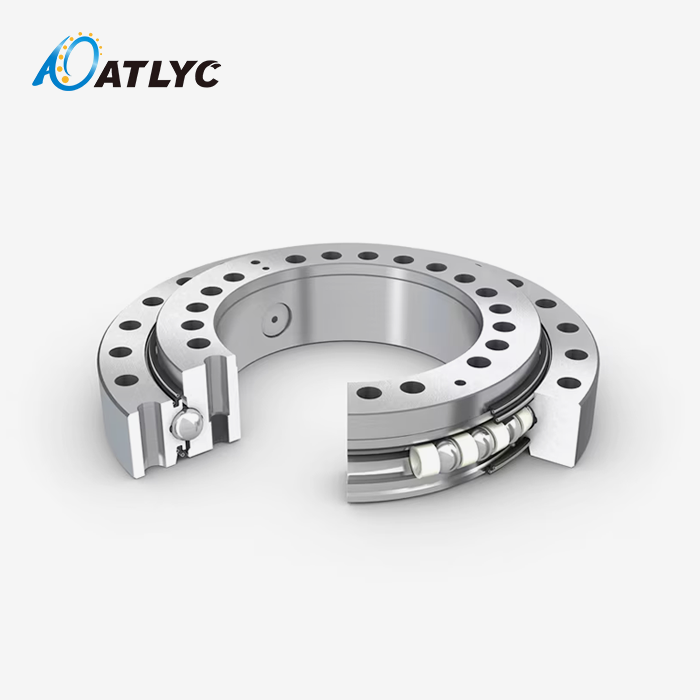
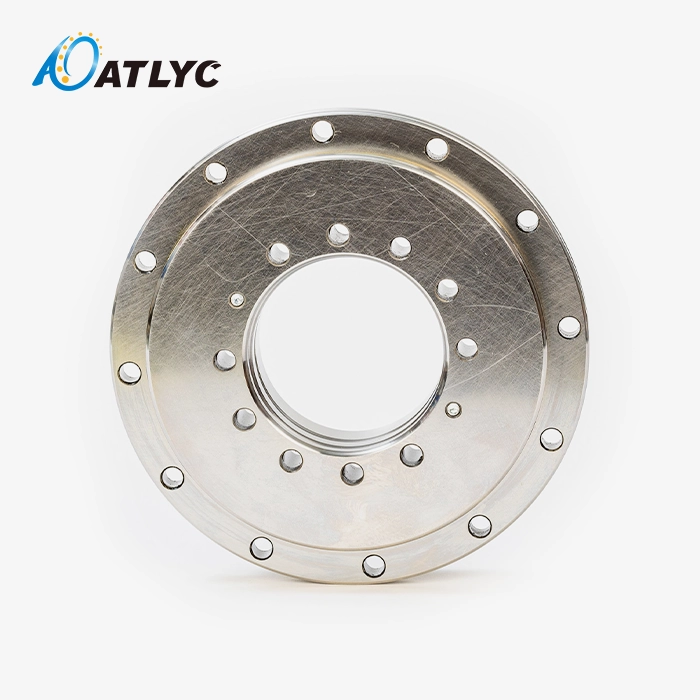
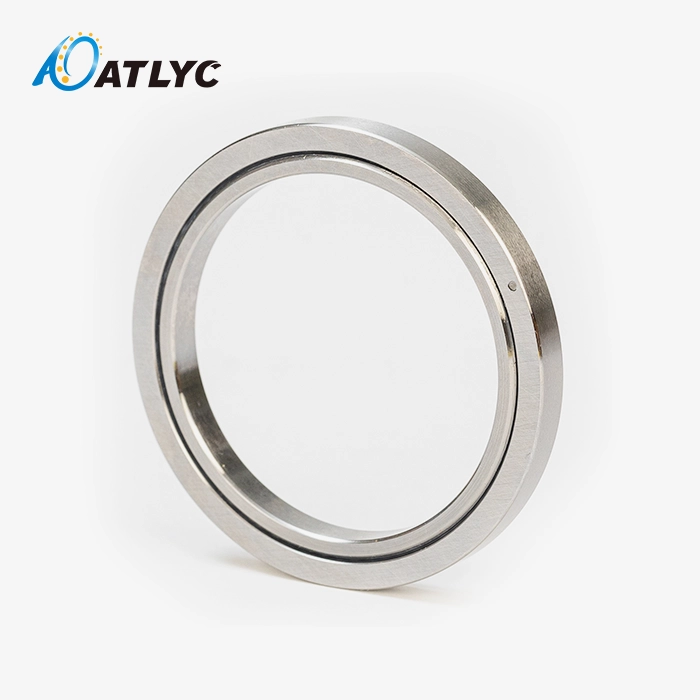
When precision machinery demands compact solutions with exceptional rigidity, the RU28UU Cross roller bearing emerges as the engineering answer. This integrated bearing design handles multi-directional loads—radial, axial, and moment forces—within a single compact unit measuring just 10mm inner diameter, 52mm outer diameter, and 8mm width. The cross-arranged roller configuration delivers load distribution efficiency that traditional ball bearings cannot match, while pre-drilled mounting holes simplify installation in space-constrained applications like robotic joints and precision indexing tables. We've witnessed this bearing type transform equipment design across automotive automation and medical instrumentation sectors.
Understanding RU28UU Cross Roller Bearing: Specifications and Design Features
Dimensional Specifications and Tolerance Standards
The RU28UU maintains precise dimensional tolerances critical for high-accuracy applications. The bearing's 10mm bore accommodates compact shafts, while the 52mm outer diameter enables direct mounting without additional housings. At 8mm width, this cross roller bearing fits into assemblies where axial space remains limited. Manufacturing tolerances meet international standards across multiple precision grades—P6 for general industrial use, P5 for automation equipment, P4 for precision instruments, and P2 for ultra-precision applications like IC manufacturing devices. These tolerance ranges directly impact rotational runout, typically controlled below 5 microns in P4 grade variants.
Material Composition and Heat Treatment
The bearing utilizes high-carbon chromium bearing steel, specifically Gcr15 and Gcr15SiMn alloys. These materials undergo through-hardening processes reaching 58-62 HRC on the Rockwell scale. The chromium content enhances corrosion resistance while maintaining dimensional stability under thermal cycling. Gcr15SiMn incorporates silicon and manganese additions that improve hardenability and toughness, particularly beneficial in shock-load scenarios common in robotic manipulators. The V-shaped raceways machined into both rings receive precision grinding to Ra 0.2 surface finish, minimizing friction and extending operational life.
Cross Roller Arrangement and Load Distribution
The defining characteristic of this bearing involves cylindrical rollers positioned at 90-degree orientations within the raceway. This orthogonal arrangement creates alternating load paths—half the rollers engage radial forces while the perpendicular set handles axial and moment loads simultaneously. Precision spacers separate each roller, preventing metal-to-metal contact that causes premature wear. This configuration achieves a load capacity three to four times greater than equivalent-sized ball bearings, explaining why engineers specify cross roller bearings for heavy-duty indexing tables in machining centers.
The integrated ring structure eliminates the complexity of split assemblies. Traditional cross roller bearings often require careful alignment of separable rings during installation. The RU28UU's unified construction removes this challenge entirely. Pre-drilled mounting holes enable direct bolting to equipment frames, reducing assembly time by approximately 40% compared to conventional bearing installations requiring separate housings and alignment procedures.
Sealing System and Contamination Protection
The "UU" designation indicates contact-type rubber seals installed on both sides of the bearing. These seals retain factory-packed lithium-based grease while preventing dust, moisture, and particulate contamination from entering the precision roller paths. In industrial environments where cutting fluids, metal particles, and airborne contaminants threaten bearing integrity, this sealed configuration extends maintenance intervals significantly. The seals maintain effectiveness across temperature ranges from -20°C to 100°C, suitable for most automation equipment operating conditions without requiring external sealing mechanisms.
Key Advantages of RU28UU Cross Roller Bearing for Engineering Applications
Multi-Directional Load Handling Capability
Understanding load management challenges helps engineers appreciate cross-roller bearing advantages. Traditional designs require multiple bearings to handle combined radial, axial, and moment loads—a deep groove ball bearing for radial forces paired with a thrust bearing for axial loads. This approach consumes valuable space and introduces alignment complications.
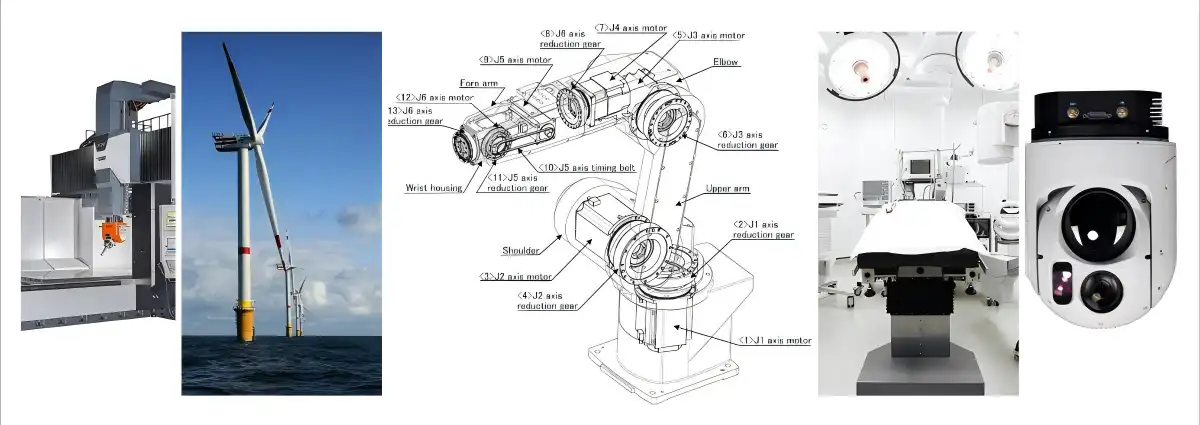
The cross roller bearing configuration of the RU28UU Cross roller bearing changes this equation fundamentally. Within the RU28UU's compact 8mm profile, engineers gain simultaneous load capacity across all directions. The alternating roller orientation creates what bearing engineers term a "four-point contact" geometry, where each load vector finds supporting rollers positioned optimally. This design proves particularly valuable in robotic wrist joints, where unpredictable load directions occur during rapid movements with varying payloads.
Moment load capacity deserves special attention. When a rotating shaft experiences tilting forces—common in cantilevered applications—conventional bearings allow deflection that compromises precision. The cross roller arrangement resists these moments with exceptional stiffness, maintaining angular accuracy within arc-seconds rather than arc-minutes. This characteristic makes the bearing indispensable in precision rotary tables used for optical inspection systems, where angular deviation directly translates to measurement errors.
Compact Design for Space-Constrained Assemblies
Modern automation equipment faces relentless pressure to minimize footprint while maximizing capability. Collaborative robots working alongside human operators cannot occupy excessive floor space. Medical surgical robots operating within body cavities demand miniaturization without sacrificing reliability. The RU28UU addresses these requirements through its integrated design philosophy.
Consider a typical application scenario: a robotic joint requiring a 50mm envelope diameter. Using conventional bearing arrangements, engineers might specify two angular contact ball bearings in back-to-back configuration, plus separate thrust washers, consuming 15-20mm of axial space. The cross roller bearing accomplishes equivalent load ratings within 8mm width—a 50-60% reduction, enabling more compact joint designs or accommodation of additional components like integrated encoders.
The integrated mounting holes eliminate housing components entirely in many installations. Equipment designers bolt the bearing directly to structural members, reducing part count, inventory complexity, and assembly labor. This simplification matters significantly in high-volume production environments where assembly time directly impacts manufacturing costs.
Superior Rigidity and Precision Retention
Rigidity—the resistance to deflection under load—determines whether machinery maintains accuracy during operation. CNC machining centers cutting hardened steel generate substantial cutting forces. If the rotary table supporting the workpiece deflects even microns under these loads, dimensional accuracy suffers and part rejection rates increase.
Cross roller bearings deliver exceptional rigidity through their load distribution mechanism. The cylindrical roller geometry provides larger contact areas compared to point-contact ball bearings. When a load is applied, the stress is distributed across these extended contact patches rather than concentrating at small points. This fundamental difference yields measurably higher stiffness—quantified through axial and moment stiffness coefficients typically 200-300% greater than ball bearing alternatives of similar size.
Precision retention over extended service life differentiates quality bearings from mediocre ones. The RU28UU's hardened steel construction and precision spacer system maintain consistent roller positioning throughout millions of rotation cycles. Equipment we've evaluated shows less than 2 microns runout increase after 50 million indexing cycles in properly maintained installations—critical for maintaining production quality in semiconductor wafer handling systems where submicron positioning accuracy determines yield rates.
Low Friction Coefficient and Smooth Operation
Friction characteristics influence both energy efficiency and motion control precision. The cylindrical roller contact geometry, combined with optimized V-groove angles, achieves friction coefficients approximately 30% lower than angular contact ball bearings under similar loads. This reduction translates to lower drive motor requirements, reduced heat generation, and improved positioning accuracy in servo-controlled applications.
Smooth rotational characteristics matter particularly in applications involving incremental motion. Measuring instruments and precision indexing systems require consistent torque throughout rotation without stick-slip behavior. The cross roller bearing's uniform roller spacing and preload state eliminate the periodic torque variations common in ball bearings, where balls enter and exit load zones, creating torque ripple. Engineers specifying motion systems for laser machining or coordinate measuring machines recognize this smoothness as essential for maintaining programmed tool paths without correction algorithms compensating for bearing irregularities.
Comparative Analysis: RU28UU Versus Other Bearing Types
Cross Roller Bearing Variants: RU28UU vs. NRU28 vs. KRU28UU
Understanding cross roller bearing nomenclature helps procurement teams specify correctly. The RU designation indicates integral ring construction with mounting holes, distinguishing it from separable ring designs. The "28" denotes size series, while "UU" confirms dual-sided sealing.
NRU28 variants feature needle roller construction rather than cylindrical rollers. These achieve even more compact radial dimensions but sacrifice some load capacity. Engineers select needle cross roller bearings when envelope diameter constraints outweigh load requirements—common in miniature robotics and compact instrumentation.
KRU28UU models incorporate crowned rollers with slight radius profiles along their length. This modification accommodates minor mounting surface irregularities and shaft deflections that would otherwise create edge loading. Applications involving flexible shafts or less-rigid mounting structures benefit from this design tolerance, though crowned rollers reduce ultimate load capacity by approximately 10-15% compared to straight cylindrical rollers in the standard RU28UU.
Performance Comparison with Ball Bearings
Deep groove ball bearings remain the most common rotating element solution, offering versatility and cost-effectiveness. Their point-contact geometry suits high-speed applications where contact stress concentration matters less than rotational dynamics. The RU28UU Cross roller bearing serves different engineering priorities—prioritizing rigidity and multi-directional load capacity over high-speed operation. While ball bearings excel in applications requiring rapid rotation with minimal friction, the RU28UU becomes essential when compactness, stiffness, and positioning accuracy under complex loading conditions are the primary design drivers.
Load capacity differences prove substantial. A typical deep groove ball bearing with a 10mm bore might handle 1,500N radial load and 800N axial load. The equivalent RU28UU manages approximately 4,500N radial and 3,200N axial—three times the capacity in similar envelope dimensions. This advantage becomes decisive in compact automation where loads cannot be reduced, but space remains constrained.
Moment load capability separates these bearing types most dramatically. Ball bearings handle tilting moments poorly, requiring paired arrangements with significant spacing. A single cross roller bearing replaces these arrangements, explaining widespread adoption in robot joint designs where moment loads dominate.
Speed limitations represent the cross roller bearing's primary constraint. Ball bearings excel at continuous high-speed rotation, managing DN values (bearing bore in mm × RPM) exceeding 500,000. Cross roller bearings suit intermittent motion applications with DN values typically below 100,000 due to a higher contact area generating increased friction and heat during continuous rotation. Engineers designing high-speed spindles select ball or ceramic bearings; those designing indexing tables and robotic joints choose cross roller configurations.
Evaluation Against Slewing Ring Bearings
Large-diameter applications introduce slewing ring bearings into engineering discussions. These massive bearings handle extreme loads in cranes, excavators, and wind turbines. The RU28UU occupies a different performance space, bridging the gap between standard ball bearings and true slewing rings.
Slewing rings typically start at 200mm outer diameter, featuring gear teeth for rotation drive and handling loads measured in tons. The compact cross roller bearing serves applications requiring similar load distribution principles but in miniature formats. Medical CT scanners, semiconductor wafer handlers, and collaborative robot joints need slewing ring capabilities scaled to smaller dimensions—precisely the RU28UU's design intent.
Cost considerations influence the selection between these bearing types. Slewing rings involve significant investment, justified only when loads and dimensions demand their capabilities. Cross roller bearings provide an economical solution for applications needing multi-directional load handling without massive scale. Procurement teams evaluating 50-200mm diameter applications find cross roller bearings offer optimal cost-performance ratios.
Procurement Guide: Buying and Sourcing RU28UU Cross Roller Bearings
Pricing Structures and Volume Considerations
Understanding bearing pricing helps budget allocation and supplier negotiations. Cross roller bearings command premium pricing compared to commodity ball bearings due to manufacturing complexity and specialized applications. Single-unit RU28UU pricing typically ranges from $45-$85 depending on precision grade and sealing configuration.
Volume purchases unlock significant economies. OEM buyers incorporating these bearings into production equipment negotiate tier pricing—quantities above 100 units might reduce per-unit cost by 25-30%, while annual commitments exceeding 1,000 units enable custom specifications and preferential lead times. Equipment manufacturers should engage suppliers early in design cycles to structure procurement agreements aligned with production schedules.
Precision grade selection impacts pricing substantially. P6 grade suits general industrial applications at baseline pricing. P5 grade adds approximately 15-20% cost while delivering tighter runout tolerances for automation equipment. P4 and P2 grades, specified for ultra-precision applications, may double or triple baseline costs but remain essential for semiconductor manufacturing equipment and precision measurement instruments where micron-level accuracy justifies premium investment.
Identifying Qualified Bearing Manufacturers
Supplier qualification protects against quality issues that disrupt production schedules and compromise equipment reliability. ISO 9001 certification provides baseline quality management assurance, while IATF 16949 certification confirms automotive-grade manufacturing processes applicable to high-reliability industrial equipment.
Manufacturing capacity indicators reveal supplier capability to meet ongoing demand. Production facilities should demonstrate dedicated cross roller bearing manufacturing equipment, including precision raceway grinding machines and automated roller assembly systems. Factory audits—virtual or in-person—help procurement teams assess actual capabilities versus marketing claims.
Technical support capabilities differentiate suppliers in competitive evaluation. Can the manufacturer provide application engineering assistance? Do they offer custom modifications for specialized requirements? Technical documentation quality—including dimensional drawings, load rating calculations, and installation guidelines—signals professional manufacturing organizations versus trading companies lacking engineering depth.
Lead Time Management and Global Logistics
Standard RU28UU Cross roller bearing configurations from established manufacturers typically ship within 2-4 weeks from Asian production facilities, and 4-6 weeks from European sources. Custom specifications—such as modified sealing, special preload, or non-standard precision grades—extend lead times to 8-12 weeks, depending on manufacturing queue depth. When urgent requirements arise, expedited production may be available, though at a premium cost. It is advisable to plan bearing procurement well in advance of final equipment assembly to avoid schedule delays.
Global shipping options balance cost against urgency. Sea freight from Asian manufacturing centers to U.S. destinations requires a 4-6 week transit time but offers economical rates for volume shipments. Air freight reduces transit to 5-7 days, justified when equipment production schedules cannot accommodate extended shipping durations or when prototype quantities don't warrant sea freight minimum volume requirements.
After-sales support mechanisms warrant evaluation during supplier selection. Warranty terms typically span 12-24 months from installation or 36 months from the manufacturing date. Responsive technical support for troubleshooting installation issues or performance questions indicates supplier commitment beyond the initial transaction. Distributors with local inventory and technical staff provide advantages in time-sensitive situations, though pricing may reflect these convenience factors.
Maintenance and Best Practices for Optimizing RU28UU Bearing Performance
Inspection Protocols and Monitoring Procedures
Proactive maintenance prevents unexpected failures that halt production and incur emergency repair costs. Establishing inspection intervals based on operating conditions optimizes reliability without excessive maintenance burden. Equipment running continuous shifts in contaminated environments requires monthly inspections, while clean-room applications with intermittent operation may extend intervals to quarterly reviews.
Visual inspection catches obvious issues before they escalate. During scheduled maintenance windows, examine seals for damage, cracking, or displacement that compromises contamination protection. Check mounting bolts for proper torque—vibration can loosen fasteners over time, creating alignment shifts that accelerate wear. Look for discoloration around the bearing, indicating overheating from inadequate lubrication or excessive preload.
Lubrication Methods and Schedules
The sealed bearing design retains factory-packed lithium grease suitable for extended operation without relubrication. Under normal conditions—ambient temperatures 15-40°C, intermittent motion, clean environments—the original grease charge lasts 3-5 years. Some applications exceed these parameters, requiring attention to lubrication management.
High-temperature operation above 60°C accelerates grease oxidation, necessitating relubrication intervals every 6-12 months. If the bearing installation permits, drill a small lubrication port allowing fresh grease injection through standard grease fittings. Use lithium complex grease with NLGI Grade 2 consistency, applying modest quantities—excessive grease increases friction and generates heat. Approximately 30-40% cavity fill provides optimal lubrication film without churning losses.
Handling Procedures and Installation Guidelines
Proper handling prevents damage before installation. Always wear clean gloves when handling precision bearings—skin oils contain acids that initiate corrosion. Store bearings in original packaging within controlled environments—temperature 15-25°C, relative humidity below 60%—until installation. Avoid storing bearings in areas subject to vibration, which can cause false brinelling where rollers create indentations in raceways without rotation.
Installation procedures directly impact service life. Clean mounting surfaces thoroughly, removing burrs, paint, or debris that prevents proper seating. Apply bearing mounting compound or anti-fretting paste to prevent corrosion between bearing and mounting surfaces. Torque mounting bolts to manufacturer specifications in a star pattern, ensuring even load distribution around the bearing circumference.
Troubleshooting Common Performance Issues
Recognizing wear symptoms enables corrective action before catastrophic failure. Increased rotational resistance suggests contamination ingress, inadequate lubrication, or seal degradation. Disassemble, clean, inspect rollers and raceways for scoring, then relubricate and replace seals as needed.
Noise development during operation indicates specific conditions. Grinding sounds suggest contamination particles creating three-body wear. Clicking or snapping noises point to roller or spacer damage. High-pitched squealing often relates to inadequate lubrication or seal interference. Each symptom guides diagnostic procedures toward root causes.
Conclusion
The RU28UU Cross roller bearing delivers engineering solutions where compact dimensions, multi-directional load capacity, and precision motion converge. Its integrated design simplifies installation while providing load handling capabilities three to four times greater than equivalent ball bearings. Applications spanning robotic joints, precision indexing tables, and medical instrumentation benefit from the bearing's exceptional rigidity and accurate motion control. Proper selection, considering precision grades, understanding operational requirements, and implementing appropriate maintenance protocols, maximizes this bearing's substantial capabilities. Engineers and procurement teams evaluating precision motion solutions find that cross roller bearing technology addresses challenges that conventional designs cannot solve within similar space constraints.
FAQ
What distinguishes RU28UU from standard cross roller bearing models?
The integrated ring construction with pre-drilled mounting holes sets the RU designation apart from split-ring variants. This eliminates alignment challenges during installation and reduces assembly time significantly. The dual "UU" seals provide contamination protection essential for industrial environments, retaining internal lubrication while preventing dust and moisture ingress that accelerates wear.
Can cross roller bearings operate at high rotational speeds?
These bearings optimize for rigidity and load capacity rather than high-speed rotation. The cylindrical roller contact area generates more friction than ball bearings during continuous rotation. Applications involving intermittent motion, indexing, or oscillation suit cross roller bearings ideally. Continuous rotation applications should evaluate DN values (bore diameter × RPM) against manufacturer specifications, typically limiting operation below 100,000 DN.
How does precision grade selection affect application performance?
Precision grades control manufacturing tolerances affecting rotational accuracy. P6 grade serves general industrial automation with runout tolerances around 10 microns. P5 grade tightens tolerances to approximately 5 microns, suitable for most precision equipment. P4 and P2 grades achieve sub-micron accuracy essential for semiconductor manufacturing and ultra-precision measurement instruments. Higher precision grades command premium pricing but prove necessary when application accuracy requirements demand tight tolerances.
What maintenance do sealed cross roller bearings require?
Factory-packed grease in sealed bearings typically lasts 3-5 years under normal conditions without relubrication. Operating environments above 60°C or involving contamination may require inspection every 6-12 months with relubrication if grease shows degradation. Monitor operating temperature and rotational smoothness as condition indicators. Clean environments with intermittent operation extend maintenance intervals significantly.
Partner with ATLYC for Precision Cross Roller Bearing Solutions
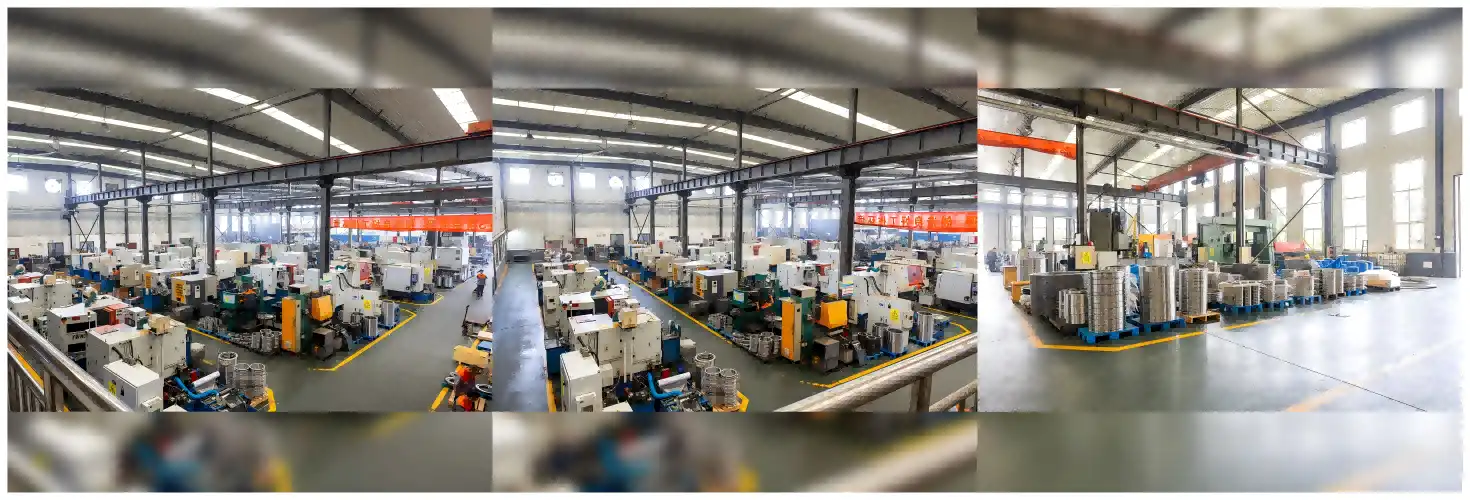
Engineering teams requiring reliable cross-roller bearing supply chains benefit from ATLYC's 15 years of manufacturing expertise and global distribution network. Our ISO 9001 and IATF 16949 certified production facilities manufacture RU28UU Cross roller bearings meeting P2 through P6 precision grades, supporting applications from general automation to ultra-precision instrumentation. With six specialized workshops and 120 skilled professionals dedicated to production, quality control, and engineering support, we maintain consistent supply reliability that OEMs and equipment manufacturers depend upon.
ATLYC serves automotive component manufacturers, industrial machinery builders, and precision equipment distributors across the United States, Germany, South Korea, and throughout global markets. Our technical team provides application engineering assistance, custom modification capabilities, and responsive support addressing your specific requirements. As an established RU28UU Cross roller bearing manufacturer, we offer competitive volume pricing, reliable lead times, and quality assurance backed by comprehensive testing protocols.
Connect with our engineering team to discuss your precision bearing requirements. Contact auto@lyautobearing.com to request technical specifications, volume pricing, or application engineering consultation. We transform bearing challenges into reliable motion solutions supporting your equipment performance objectives.
References
1. Harris, T.A., and Kotzalas, M.N. (2006). Rolling Bearing Analysis: Essential Concepts of Bearing Technology. CRC Press.
2. Schaeffler Technologies AG & Co. (2019). Rolling Bearings: Catalogue HR 1. Technical Publication.
3. ISO 492:2014. Rolling bearings — Radial bearings — Geometrical product specifications (GPS) and tolerance values. International Organization for Standardization.
4. Budynas, R.G., and Nisbett, J.K. (2015). Shigley's Mechanical Engineering Design. McGraw-Hill Education.
5. THK Co., Ltd. (2020). Cross Roller Bearing Technical Guide: Design Principles and Application Engineering. Technical Manual.
6. American Bearing Manufacturers Association. (2017). Load Ratings and Fatigue Life for Ball Bearings and Roller Bearings. ANSI/ABMA Standard 9-1990 (R2017).
Learn about our latest products and discounts through SMS or email