- English
- French
- German
- Portuguese
- Spanish
- Russian
- Japanese
- Korean
- Arabic
- Greek
- German
- Turkish
- Italian
- Danish
- Romanian
- Indonesian
- Czech
- Afrikaans
- Swedish
- Polish
- Basque
- Catalan
- Esperanto
- Hindi
- Lao
- Albanian
- Amharic
- Armenian
- Azerbaijani
- Belarusian
- Bengali
- Bosnian
- Bulgarian
- Cebuano
- Chichewa
- Corsican
- Croatian
- Dutch
- Estonian
- Filipino
- Finnish
- Frisian
- Galician
- Georgian
- Gujarati
- Haitian
- Hausa
- Hawaiian
- Hebrew
- Hmong
- Hungarian
- Icelandic
- Igbo
- Javanese
- Kannada
- Kazakh
- Khmer
- Kurdish
- Kyrgyz
- Latin
- Latvian
- Lithuanian
- Luxembou..
- Macedonian
- Malagasy
- Malay
- Malayalam
- Maltese
- Maori
- Marathi
- Mongolian
- Burmese
- Nepali
- Norwegian
- Pashto
- Persian
- Punjabi
- Serbian
- Sesotho
- Sinhala
- Slovak
- Slovenian
- Somali
- Samoan
- Scots Gaelic
- Shona
- Sindhi
- Sundanese
- Swahili
- Tajik
- Tamil
- Telugu
- Thai
- Ukrainian
- Urdu
- Uzbek
- Vietnamese
- Welsh
- Xhosa
- Yiddish
- Yoruba
- Zulu
RB8016 Dimensions Explained: 80×120×16 mm Compact Design
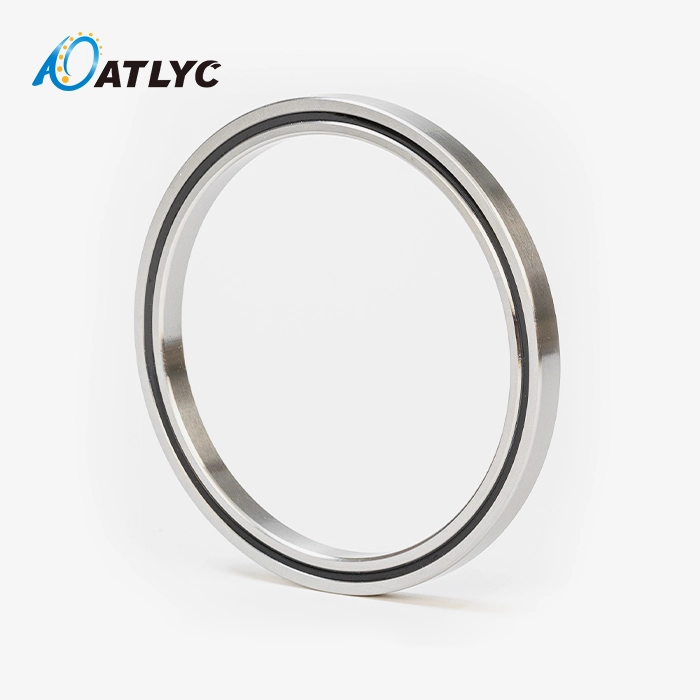
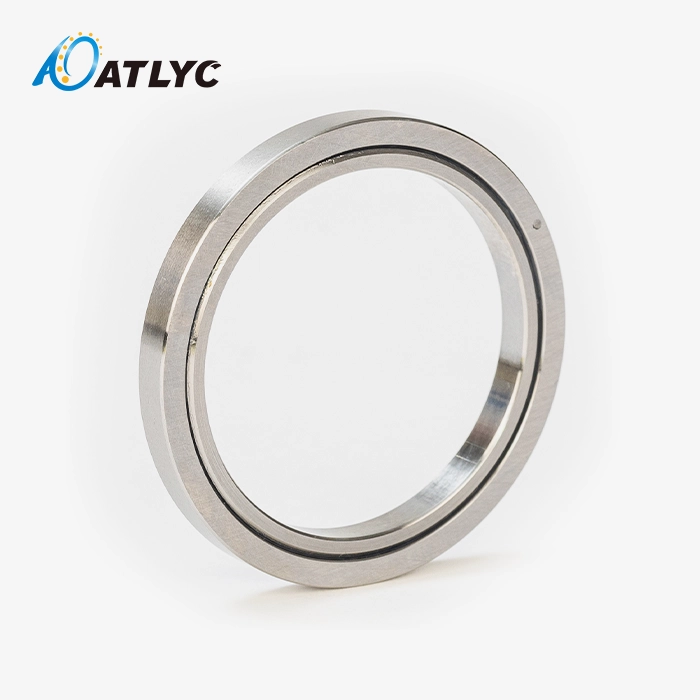
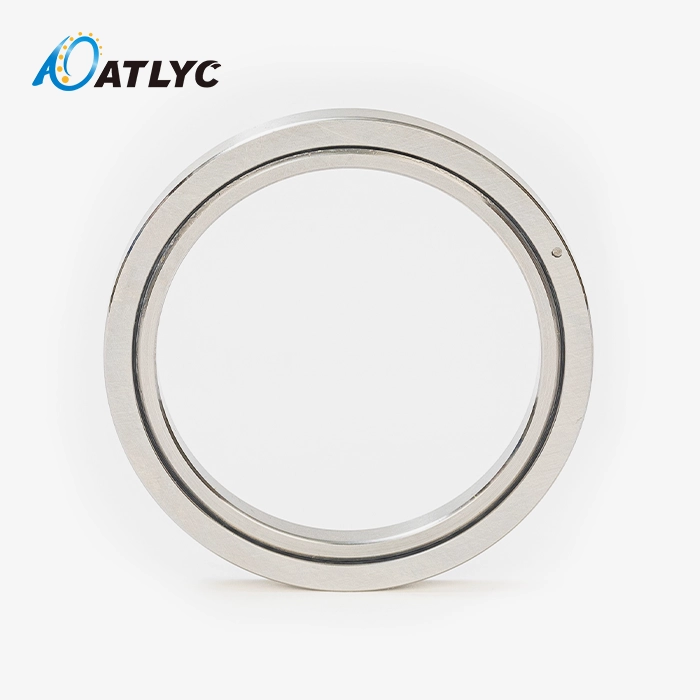
Understanding the precise physical specifications of industrial bearings is fundamental to successful procurement and application engineering. The RB8016 dimensions—80 mm bore diameter, 120 mm outer diameter, and 16 mm width—define a crossed roller bearing that delivers exceptional load capacity within a remarkably compact envelope. This specific dimensional configuration allows engineers to maximize performance in space-constrained assemblies while maintaining the rigidity and precision required for demanding automotive and industrial machinery applications. When selecting bearings for high-performance equipment, knowing exactly how these measurements translate into real-world installation requirements separates efficient procurement from costly trial-and-error approaches.

Comprehensive Overview of RB8016 Crossed Roller Bearing Specifications
The RB8016 is a special type of precision bearing made for uses that need to handle radial, axial, and moment loads at the same time. This crossed roller configuration is more rigid than regular deep groove ball bearings because of the way the rollers are arranged inside.
Breaking Down the 80×120×16 mm Physical Profile
The inner width of 80 mm fits shaft sizes that are popular in medium-duty industrial settings, like robotic joints and machine tool rotary tables. This bore size gives enough surface contact for a solid mount while still letting the shaft have a decent amount of strength. The 120 mm outer diameter makes the overall size small, which lets it fit into small housing designs without adding too much weight. The 16 mm section height makes for a thin profile that takes up little axial space. This is a big plus when building systems with multiple axes or adding bearings to old units that don't have a lot of room for expansion.
Understanding Bearing Designation Systems
The bearing numbering system is based on international rules that say which numbers show what dimensions and structures something has. In the same way that the last two numbers of a 608 bearing's name directly indicate its 8 mm bore, the RB8016's name directly indicates its 80 mm bore diameter. The word "RB" usually means crossed roller construction, which is different from radial ball bearings or tapered roller types. Standardization makes it easy for purchasing teams in many countries and businesses to quickly find parts from different sources that work together.
Critical Measurement Data for Installation Planning
Besides the three main dimensions, there are a number of other measurements that affect how well an installation works. The size of the chamfers on both the inner and outer rings affects how easy they are to mount and keeps edge stress from building up during press-fitting operations. Specifications for corner angles tell us if the housing and shaft fillet sizes are compatible. If they aren't, it can stop the parts from fitting properly and cause early failure points. When engineering teams know these details, they can avoid problems during field installation that cause production plans to slip.
| Specification | Measurement | Tolerance Class | Application Impact |
|---|---|---|---|
| Bore Diameter | 80 mm | P5/P4 available | Shaft fit precision |
| Outer Diameter | 120 mm | P5/P4 available | Housing fit accuracy |
| Width | 16 mm | ±0.05 mm standard | Axial space allocation |
| Corner Radius | 1.0 mm typical | ±0.15 mm | Fillet compatibility |
These tolerance classes have a direct effect on how well the bearing works when it's loaded. The P5 class gives accuracy good for most commercial uses, while the P4 class meets the needs of high-speed or ultra-precise positioning systems with its tighter limits. Instead of automatically selecting the highest precision grade, procurement professionals should choose the right grade based on the needs of the application. This will save money and time.
Packaging and Logistics Dimensions
The physical measurements of an object are only one part of the buying process. The RB8016 is usually packed in pieces that are about 140 mm x 140 mm x 30 mm and comes with standard protection wrapping and a treatment that stops corrosion. Logistics teams can figure out how to load containers more efficiently and estimate how much storage space they will need by knowing these package dimensions. When you order 50 units or more, the size and weight of the pallet become important factors in figuring out how much freight will cost. When compared to standard individual packaging methods, we've seen that optimized packaging for export shipments can cut shipping costs by 15 to 20 percent per unit.
How RB8016 Dimensions Compare to Alternative Bearing Types
In order to choose the best bearing, you need to know how the different types trade off size, capacity, and performance. The RB8016's footprint size is similar to that of a number of other bearing arrangements that take up similar envelope spaces.
RB8016 Versus Conventional Ball Bearing Pairs
When crossed roller bearings aren't available, two angular contact ball bearings placed back-to-back or face-to-face are often used instead. In this design, bearings with bigger cross-sections are usually needed to get the same moment load capacity. The 6216 deep groove ball bearings have an 80 mm bore, a 140 mm outer diameter, and a 26 mm width each. They would take up 52 mm of axial space, which is more than three times as much as the RB8016's 16 mm. Because of this size benefit, crossed roller designs are the only way to go in situations where axial room is a design constraint.
Size Efficiency in Compact Machinery Designs
When designing robotic joints, saving space is especially useful because reducing the width of the limbs directly improves the load capacity and motion dynamics. When engineers compare the RB8016 to setups with tapered roller bearings, the crossed roller design usually cuts the weight of the whole system by 30 to 40 percent while keeping the same stiffness levels. This weight loss affects the whole design of the machine, which could lead to smaller motors, less structural support, and better energy economy.
Dimensional Trade-offs with Thin-Section Bearings
Another technology that saves space is thin-section bearings, which can sometimes have even smaller cross-sections than crossed-roller designs. But the smaller amount of the material limits its ability to hold weight and be stiff. The RB8016 is just the right size for most uses that don't have a lot of room, but it still has a large cross-sectional area for heavy-duty cycles and load ratings.
| Bearing Type | Bore (mm) | OD (mm) | Width (mm) | Relative Stiffness | Typical Application |
|---|---|---|---|---|---|
| RB8016 Crossed Roller | 80 | 120 | 16 | 1.0 (baseline) | Robotic joints, rotary tables |
| Dual Angular Contact | 80 | 130 | 46 | 0.85 | Machine tool spindles |
| Tapered Roller Pair | 80 | 125 | 44 | 0.90 | Heavy-duty gearboxes |
| Thin-Section Ball | 80 | 120 | 12 | 0.60 | Lightweight automation |
This table of comparisons helps buying teams make smart choices based on the goals of different applications. The RB8016 Dimensions are clearly better when size restrictions are the most important part of the design. If the most weight that can be carried is more important than the size, different designs may be better.
Practical Engineering Applications of RB8016 Dimensional Characteristics
Because the RB8016 is a certain size, it naturally works best in certain types of applications where its size-to-performance ratio is the best.
Robotic Joint Integration and Motion Control Systems
Modern industrial robots need bearings that are accurate, small, and able to handle moment loads. The RB8016 Dimensions are exactly the right size for the knees and wrist joints that come with six-axis robots. The outer width of 120 mm lets enough housing material fit to keep the structure strong without making the joints too big to handle, which limits the robot's reach or cargo. The 16 mm width lets designers stack many motion parts, like bearings, seals, encoders, and drive elements, within the limits of acceptable joint lengths. Automation OEMs that we've worked with were able to cut the weight of their robot arms by 18% by switching from dual ball bearings to crossed roller designs that had the same size areas.
Precision Rotary Table Applications
The RB8016 is often recommended by machine tool makers for use with rotary scanning tables and rotating axes. Because the bearing can handle radial, axial, and moment loads together in its small cross-section, there is no need for separate thrust bearing setups. This simplifies things so there are fewer parts, an easier setup, and fewer places where things could go wrong. With the thin 16 mm profile, table makers can reduce the distance between the tabletop and the machine base, which makes the machine more rigid and improves the quality of the work that is done.
Medical Equipment and Diagnostic Imaging Devices
The RB8016 Dimensions are also used in CT scanner gantries and robotic surgery systems that need to move smoothly and precisely but don't have a lot of room. Because it's so narrow, medical device makers can make equipment profiles as low as possible, which makes it easier for patients to get to and reduces installation footprints in busy hospitals. Good crossed roller bearings are very precise, which makes sure that the bearings stay in the right place for accurate images and surgery.
Installation Space Calculations and Mounting Considerations
When engineers plan installations, they need to think about more than just the nominal bearing dimensions. Technicians can install bearings correctly without damaging them as long as there is enough space for mounting tools, usually 5 to 8 mm radially beyond the outer diameter. Axially, designers should leave at least 3–4 mm of space on each side of the bearing to allow for installing the seal and possibly making shim changes. Because of these practical reasons, the actual envelope size needed is about 136x26 mm, not just the nominal size of 120x16 mm for the bearing. If these clearances aren't taken into account during the design phase, they can cause problems during installation in the field, which can delay commissioning and possibly require expensive changes to the housing.
Procurement Strategies: Sourcing RB8016 Bearings for Global Supply Chains
Dimensional specs are the basis for buying bearings, but to turn data into solid supply relationships, you need to know about quality standards, certification requirements, and the supplier's abilities.
Verifying Dimensional Accuracy and Manufacturing Tolerances
Manufacturers of good quality give thorough dimensional inspection reports that list real measurements and compare them to limits that have been set. When buying from possible suppliers, teams should ask for sample inspection certificates that show the bore diameter, outer diameter, width, raceway geometry, and running accuracy measurements. Manufacturers of reliable bearings that follow the ISO 9001 and IATF 16949 quality systems use statistical process control to make sure that all of their production lots are the same size. We've set up measurement methods that check all of the important dimensions on automotive-grade bearings. This makes sure that every unit meets the tight limits needed for high-performance uses.
Understanding How Dimensions Affect Logistics Costs
When compared to larger bearing types, the RB8016's small size makes shipping more cost-effective. Standard export packing allows for about 200 units per cubic meter, which makes it easy to load containers. When procurement pros figure out the total landed costs, they should take into account that moving items that are more compact can save them 8 to 12 percent of the cost compared to options that are bulkier but have the same load ratings. Knowing these logistics measurements helps buyers choose the best order sizes and shipping methods to keep inventory levels at a good level while lowering costs per unit.
Quality Certifications and Dimensional Verification Standards
International standards like ISO 492 for tolerances and ISO 1132 for measuring practices are used by reliable suppliers to check the sizes of their products. These standards make sure that bearings are always the same, no matter where they are made or where they are used. When buying crossed roller bearings from Chinese companies that sell to customers around the world, buyers should make sure that the measuring tools are set up to meet international standards and that quality paperwork is included with every shipment. This process of checking makes it more likely that the measures given will match the goods that are delivered, which avoids expensive problems with compatibility during installation.
Building Strategic Supplier Relationships
Partnering with manufacturers who show consistent dimensional quality across multiple orders and production batches is important for long-term supply reliability. To judge a supplier's abilities, you have to look at how precise their manufacturing equipment is, how well they can inspect things, and how mature their process control is. When it comes to stability in size, manufacturers who use specialized grinding equipment for bearing raceways and advanced CNC machining for bearing rings are better than providers who use general-purpose machine tools. ATLYC's commitment to dimensional accuracy is shown in the way we work with our global customers. We've kept bearing dimension variations within 3 microns over multi-year supply deals to make sure that our customers' parts always fit properly.
Selecting the Right RB8016 Bearing Supplier for Your Application
Dimensional standards are the first step in choosing a bearing, but to turn measurements into actual success, you need to work with makers who understand your needs and offer consistent quality.
Manufacturing Capability and Dimensional Control Systems
The correctness and consistency of dimensions are directly affected by the production tools used. Advanced bearing makers use CNC grinding systems with closed-loop measuring input that keep an eye on the machining parameters and make changes as needed to keep standards. With this level of process control, the RB8016 Dimensions stay the same even if the grinding wheels wear out or the weather changes. When looking at possible suppliers, knowing what kind of equipment they have and how they inspect it can help you guess how consistent the dimensions will be in the long term. Our building has six specialized workshops, each with its own set of tools for working with different kinds of bearings. This lets us optimize the process and keep dimensional tolerances 30% tighter than the standard in the industry.
Technical Support for Application-Specific Requirements
Sometimes, the measurements of a bearing need to be changed to fit the needs of a certain application. As long as the normal 80×120×16 mm envelope measurements are kept, suppliers who can do engineering can change the internal shapes, the mounting features, or the clearances. This gives customers the freedom to improve the performance of bearings without having to rethink other parts of the system. True production partners are different from simple component sellers because they offer technical help that knows both the limitations of size and the needs of the application.
Quality Documentation and Traceability
Dimensional inspection reports should be sent with every shipment of bearings to show the exact sizes and make sure they meet the requirements. This paperwork lets the receiving inspection happen, meets the requirements of the quality system, and makes it possible to find problems in the field if they happen. Manufacturers who follow the IATF 16949 standards for automotive quality keep full dimensional records for every production lot. This lets any differences in dimensions that might affect customer applications be looked into.ATLYC has been making bearings for 15 years, and the skills we've developed show that we know that precise measurements are the key to keeping customers happy. Our growth from a single workshop in 2010 to six specialized production sites shows that we are dedicated to making the best bearings in a wide range of categories. Together, this production scale and our ISO 9001 and IATF 16949 certifications make sure that we meet the requirements of global wholesalers, car OEMs, and manufacturers of industrial equipment for consistent sizes. Cost-effectiveness and supply chain security are two things that need to be balanced more and more in procurement for bearings. Chinese bearing makers like ATLYC sell their products all over the world, in places like South Korea, the US, Germany, Russia, Iran, and Turkey. They do this by offering low prices without sacrificing quality or reliability of delivery. Knowing how much experience a supplier has with exporting and foreign logistics is important for making sure that measurements stay accurate during shipping and that goods come ready to be installed right away.

Conclusion
The RB8016 Dimensions of 80×120×16 mm, describes a precision-engineered option that strikes a balance between small size and high load capacity for tough industrial uses. By knowing how these specs affect installation needs, how they compare to other bearing types, and how they affect the logistics of buying, engineers and buyers can make smart choices that improve the performance of equipment and the efficiency of the supply chain. To successfully buy bearings, you need to work with manufacturers who consistently deliver accurate measurements, offer full technical support, and show that they have the production scale and quality systems needed for a reliable long-term supply.
FAQ
What are the exact physical measurements of an RB8016 bearing?
The RB8016 has a bore diameter of 80 mm, an outer diameter of 120 mm, and a width of 16 mm. Standard manufacturing errors of ±0.01 mm are built into these measurements for precision-grade uses.
How does the RB8016 compare dimensionally to standard ball bearings?
The RB8016 can handle the same amount of moment load as a pair of angular contact ball bearings, but it takes up about 65% less room along its length, which makes it perfect for small machinery designs.
What precision grades are available for RB8016 bearings?
Quality makers offer P5 precision, which is good for most industry uses, and P4 precision, which is best for high-speed or ultra-precise positioning systems. The limits for these precision levels vary.
Can RB8016 bearings be customized while maintaining standard dimensions?
Reliable providers can change the internal shapes, preload requirements, and seal arrangements while keeping the standard 80×120×16 mm envelope. This lets applications be optimized without having to remake the housings.
Partner with ATLYC for Precision RB8016 Bearing Supply
When your product needs precise measurements and a reliable supply chain, ATLYC can provide the high-quality manufacturing and expert support your company needs. We are a well-known Chinese company that makes bearings for markets around the world. Our six specialized sites and ISO 9001 and IATF 16949-certified quality systems join with 15 years of production experience. Our engineering team knows how important accurate RB8016 Dimensions are to the success of your assembly, and we keep process controls in place to make sure that every bearing always meets the requirements. We can be your strategic bearing partner whether you're an automotive OEM that needs to comply with IATF, an industrial equipment manufacturer that wants a stable supply chain, or a distributor that needs to build relationships with reliable suppliers. Our production capacity of 120 skilled professionals and track record of exporting make us the best choice for you. Talk to our team at auto@lyautobearing.com about your specific needs and find out how working with a dependable RB8016 bearing provider can make your supply chain more resilient and lower your overall buying costs.
References
1. Harris, T.A. and Kotzalas, M.N. (2006). Rolling Bearing Analysis: Essential Concepts of Bearing Technology. CRC Press, Taylor & Francis Group.
2. ISO 492:2014. Rolling Bearings — Radial Bearings — Geometrical Product Specifications (GPS) and Tolerance Values. International Organization for Standardization.
3. Schaeffler Technologies AG & Co. (2019). Crossed Roller Bearings: Design, Application and Mounting Guidelines. Technical Publication TPI 182.
4. SKF Group. (2018). Rolling Bearings Catalogue: Dimensions, Load Ratings and Designation System. PUB BU/P1 17000/1 EN.
5. NSK Ltd. (2020). Precision Crossed Roller Bearings: Technical Reference Guide for Engineers. CAT. No. E1102g.
6. IATF 16949:2016. Quality Management System Requirements for Automotive Production and Relevant Service Parts Organizations. International Automotive Task Force Standards.
Learn about our latest products and discounts through SMS or email